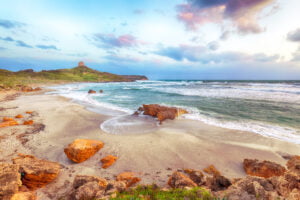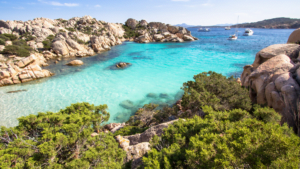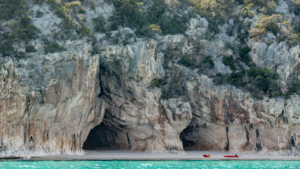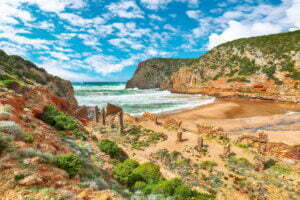
Surfing in Sardinia is not the niche activity most visitors expect from a Mediterranean island. The west coast alone picks up swell almost the whole year, the Mistral wind does the heavy lifting, and the island regularly gets close to 300 surfable days a year. If you are planning a surf trip, or you simply want to know where the waves are while you are here for the beaches, this guide covers the spots, the seasons and the lessons worth booking.
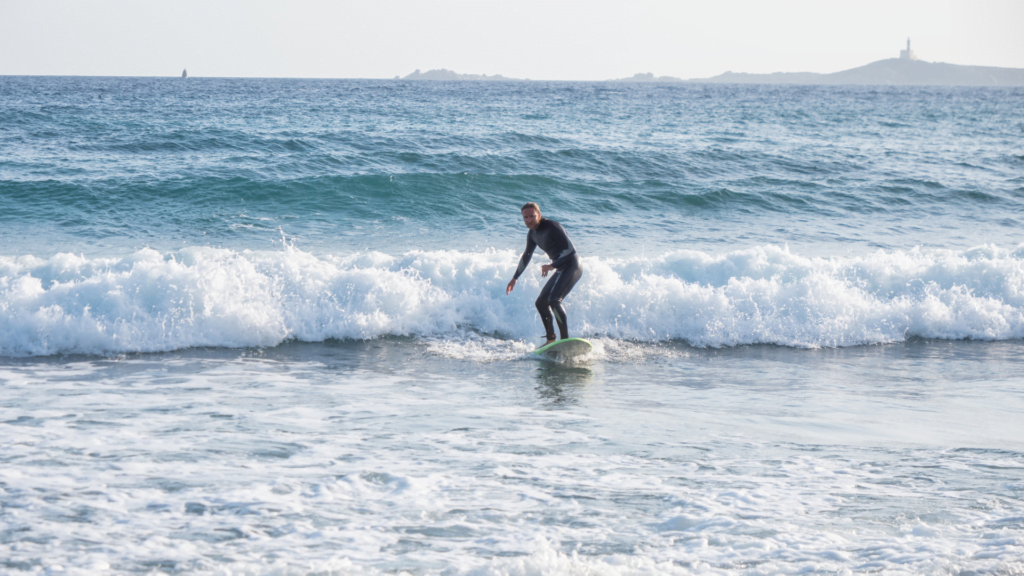
Why Sardinia is one of the Mediterranean’s best surf destinations
Most people picture flat, turquoise water when they think of Sardinia. The west coast tells a different story. It faces open water toward mainland Spain and the Balearics, which means it catches swell that most of the enclosed Mediterranean never sees.
The real driver behind Sardinian surf is the Mistral, a strong northwesterly wind that blows hardest between autumn and spring. When it picks up, it pushes groundswell straight into the Costa Verde and the Sinis peninsula, generating waves that regularly reach 2 to 4 meters during winter storms. That is not a typical Mediterranean number.
What makes the island unusual as a destination, rather than just a wave, is consistency. Locals count on roughly 300 days a year with rideable conditions somewhere on the coastline, since a swell that is too big on the west side often means clean, manageable waves on a more sheltered corner. Surfing in Sardinia rewards people who are willing to move around rather than camp on a single beach.
Best surfing spots in Sardinia
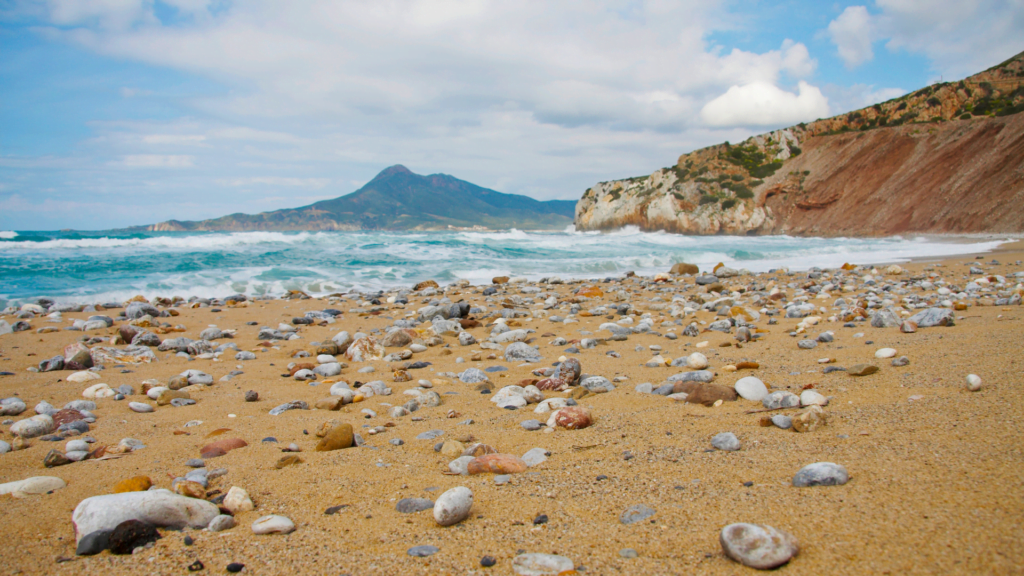
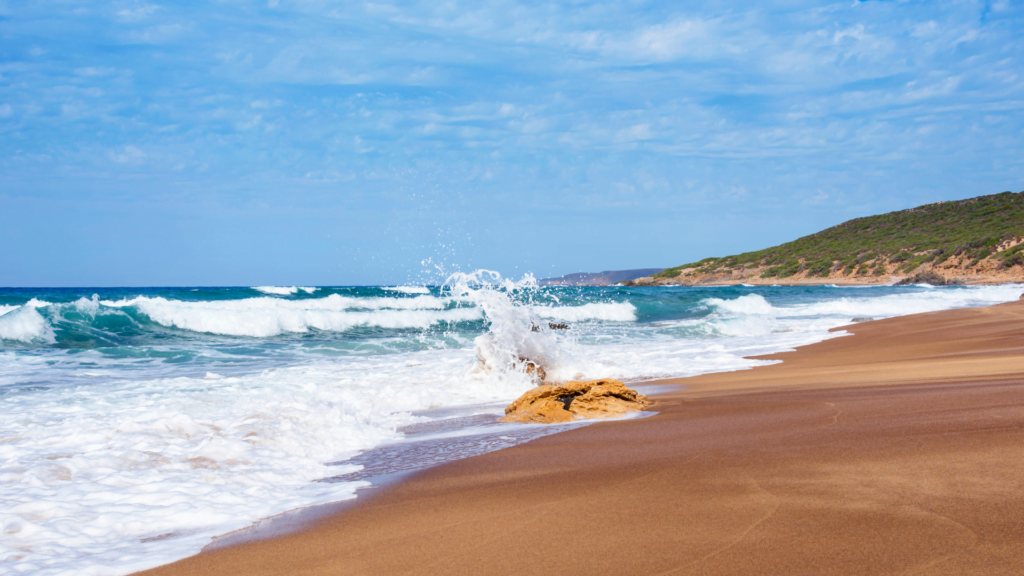
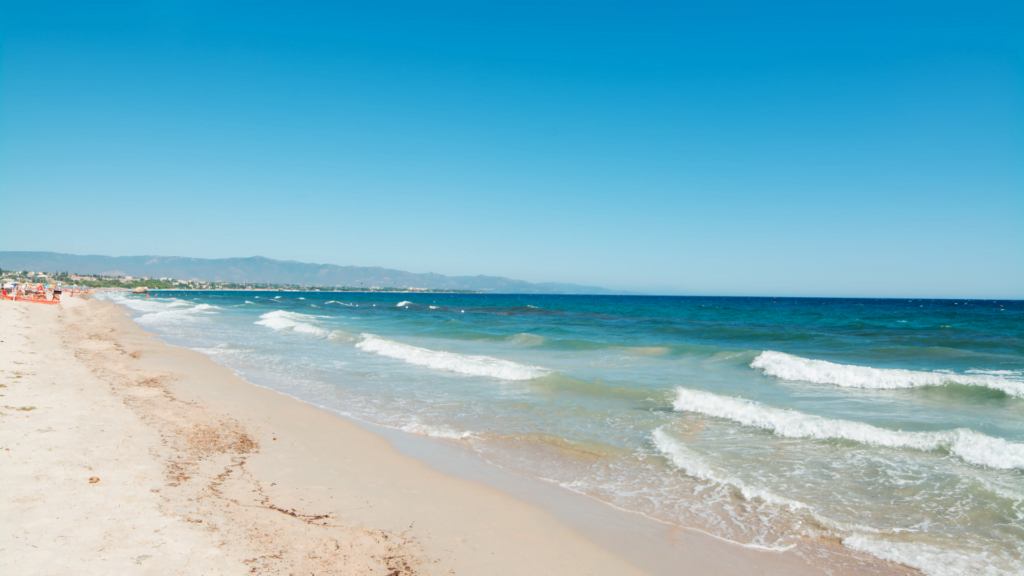
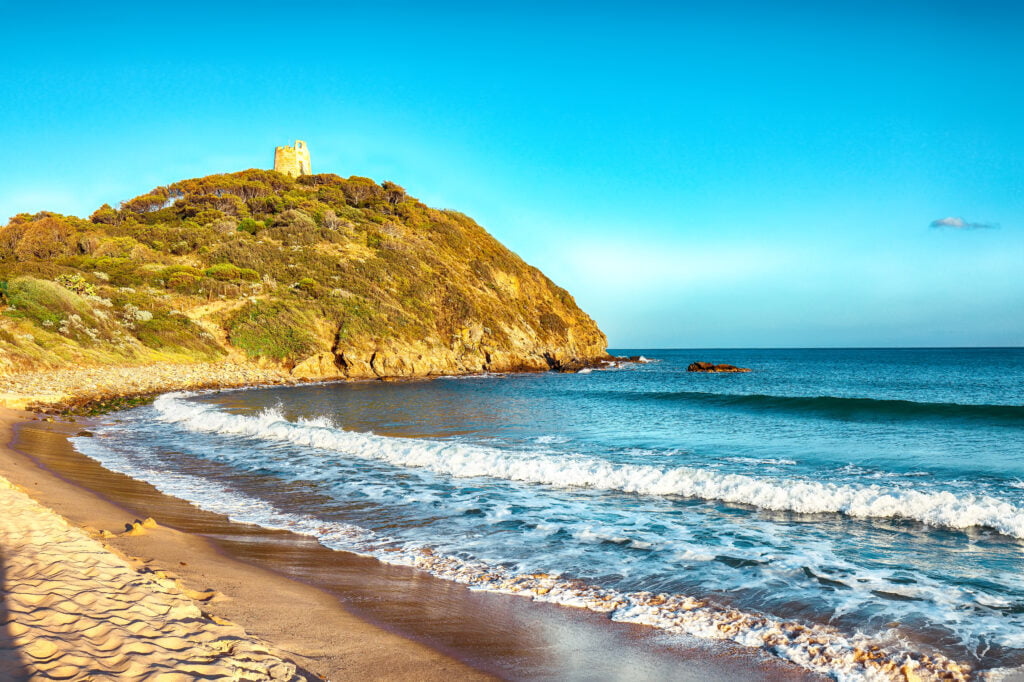
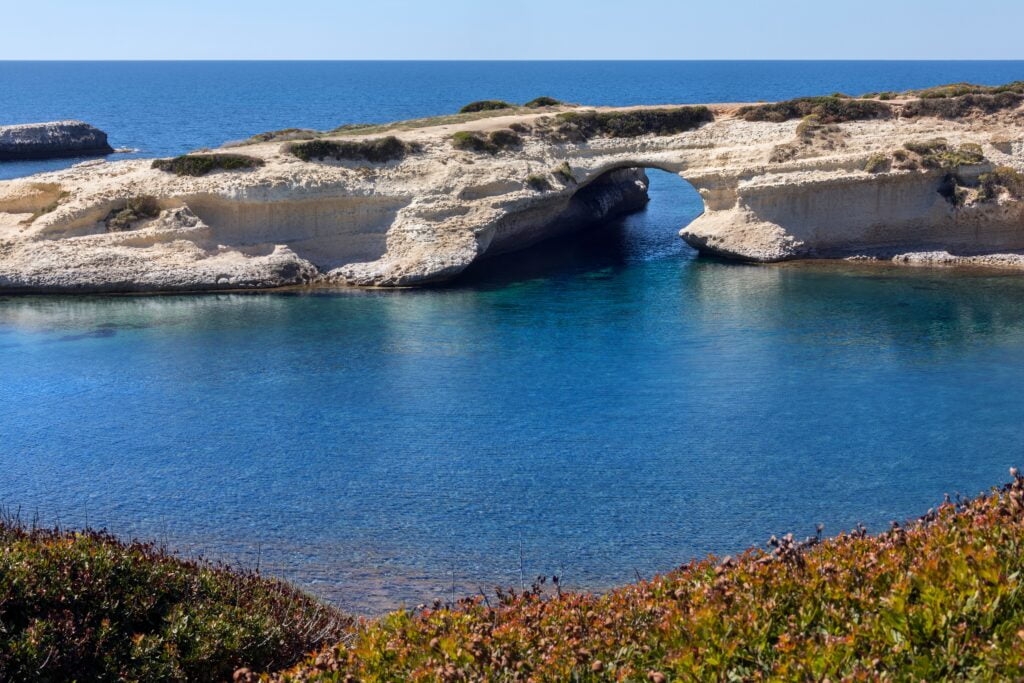
The spots below are grouped by coast because that is how a local actually plans a session: check the wind, then decide which side of the island to drive to.
West coast: the swell magnet
This is where the biggest and most consistent waves in Sardinia happen, thanks to direct Mistral exposure.
Capo Mannu, near Cabras, is the reference point for experienced surfers in the whole Mediterranean. The bay wraps the swell into long, powerful walls that can hold up to 4 meters, with a rocky bottom and strong currents that make it unsuitable for beginners. Access is via an unpaved track down to the lighthouse, with informal parking on the headland rather than a proper lot. Being the best known spot on this coast, it is also the most crowded one on a good winter swell, with vans and camper vans lining the track from early morning.
Putzu Idu, a short drive from Capo Mannu on the Sinis peninsula, offers a gentler version of the same swell window. The seabed is shallower and sandier, which is why it also doubles as one of the island’s main windsurfing and kitesurfing hubs. Parking is paved and easy to find right behind the village, with bars and a windsurf school within walking distance. That convenience means it fills up faster than the more isolated west coast spots, especially when wind and swell overlap on the same day.
Buggerru hosts organized surf competitions and has well formed, fairly consistent waves, making it a good option if you want company in the water rather than an empty lineup. Parking sits right by the old mining village, a short walk from the beach, so access is straightforward. Expect a busier lineup than most west coast spots on contest weekends, but a manageable one outside of those dates.
Piscinas, backed by Europe’s tallest coastal sand dunes, breaks in a more isolated setting. Reaching the water means crossing an unpaved track through the dunes, and parking is limited to a small gravel area, so fewer people bother making the trip. That effort pays off with one of the quietest lineups on the west coast, even on a solid swell.
Guroneddu, close to Portoscuso, works well in winter but goes almost completely flat in summer. It has an exposed reef bottom, and sea urchins and sharp rocks are a real hazard, plus a long walk in from the road. There is no formal parking, just space to pull over, and no facilities of any kind nearby. Between the access and the hazards, the lineup here stays thin even when the waves are firing. Not a beginner spot.
Racca Point, about 25 minutes from Cagliari, produces long rides when the wind blows from the northeast, and is generally easier to reach than the spots further north on this coast, with roadside parking close to the water. Its proximity to the city means weekends bring a steady stream of Cagliari locals, so early mornings are your best bet for space.
Portixeddu and San Nicolao, both near the former mining village of Buggerru, catch waves up to 3 meters when the Mistral is working, and have hosted competitions run by the European Professional Surfing Association. Both have small parking areas right behind the sand, so access is not an issue, but competition days and summer weekends draw a noticeably bigger crowd than the surrounding coastline.
North coast: reliable breaks near Alghero and Porto Pollo
The north picks up swell less directly than the west, but still delivers solid conditions, particularly when the Mistral wraps around the coastline.
Porto Ferro, about 20 km north of Alghero, has a sandy bottom with consistent beach breaks suited to beginners and intermediates. It is one of the most recommended spots on the island for people learning to surf. A large paved car park sits right behind the beach, which makes it the easiest west facing spot to reach on this coast, and also the busiest, since families and swimmers share the same stretch of sand in high season.
La Speranza, also near Alghero, is versatile enough for families and improving surfers, with breaks that rarely get too heavy. Parking is smaller and less structured than at Porto Ferro, which keeps numbers down and makes it a good backup when its neighbor gets crowded.
Isola Rossa (Marinedda) has hosted the Frozen Open, one of Italy’s major surf contests, since 2004. Sandy seabed, both left and right waves, and a lively surf community on the beach. Parking runs along the seafront and fills up quickly during the contest and through summer, though outside those windows it is easy to find a spot close to the sand.
S’Archittu, named after the natural rock arch on the shoreline, is a point break that works well with strong onshore wind and rewards surfers who can read a changing wall. It sits inside a small village, with parking a short walk from the water and a handful of bars nearby, which keeps the vibe relaxed rather than crowded even on a good day.
Silver Rock, on the last stretch of coastline before it curves into more sheltered water, only comes alive during the strongest winter storms, but when it does it forms a hollow, slabby wave for experienced riders. There is no formal parking and the access over rocks is rough, which is exactly why the lineup here stays close to empty even when the wave is at its best.
South coast: Cagliari and beyond
The south trades size for accessibility, which makes it the easiest place to start.
Poetto, Cagliari’s main city beach, has a long stretch of consistent, beginner friendly surf and every amenity you would need within walking distance. Parking runs along the entire lungomare, both free and paid, making it by far the easiest spot on the island to reach without planning. That same convenience means it is also the most crowded, particularly on summer weekends when swimmers, kiters and surfers all share the same water.
Cala Cipolla, south of Cagliari, works for both improving surfers and more experienced ones depending on the day. A small dirt parking area sits above the cove, with a short walk down to the sand, which keeps numbers lower than the more accessible beaches nearby, though summer still brings plenty of swimmers into the mix.
Chia, about 50 km from Cagliari in the municipality of Domus de Maria, is one of the best known south coast spots, with waves that pick up nicely on southerly swells. Several paid car parks serve the beach in season, and given its reputation as one of Sardinia’s most popular tourist beaches, expect real crowds through July and August regardless of how the surf is looking.
Comparison table: best surf spots by level and season
| Spot | Skill level | Best season | Wind exposure |
|---|---|---|---|
| Capo Mannu | Advanced | Winter | West coast, direct Mistral |
| Putzu Idu | Beginner to intermediate | Autumn, spring | West coast, sheltered bay |
| Buggerru | Intermediate | Winter | West coast, direct Mistral |
| Piscinas | Intermediate | Winter | West coast, direct Mistral |
| Guroneddu | Advanced | Winter only | West coast, exposed reef |
| Porto Ferro | Beginner to intermediate | Autumn, spring | North coast, Mistral wrap |
| La Speranza | Beginner to intermediate | Autumn, spring | North coast, sheltered |
| Isola Rossa (Marinedda) | Intermediate to advanced | Winter | North coast, direct swell |
| Poetto | Beginner | Year round | South coast, mixed swell |
| Chia | Beginner to intermediate | Summer, autumn | South coast, southerly swell |
When to surf in Sardinia: season by season
Winter (November to February) is the prime season for size. Powerful Mistral swells hit the west coast hardest, with waves regularly reaching 3 to 4 meters. Water temperature drops to 14 to 16°C, so a good wetsuit is not optional.
Autumn and spring (September to October, March to May) offer the best balance for most surfers. Waves are well formed without being intimidating, and water temperatures sit between 18 and 20°C, comfortable enough for a lighter wetsuit.
Summer (June to August) is technically the off season. Swells shrink and become less consistent, though east facing beaches can still produce surfable days. Water reaches 24 to 26°C, warm enough to surf in a swimsuit, and the smaller waves make it a forgiving window for absolute beginners.
Reading a forecast changes with the season, too. In winter, the number that matters most is swell period rather than wave height, since a long period groundswell from a distant Atlantic or Mediterranean low will hold up far better on the west coast than a short, wind driven swell of the same size. In autumn and spring, wind direction becomes the deciding factor: a west coast spot needs the Mistral to have blown for at least a day to build clean swell, while an onshore wind on the same day usually means messy, close out waves. In summer, forecasts are less about the west coast and more about scanning east facing beaches for anything generated by local sea breezes, which tend to show up in the afternoon rather than the morning.
Kitesurfing and windsurfing: an alternative when the waves are flat
When the swell disappears in summer, wind rarely does, and that is where Sardinia’s kite and windsurf scene takes over. Porto Pollo, between Palau and Santa Teresa di Gallura, is one of Europe’s most established kite and windsurf destinations, split into two bays so kiters and windsurfers do not compete for the same water. Punta Trettu, in the southwest near Sant’Antioco, has shallow, flat water that many instructors consider the best learning environment on the island.
If you want to try it while you are here, the Windsurfing lesson in Palau is a solid entry point: a half day session with all equipment included, suitable from age 8 upward, in the sheltered bay right at Porto Pollo.
Things to do: surfing lessons and tours in Sardinia
Booking a lesson is the fastest way to get a feel for Sardinian conditions, especially since local instructors know exactly which spot is working on a given day.
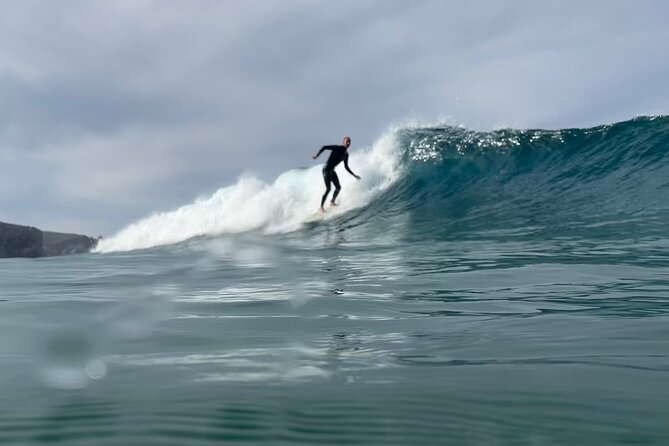
Private Surf Experience in Sardinia with Certified Guide. Led by an instructor with 25 years on the water, this session adapts to the day’s conditions to find the best available waves. Private transport, wetsuit and board rental included, best suited to intermediate and higher levels. Book the Private Surf Experience.
Surf Lesson in Cagliari. Built for beginners, with softboard, wetsuit, a proper warm up, and a hot shower afterward. Meeting point at Poetto beach. Book the Surf Lesson in Cagliari.
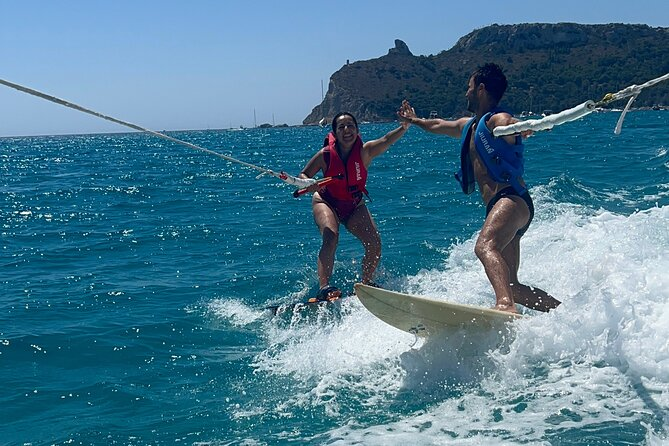
Watergames and Wakeboarding in the Golfo degli Angeli. A 30-minute session in Cagliari that mixes wakeboarding with inflatable water games, accessible to people with disabilities and suitable for all ages. Book the Watergames and Wakeboarding experience.
Windsurfing lesson in Palau. Covered above, ideal if the surf is flat but the wind is up. Book the Windsurfing lesson in Palau.
Porto Pollo: watersports rental and lessons. A flexible option covering windsurfing, wingfoiling and kitesurfing at the same spot, with equipment rental included, so you can try more than one discipline in a single booking. Book Porto Pollo watersports.
SUP rental at Poetto, Cagliari. Not surfing in the strict sense, but a good way to read the swell from the water on a flat day, with delivery directly to the beach. Book SUP rental at Poetto.
Getting around: car rental for surf road trips in Sardinia
The best waves in Sardinia are rarely next to a town center. Capo Mannu, Putzu Idu, Porto Ferro and Guroneddu all require a car, since surf checking here means driving between two or three spots in the same morning until you find clean conditions. Public transport does not cover this kind of flexibility.
You can compare prices and book directly from:
- Cagliari Airport car rental, the natural base for south coast spots and Punta Trettu
- Olbia Airport car rental, closest to Porto Pollo and the north coast
- Alghero car rental, practical for Porto Ferro, La Speranza and the surf spots around Alghero
- Sardinia car rental, general search, useful if your trip covers multiple coasts
Where to stay near the best surf spots
For the west coast, Oristano has the widest choice of hotels, while staying closer to Putzu Idu shortens the drive to Capo Mannu considerably. La Baia Apartments sits about 3 km from Capo Mannu beach, a practical base if you want to check the surf before breakfast. Check availability at La Baia Apartments.
For the north coast, staying near Alghero puts you within reach of both Porto Ferro and La Speranza. El Faro Hotel & Spa, set inside the Porto Conte nature reserve, is the premium option in the area, with its own stretch of coastline and a 20 minute drive to Alghero itself. Check availability at El Faro Hotel & Spa.
If you would rather browse a wider set of options, our guides to where to stay in South Sardinia and where to stay in Northern Sardinia cover areas beyond the surf spots themselves.
The local perspective: what Sardinians think about surfing here
We grow up watching the Mistral, long before anyone mentions surfing. It is the wind that decides everything on this island, not just for surfers but for fishermen, sailors and anyone planning a day at the beach.
What surprises visitors most is how different the west coast feels in winter compared to the postcard version of Sardinia. Those same beaches that are packed and glassy flat in August turn into something closer to an Atlantic coastline once October arrives. If your only image of Sardinia comes from summer photos, the winter west coast will not look like the same place.
Logistics matter more here than people expect. Spots like Capo Mannu or Guroneddu are not walking distance from anywhere, parking is informal at best near the more isolated breaks, and mobile signal can be patchy on the Costa Verde. Bring water, check fuel before you head out, and do not assume you will find a shop nearby.
FAQ about surfing in Sardinia
Where are the best places to surf in Sardinia?
The west coast is the most consistent stretch of coastline. Capo Mannu, near Cabras, is widely considered the top surf spot in the Mediterranean, with Buggerru and Piscinas close behind.
Is Sardinia good for beginner surfers?
Yes, particularly Poetto in Cagliari, Porto Ferro near Alghero, and Chia in the south. All three have sandy bottoms and more forgiving wave sizes than the west coast.
When is the best time to surf in Sardinia?
Winter brings the biggest and most consistent swells, while autumn and spring offer a gentler, more approachable version of the same conditions. For a broader picture of the island’s climate through the year, see our guide to the weather in Sardinia.
Can I surf in Sardinia during summer?
Summer is the quietest season for waves, but east facing beaches can still produce surfable days, and the smaller size makes it a good window for absolute beginners.
Are there surf schools for beginners?
Yes, with several operating out of Cagliari’s Poetto beach and around Alghero, offering everything from single lessons to multi day courses.
Can you surf on the northern coast of Sardinia?
Yes. When the Mistral blows, the beaches near Alghero and the Porto Pollo area become active, with Porto Pollo doubling as one of the island’s main kite and windsurf hubs.
Surf forecast resources for Sardinia
Checking a forecast before driving out is standard practice here, given how quickly conditions can shift with the wind. Surfline covers wave height, wind direction and swell period for the main Sardinian breaks. Surf-Forecast.com offers a similar breakdown spot by spot, and Windguru is the reference for hour by hour wind data, which matters more here than almost anywhere else in the Mediterranean.
Sources: Surf-Forecast.com, Windguru, Stormrider Surf Guides.
This is a sensitive outdoor activity: sea and wind conditions in Sardinia can change quickly, so always check a live forecast and local advice before heading into the water, particularly at exposed reef spots like Guroneddu.