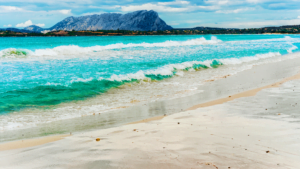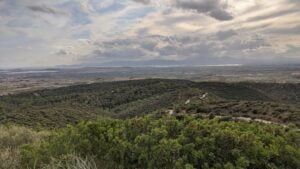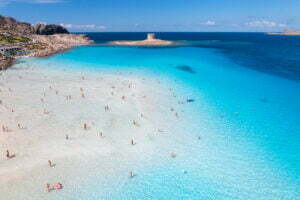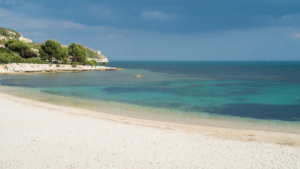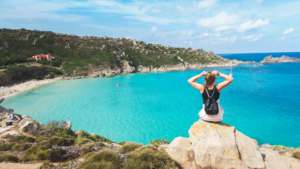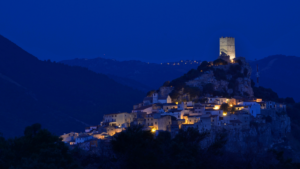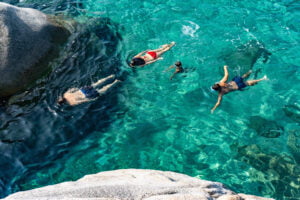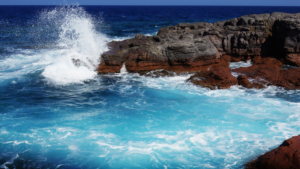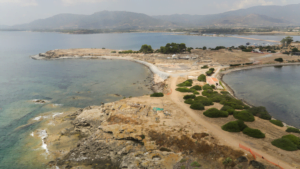
Asinara Island is one of the most extraordinary places in Sardinia: a protected national park, a former maximum-security prison, a marine reserve of rare biodiversity, and the home of the only population of albino donkeys in Europe. This guide covers everything you need to know to visit it properly, from how to get there and which tours are worth booking, to the beaches you can actually swim at, the history no other article tells you in full, and the honest logistical details that will save you a wasted day.
What is Asinara Island?
Asinara is a small island of approximately 52 square kilometres off the northwestern tip of Sardinia, in the province of Sassari and administratively part of the municipality of Porto Torres. It sits directly in the Gulf of Asinara, roughly 20 to 30 minutes by boat from the fishing village of Stintino.
It is not a resort island. There are no hotels along the coast, no beach clubs, no rental sunbeds, and no traffic. The island has been a national park and marine protected area since 1997-1998, which means access is regulated, private cars are banned, and several beaches are off-limits or accessible only with an authorised guide.
What makes Asinara genuinely unlike anything else in Sardinia is the combination it offers: wild Mediterranean scrub, crystalline water in colours that range from electric turquoise to deep green, and a history so layered and dark that it gives the landscape a gravity you rarely feel on a typical beach day. The island’s name is debated. Some derive it from the Latin sinuaria, meaning sinuous, a reference to the island’s curved coastline with 110 kilometres of shore. Others connect it to asino, the Italian for donkey, pointing to the white donkeys that have lived here for centuries. Both explanations are plausible, and neither is definitive.
The History of Asinara: From Fishermen to Italy’s Alcatraz
Most travel articles give Asinara’s history a paragraph. That is not enough. The history of this island is inseparable from the experience of visiting it. The abandoned buildings are not just “atmospheric ruins.” They are specific places where specific, documented things happened to real people. Understanding this changes what you see when you walk through Cala d’Oliva or stand in front of the former prison cells.
Prehistoric and Roman origins
Human settlement on Asinara dates back to pre-Nuragic times. The Domus de Janas (rock-cut tombs) at Campu Perdu in the northern part of the island are among the island’s oldest evidence of habitation, placing early settlers here well before 2000 BC. The Romans used Asinara as a port of call along Mediterranean trade routes, and remnants of Roman-era shipwrecks have been found in the surrounding waters. The Castellaccio, a medieval fortress built over earlier structures, still stands on a promontory and is reachable via one of the island’s hiking trails. It is one of the most visually dramatic points on the entire island.
The forced displacement of 1885
This is the chapter that Sardinians know and that most tourists do not. In 1885, the Kingdom of Italy decided to convert Asinara into a penal colony and a lazaretto, a quarantine health station. To do so, they had to remove the people already living there: 45 fishing and shepherding families who had inhabited the island for generations, many of them of Ligurian origin descended from fishermen from Camogli.
These families were given almost no time and almost no choice. They were relocated to a stretch of empty coastline on the Sardinian mainland where they built a new village from nothing, bringing their boats, their dialect, and their traditions. That village is Stintino. The history of Stintino begins with an act of forced displacement. When you visit Stintino’s Tonnara Museum today, what you are seeing is the cultural memory of people who were pushed off their own land so that the state could use the island as a prison. This is not a neutral piece of history, and Sardinians do not treat it as one.
For more on Stintino itself, see our Stintino guide.
WWI prison camp and leper colony
During the First World War, Asinara served as a prison camp for over 24,000 Austro-Hungarian prisoners of war captured during the Isonzo campaign. Conditions were brutal. Disease spread rapidly, and approximately 7,000 prisoners died on the island. An ossuary built in 1936 still stands near Cala d’Oliva, containing their remains. It is a sobering structure and worth visiting if you are doing any walking in that area.
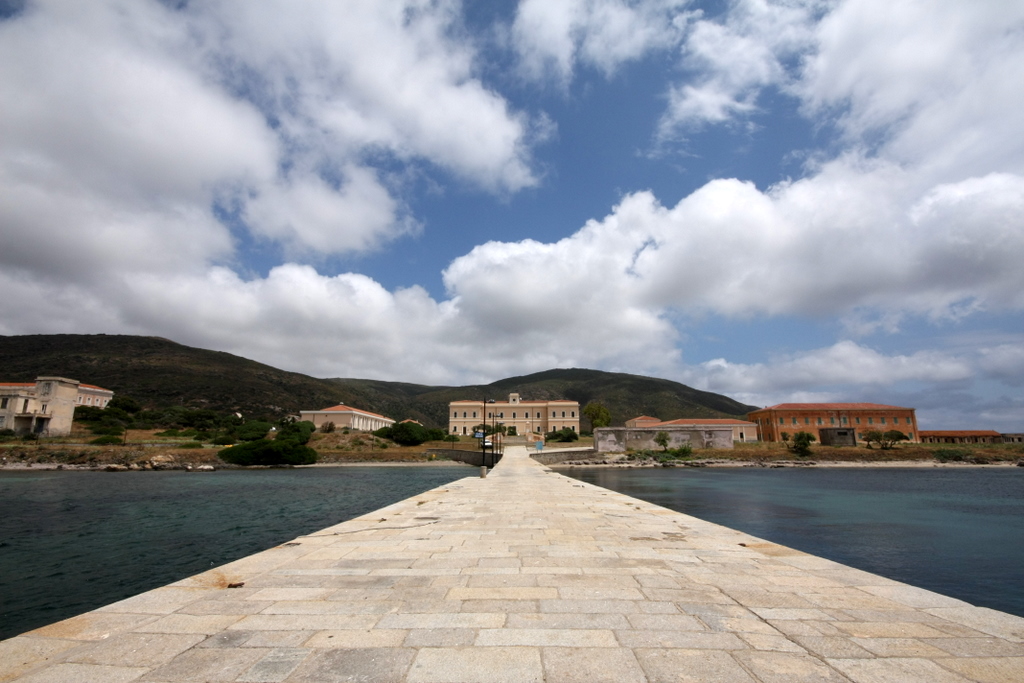
Parallel to the prison camp, the Maritime Health Station at Cala Reale served as a quarantine facility for ships arriving with infectious diseases. The characteristic layout of Cala Reale, with its long pier leading to steps, formal gardens, and the entrance to the so-called Royal Palace (now the national park headquarters), dates from this period.
Italy’s Alcatraz: the maximum security prison
From the 1970s until 1997, Asinara became known across Italy as the Isola del Diavolo, Devil’s Island, and as the Italian Alcatraz. The prison housed some of the country’s most dangerous convicted criminals: Mafia bosses, members of the Red Brigades terrorist organisation, and other high-security prisoners whose isolation was considered essential to the state.
One specific, documented event elevates this period beyond generic prison history. In 1985, Italian anti-Mafia judges Giovanni Falcone and Paolo Borsellino were transferred to Asinara with a group of colleagues and assistants to work on the documents and testimonies that would form the basis of the Maxi Trial, the largest organised crime prosecution in Italian history.
The isolation of the island was chosen precisely because it offered security. The house they used at Cala d’Oliva still exists. Both Falcone and Borsellino were later assassinated by the Mafia in 1992, within two months of each other. The building where they worked is not a tourist attraction in the conventional sense. It is simply there, with a small explanation, and it carries a weight that is difficult to describe.
Both judges were murdered by the Mafia in 1992, within two months of each other. Their work, which began partly in this isolated island, eventually led to the conviction of hundreds of Mafia members.
From prison to national park
The prison closed in 1997, and the Parco Nazionale dell’Asinara was formally established the same year, officially opening to visitors in 1998. The transformation was deliberate and has been largely successful. Wildlife populations have recovered. The marine ecosystem is among the healthiest in the western Mediterranean. The island now hosts rare species that have disappeared from most of Sardinia’s coast. What over a century of enforced isolation ultimately protected was a piece of nature.
Where is Asinara island?
Location: Northwestern Coast of Sardinia, Italy
Asinara Island is situated in the Mediterranean Sea, just to the northwest of the main island of Sardinia. It is accessible by ferry from Porto Torres and Stintino, making it a convenient day trip for tourists exploring Sardinia.
How to Get to Asinara Island
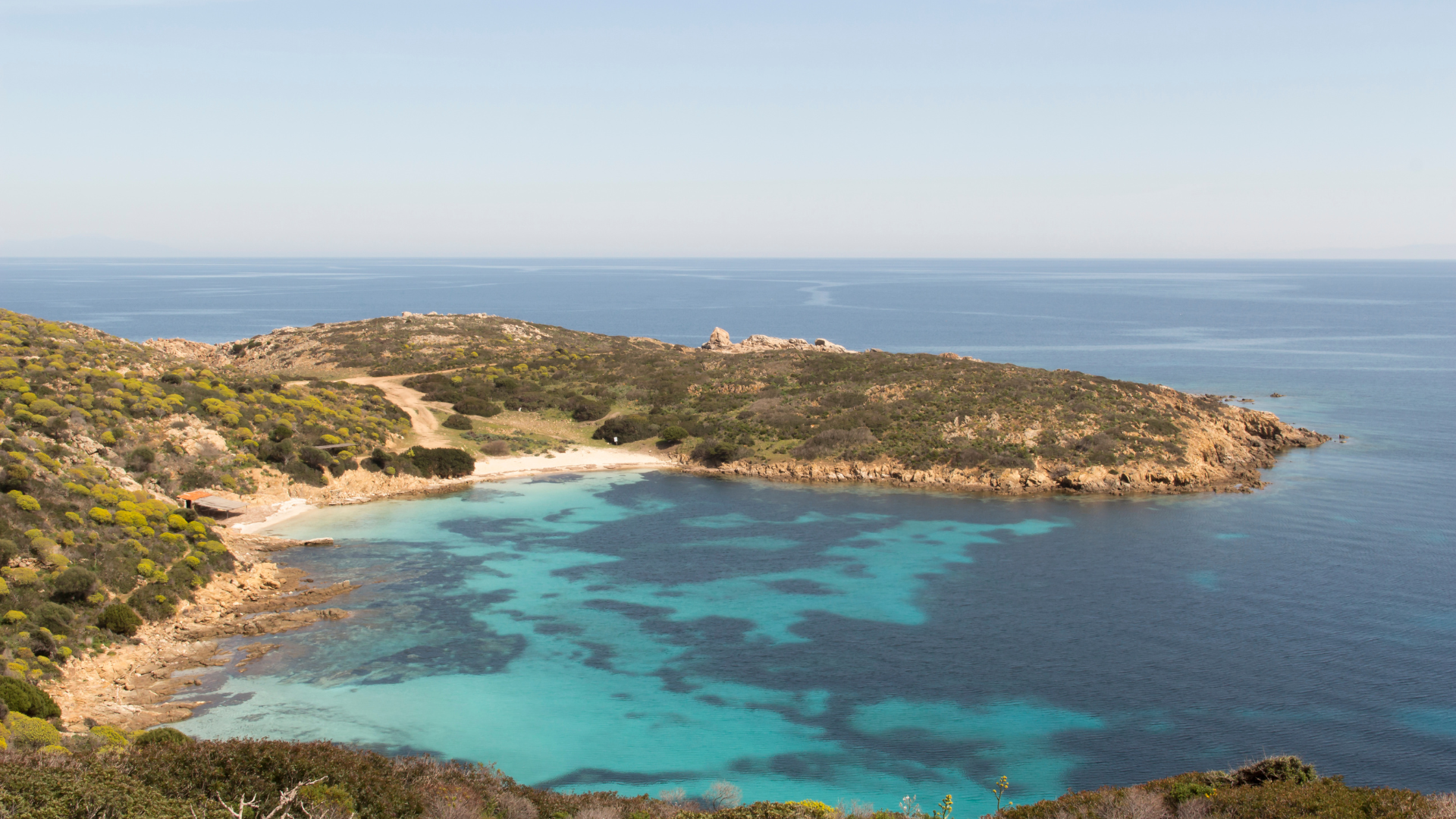
This is where most articles let you down with vague summaries. The logistics of getting to Asinara are not complicated, but they have specific details that matter.
Ferry from Porto Torres
The most direct ferry connection is operated by Delcomar using the vessel Sara D, departing from the Segni pier in Porto Torres. The crossing to Cala Reale takes approximately 1 hour and 15 minutes.
- In summer (roughly June to September): daily departures, typically at 8:30 and 15:00. Check the current timetable on the Delcomar website before booking, as schedules change.
- Low season (October to May): reduced service, typically three days per week (Tuesday, Friday, Sunday), departing around 8:15.
- Ferry cost: approximately €15 round trip, paid to Delcomar, not including the landing fee.
- Landing fee: €5 per person from June 1 to September 30; €2.50 per person from October 1 to May 31. Bring cash for this.
Porto Torres is about 30 kilometres from Stintino by road. It also connects to Sassari by highway. For visitors based in Sassari, Porto Torres is the more practical departure point.
Boat tours from Stintino
In summer, Stintino is by far the busiest and most practical departure point for Asinara. The crossing takes only 20 to 30 minutes, and dozens of licensed operators depart from the Porto Mannu and the new tourist port. Day tours are the dominant format, departing around 9:30 to 9:45 in the morning and returning in the afternoon. Most include swimming stops, an on-board lunch, and guided land visits at one or more points on the island.
Independent visitors can also arrive by private boat, but are subject to the same park rules: no anchoring in protected zones, no access to restricted areas, and the landing fee applies regardless of how you arrive.
The Maestrale wind factor
This is the warning almost nobody gives you, and it is genuinely important.
The Maestrale, the northwest wind that dominates this stretch of Sardinian coast, can reach significant force with little warning. Asinara’s position in the Gulf of Asinara, fully exposed to the northwest, means that when the Maestrale picks up, ferry crossings are cancelled and boat tours are called off. This can happen in any season, but it is most common in spring and autumn.
If Asinara is the single purpose of a day trip to northern Sardinia, you are taking a meaningful risk by not having a backup plan. Check wind conditions the morning of your visit. If operators are calling off departures, the sea is not safe to cross in the typical tourist vessels. This is not over-caution: it is the practical reality of this part of the Sardinian coast, and locals who have tried to plan an Asinara day for guests have been caught by it more than once.
Things to Do on Asinara Island
Catamaran tour around the island
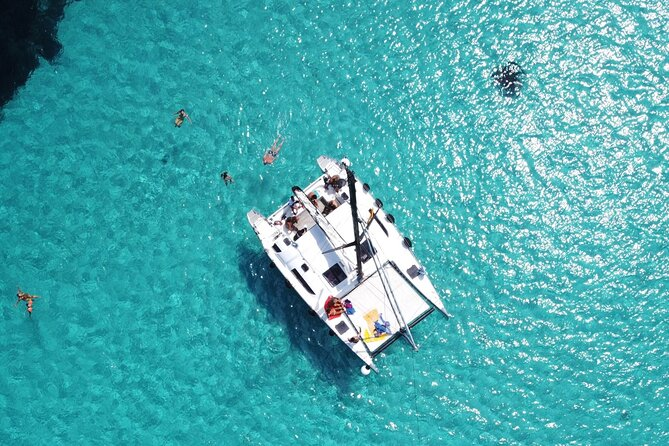
The catamaran day tour is the best overall introduction to Asinara for most visitors. A typical full-day excursion departs from Stintino’s port in the morning, sails to multiple coves around the island, makes two or three stops for swimming and snorkeling in water that is genuinely exceptional, and includes an on-board lunch with local fish, pasta, cheese, sausage and Vermentino wine. Group sizes are typically capped at 10 to 12 passengers, which keeps the experience relaxed.
This is the right format if you want to see the island from the sea, understand its scale and coastline, and swim in places that are unreachable on foot. It is the premium option, priced around €85 per person for a full day.
- Book the Asinara catamaran excursion on Viator
- Book the full-day catamaran from Stintino on GetYourGuide
Guided Jeep / minivan and 4WD tour
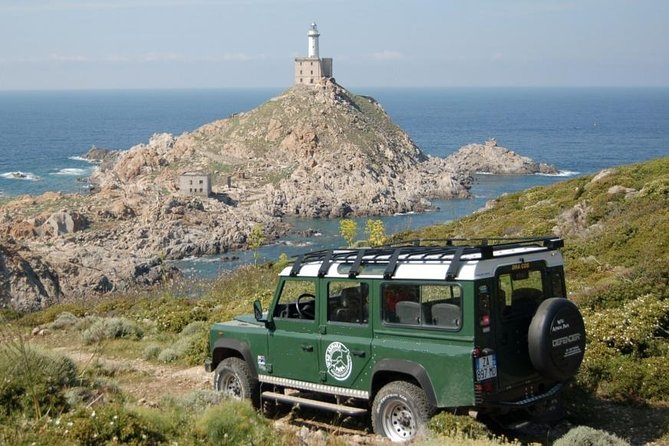
The Jeep tour is the right choice if your priority is the island’s interior, wildlife and history rather than sea access. A guided 4WD excursion covers ground that is unreachable on foot within a single day: the inland tracks, the restricted areas near Trabuccato, the northern reaches of the island, and the spots where you are most likely to encounter the white donkeys in their natural setting.
Full-day Jeep tours typically include boat transfer from Stintino or Porto Torres, a local environmental guide who explains the landscape and history, stops for swimming at accessible beaches including Cala Sabina, and a packed lunch. Cost starts around €70 per person.
E-bike tour
The e-bike tour is the option for visitors who want independence and light physical engagement without the extremes of either a guided jeep or a full hiking day. Departing from Porto Torres, the tour includes the ferry crossing, e-bikes and helmets, and a cycling guide who leads a small group along the island’s trails and paved paths.
Asinara is hilly, and the terrain on some trails is genuinely rough, but the assisted pedalling makes the distance manageable for anyone in reasonable shape. It is also among the most sustainable ways to explore the park, which is partly the point.
Half-day boat excursion
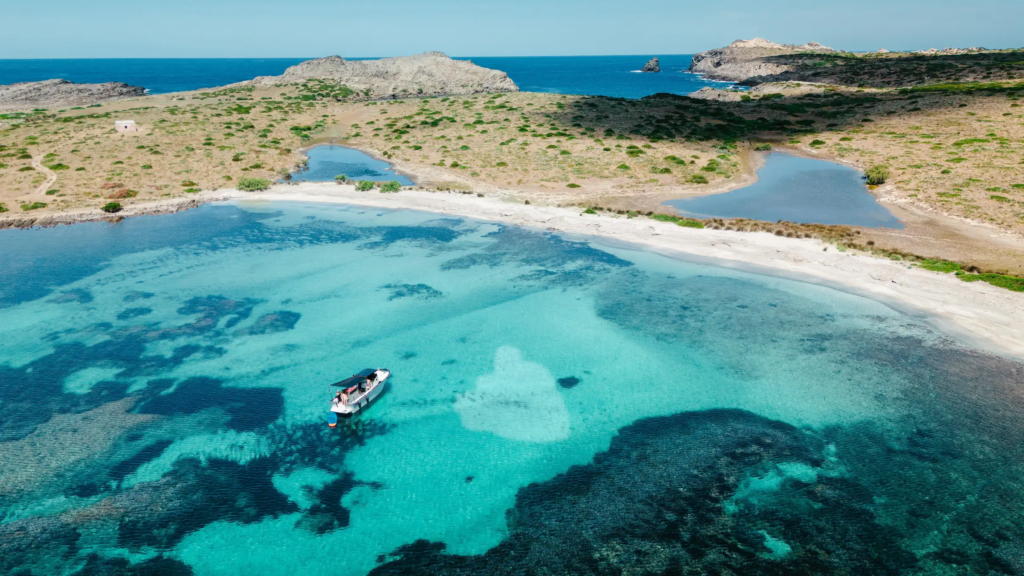
If you have limited time, or if you want to combine Asinara with a morning or afternoon at La Pelosa beach, the half-day boat tour is a practical compromise. Departing around 9:45 from Stintino’s tourist marina, these three-hour excursions sail around the southern coves of the island, include at least one swimming stop, and return to port by midday or early afternoon. Price is typically €35 to €50 per person.
- Book the half-day Asinara excursion on Viator
- Book the half-day speedboat tour from Stintino on GetYourGuide
For the full range of available tours: Asinara tours on GetYourGuide.
Hiking the island’s trails
Asinara has several marked hiking trails, each with a distinct character. The most accessible options:
- Sentiero del Granito: a circular loop starting from Fornelli, the ferry landing. Relatively flat and well-signposted. Good for an introductory walk.
- Sentiero del Castellaccio: starting from Fornelli, this trail climbs to the medieval fortress overlooking the island. Around three hours total, moderate difficulty. The views from the top are extensive.
- Sentiero del Faro / White Donkey Trail: beginning at Cala Reale, this trail heads toward Cala Sabina (about 30 minutes on foot) and continues to Cala d’Arena and the lighthouse at Punta Scorno. This is the most scenic trail on the island and the one most likely to result in an encounter with albino donkeys in their natural habitat.
- Holm Oak Trail (Sentiero del Leccio): beginning near Cala d’Oliva, this longer route wraps around the interior, ascending to Punta della Scomunica, the island’s highest point.
One important caveat: do not attempt long hikes in July or August during the middle of the day. Inland temperatures on Asinara regularly exceed 35°C in summer, shade is minimal, and there are no water sources on the trails. The risk is real. Spring (April to June) and early autumn (September to October) are the ideal seasons for hiking here.
Snorkeling and diving
The marine protected area around Asinara is one of the most biodiverse in the western Mediterranean. Posidonia oceanica meadows cover large areas of the seabed, providing habitat for grouper, sea bream, octopus, moray eels, and numerous other species. In the open water during crossings, dolphin sightings are common. Caretta caretta sea turtles nest on two of the island’s beaches, and there is a reasonable chance of seeing one in the water during any sea-based tour.
Snorkeling is possible from any of the accessible beaches and from any boat tour. Dive operators based in Stintino also run guided dives in the marine park, which requires prior authorisation.
At Cala Reale, the CRAMA (Marine Animal Recovery Centre) runs a sea turtle rehabilitation facility. Entry is approximately €3 as a donation. The centre is small but genuinely interesting, and the team can explain the current state of the turtle population and the threats it faces.
The Observatory of Memory (ex-prison museum)
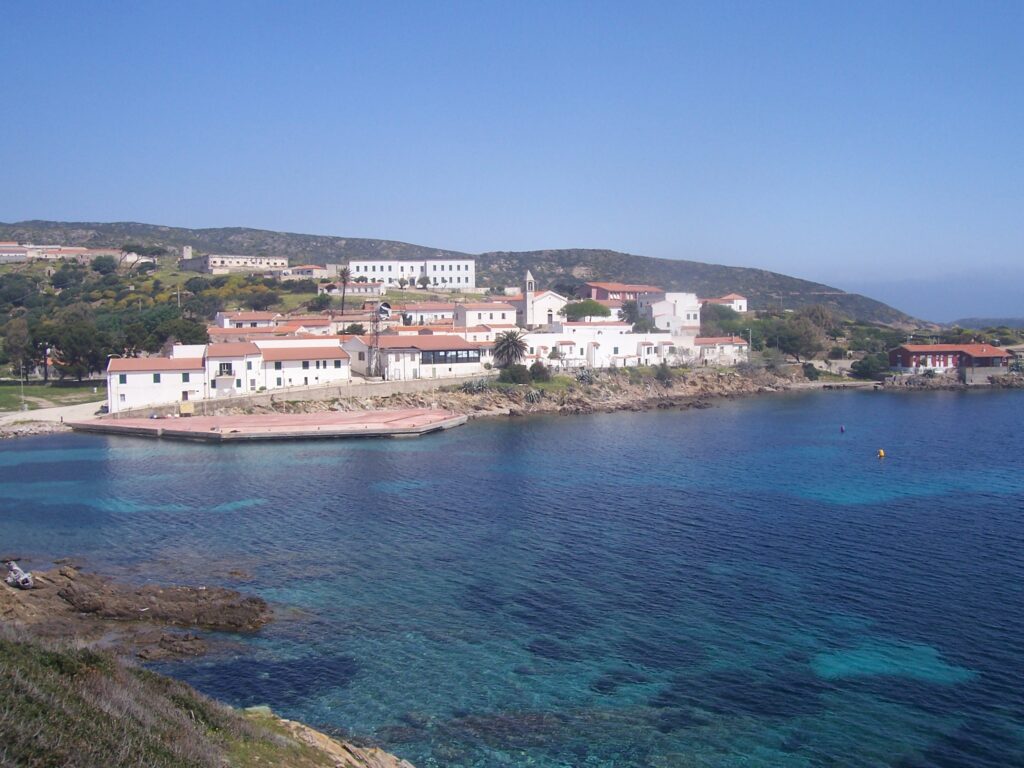
At Cala d’Oliva, the former central prison branch has been converted into the Observatory of Memory, a museum documenting Asinara’s 112 years of prison history. The exhibition includes original documents, objects, tools, and photographs from the various periods of the island’s use as a penitentiary.
Entry is free, and there is often a guide present who will explain the structure at no charge. The building where Falcone and Borsellino worked on the Maxi Trial documents is visible from outside and marked. The whole of Cala d’Oliva has the feel of a village paused in mid-departure, buildings intact, life suspended. It is the most emotionally powerful part of the island.
Best Beaches on Asinara
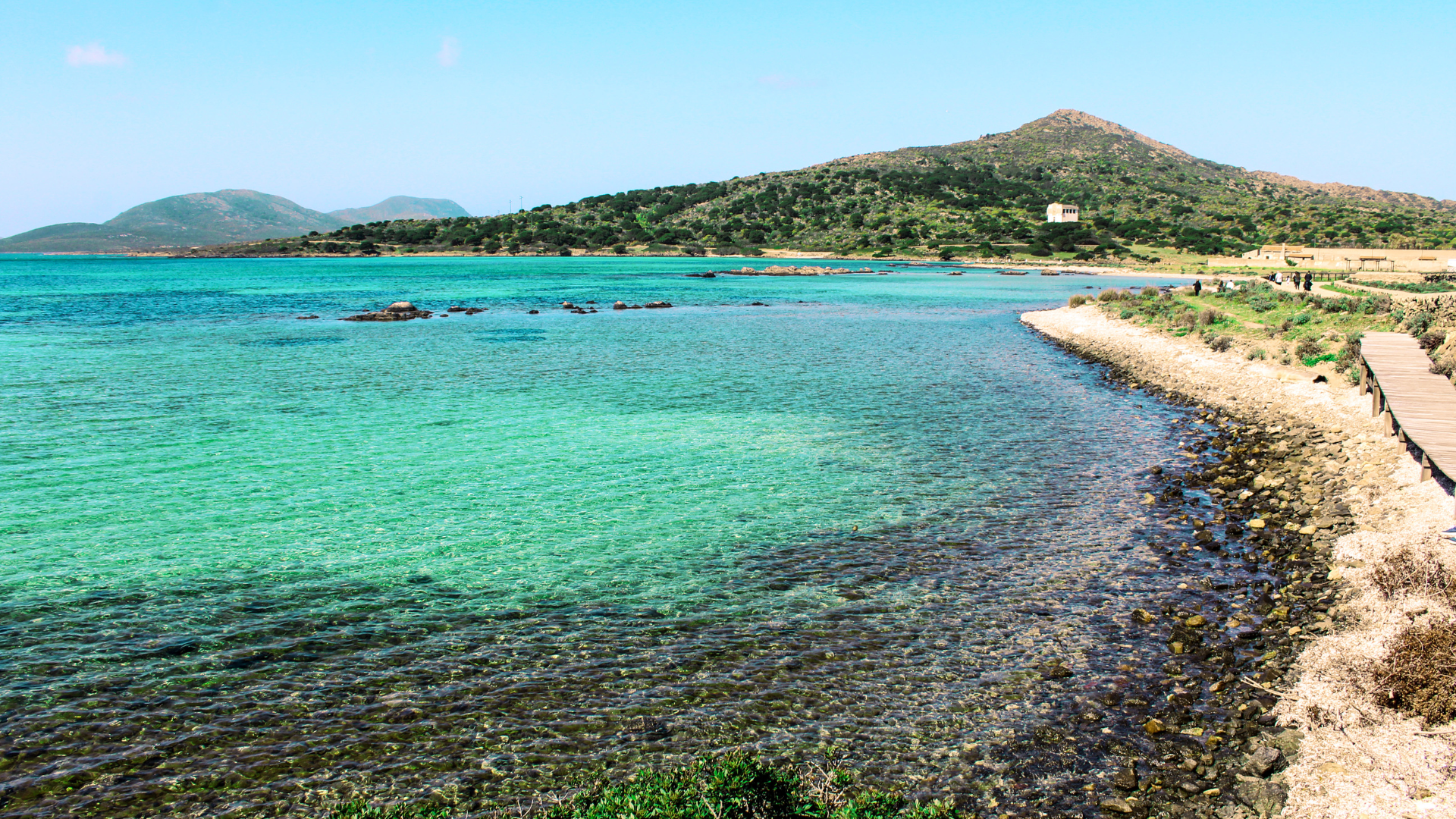
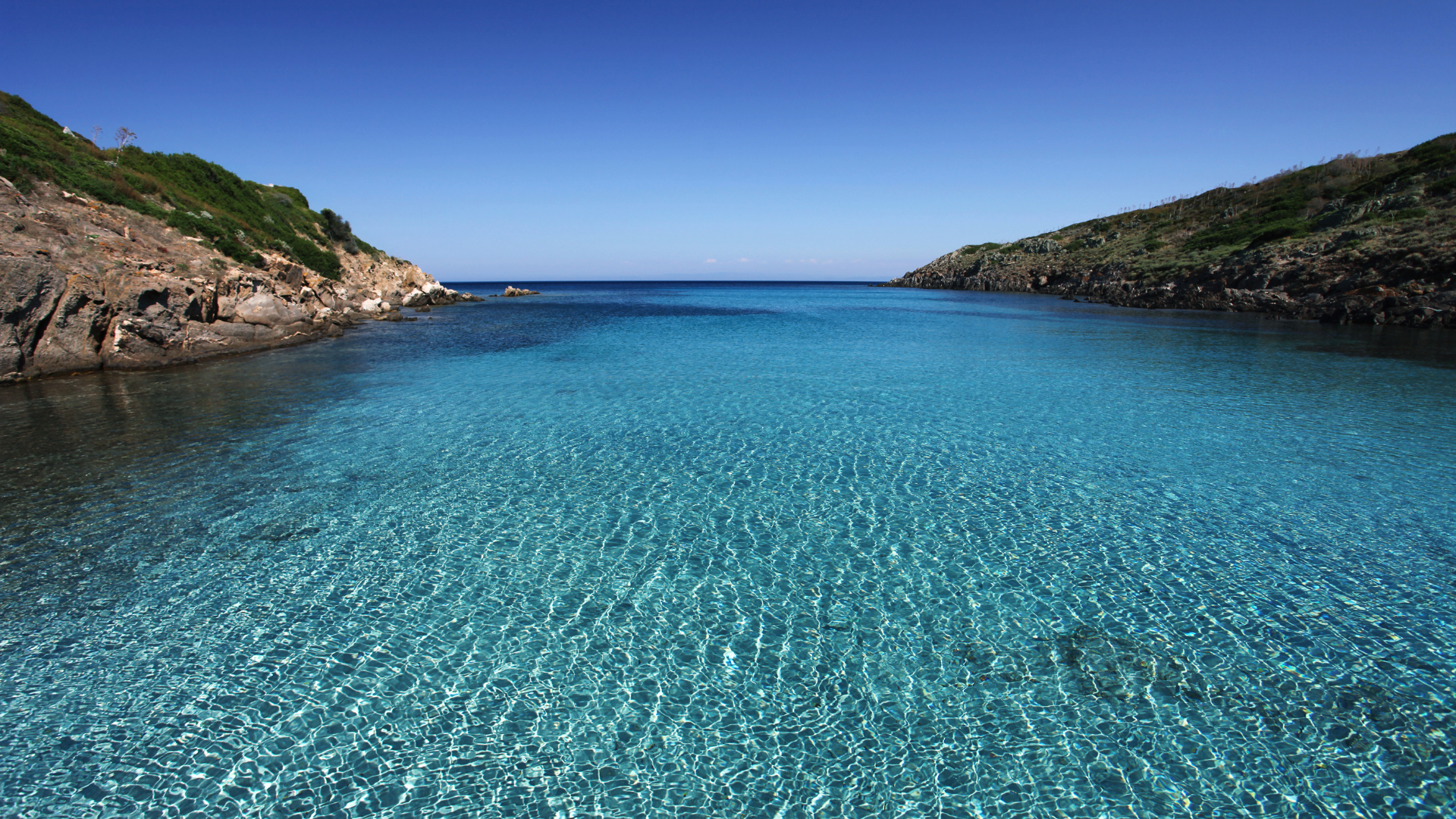
One of the most common sources of confusion about Asinara is which beaches you can actually visit and swim at. The island is a marine protected area and the rules are real.
| Beach | Access | Notes |
|---|---|---|
| Cala Reale | Open to all | Main arrival point; calm, family-friendly; visitor centre adjacent |
| Cala Sabina | On foot or guided tour | The best swimable beach; 30 min walk from Cala d’Oliva; white sand, turquoise water |
| Cala d’Oliva | Open to all | Village setting; good for swimming; quieter after 4pm |
| Cala Sant’Andrea | Guided tour only | Protected nesting site for Caretta caretta turtles; outstanding sea but restricted |
| Cala d’Arena | Restricted / authorised boat only | Caretta caretta nesting; viewable from sea |
| Cala Trabuccato | Boat only | Swimming forbidden; extraordinary seabed; admire from the water |
Why are some beaches restricted? It is not bureaucratic obstruction. Cala Sant’Andrea and Cala d’Arena are active Caretta caretta nesting sites, and any disturbance during the nesting season can directly destroy eggs. The protection works: turtle populations here are recovering precisely because human access has been controlled. If you visit during a guided tour, your operator will often arrange an authorised visit to Cala Sant’Andrea. On a boat tour, you can swim in the water near Cala d’Arena while staying clear of the beach itself.
Wildlife on Asinara: What You Can Actually See
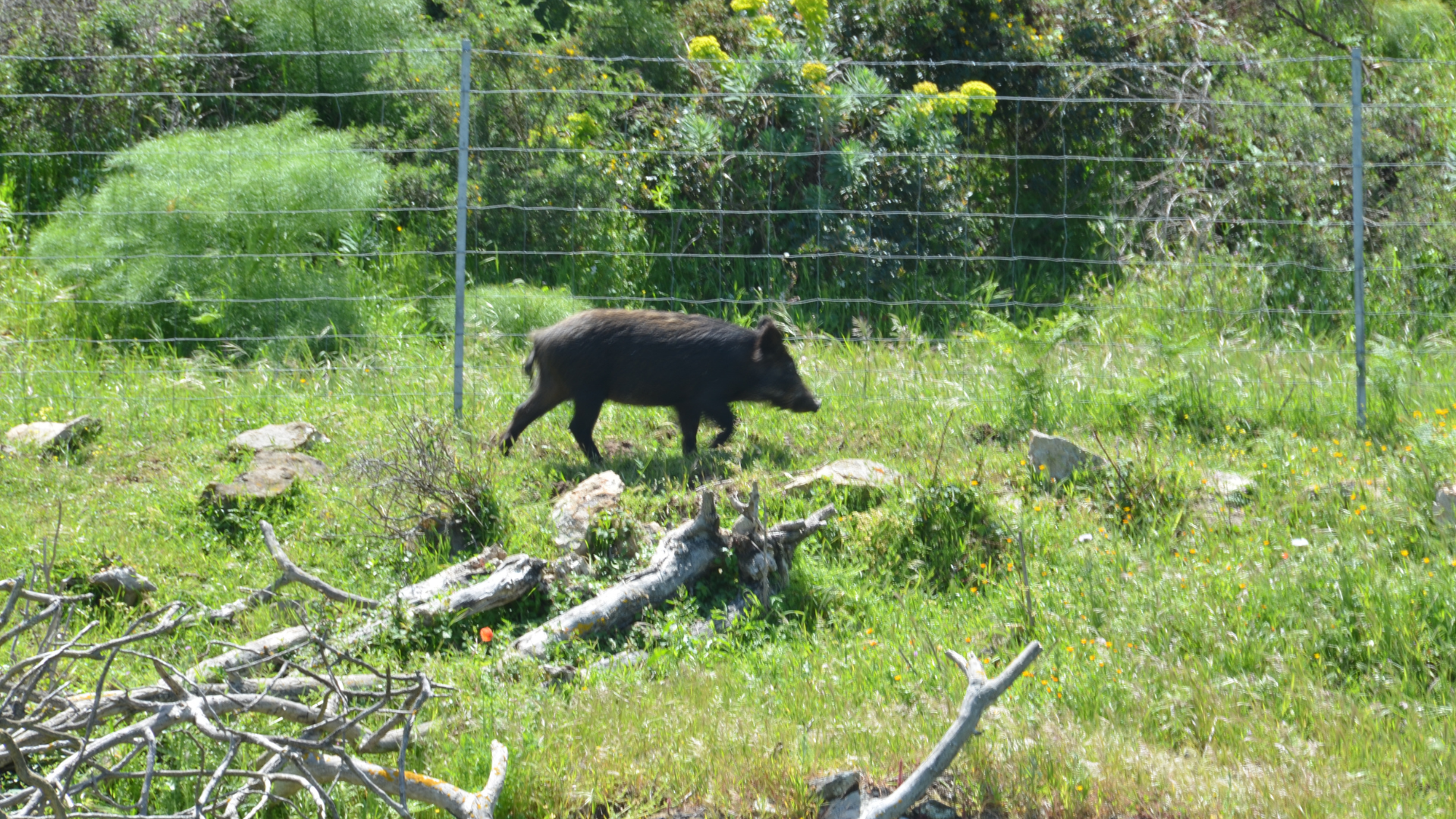
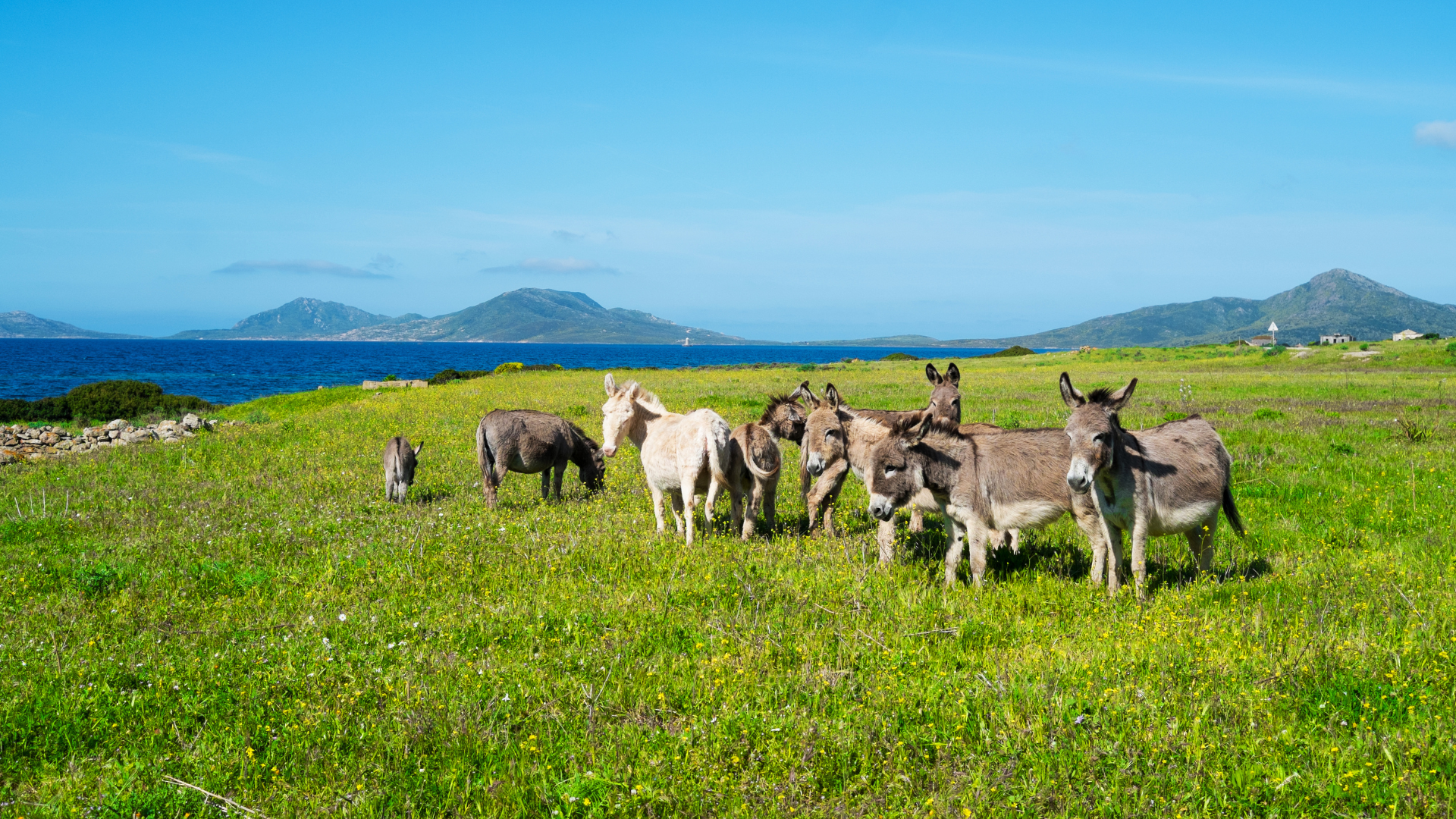
Let’s manage expectations before raising them.
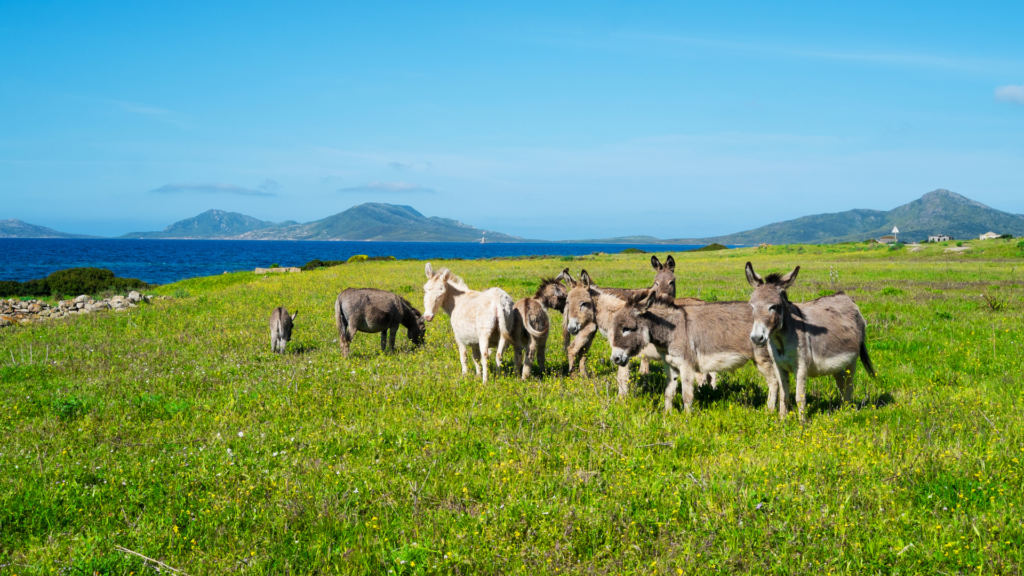
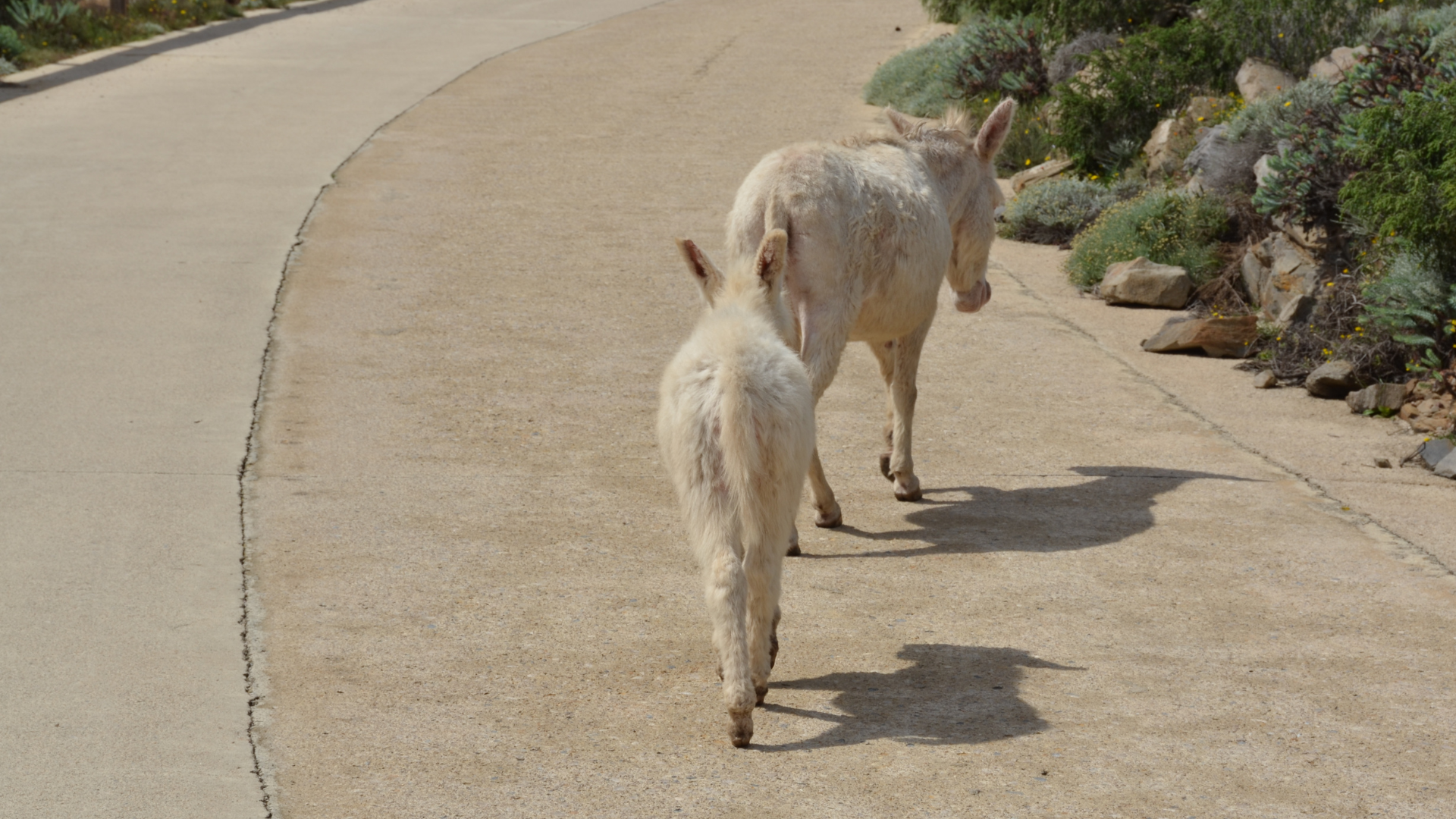
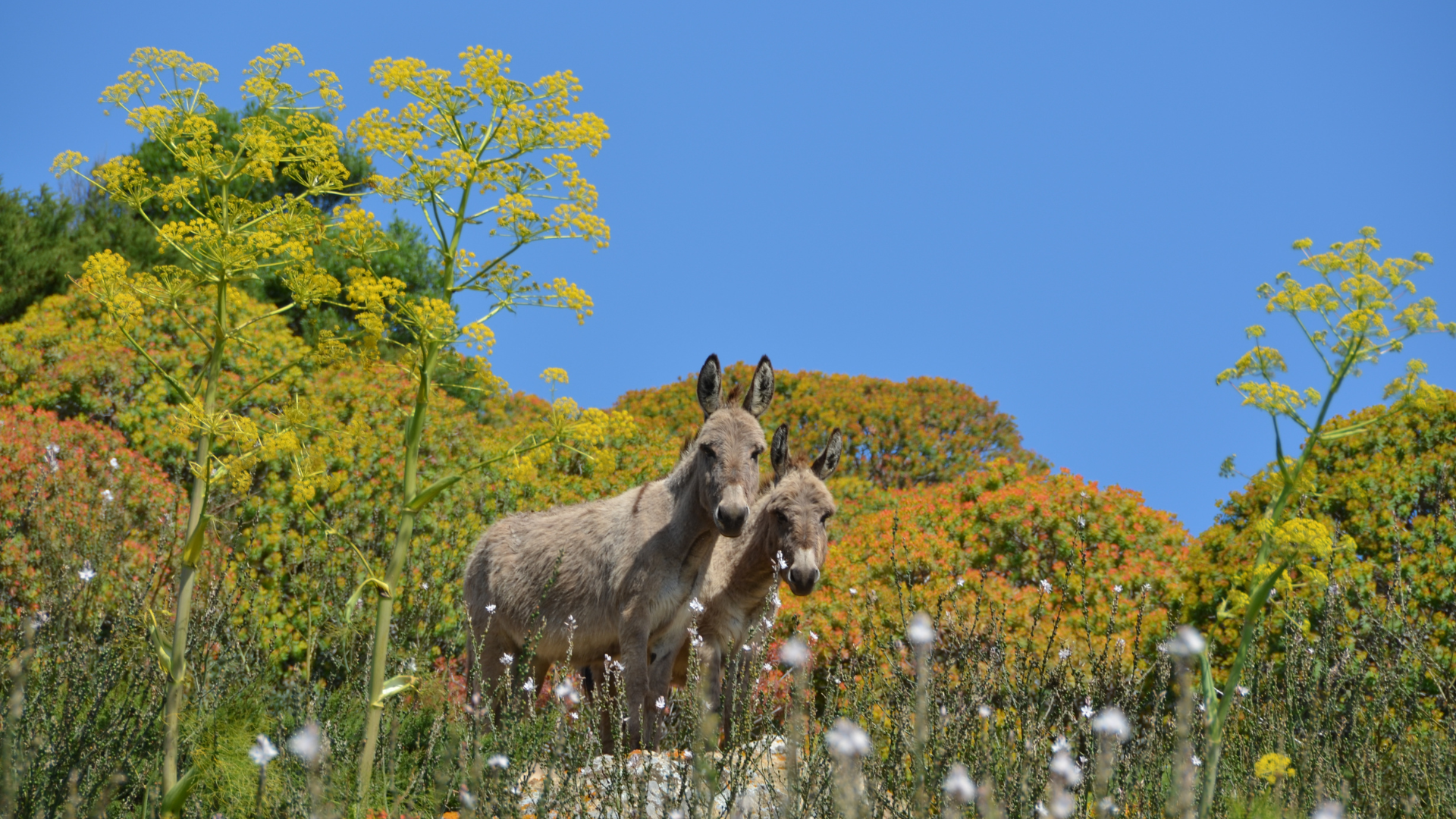
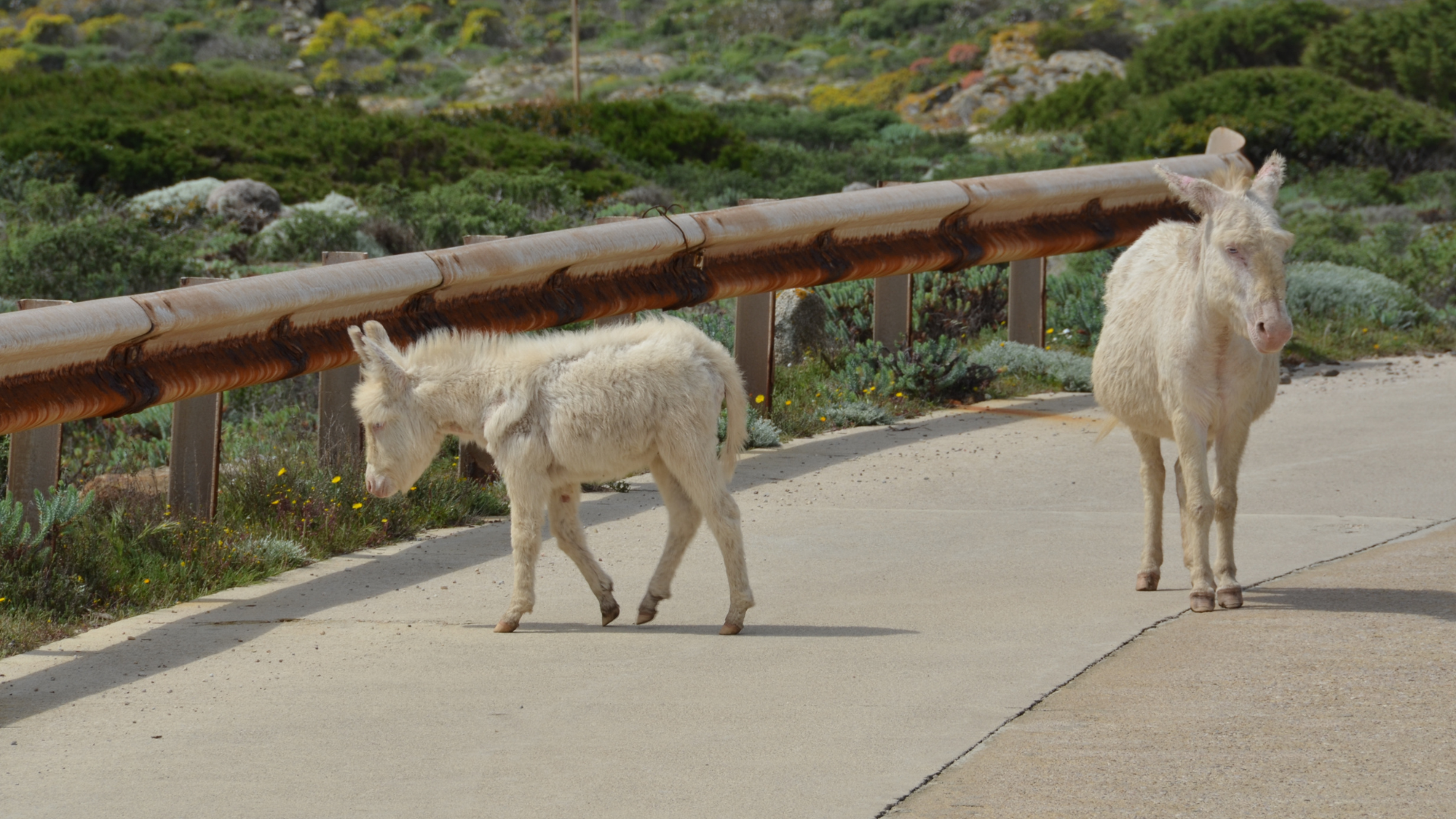
Albino donkeys – the island’s most famous residents – are genuinely here and genuinely visible. Over 120 of them live freely across the island under the care of the Sardinian Forest Authority. The best areas to encounter them are around the Trabuccato zone and along the White Donkey Trail. They are small, white-coated, and have the slightly pink eyes typical of albino animals. They are also, to put it plainly, quite used to people at this point, which makes approaching for photographs possible, but feeding or touching them is prohibited.
Mouflon are present but harder to see. These wild sheep with curved horns tend to stay in the higher, more remote interior sections. A Jeep tour into the island’s centre gives you the best chance of spotting them.
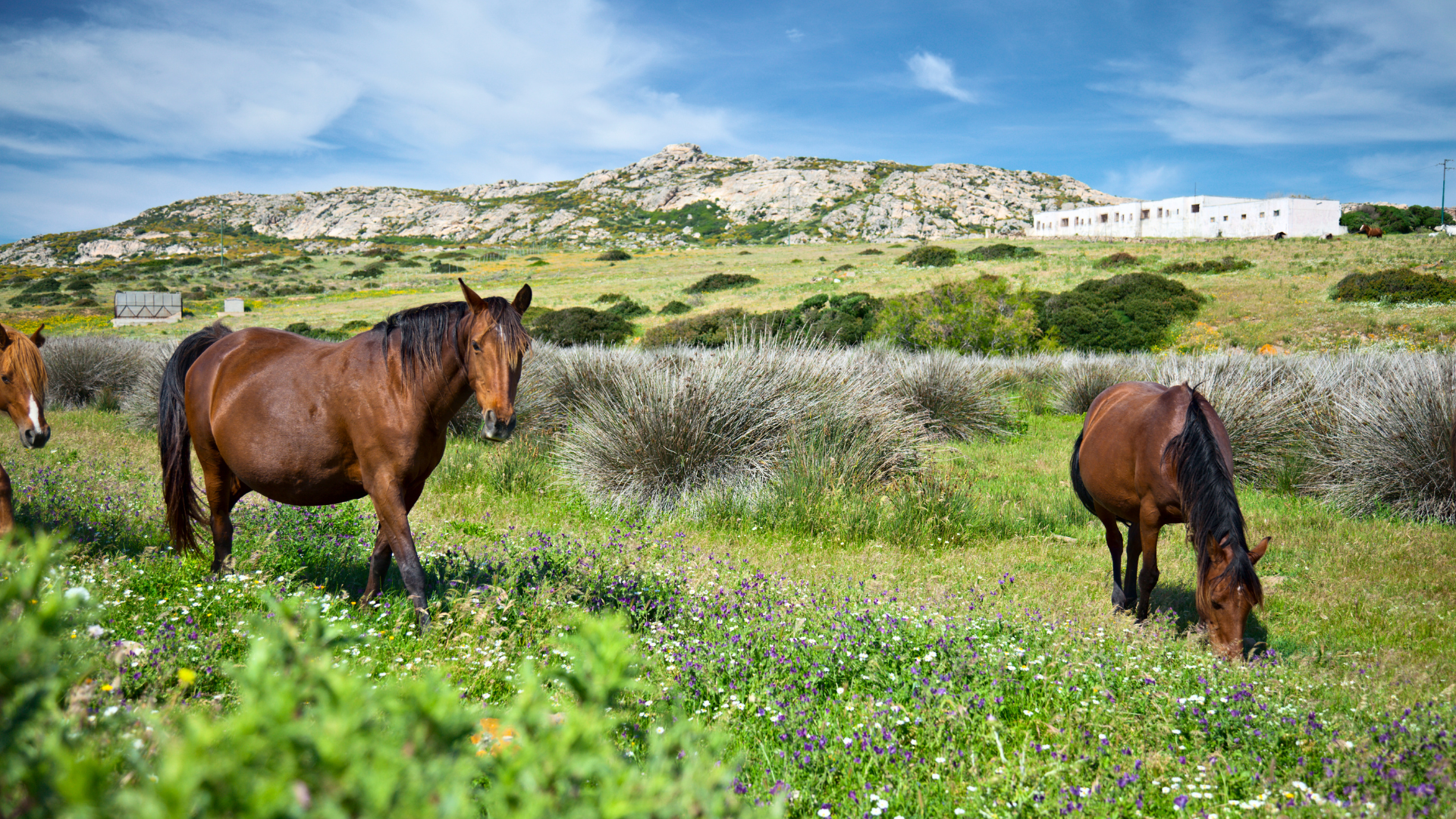
Wild horses graze in several areas, particularly in the central and southern parts of the island. They are descended from horses that were kept on the island during the prison period and were never removed.
Peregrine falcons nest on the cliffs of the western coast. During any boat tour along the western side, watch the cliff faces, particularly around Punta Scorno.
Dolphins are routinely seen during the boat crossing between Stintino and the island, and during any circumnavigation by sea. The waters around Asinara are part of the Pelagos Sanctuary for Mediterranean Marine Mammals, the largest marine protected area in the Mediterranean.
At Cala Reale, the Farmasinara shop sells cosmetics and products made using the island’s wild flora and donkey milk. It is the only place on the island to buy anything resembling a souvenir, and the donkey milk soap is genuinely distinctive.
For a broader overview of Sardinia’s most important protected natural areas, see our guide to Sardinia’s national parks and nature reserves.
Getting Around: Car Rental to Reach Stintino and Porto Torres
Once on Asinara, private cars are strictly banned. The only vehicles allowed on the island are those operated by authorised park services. On the mainland, however, a car is effectively essential for reaching the departure points.
Neither Stintino nor Porto Torres is served by public transport with frequency or timing suitable for an Asinara day trip. Stintino is a small village with limited bus connections, and the morning ferry and boat departure times do not align well with public transit schedules from Sassari or Alghero.
Alghero airport (Fertilia) is the closest airport to Stintino, approximately 50 kilometres away and about 45 minutes by car. Porto Torres is roughly 30 kilometres from Stintino.
Compare rental prices and book a car at:
For visitors staying further south and combining Asinara with a broader Sardinia itinerary, building a day in the northwest requires planning the driving route the day before.
Where to Sleep: On Asinara and Nearby
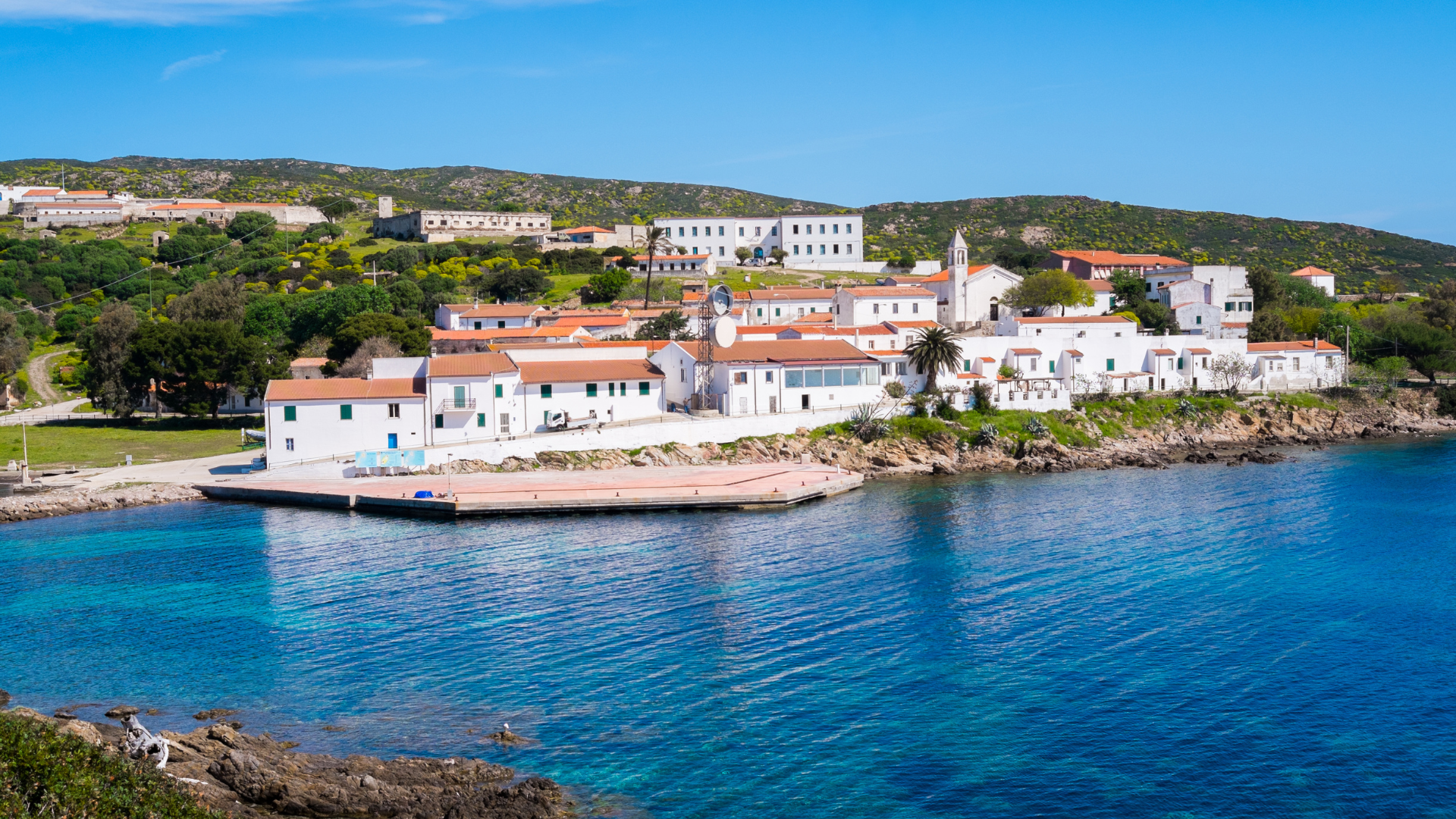
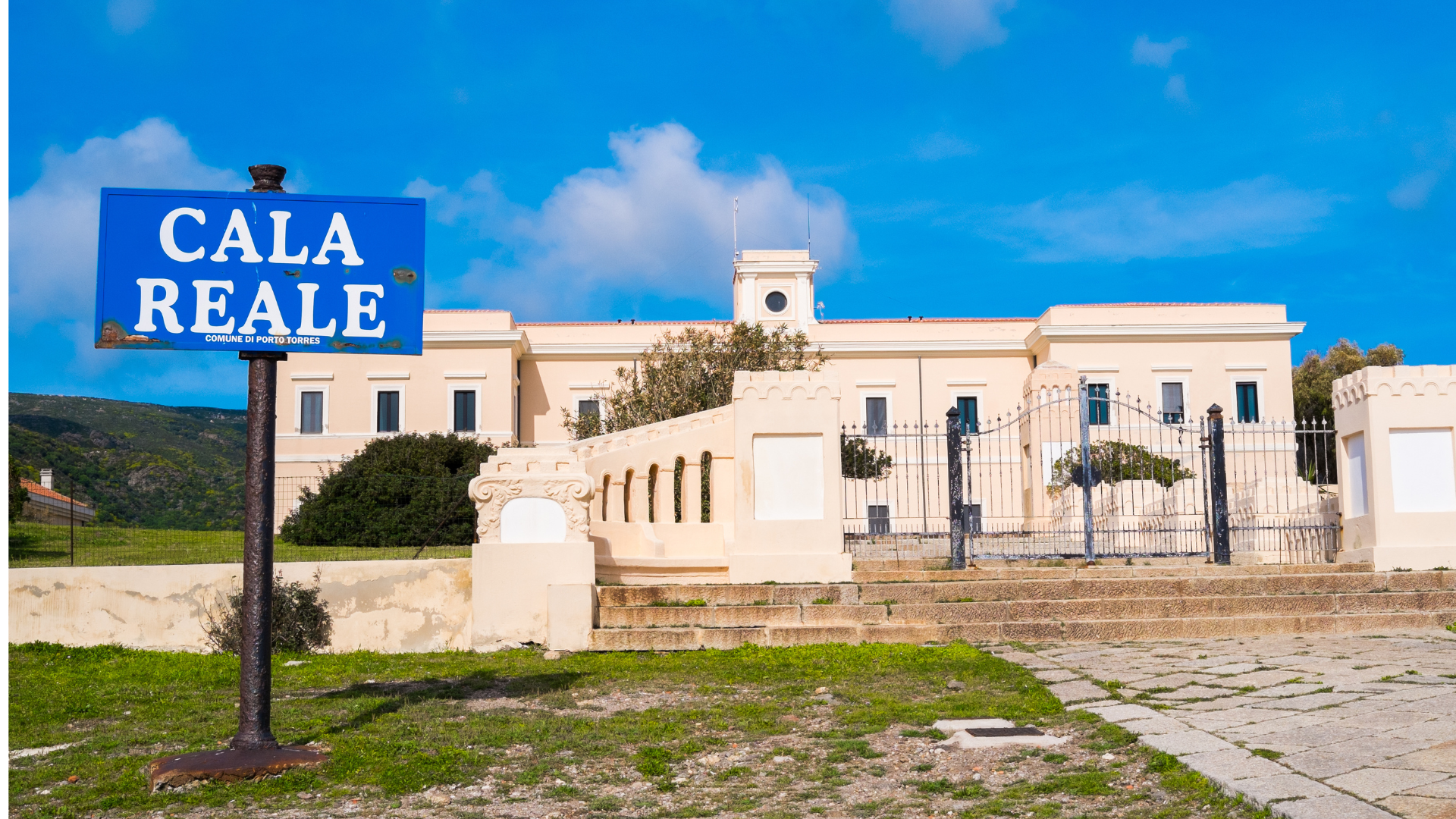
Sleeping directly on Asinara Island
Accommodation on the island is extremely limited by design – this is a national park, not a resort.
La Locanda del Parco is the premium option: a boutique guest house with six rooms, meals included, located within the park. It is the only comfortable hotel-style accommodation on the island. Staying overnight at La Locanda transforms the experience entirely. After the day-trippers leave, the island becomes almost completely silent – the only sounds are the wind, the sea, and the occasional bray of a donkey in the dark. The quality of light at sunrise on Asinara, seen with no crowd around you, is something that day-trippers simply never access. Bookings for La Locanda go through the park directly or authorised operators, and availability is limited, particularly in summer.
The hostel at Cala d’Oliva is the budget alternative: basic facilities with both private rooms and dormitories. It is functional, not comfortable, and suited to hikers and visitors who want an early start on the trails. Expect limited amenities and accept the limitations gratefully.
Staying in Stintino
Stintino is the most practical base for an Asinara day trip. Short crossing time, departure boats at every hour in summer, good restaurants, and access to La Pelosa beach for the afternoon after your return.
- Park Hotel Asinara (3 stars) – the most well-rounded option in Stintino. Sea views over the Gulf of Asinara, Sardinian-style rooms, a respected breakfast buffet, outdoor pool (open April to October), and a free shuttle to La Pelosa beach. About 10 minutes’ walk from the town centre. Popular with couples and families. Book on Booking.com or on Trip.com.
- Hotel Cala Reale – on the Asinara Bay waterfront, near the characteristic pier. Outdoor pool, tennis courts, children’s playground. Good for families who want proximity to the boat departures. Book on Booking.com.
- 103 Boutique Hotel Stintino – smaller and more central, 15 minutes by ferry from the national park, contemporary rooms, well-reviewed by couples. Book on Booking.com.
For a broader overview of accommodation choices across northern Sardinia, see where to stay in northern Sardinia.
Staying in Porto Torres
If your priority is the ferry departure and you are not fussed about a beach base, Porto Torres makes sense. It is a working port city with a direct ferry to Cala Reale, and it connects well to Sassari and the wider road network.
- Hotel Libyssonis – 5 minutes by car from the ferry port to Asinara, quiet location, free parking, standard 3-star comfort. A reliable and honest budget choice for the logistics-first traveller. Book on Booking.com.
The Local Perspective: What Sardinians Think About Asinara
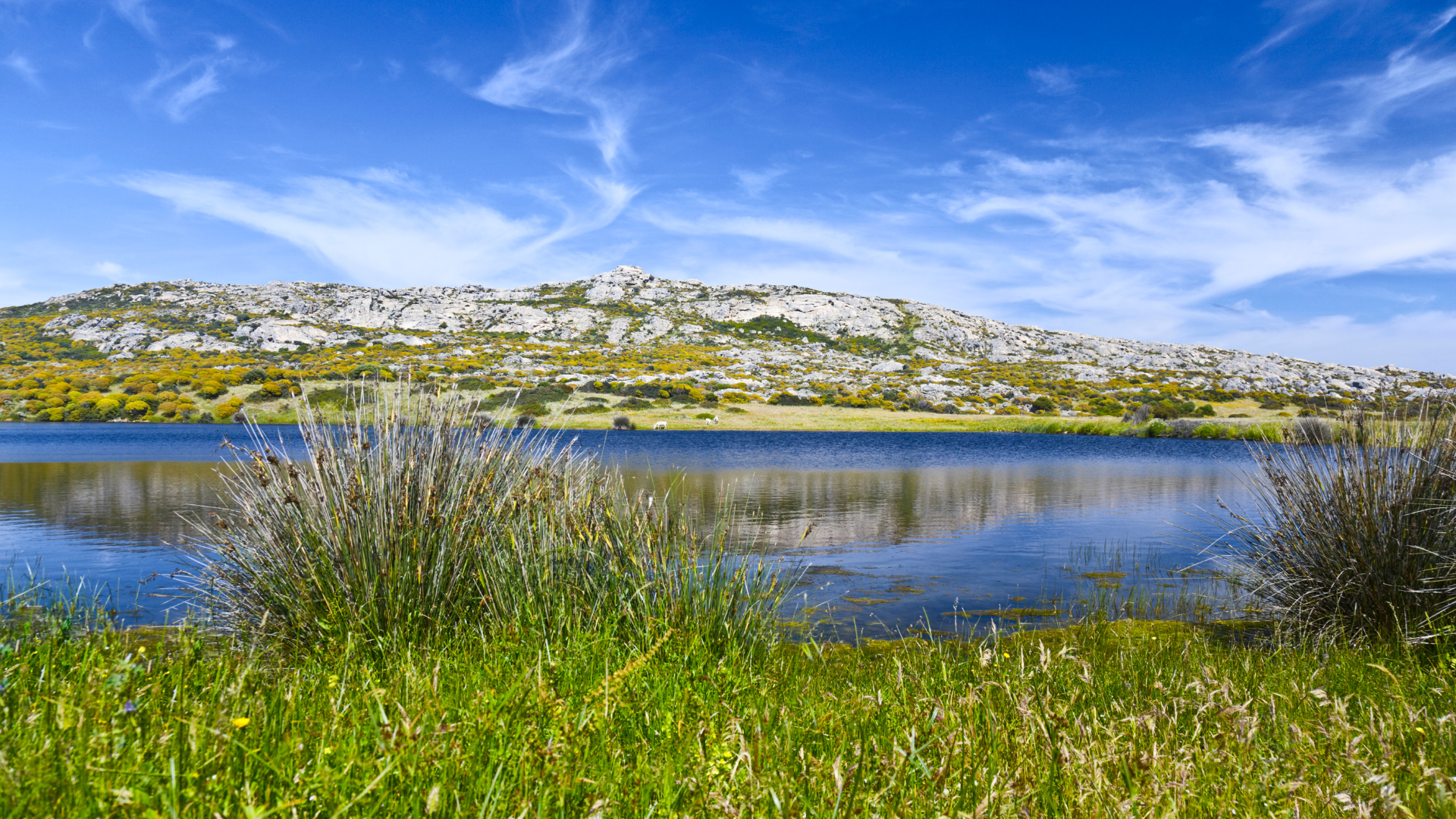
Geography and climate. Asinara sits directly in the Maestrale’s path. This is not background detail: the island’s entire character is shaped by its exposure to this northwest wind. The western coast is wild, rocky, and wave-beaten even in summer. The eastern coast is calmer and more protected. The interior heats up to levels that can be dangerous for unprepared hikers between late June and early September. Anyone who grew up in this part of Sardinia knows that the Maestrale can turn a flat sea into choppy, unsafe water within two hours. When operators say a crossing is cancelled for weather, they mean it, and pushing back on that decision helps nobody.
The Stintino connection and what it means. We Sardinians know the story of the 45 families. We know it because in many cases our own family histories intersect with it, or with the histories of people from Stintino whose grandparents or great-grandparents lived on that island before 1885.
Asinara is not simply a beautiful place. It is a place from which people were removed by force so the state could use it for purposes that suited the state. That the island is now a protected natural park is genuinely good. But the good outcome does not erase the original displacement. When you visit Stintino’s Tonnara Museum, or when a local guide explains the history at Cala d’Oliva, you are hearing a memory that has been passed down with intention. Pay attention to it.
The Falcone and Borsellino legacy. For Italians of a certain generation, and for many Sardinians who followed the Maxi Trial and its aftermath, the fact that this work was partly done on Asinara is not a tourism talking point. It is a piece of civic memory. F
alcone and Borsellino chose to work here because the island’s isolation, which had been its curse for over a century, became the condition that allowed them to do what they needed to do safely. Both were murdered by the Mafia within two months of each other in 1992. The house at Cala d’Oliva is not a museum. It is just a house. Standing outside it, knowing what it represents, is one of the quieter and more significant moments available on Asinara.
Practical Tips Before You Go
- Book your tour in advance, especially July and August. Popular catamaran and jeep tours sell out weeks ahead of peak dates.
- Landing fee: €5/person (June-September), €2.50/person (October-May). Bring cash. It is paid separately from any tour or ferry cost.
- No private cars are allowed on the island. If you have a rental car, park it in Stintino or Porto Torres.
- Mobile signal is minimal to non-existent on most of the island. Download offline maps and any information you need before boarding.
- Shade is rare outside of the scrub woodland areas. A hat, high-factor sunscreen, and at least 1.5 litres of water per person are not optional.
- The island has two small seasonal restaurants near the main beaches, but they operate limited hours and limited menus. Bring food if you are exploring independently for a full day.
- Bring sturdy footwear for any trail work. The paths are rocky, uneven, and not designed for flip-flops.
- Best times to visit: May, June, September, and October. In May the island is in full bloom, temperatures are mild, the trails are comfortable, and the sea is beginning to warm. September offers warm water and significantly fewer people.
- Check the Delcomar website the morning of a planned ferry departure for any cancellations due to sea conditions.
FAQ About Asinara Island
How do I get to Asinara Island?
By sea only. Options are the Delcomar ferry from Porto Torres (about 1 hour 15 min to Cala Reale), or boat tours and water taxis from Stintino (20-30 min crossing). There are no bridges, no airstrips, and no private car access.
Do I need a guide to visit Asinara?
Not for all areas. Some parts of the island are open to independent visitors who arrive by ferry. However, several beaches and zones (including Cala Sant’Andrea and most inland areas) require an authorised guide. If you want to see the island’s interior, a guided Jeep or e-bike tour is the practical option.
Where do the white donkeys of Asinara come from?
The precise origin is not definitively established. The most plausible hypothesis is that they are descended from grey Sardinian donkeys who developed an albino genetic trait over generations of island isolation. One popular legend suggests they were being transported from Egypt to France when their ship ran aground on the island; this is unverified. What is confirmed is that they have been on Asinara for at least two centuries and today number over 120, cared for by the Sardinian Forest Authority.
Can you stay overnight on Asinara Island?
Yes, but options are very limited. La Locanda del Parco is a six-room boutique guesthouse with meals included, bookable directly or through authorised park operators. A basic hostel at Cala d’Oliva serves budget travellers. Availability in both is tight in summer; book months in advance if this is important to you.
What is the best time of year to visit Asinara?
May to June and September to October. Spring offers flowering vegetation, mild hiking temperatures, and uncrowded conditions. Early autumn has warm sea water, lower visitor numbers, and the Maestrale is generally less intense than in spring. July and August are possible but demanding: intense heat inland, crowded boat tours, and the highest risk of a frustrating experience if the Maestrale intervenes.
How much does it cost to visit Asinara?
Budget a minimum of €50 to €100 per person for a day trip, depending on your choice. This includes: ferry or boat transfer, landing fee (€5 in summer), and a tour (half-day from ~€35-50, full-day catamaran from ~€85, Jeep tour from ~€70). If you are using the ferry and exploring independently, costs are lower but access to the interior is more limited.
Which beaches on Asinara can you actually swim at?
Cala Reale and Cala d’Oliva are open to independent visitors. Cala Sabina is accessible on foot via a 30-minute trail from Cala d’Oliva and is the best beach for swimming. Cala Sant’Andrea requires a guided visit and is only accessible with an authorised operator. Cala d’Arena and Cala Trabuccato are restricted for environmental protection reasons.
- What was the former use of Asinara Island?
For decades, it was a maximum-security prison. Today, it is an untouched paradise and one of the most important national parks in Italy. - How can I see the famous white donkeys?
They roam freely across the island. You can spot them by joining organized boat tours or taking the “trenino” (little train) once you arrive. - Can I stay overnight on Asinara?
Accommodation is very limited and managed by a local hostel. Most visitors prefer to stay in hotels in Stintino and visit for the day. - Is it possible to hike on the island?
Yes, there are several marked trails. It is a fantastic place for trekking in Northern Sardinia due to its unique flora and fauna.