Costa Smeralda is one of the most mythologised stretches of coastline in Europe, and that mythology gets in the way of planning a real trip.
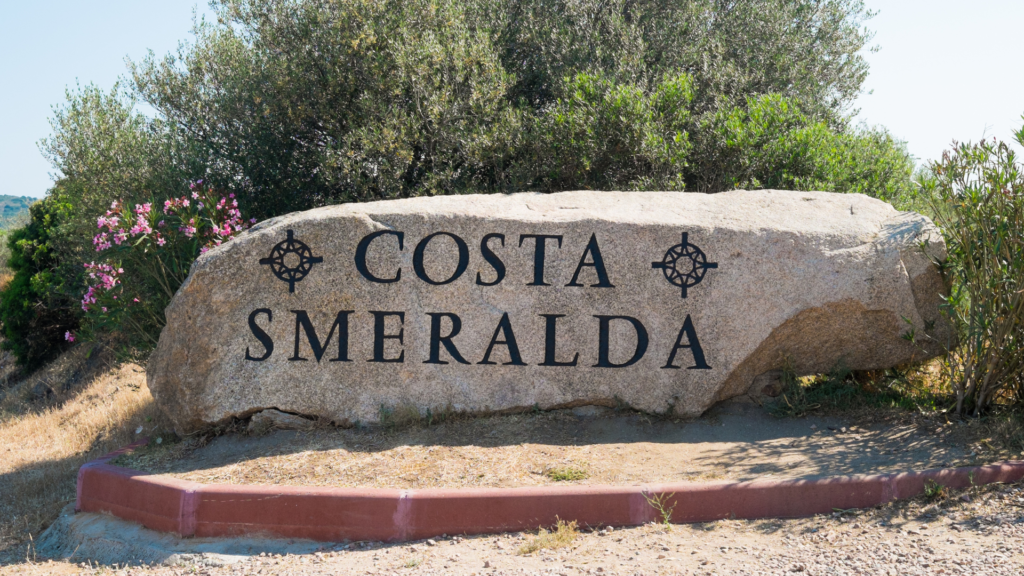
This guide cuts through the brochure image to give you a practical, honest picture of what the place actually is: how big it is, which towns are worth your time, what to do beyond lying on a beach, and when to come if you want beauty without chaos.
What is Costa Smeralda: size, history and the Aga Khan project
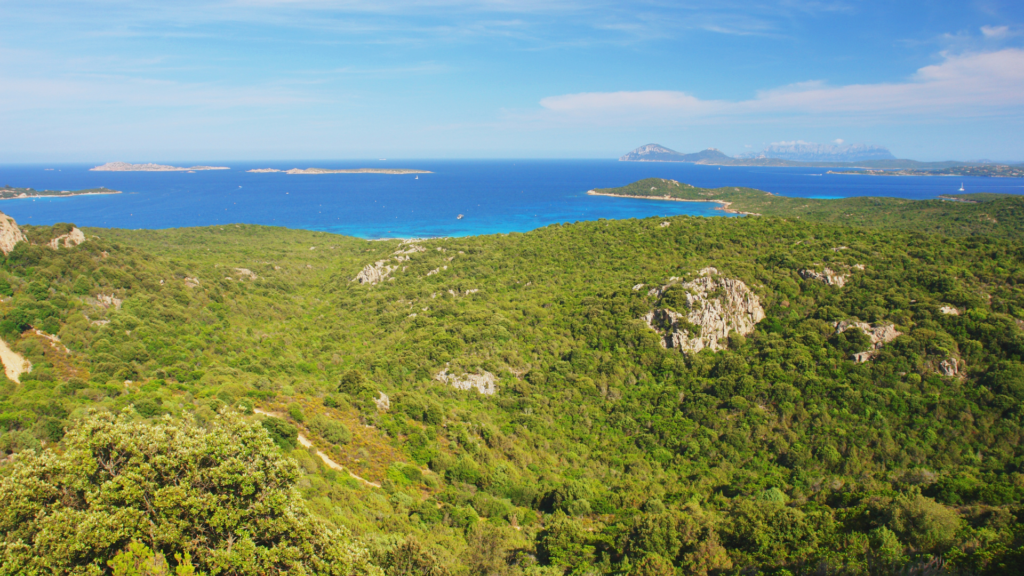
Costa Smeralda is a stretch of northeastern Sardinian coastline covering roughly 55 km of shoreline, running between the Gulf of Arzachena to the north and the Gulf of Cugnana to the south. It is not a city, not a region and not an administrative entity. It is a private development consortium area within the municipality of Arzachena.
The origin story is well documented. In 1962, Prince Karim Aga Khan IV, along with a group of investors and the architect Jacques Couelle, founded the Consorzio Costa Smeralda with the explicit goal of transforming a sparsely inhabited stretch of Gallura coastline into an international luxury destination. The name almost certainly does not come from the emerald colour of the water, as the popular legend suggests. It more likely honours Esmeralda, the daughter of one of the founding investors.
What makes the Consorzio historically significant is not the glamour it created, but the planning rules it imposed. No building can exceed the height of the surrounding vegetation. Architectural styles must follow a pseudo-Mediterranean aesthetic inspired by local Galluresi vernacular: white stucco, granite stonework, terracotta, no straight lines. There are no high-rises, no neon signs and no large commercial buildings in sight. This explains the coherent, almost stagey visual quality of Porto Cervo and Baja Sardinia. It looks unified because it was designed that way from the start.
The Consorzio still controls planning permissions within its perimeter today. This is not common knowledge among visitors, but it matters: it is why the Costa Smeralda has maintained its visual character across six decades of development, and why it looks so different from other mass-market coastal resorts in the Mediterranean.
The main towns and areas of Costa Smeralda
The Costa Smeralda is not a single resort. It is a collection of distinct towns and localities, each with a different character and a different practical proposition for visitors.
Porto Cervo
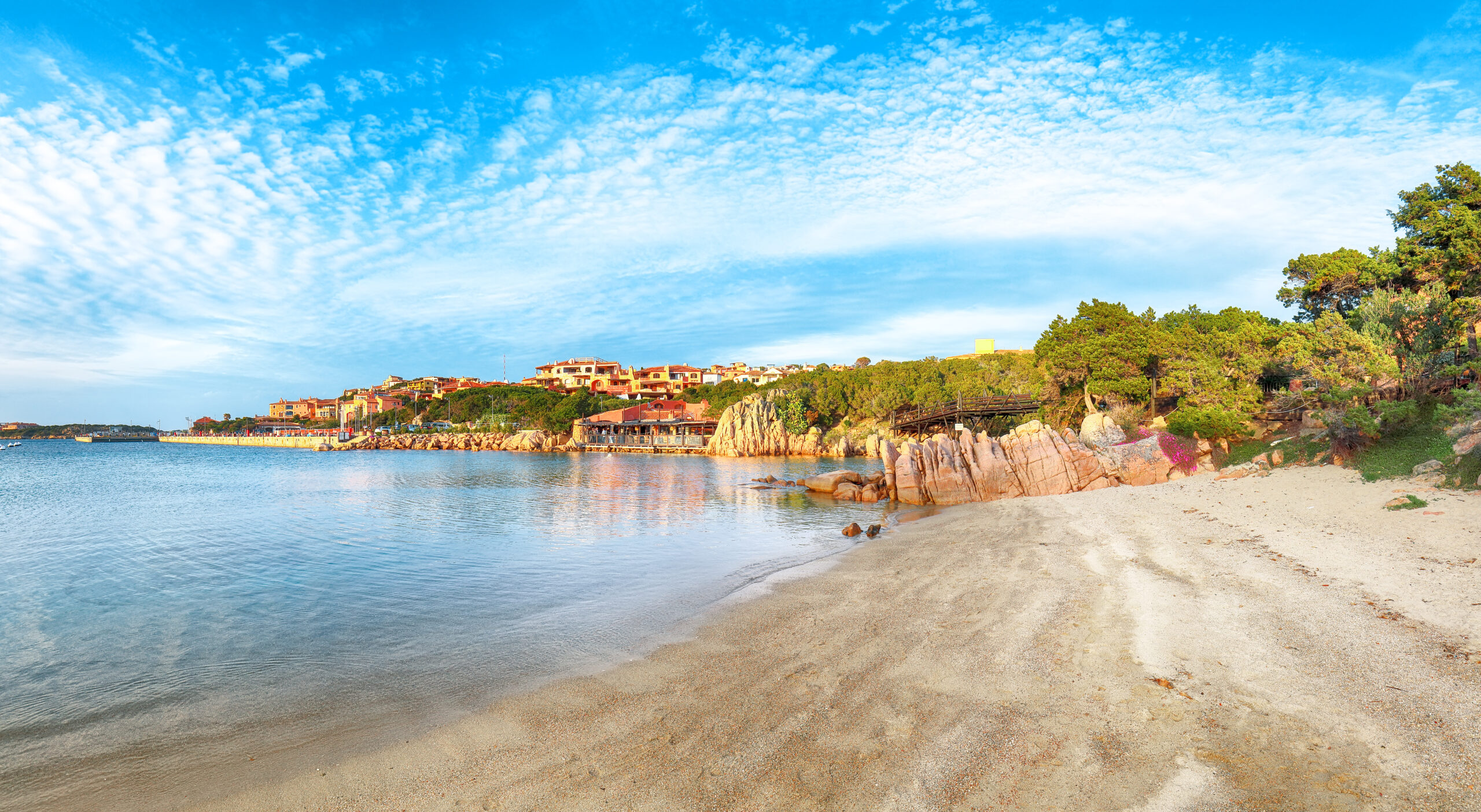
Porto Cervo is the undisputed hub and the place most people picture when they hear the name Costa Smeralda. The marina is one of the best-equipped in the Mediterranean, capable of accommodating mega-yachts, and in July and August it fills up completely. The Piazzetta, at the centre of the village, is a stone terrace lined with cafes and designer boutiques where the see-and-be-seen dynamic plays out every evening.
The architecture was designed by Michele Busiri Vici in the early 1960s to evoke a pan-Mediterranean village: arches, pastel stucco, narrow alleys, cobblestones. The Stella Maris Church, built into the hillside above the marina, contains a painting attributed to El Greco, donated to the church in the 1980s. It is not widely publicised but is genuinely worth a visit.
Two practical warnings. First: parking in Porto Cervo in August is genuinely difficult. The main lots fill up before 9am on peak days. If you are arriving from outside the area, plan to park in one of the larger lots on the periphery and walk in. Second: prices in Porto Cervo are on a different scale from the rest of Sardinia. A coffee at the Piazzetta is not a budget experience. This is not a complaint, just a calibration.
For a more detailed guide to Porto Cervo, see the Porto Cervo guide on sardiniabella.com.
Associated with Costa Smeralda but not in the Consorzio
Baja Sardinia
Baja Sardinia sits about 6 km north of Porto Cervo and has a considerably more relaxed atmosphere. The beach in front of the village is good, wide and reasonably accessible. The town itself has restaurants, bars and a few hotels at a slightly lower price point than Porto Cervo. It is also one of the main departure points for boat excursions to the La Maddalena Archipelago.
From Baja Sardinia you can see the Maddalena islands clearly on most days. The proximity to Palau, which is the main ferry terminal for La Maddalena, makes this a good base if boat trips are a priority.
Cannigione
Cannigione is the most authentically Sardinian town in the Costa Smeralda perimeter. It has a small fishing harbour, a local market, supermarkets, and seafood restaurants that are actually affordable. In high season it fills with Italian families and sailing enthusiasts rather than the international jet set. This is not a negative.
The town sits on the Gulf of Arzachena, which is sheltered and calm, and its marina serves as a departure point for La Maddalena ferries operated by private tour companies. If you want to experience the Costa Smeralda area without paying Porto Cervo prices for everything, Cannigione is a sensible base.
San Pantaleo
San Pantaleo is an inland granite village about 15 km from Porto Cervo, set among the characteristic rounded rock formations of Gallura. It has a weekly market on Thursdays that draws artisans and crafts sellers from across the region, and a small but characterful main square.
The village was used as a filming location for The Spy Who Loved Me (1977) because of its striking combination of old stone architecture and dramatic granite landscape. It is genuinely different from the coastal resorts: quieter, cooler in summer, and a useful reminder that the Costa Smeralda is not simply a beach club with infrastructure attached.
Poltu Quatu
Geographically and thematically close, officially not on the Costa Smeralda consortium. Discover the secluded beauty of Poltu Quatu, a village celebrated for its picturesque landscapes and quiet sophistication. Off the beaten path, it provides a peaceful haven with its secluded coves and calm marina, ideal for visitors looking to unwind in a more intimate setting.
Best beaches in Costa Smeralda
The beaches in this stretch of coast are genuinely among the best in Sardinia, and among the best in the Mediterranean. Here are the most relevant ones with practical notes.
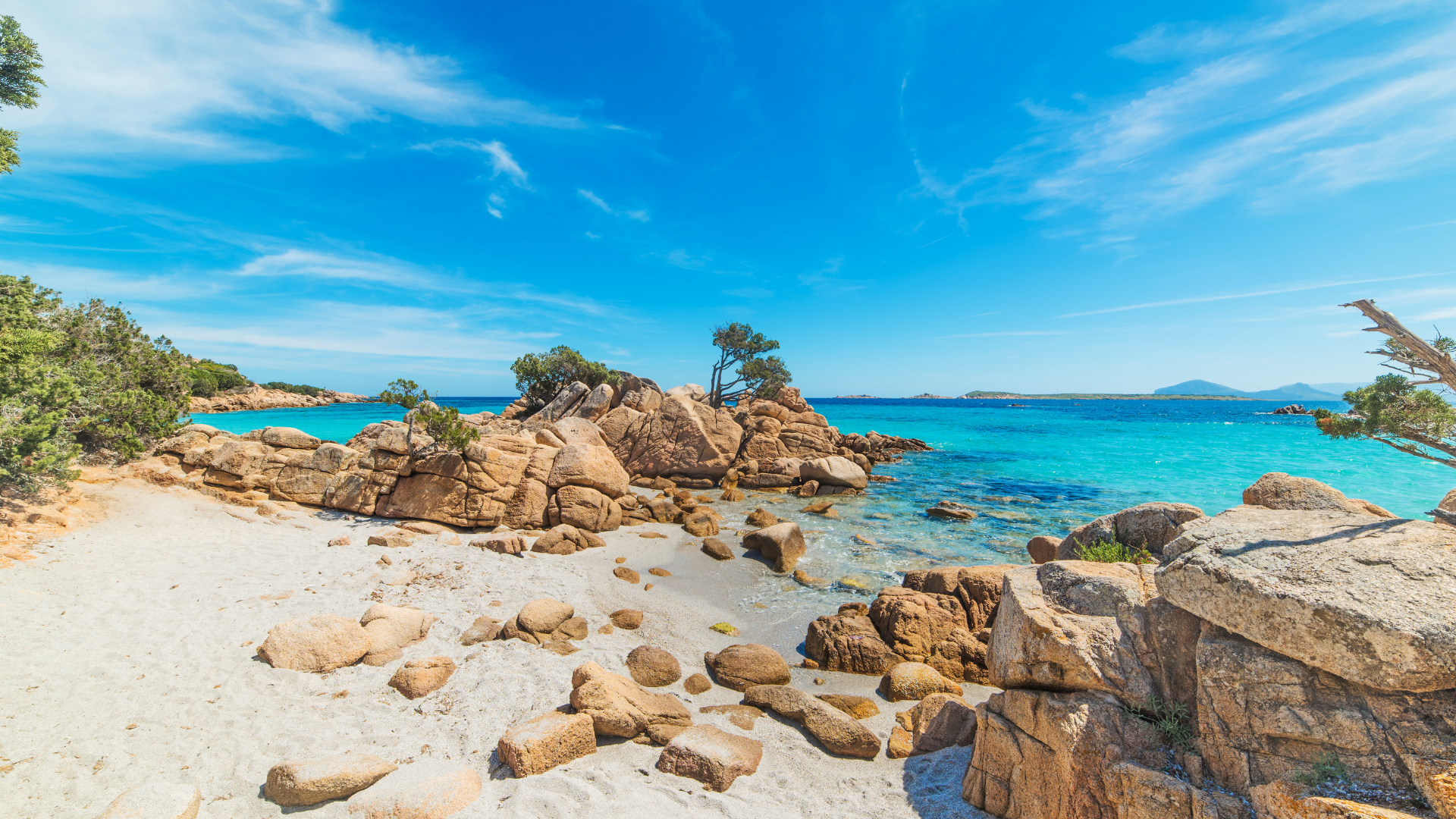
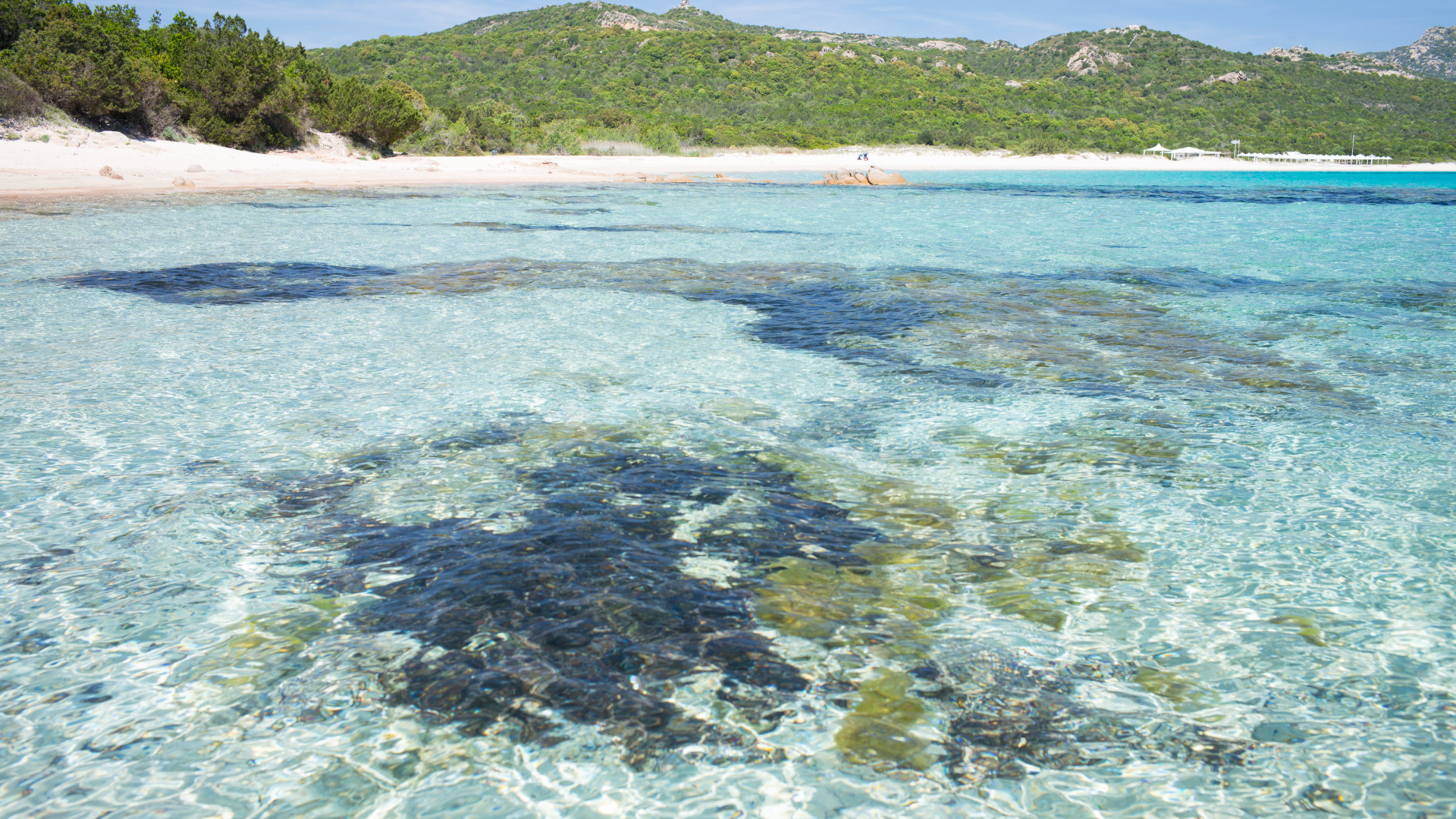
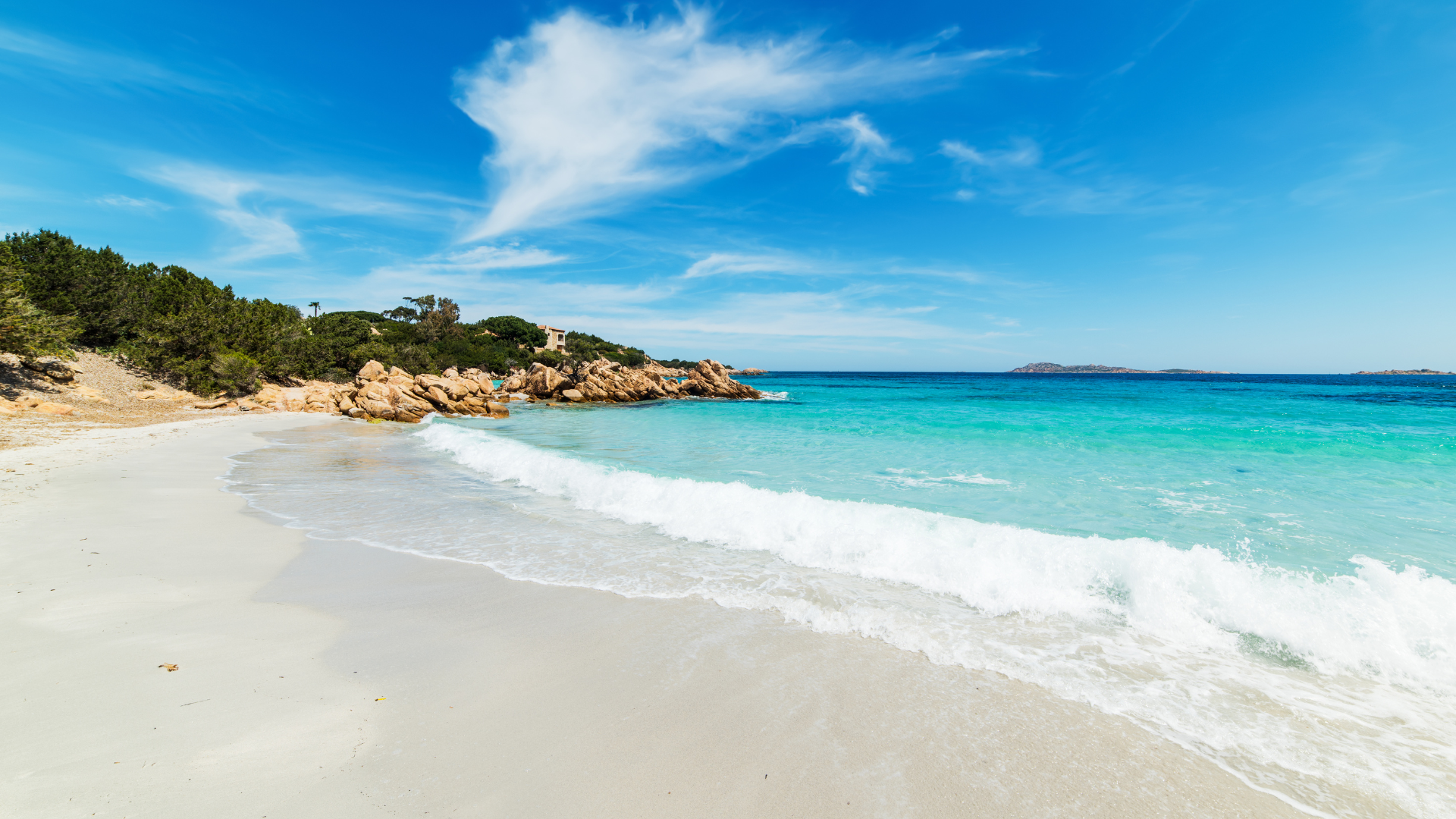
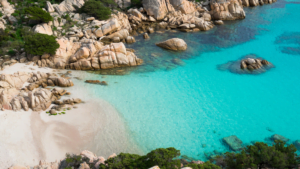
Capriccioli is one of the most photogenic and most accessible beaches in the area. It is formed by several small coves separated by granite rocks and Mediterranean scrub, and the sea floor has a mix of sand and rock that makes it excellent for snorkelling. Parking is available but limited: in August it fills by 8.30am. For a detailed guide: Capriccioli guide on sardiniabella.com.
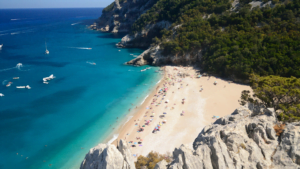
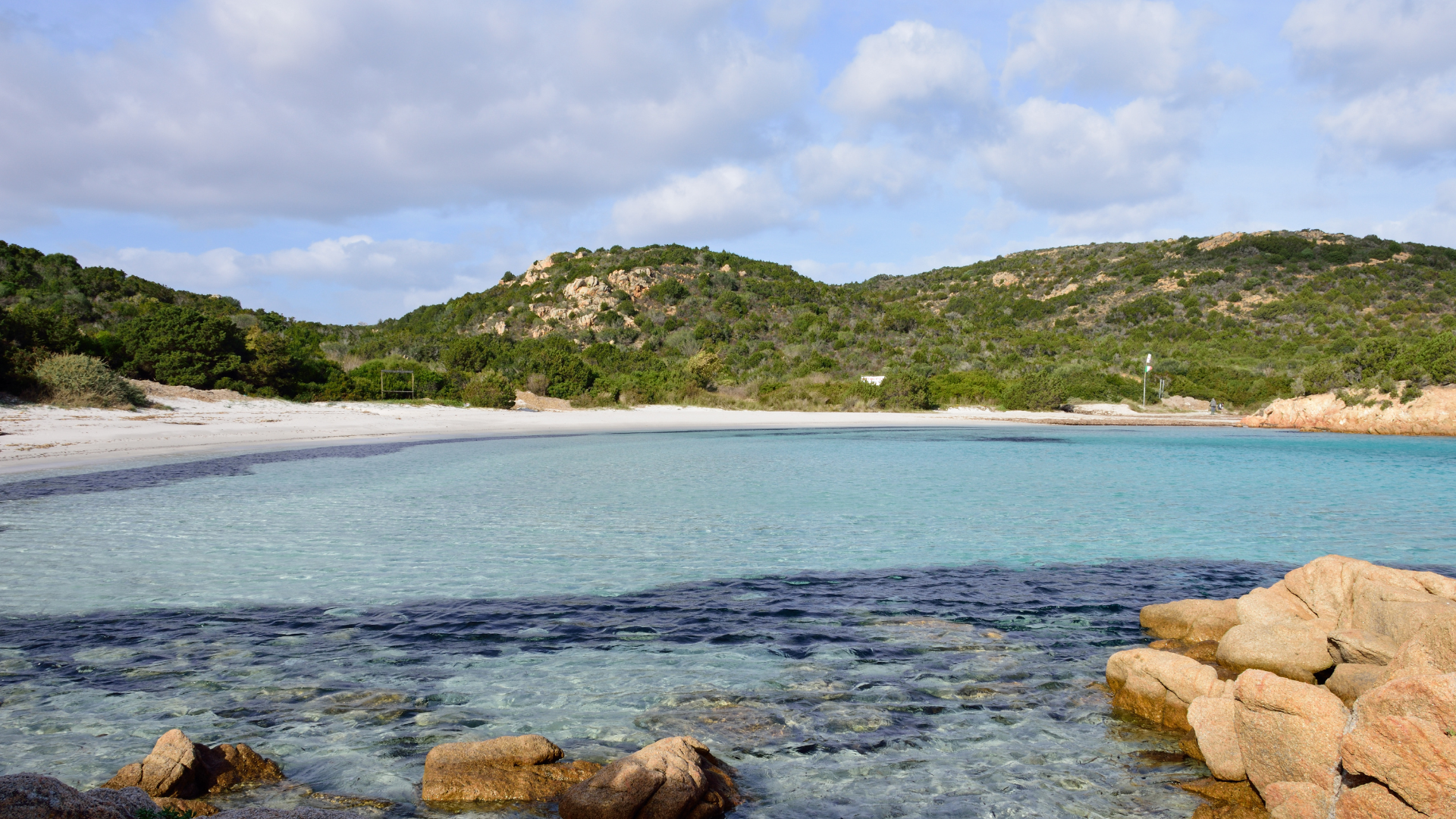
Spiaggia del Principe is widely considered one of the finest beaches in Sardinia, a crescent of very fine white sand enclosed by granite headlands. It owes its name to Aga Khan IV, who reportedly used it as his personal beach. Access requires a 10-15 minute walk from the parking area. In high season the walk itself can be crowded. Worth it regardless. See also the Spiaggia del Principe guide.
Cala di Volpe is the bay in front of the famous hotel of the same name. The water is deep blue, the setting is dramatic, and the beach itself is smaller than you expect from the photographs. Not the most accessible beach for independent visitors, but stunning to look at from a boat. Detailed guide: Cala di Volpe on sardiniabella.com.
Liscia Ruja is a long, wide beach with consistent sand and a beach club. It is more family-friendly than some of the smaller coves and has better parking infrastructure.
Celvia (also called Grande Pevero) is a wide sandy beach near Porto Cervo with relatively good accessibility and a beach bar.
For the broader picture of Sardinia’s top beaches :Top beaches in Sardinia by a local.
Things to do in Costa Smeralda: top activities
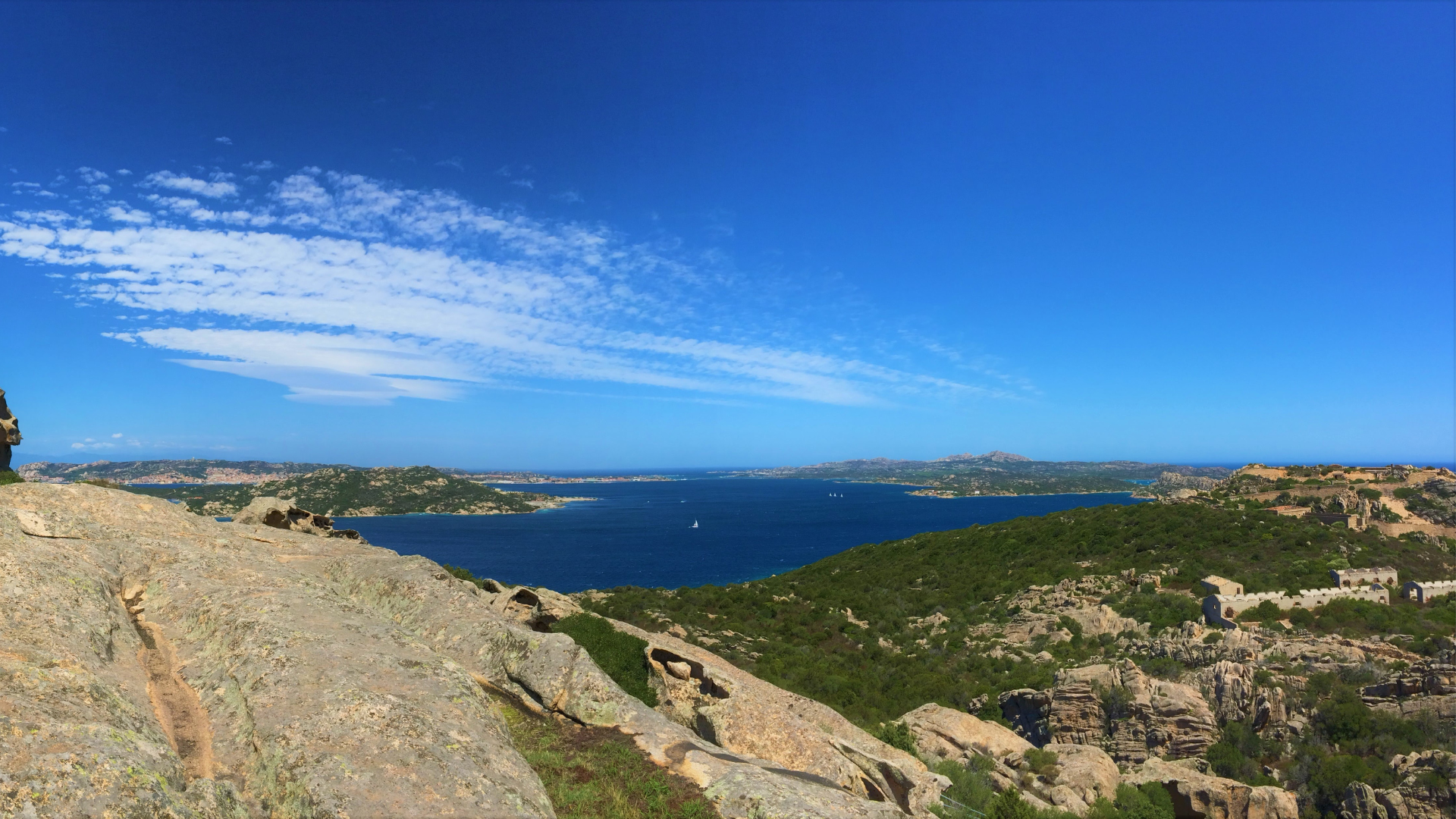
Small Group Costa Smeralda Tour: Porto Cervo and San Pantaleo
A guided small-group half-day tour departing from Olbia that covers Porto Cervo, Baja Sardinia and San Pantaleo village. Highly rated (4.9 on Viator, 471 reviews as of early 2026), and the most practical option for visitors arriving by cruise ship or without a car. Duration is approximately 5.5 hours.
Book the Small Group Costa Smeralda Tour on Viator
Costa Smeralda and Porto Cervo Tour with pickup from Olbia
A half-day tour covering the panoramic coastal road, Porto Cervo’s historic centre and Baja Sardinia, with pickup directly from your accommodation in Olbia. A good introduction to the area if you want orientation before exploring independently.
Book the Costa Smeralda and Porto Cervo Tour on Viator
La Maddalena Archipelago Boat Tour with Minibus Transfer from Olbia
One of the most booked excursions in the entire area. Full-day boat tour departing from Cannigione, covering the islands of La Maddalena, Spargi and Santa Maria, with swim stops in crystal-clear water, a guided visit to La Maddalena town, and pasta lunch included. Minibus transfer from Olbia provided.
Book the La Maddalena Boat Tour on GetYourGuide
Full-Day La Maddalena Boat Trip from Cannigione or Baja Sardinia
An alternative departure for the same archipelago if you are already staying in the Costa Smeralda area. Departures from Laconia, Cannigione or Baja Sardinia, stopping at Budelli’s Pink Beach, La Maddalena town, and Cala Corsara. Lunch on board.
Book the La Maddalena Boat Trip from Cannigione on Viator
Palau: Full-Day La Maddalena and Caprera Islands Guided Tour
A small-group guided excursion by minivan and ferry from Palau, covering both La Maddalena and the island of Caprera, where Garibaldi lived out his last years. Combines sea and land exploration. Good for those who want history alongside the beaches.
Book the La Maddalena and Caprera Tour on GetYourGuide
Gallura Winery Guided Tour with Tasting from Olbia
The Gallura region is one of the only areas in Sardinia where Vermentino di Gallura DOCG is produced, the island’s only wine with Controlled and Guaranteed Denomination of Origin status. This guided winery tour near Olbia includes a tasting of three to seven wines (Vermentino, Cannonau, and other local labels) paired with Sardinian cheeses and cured meats. Duration is about two hours. An excellent way to understand what makes Gallura wines distinctive without driving yourself through narrow country roads.
Book the Gallura Winery Tour on GetYourGuide
Sardinian Winery and Tasting from Olbia
A similar experience with pickup from your Olbia accommodation, visiting a family-run winery in the Cugnana valley. The tasting includes Vermentino, Cannonau and Millesimato paired with local cheeses and cold cuts, led by the vineyard manager.
Book the Sardinian Winery Tour on Viator
Getting around: car rental in Costa Smeralda
A car is essentially non-negotiable for exploring the Costa Smeralda area independently. There is no public bus service connecting Porto Cervo, Baja Sardinia, Capriccioli, Cannigione and the inland towns. The distances are not enormous, but they are not walkable either: Porto Cervo to Cannigione is about 12 km by road, and Porto Cervo to Capriccioli is about 4 km, but on a single-lane coastal road with no pavement.
The nearest airport is Olbia Costa Smeralda (OLB), about 30 km from Porto Cervo. Car rental desks are available directly at the airport.
You can compare prices and book directly here:
One genuine local note: in August, the SP59 coastal road between Cannigione and Porto Cervo and the access road to Capriccioli beach are routinely backed up from 9am onwards. If you are arriving at a popular beach in high season, plan to be there before 9am or after 5pm, or accept the queue as part of the experience.
Where to sleep in Costa Smeralda
Accommodation in the Costa Smeralda area spans an enormous price range, from some of the most expensive hotel rooms in Europe to genuinely affordable options in Cannigione and Arzachena. The five-star icons (Hotel Cala di Volpe, Hotel Pitrizza, Romazzino Belmond) are well documented elsewhere. Below are options across different budgets.
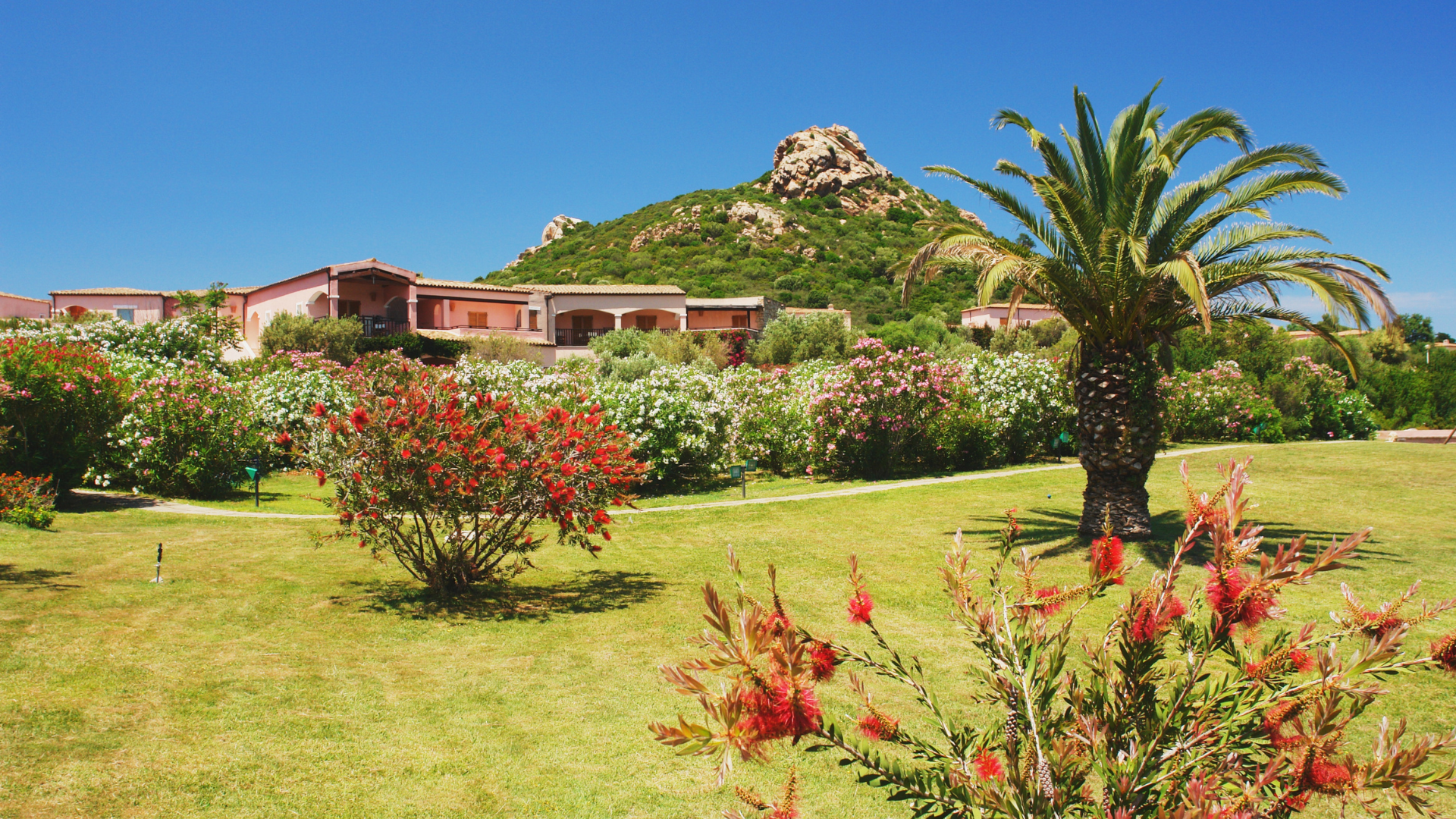
Cervo Hotel, Costa Smeralda Resort – Porto Cervo, panoramic views over the bay, private beach, wellness centre and outdoor pool. One of the most established mid-to-upper range options in Porto Cervo proper, with rooms in a Sardinian decorative style.Book Cervo Hotel on Booking.com
Moma Hotel Cannigione – Located in Cannigione, rated for excellent sea views and well reviewed for its breakfast. A much more accessible price point than the Porto Cervo resorts, with easy access to the harbour and La Maddalena boat departures. Book Moma Hotel on Booking.com
Hotel Airone, Cannigione – A four-star property set in a large Mediterranean park overlooking the Gulf of Cannigione, with a private beach and pool. Positioned as a relaxed, family-friendly alternative to the more glamorous Porto Cervo options.Search Hotel Airone on Booking.com
Cascioni Eco Retreat, Arzachena – A five-star agriturismo a short drive from the coast, surrounded by olive groves. Activities include kayaking, birdwatching and cookery classes. A genuinely different proposition from the beachfront resorts, and worth considering for those who want more than a beach holiday.Search Cascioni Eco Retreat on Booking.com
For a broader guide to accommodation in northern Sardinia, including options outside the Consorzio perimeter: Where to stay in northern Sardinia.
The local perspective: what Sardinians think
Those of us who have grown up in Sardinia have a fairly clear-eyed view of the Costa Smeralda, one that is different from both the reverence of international travel media and the occasional resentment of those who feel the area belongs to everyone except Sardinians. Here is an honest assessment built on verifiable facts.
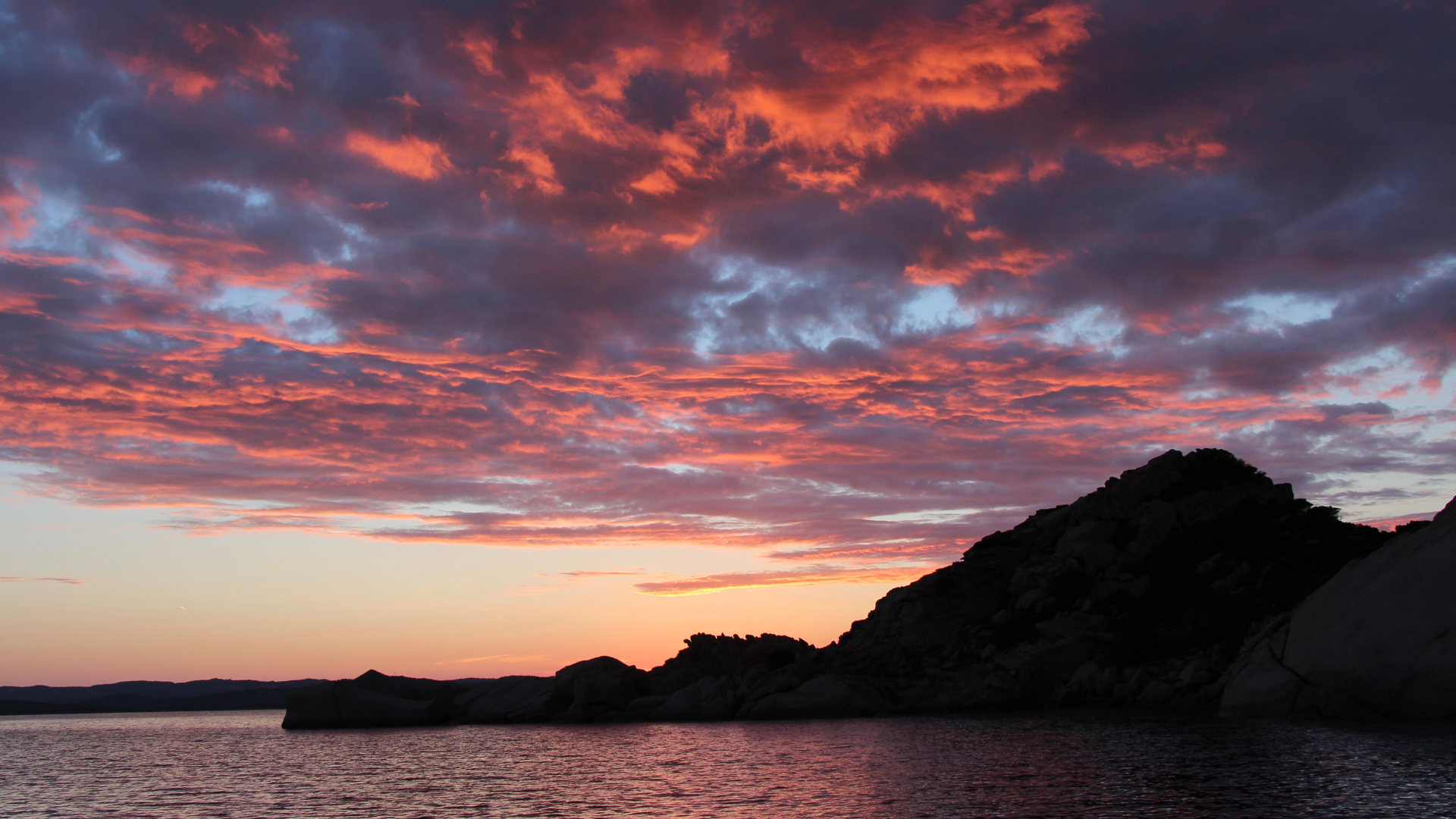
Geography and climate. The Costa Smeralda is exposed to the Maestrale, the northwest wind that blows across Sardinia with considerable force, particularly between May and September. This wind is one of the reasons the water is so clean and clear: it keeps the sea oxygenated and prevents the stagnation that affects more sheltered bays. But it also means that sea conditions along the exposed northern and western beaches of the area can be rough even in summer, with strong gusts and chop that make small boat excursions uncomfortable and some beaches effectively unusable for swimming on bad days.
The brochure photographs are all taken on calm days. Baja Sardinia and the northern stretch of the coast get more wind exposure than the more sheltered coves like Capriccioli and Liscia Ruja. If you are planning a sailing or boat trip, check the Maestrale forecast before booking.
Logistics in August. What the travel industry describes as “peak season glamour” on the Costa Smeralda, those of us who live within driving distance would call gridlock.
In August, the SP59 coastal road between Porto Cervo and Cannigione is backed up for several kilometres on most mornings. The access road to Capriccioli and the surrounding beach parking areas fill completely before 9am. Porto Cervo itself has very limited parking, and the lots that exist cost several euros per hour. This is not a reason to avoid the area in August, but it is a reason to plan very differently than you would in June or September.
The water temperature in September is virtually identical to August, the beaches are significantly less crowded, and the prices at restaurants and accommodation drop noticeably. June is an excellent month: the landscape is still green, the sea has warmed enough for comfortable swimming, and the social scene is active without the full-summer pressure.
The Consorzio and what it means in practice. The Consorzio Costa Smeralda’s building regulations have protected the visual landscape of the area for over sixty years. This is a genuine achievement. It also means that within the Consorzio perimeter, you are in a managed private environment where aesthetic coherence was always the primary goal.
The towns look like they do because they were designed to look that way. This is not inherently a problem, but it is worth understanding that Porto Cervo is not an organically evolved Sardinian village. It is a designed resort that borrows from Sardinian and broader Mediterranean aesthetics. If you want to experience how Sardinians actually live in this part of the island, Cannigione, Arzachena and San Pantaleo are considerably more revealing than Porto Cervo’s Piazzetta.
How to Get There
By Air:
- Olbia Costa Smeralda Airport: The main gateway for visitors to Costa Smeralda, offering numerous domestic and international flights. It’s conveniently located just 30 minutes from Porto Cervo and other major attractions in the region.
By Sea:
- Ferry Services: Regular ferry services connect Sardinia with mainland Italy, docking at Olbia and Golfo Aranci. These ports are well-connected to various parts of the island, including Costa Smeralda.
- Yacht: For a more luxurious arrival, consider chartering a yacht to dock at one of the exclusive marinas in Porto Cervo or Porto Rotondo.
By Road:
- Driving Directions: Costa Smeralda is accessible by car from major cities on the island. From Olbia, it’s (usually) a short drive on the SS125 to reach the heart of Costa Smeralda. The scenic drive offers beautiful views of the Sardinian landscape.
FAQ about Costa Smeralda
What is Costa Smeralda in Sardinia?
Costa Smeralda is a stretch of coastline in northeastern Sardinia, in the Gallura region, developed as a luxury resort destination from 1962 onwards by a consortium led by Prince Karim Aga Khan IV. It includes a series of towns and beaches between the Gulf of Arzachena and the Gulf of Cugnana, all governed by strict building and architectural regulations managed by the Consorzio Costa Smeralda.
How big is Costa Smeralda?
The Costa Smeralda covers approximately 55 km of coastline within the municipality of Arzachena. It is a compact area: driving from the northernmost point near Baja Sardinia to the southern edge near Porto Rotondo takes about 30 minutes without traffic.
When is the best time to visit Costa Smeralda?
June and September offer the best combination of good weather, warm sea and manageable crowds. July is busy and expensive; August is the peak of both the season and the logistical difficulty, with roads, beaches and restaurants at maximum capacity. May is beautiful but the sea is still cool for most people. October sees the area largely close down, with many hotels and restaurants shutting by mid-month.
Is Costa Smeralda only for wealthy travellers?
No, though the reputation suggests otherwise. Porto Cervo is genuinely expensive across the board. Cannigione, Arzachena and San Pantaleo are not. Accommodation in these towns covers a wide range of budgets. The beaches themselves are free and public. A week in the area staying in Cannigione, eating at local restaurants and renting a car costs very little more than a comparable week at any other Sardinian resort. The beaches are identical.
Do you need a car in Costa Smeralda?
Yes, in practice. There is no reliable public transport linking the beaches, towns and interior villages within the area. A rental car from Olbia airport is the standard approach, and is essential if you want to visit more than one or two locations during your stay.
How far is Costa Smeralda from Olbia airport?
Porto Cervo is approximately 30-35 km from Olbia Costa Smeralda Airport, a drive of around 30 minutes in low season and up to an hour or more in August traffic. Cannigione is about 30 km. Car rental is available at the airport.
Sources:
- Consorzio Costa Smeralda official information and historical records (1962 founding)
- Sardiniabella.com internal pages: Capriccioli, Cala di Volpe, Porto Cervo, Spiaggia del Principe, La Maddalena, Palau, Arzachena, Where to stay in northern Sardinia