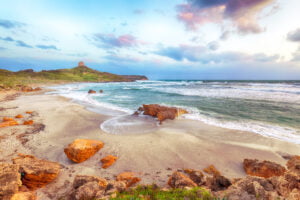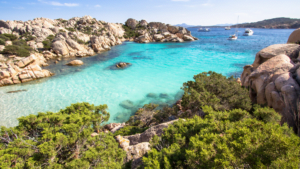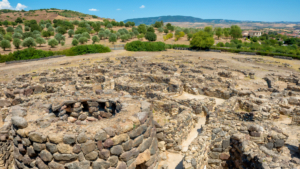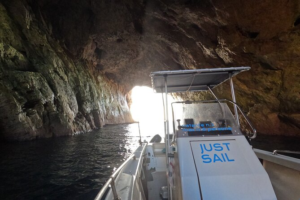

Where to go in Northern Sardinia is one of the most common questions I get, and it deserves a straight answer: the north is not one place. It is two distinct coasts, separated by about 130 km of road, each with its own character, its own sea conditions, and its own type of traveler. Understand that split first, and the rest of your planning becomes much easier.
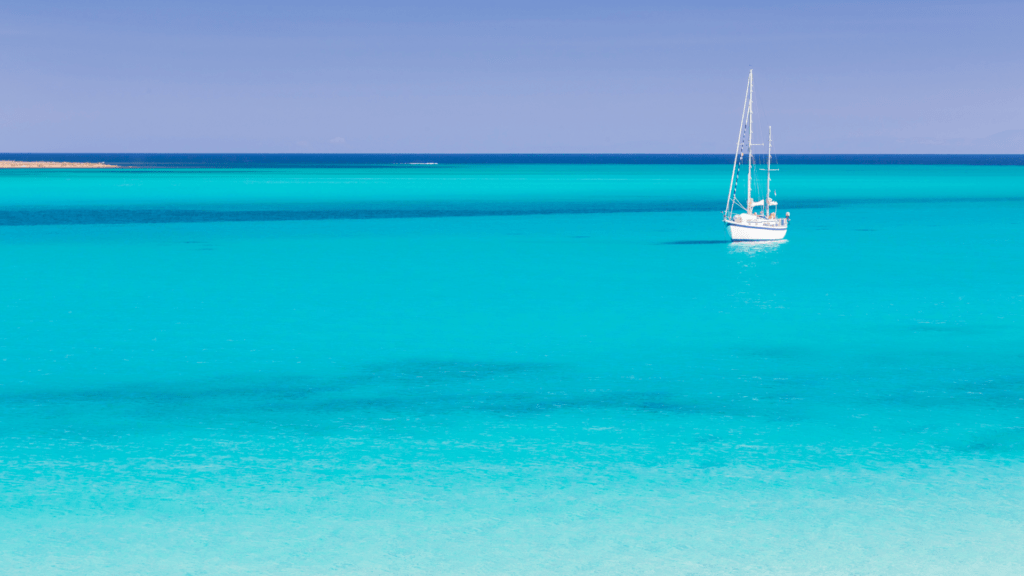
Northern Sardinia: northeast or northwest?
The north of the island divides cleanly along a geographic line.
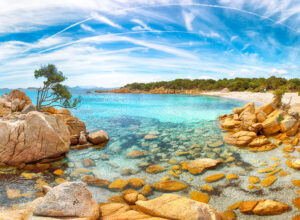
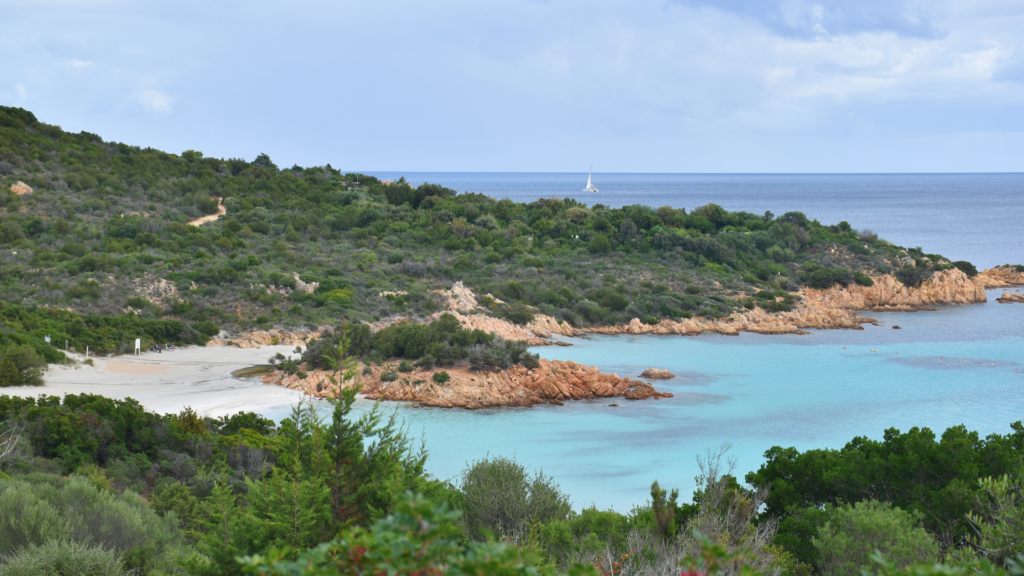
Northeast Sardinia, the area known as Gallura, runs from Olbia up to Santa Teresa Gallura and across the Costa Smeralda. The landscape here is granite: rounded pink rocks that drop straight into the sea, forming sheltered coves with turquoise water. The northeast is where most international tourists land, mostly through Olbia’s Costa Smeralda Airport, and it carries the price tag to match.
Northwest Sardinia is a different story. Alghero, Stintino, Castelsardo, and the Asinara Island sit on a longer, more open coastline that faces the Gulf of Asinara. The sea is wider, the wind stronger, and the towns feel more authentically Sardinian. Prices are generally lower. The crowd is different too: more Italian, more outdoor-oriented, more interested in history.
A few practical distances worth knowing before you plan:
- Olbia to Alghero: approximately 130 km, about 1 hour and 45 minutes by car
- Olbia to Palau: approximately 35 km, about 35 minutes
- Alghero to Stintino: approximately 30 km, about 30 minutes
- Olbia to Santa Teresa Gallura: approximately 60 km, about 50 minutes
You cannot comfortably cover both coasts in fewer than 5 days. Trying to do so means spending two days in the car rather than on the beach.
The best places in Northeast Sardinia
The northeast draws the biggest numbers. That is partly deserved, partly reputation. Here is what is worth your time and what to watch out for.
Costa Smeralda and Porto Cervo
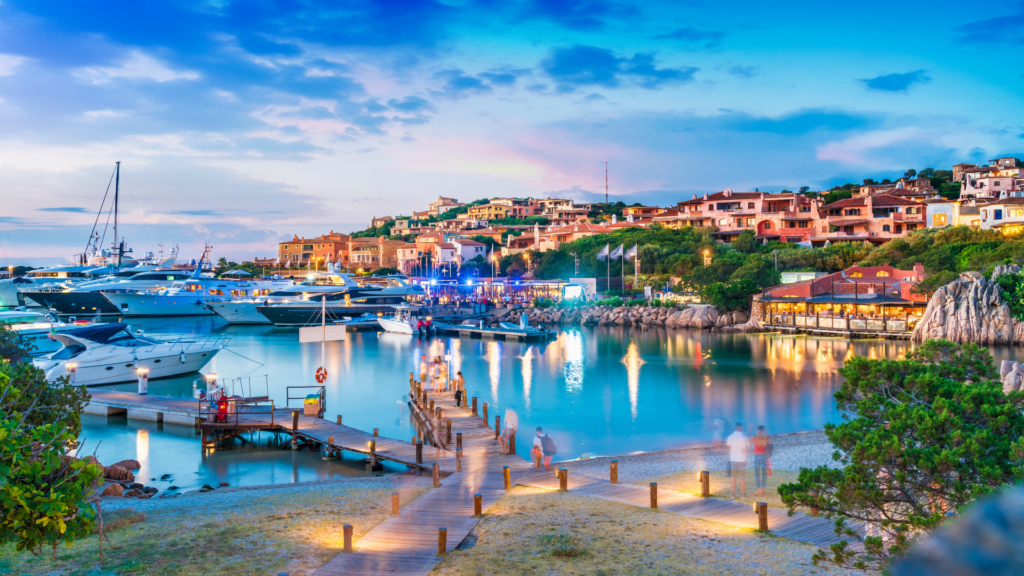
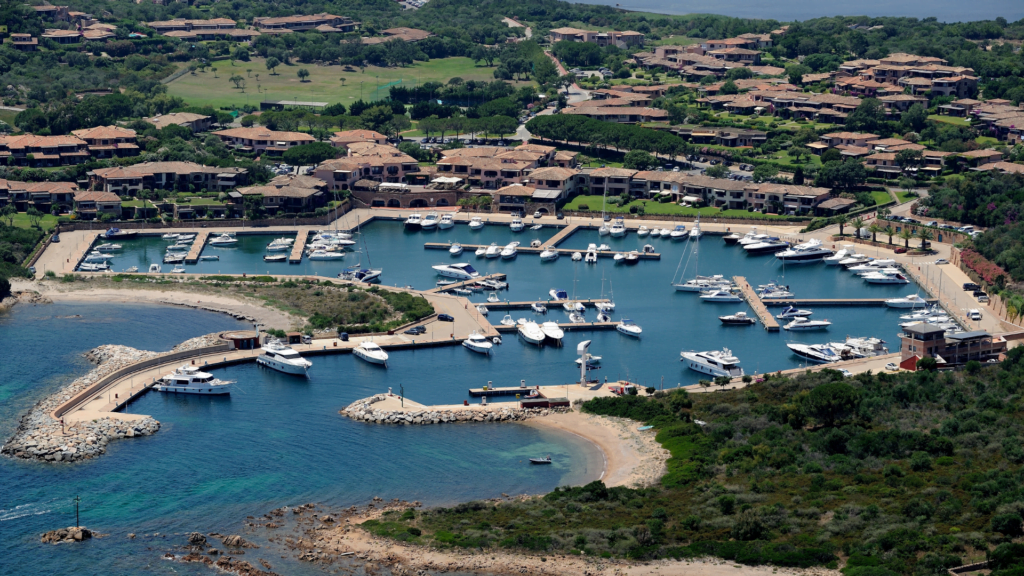
The Costa Smeralda is a 20-kilometer stretch of coastline between Baia Sardinia and Portisco that was developed in the 1960s into one of the Mediterranean’s most exclusive resort areas. Porto Cervo is its center: a purpose-built village of designer boutiques, a yacht marina packed with superyachts in summer, and restaurants where a pasta dish can cost what you would pay for a full meal elsewhere on the island.
The beaches are genuinely spectacular. Spiaggia del Principe is among the finest anywhere in the Mediterranean: shallow water the color of a swimming pool, fine white sand, granite boulders framing the bay. Liscia Ruja and Capriccioli are almost as good, and more accessible.
Worth knowing: the Costa Smeralda is expensive in July and August, and genuinely quiet the rest of the year. If you visit in September or early October, you get the same beaches at a fraction of the cost and with almost nobody on them.
La Maddalena Archipelago
The La Maddalena Archipelago is a national park of over 60 islands and islets just a 20-minute ferry from Palau. The main island, La Maddalena, has a small town with a working harbor, good restaurants, and a quiet residential feel that contrasts sharply with the Costa Smeralda glamour nearby.
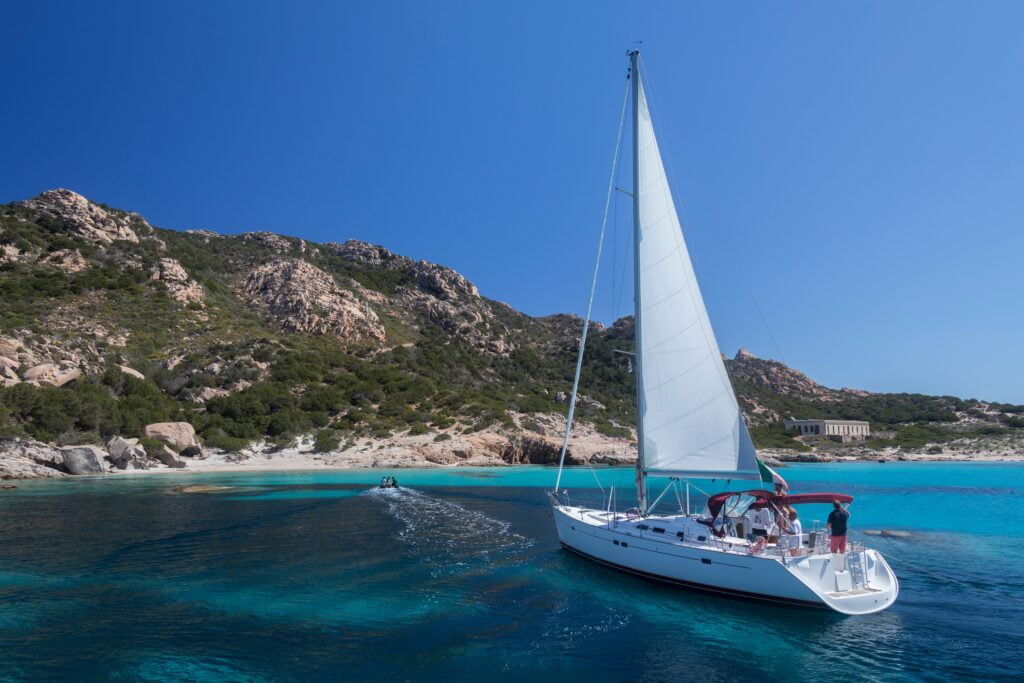
The real draw is the water. Caprera, connected to La Maddalena by a causeway, holds Cala Coticcio, often called “Sardinia’s Tahiti.” Budelli is famous for its pink-sand beach, protected and only viewable from the water. Spargi and Santa Maria offer crystalline anchorages that most tourists never see because they require a boat.
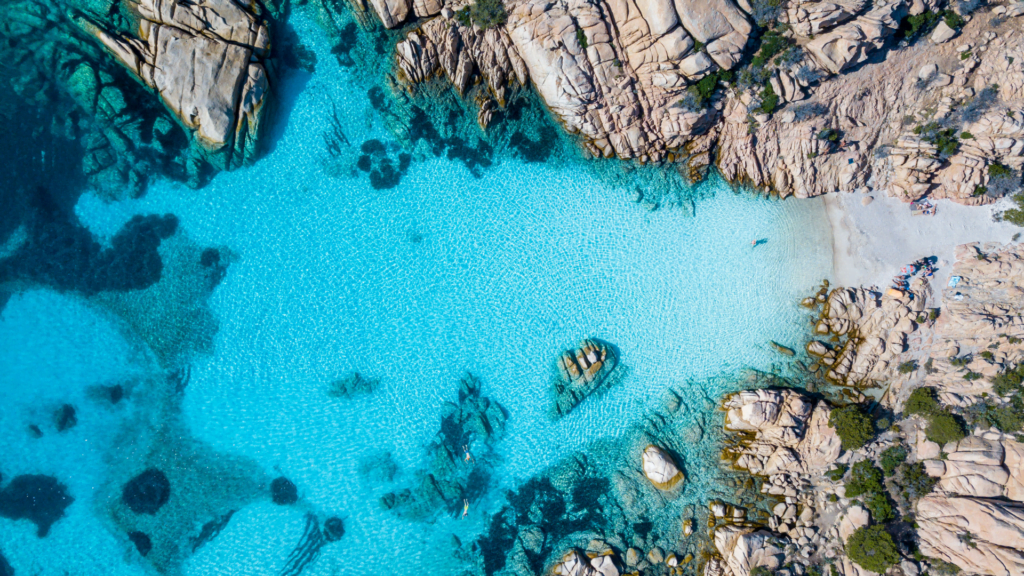
This is the area where a day boat tour pays for itself. Walking the streets of La Maddalena takes two hours; the water deserves a full day.
Palau
Palau is a small, lived-in coastal town that works well as a base for the northeast. It is far cheaper to stay here than in the Costa Smeralda, the ferry to La Maddalena leaves from the harbor every 15 to 30 minutes, and the surrounding bays, including Porto Pollo with its famous windsurfing conditions, are excellent.
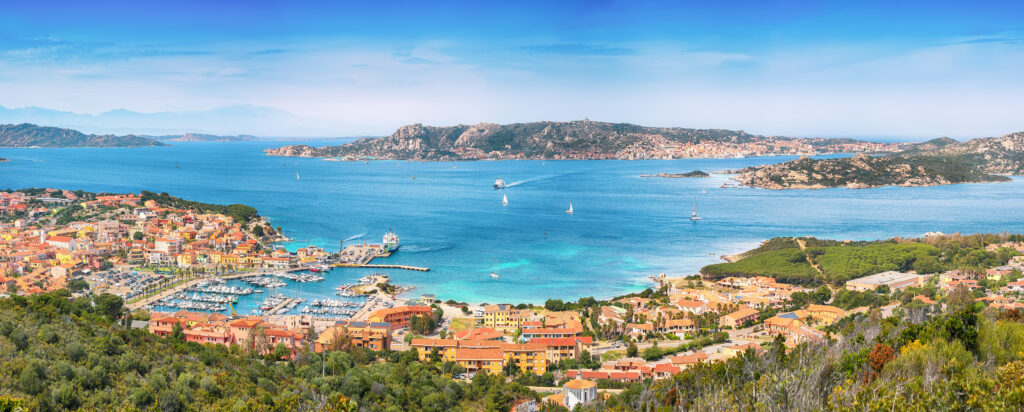
The town itself is not a destination in the traditional sense: no cathedral, no old quarter. What it offers is practicality combined with a genuine local atmosphere and proximity to some of the best water in Europe.
Santa Teresa Gallura
Santa Teresa Gallura sits at the very tip of the island, looking north across the Strait of Bonifacio toward Corsica. The view from the cliffs at Capo Testa is one of the most striking in Sardinia: granite formations sculpted by the wind into improbable shapes, and just beyond them, Corsica close enough that you can see its hills clearly on a good day.
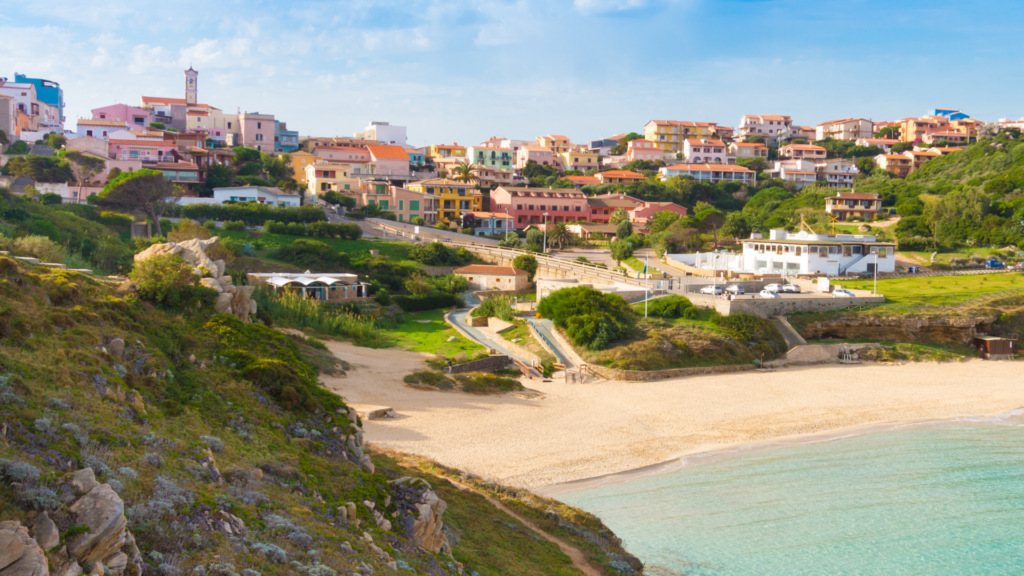
Rena Bianca is the town beach, well-organized and family-friendly. The town itself is pleasant: more relaxed than Palau, with good restaurants and a reasonable range of accommodation. This is a better choice than the Costa Smeralda for families or couples who want beauty without the scene.
San Teodoro
San Teodoro is a small resort town about 40 km south of Olbia, and it is the northeast’s best-kept secret for travelers who want Costa Smeralda sea quality at roughly half the price. The beach at La Cinta is a long sandbar between the sea and a lagoon, with shallow, clear water on both sides. Cala Brandinchi, a few kilometers away, is regularly listed among the best beaches in Italy.
The Tavolara Marine Protected Area, just offshore, protects some of the clearest water on the island. This is where you go if you want world-class snorkeling in the northeast without the Porto Cervo surcharge.
Olbia
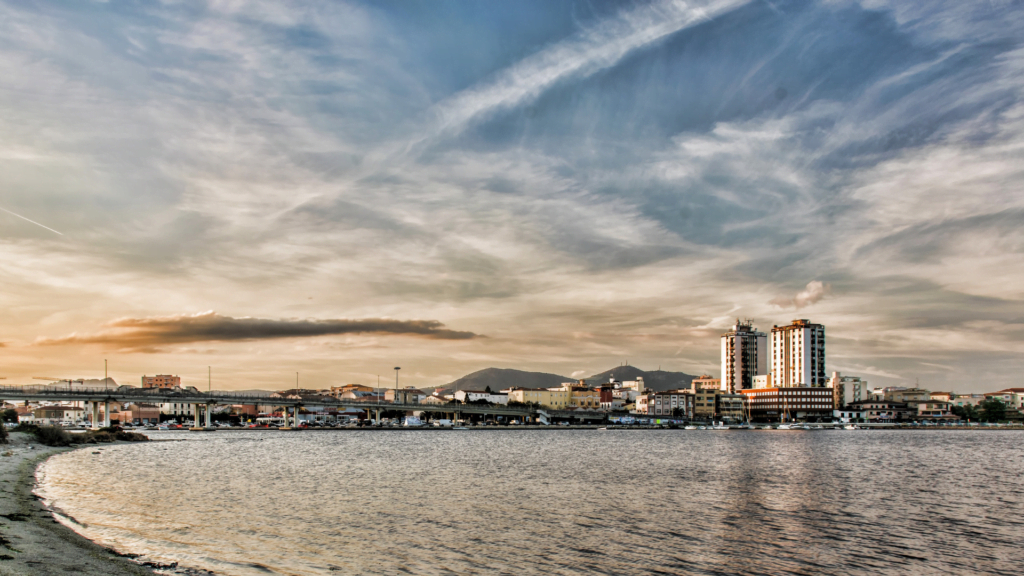
Olbia is primarily a transit hub, the largest entry point to the north through its airport and ferry port. Most travelers pass through without stopping, which is a mistake. The old center has a Romanesque church, the Basilica di San Simplicio, dating from the 11th century. The Archaeological Museum documents the city’s Phoenician and Roman past with well-presented finds.
As a base, Olbia offers the widest range of accommodation prices in the northeast and good road connections to anywhere in the region. It is not a beach destination, but it is a useful and underrated overnight stop.
The best places in Northwest Sardinia
The northwest gets less international attention. That makes it better for most travelers.
Alghero
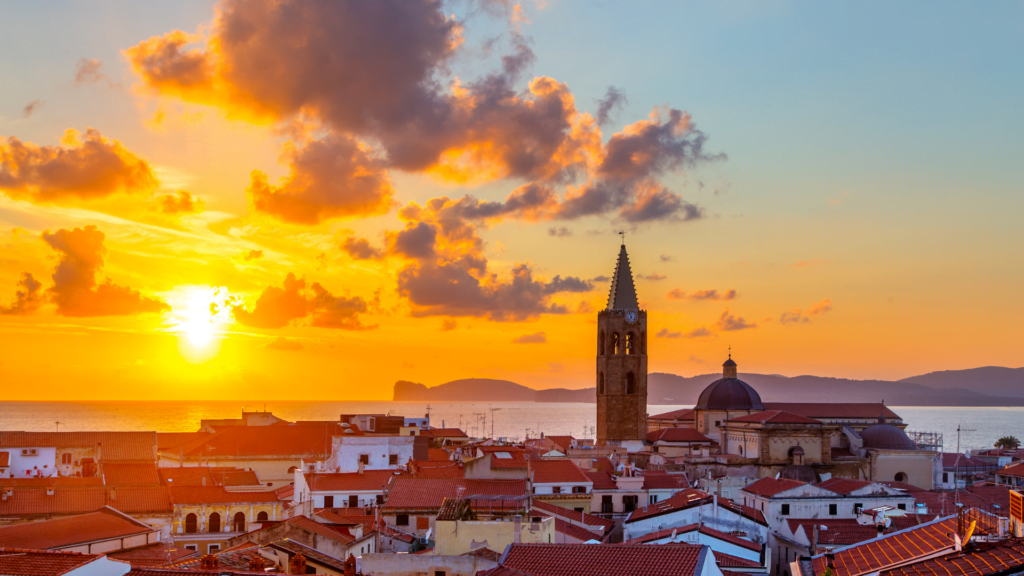
Alghero is the most complete destination in northern Sardinia. It has a beautifully preserved medieval old town, a working fishing harbor, excellent restaurants, a range of beaches within 15 minutes by car, and the Grotta di Nettuno, one of the most impressive cave systems in the Mediterranean, just 25 km away.
The Catalan heritage is real and visible. Since the Aragonese conquest in the 14th century, Alghero’s dialect, architecture, and cuisine have retained a Catalan character unlike anything else on the island. The old town bastions at sunset are genuinely romantic.
The sea around Alghero ranges from calm bays at Lazzaretto and Le Bombarde to the dramatic cliffs of Capo Caccia. This variety makes it suitable for families, couples, divers, and hikers in the same visit. In my experience, of all the towns in the north, Alghero gives you the most for the days you spend there.
Stintino and La Pelosa Beach
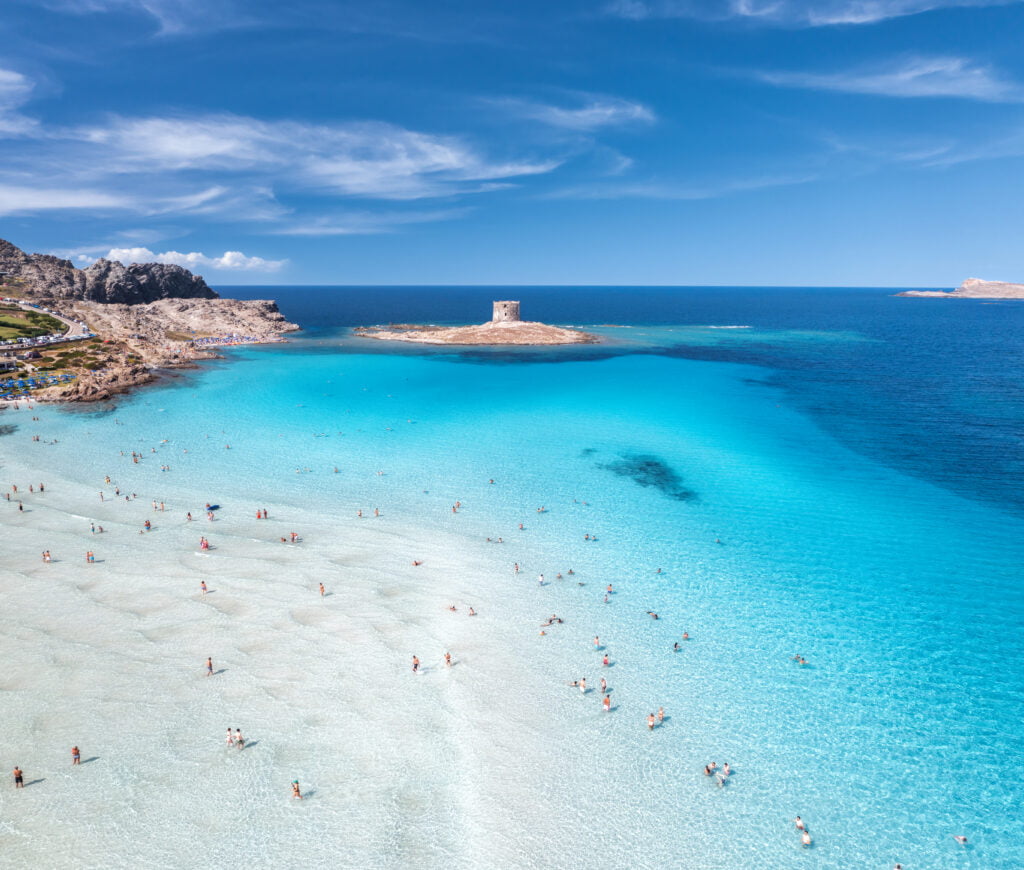
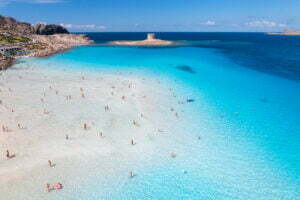
Stintino is a former fishing village on a narrow peninsula, and La Pelosa is its beach, one of the most photographed in Italy. The water is flat, clear, and shallow, with a medieval tower offshore that looks like it belongs in a travel magazine.
The honest version: La Pelosa is stunning, and it requires advance booking. Since 2021, access is limited and must be reserved online. In August, the beach fills up by 9am. Go in June, early July, or September and it is genuinely extraordinary. Go at the peak of August and you will spend more time managing logistics than enjoying the sea.
The rest of Stintino, the village itself, is charming: a small harbor, fresh fish restaurants, a quiet local atmosphere. It punches above its weight as a base for 2 to 3 nights.
Asinara Island
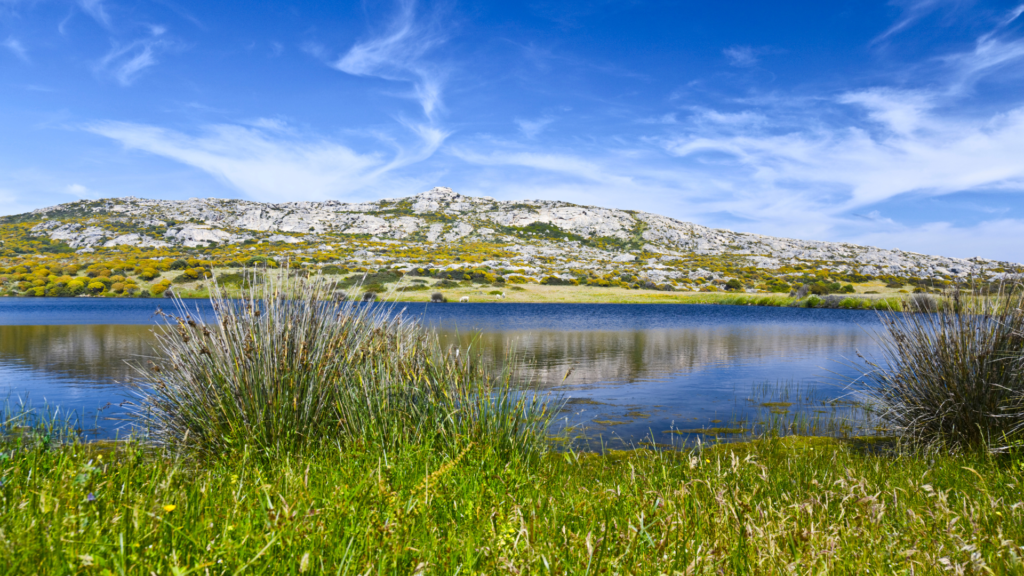
Asinara is a national park island with no permanent residents, a history as a maximum-security prison, and one of the most pristine ecosystems in the western Mediterranean. You cannot visit independently: all access is via authorized tours from Stintino or Porto Torres.
The island’s famous albino donkeys are real and surprisingly easy to spot. Wild boar, mouflon, and nesting birds of prey share the landscape. The bays on the eastern coast, particularly Cala Sabina and Cala Arena, have water that rivals anything in the northeast. The absence of private development is the key: no hotels, no beach clubs, no souvenir shops.
Castelsardo
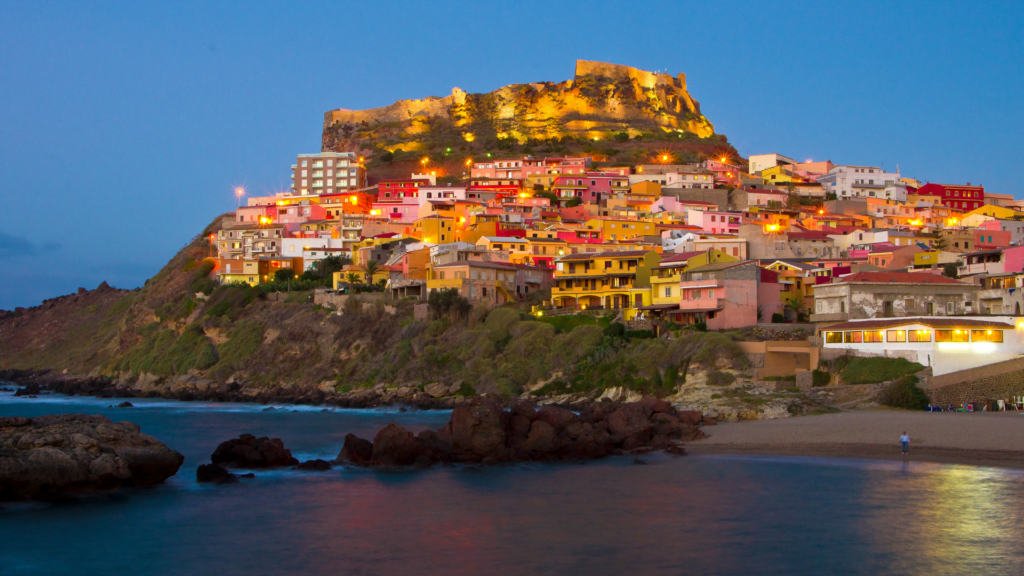
Castelsardo is one of those medieval villages that actually delivers on the postcard. Built on a headland overlooking the Gulf of Asinara, it has a 12th-century castle, a cathedral with a notably old painting of the Madonna with child, and a dense tangle of stone streets that rise toward the cliff.
The local craft tradition of basket weaving, done from dwarf-palm leaves by local women, is not a tourist performance. It is a living tradition, and the products sold in the workshops are genuinely handmade.
Castelsardo works well as a half-day or full-day visit from Alghero, about 50 km to the southwest. The drive along the coast is itself worth the detour.
Sassari
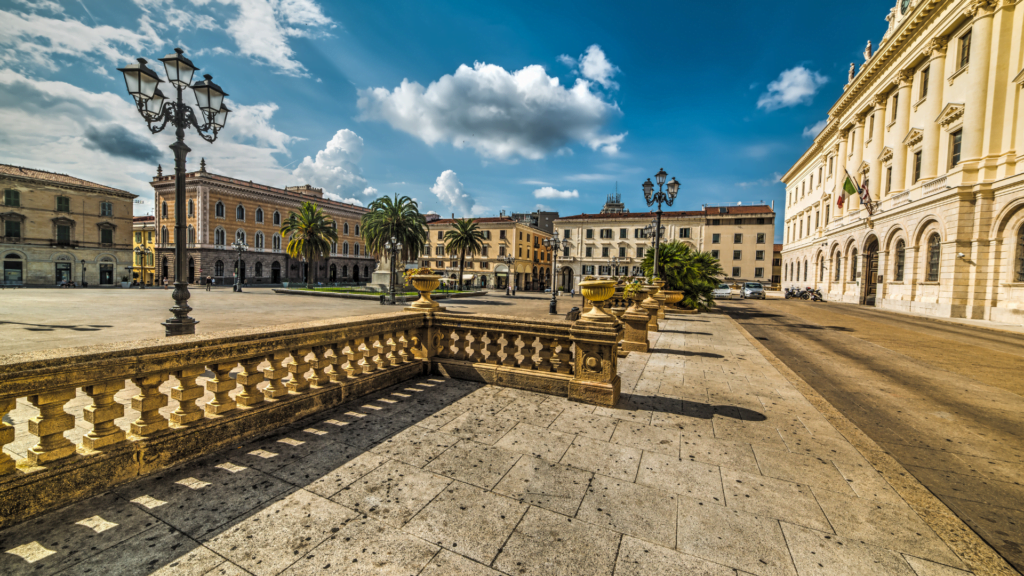
Sassari is the second city of Sardinia, a place most tourists skip entirely in favor of the coast. That is understandable but leaves them without context for understanding the island. The Museo Nazionale Sanna holds one of the most important collections of Nuragic artifacts in existence. Piazza d’Italia is a grand neoclassical square that says more about Sardinia’s complicated relationship with mainland Italy than any guidebook explanation.
The Faradda di li Candareri in August, a UNESCO-recognized procession of giant wooden candlesticks through the old streets, is one of the most authentic popular festivals on the island. If you are here in mid-August, do not miss it.
Things to do in Northern Sardinia: top activities
La Maddalena Archipelago Full-Day Boat Tour from Palau
The classic northeast experience. A full day on the water visiting the islands of La Maddalena, Caprera, Spargi, and Budelli, with swim stops in protected coves that are otherwise unreachable. The best option for first-time visitors to the archipelago.
Book the full-day boat tour from Palau on Viator
Sailing Tour of the Maddalena Archipelago
A small-group alternative for travelers who want more space and a slower pace. A chartered sailboat with an experienced skipper, snorkeling equipment, paddleboards, and lunch on board. Reviews consistently mention the stops at coves that larger boats cannot reach.
Book the sailing tour of La Maddalena on Viator
Alghero: Snorkeling Boat Tour in Porto Conte and Capo Caccia
A three-hour guided snorkeling tour in the Porto Conte Marine Protected Area, one of the most biodiverse stretches of water in the northwest. The guide is the only certified operator for this area. Small group, excellent underwater visibility, and views of the Capo Caccia cliffs from the water.
Book the Porto Conte snorkeling tour on GetYourGuide
Alghero: Mini Yacht Boat Tour with Sardinian Lunch
A full-day private or semi-private boat excursion from Alghero harbor along the coast toward Capo Caccia and Porto Conte. Lunch on board using local Sardinian products, wine included. One of the most consistently reviewed day-trip options in the northwest.
Book the Alghero mini yacht tour on GetYourGuide
Asinara Island: Minivan Full-Day Tour in the National Park
The easiest way to see Asinara in a day: boat transfer from Stintino, then a full-day minivan circuit of the island with a guide. Includes the former prison buildings at Cala d’Oliva, the albino donkeys, and a swim stop at one of the protected coves. Suitable for all ages.
Book the Asinara full-day minivan tour on Viator
Asinara Island: Half-Day Boat Excursion
A shorter option that covers Asinara by sea from Stintino. Three hours, swim stops, and a view of the most dramatic stretches of coastline in the national park. A good choice if you have limited time or prefer to avoid a full day of walking.
Book the Asinara half-day excursion on Viator
Alghero and Capo Caccia Tour with Neptune’s Grotto
A small-group minivan tour from Alghero that combines the medieval old town, the Capo Caccia cliffs, and an optional visit to the Grotta di Nettuno. A practical option for travelers who want to cover the main sights around Alghero without renting a car. Grotto entrance is bookable separately and should be reserved in advance.
Book the Alghero and Capo Caccia tour on Viator
San Teodoro: Boat Tour of the Tavolara Archipelago
A dinghy-based tour from San Teodoro into the Tavolara Marine Protected Area, visiting Cala Brandinchi (known as Little Tahiti), the island of Tavolara, and Molara. One of the best ways to see the northeast’s most protected waters. Small boats, maximum flexibility, exceptional underwater clarity.
Book the Tavolara Archipelago tour from San Teodoro on Viator
Getting around: car rental in Northern Sardinia
A car is not optional here. The north of Sardinia has no useful public transport between destinations. Buses exist but run infrequently, miss the most interesting coastal spots entirely, and make multi-day touring impractical.
The northeast and northwest each have their own airport, which makes planning simpler:
- Olbia Costa Smeralda Airport (OLB) is the main gateway to the northeast: Costa Smeralda, La Maddalena, Palau, San Teodoro.
- Alghero Fertilia Airport (AHO) is the entry point for the northwest: Alghero, Stintino, Asinara, Castelsardo.
If your itinerary covers both coasts, compare prices for a one-way rental pickup at one airport and drop-off at the other, as this is sometimes cheaper than backtracking.
- Compare car hire at Olbia Airport on DiscoverCars
- Compare car hire at Alghero Airport on DiscoverCars
Book early. In July and August, rental availability in Sardinia is genuinely tight, and last-minute prices at the airport can be three times higher than pre-booked rates.
Where to stay in Northern Sardinia
A more detailed overview of accommodation options across the north is available on the Where to stay in Northern Sardinia guide. Here is a quick reference for each area.
Luxury in Alghero:
Villa Las Tronas Hotel & SPA is a former royal residence on a headland just outside Alghero’s old town, with panoramic sea views, a spa, and direct sea access. Rated 9.1 on Booking.com. One of the finest addresses in the northwest.
Premium in Palau:
Hotel Capo d’Orso Thalasso & SPA is a five-star thalasso spa resort a few kilometers from Palau, overlooking the La Maddalena Archipelago. Expensive, but the location and facilities justify the price for a special occasion.
Mid-range with views in Palau:
Hotel Palau sits on the upper part of the town with views across to La Maddalena and Caprera. Four-star comfort, two pools, a free shuttle to the beach, and a 5-minute walk to the ferry port. A reliable, well-located option for the northeast.
Boutique in Palau center:
La Vecchia Fonte Boutique Hotel is a small, well-reviewed hotel right in Palau’s harbor district, decorated with traditional Sardinian furniture. Suites have hot tubs. A good value choice for couples who want character without the spa-resort price.
Mid-range in Palau:
Grand Hotel Palau is a straightforward 4-star option a few hundred meters from the beach, with sea-view rooms and a 5-minute walk to the ferry. Solid choice for budget-conscious travelers who still want reliable comfort in the northeast.
The local perspective: what Sardinians think
Anyone who lives here will tell you a few things that do not appear in the tourist brochures.
The wind. The northwest coast gets the Maestrale hard in summer. At Stintino and Alghero, afternoons in July and August can have strong gusts that make the sea rough and cover you in fine sand. Mornings are usually calm. If you are visiting La Pelosa, go early. Porto Pollo near Palau is windy by design: that is why windsurfers love it.
The northeast is more sheltered because the granite headlands break the wind. La Maddalena’s coves and the Costa Smeralda beaches face different directions and conditions vary significantly from one cove to the next, even on the same day.
The August reality. La Pelosa at peak August has a reservation system, paid parking, and a shuttle from Stintino because the beach was being loved to death. This is not a minor inconvenience: it fundamentally changes the experience. The same is true of Cala Coticcio, which requires either a boat or a long hike. June and September give you the same water with a fraction of the crowd.
The logistics of the archipelago. The ferry from Palau to La Maddalena costs a few euros and runs every 15 to 30 minutes in summer. It is one of the cheapest and most rewarding short crossings in Europe. Do it at least once even if you have a boat tour booked: spending an evening in La Maddalena town, eating at a harbor restaurant, and taking the last ferry back to Palau is hard to beat.
The budget gap. Costa Smeralda in August is expensive in a way that surprises first-time visitors. A beach club sunbed, a lunch, and an aperitif in Porto Cervo can cost more than a hotel night elsewhere on the island. San Teodoro, Palau, and Santa Teresa Gallura offer comparable sea quality, fewer designer boutiques, and a much more manageable daily cost.
Interactive map for tourists (North Sardinia included)
In this map I have distilled about 111 places and attractions you can see and visit in the whole island (North included):
FAQ about Northern Sardinia
How many days do you need to visit Northern Sardinia?
A minimum of 5 to 6 days to cover one coast properly. If you want to see both the northeast and the northwest, allow at least 8 to 10 days. Trying to do both in a long weekend means rushing between driving and seeing almost nothing.
When is the best time to visit Northern Sardinia?
June and September are the best months. Water temperature is warm (around 22 to 25 degrees), beaches are not at capacity, and prices drop significantly compared to July and August. May is excellent for hikers and anyone visiting Asinara or the interior.
Is a car necessary in Northern Sardinia?
Yes. Most of the best beaches, all the national parks, and the connections between towns require a car. The only exceptions are La Maddalena and Alghero’s old town, which are walkable once you arrive. For everything else, a car is indispensable.
Is the Costa Smeralda worth it, or is it too expensive?
The beaches are among the best in Europe, and that part is not hype. The price of everything else, hotels, restaurants, parking, beach clubs, is real and high in peak season. The formula that works: stay in a nearby town (Arzachena, San Pantaleo, Cannigione), drive to the beaches early in the morning, and avoid Porto Cervo restaurants at dinner. That way you get the water without the luxury-resort bill.
What is the difference between eastern and western Northern Sardinia?
Northeast Sardinia (Gallura) has granite coves, turquoise sea, Costa Smeralda glamour, La Maddalena, and the heaviest tourist infrastructure. Northwest Sardinia has Alghero’s Catalan history, the Asinara National Park, La Pelosa beach, stronger Maestrale winds, and a more local character. Neither is better: they suit different travelers and different trips.
Can you visit La Maddalena as a day trip?
Yes, easily. The ferry from Palau takes 20 minutes and runs frequently all day in summer. La Maddalena town alone takes a half day to explore. Combine it with a boat tour of the archipelago for a full day. There is no need to stay overnight unless you specifically want to.
Sources: Comune di Alghero, Ente Parco Nazionale dell’Asinara, Parco Nazionale Arcipelago di La Maddalena, Regione Sardegna Turismo, Comune di Stintino (information on La Pelosa reservation system).