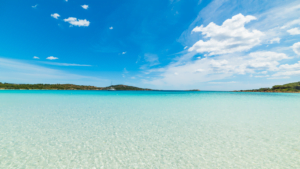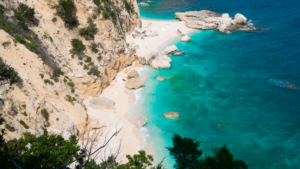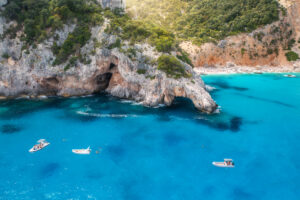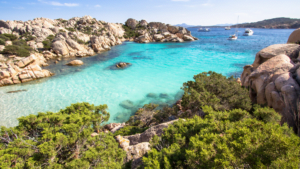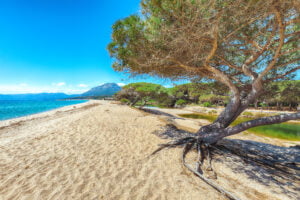
The Golfo di Orosei is one of the most extraordinary stretches of coastline in the Mediterranean. Roughly 30 kilometres of limestone cliffs, hidden coves, turquoise water and complete silence – most of it inside a national park that has kept roads, hotels and beach bars far away from the shore. This guide covers everything you need to know: the best beaches, the top activities, what to see inland, and the practical details that make the difference between a great trip and a wasted one.
What is the Golfo di Orosei?
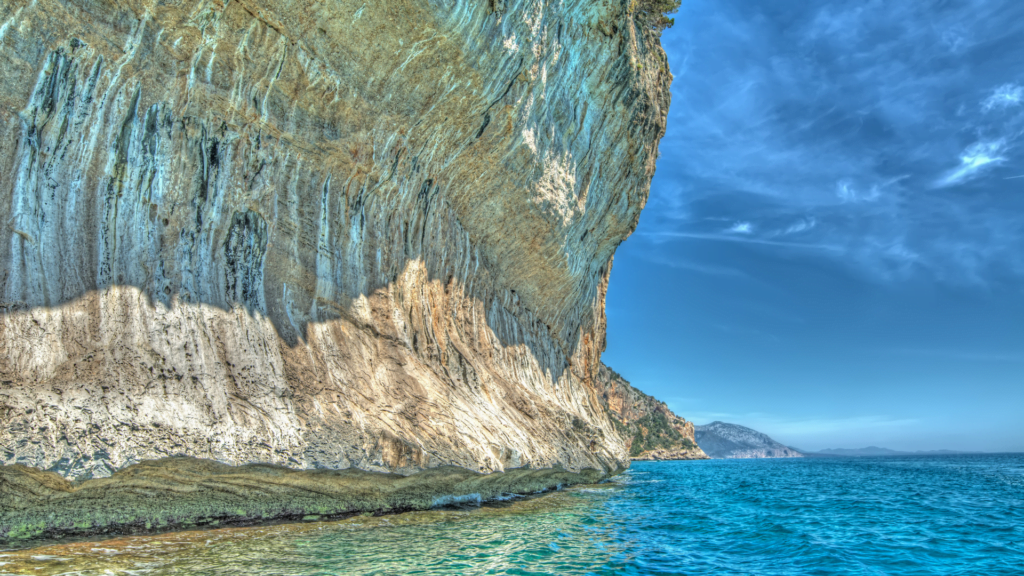
The Golfo di Orosei sits on Sardinia’s eastern coast, between the towns of Orosei to the north and Arbatax to the south. Almost the entire coastline falls within the Parco Nazionale del Golfo di Orosei e del Gennargentu, established in 1998 and covering approximately 74,000 hectares. The park takes in not only the coast but the entire Supramonte plateau behind it, including the Gennargentu mountain range, Sardinia’s highest point at Punta La Marmora (1,834 m), and some of the most complex cave systems in Europe.
What makes this gulf different from anywhere else in Sardinia is simple: there are no roads along the coast. The cliffs drop straight into the sea. The coves are cut off from the hinterland by hundreds of metres of vertical limestone. Getting to the beaches requires either a boat or a serious hike, sometimes both. That physical barrier is also what has preserved the place.
The gulf is best understood in two halves. The northern half, anchored by the village of Cala Gonone (a hamlet of Dorgali), is where most infrastructure is concentrated: the port, the majority of boat tours, the hotels, and the main trailheads. The southern half, centred on Baunei and its sea hamlet of Santa Maria Navarrese, is quieter, more rugged, and where the most iconic beaches – including Cala Goloritzé – are located.
Understanding this north-south divide before you go is the most useful thing you can do.
The beaches of the Golfo di Orosei: what to see
No two coves here are alike. Some are sand, some are pebbles, some are barely wide enough for fifty people. Below are the beaches worth knowing, roughly from north to south.
Oasi di Bidderosa
Before reaching the wilder coves, Bidderosa deserves a mention precisely because it is so often overlooked. Located near Orosei, it is a protected natural oasis with five small beaches surrounded by a fragrant pine and juniper forest. The water is transparent, the sand is fine, and access is carefully regulated to keep numbers low.
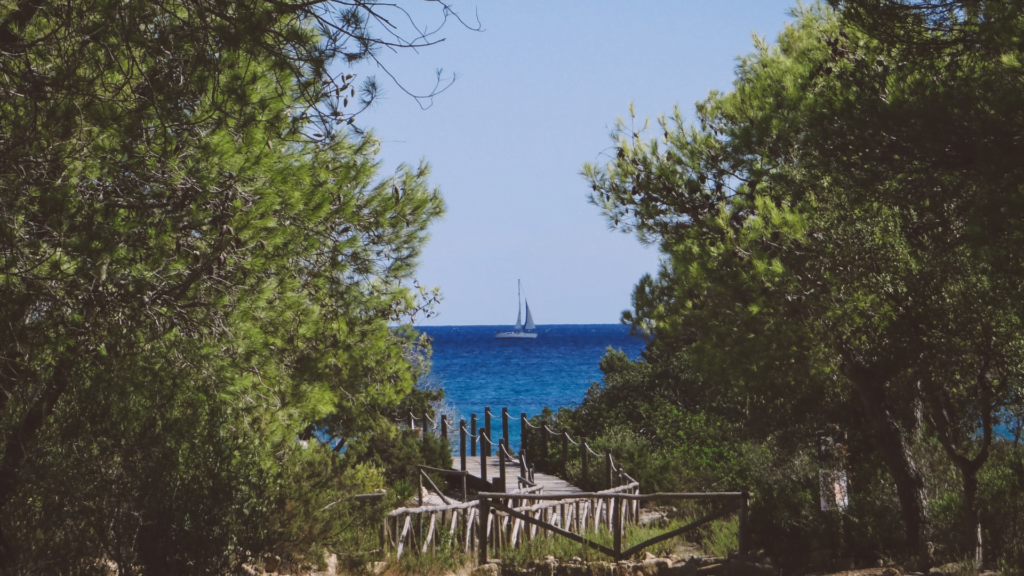
Unlike the southern coves, Bidderosa can be reached by car. Entry requires a timed booking, especially in summer. This is one of the few places on the gulf where you can have a proper beach day without relying on a boat or a five-hour hike.
Cala Luna
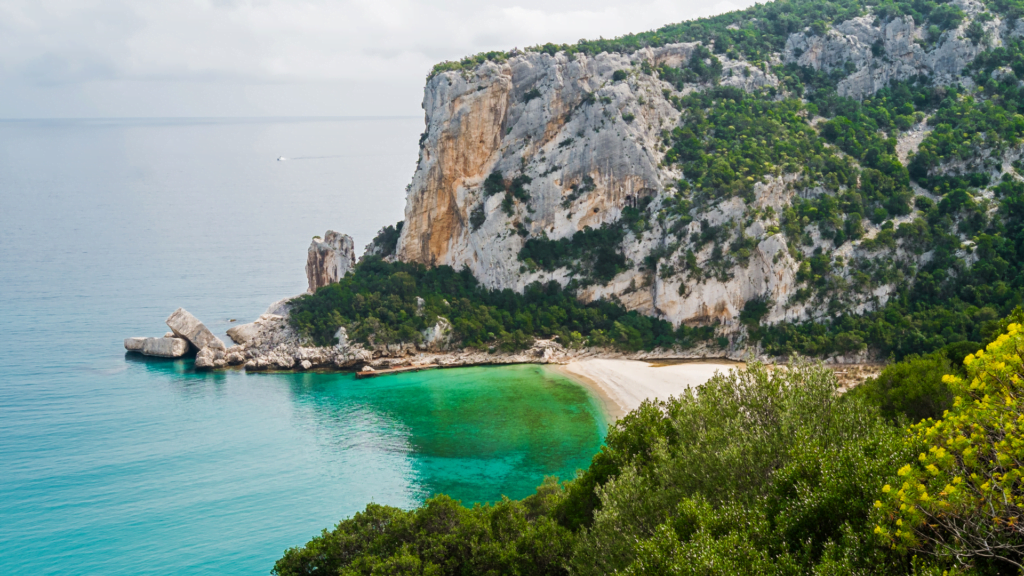
Cala Luna is the most famous beach in the northern half of the gulf. Its name comes from the crescent-shaped 800-metre sandbar that curves between sheer limestone cliffs, with six large caves opening onto the beach from the cliff face. The film “Swept Away” by Lina Wertmüller was shot here in 1974, and the place still carries that cinematic quality.
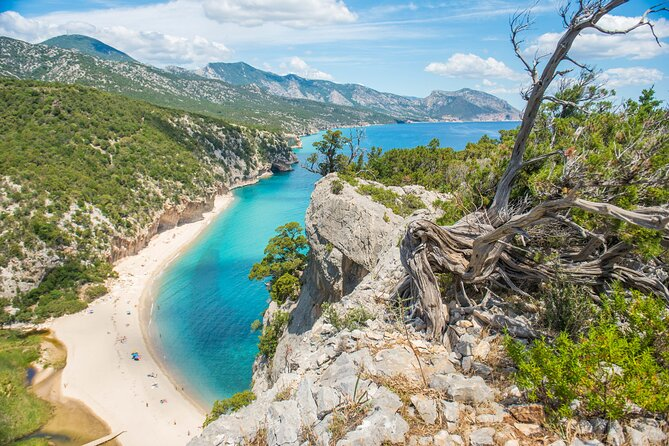
Access by boat is the easiest option, departing from Cala Gonone. You can also hike from Cala Fuili, a small beach just south of Cala Gonone: the trail takes around two hours each way and involves some technical sections. There is a small bar and a basic restaurant behind the beach, which makes Cala Luna one of the few coves where you can actually eat without carrying everything in.
Cala Fuili
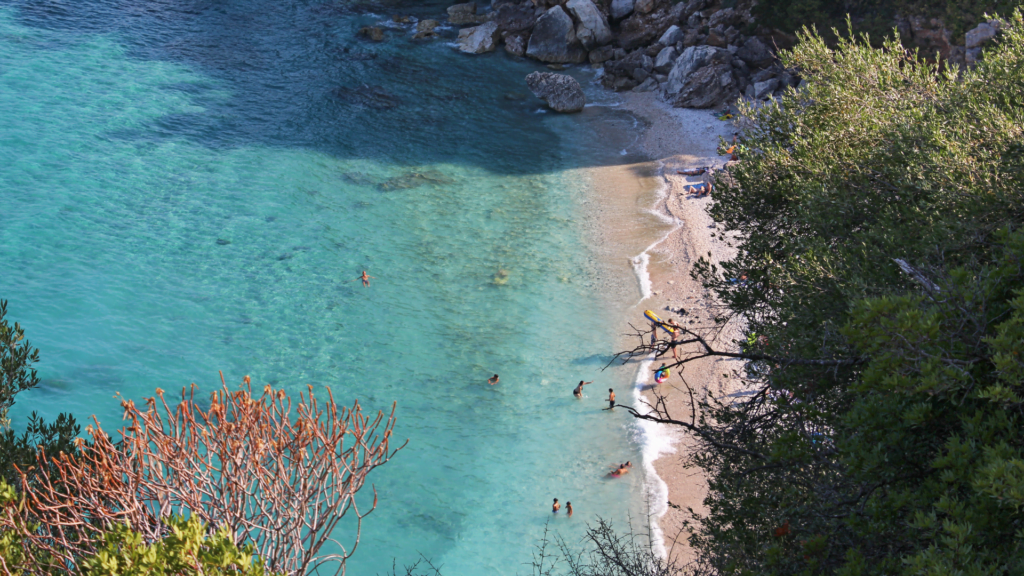
Cala Fuili is one of the most accessible and charming beaches in the Golfo di Orosei. Located just outside Cala Gonone, this beach is an ideal starting point for exploring the region’s natural wonders. With its golden sand and clear waters, Cala Fuili offers a beautiful and convenient spot for relaxation and adventure.
Cala Mariolu
Cala Mariolu is the beach that photographers keep coming back to. Its defining feature is the mix of pink and white pebbles – the result of erosion from the surrounding limestone and quartzite rock – which give the water an almost unnatural shade of blue-green. Boat access only.
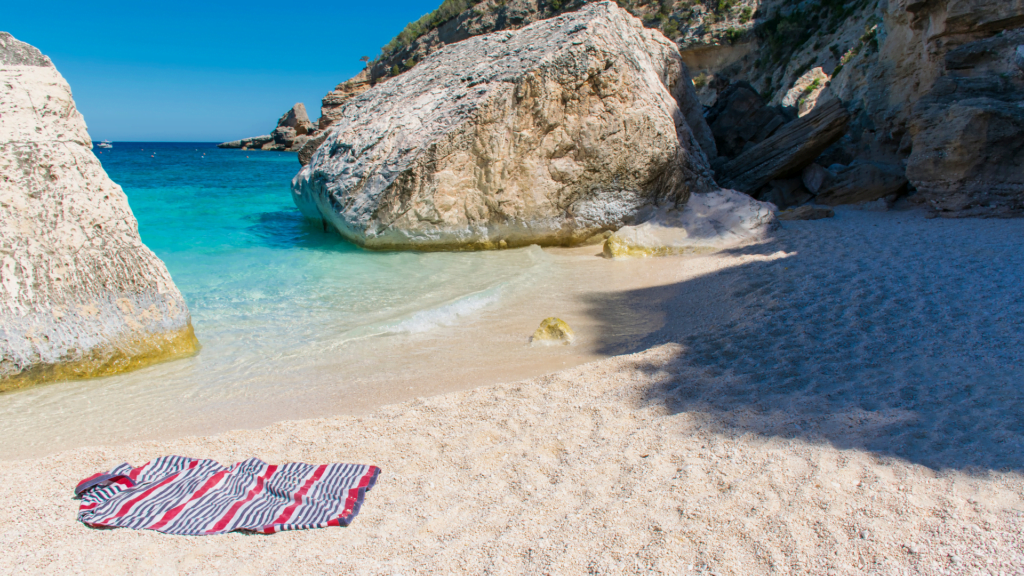
It is consistently ranked among the most beautiful beaches in Italy and, after Cala Goloritzé won the World’s Best Beach award in 2025, Cala Mariolu is arguably the more accessible of the two top-tier coves. Snorkelling here is exceptional: the sea floor drops gradually through crystal-clear water, and the pebble base means no stirred-up sand. Get there early. By mid-morning in July and August, the anchorage fills up.
Cala Sisine
Cala Sisine is the widest beach on the gulf, sitting at the base of a steep valley with cliffs rising over 400 metres on either side. Because it is broader than most coves, people spread out more naturally and it tends to feel less crowded than Mariolu or Goloritzé, even in peak season.
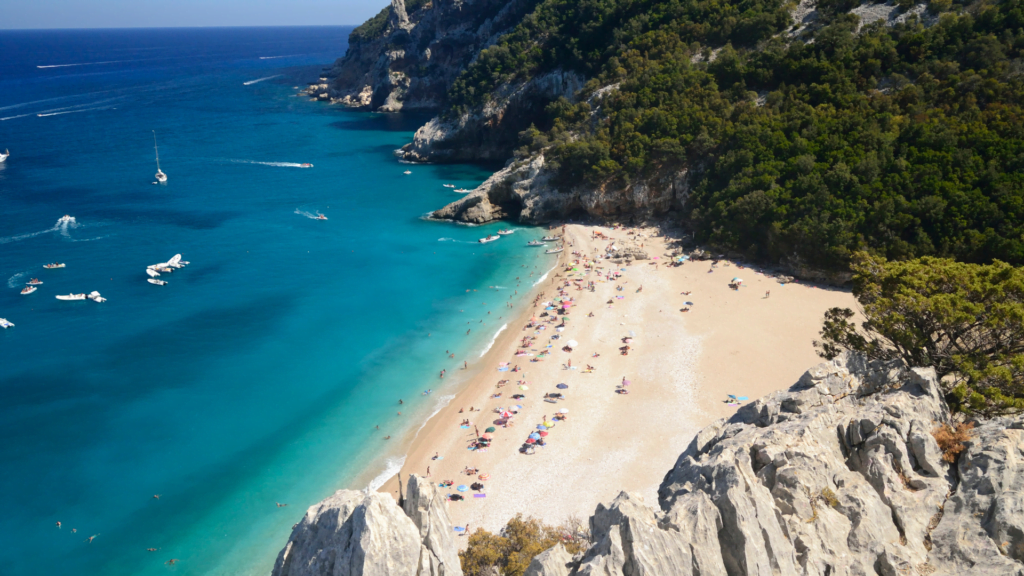
It can be reached by boat or by a relatively manageable hike from the Golgo Plateau above Baunei. If you have a four-wheel-drive vehicle, you can reach a small car park about 2 km from the beach and walk the rest of the way. That makes Cala Sisine one of the more accessible options for those who want to avoid the boat dependency.
Cala Cartoe
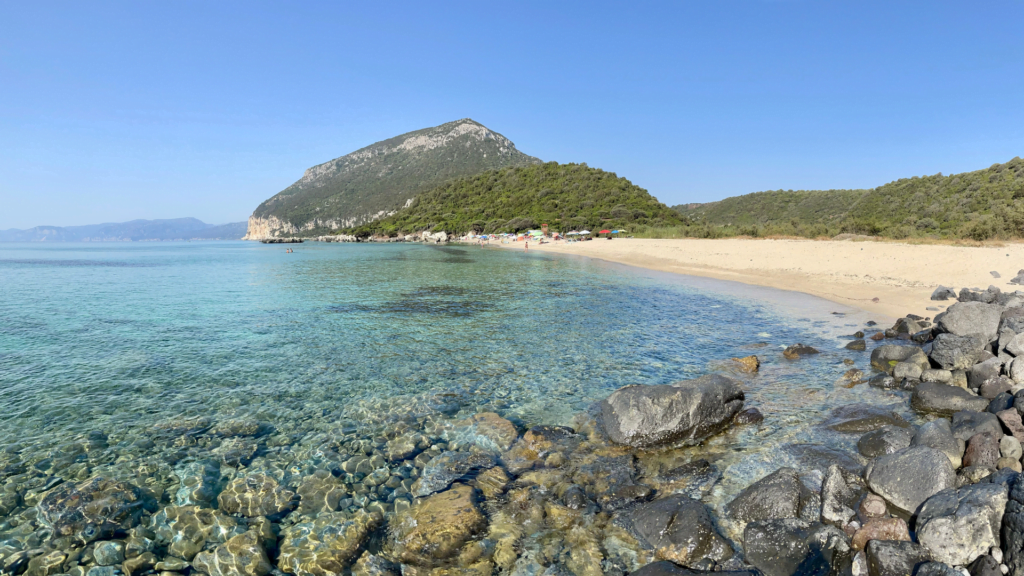
Cala Cartoe is an ideal beach for families, featuring fine white sand and shallow, crystal-clear waters. The beach’s gentle slope and safe swimming conditions make it perfect for children. Surrounded by lush Mediterranean vegetation, Cala Cartoe offers a relaxing and enjoyable environment for a family day out.
Cala Biriola
Cala Biriola is small, remote, and genuinely wild. The hike down from the Golgo Plateau takes around 2.5 hours and involves narrow passages, sections of bare rock, and metal ladders fixed to the cliff face – you descend holding a cable in places. The climb back up takes roughly two hours. It is not a hike for anyone who is not fit and comfortable on exposed terrain.
Most visitors reach it by boat instead, and spend about an hour on the beach before continuing. Tiny beach, white pebbles, no services whatsoever, and water that looks almost too blue to be real. If you are considering the hike, do not attempt it in July or August without starting at first light.
Cala dei Gabbiani
Cala dei Gabbiani is named after the large colony of seagulls that descend onto the beach every evening after the last boats leave, leaving intricate patterns of footprints in the white pebbles by morning. Boat access only. The sea here is a particularly deep blue, and the beach sees fewer visitors than its more famous neighbours.
It is a good choice if you want to spend time somewhere genuinely quiet. Most boat tours from Cala Gonone include it as a stop, and some allow passengers to stay here for lunch before picking them up on the return journey.
Cala Goloritzé
Cala Goloritzé sits at the very southern end of the gulf’s main coastline and is, by any honest assessment, one of the most beautiful places in Europe. In 2025, it was named the world’s best beach by the “World’s 50 Best Beaches” ranking – the first Italian beach ever to win the title.
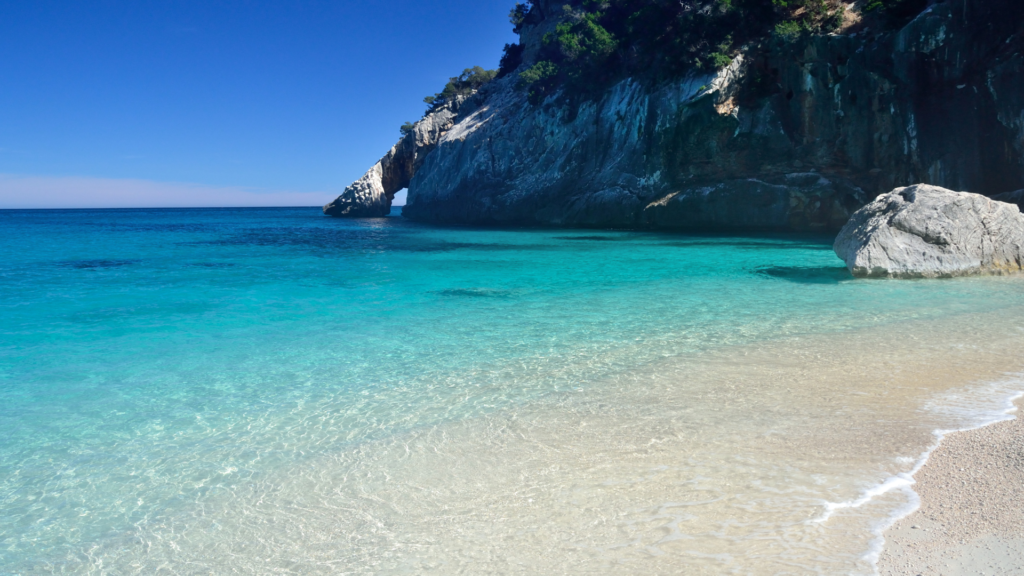
The beach is small: a strip of white pebbles at the base of enormous limestone cliffs. At the southern end, a natural arch of rock soars above the water, and beside it rises the Aguglia – a 100-metre free-standing needle of limestone that is one of the most famous rock-climbing routes in the Mediterranean. Climbers have been coming here since the 1980s.
Access requires some thought. A sea protection zone prevents boats from landing on the beach, so boat tours can only stop nearby for a swim from anchor. To actually walk on the beach, you need to hike: one hour on a well-marked path from the Su Golgo plateau near Baunei. The hike itself is not particularly difficult, but the final descent is steep. More details in the Baunei guide.
The Venus Pools (Piscine di Venere)
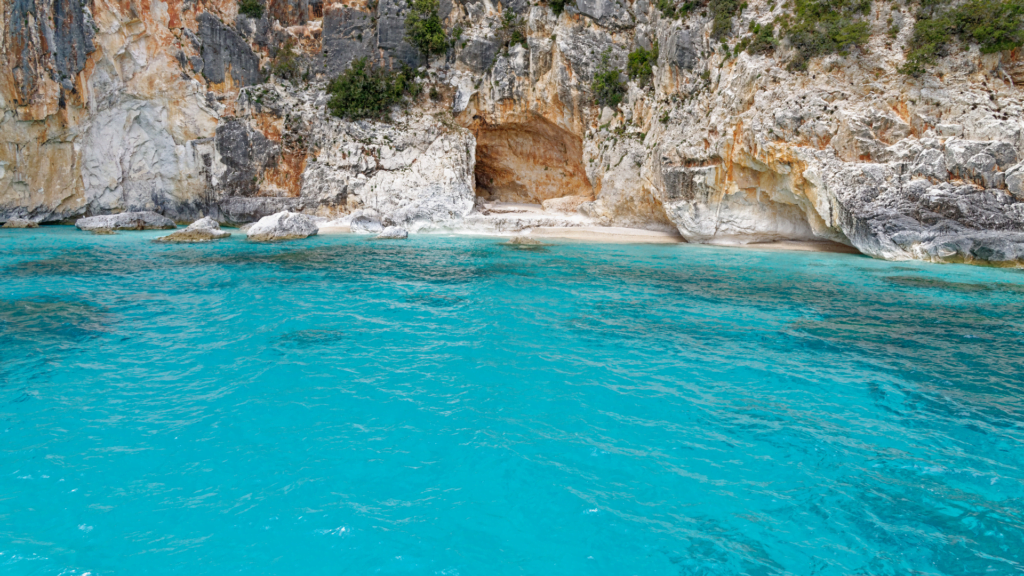
The Piscine di Venere (Venus Pools) are not a beach but a natural phenomenon worth knowing about. Located between Cala Sisine and Cala Biriola, they are a series of shallow rock pools where underground freshwater springs mix with the sea, creating a distinctive turquoise colour caused by the light scattering through the mineral-rich water.
Access is by boat only. The pools are best seen in the morning, when the angle of the light makes the colours most vivid. Many zodiac tours from Cala Gonone include a stop here.
Osalla di Orosei
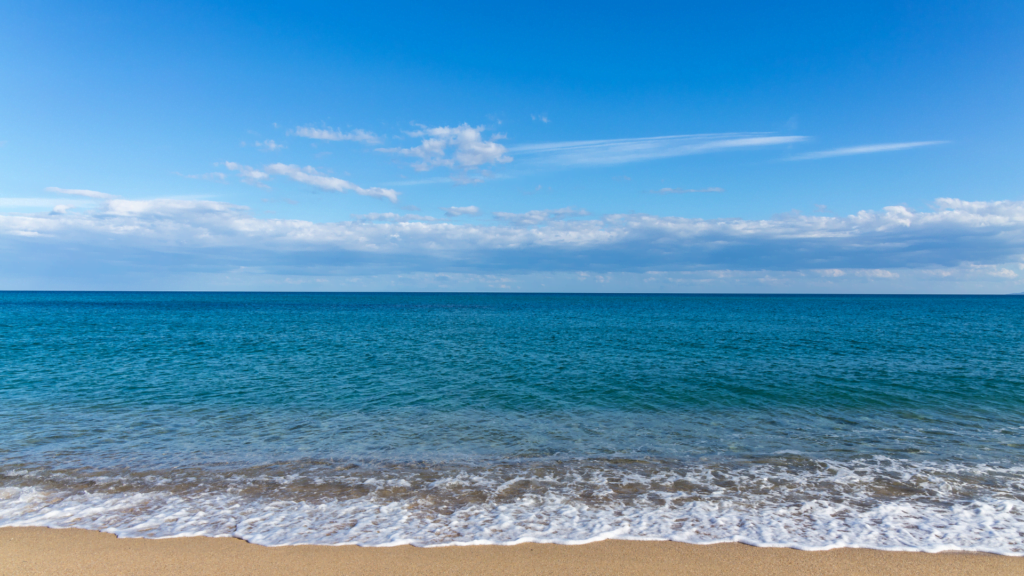
Osalla di Orosei is renowned for its long stretch of golden sand and crystal-clear waters. This beach is perfect for sunbathing, swimming, and snorkeling. The surrounding pine forest adds a touch of green to the landscape, making it an ideal place for relaxation and nature walks.
Things to do in the Golfo di Orosei: top activities
The gulf offers far more than beach days. Here are the best bookable experiences, covering both sea and land.
Full-Day Gulf of Orosei Cruise from Cala Gonone
The classic group boat tour aboard a large motorboat. The itinerary covers Cala Luna, Cala Mariolu, and Cala Sisine, with swimming stops on each beach. A multilingual audio guide explains the coast along the way, and there is shade on board. You can buy lunch on the boat. Good value for money and very well organised, though the boat carries a significant number of passengers.
Book the full-day cruise on Viator
Small-Group Zodiac Tour from Cala Gonone
The zodiac option carries a maximum of around 12 passengers, moves faster, and makes more stops than the large cruise. Typical itinerary includes Cala Luna, Venus Pools, Cala Sisine, Cala Mariolu, and Cala Biriola, plus cave swimming stops along the cliffside. You get more time on the beach and more flexibility on the route.
No toilet on board, limited shade. Bring a hat, reef-safe sunscreen, and water shoes (the pebble beaches are beautiful but hard underfoot). Worth every euro.
Book the small-group zodiac on Viator
Cruise to Cala Goloritzé from Cala Gonone
This motorboat tour is specifically structured to reach Cala Goloritzé – the highlight of the southern gulf – with beach stops at Cala Mariolu, Cala Biriola, and Cala Sisine along the way. A guided coastal commentary is included. One of the most highly rated tours operating out of Cala Gonone, with consistent reviews praising the crew and the timing at each stop.
Book the Cala Goloritzé cruise on GetYourGuide
Su Gorropu Canyon Guided Hike
Su Gorropu is Italy’s deepest canyon and one of the most spectacular in Europe. Its limestone walls rise up to 500 metres on both sides, and the floor is a narrow corridor of boulders, forest, and natural pools. The hike from the valley floor takes around 4.5 hours total and covers approximately 7 km at a moderate difficulty level.
A guide is strongly recommended: the terrain inside the canyon is complex, the route is not always obvious, and the ecology of the place – including the endemic Aquilegia Nuragica wildflower that grows almost exclusively here – deserves explanation. Pickup from Orosei or Dorgali is included. Book well in advance.
Book the Su Gorropu hike on Viator
Gorropu Canyon Trek with Panoramic Views from Orosei/Dorgali
A longer, 8-hour version of the Gorropu experience, departing from Orosei or Dorgali in a 4×4 Land Rover. This tour adds a panoramic ridge approach before descending into the canyon, making it the more immersive option for those who want the full landscape context of the Supramonte. Small group, licensed guide, pickup included.
Rated 4.9/5 across hundreds of reviews. The guide, Sergio, is frequently mentioned by name.
Book the panoramic Gorropu trek on GetYourGuide
Tiscali Nuragic Village Guided Hike
Tiscali is one of the strangest and most evocative places in Sardinia. A nuragic village built sometime between the 15th and 8th centuries BC, hidden inside a vast collapsed cave – a karst sinkhole on the summit of Monte Tiscali at around 520 metres. The village was invisible from outside and accessible only through a narrow crack in the rock, which may have served as a defensive gateway.
The guided hike departs from the Lanaittu Valley, passes through oak forests and Mediterranean scrubland, and takes around 8 hours in total. Hotel pickup from Orosei, Dorgali, Cala Gonone, or Oliena is included. This is an archaeological and landscape experience unlike anything else in the region.
Book the Tiscali hike on GetYourGuide
Inland highlights: beyond the beaches
Most visitors to the Golfo di Orosei spend the entire trip at sea. That is understandable. But the interior of this part of Sardinia contains places that rival the coast in beauty and easily surpass it in historical depth.
Su Gorropu canyon – covered above as a guided activity – is the most dramatic inland landscape. What is worth adding here is the ecological context: the canyon was formed by the Rio Flumineddu cutting through Jurassic limestone over millions of years. The microclimate inside keeps temperatures 10 degrees cooler than the surrounding plateau even in August, and supports a rare assemblage of endemic plants and cave amphibians found almost nowhere else in Europe.
Tiscali sits at the other end of the spectrum: deeply human rather than purely geological. The village was inhabited, on and off, from the nuragic period through the Roman era and possibly into the early Middle Ages – a span of roughly two thousand years. The hut foundations are still visible, along with stone walls built using Roman construction techniques layered on top of the original nuragic structures. Sardinians consider Tiscali a symbol of resistance to foreign occupation; the village’s extreme inaccessibility was a deliberate strategy.
Dorgali itself is worth half a day. The town has a small but well-curated archaeological museum with artefacts from the main local excavation sites, including material from Tiscali and the nuragic settlement of Sa Sedda ‘e Sos Carros. The leather workshops on the main street are among the best in Sardinia for traditional craftsmanship, and the local Cannonau wine – produced from vineyards on the basaltic plateau above Cala Gonone – is exceptional.
For serious hikers, the Selvaggio Blu trail deserves a mention. It is a multi-day route covering 40 km along the coastline from Santa Maria Navarrese to Cala Sisine, graded among the most technically demanding trekking routes in Italy. No camping infrastructure, rough terrain, and sections that require basic climbing moves. It is not a casual hike, but it is one of the most extraordinary walking routes in the Mediterranean. More options in our guide to the best hikes in Sardinia.
Getting around: car rental in the Golfo di Orosei
A car is essential. Not to reach the beaches – those require a boat – but to reach the base towns, the trailheads, the canyon access points, and anywhere off the coast itself. The SS 125 Orientale Sarda is the main road connecting the gulf from north to south, and it is one of the most scenic drives in Sardinia: mountain passes, hairpin bends, and glimpses of the sea far below. It is also slow. Factor in more time than the map suggests.
The nearest airports are Olbia to the north (approximately 1 hour 30 minutes from Cala Gonone) and Cagliari to the south (approximately 2 hours 30 minutes). Alghero is a possible option from the north-west, though the drive is longer.
Compare prices and book your rental directly:
Note: in August, parking in Cala Gonone becomes genuinely difficult. Paid parking fills up fast. A shuttle bus runs from the village entrance to the port for €1, which is the practical solution. Arriving before 8 am or after 7 pm avoids most of the problem.
Where to sleep in the Golfo di Orosei
The two main bases are Cala Gonone in the north and Santa Maria Navarrese in the south. Choose based on which part of the gulf you prioritise: Cala Gonone has more infrastructure, more boat tours, and better access to the northern coves and inland sites. Santa Maria Navarrese is smaller and quieter, with easier access to Cala Goloritzé and the southern coast.
Here are four options across different budgets:
Costa Dorada – The premium waterfront option in Cala Gonone. A four-star hotel built directly on the seafront promenade, 10 metres from the beach. Terrace restaurant serving traditional Sardinian cuisine, sea-view rooms, and one of the best locations in the village. The kind of place you book once and return to every year.
Book on Booking.com
Margaida Boutique Hotel & SPA – Adults-only, four-star, 2 minutes from Spiaggia Centrale in Cala Gonone. Infinity pool, spa with steam room and sauna, sea-view balconies, excellent breakfast buffet. Modern design without feeling impersonal. Highly rated for couples and those who want comfort without the resort scale.
Book on Booking.com
Hotel Brancamaria – A well-regarded three-star option at the entrance of Cala Gonone, with an outdoor pool, bright rooms, and easy access to both the port and the village. A reliable mid-range base that books up quickly in summer.
Book on Booking.com
Il Nuovo Gabbiano – The budget option, available from around $44 per night. Right on the port square, sea-view balconies, friendly staff, and a Mediterranean restaurant downstairs. Fine for those who plan to spend the day on the water or hiking and just need somewhere to sleep.
Book on Trip.com
Where is Golfo di Orosei?
Golfo di Orosei is located on the eastern coast of Sardinia, Italy. It is a 40-kilometer-long coastal area that stretches from Capo Comino in the north to Capo Monte Santu in the south. The gulf is characterized by a mix of sandy beaches and rocky inlets, dominated by towering limestone cliffs covered in Mediterranean vegetation and ancient forests.
The local perspective: what Sardinians think
We Sardinians have a complicated relationship with the Golfo di Orosei. We are proud of it, obviously. But we also know things about it that the travel brochures leave out.
On the geography and the seasons: The gulf faces east, which means it catches the Maestrale wind less than the western and northern coasts. The coves are sheltered by the cliffs. The water stays calm in most conditions. That said, when the sea is rough – which can happen even in summer – all boat tours are cancelled, often with very little warning. If you have only one or two days and the tours matter, build in flexibility. September is the month locals prefer: the water temperature peaks, the crowds thin out sharply after the first week, and the light in the afternoon turns the cliffs gold.
On the August question: yes, Cala Mariolu fills up by 9 am. There are mornings in peak season when the anchorage off Cala Goloritzé looks like a parking lot. This is not exaggeration. Come before the boats arrive – which means booking the earliest departure – or come in June or September.
On logistics: The lack of road access to the coast is not a design flaw; it is the whole point. Many visitors are surprised to discover that a car takes them only as far as the base towns. After that, the boat or the trail take over. Plan accordingly. Do not expect to improvise a boat tour on the same morning in July: they sell out. Book the activities before you book the hotel.
On the two bases: Cala Gonone is the more practical choice for most visitors. More tours, more restaurants, more services, a proper port. Our full Cala Gonone guide covers everything in detail. Santa Maria Navarrese, on the other hand, is quieter and increasingly well-served. Those who base themselves there will have shorter journey times to the southern coves and a more genuinely local atmosphere. The trade-off is fewer departures and slightly less infrastructure.
On the inland: Dorgali and Baunei are not tourist destinations. They are working Sardinian towns with their own economy, their own rhythms, and very little interest in performing authenticity for visitors. That is exactly what makes them worth visiting.
FAQ about the Golfo di Orosei
How do you get to the beaches of the Golfo di Orosei?
Almost all the famous coves are accessible only by boat or by hiking trail. There area no roads along the coast. Boat tours depart daily from Cala Gonone and Santa Maria Navarrese throughout the summer season. Some beaches – Cala Sisine, Bidderosa – can be partially reached by car with a short walk.
What is the best base for visiting the Gulf of Orosei?
Cala Gonone is the most practical base for first-time visitors: it has the most boat tour operators, the most accommodation options, and the best access to the inland sites of Dorgali, Su Gorropu, and Tiscali. Santa Maria Navarrese works better if you prioritise the southern coves, especially Cala Goloritzé.
Is Cala Goloritzé accessible by boat or only by foot?
Both, but with an important distinction. Boats can anchor just offshore and allow passengers to swim, but cannot land on the beach due to a sea protection zone. To walk on the beach itself, you need to hike: a one-hour trail from the Su Golgo plateau above Baunei. Full details in the Cala Goloritzé guide.
When is the best time to visit the Golfo di Orosei?
June and September offer the best combination of warm water, manageable crowds, and reliable weather. July is beautiful but the busiest. August is the most crowded month: beaches fill early, boat tours sell out days in advance, and parking is difficult. May works well for hiking and inland exploration, though the water is still cool for swimming.
Do I need a car to visit the Golfo di Orosei?
Yes. The base towns (Cala Gonone, Dorgali, Baunei, Santa Maria Navarrese) are not served by regular public transport that is practical for tourists, and the inland sites require driving on roads that buses do not cover. Renting a car at either Olbia or Cagliari airport and driving to the gulf is the standard approach for independent travellers. Our guide to boat tours in Sardinia covers the sea-based options once you are there.
- Which is the most famous beach in the Orosei Gulf?
While all are stunning, Cala Mariolu is consistently ranked as one of the most beautiful in the Mediterranean. - Where should I stay to be close to these beaches?
The most convenient base is the village of Cala Gonone, which offers easy access to the harbor and coastal trails. - Are there any trekking routes along the coast?
Yes, the coastline is famous for its rugged trails. You can find more information in our guide to the best hikes in Sardinia.
Sources and references:
- Parco Nazionale del Golfo di Orosei e del Gennargentu – official documentation (est. 1998, 74,000 ha)
- SardegnaTurismo – Regione Sardegna official tourism portal
- World’s 50 Best Beaches 2025 (Cala Goloritzé, first place)