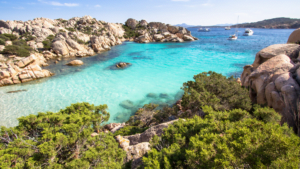
Best beaches of Sardinia actually exist and go far beyond standard marketing catalogs. Discover the top 27 coastal gems in this ultimate guide from a local. In 2025, The World’s 50 Best Beaches elected Cala Goloritzé the number one beach globally. It is not just a generic Mediterranean destination. It is a specific and unrepeatable corner of the Sardinian coast. This guide covers all 27 must-see spots in the right order. I will give you the details you actually need. You will find real access info, actual crowd levels, mandatory reservations, and a few truths that glossy catalog sites tend to leave out.
Best Beaches of Sardinia
Gulf of Orosei and Ogliastra: The Coves You Have to Earn
Forty kilometers of vertical limestone coast. You can access them almost exclusively by sea or through challenging trekking paths. No road goes all the way down to the water. This is exactly what makes the Gulf of Orosei unique in Europe. In my experience, the effort keeps the magic alive.
1. Cala Goloritzé: The Most Beautiful Beach in the World
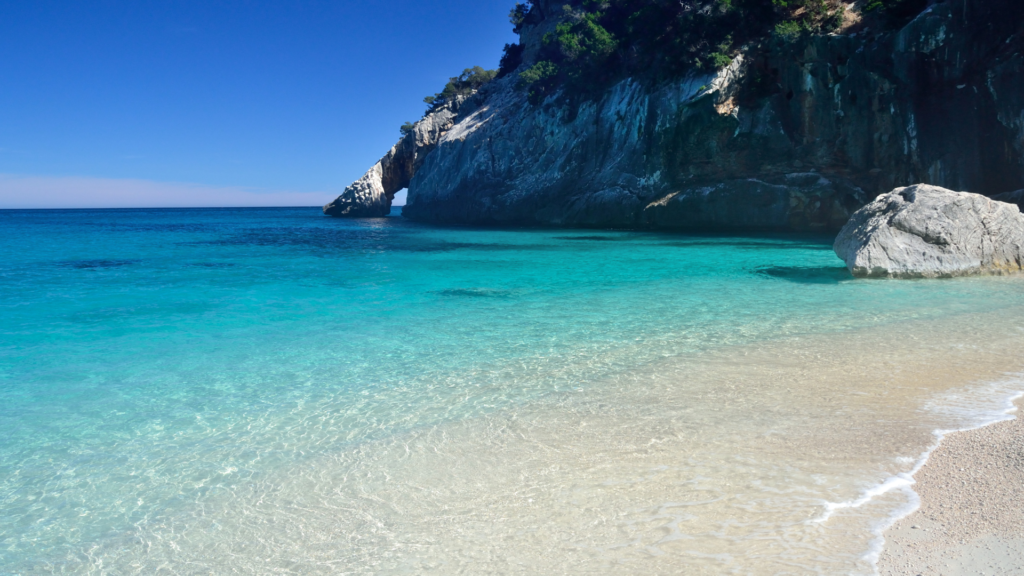
In 2025, The World’s 50 Best Beaches ranked it absolute first. Is anyone who knows the island surprised? Not at all. Cala Goloritzé has been a National Natural Monument since 1993. People have considered it one of the most extraordinary shores in the Mediterranean for decades.
The beach opens below the cliffs of Punta Caroddi. This limestone needle exceeds 140 meters in height. The incredibly fine white pebbles almost look plasticized by the light. The water changes color depending on the depth. It is emerald green near the shore and cobalt blue further out. Underwater karst springs feed an almost unnatural transparency.
How do you get there? Only by sea via a boat trip from Cala Gonone, Baunei, or Santa Maria Navarrese, or on foot from the Golgo plateau. The trek is about 3.5 km. The Municipality of Baunei applies an environmental fee for access. Check the updated rates on the official website before leaving. I always tell my friends to arrive by boat early in the morning during high season.
2. Cala Mariolu: Pebbles That Look Like Snow
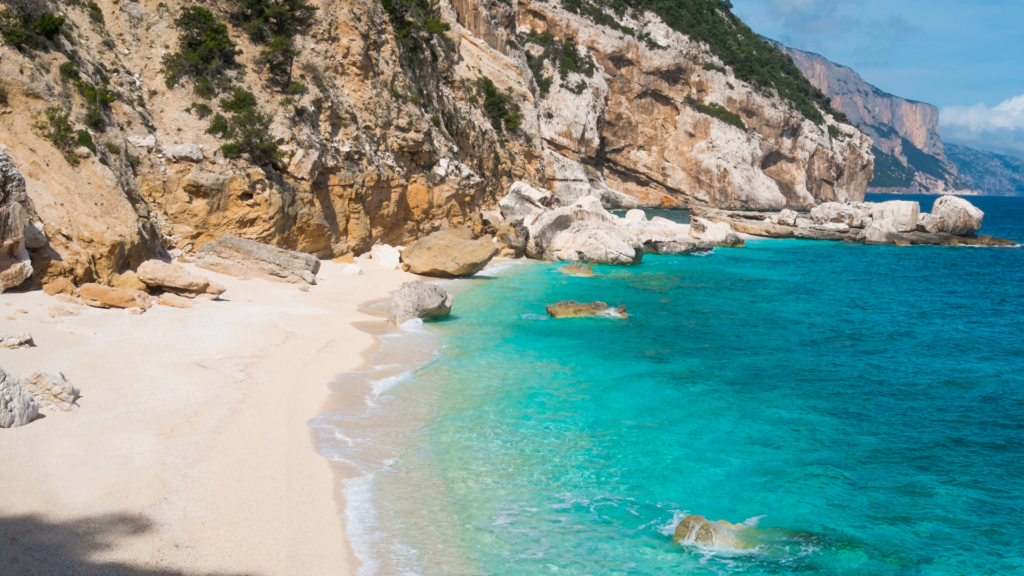
The Sardinian name is Ispuligi de nìe, which translates literally to snowflakes. The white and pink calcium carbonate pebbles match this description perfectly. Water has polished them for centuries. TripAdvisor placed Cala Mariolu in the top three beaches in Italy in 2025.
The cliffs behind the beach exceed 500 meters in height. The water is clear and deep, making it ideal for snorkeling on rocky seabeds. There are no facilities. You must bring water, food, and everything else you need. You can reach it by sea from Cala Gonone or Santa Maria Navarrese. You can also hike a demanding trail meant for expert trekkers. This is not a beach for those seeking pure comfort.
3. Cala Luna: Caves, Oleanders, and Silence
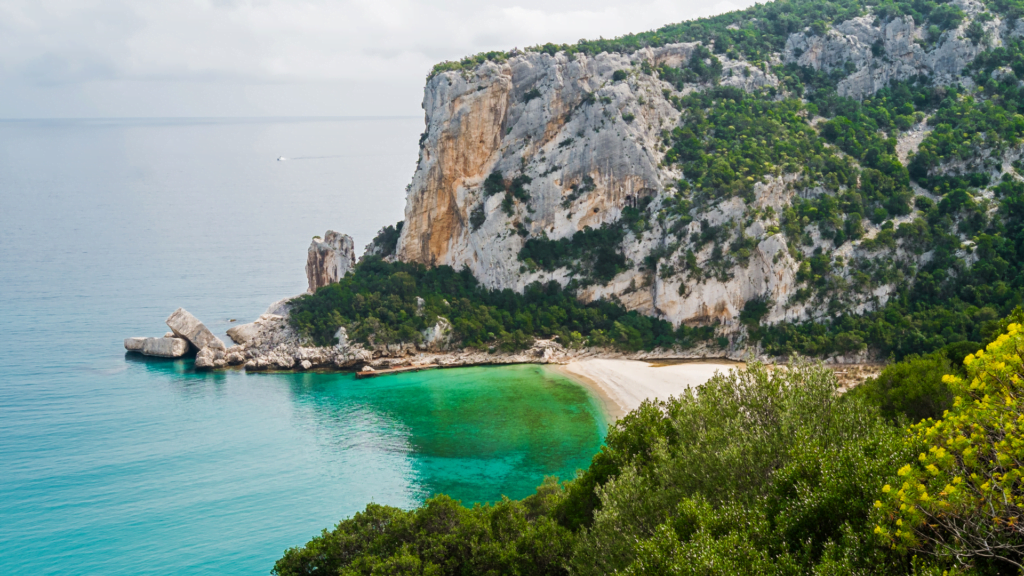
This is one of the most photographed beaches in the Gulf. Photographs rarely capture its best feature. Limestone caves open directly onto the beach. Multicolored oleanders grow inside them, forming an impossible natural garden.
The seabed is mixed. You will find fine sand towards the center and pebbles towards the edges. A small kiosk operates during the season. You can arrive by boat from Cala Gonone in 20 minutes. Alternatively, you can walk through the Supramonte trails of Dorgali. The shortest route is about 4 km, while the longer one spans 12 km with significant elevation changes.
4. Cala Sisine: The Wildest in the Gulf
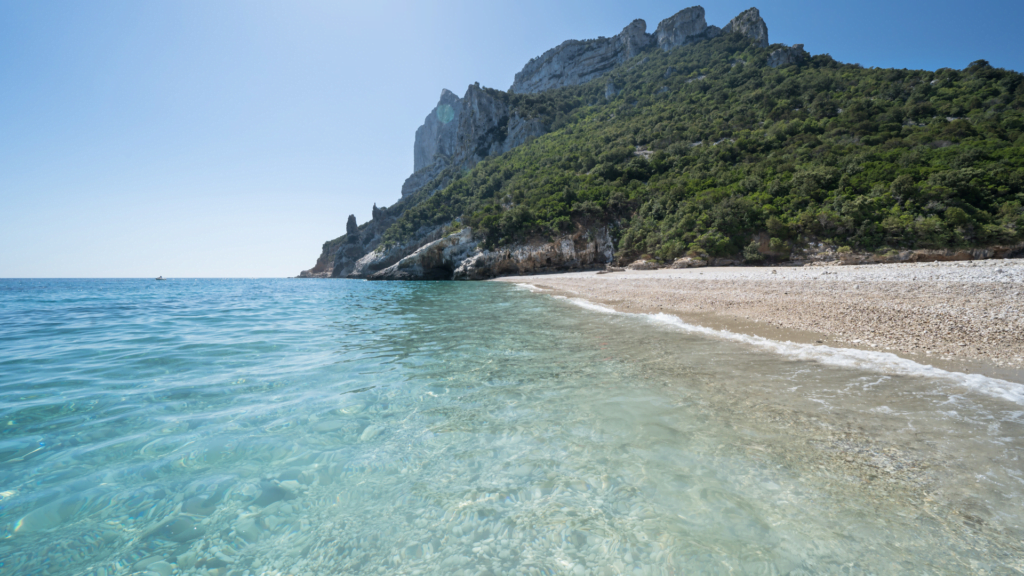
You can only access it by sea or through a trek lasting over 4 hours from the village of Baunei. Cala Sisine opens at the end of the Codula di Sisine. This deep limestone valley features a cliff that towers over 400 meters above the sea.
Expect very fine sand, transparent water, and zero facilities. There are no kiosks and no umbrellas for rent. People arriving by boat usually get about an hour to stop. Those who arrive on foot bring everything themselves. It is the hardest beach to reach among the accessible ones, and probably the most authentic.
5. Piscine di Venere: Water That Hardly Seems Real
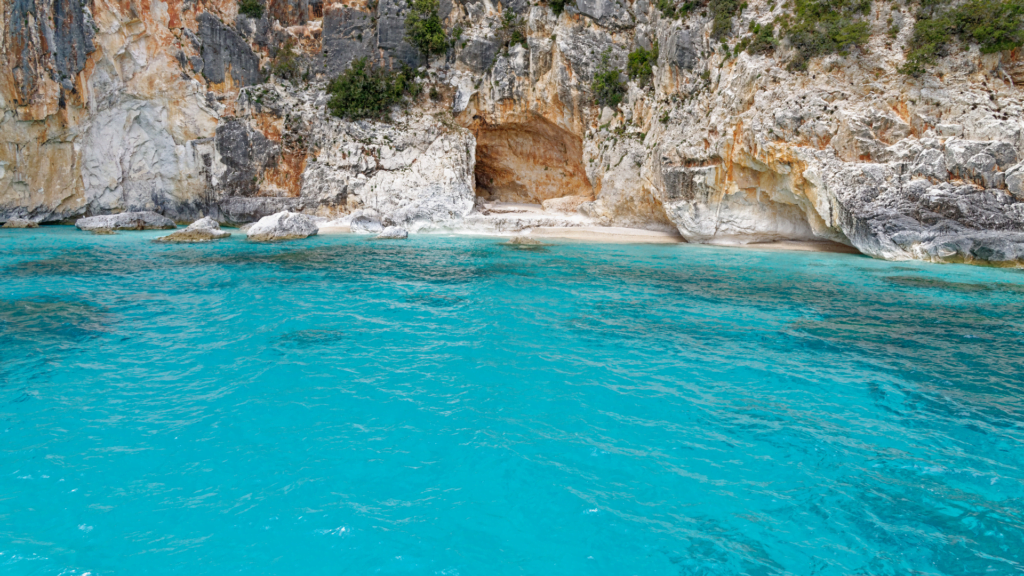
Technically, this is not a beach. It is a system of natural pools set into the limestone rock of the Baunei coast. You can only reach them by sea. Freshwater springs mix with the salty sea water. This creates an almost fluorescent turquoise hue. The luminosity is so intense that photographs never fully capture it.
The seabed is shallow and protected. Visibility reaches several meters on calm days. It remains one of the most requested stops on dinghy tours departing from Cala Gonone and Santa Maria Navarrese. There is no land access whatsoever.
Northeast: Siniscola and Orosei
The northeastern coast between Siniscola and Orosei alternates beaches protected by nature reserves with fully equipped shores. The crowding is lower compared to the Gulf of Orosei but remains high in August. September is the absolute right month for these beaches.
6. Biderosa: The Reserve with the Pine Forest
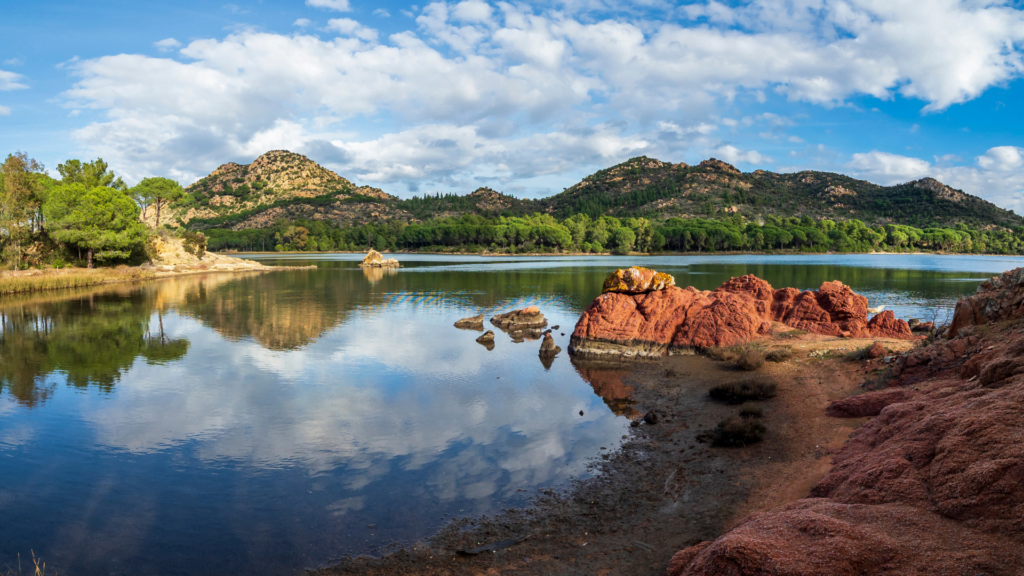
Located in the municipality of Orosei, Biderosa is a nature reserve. It protects one of the most extensive coastal pine forests in eastern Sardinia. The beach is long and sandy. The water is shallow and extremely calm, making it ideal for young children.
Access is limited with a mandatory reservation in summer. The number of daily entries is restricted to preserve the reserve. Parking requires a fee and is located away from the beach. You can truly breathe here compared to the chaos of Cala Brandinchi or La Cinta. The prior organization is completely worth it.
7. Berchida: Juniper Dunes in the Northeast
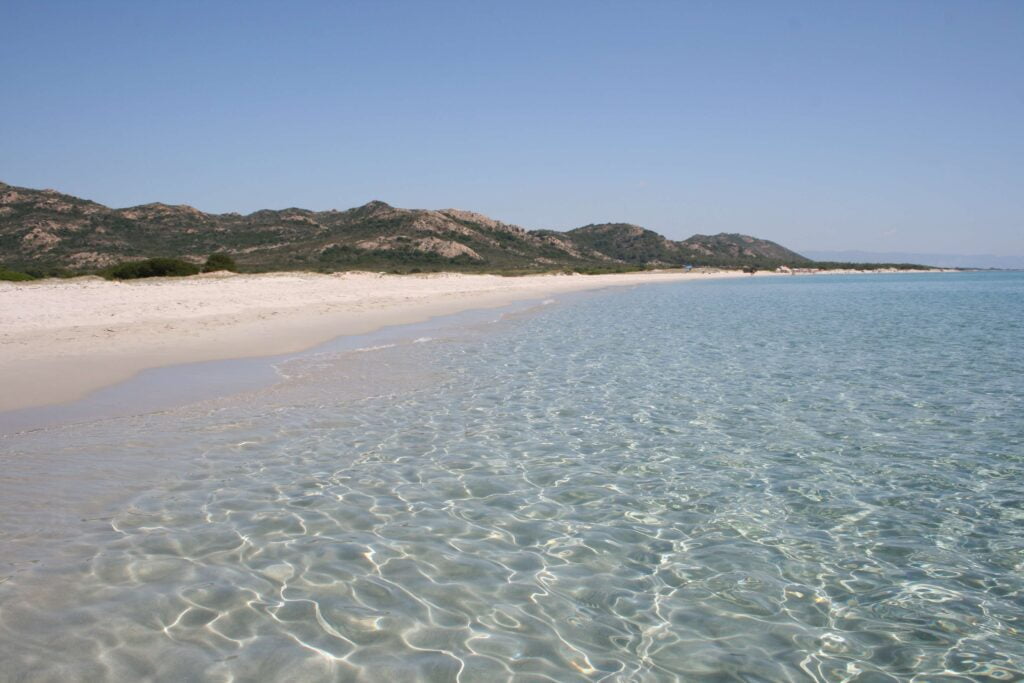
In the territory of Siniscola, Berchida is part of a nature reserve. Centuries-old junipers consolidate its white sand dunes. It is less known than the San Teodoro beaches. It remains uncrowded even in high season despite its striking beauty.
You access it via a dirt road, and parking requires a fee. Catamaran and small boat rentals are available in summer. The seabed is shallow and sandy, paired with calm waters.
8. Capo Comino: The Lighthouse, the Dunes, and Flat Water

Just a few kilometers from Siniscola, Capo Comino is one of the most underestimated beaches in the northeast. The historic lighthouse on the promontory is your visual reference point. An expanse of light sand stretches out in front with shallow and incredibly flat water. The geographical exposure of the bay naturally protects it.
It is ideal for families with young children seeking safe waters. Facilities are available, and car access is straightforward. It does not appear in major guidebooks. That alone is fantastic news.
Gallura and La Maddalena Archipelago
The northeast of Sardinia is the most famous area abroad. It boasts pink granite beaches, transparent sea, and the Archipelago islands. It is also the most crowded area overall between July and August.
9. Cala Brandinchi, San Teodoro: Little Tahiti
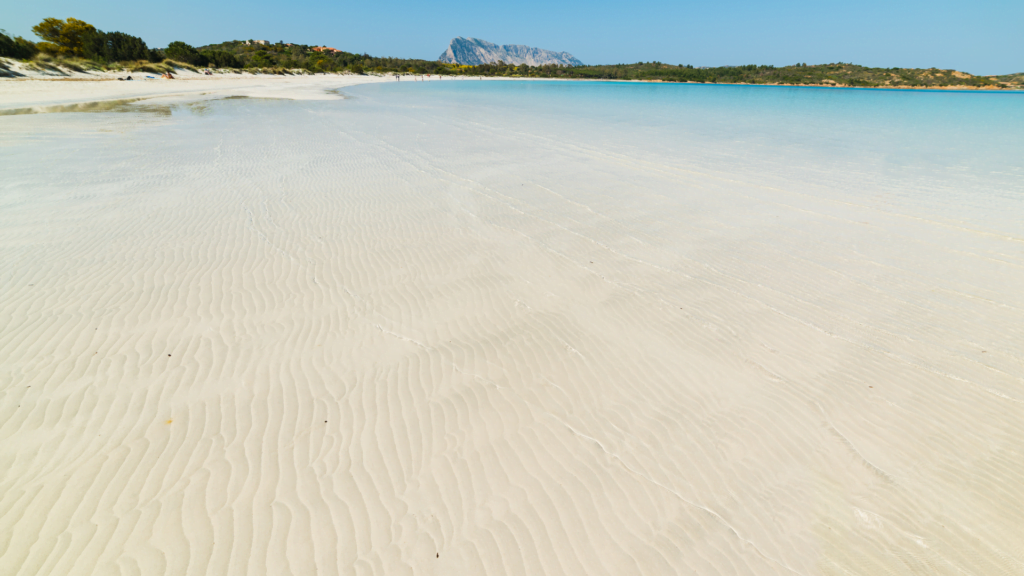
This is the most accessible among the great beaches of the northeast. Expect incredibly fine, white sand. The water is shallow and flat like a swimming pool, offering a view of Tavolara island on the horizon. They call it Little Tahiti for a very good reason.
It is overcrowded in August. Yes, parking is expensive and spots fill up fast. I know the feeling of driving around looking for a space. Arrive before 9 AM during the peak season. Outside of high season, between June and the second week of September, it easily ranks among the most beautiful beaches in Italy. You can easily pair it with La Cinta, which is just ten minutes away.
10. La Cinta, San Teodoro: Five Endless Kilometers
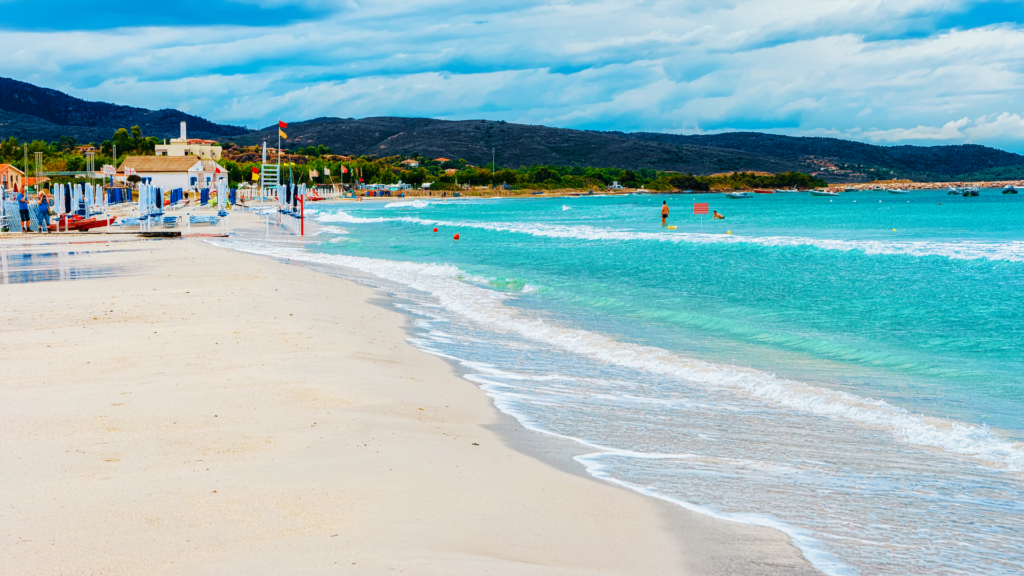
Five kilometers of white sand connect San Teodoro to the lagoon behind it. A pine forest lines the inland side while the open sea borders the outside. La Cinta is long, free, and requires no reservation. You can always find a corner for yourself.
The north wind, known as the Mistral, blows frequently. This makes the beach excellent for kite and windsurfing. It is less ideal for those seeking absolute calm. The lagoon behind it hosts beautiful pink flamingos.
11. Cala Coticcio, Caprera: The Tahiti of the Sardinians
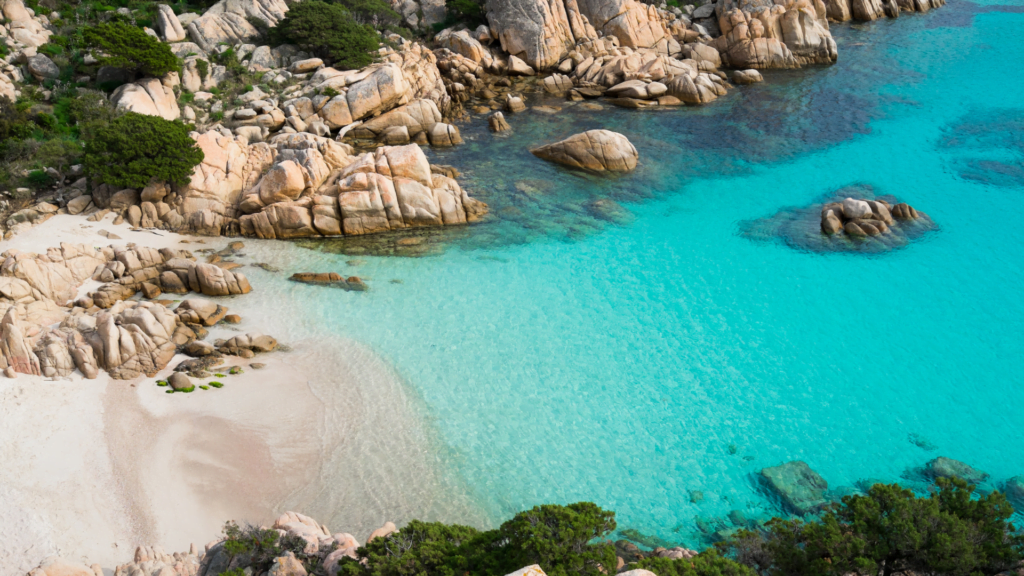
Located on the island of Caprera inside the La Maddalena Archipelago. You will find two coves of pink granite. The transparent water shows two colors, and the bottom transitions from sand to rocks. Visits are organized with mandatory accompaniment in summer to limit the environmental impact. Book well in advance.
You reach it by boat from Palau or La Maddalena. You can also walk from the interior of Caprera with a trek of about 40 minutes. The snorkeling is exceptional. The granite seabeds host unexpected biodiversity.
12. Spiaggia Rosa di Budelli: Do Not Touch the Sand
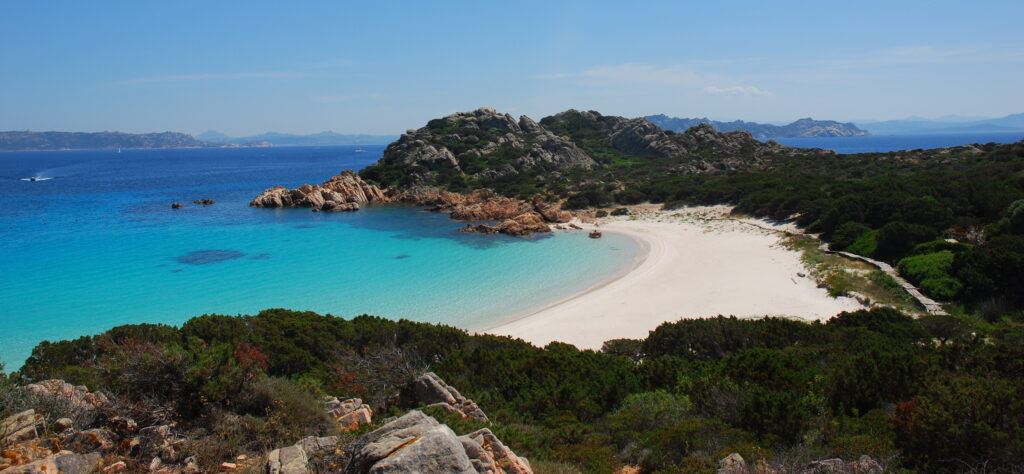
It is not accessible on foot. Since 1994, the La Maddalena Archipelago National Park has banned physical access. This preserves the pink color of the sand, which comes from fragments of the Miniacina miniacea foraminifer shells. You admire it from the water aboard a dinghy or catamaran. You can visit the island of Budelli as part of an archipelago tour.
The pink sand is mostly visible underwater, rather than on the emerged shore. Aerial photographs show it better than a close-up visit. The archipelago tour it belongs to is still entirely worth your time.
13. Spiaggia del Principe, Costa Smeralda: The Pearl of the Northeast
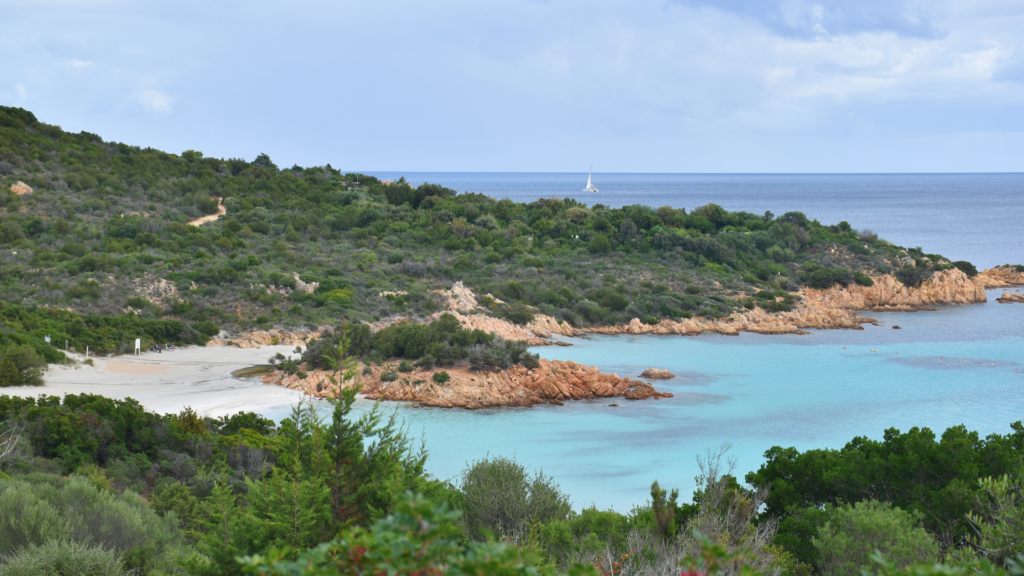
Locally known as Portu Li Coggi, it is the most beautiful beach in the Costa Smeralda and one of the most photographed in Italy. You will see maritime pines, granite, and water that shifts from green to blue in just a few meters. Parking requires a fee and involves a 10-minute walk on a path. People expecting to drive right up to the shore are always surprised.
High-quality facilities are present. Crowding in August is significant, but the beach is wide enough to absorb it. It is the most “equipped” among the wild beaches of the northeast.
Northwest: Sassari, Stintino, and Alghero
The northwest sees fewer crowds than Gallura. However, it hosts some of the most iconic beaches on the island. The Mistral wind takes center stage here and heavily influences sea quality.
14. La Pelosa, Stintino: The Caribbean of the Mediterranean
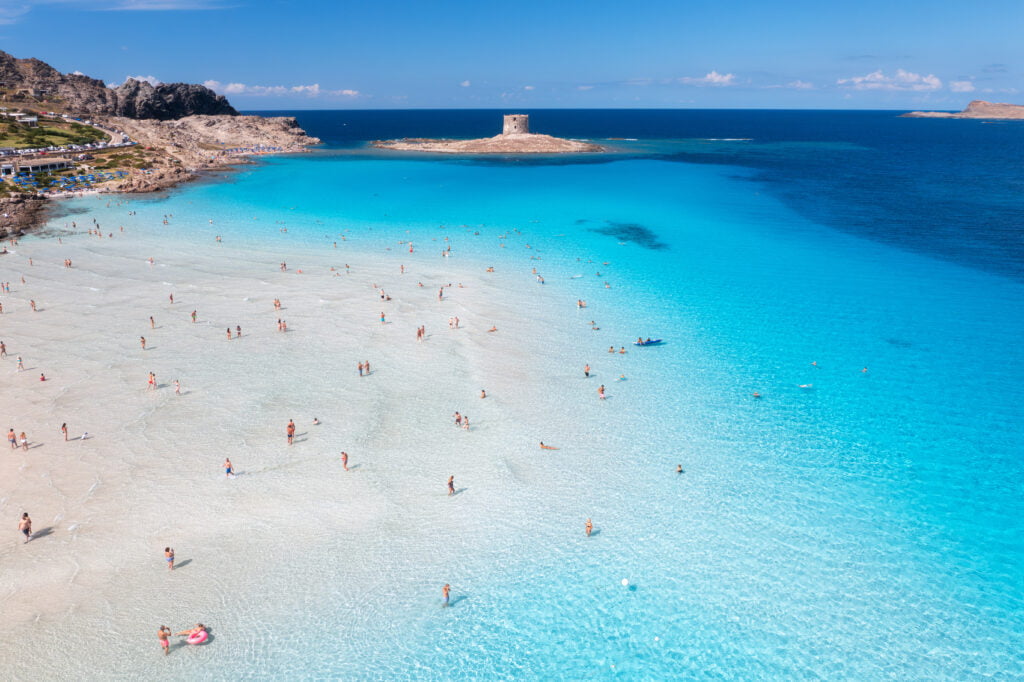
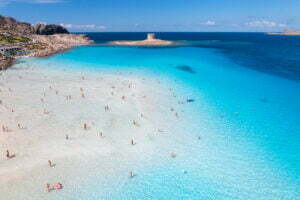
This is the most famous Sardinian beach in Italy. It is likely among the most photographed in Europe. Incredibly shallow seabed, fine white sand, green-turquoise water, and an Aragonese tower on the islet opposite. The photos do not lie.
Access is strictly limited since 2020. Mandatory reservations go through the official spiaggialapelosa.it app, offering about 1,500 daily entries. Bookings sell out in the early morning hours for July and August weekends. Mats are mandatory to prevent sand removal. You can buy or rent them on-site.
Here is a truth websites skip. When the Mistral blows hard, visibility drops. The water gets choppy, and La Pelosa loses much of its appeal. Always check the wind forecast before booking.
15. Spiaggia del Lazzaretto, Alghero: The Forgotten Jewel of the Northwest
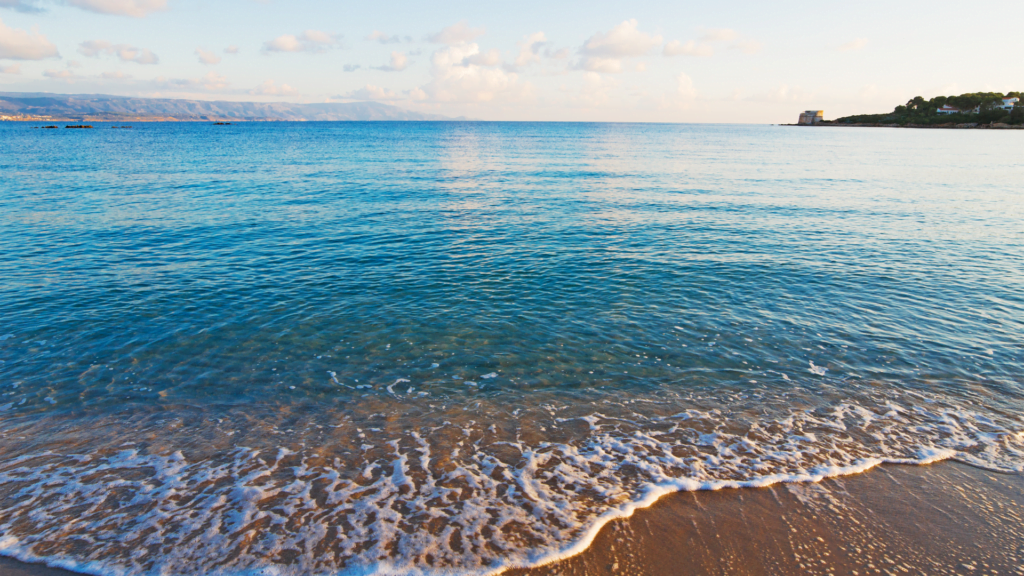
Situated between Alghero and the Calich pond, the Spiaggia del Lazzaretto is practically ignored by general tourist guides despite its incredible quality. You will find light sand, turquoise water, a pine forest behind, and a panoramic Spanish tower dominating the promontory.
It is never as overcrowded as La Pelosa, even though it is less than ten minutes from Alghero. The water is slightly less picture-perfect than La Pelosa, but it is calmer and far less exposed to the wind. It is a solid alternative if you find La Pelosa sold out or prefer to avoid the masses.
16. Porto Ferro, Sassari: Dark Dunes and Surfer Winds
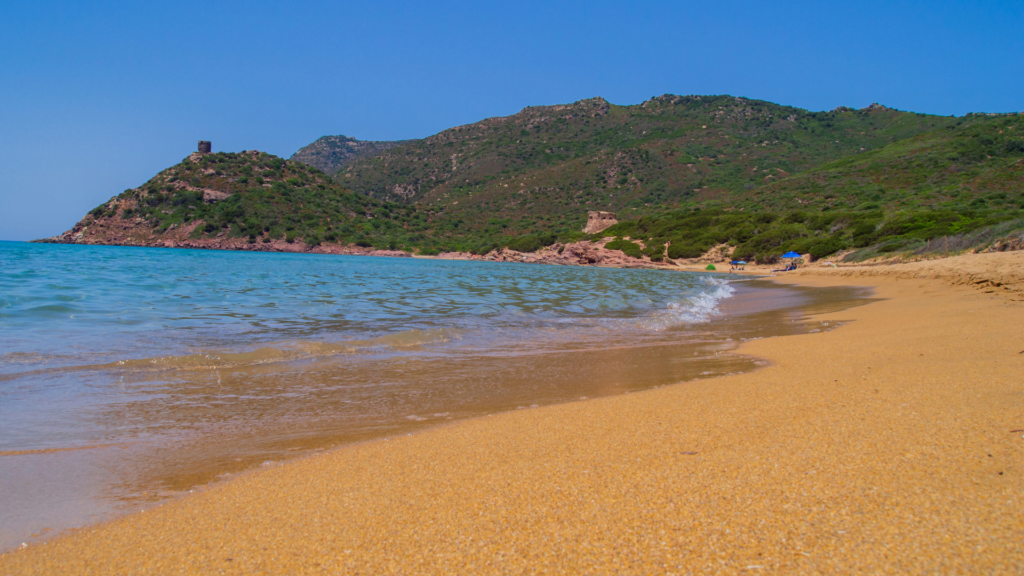
This is one of the least known and most distinctive beaches in all of Sardinia. Porto Ferro is characterized by dark sand dunes of volcanic origin. This is a nearly unique feature on the island. The constant north wind makes it a reference point for surfing and kitesurfing.
Access is via a dirt road. You will find almost no mass tourism here. The sea is open and currents can be demanding. This is not a beach for beginners in the water. It is one of the best choices in Sardinia for anyone seeking authenticity away from tourist circuits.
Sinis Peninsula: Quartz and Nuraghi
17. Is Arutas, Oristano: The Quartz Beach
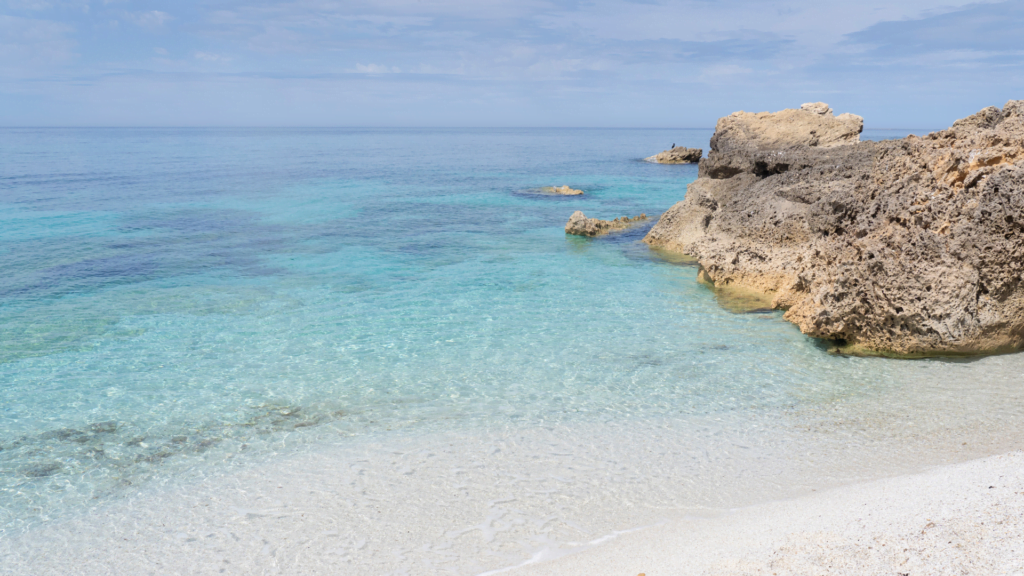
The bottom consists of white and pink quartz grains. They are rounded, shiny, and about the size of a grain of rice. Taking them away is strictly forbidden by law. The rule has existed since 2017 and is actively enforced. The water color is extraordinary specifically because light refracts off this unusual seabed.
The water is calm and shallow, making it perfect for families. It is located in the Sinis Peninsula, a few kilometers from the archaeological sites of Tharros and the town of Cabras. If you are exploring the Oristano area, you can easily pair a beach day with a cultural visit.
South, Costa Verde, and Sulcis
Southern Sardinia gathers beaches with vastly different characters. You go from the protected coves of Villasimius to the wild immensity of Piscinas, passing through local Cagliari beaches and the Costa Rei corridor. Grouping them makes geographic sense, but you absolutely need a car. The distances are significant.
18. Porto Giunco, Villasimius: Sea and Flamingos in the Same Place
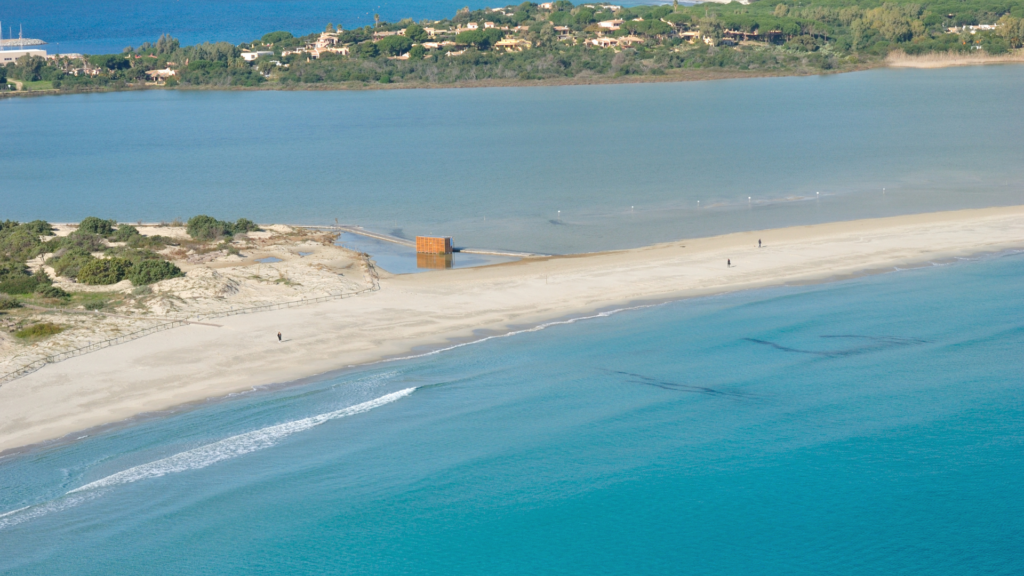
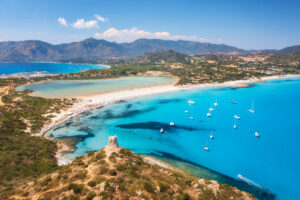
Porto Giunco offers a unique double spectacle in Sardinia. You have the turquoise sea of the Capo Carbonara Marine Protected Area on one side, and the Notteri Pond with pink flamingos on the other. A sand isthmus that you can walk across separates the two worlds.
Snorkeling on the side rocks is among the best in southern Sardinia. The marine protection has preserved the seabed biodiversity. Parking requires a fee, facilities are present, and it is never completely overcrowded even in August.
19. Punta Molentis, Villasimius: The Bicolor Bay
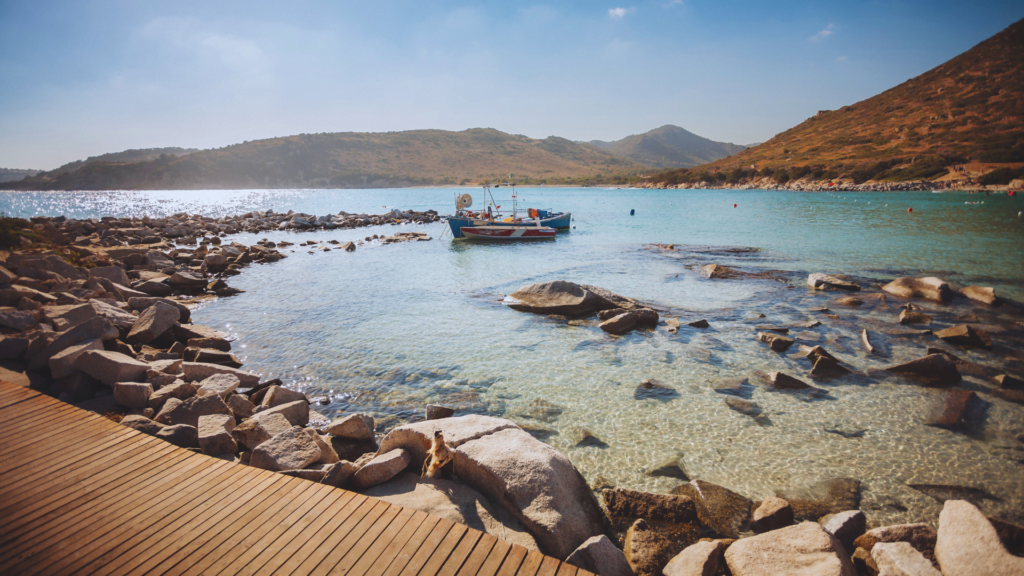
This is one of the most shared photographs of Sardinia. Two expanses of water of different colors are separated by a very thin sand isthmus. You reach Punta Molentis via a private paid shuttle or on foot via a 20-minute trail.
The northern part of the bay is calm and sandy. The southern part is more open with rocky seabeds. You cannot freely access it by car. This is precisely why it has remained relatively preserved.
20. Mari Pintau, Quartu Sant’Elena: The Painted Sea
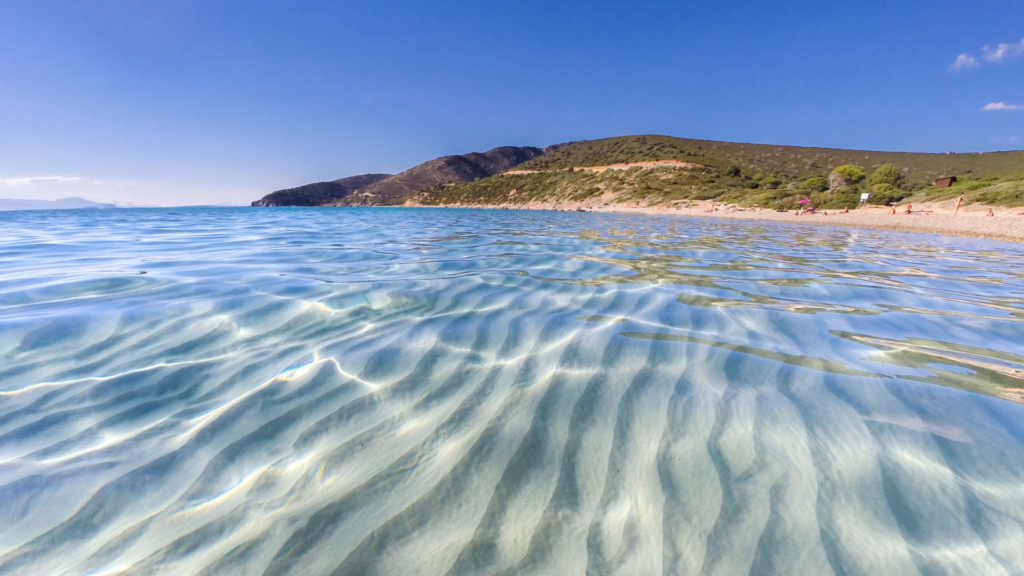
In the Sardinian language, “mari pintau” means exactly what you see. A painted sea. The light playing on the pebble and rock seabed creates turquoise and emerald shades that change every hour. It sits about 20 km from Cagliari along the SP17 road toward Villasimius in the Geremeas area.
The beach is small, roughly 270 meters long, and parking is extremely limited. Cars park along the entire edge of the SP17 in the summer, far beyond designated areas. Everyone in Cagliari knows this detail. The Municipality of Quartu Sant’Elena took over direct management in 2024 to preserve its biodiversity. The beach is part of the SIC ITB040051 Natura 2000 Network.
The seabed consists of pebbles and granite stones that turn into very fine sand as soon as you enter the water. It is perfect for snorkeling. Locals frequent it heavily while foreign tourists often miss it. It is one of those places that truly exist for the locals.
21. Spiaggia di Solanas, Sinnai: The Bay of Capo Boi
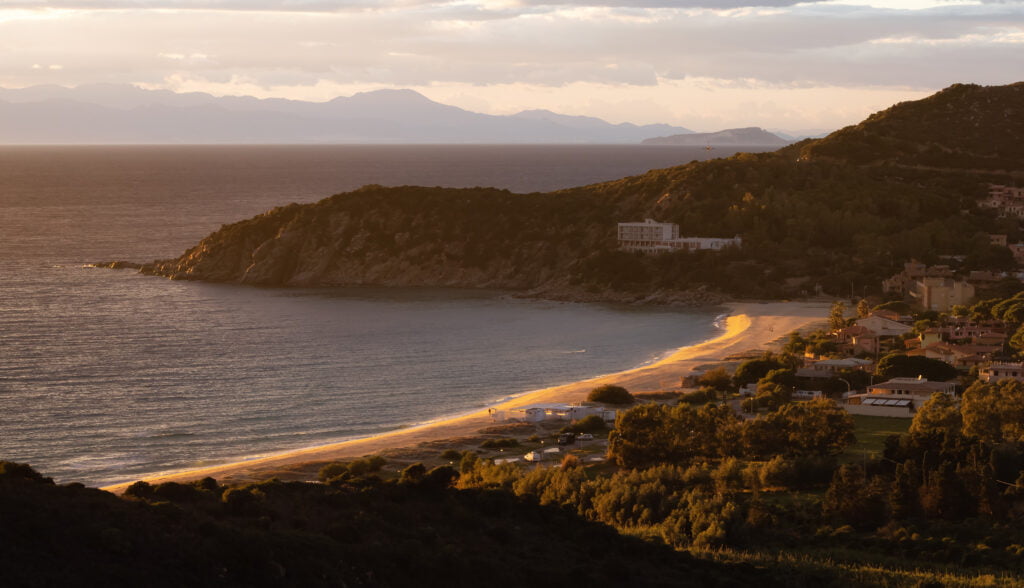
Located in the municipality of Sinnai, Solanas beach stretches for about a kilometer. It lies between the promontory of Capo Boi and Punta Porto Perdosu. The Spanish tower of Capo Boi dominates the horizon to the southeast. The sand is golden and fine. The sea is transparent with shades ranging from emerald green to light blue.
The wind is constant. This exposure makes it excellent for windsurfing and kitesurfing. The sea can be rough on certain days. The seabed drops rapidly after the shoreline. You will find a diving school and dinghy rentals to explore lateral coves reachable only by sea. It is about 12 km from Villasimius and 30 km from Cagliari.
22. Spiaggia di Santa Giusta, Castiadas: Peppino’s Rock
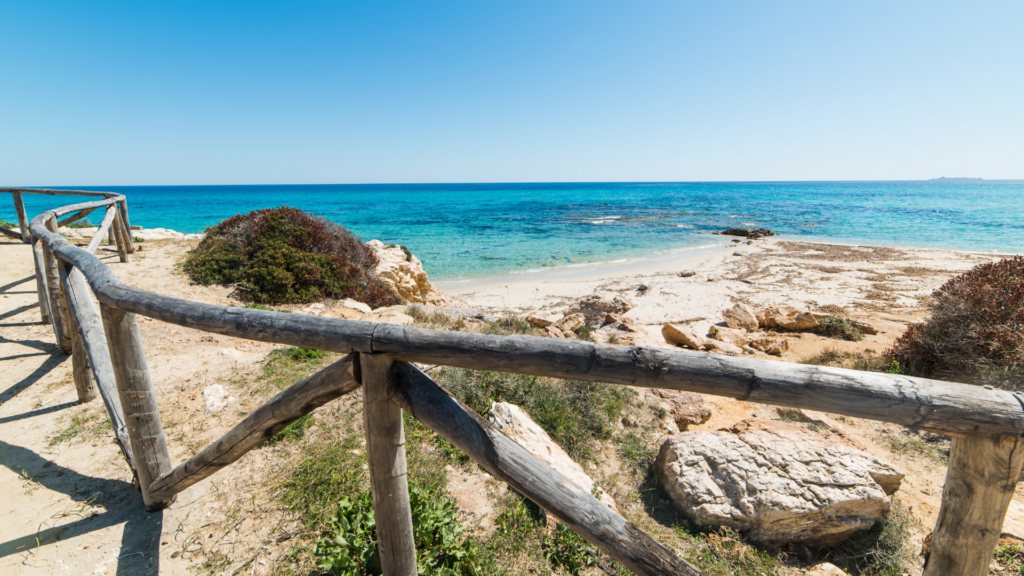
Located in the municipality of Castiadas at the northern border of Costa Rei. Santa Giusta beach extends for about 1.2 km with fine white sand. The shallow and transparent seabed creates a classic pool effect that makes this coastline safe for children.
Your reference point is Peppino’s Rock. It is a granite rock almost a hundred meters long, shaped somewhat like a turtle, emerging a few steps from the shore. You can reach it on foot during low tide. It marks the border between Castiadas and Muravera. A bronze statue of the blessing Christ stands at the top of the beach. It is well-equipped during the season with paid parking available.
23. Cala Sinzias, Castiadas: Two Kilometers of Award-Winning Waters
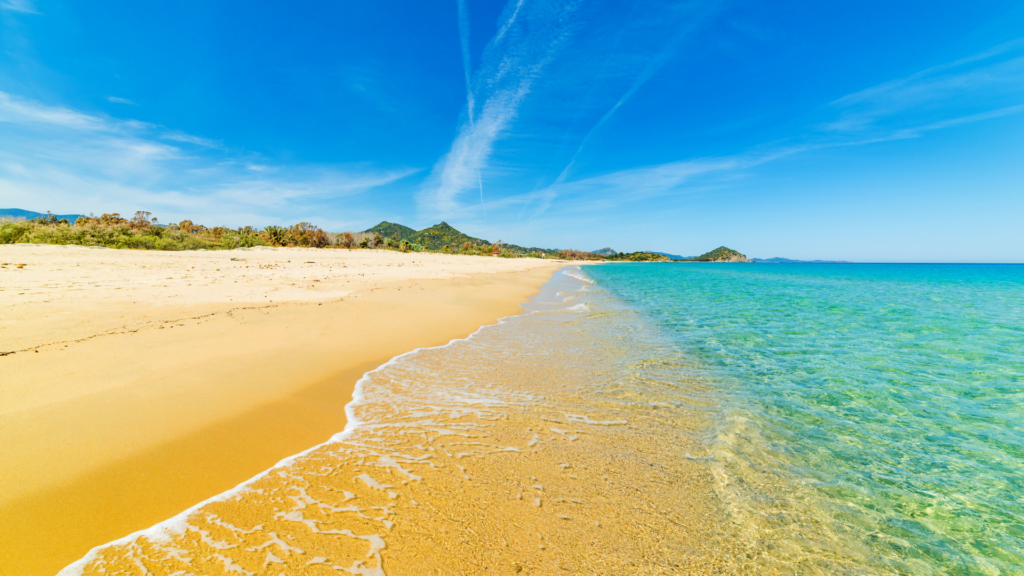
Seven kilometers from Costa Rei and fifteen from Villasimius, Cala Sinzias is a two-kilometer stretch of fine white sand. A eucalyptus forest and pine-reforested hills surround it. Legambiente’s Goletta Verde has highlighted it among the purest waters in the entire Mediterranean.
Wind is frequent, making it ideal for windsurfing and kitesurfing. The seabed is irregular despite being shallow. Submerged cliffs attract spearfishermen and snorkeling enthusiasts. Two campsites overlook the beach directly. Parking requires a fee, and shuttles from Costa Rei operate in the summer. It is completely accessible for disabled visitors.
24. Tuerredda, Teulada: The Bluest Water Triangle in the South
This is a wind-protected bay featuring an islet reachable by swimming in about five minutes from the shore. The water triangle between the beach and the islet burns with a bright blue color rarely seen in other Mediterranean beaches.
Access is limited during high season. The road closes to vehicles after a certain time, and shuttles take you to the beach. Both equipped and free zones are available. The snorkeling on the lateral rocks is remarkable.
25. Su Giudeu, Chia: Juniper Dunes and Flat Sea
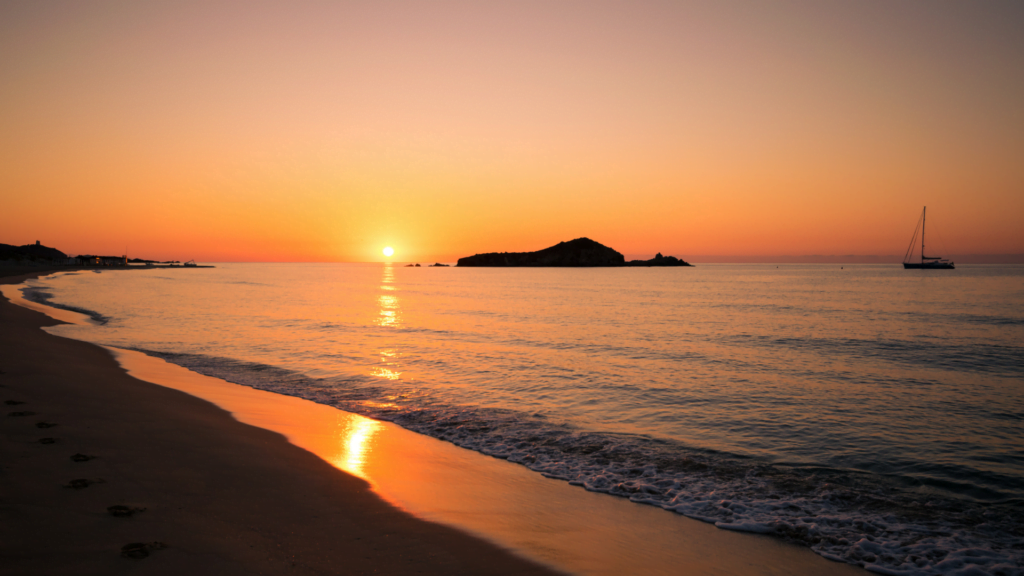
The dunes of Su Giudeu are among the highest in southern Sardinia. Centuries-old junipers colonize them, forming a dense and fragrant scrub. The sea is generally flat and calm, heavily protected by the coastline’s layout.
The wind blows often, attracting kitesurfers and windsurfers. A sand passage towards a small islet appears during low tide. You can see the Aragonese towers of Chia from the shoreline. It easily pairs with a visit to the Punic-Roman site of Bithia just a few kilometers away.
26. Piscinas, Costa Verde: The Sahara of Sardinia
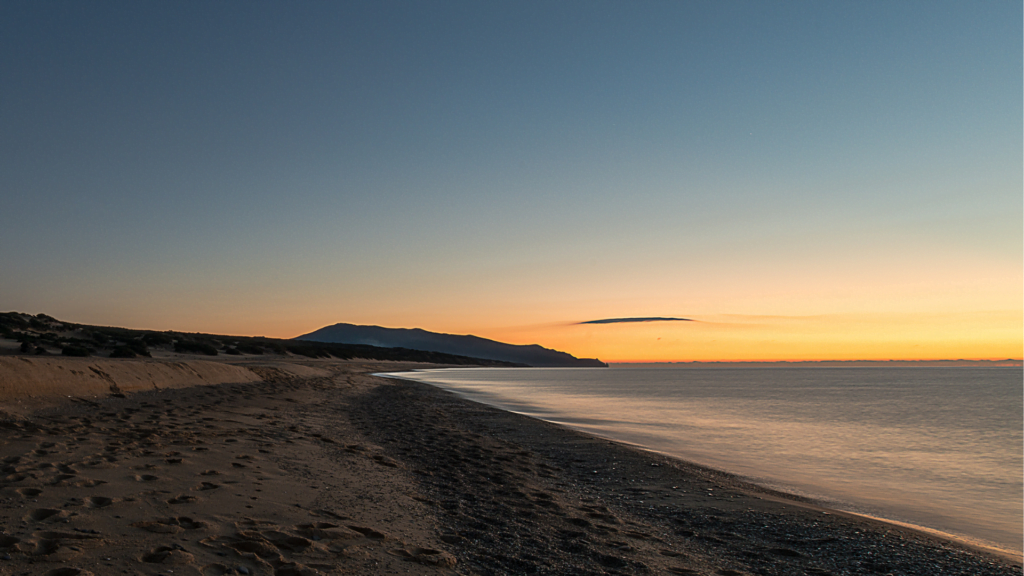
The dunes of Piscinas reach 60 meters in height and are the tallest in Europe. It is a desert landscape you never expect. Golden sand, Mediterranean scrub, no facilities, and no umbrellas. The access road is unpaved and requires a car with good ground clearance.
The ocean currents are highly demanding. Piscinas is absolutely not a beach for inexperienced swimmers or young children. If you seek an authentic experience far from mass tourism, this is one of the most beautiful spots on the island. June, September, or October are best. Even here, people arrive in August.
27. Cala Domestica, Buggerru: The Passage Cave
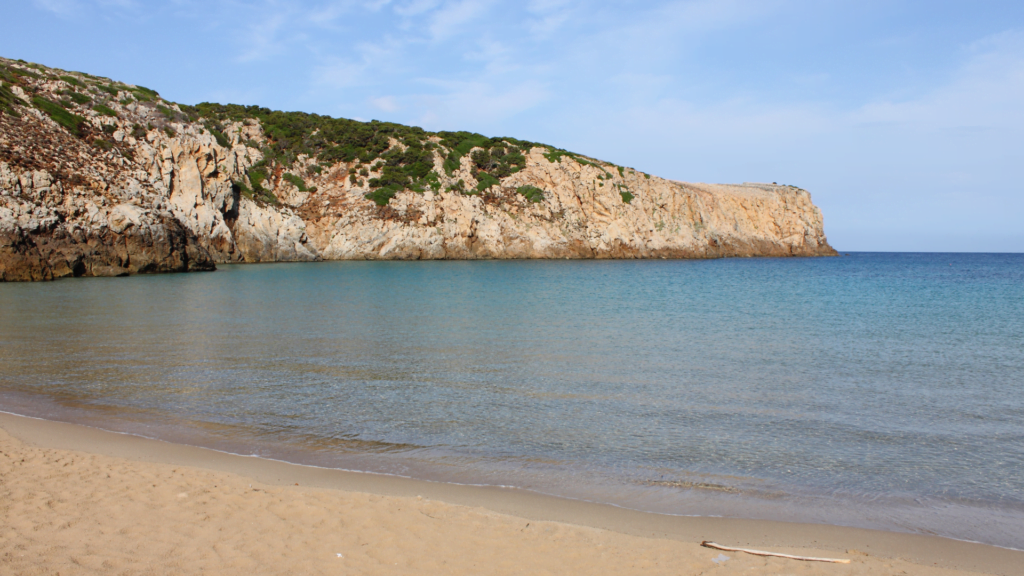
This is a limestone inlet in the Sulcis-Iglesiente region with a serious peculiarity. A cave runs through the rock and leads to a second hidden cove. You can only access it on foot through this natural tunnel. Very few beaches in the world boast this kind of natural architecture.
An Aragonese tower dominates the northern promontory. The sea is clear and the seabed is sandy. This is a former mining area. The industrial remains inland add a highly unusual historical context. Crowding is contained even in August, likely due to the distance from major southern tourist centers.
Summary Table: Which Beach is Right for You?
| No. | Beach | Area | Seabed | How to get there | Ideal for | Reservation |
|---|---|---|---|---|---|---|
| 1 | Cala Goloritzé | Gulf of Orosei | White pebbles | Boat or 3.5 km trek | Absolute beauty, snorkeling | Baunei fee |
| 2 | Cala Mariolu | Gulf of Orosei | White/pink pebbles | Boat or trek | Snorkeling, nature | No |
| 3 | Cala Luna | Gulf of Orosei | Sand + pebbles | Boat or trek | Caves, naturalism | No |
| 4 | Cala Sisine | Gulf of Orosei | Fine sand | Boat or trek (4h+) | Isolation, adventure | No |
| 5 | Piscine di Venere | Gulf of Orosei | Limestone rock | Boat only | Snorkeling, rare waters | No |
| 6 | Biderosa | Orosei | Fine sand | Car + reserve entry | Families, reserve | Yes |
| 7 | Berchida | Siniscola | White sand | Car (dirt road) | Naturalism, relax | No |
| 8 | Capo Comino | Siniscola | Sand, flat water | Car | Families, children | No |
| 9 | Cala Brandinchi | San Teodoro | Very fine sand | Car | Families, beauty | No |
| 10 | La Cinta | San Teodoro | White sand | Car | Walks, wind | No |
| 11 | Cala Coticcio | Maddalena Arch. | Pink granite, sand | Boat or trek | Snorkeling, couples | Yes (guided) |
| 12 | Spiaggia Rosa Budelli | Maddalena Arch. | Pink sand | Boat only | Photography, boat | Yes (boat only) |
| 13 | Spiaggia del Principe | Costa Smeralda | Granite, sand | Car + 10 min walk | Beauty, facilities | No |
| 14 | La Pelosa | Stintino | White sand | Car + app | Very shallow water | Yes (app required) |
| 15 | Lazzaretto | Alghero | Light sand | Car | La Pelosa alternative | No |
| 16 | Porto Ferro | Sassari | Dark dunes | Car (dirt road) | Surf, authenticity | No |
| 17 | Is Arutas | Sinis/Oristano | White/pink quartz | Car | Families, uniqueness | No |
| 18 | Porto Giunco | Villasimius | Sand, rocks | Car | Flamingos, snorkeling | No |
| 19 | Punta Molentis | Villasimius | White sand | Shuttle or path | Photography, beauty | No |
| 20 | Mari Pintau | Quartu Sant’Elena | Pebbles + sand | Car (limited parking) | Snorkeling, locals | No |
| 21 | Solanas | Sinnai | Golden sand | Car | Surf, diving, families | No |
| 22 | Santa Giusta | Castiadas | Fine white sand | Car | Families, children | No |
| 23 | Cala Sinzias | Castiadas | Fine sand | Car | Surf, snorkeling, camper | No |
| 24 | Tuerredda | Teulada | Sand + rocks | Shuttle in summer | Snorkeling, islet | Yes (in season) |
| 25 | Su Giudeu | Chia | Sand, dunes | Car | Kite, dunes, nature | No |
| 26 | Piscinas | Costa Verde | Sand + 60m dunes | Car (dirt road) | Isolation, dunes | No |
| 27 | Cala Domestica | Buggerru | Sand + rock | Car | Cave, history | No |
What to Do: Excursions and Activities at the Most Beautiful Beaches
Some of the most incredible spots are only reachable by sea. You have numerous booking options for every budget.
Dinghy Trip in the Gulf of Orosei from Cala Gonone
This is the classic excursion to see Cala Goloritzé, Cala Mariolu, Cala Biriola, and Piscine di Venere in a single day. Small dinghies carrying max 12 people guarantee a much more intimate experience than motor ships. Snorkeling stops are included, and the kit is provided on board.
Book the dinghy tour on Viator
Guided Boat Tour Along the Baunei Coast (Full Day)
Departure from Santa Maria Navarrese or Arbatax. The itinerary covers the entire southern coast of the Gulf of Orosei. You will stop at Cala Goloritzé, Cala Mariolu, and Cala Luna. A local guide on board provides commentary on the history and geology of the Gulf.
Cala Mariolu and Cala Goloritzé Dinghy Tour with Private Skipper
This option is for those who want flexibility on stops and duration. It includes a small group, a dedicated skipper, and a customizable itinerary. You will also see Piscine di Venere and Cala dei Gabbiani.
Book the tour with a private skipper on Viator
Snorkeling in the Capo Carbonara Marine Protected Area, Villasimius
Take a boat excursion with a marine biologist guide in the protected area of Capo Carbonara, between the islands of Cavoli and Serpentara. It lasts about 4 hours with small groups of max 15 people. Snorkeling equipment and drinks are included. This is one of the richest snorkeling areas in the Mediterranean, full of posidonia, groupers, octopuses, and numerous fish species.
Book snorkeling in Villasimius on Viator
La Maddalena Archipelago Boat Tour from Palau (Full Day)
The most booked tour of the archipelago departs from Palau. Stops include Spargi, Budelli to see the Pink Beach, and Santa Maria. You have an optional final stop at Cala Coticcio on Caprera. Commentary is in multiple languages, and lunch on the boat is available. It has over 1,100 verified reviews on Viator.
Book the Archipelago tour on Viator
Dinghy and Snorkeling in Chia and Tuerredda
Enjoy a dinghy excursion along the Chia coast with snorkeling stops at Cala Cipolla, Capo Malfatano, and Tuerredda. A local skipper joins you on board. Departure includes pickup from Cagliari. You explore the southern coast from a vantage point that does not exist from land.
Book the dinghy tour in Chia on Viator
Getting Around: Car Rental in Sardinia
A car is absolutely essential to reach most of the beaches on this list. There is no practical alternative to visit Piscinas, Porto Ferro, Berchida, Is Arutas, or the Castiadas shores without your own vehicle. Bus schedules do not allow for a full beach day even for famous spots like La Pelosa or Cala Brandinchi.
You can compare prices and book directly from your arrival airport:
- Cagliari Airport (Elmas): compare prices on DiscoverCars, recommended for Villasimius, Costa Rei, Chia, Piscinas, Oristano.
- Olbia Airport: compare prices on DiscoverCars, recommended for San Teodoro, Cala Gonone, Archipelago, Costa Smeralda.
- Alghero Airport: compare prices on DiscoverCars, recommended for La Pelosa, Porto Ferro, Stintino.
Alternatively, you can compare all offers for Sardinia.
The Local Point of View: A Sardinian Perspective
Three things locals know and tourist sites will not tell you.
The Mistral wind is real. The northwest wind blows for periods of three or four consecutive days between July and August. North-facing beaches like La Pelosa or La Cinta become difficult to enjoy. The sea gets rough, sand flies everywhere, and underwater visibility drops. People wanting flat summer seas choose east or south-facing beaches like Villasimius, Costa Rei, or Cala Brandinchi. The Mistral does not reach them in the same way. Always check the wind forecast on Windy or a marine weather service before leaving.
August is too late. The Gulf of Orosei beaches fill up during the middle weeks of August in a way many foreign tourists never expect. People book dinghies weeks in advance. Cala Gonone parking lots are full by 8 AM. Why do locals avoid August? June and September are the months locals have always recommended. The sea is already warm, beaches are only half full, and prices are lower. This applies to almost the entire south and northeast of the island.
Distances in Sardinia are a different story. Everything looks close on the map. Cagliari to Cala Gonone is about 200 km, but the road climbs through the Gennargentu mountains and takes over three hours. Oristano to Stintino is almost 200 km and a two-and-a-half-hour drive. Do you plan to do the Gulf of Orosei and Gallura in the same week without accepting at least four hours of daily driving? You risk spending more time in the car than on the beach. Picking one geographical area and exploring it deeply is the exact strategy locals use for their own vacations.
FAQs on the Most Beautiful Beaches in Sardinia
What is the most beautiful beach in Sardinia?
In 2025, The World’s 50 Best Beaches elected Cala Goloritzé the most beautiful beach in the world. It is located in the municipality of Baunei in the Gulf of Orosei. You can only access it by sea or with a 3.5 km trek from the Golgo plateau. It has been a National Natural Monument since 1993.
Which beaches in Sardinia require a reservation?
La Pelosa in Stintino requires a mandatory reservation through the official spiaggialapelosa.it app with a paid ticket. Biderosa in Orosei requires a reservation to enter the nature reserve. Cala Coticcio on Caprera mandates guided tours in the summer. The Municipality of Baunei applies an environmental fee for access to Cala Goloritzé by boat.
What is the best beach in Sardinia for families with children?
It strictly depends on age. For young children seeking shallow and safe water, check out Cala Brandinchi in San Teodoro, Santa Giusta in Castiadas, Capo Comino in Siniscola, and Is Arutas in Oristano. Families wanting a nature experience should visit Biderosa with its reserve and pine forest.
When is the best time to visit the beaches of Sardinia?
June and September are the undisputed favorite months for locals. The sea is warm, hitting 22 to 25 degrees Celsius. The beaches are far less crowded than in August. Parking is easier to find, and prices are generally lower. July is already high season but remains acceptable in the first two weeks.
Where can I find the most beautiful wild coves?
The Gulf of Orosei coastline offers untouched gems like Cala Mariolu and Cala Goloritzé, accessible only by boat or hiking.
Can you only reach the Gulf of Orosei beaches by boat?
Almost all of them require a boat, at least the most spectacular ones. You can reach Cala Goloritzé, Cala Mariolu, Cala Sisine, Cala Luna, and Piscine di Venere by boat from Cala Gonone, Orosei, Baunei, or Santa Maria Navarrese. Some have alternative trekking trails like Cala Luna and Cala Goloritzé. However, these require 3 to 12 km of walking on demanding terrain.
What are the best beaches in the south?
The southeastern tip is home to incredible spots like Porto Giunco in Villasimius, famous for its white sand and nearby flamingos.
Is there a coast with impressive sand dunes?
Yes, for a desert-like experience, you must visit the Piscinas dunes on the West Coast, which are among the highest in Europe.
Sources
- Sardinia Tourism, Sardinia Region, official beach profiles
- Municipality of Castiadas, official website, “The Sea” section
- Municipality of Baunei, Cala Goloritzé access information
- The World’s 50 Best Beaches 2025, international classification
- Ministry of Culture IDESE, coastal natural heritage profiles
- Goletta Verde, Legambiente, Italian marine water rankings
- Tourist Association of Quartu Sant’Elena, Mari Pintau profile
- SardegnaTurismo, Solanas, Santa Giusta, Cala Sinzias, and Mari Pintau profiles