
Neptune’s Grotto is one of Sardinia’s most striking sea caves, carved into the cliffs of Capo Caccia near Alghero, and visiting it well comes down to two things most guides skip: knowing exactly how to get in, and knowing that the wind can shut the whole thing down without warning. This guide covers tickets, opening hours, the boat versus the stairs, and the practical details that actually matter once you’re standing at Capo Caccia wondering why the boats aren’t running.
Where Is Neptune’s Grotto
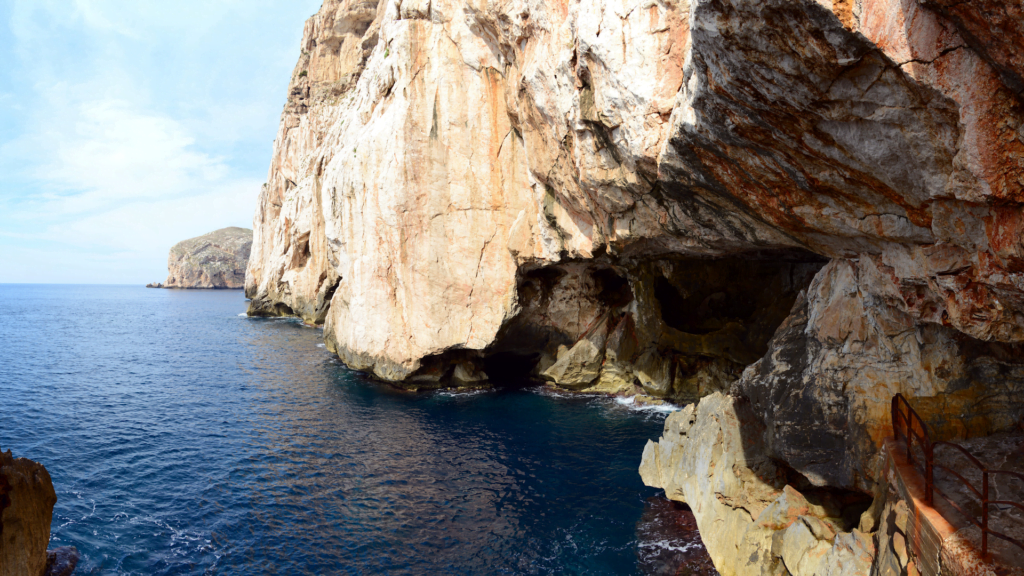
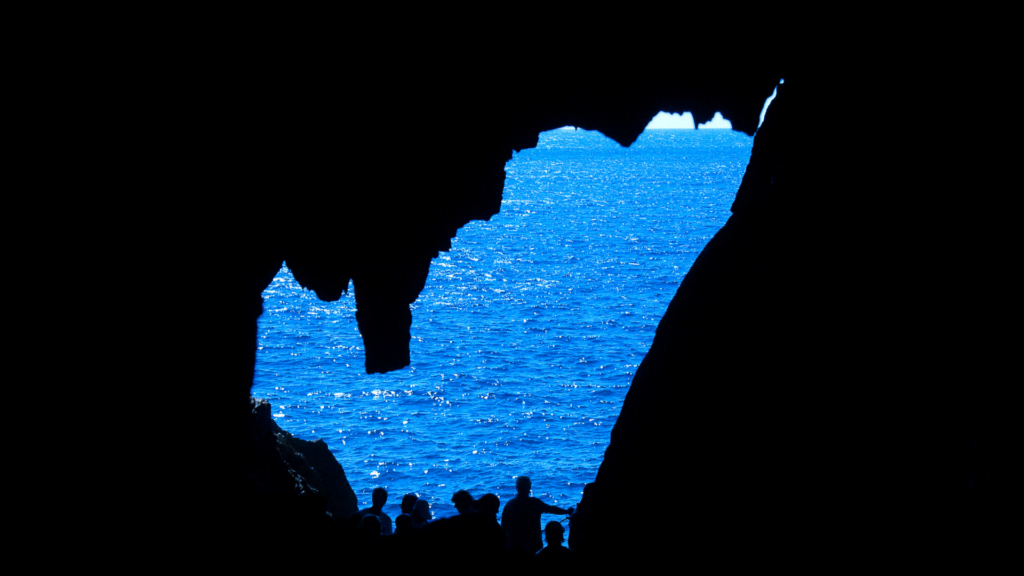
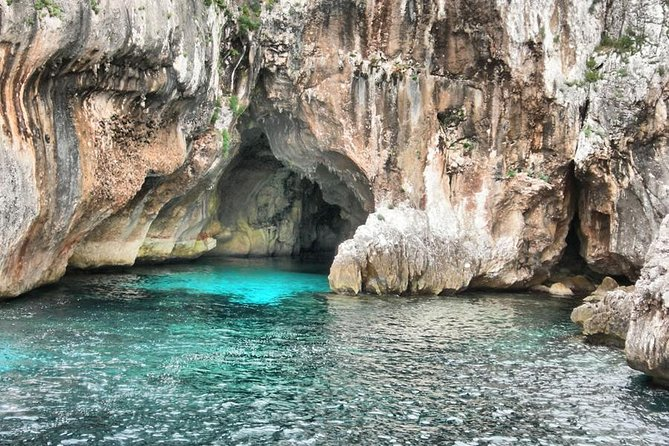
Neptune’s Grotto, Grotta di Nettuno in Italian, opens into the limestone cliffs of Capo Caccia, a dramatic promontory about 25 km west of Alghero, inside the Porto Conte protected marine area in northwest Sardinia. The promontory itself rises close to 300 metres above the sea, and the cave entrance sits roughly two thirds of the way down the cliff face.
| Quick facts | |
|---|---|
| Nearest town | Alghero, about 25 km |
| Nearest airport | Alghero-Fertilia (AHO) |
| Steps from the land entrance | 654 (Escala del Cabirol) |
| Boat trip duration | Around 35 to 40 minutes one way |
| Guided visit inside the cave | About 40 minutes |
History and Geology
Geological Formation
Local fishermen are credited with discovering the cave back in the 18th century, although its more systematic exploration is tied to Alberto La Marmora, the Italian geographer whose name was later given to the lake inside. The site opened to the public as a show cave in 1959 and has remained one of Sardinia’s defining attractions ever since.
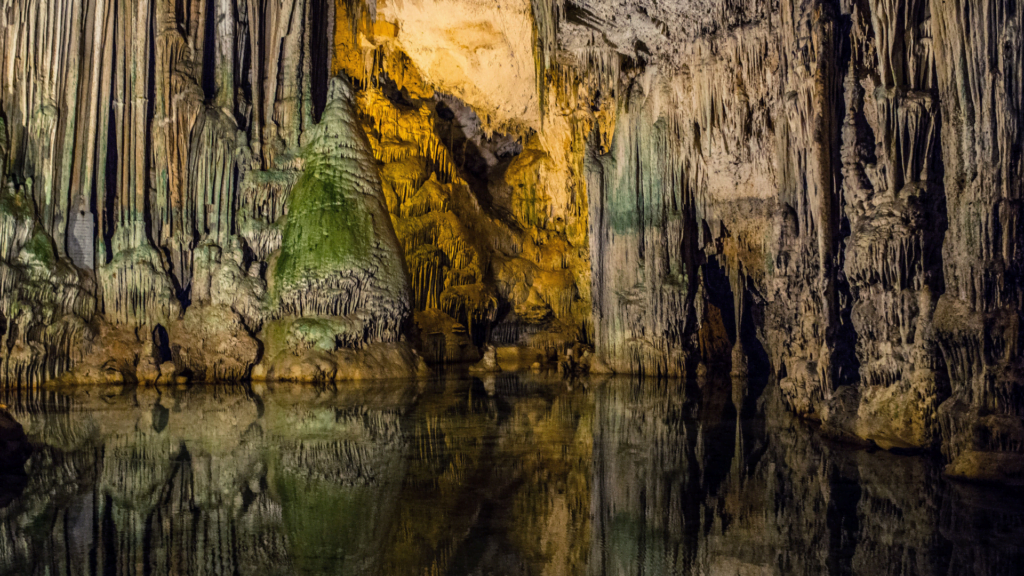
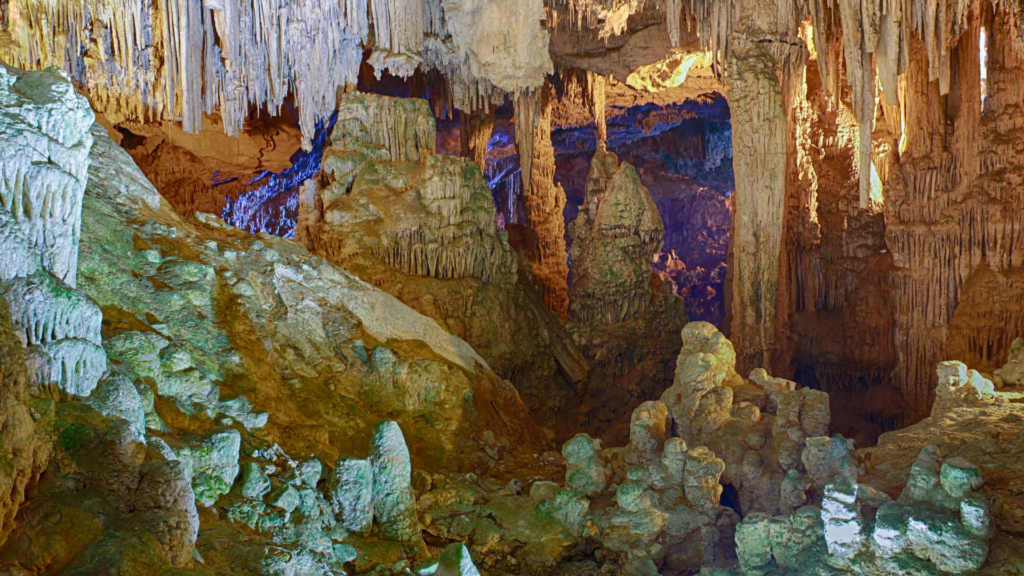
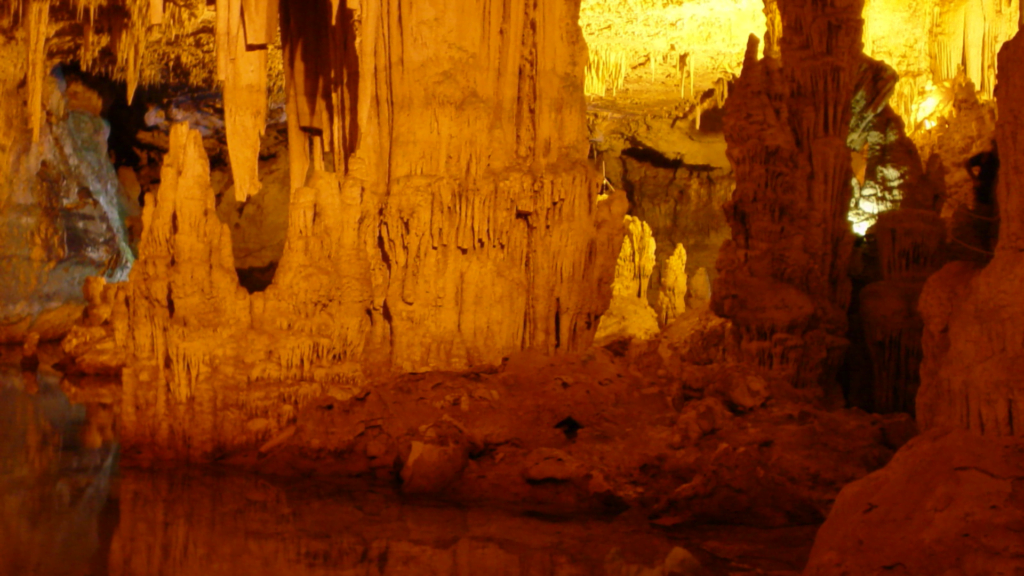
The cave formed over millions of years as seawater slowly dissolved the limestone of Capo Caccia, a process geologists call karst erosion, the same mechanism behind most of the Mediterranean’s great sea caves. The full system stretches around 4 km into the cliff, though only about 500 metres, the most spectacular section, is open for visits.
La Marmora explored and documented the lake that now carries his name back in the 19th century, and his notes are part of why the site was eventually developed for public access rather than left as a curiosity known only to local fishermen.
What’s Inside Neptune’s Grotto
Rooms To Visit
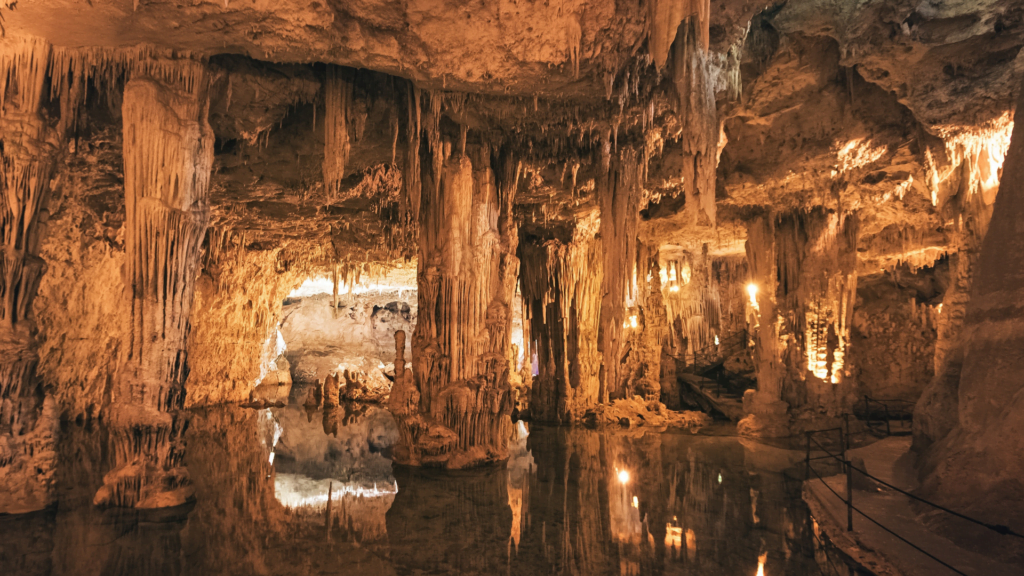
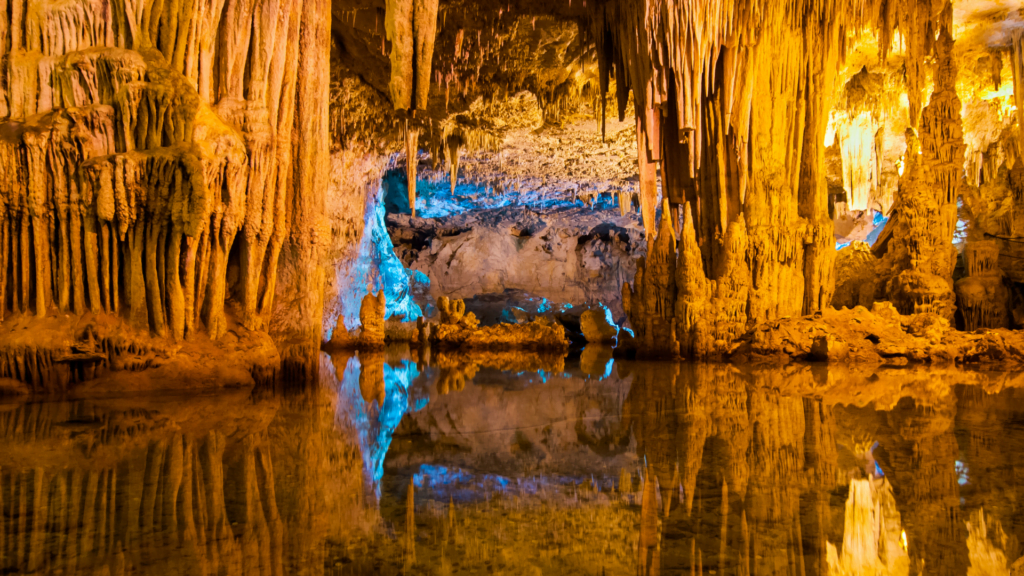
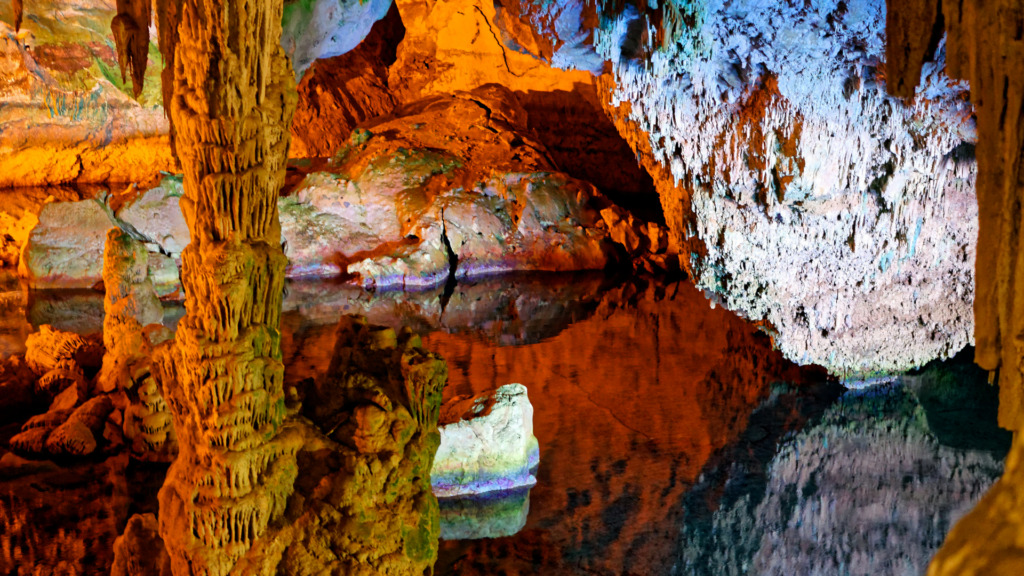
The path follows the edge of Lake La Marmora, a still saltwater lake roughly 120 metres long. On a calm day the water mirrors the ceiling so precisely that it’s genuinely disorienting, in a good way.
Past the lake, the walkway opens into the Sala delle Rovine, named for the broken, ruin-like shapes of collapsed formations scattered across the floor, before continuing to la Reggia, the largest chamber on the route and the one most guides save for last.
Key Formations
Stalactites and stalagmites line the route, some reaching 10 to 15 metres tall. One column near the centre of the lake, nicknamed the Organ, is the formation most photos online focus on, and it’s worth seeing in person rather than through a screen.
Neptune’s Grotto Opening Hours and Tickets
Opening hours change with the season: longer hours and more frequent boat departures from spring through autumn, a reduced schedule in winter. Always check the official site before you go, since hours and even weekday closures shift from year to year.
Ticket Prices
Expect a full price around the €14 to €18 mark for the cave entrance, with reduced rates for children and groups, plus a separate fee for the boat crossing if you go by sea. The boat ticket and the cave entrance ticket are not the same thing, and buying one doesn’t automatically include the other. Confirm current prices on the official site before planning your day around them.
Best Time to Visit
May, June and September tend to bring calmer seas alongside thinner crowds, a useful combination given how much the boat depends on weather. July and August have the most reliable opening hours and the most frequent departures, but also the longest queues and the highest odds of a sold out day. Outside the April to November season, opening days and hours shrink considerably, so anyone visiting in winter should treat a visit as a maybe rather than a certainty until confirmed locally.
How to Get to Neptune’s Grotto
By Sea
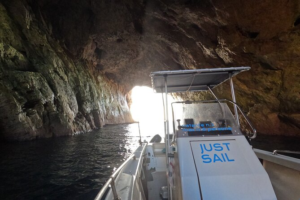
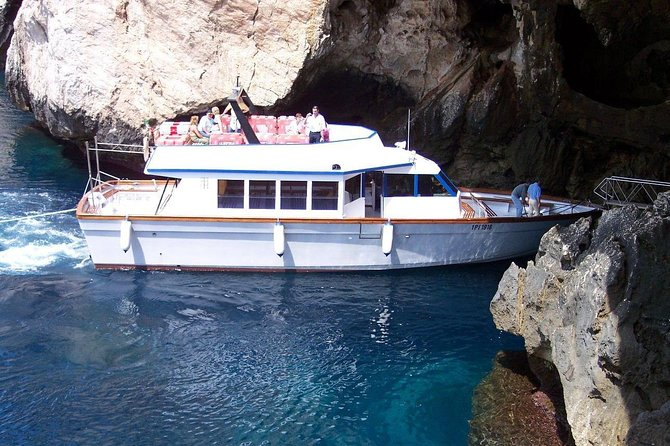
Boats leave from Alghero’s old port and take about 35 to 40 minutes to reach the cave, with stops along some of the coves of the Riviera del Corallo on the way. It’s the easier option physically, and the boat ride alone is worth doing even without continuing into the grotto.
Tickets for the boat are usually sold from kiosks right at the old port rather than online, so build some flexibility into your morning instead of expecting to lock in one exact departure time. The crossing can get choppy even on days that look calm from land, so anyone prone to motion sickness is better off taking something before boarding rather than after.
The catch: boats only run when the sea allows it. Rough water or strong wind cancels the crossing, sometimes for days at a stretch, so never plan a boat trip as the only thing you’re doing that day.
By Land: The Escala del Cabirol
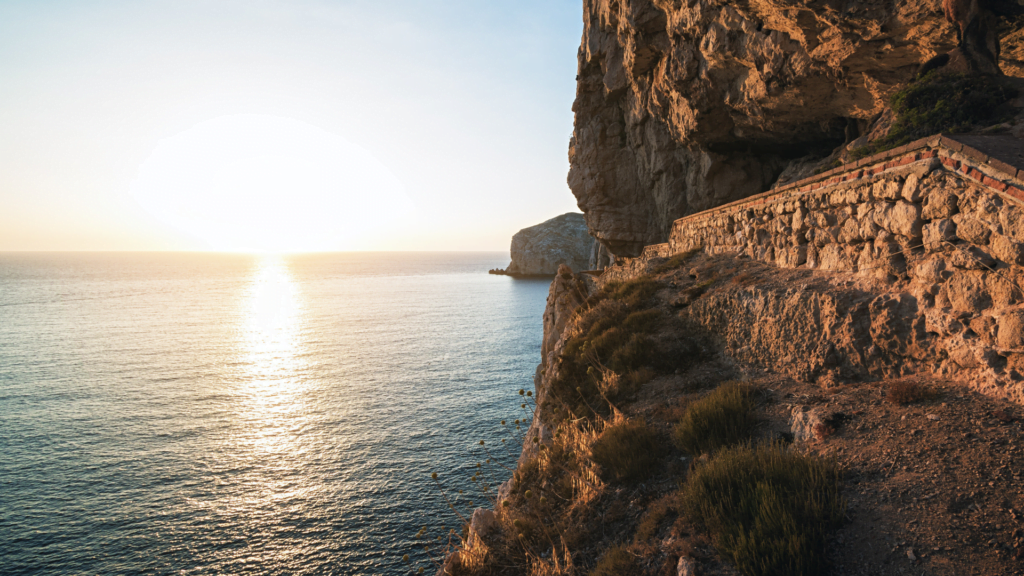
The land route descends 654 steps cut into the cliff face, known locally as the Escala del Cabirol, the “goat’s stairway.” There’s no shade, the steps are uneven in places, and going back up is harder than going down. It’s manageable for most fit adults but genuinely demanding for anyone with knee issues or limited mobility.
The descent winds down in sections, with a handful of natural viewpoints cut into the rock where it’s worth pausing, both to catch your breath and to look back at the cliff face you’ve just come down. Most visitors manage the descent in 15 to 20 minutes, the climb back up usually takes noticeably longer.
By Car or Bus
Driving is the most flexible way to reach the entrance above the stairs, with parking available near the top. Seasonal buses also connect Alghero to Capo Caccia in summer, though schedules thin out considerably off season.
Boat vs Stairs: Which Should You Choose
| By boat | By stairs | |
|---|---|---|
| Physical effort | Low | High, especially the climb back up |
| Reliability | Depends entirely on weather | Reliable regardless of sea conditions |
| Views along the way | Coastal cliffs and coves | Cliff and sea views from the staircase |
| Best for | Families, limited mobility, calmer days | Hikers, anyone wanting a backup if the sea is rough |
| Main risk | Cancellation due to wind or swell | Heat and fatigue in summer |
Guided Tours: What to Expect
Tour Structure and Duration
Entry to the cave is only possible with a guide, in small groups, on a fixed schedule. The walk through takes roughly 40 minutes at a relaxed pace, with the guide pointing out the main formations and the history of the site along the way.
Groups are kept to a manageable size, and tours generally run in both Italian and English depending on the time slot. Photography is allowed, though the low light and the reflections off the lake make a steady hand, or a phone with a decent night mode, more useful than a flash.
Tips Before You Go
A few things worth knowing before you head out to Capo Caccia:
- Check the official site the day before your visit, specifically for wind and sea conditions. On one of my own trips out there, the sea stayed too rough for the boats to dock for three days in a row, and a fair number of visitors who hadn’t checked ahead ended up stranded at the port with nothing to show for the trip.
- Bring a light layer. The temperature inside the cave stays cool and fairly constant year round, a relief in August, a bit much in flip flops in winter.
- Wear proper shoes if you’re taking the stairs. Sandals are a bad idea on uneven stone.
- Book ahead in July and August. Both the boat and the cave entry sell out on busy days.
Things to Do Near Neptune’s Grotto
Alghero, Capo Caccia and Neptune’s Grottos Small Group Tour
A half day tour combining Alghero’s old town with the Capo Caccia coastline and an optional stop at the grotto itself, a solid option if you’d rather not organise transport and tickets separately.
View this tour on Viator
Snorkeling Boat Tour in Porto Conte and Capo Caccia
Departs from Porto Conte and combines a boat trip past the Capo Caccia cliffs with snorkelling stops, including the lesser known cave of the Palombi on Isola Foradada.
View this tour on GetYourGuide
Alghero Boat Tour with Snorkelling
A shared group boat tour along the Alghero coastline with time in the water, generally a more affordable option than the private excursions if budget matters more than flexibility.
View this tour on GetYourGuide
Capo Caccia Excursions and Tours
A directory page covering several Capo Caccia based tours, from sailing to e-bike routes, useful if you want to compare multiple operators before booking.
View options on Viator
Alghero Mini Yacht Excursion
A smaller, more flexible boat trip along the coast, well suited to couples or small groups who’d rather skip the larger shared tours.
View this tour on GetYourGuide
Capo Caccia Tour with Snorkelling
This one sails right past the Escala del Cabirol and the entrance to Neptune’s Cave on the way to a series of inlets only reachable by boat, a good combination if you want context on the cave from the water before or after visiting it on foot.
View this tour on GetYourGuide
Cagliari: Day Trip to Cave of Neptune Private Experience
A private full day trip for anyone based further south, with round trip transport from Cagliari, a guided walk through the cave and the option to add the boat crossing on top, useful if Capo Caccia is a single planned excursion rather than part of a longer stay near Alghero.
View this tour on Viator
One Day Excursion on a Sailing Boat in the Gulf of Alghero
An 8 hour sailing day along the same stretch of coast as Capo Caccia, with swimming and snorkelling stops at Cala Dragunara and Torre del Lazzaretto plus a lunch made on board, a good fit for anyone who’d rather spend the whole day on the water than commit to a single grotto visit.
View this tour on Viator
Divers may also want to look at diving spots around Sardinia, since the submerged caves around Capo Caccia, like the Nereo Cave, are well known among advanced divers.
Getting Around: Car Rental near Alghero
Capo Caccia has no train link and limited bus service outside summer, so a car genuinely changes how easy this trip is. Picking up a rental at Alghero airport means you can time your visit around the wind forecast rather than a fixed tour departure, which matters more here than almost anywhere else in Sardinia.
- Alghero airport pickup, the most convenient option for this guide: Discovercars, Alghero
- If you’re planning a longer loop around the island, comparing all of Sardinia at once can work out cheaper than booking by single location: Discovercars, Sardinia
From Alghero, you can take ARST buses to the cave if you don’t want to drive. However, the schedules aren’t particularly convenient.
For flight options into the island, our guide to Sardinia’s airports breaks down which one makes sense depending on where you’re staying.
Where to Stay Near Neptune’s Grotto
Best Hotels and Accommodations
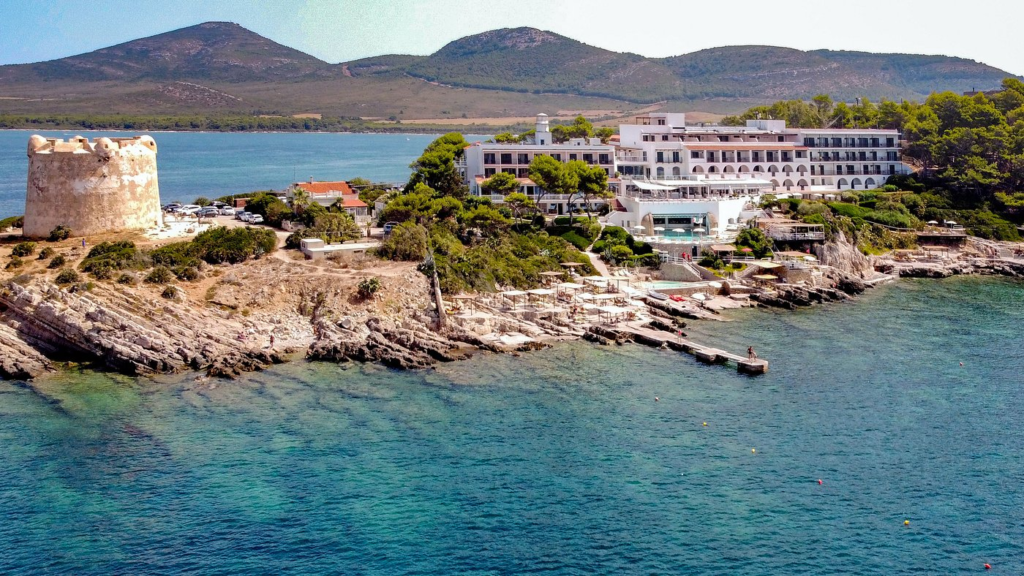
- El Faro Hotel & Spa, premium, right at Porto Conte with sea views over Capo Caccia, the closest comfortable base to the grotto itself: Booking.com · Trip.com
- Hotel San Marco, mid-range, beachfront in Alghero with easy access to both the old town and the road out to Capo Caccia: Booking.com
- Hotel Fertilia, budget friendly, set among pine trees near Alghero-Fertilia airport with air conditioning, free WiFi and parking included, a practical choice if you’re picking up a rental car nearby: Booking.com · Trip.com
Additional Tips
Staying in Alghero itself rather than right at Capo Caccia gives you more restaurant choice in the evening and a shorter drive if the boat schedule changes last minute. For a broader look at where to base yourself in this part of the island, see our guide to where to stay in northern Sardinia.
Nearby Attractions
Other Caves and Natural Sites
Cala Dragunara, a small cove just along the coast from Capo Caccia, is a common stop on boat tours and a pleasant swimming spot in its own right. The wider Porto Conte area also hides several submerged caves popular with divers, including the Nereo Cave.
The Capo Caccia lighthouse, one of the tallest in Italy, stands close to the top of the staircase and makes a worthwhile stop before or after the descent, particularly around sunset when the light over the cliffs turns properly dramatic.
For more of the coastline around here, our roundup of Sardinia’s top beaches covers several spots within easy reach of Alghero, and the Alghero guide is a good next stop if you’re spending more than a day in the area.
The Local Perspective: What Sardinians Think
We who live near Alghero know one thing about Neptune’s Grotto that rarely makes it into a typical itinerary: the wind decides whether you get in, not your ticket. The maestrale and the scirocco can both whip up enough swell to make docking at the cave unsafe, and when that happens the boats simply don’t run, sometimes for several days in a row. Anyone treating a single day trip to Capo Caccia as guaranteed is setting themselves up for disappointment. Check the forecast and the official site the evening before, not the morning of.
The 654 steps are the other thing people underestimate. They’re not difficult in the way a mountain trail is difficult, but there’s no shade and no shortcut, and the climb back up in August heat catches out more visitors than the cave itself ever could.
Parking at Capo Caccia also fills up fast in summer, and the access road narrows in places, which is exactly why having your own car, timed around the wind rather than around a fixed transfer, tends to work out better than it sounds on paper. Most people who live nearby visit early in the morning or during the shoulder months, partly to dodge the heat on the steps, partly because the sea is simply more likely to behave.
Common Mistakes Visitors Make
- Not checking the wind or sea forecast before heading out, then arriving to find the boats cancelled
- Assuming the boat ticket includes entry to the cave, or the other way around
- Underestimating the 654 steps, especially the walk back up
- Skipping advance booking in July and August and finding both the boat and the cave sold out for the day
- Visiting at midday in peak summer and queuing in full sun with no shade nearby
- Expecting phone signal inside the cave to check tour times or message the rest of your group, since there usually isn’t any once you’re inside
For a sense of when crowds and weather are at their calmest, our guide to the best time to visit Sardinia month by month is worth a look before you book your dates, alongside the broader Sardinia weather guide for context on the island’s wind patterns.
FAQ about Neptune’s Grotto
How many steps are there to Neptune’s Grotto?
654, along the Escala del Cabirol from the land entrance. A few sources cite 660, but 654 is the figure most commonly used by local operators.
Can wind close Neptune’s Grotto?
Yes. Strong wind or rough sea can cancel the boat crossing, and in some cases close access to the cave entirely, sometimes for multiple days in a row. Always check the official site the day before.
Is Neptune’s Grotto worth visiting?
For most visitors, yes, the lake and the stalactite formations are genuinely impressive and unlike anything else on this part of the coast. It’s worth going in with realistic expectations about queues and weather rather than treating it as a guaranteed quick stop.
Can you visit Neptune’s Grotto by boat?
Yes, boats run from Alghero’s old port on a seasonal schedule, weather permitting. It’s one of the best boat tours in Sardinia.
How long does the visit to Neptune’s Grotto last?
The guided walk inside takes about 40 minutes. Add the boat crossing or the staircase, plus waiting time, and budget half a day for the full outing.
Do I need to book Neptune’s Grotto in advance?
It’s strongly recommended in July and August, when both the boat and the cave entry can sell out for the day.
- What is the “Escala del Cabirol”?
It is the famous “Goat’s Steps,” a staircase of 654 steps carved into the cliff to reach the cave. It’s a highlight for those visiting the Alghero area. - Is it the largest cave system on the island?
It’s the most famous sea cave. However, if you love caves, you should also visit the Grotte del Bue Marino on the east coast. - What is the best time to visit to avoid crowds?
Go early in the morning. For more practical advice on your trip, check our general travel tips for Sardinia.
Sources
Information in this guide was compiled from the official Neptune’s Grotto and Alghero tourism resources, Wikipedia’s entry on Neptune’s Grotto, and direct local experience of visiting Capo Caccia, including weather related closures.