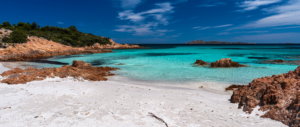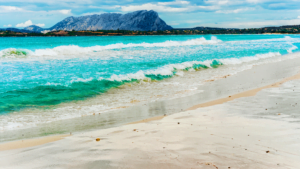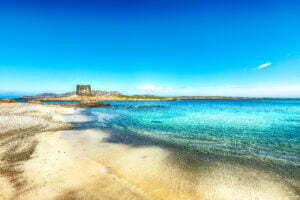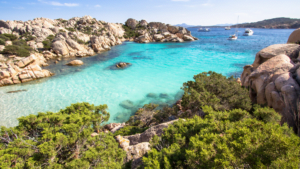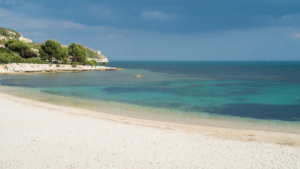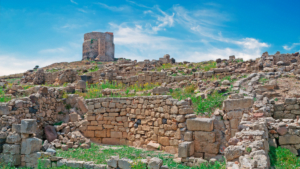
Cala Goloritze was voted the best beach in the world in 2025 by The World’s 50 Best Beaches. Not the best in Italy. The best on the planet. And if you’ve seen the photos, you understand why. But photos don’t tell you how to book, how hard the hike actually is, or what it looks like when the afternoon shadow creeps over the limestone cliffs at 2 p.m. This guide does. Practical, honest, from someone who knows this coast.
What makes Cala Goloritze unique
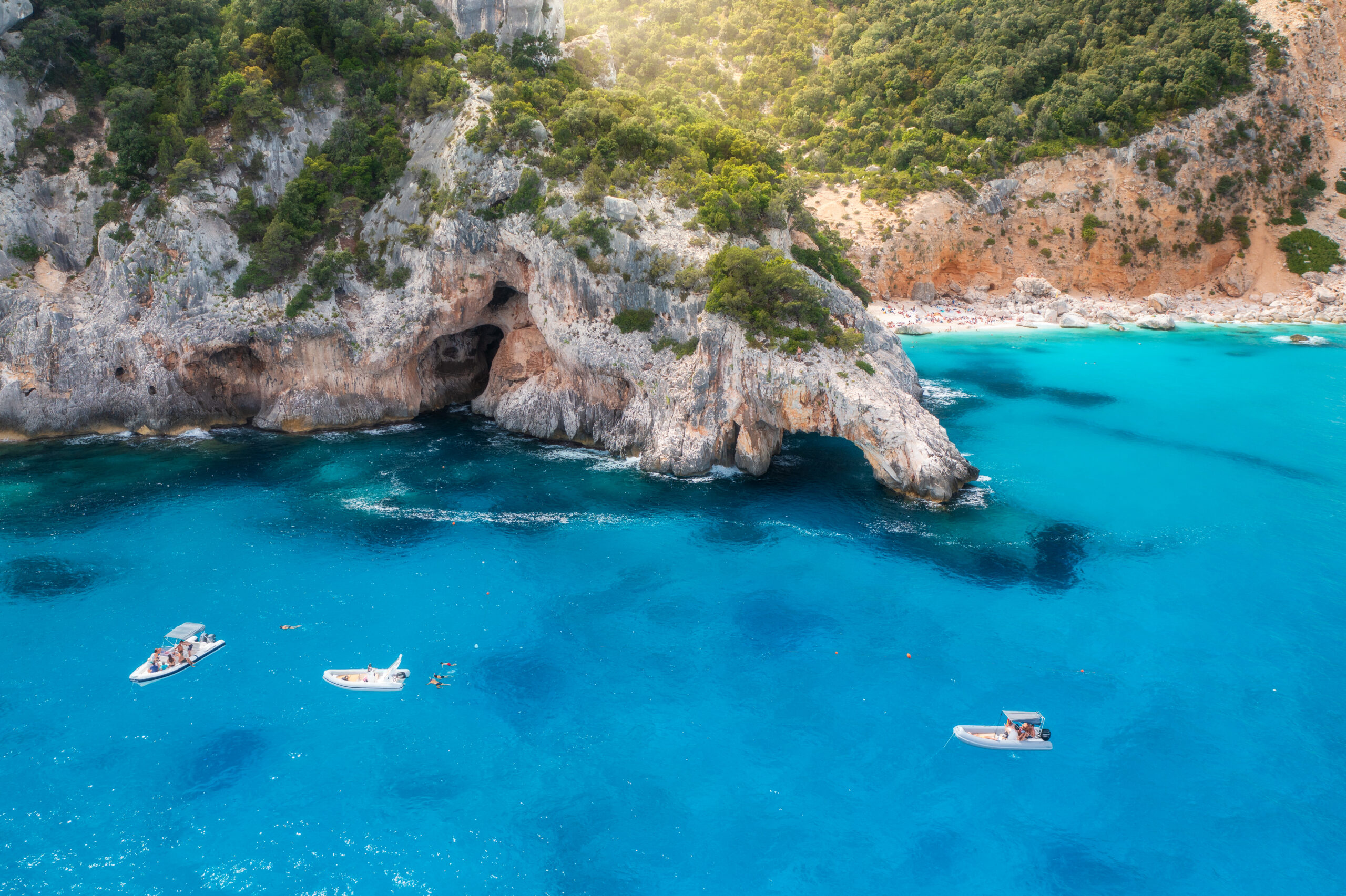
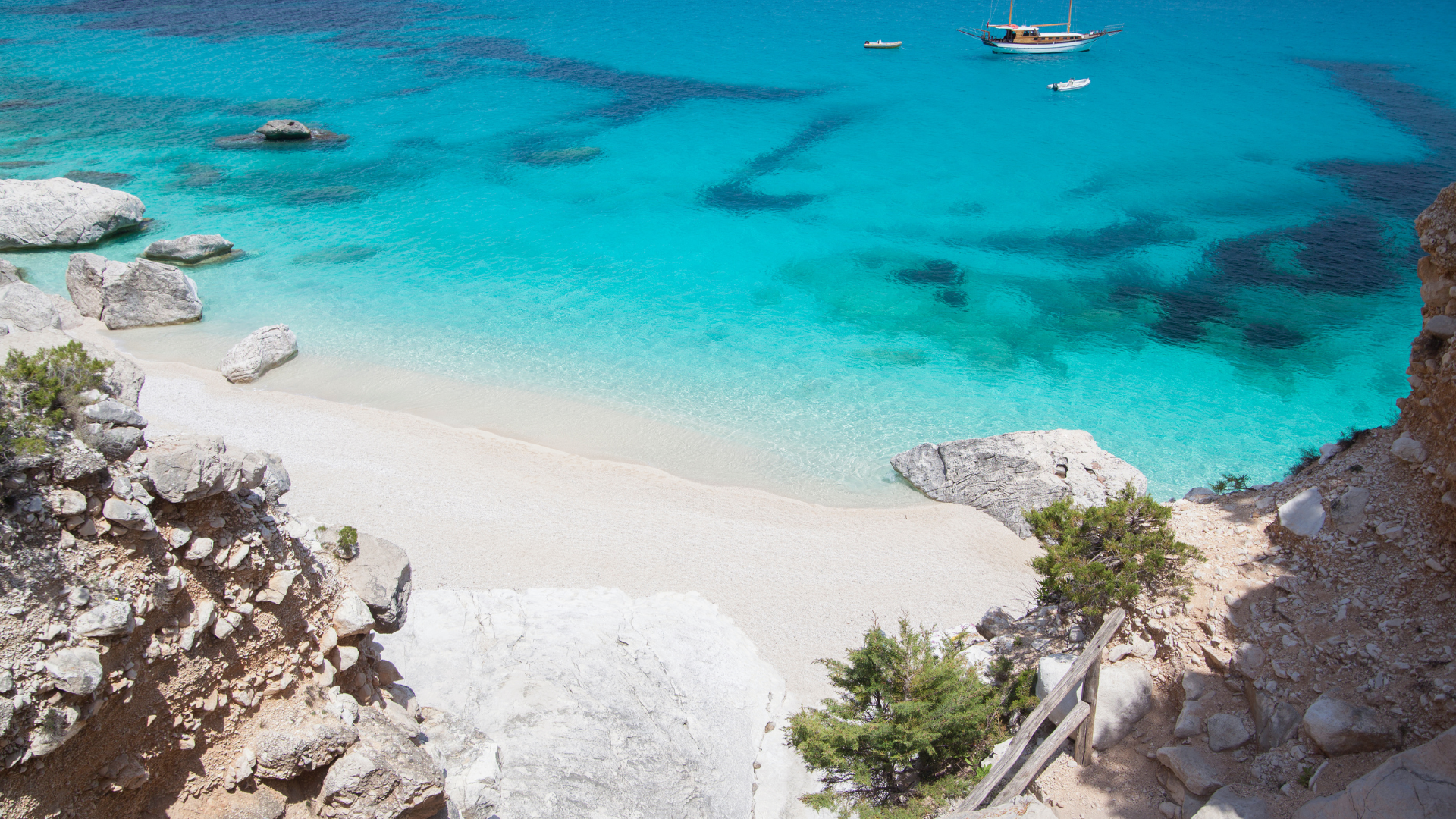
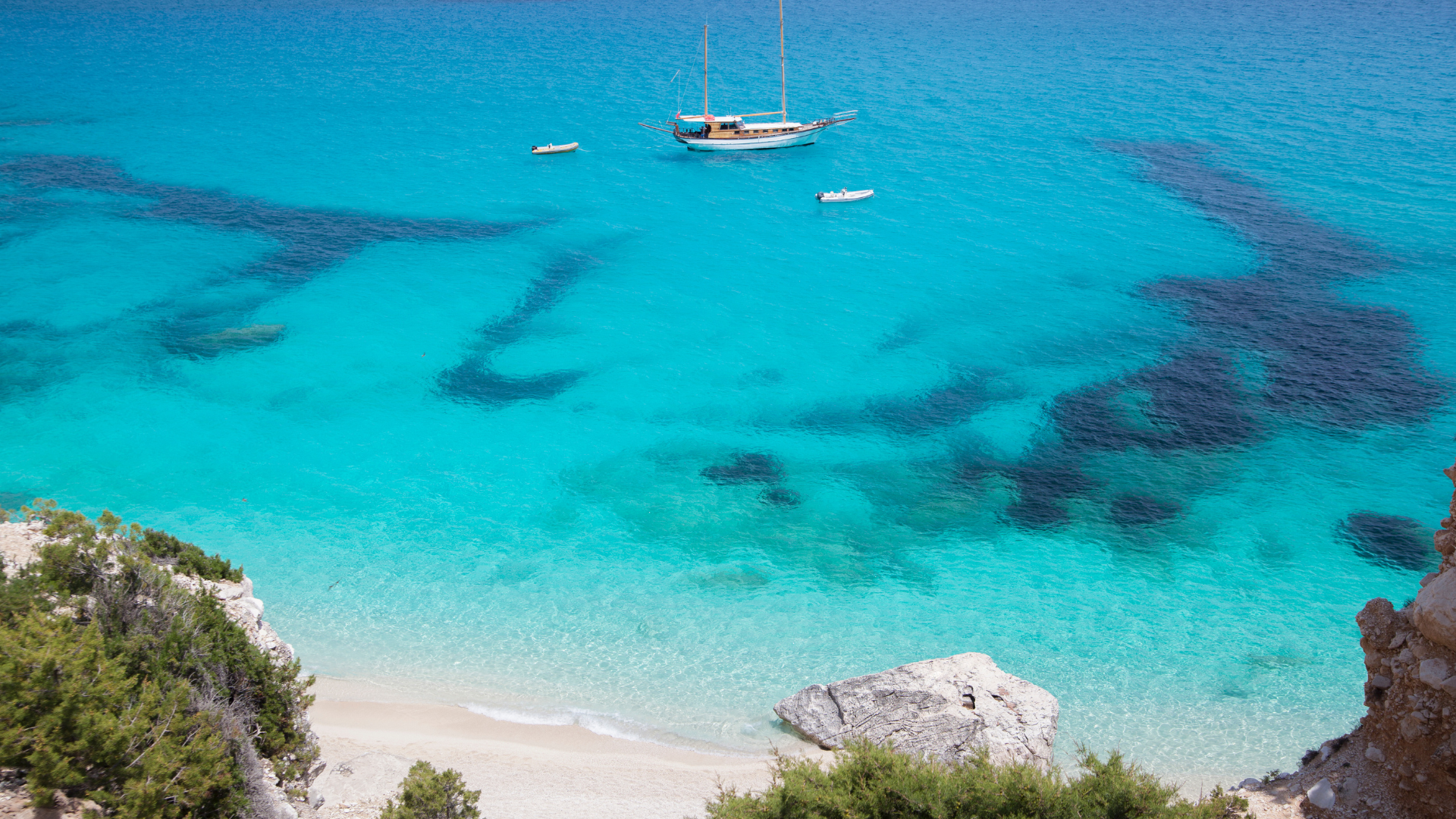
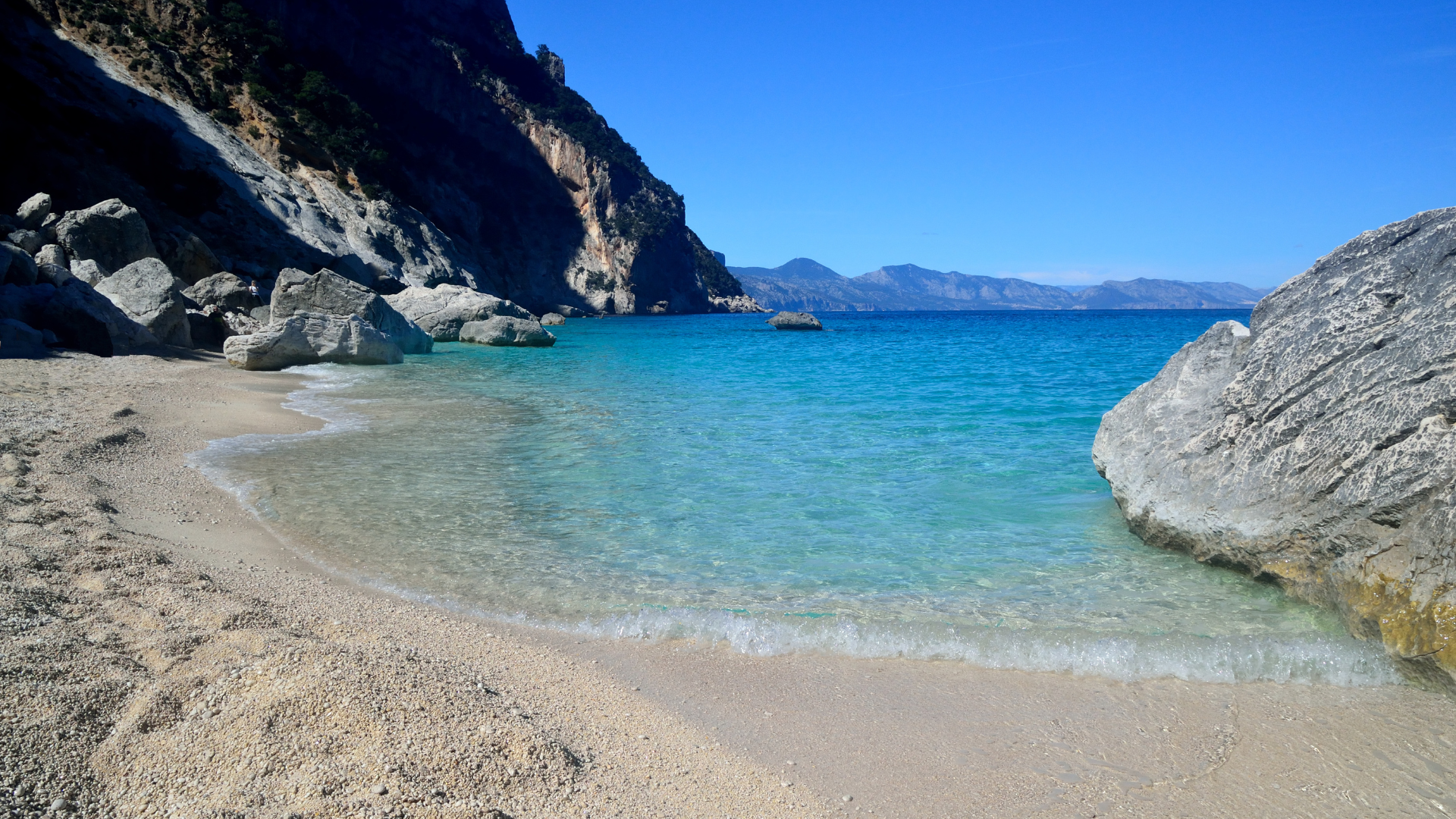
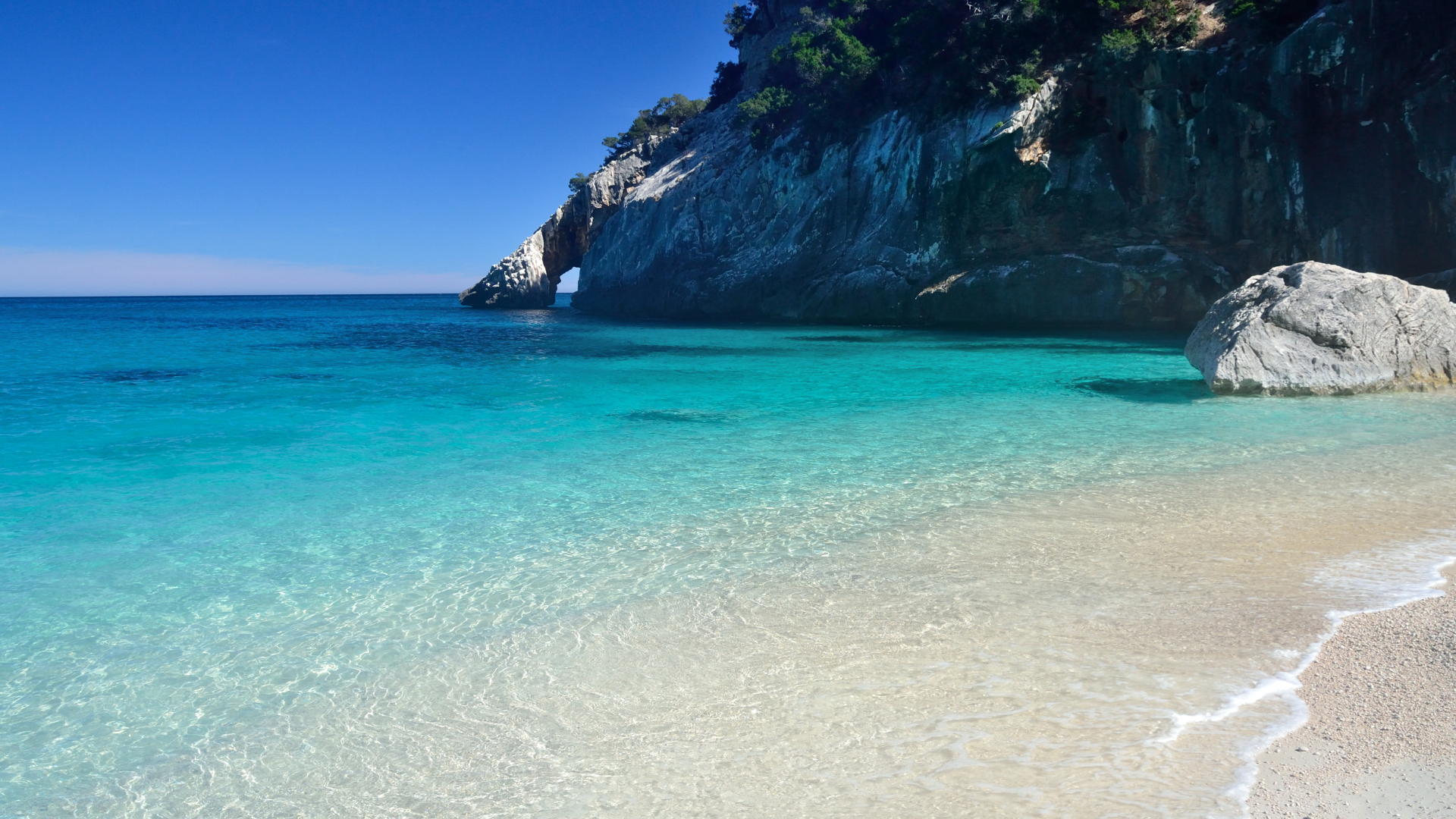
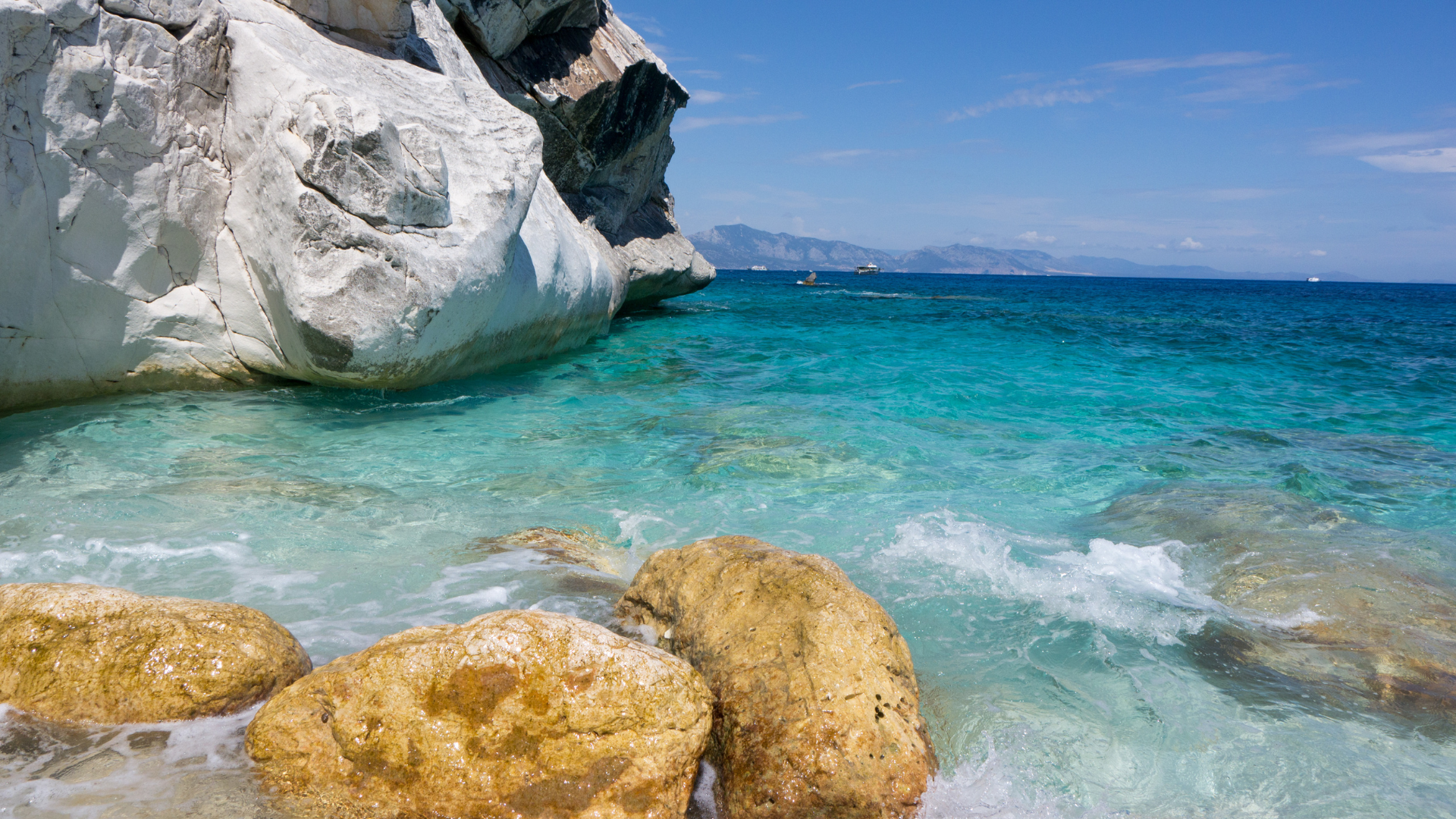
Most beaches earn their reputation from sand and calm water. Cala Goloritze is different. The beach is made of white limestone pebbles, not sand. The water is electric blue, almost impossibly clear. And the whole cove sits inside a dramatic natural amphitheatre of vertical cliffs that rise straight out of the sea.
Two features make it unlike anything else in the Mediterranean.
The first is the natural stone arch at the water’s edge, a limestone bridge carved by millennia of erosion. The second is the Aguglia di Goloritzè (also called Punta Caroddi): a freestanding limestone pinnacle 143 meters tall that juts straight up from the cliff face, visible from the sea long before you reach the beach.
One important clarification: Cala Goloritze is not a UNESCO World Heritage Site, despite what some websites claim. It was declared a National Natural Monument in 1995, preceded by a regional environmental protection decree in 1993. The distinction matters if you’re sharing information with others.
The cove was formed by a massive limestone landslide from the Supramonte massif, sometime in the early 1960s (local sources give slightly different years, between 1962 and 1965; nobody agrees on the exact date). Before the landslide, this stretch of coast looked entirely different. The cove is, geologically speaking, very young.
The Aguglia: a 143-meter limestone spire
The Aguglia is the only freestanding limestone pinnacle of its kind in Sardinia. It’s a recognized destination for technical rock climbing at international level, with routes graded up to 8a. Every summer, climbers from across Europe come specifically for the Aguglia. You can watch them from the beach on a clear day. From the sea, the pinnacle dominates the skyline long before the cove itself comes into view.
The underwater freshwater spring
Beneath the surface of the sea at Cala Goloritze, a karstic freshwater spring flows up from the Supramonte limestone massif above. This subterranean water mixes with the saltwater of the Gulf of Orosei and creates sudden cold patches, together with the peculiar light refraction effect that makes the water appear that specific shade of deep turquoise. It’s not just aesthetics. The temperature drops as you swim toward certain parts of the cove. Most visitors notice it without knowing why.
How to book your visit: tickets and rules
Access to Cala Goloritze is strictly regulated. You cannot just show up.
Key facts:
- Daily limit: 250 people per day
- Advance booking required: minimum 72 hours before the date of visit
- Where to book: the Heart of Sardinia app and website
- Ticket price: €7 per person; children under 6 years old enter free
- Parking: included in the ticket price, at the Su Porteddu trailhead on the Golgo Plateau
- Trail opening hours: descent open from 7:30 AM to 2:00 PM; you can remain on the beach until approximately 5:00 PM
- Closed-toe shoes with grip: mandatory by regulation, not a suggestion: an actual rule enforced at the checkpoint
In July and August, the 250 daily spots fill quickly, often within minutes of the booking window opening. Set a reminder. If you are traveling with a group, coordinate bookings in advance: the date is fixed, and you need to be online the moment the window opens.
New from 2025: even visitors arriving by private boat or rented dinghy must obtain a QR code by booking through the same system before anchoring near the beach. Coast staff enforce this on-site.
How to get to Cala Goloritze: hiking vs boat
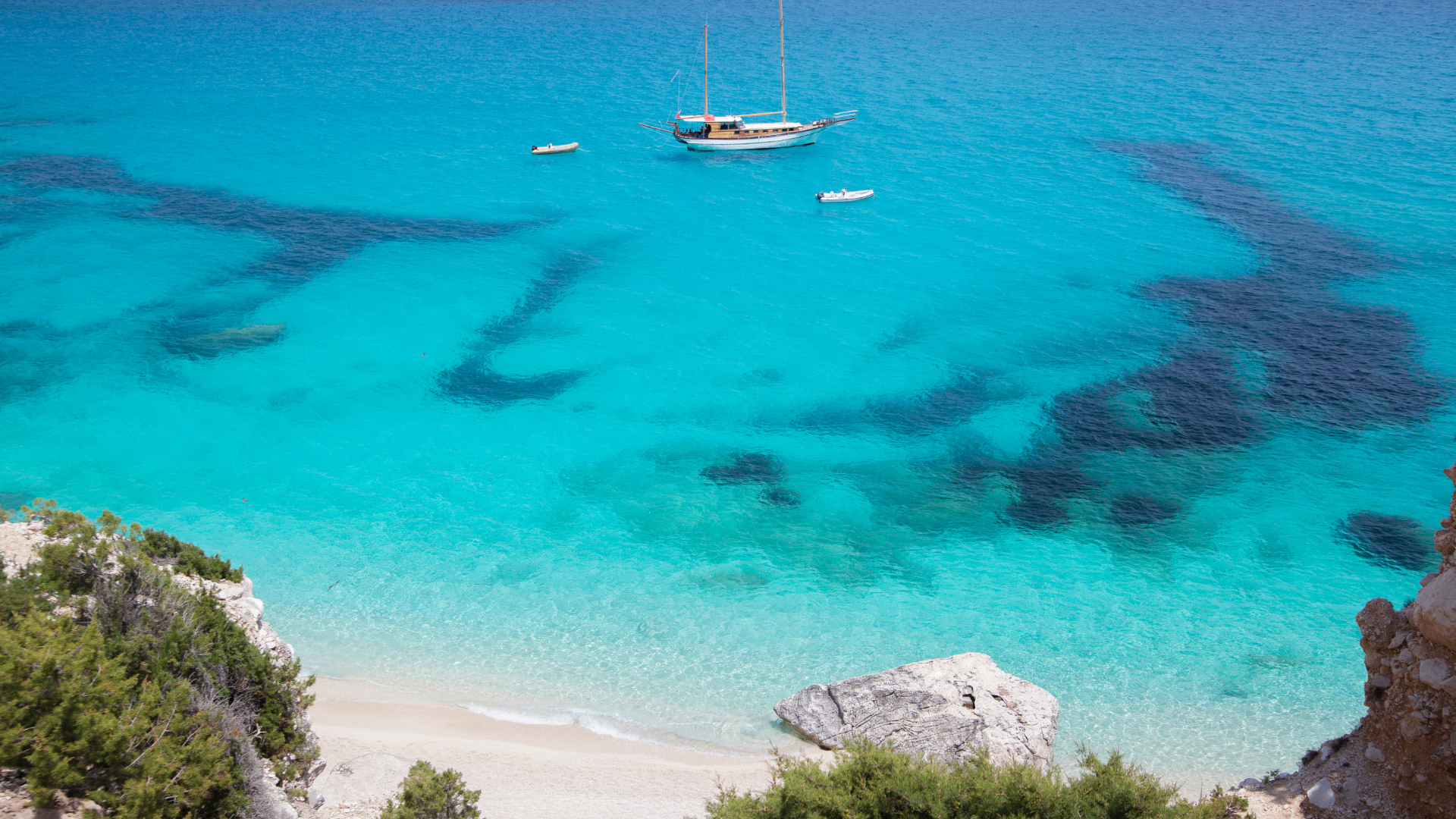
There are two ways in. Both have honest trade-offs.
Option 1: the hike from Su Porteddu (Golgo Plateau)
This is the only way to actually set foot on the beach.
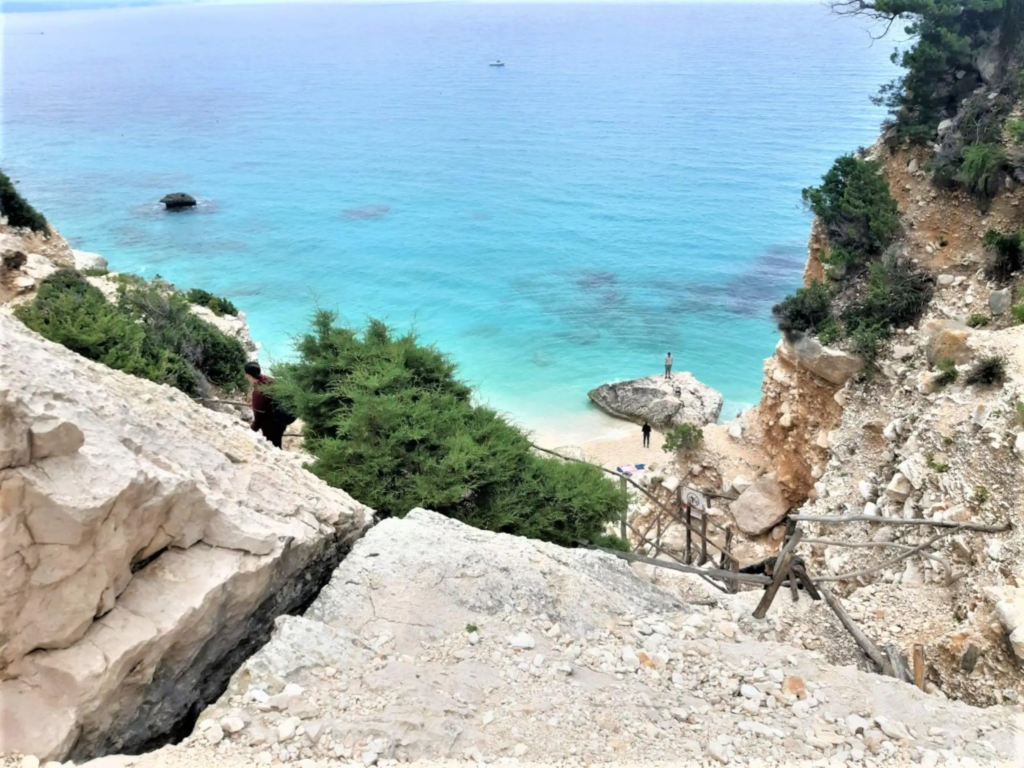
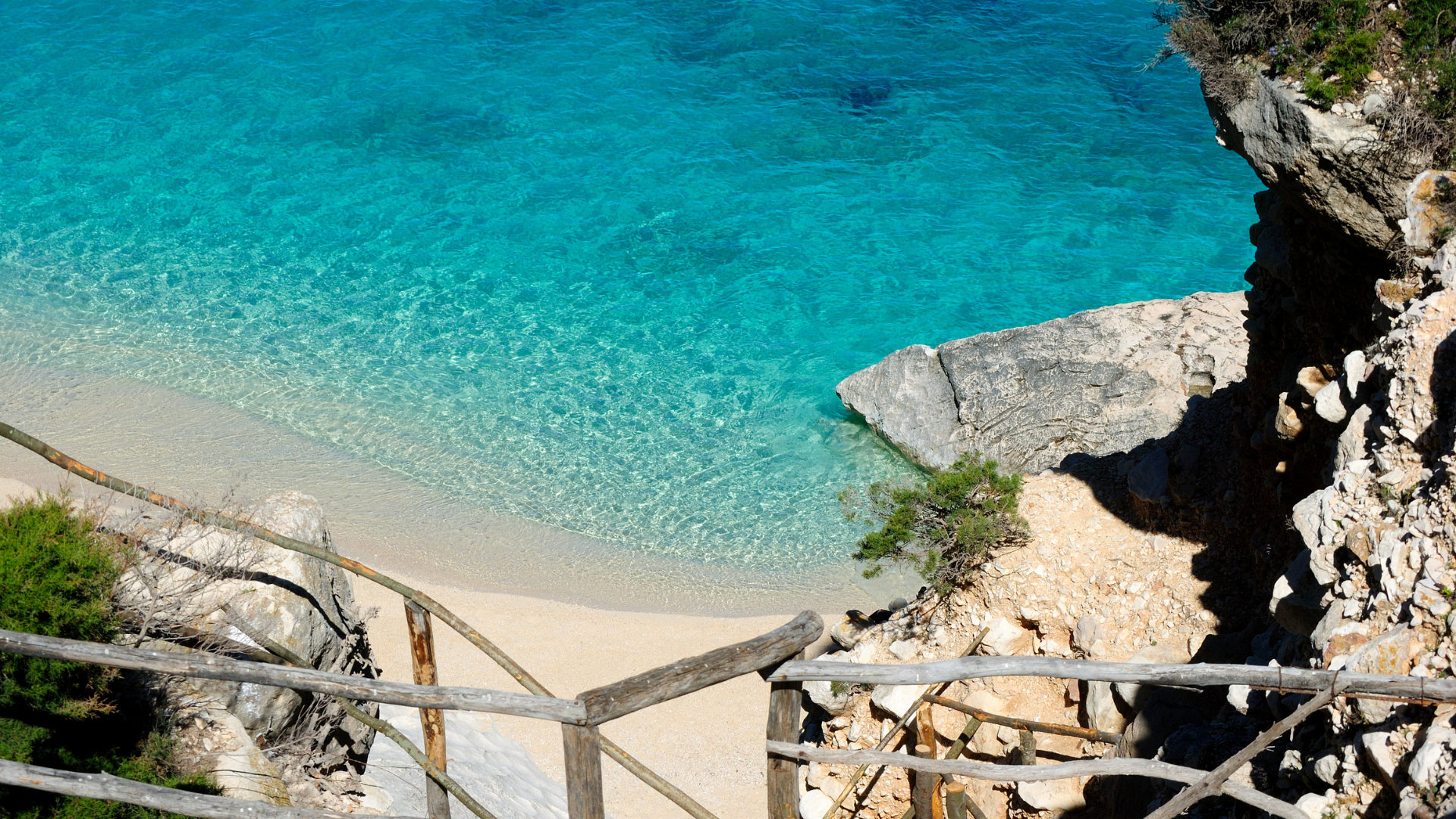
Starting point: the Su Porteddu restaurant on the Golgo Plateau, above Baunei. From the trailhead, the path descends approximately 3.5 km one way through Macchia Mediterranea scrub and white limestone terrain.
- Descent: 1 to 1.5 hours, moderately technical in places, good grip required
- Ascent: 1.5 to 2 hours, significantly more demanding, especially in full afternoon heat
- Difficulty: moderate on the way down, strenuous on the way back up
- No water on the trail: bring at least 2 liters per person
- No shade on the upper section: start by 8:00 AM at the latest if visiting in July or August
The trail surface is mostly limestone rock and compacted earth. Some sections are steep. Trainers are not suitable. Closed shoes with proper grip are mandatory. The path is well-marked.
Be realistic about the return. The ascent back to Su Porteddu in the heat of the afternoon is genuinely tiring. Many visitors underestimate it.
Option 2: by boat – what you can and cannot do
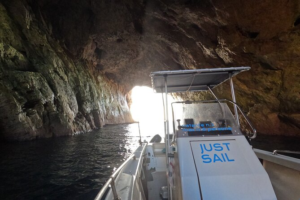
Here is the honest version, which not everyone tells you. Motorized boats cannot dock at Cala Goloritze. The regulation prohibits it. All commercial boat tours, including zodiacs and motorboats, must anchor at least 300 meters from the beach. You see the arch from the water, take photos, and swim in the area. You do not land on the pebbles.
Only rowing boats and kayaks can approach and land at Cala Goloritze from the sea.
This doesn’t mean a boat tour is a bad choice. Seeing the Aguglia and the arch from the water is spectacular, and the Gulf of Orosei from the sea is a completely different experience. But it’s a different experience from the hike, not a substitute for it.
Departure ports: Santa Maria Navarrese (closest, roughly 12 nautical miles), Cala Gonone (12 nautical miles north), and Arbatax (further south).
Getting there by car
Cala Goloritze is not accessible by public transport in any practical sense. A car is essential.
- From Olbia: approximately 2.5 hours via SS131 and SS125 (Orientale Sarda)
- From Cagliari: approximately 2.5 hours via SS125
Drive to Baunei, then follow signs toward Golgo/Su Porteddu. The road climbs steeply through the village and up onto the plateau. Parking is included in the entrance ticket. The car park is at the trailhead.
To compare prices and book a rental car from the main Sardinian airports:
6 things to do at Cala Goloritze: top activities
Guided trekking tour to Cala Goloritze
A guided trek from Baunei with a local expert who explains the geology, the flora, and the history of the coastline along the route. The guide manages your booking and access, so you skip the 72-hour online race. Ideal for first-time visitors who want context alongside the physical experience.
Book the guided trekking tour on GetYourGuide
Full-day dinghy tour from Santa Maria Navarrese: Goloritze and Mariolu
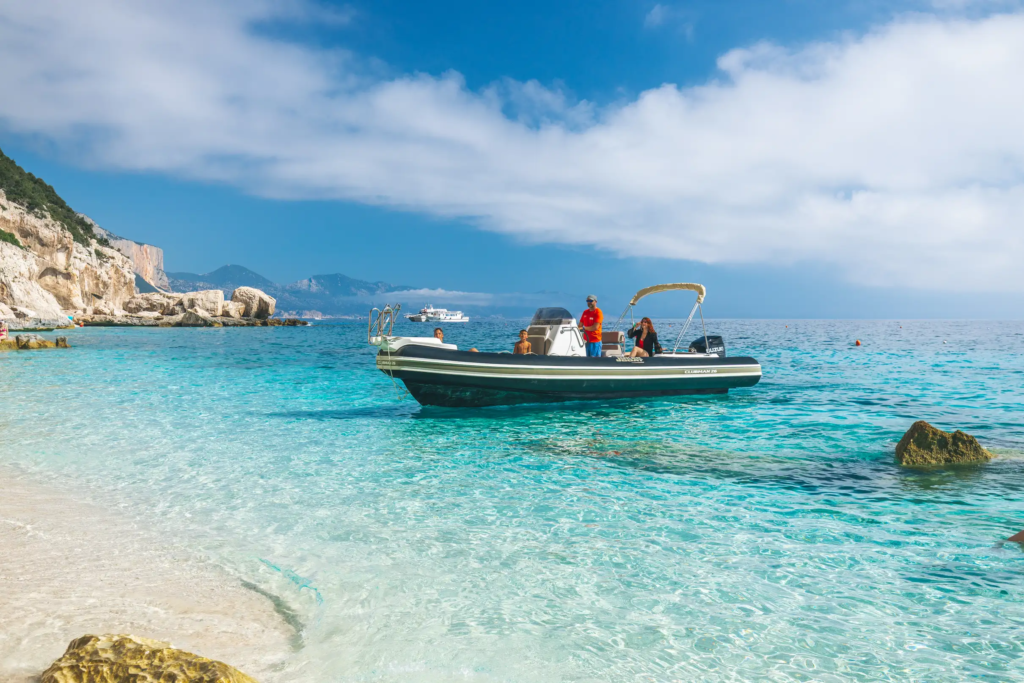
Small-group rubber dinghy tour (max 11-12 passengers) departing from the port of Santa Maria Navarrese. Swim stop at Cala Goloritze, beach stops at Cala Mariolu, Cala Biriala, and Piscine di Venere. The small boat reaches spots larger vessels cannot approach. Expert skipper included. Best option if you want a gentle introduction to the Baunei coast by sea.
Book the dinghy tour from Santa Maria Navarrese on GetYourGuide
Full-day cruise: Goloritze, Mariolu, Biriala and Grotta del Fico
Speedboat departing from Santa Maria Navarrese covering the full Baunei coast: swim stop at Cala Goloritze, beach stops at Cala Mariolu, Cala Biriola, and Cala dei Gabbiani. The tour also includes the Grotta del Fico, one of the most impressive sea caves in the Gulf of Orosei (cave ticket purchased separately on-site). Up to 5 hours on beaches. Full snorkeling recommended.
Book the full-day cruise on GetYourGuide
Gulf of Orosei dinghy excursion from Cala Gonone
Departures at 8:30 AM and 10:30 AM daily from Cala Gonone port. Max 12 passengers, skipper with detailed local knowledge. Swim stop in the water facing Cala Goloritze’s arch, beach stops at Cala Mariolu and other Gulf beaches. The 8:30 AM departure is strongly recommended: you reach the most popular beaches before the crowds. Return around 4:30-5:00 PM.
Book the dinghy excursion from Cala Gonone on GetYourGuide
Baunei coast boat tour with swimming and snorkeling (Viator)
Full-day boat tour from Santa Maria Navarrese along the Baunei coast, with swim and snorkeling stops at Cala Goloritze, Cala Mariolu, Cala Biriola, Cala Gabbiani, and the Piscine di Venere. About 6 hours on the water and beaches combined. Snorkeling gear not included but recommended. Small group setting, max 12 passengers.
Book the Baunei coast tour on Viator
Dinghy tour: Goloritze, Mariolu, Biriala and Grotta del Fico (Viator)
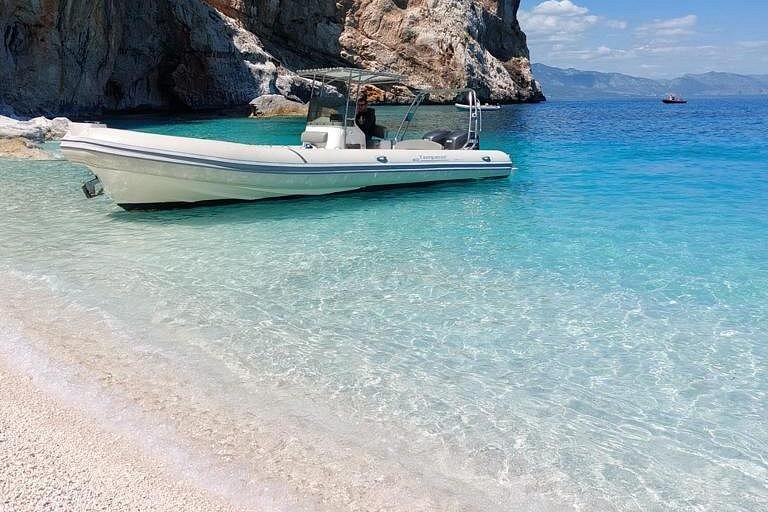
Small-group rubber dinghy tour with skipper covering Cala Goloritze (swim stop near the arch), Cala Mariolu, Cala Biriola, and the Grotta del Fico. The dinghy accesses hidden bays and sea-level caves that motorboats cannot reach. Good choice if you want maximum access to the lesser-visited spots along the coast. 163+ reviews on Viator.
Book the dinghy tour with Grotta del Fico on Viator
Getting around: car rental near Cala Goloritze
To reach Cala Goloritze, a rental car is not optional. The Golgo Plateau above Baunei has no bus connections, no shuttles, and no taxis. The only practical access to the Su Porteddu trailhead is by private vehicle.
A car also gives you flexibility to explore the rest of Ogliastra and the Gulf of Orosei at your own pace: Cala Mariolu, Pedra Longa, the Gorropu Gorge, and the villages of the Supramonte are all within range.
Compare prices and book directly at the airport that suits your arrival point:
What to bring: the honest checklist
There are zero facilities at Cala Goloritze. No bar, no toilets, no restaurant, no sun lounger rental, no lifeguard. Plan accordingly.
Essential:
- Closed-toe hiking shoes with grip (mandatory: sandals and trainers are not suitable and may be refused at the checkpoint)
- At least 2 liters of water per person, more if visiting in July or August
- Food for the day, there is nothing to buy on the beach or the trail
- Sun protection: high SPF cream, hat, sunglasses
- Water shoes for entering the water (limestone pebbles are sharp)
- Snorkeling mask, the water is clear enough to make it worth it even for casual swimmers
Leave at home:
- Large beach umbrellas (they damage the surface and are discouraged)
- Dogs, animals are not permitted
- Camping equipment of any kind, overnight stays are prohibited
- Inflatable items that take up excessive space on a small beach
The Su Porteddu restaurant at the trailhead sells water, snacks, and basic supplies. Stock up there before descending.
Best time to visit Cala Goloritze
May and June are the best months in practical terms. The sea is warm enough to swim, the 250 daily places are easier to book, and the light in the early morning is exceptional. The sun hits the cove directly from the east, so mornings are the best lit part of the day regardless of season.
July is peak quality with increasing crowds. Booking spots go fast. Aim for early morning access.
August is maximum demand. The 250 daily places can be gone within minutes of the booking window opening at 72 hours. Weekends are harder than weekdays. Arrive very early if you have a ticket: the trail gets busy.
September and early October bring fewer visitors, warm water, and the added benefit of quieter booking. The trade-off: the afternoon shadow arrives earlier, as the cliffs shade the cove progressively from around 1:30-2:00 PM onward. This is a consistent feature of the cove’s southeastern orientation that no one mentions in the listings.
Boat tours from Santa Maria Navarrese and Cala Gonone typically operate from April to mid-October.
Where to sleep near Cala Goloritze
Baunei and Santa Maria Navarrese are the two best bases. Baunei puts you closest to the Golgo Plateau and the trailhead. Santa Maria Navarrese is ideal if you plan to take a boat tour.
Hotel Goloritzé (Baunei): a solid 3-star hotel named after the cove itself, located in Baunei on the road toward Golgo. Free parking, good breakfast with local products, helpful staff who know the hiking routes well. Best choice for trekkers.
View Hotel Goloritzé on Booking.com
Hotel Santa Maria (Santa Maria Navarrese): rated 8.7 on Booking.com by recent guests. Located a short walk from the port where all boat tours depart. Restaurant on-site, private balconies, good breakfast. Ideal if your priority is the sea excursion.
View Hotel Santa Maria on Booking.com
Lanthia Resort (Santa Maria Navarrese): the premium option in the area, with direct private beach access in front of the Ogliastra islands. For those who want comfort after a day’s hiking or on the water.
View Lanthia Resort on Booking.com
B&B Selvaggio Blu (Baunei): a well-reviewed budget option in Baunei, free parking, friendly host with detailed local knowledge of trails and timings. Good value for independent hikers.
View B&B Selvaggio Blu on Booking.com
The local perspective: what Sardinians think
Geography and light
Cala Goloritze faces southeast. It gets direct sunlight from sunrise until early-to-mid afternoon, depending on the season. By 1:30-2:00 PM in autumn, and around 3:00-4:00 PM at the summer solstice, the cliffs progressively shadow the beach. If you arrive at midday expecting a full afternoon of sun, you may be disappointed. The morning is the right time to be there.
The Maestrale (northwest wind), the prevailing summer wind in Sardinia, doesn’t directly affect navigation from Cala Gonone: the port is relatively sheltered. The Grecale (northeast) and the Tramontana (north) are the winds that stop boats from running. When these blow, conditions in the open gulf deteriorate fast. If you’re planning a boat tour and the forecast shows Grecale above 15-20 knots, expect cancellation.
Logistics and access
The 250-person daily limit is enforced seriously. Coast staff check QR codes at the bottom of the trail, at the beach. If you don’t have a valid booking, you are turned back. This has happened to people who drove two hours from Olbia.
The booking window opens at exactly 72 hours before the access date. In peak season, set an alarm and book the moment it opens. Keep your accommodation flexible for that specific night: book your hotel, but leave the trekking date slightly open until you can confirm the ticket.
There is no public transport to Su Porteddu. No exceptions, no workarounds.
History
Cala Goloritze was declared a protected natural monument by the Sardinian Region in 1993, and confirmed as a National Natural Monument by the Italian state in 1995. The designation protects the geological formation, the marine ecosystem, and the climbing routes on the Aguglia. Access limits are a direct consequence of this status. Given the fragility of the limestone seabed and the pebble beach, they make sense.
The origin of the cove, a massive limestone landslide from the Supramonte in the 1960s, means the entire beach is geologically recent. Local accounts place the landslide between 1962 and 1965; the official sources are not consistent on the exact year.
For more context on the Gulf of Orosei, read our Gulf of Orosei guide to the best beaches. If you’re planning a full day of hiking in the area, our best hikes in Sardinia guide covers the Supramonte routes. For the full coastal picture, Cala Gonone and Cala Mariolu are worth reading alongside this guide.
FAQ about Cala Goloritze
Is Cala Goloritze a sandy beach?
No. The beach is made of white limestone pebbles, ranging from gravel to larger rounded stones. It is beautiful, but not soft underfoot. Water shoes are strongly recommended for entering the sea.
How do I book tickets for Cala Goloritze?
Through the Heart of Sardinia app and website. Booking opens 72 hours before the access date. The ticket costs €7 per person (under 6 free). The daily limit is 250 people. In July and August, book the moment the window opens.
Can boats dock at Cala Goloritze?
No. Motorized boats must remain at least 300 meters from the shore. Commercial boat tours stop in the water offshore, where passengers can swim and take photos of the arch and the Aguglia. Only rowing boats can land directly on the beach. Private boats must also have a QR code booking from 2025 onward.
How long does the hike take?
The descent from Su Porteddu takes 1 to 1.5 hours (3.5 km). The return ascent takes 1.5 to 2 hours, and is significantly harder, especially in afternoon heat. Allow a full day. The trail closes to new descents at 2:00 PM, and you must leave the beach by approximately 5:00 PM.
Is Cala Goloritze really the best beach in the world?
It was ranked number one by The World’s 50 Best Beaches in 2025. Whether it’s “the best” depends on what you value in a beach. It’s not for relaxing on sun loungers with cocktails: there are no facilities. It’s for people who want something raw, wild, and genuinely difficult to reach. On those terms, it may well be unmatched.
Are dogs allowed at Cala Goloritze?
No. Animals are not permitted at Cala Goloritze.
- Can I reach Cala Goloritzé by boat?
Boats are not allowed to dock on the beach to protect the environment. Most people arrive by trekking from Baunei. - Is the hike to the beach difficult?
It is a moderate to challenging hike. It is often cited as one of the most panoramic hikes in Sardinia due to its limestone spires. - Why is this beach a National Landmark?
Because of its unique geology and pristine nature. It is a key part of the protected natural reserves of the island. - Are there other similar beaches nearby?
Yes, while you are in the area, you should explore the othe rstunning coves of the Orosei Gulf like Cala Mariolu.
Sources
- Heart of Sardinia, official booking platform for Cala Goloritze
- The World’s 50 Best Beaches 2025
- GetYourGuide, Cala Goloritzé activities and tours
- Viator, Cala Goloritze boat tours
- Sardinian Region environmental protection decree 1993 (Monumento Naturale Regionale)
- Italian Ministry of Environment decree 1995 (Monumento Naturale Nazionale)