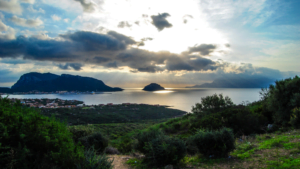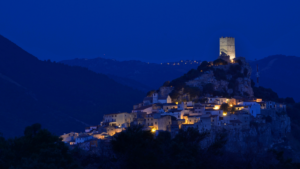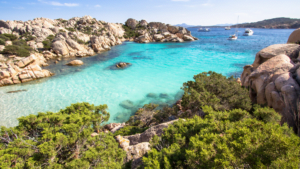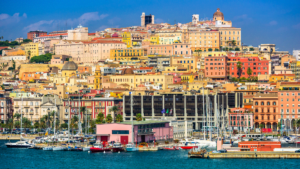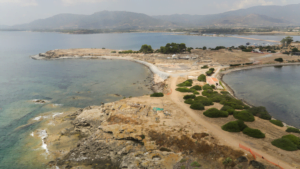
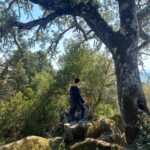
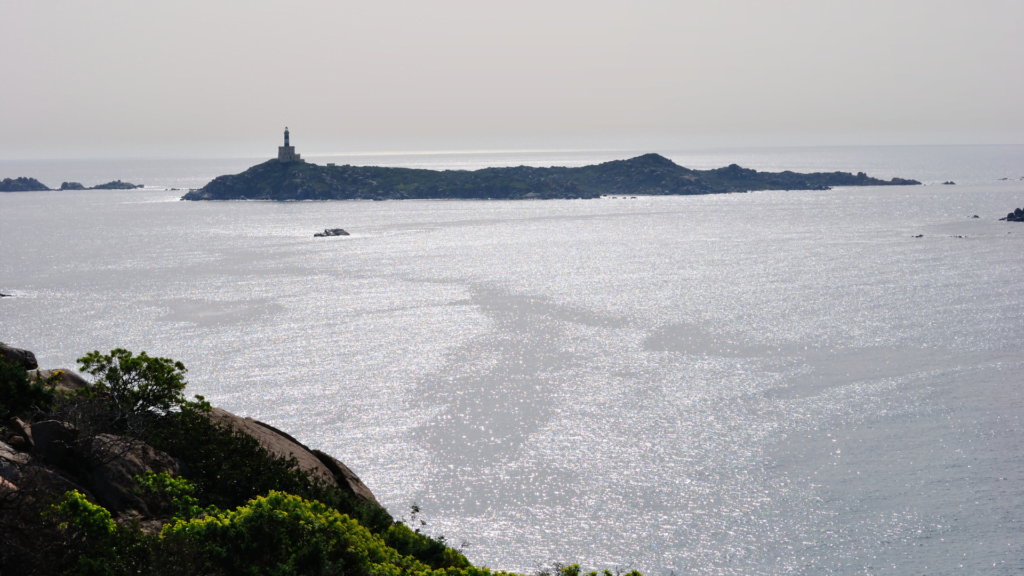
Isola dei Cavoli is a 43-hectare granite island off the southeastern tip of Sardinia, less than one kilometre from Capo Carbonara, inside one of the most intact marine protected areas in the Mediterranean. You can only reach it by boat from Villasimius, and that inaccessibility is precisely what has kept it wild.
What Is Isola dei Cavoli?
Isola dei Cavoli sits at the edge of the Capo Carbonara Marine Protected Area, roughly 15 minutes by boat from the Porto Turistico di Villasimius. It is uninhabited: the last permanent residents were the lighthouse keepers and their families, who left when the lighthouse system became fully automated in the mid-twentieth century. Today the island hosts a scientific research station managed by the Faculty of Biology at the University of Cagliari, which monitors the health of the protected marine and terrestrial ecosystems.
The island’s shape — a jagged granite mass that rises steeply from the sea — is sometimes compared to the prow of a ship. Together with nearby Serpentara Island, it forms the core of the protected area, classified as a Site of Community Interest (SCI) under European conservation law.
The Name: Crabs or Cabbages?
The name has two competing origins, and both have defenders among Sardinian scholars. The older theory holds that it is a mistranslation of the Sardinian phrase isula de is càvurus, meaning “island of crabs” — an error that became fixed in usage over the centuries. The more recent hypothesis points to the endemic presence of Brassica Insularis, a wild cabbage that grows abundantly across the island and is found almost nowhere else on earth. Either way, the name stuck.
The Geography
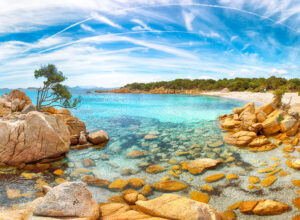
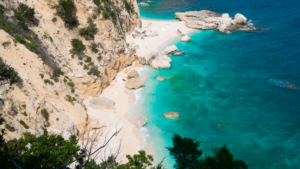
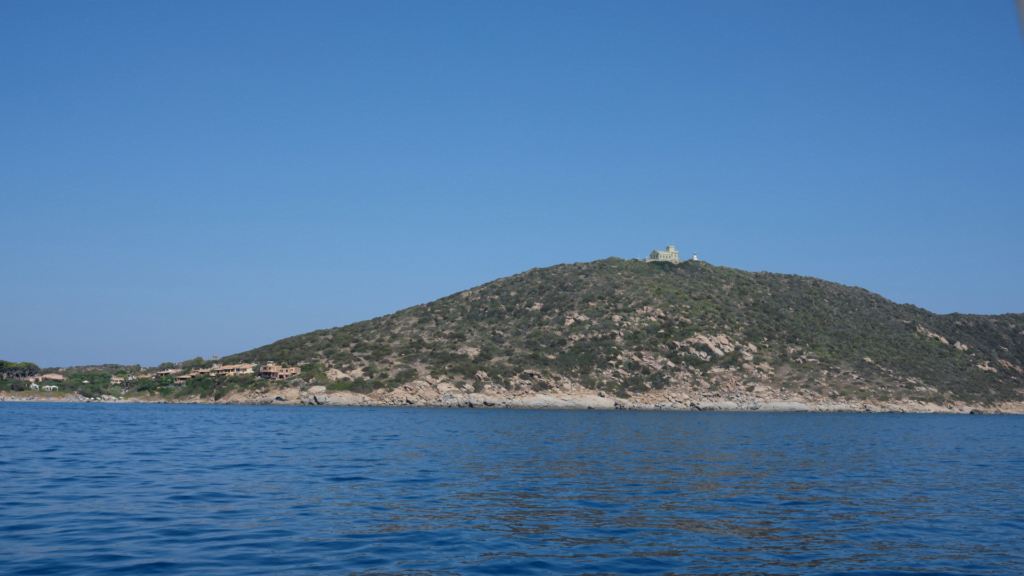
Geologically, Isola dei Cavoli represents the final emerged outcrop of the granitic complex of southeastern Sardinia. Sea levels rose approximately 10,000-12,000 years ago at the end of the last Ice Age, separating it from the mainland. Its coast is deeply irregular: granite boulders frame a series of small coves with coarse white sand, each one distinct in character. From the water, the lighthouse is visible from a long distance, its tiled walls striped white, azure, and purple.
What to See on Isola dei Cavoli
The Lighthouse and the Spanish Tower
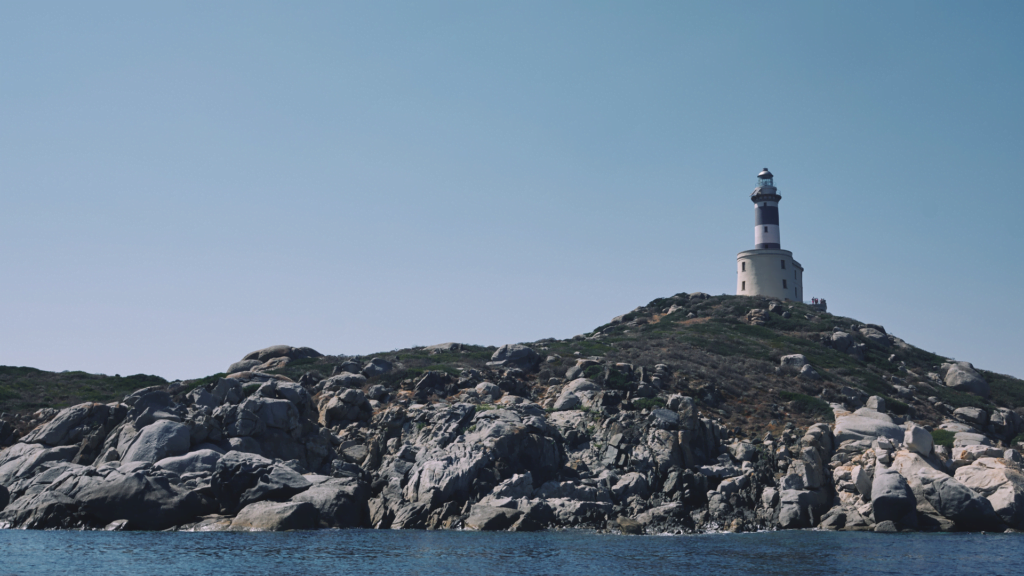
The Faro dei Cavoli is the island’s defining landmark. Built in 1856, it was constructed around an earlier Spanish defensive tower dating from 1591 — a watchtower raised during the period of coastal raiding that plagued Sardinian shores for centuries. The two structures are fused into a single building today, visible from far out at sea.
The lighthouse is managed by the CEAS Capo Carbonara (Centre for Environmental Education and Sustainability), which opens it to public visits during July and August. Admission costs €3 for adults, €1.50 for children aged 7-11, and is free for children under 6. The climb to the top is steep and exposed to the sun — allow 20-30 minutes each way and bring water. The panoramic view from the terrace is genuine: on a clear day you can trace the entire southern Sardinian coastline from Porto Giunco in the west to Serpentara in the east, with the Gennargentu mountains visible inland.
The lighthouse keepers who lived here through the twentieth century gave names to all the island’s coves based on daily experience. Those names have survived.
The Coves: Named by the People Who Lived Here
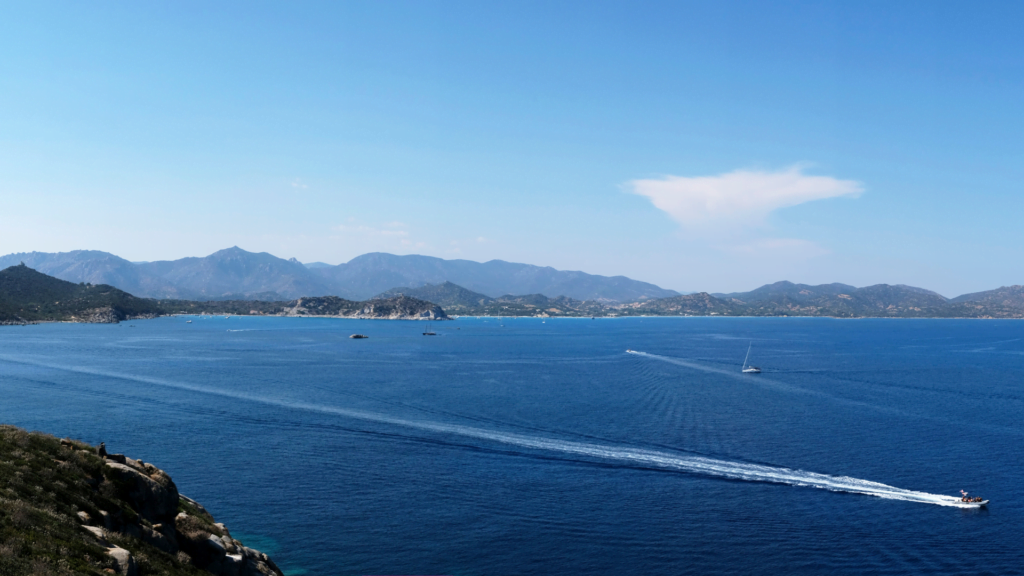
- Cala di Ponente — the long, narrow inlet on the western side, sheltered and accessible to small boats. This is where most visiting vessels moor. The name simply means “western cove.”
- Cala di Scasciu — the largest and most protected inlet. Scasciu means “fun” or “recreation” in Sardinian dialect: this was where the lighthouse keepers and their families held their picnics and gatherings, shielded from the prevailing winds.
- Cala del Morto — a smaller, more exposed cove on the southern side. Two explanations circulate for the name: one refers to murta, the myrtle plant that grows on the slopes above it; the other recalls a body washed ashore from the sea in the distant past.
- Cala del Ceppo — named after the stump of a large tree that once stood at the head of the cove and served as a mooring point.
Flora and Fauna
On land, the island is a nesting site for peregrine falcons, Cory’s shearwaters, European shags, and various gull species. The rare Corsican seagull (Larus audouinii) is recovering in the area, and its presence is considered an indicator of the ecosystem’s health. The terrestrial vegetation is dominated by Mediterranean scrub and the endemic Brassica Insularis, which flowers in spring.
Underwater, the protected zone around Cavoli is dense with life. The granite seabed forms a network of valleys, ridges, and crevices inhabited by lobsters, moray eels, groupers, amberjacks, dentex, bream, and octopus. Large schools of barracuda are common. The Posidonia oceanica meadows — the most important marine plant of the Mediterranean, classified as a protected species — cover significant stretches of the seafloor and act as nurseries for juvenile fish.
The Madonna del Naufrago: an Underwater Icon
At 11 metres depth, in the bay north of the island, rests one of the most unusual sculptures in the Mediterranean: the Madonna del Naufrago (“Our Lady of the Shipwrecked”), a statue in pink trachyte created by the internationally renowned Sardinian sculptor Pinuccio Sciola of San Sperate.
The statue was placed on the seabed on 8 July 1979 by the Sub Sinnai diving club. It stands over three metres tall and depicts the Virgin Mary as the patron of sailors and those lost at sea. Sciola (1942-2016) is one of the most significant figures in twentieth-century Sardinian art: his work is held in the Vatican, at the United Nations headquarters in New York, and in major international museums. The Madonna del Naufrago is not a minor local curiosity, it is a substantial cultural landmark.
Every third Sunday of July, a procession of boats departs from Villasimius for the island. Divers descend to lay wreaths at the statue’s feet while a priest on the water’s surface conducts the benediction through loudspeakers. The boats sound their horns and scatter flowers on the sea. It is one of the most moving traditions in southern Sardinia.
A separate religious festival, the Festa di Santa Maria, takes place on 7-8 September in Villasimius and also involves the island as a destination for devotional processions. These are two distinct events, often confused in tourist literature.
Snorkelers can reach the statue without difficulty from the surface. Divers will find it at a depth manageable for all certification levels.
Things to Do near Isola dei Cavoli: Top Activities
Capo Carbonara Boat and Snorkeling Tour
A 4-hour small-group tour via GetYourGuide covering the full protected area, sailing around both Cavoli and Serpentara with stops for snorkeling guided by a marine biologist. Includes soft drinks, snorkeling gear, and entry to the marine protected area. Hotel pickup and drop-off included. Rated 4.6/5 from over 240 reviews — one of the best-value ways to experience both islands in a single outing.
From Notteri: Isola dei Cavoli and Punta Molentis Boat Trip
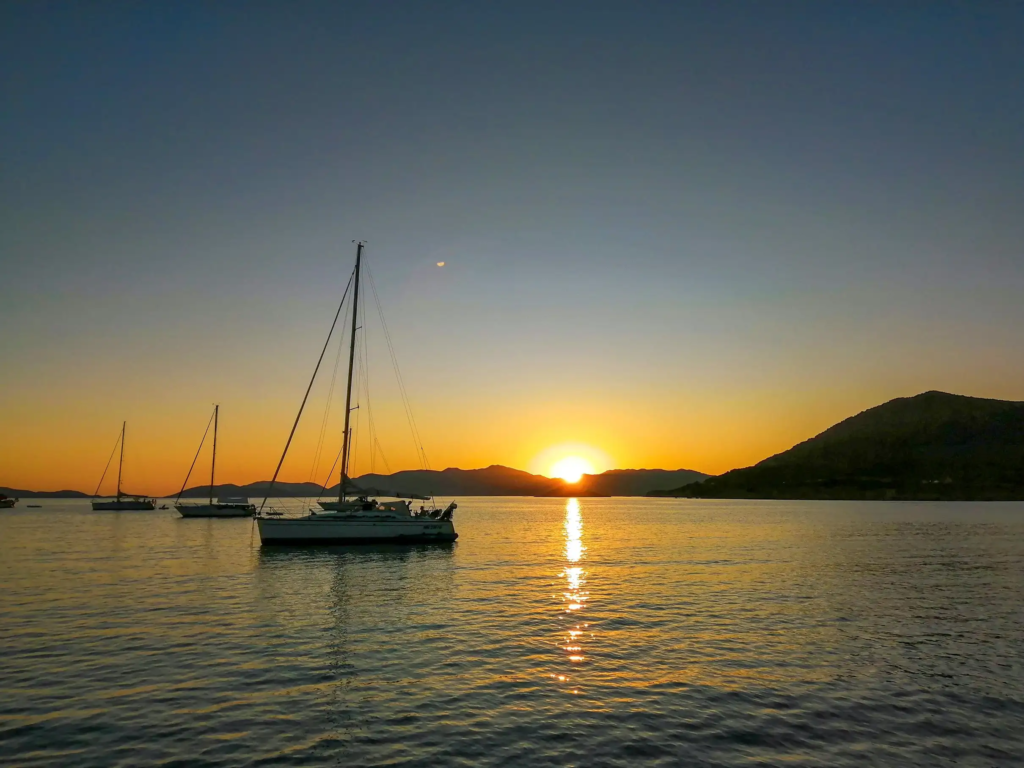
A private 3-hour boat charter for groups of up to 10, departing from Notteri beach and covering Isola dei Cavoli, the Madonna del Naufrago bay, and Punta Molentis — one of the most spectacular beaches in southern Sardinia. Skipper and fuel included. The private format means you set the pace and stay longer at the stops that interest you most. Rated 4.3/5 from 76 reviews.
Villasimius Marine Park Tour with Snorkeling and Drinks
This 3.5-hour tour aboard a 10-metre inflatable boat is limited to 12 people and covers Cavoli Island, Punta Molentis, and the hidden coves of the Capo Carbonara Marine Protected Area. Snorkeling gear is provided on board. An aperitif with typical Sardinian products is served during the excursion. The smaller group size and the quality of the boat make this a more comfortable choice for those who want both nature and a degree of comfort.
Private Boat Tour from Villasimius
A private mini-yacht charter departing from the port of Villasimius, visiting Punta Molentis, Porto Giunco, hidden coves including Cala Sa Calazziga, and Isola dei Cavoli. An aperitif with local products is served on board. Ideal for couples or small groups wanting flexibility and comfort rather than a group excursion.
Getting There: How to Reach Isola dei Cavoli
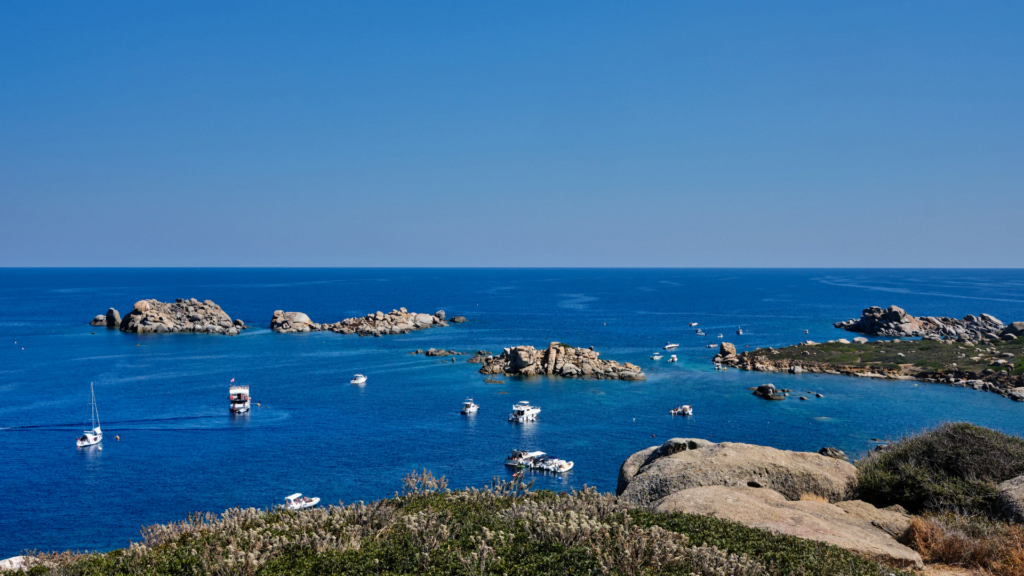
Isola dei Cavoli has no road connection, no ferry service, and no permanent residents. The only options are:
- Organised boat tour from Villasimius (15-20 minutes at sea, most common approach). Tours depart from Porto Turistico di Villasimius throughout the day in season. Book in advance in July and August — they do sell out, particularly around the Madonna del Naufrago festival weekend.
- Private boat rental from Villasimius or Costa Rei. Several operators offer inflatable boats with and without skipper. A boat licence is required if you rent without a skipper.
- Kayak (for experienced paddlers only). The crossing is approximately 8 km from Villasimius, with open water exposed to wind and boat traffic. Not recommended in peak summer without serious experience and appropriate equipment.
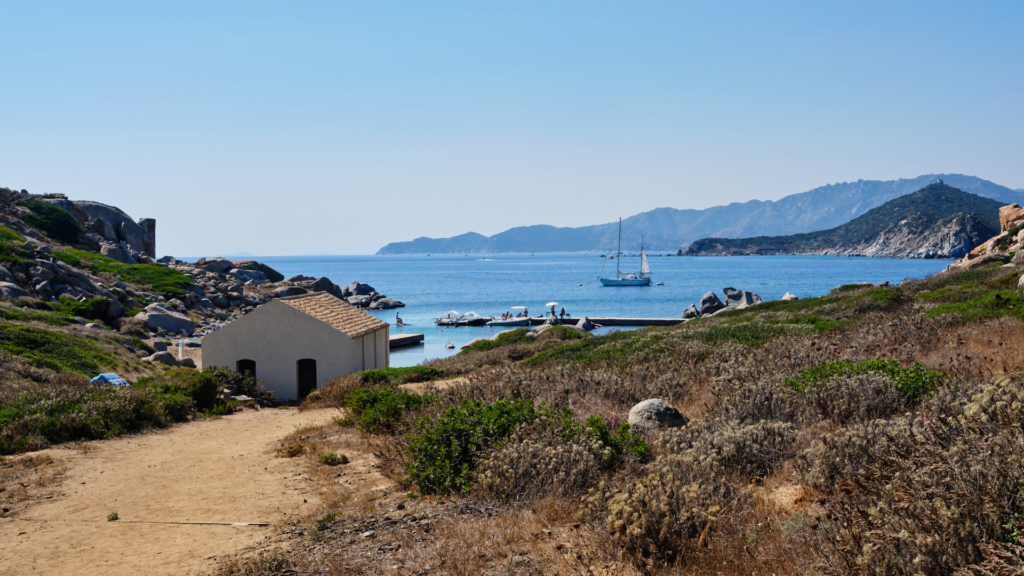
Important practical note: there are no bars, restaurants, shops or shade structures on the island. Bring water, snacks, and sunscreen. The island has two floating pontoon docks at Cala di Ponente; moor there and report to the staff on duty, who can advise on conditions and lighthouse opening times.
Getting Around: Car Rental in Villasimius
The island itself is car-free, but getting to Villasimius from Cagliari Elmas Airport (approximately 60 km) is far more convenient by car than by public transport, particularly if you are combining the Cavoli visit with time at Villasimius’ beaches or Porto Giunco. The road south from Cagliari is straightforward, and having a car opens up the entire southeastern coast.
You can compare prices and book directly from Cagliari Elmas Airport on Discovercars.
Where to Stay near Isola dei Cavoli
Isola dei Cavoli itself has no accommodation. All visitors base themselves in Villasimius or nearby.
Falkensteiner Resort Capo Boi – A luxury resort on the Capo Carbonara coast with direct views across the Marine Protected Area, a private beach, spa, and outdoor pools. One of the most well-positioned resorts for visiting the island, with the boat departure point at Villasimius roughly 10 minutes away by car. Book on Booking.com
Almar Timi Ama Resort & Spa – A large 5-star resort a 10-minute walk from Spiaggia Timi Ama, surrounded by Mediterranean vegetation. Free shuttle to the beach, outdoor pool, spa, and four restaurants. Excellent base for families and couples. Rated 8.6/10 by guests. Book on Booking.com
Hotel Simius Playa – A mid-range hotel 900 metres from Villasimius centre, facing the turquoise water of Capo Carbonara with a private beach, outdoor pool, and a restaurant serving fresh fish. Rated 9.1/10 for location by guests. The most practical option for accessing the tourist port and boat departures. Book on Booking.com
The Local Perspective: What Sardinians Think
Wind and Sea Conditions
The Maestrale (northwest wind) is the dominant wind system in southern Sardinia and hits the western side of Isola dei Cavoli directly. This is not theoretical: when the Maestrale is blowing at 25-30 knots, the short crossing from Villasimius becomes uncomfortable on a small inflatable, and some tours will cancel or redirect. The operators are experienced and make the right call, but it is worth checking the forecast before booking a morning departure. Afternoon crossings in summer are generally calmer. Cala di Scasciu, the lighthouse keepers’ favourite cove, earned its cheerful name precisely because its sheltered eastern position makes it the most reliable anchorage in most wind conditions.
In August, the protected area around Cavoli sees significant boat traffic. This is not the serene wilderness of early June or late September. If you are coming specifically for the snorkeling and want the seabed to yourselves, consider shoulder season: May-June and September-October are far quieter, the water is still warm enough, and the island itself is arguably more beautiful.
Logistics and Access
One and a half hours on the island is enough. That is not underselling it — it is an accurate reading of a 43-hectare rock. Walk to the lighthouse (20-30 minutes depending on pace), swim in Cala di Ponente, and walk the perimeter path. If the lighthouse is open (July-August, CEAS calendar), add another 30-40 minutes. There is no reason to rush, but also no need to plan a four-hour stay on land. The real time investment is the boat excursion around the island, which is where the marine environment opens up.
Parking at Porto Turistico di Villasimius is paid and fills up early in August. Arrive before 9:00 and you will have no problem. After 10:30 in peak season, you may be queuing.
The Cultural Weight of Pinuccio Sciola
It is worth being clear about who Pinuccio Sciola was. He is not a regional curiosity but one of the most internationally recognised Italian sculptors of the twentieth century, whose work spans five continents and includes permanent installations at institutions of global significance. The Madonna del Naufrago was placed underwater in 1979, a decade before Sciola’s major international recognition. Visiting it is not simply an unusual dive site — it is an encounter with a major work by a major artist, in one of the most improbable locations imaginable.
Location
Isola dei Cavoli is located off the southeastern coast of Sardinia, specifically opposite the renowned seaside resort of Villasimius. The island is an important landmark within the Capo Carbonara Marine Protected Area, a region dedicated to the conservation of the rich marine and terrestrial biodiversity of the area.
FAQ about Isola dei Cavoli
How do you get to Isola dei Cavoli? By boat only. The most common departure point is Porto Turistico di Villasimius, approximately 15-20 minutes away. Organised tours and taxi boat services run daily in season. You can also reach the island by private boat from Costa Rei.
Can you visit the lighthouse on Isola dei Cavoli? Yes, during July and August, when CEAS Capo Carbonara staff open the lighthouse to visitors. Entrance costs €3 for adults, €1.50 for children aged 7-11, free for under-6s. Visits are subject to weather and availability. Pay on arrival.
Is Isola dei Cavoli worth visiting? Yes, but with realistic expectations. The island itself takes 90 minutes to explore thoroughly. The real draw is the surrounding marine environment: the boat crossing, the snorkeling in the protected area, and the Madonna del Naufrago statue. If you are based in Villasimius, a half-day excursion combining the island and a snorkeling stop is one of the best experiences on the southern coast.
Can you stay overnight on Isola dei Cavoli? No. The island has no accommodation, no facilities, and does not permit overnight stays. All visitors return by boat to Villasimius or the mainland.
What is the Madonna del Naufrago statue? A pink trachyte sculpture by Sardinian artist Pinuccio Sciola, placed on the seabed at 11 metres depth in July 1979 by the Sub Sinnai diving club. The statue depicts the Virgin Mary as the protector of sailors and is the focal point of an annual boat procession held on the third Sunday of July. Snorkelers can see it from the surface; divers have direct access.
What is the best time to visit Isola dei Cavoli? May-June and September are the best compromise: warm water, low crowds, calm seas, and better conditions for snorkeling and diving. July is the month with the most cultural significance (Madonna del Naufrago procession, lighthouse open to visitors). August is the busiest month for boat traffic and requires advance booking for all excursions.
- Can I stay overnight on Isola dei Cavoli?
Direct accommodation on the island is very limited/restricted. Most visitors stay in hotels in Villasimius and visit by boat. - What is the best way to visit the island?
The best way is to join one of the many boat tours in Sardinia that depart from the Capo Carbonara area. - What can I see on the island?
The main landmark is the 19th-century lighthouse. The island is part of a protected area, similar to the Serpentara Island.
More Activities: Check Availability for Upcoming Season
The following experiences are organised by Archeo Diving and SubAquaDive directly from Porto Turistico di Villasimius. Availability varies by season — check current dates on Viator before booking.
- Taxi boat to Isola dei Cavoli (Archeo Diving) — Direct transport to the island, approx. 1.5 hours on land. No boat licence required. Lighthouse fee paid separately on arrival.
- Snorkeling in the Capo Carbonara Marine Protected Area (SubAquaDive) — Guided snorkeling with marine biologist, equipment included, max 15 participants. Rated 4.7/5 from 77 reviews.
- Discover Scuba Diving at Isola dei Cavoli (Archeo Diving) — Introductory dive for non-certified participants, open water session in the protected zone around Cavoli at approx. 5 metres depth.
Sources
- Isola dei Cavoli – Sardegna Turismo (Official Regional Tourism Portal)
- Isola dei Cavoli – Italia.it Official Portal
- Isola dei Cavoli visitor reviews – Tripadvisor
- Transport by boat from Villasimius to Isola dei Cavoli – Tripadvisor / Archeo Diving