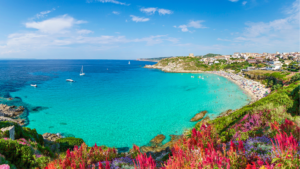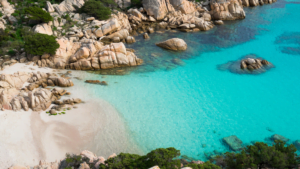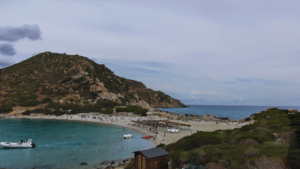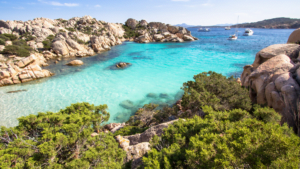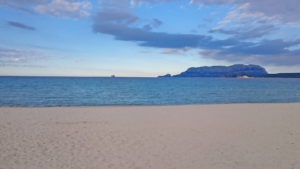
Porto Giunco is one of the most striking beaches in all of Sardinia, and one of the few that genuinely lives up to the hype. Located on the southeastern tip of the island, within the municipality of Villasimius, it combines white sand, transparent water, a protected lagoon, a 17th-century Spanish tower, and one of the most biodiverse marine areas in the Mediterranean. Whether you’re planning a single day trip or basing yourself here for a week, this guide covers everything you need to know, from a Sardinian who’s been coming here for years.
What makes Porto Giunco special
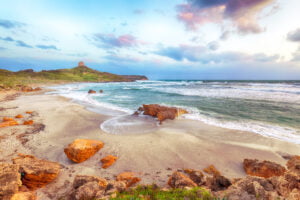
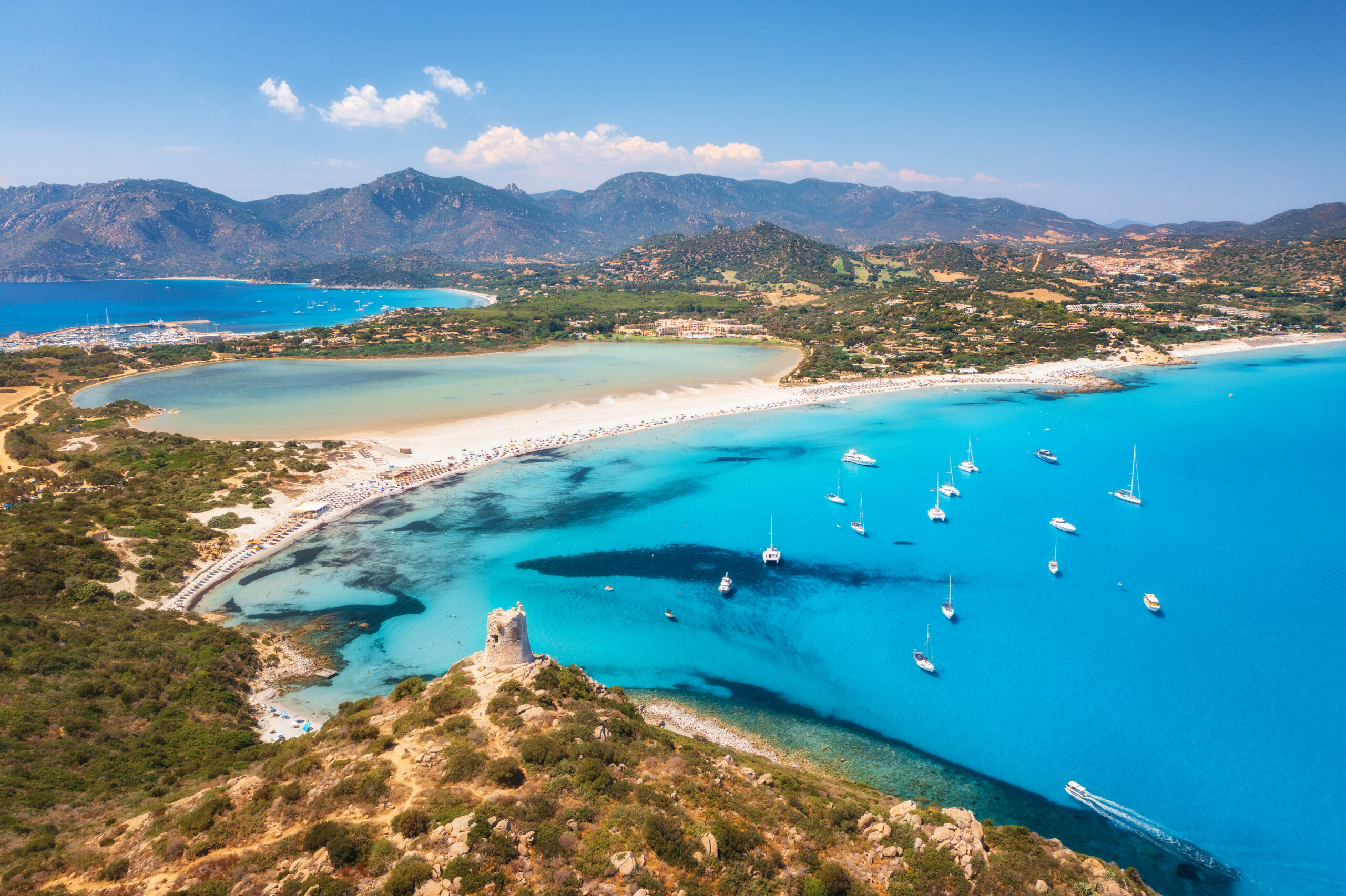
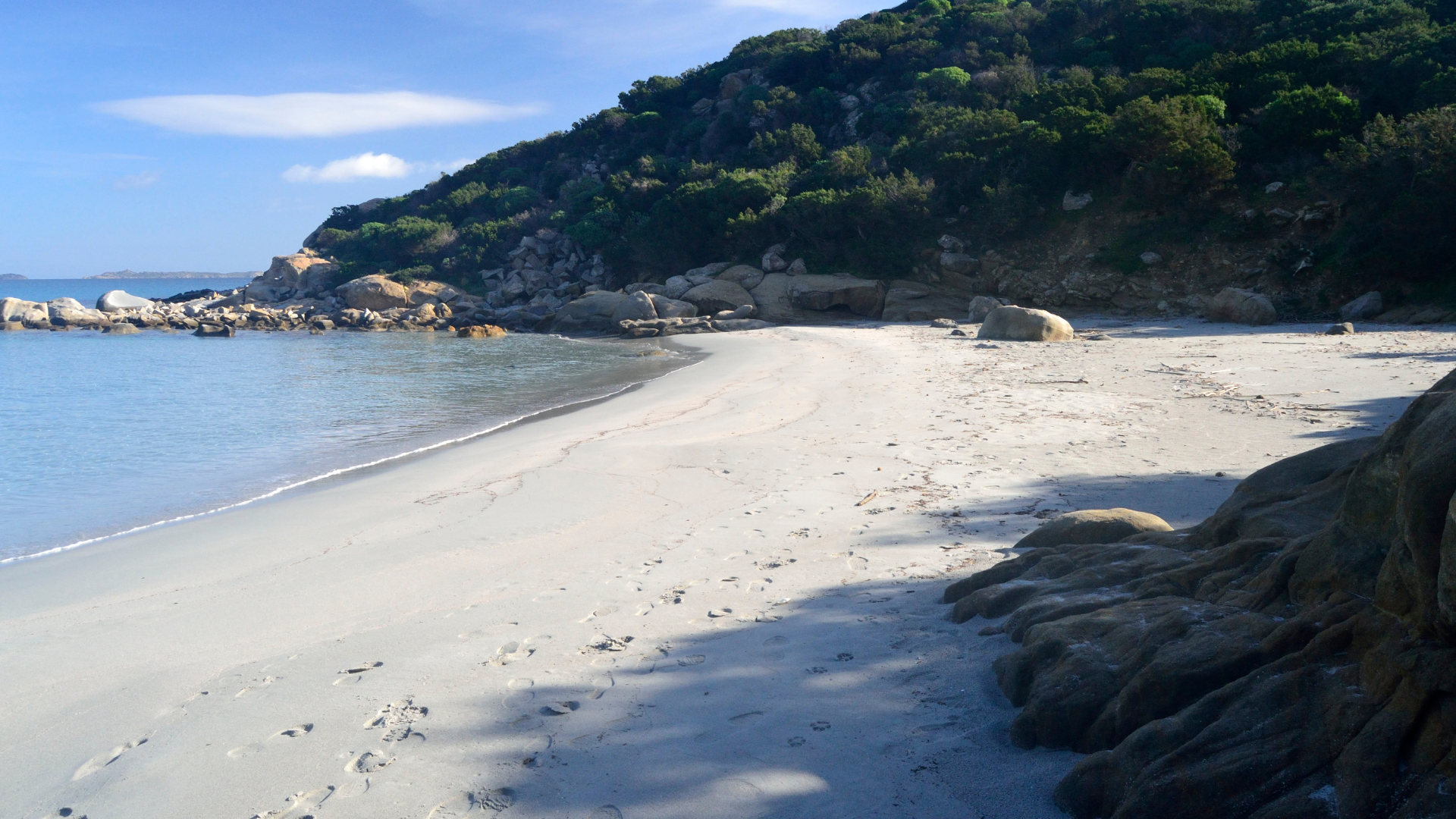
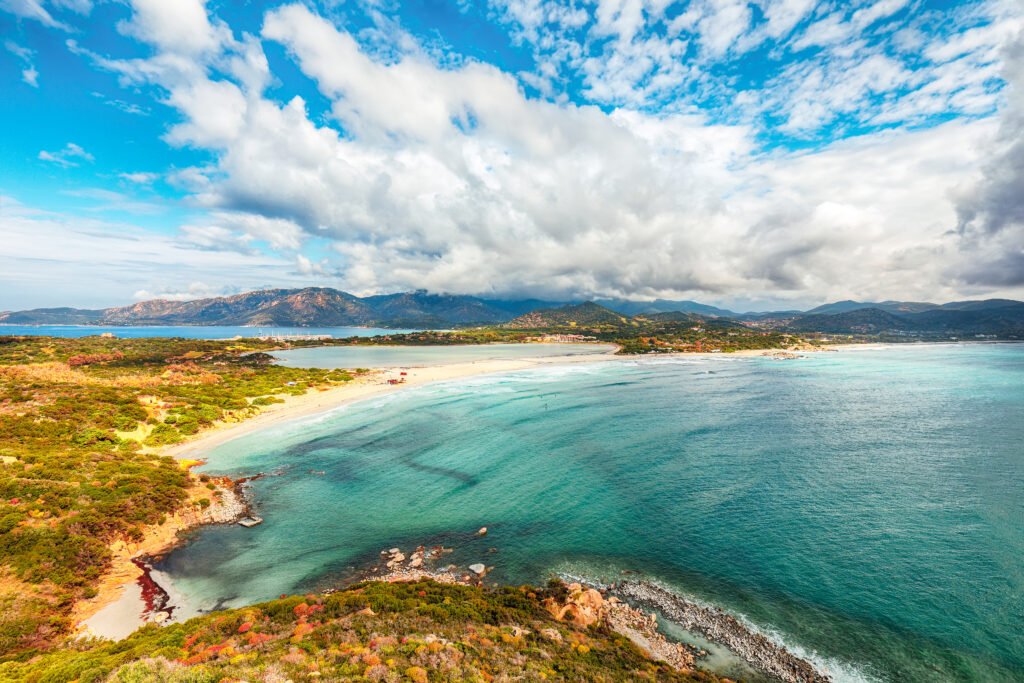
The beach extends for roughly 3 kilometres along the southeastern coast of Sardinia. The sand is fine and white, with a faint pinkish hue caused by tiny fragments of local granite. That’s not a marketing trick: the granite formations that define this corner of the island literally colour the shoreline.
The sea is shallow for a good stretch from the waterline, ideal for families with young children. The seabed slopes gradually, there are no rocks at the entrance, and the water stays clear even with a bit of wind. The beach sits entirely within the Capo Carbonara Marine Protected Area, which explains why the water looks the way it does in every photo you’ve ever seen. It actually looks like that in person.
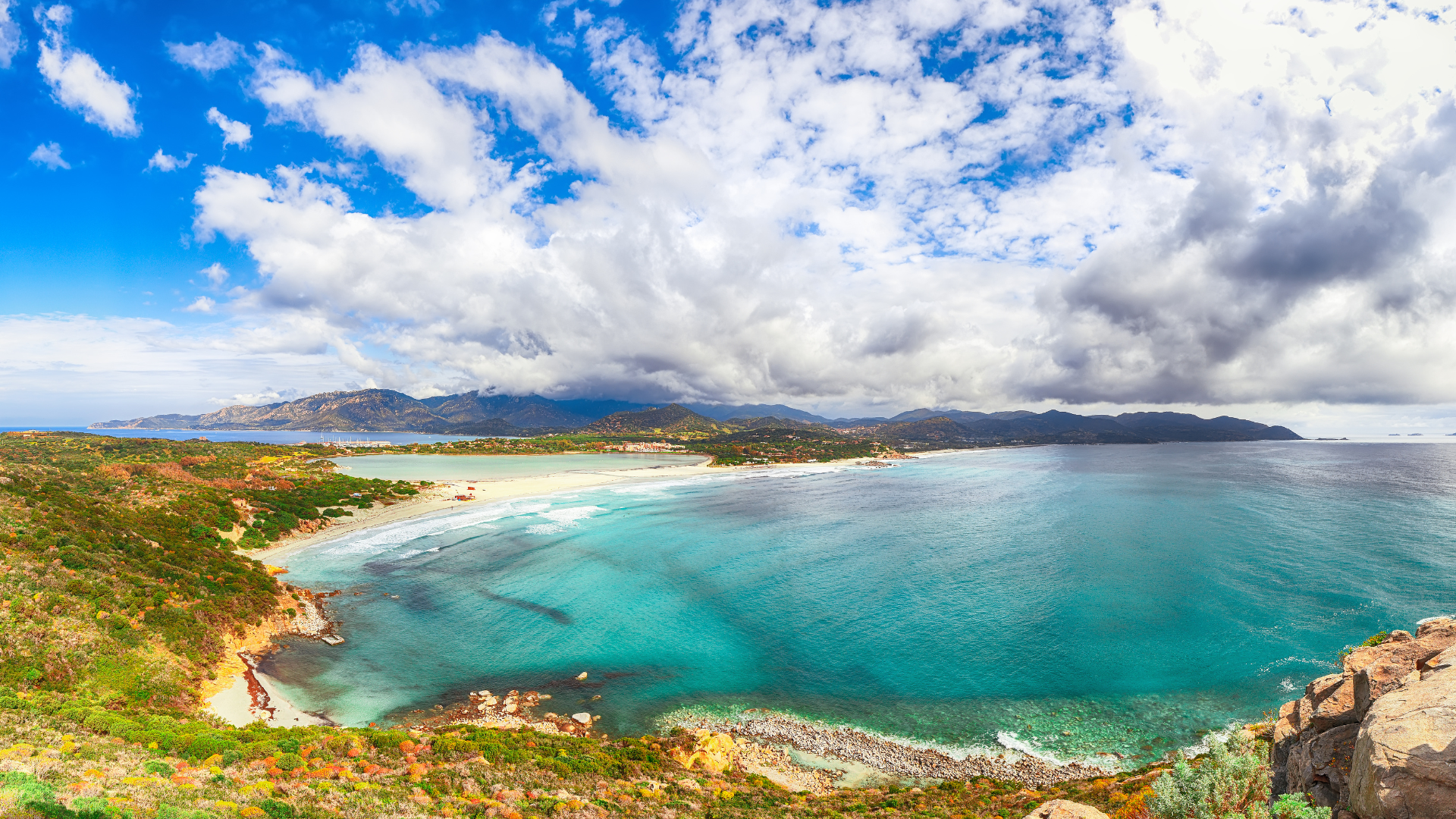
On one side, the Mediterranean. On the other, the Stagno di Notteri, a coastal lagoon that separates the beach from the dunes and macchia behind it. The combination of sea, lagoon, dunes, and a Spanish tower watching from the hilltop is what makes Porto Giunco visually unlike almost anywhere else in Sardinia. It’s been used as a filming location for commercials precisely because it looks almost unreal.
The Stagno di Notteri and the flamingos
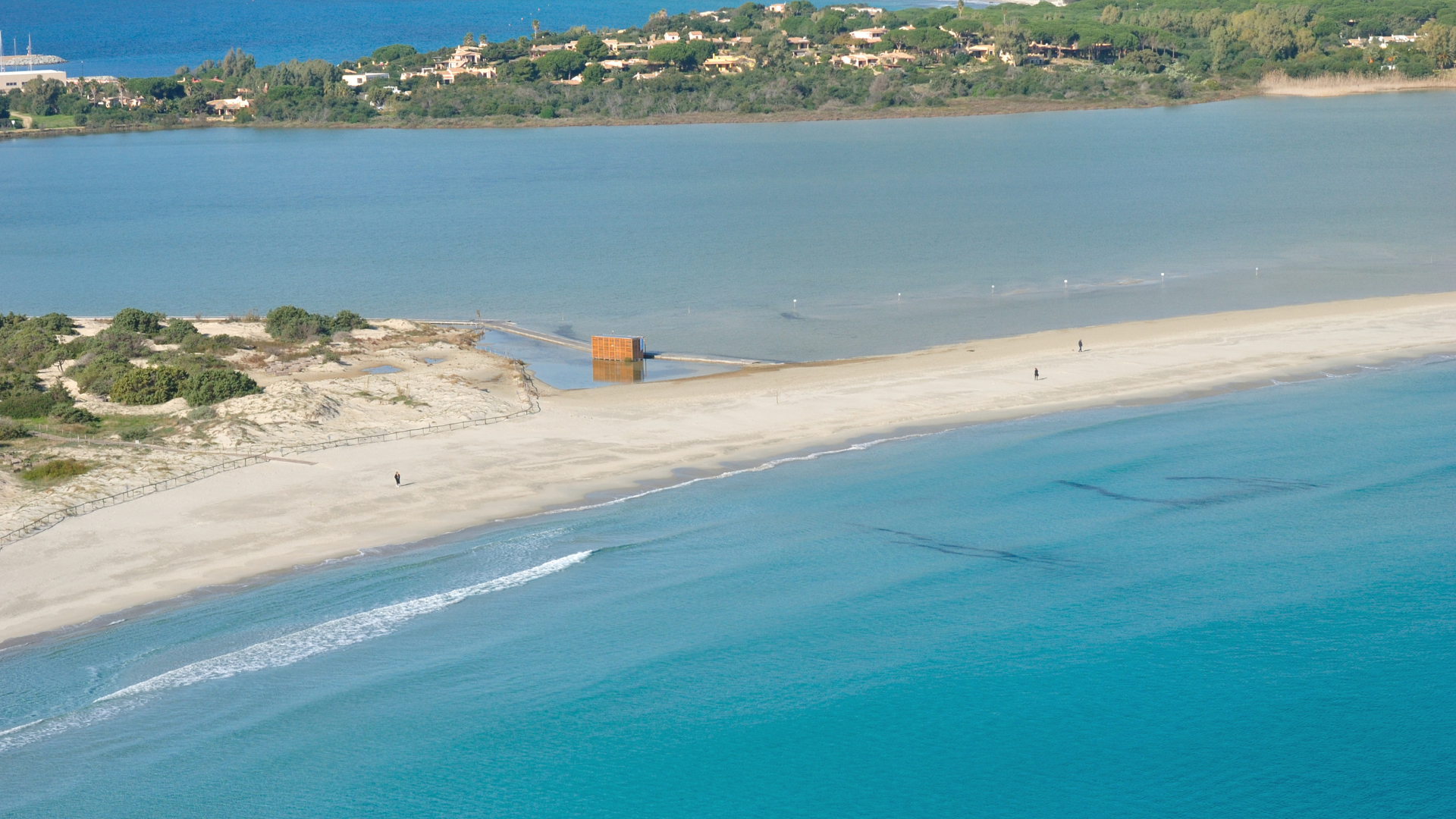
The Stagno di Notteri is a brackish lagoon positioned directly behind the beach. It forms part of the same protected ecosystem as Capo Carbonara and provides a habitat for dozens of bird species, including the pink flamingo, which is the one most visitors come hoping to see.
Here’s the information the postcards leave out: flamingos are most reliably spotted at Notteri in spring (March to May) and autumn (September to October). In August, when the beach is at its busiest, the birds tend to retreat from the lagoon because of the heat and the level of disturbance. TripAdvisor reviews from summer 2025 confirm this: multiple visitors reported no real birds in sight at all during peak season.
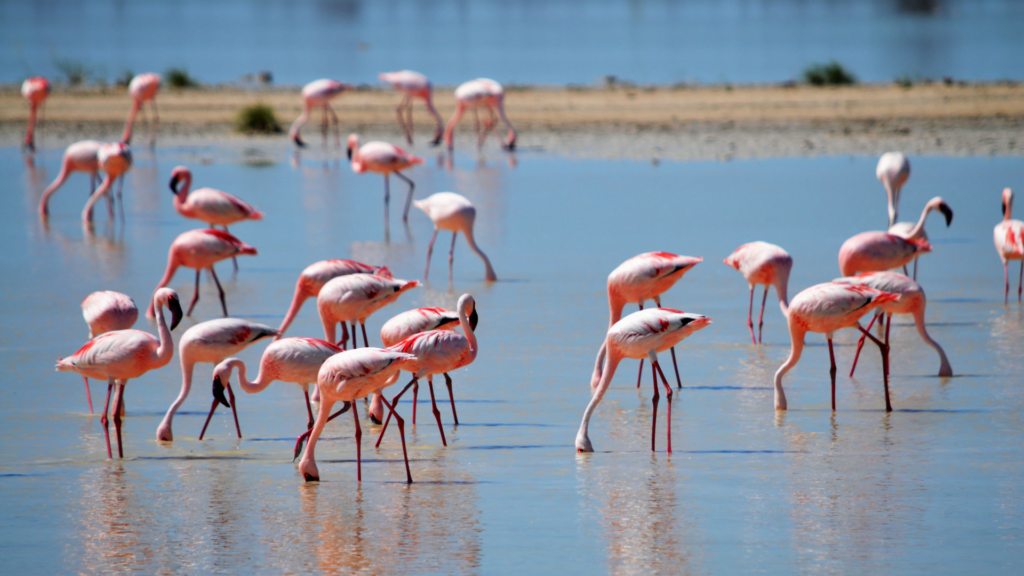
If seeing flamingos matters to you, time your visit accordingly. Late May or late September is the sweet spot: the beach is less crowded, the weather is still excellent, and the chances of spotting birds at the lagoon are significantly higher.
The Torre di Porto Giunco
Perched on the promontory at the southwestern end of the beach, the Torre di Porto Giunco is a Spanish watchtower built in the 17th century. Standing 9 metres tall at 50 metres above sea level, it was one of a network of coastal towers used to watch for pirate attacks and relay signals between settlements along the coastline.
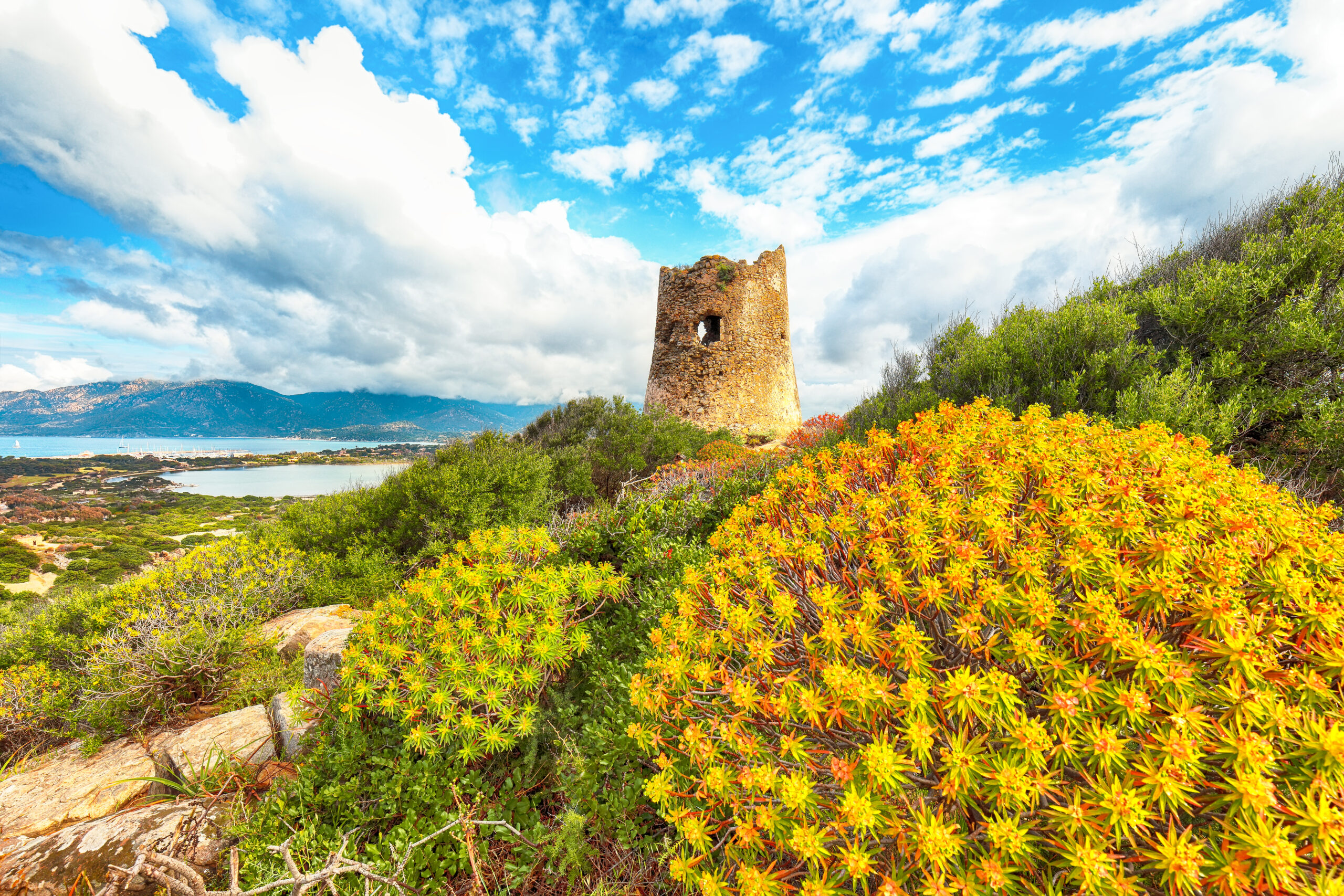
The tower was restored in summer 2024 and its original granite appearance has been carefully preserved. A hiking trail leads up from the beach. The walk takes around 20 to 30 minutes and the path is suitable for most fitness levels. The view from the top takes in the full bay, the Stagno di Notteri, the coastline stretching toward Punta Molentis, and on clear days, the islands of Cavoli and Serpentara offshore.
It’s one of the best free viewpoints in South Sardinia.
The Capo Carbonara Marine Protected Area
Porto Giunco sits within the Capo Carbonara Marine Protected Area, covering 86 square kilometres of protected waters. The area includes the islands of Cavoli and Serpentara, both visible from the shoreline on a clear day.
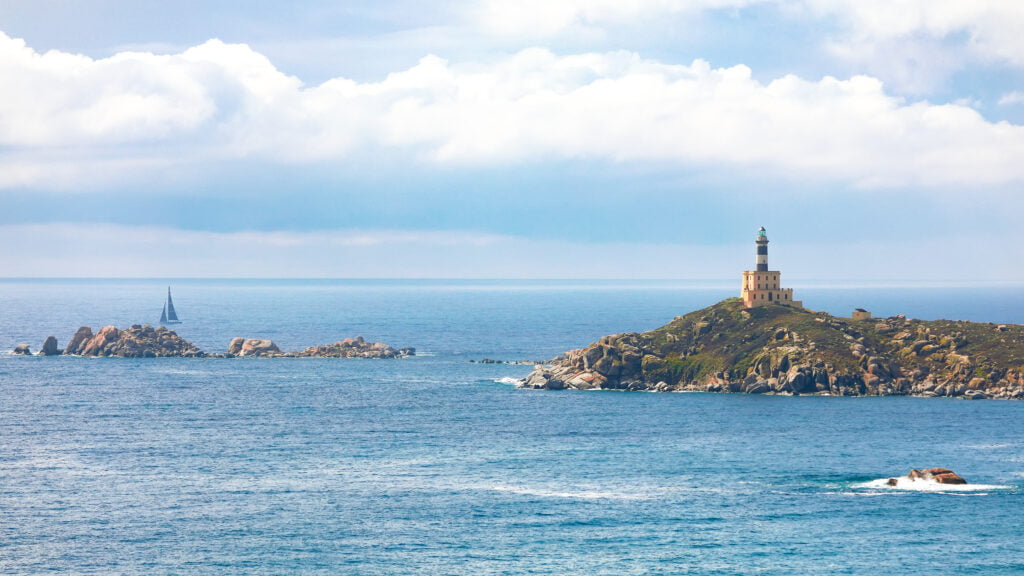
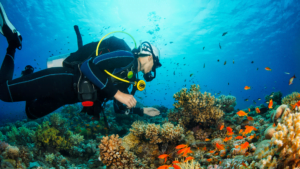
This protected status is the reason the marine ecosystem here remains so intact. Divers and snorkellers regularly encounter octopuses, sea bream, grouper, sponges, and posidonia meadows at shallow depths. The area also includes several wreck dive sites that attract experienced divers from across Europe. Some guided tours include a marine biologist, making the experience genuinely educational rather than just a boat trip.
Things to do in Porto Giunco: top activities
Beach Day Tour from Cagliari (Porto Giunco + Cala Sinzias)
If you’re staying in Cagliari without a car, this is the most practical way to reach Porto Giunco. The full-day tour departs from Cagliari, makes scenic stops along the panoramic southeastern coast road, gives you at least two hours at Porto Giunco, then continues south to Cala Sinzias beach. Beach mats and parasols are included, which removes the need to rent or carry anything. Rated 4.7/5 across 52 verified reviews.
Book on GetYourGuide (from approx. €96/person, prices vary by season)
Also available on Viator: Beach Tour Porto Giunco and Cala Sinzias from Cagliari
Marine Park RIB Snorkeling Tour (3.5 hours)
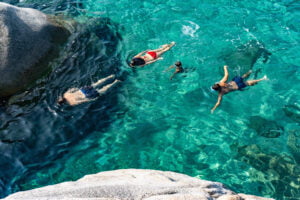
A 3.5-hour excursion aboard a 10-metre inflatable speedboat departing from Villasimius. The tour covers the Capo Carbonara Marine Protected Area, with stops at hidden coves, Cavoli Island, and Punta Molentis. Snorkeling gear and one drink are included. This is the top-rated activity for those already based in Villasimius, and the most efficient way to see the protected area by sea without committing to a full day. Rated 4.8/5 across 268 reviews.
Book on GetYourGuide (from approx. €62/person, prices vary by season)
Guided Snorkeling with a Marine Biologist (Capo Carbonara)
The right tour for anyone who wants to understand what they’re looking at underwater. A qualified marine biologist guides the group to the protected islands of Cavoli and Serpentara by boat. The focus is on the marine ecosystem: posidonia meadows, endemic species, and the ongoing conservation work in the protected zone. Snorkeling gear, snacks, and drinks are included. Small group format guarantees proper attention and access.
Book on GetYourGuide (from approx. €53/person)
Private Mini Yacht Tour from Villasimius
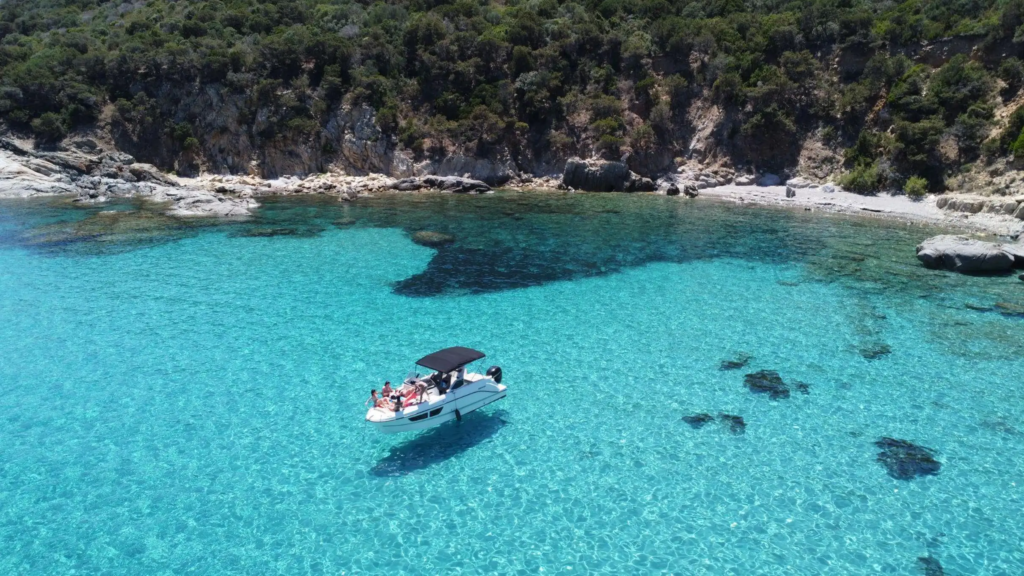
A private departure from Villasimius harbour aboard a comfortable mini yacht with a dedicated skipper and sailor. The itinerary covers Punta Molentis, Porto Giunco, Cala Sa Calazziga, Cavoli Island, and Serpentara. Snorkeling equipment, underwater scooters, a SUP board, and a floating carpet are included. An aperitif with local Sardinian products is served on board. Maximum 10 guests, which keeps the experience genuinely private.
Book on GetYourGuide (check current prices at the link, rate is per group)
Full Day Yacht Cruise with Aperitif and Lunch
For those who want an entire day at sea in comfort. The motor yacht accommodates a maximum of 10 guests with a skipper and sailor at full disposal. Stops vary with conditions but typically include Cavoli, Punta Molentis, Porto Giunco, Cava Usai, and Campulongu. Lunch with local products, full snorkeling kit, underwater scooters, a SUP board, and a floating carpet are all included.
Book on GetYourGuide (check current prices at the link, rate is per group)
Hike to the Torre di Porto Giunco
This one costs nothing. The trail begins at the southern end of the beach and climbs to the Torre di Porto Giunco in around 20 to 30 minutes. The path is well-marked and reasonably shaded in the early morning. Go early in summer: by midday, the exposed sections become uncomfortably hot and the views are slightly hazy. Early morning, when the light hits the lagoon and the bay from the east, is the best time for photography.
For more trails in the surrounding area, see our guide to the best hikes in Sardinia.
Getting around: car rental in Villasimius
A car is the most practical option for visiting Porto Giunco. The beach sits roughly 3 kilometres from the centre of Villasimius. A seasonal shuttle bus runs between the two in summer (€2 per ride or €5 for a day pass), but it only operates in the high season and not across all schedules. If you’re arriving from Cagliari, the drive takes approximately 50 minutes along the SS 125, with roughly 52 km of road.
In August, add 20 to 30 minutes for coastal congestion. Parking costs around €10 per day in peak season and the lot fills up well before 10 AM. Arriving early is not optional.
Compare prices and book at Cagliari Elmas Airport:
Car rental Cagliari Airport via Discovercars
How to get to Porto Giunco
By car: Take the SS 125 southeast from Cagliari toward Villasimius. After passing through the town, follow signs to Porto Giunco. You will pass the Stagno di Notteri on your right before reaching the parking area. Approximately 52 km, around 50 minutes.
Parking: Large lot near the beach, capacity approximately 800 vehicles. In peak summer, parking costs around €10 per day. It fills up fast. Arrive before 9:00 AM in July and August. A free shaded area is available at a slightly greater walking distance from the beach entrance.
By bus: ARST buses run from Cagliari to Villasimius several times daily. Journey time is approximately 1.5 hours, cost around €4.30 one way. From Villasimius centre, the seasonal shuttle bus reaches Porto Giunco for €2 per ride or €5 for a day pass.
By guided tour: If you prefer not to drive, several tours include pickup from Cagliari and return transfer. This is often cheaper than renting a car for a single day when you factor in fuel and parking.
Where to sleep near Porto Giunco
Porto Giunco has no accommodation directly on the beach. The nearest options are in the Notteri area immediately behind the dunes, and in Villasimius, about 3 kilometres away. Here are three well-reviewed properties covering different budgets.
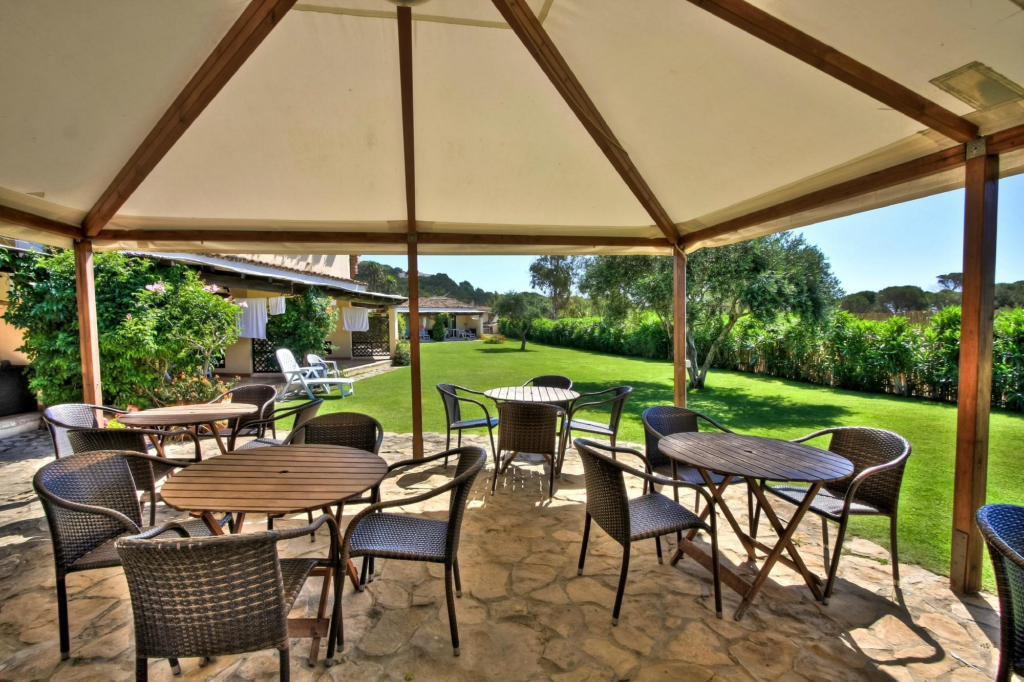
Porto Giunco Residence (Booking.com rating: 8.9)
Located 50 metres from the beach, this residence offers self-catering apartments decorated in traditional Sardinian style. Free private parking on site, a garden, Wi-Fi, and an unbeatable location. Guests consistently flag the proximity to Porto Giunco as the main reason to book here. It is one of the only places where you can walk to the water in under two minutes. Budget to mid-range pricing.
Book on Booking.com
Sirius Porto Giunco (Booking.com rating: 9.8)
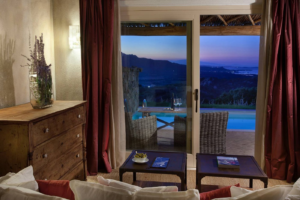
A recently renovated condo-hotel with an infinity pool, mountain views, and only 5 rooms. About a 15-minute walk from Porto Giunco. The owner Laura is consistently praised in reviews for personal service that’s rare in a tourist area. Modern apartments with full kitchens, balconies, and air conditioning. Exceptional value for the rating. Mid-range to premium.
Book on Booking.com
VOI Tanka Village (Booking.com rating: 8.1)
A large beach resort in Villasimius with a private beach, 5 restaurants, 6 bars, outdoor pools, and 5 tennis courts. Half-board rates are standard. About 0.6 km from the centre of Villasimius and 3 km from Porto Giunco. The right option for families who want everything organised in one place and are less focused on getting to Porto Giunco specifically. Less suitable for those who prefer a quieter, more independent stay. Premium pricing.
Book on Booking.com
For more options, see our full guide: Where to stay in South Sardinia.
The local perspective: what Sardinians think
Wind and water conditions. Porto Giunco is partially sheltered from the prevailing summer winds by the two headlands flanking the bay. This makes it calmer than many exposed beaches in Sardinia, particularly during the Maestrale (the northwestern wind that dominates in summer). The result: water that stays warm, relatively calm, and swimmable on most days. That said, on windier days, the windsurfers and kitesurfers who work the southern stretch of the beach are not there by accident. Porto Giunco has genuine wind sport conditions. It is not a classic surfing beach in the sense of breaking waves. Anyone expecting surf-style waves will be disappointed.
Logistics: the parking reality. The beach is large enough to absorb crowds. Even in August, you’ll find free space somewhere along the 3 kilometres of sand. The equipped zone with sunbeds and umbrellas for hire concentrates near the kiosks and beach bars. The free beach extends toward the lagoon end. The real logistical bottleneck is the parking lot. It holds around 800 cars, but in August it fills up before 10 AM. If you’re driving in peak season, arriving between 8:00 and 9:00 AM is not excessive. Anyone arriving at midday in August on a weekend should expect to park considerably further away.
The flamingo question, one more time. It’s worth repeating because it catches a lot of visitors off guard. In August, the Stagno di Notteri is often flamingo-free. The birds are sensitive to heat and disturbance. Spring and early autumn are the reliable windows. If you’re planning your trip around seeing flamingos at Porto Giunco in peak summer, adjust your expectations before you go.
Dogs. Porto Giunco is not dog-friendly during the main season. Dogs are not permitted on the beach from June through September.
FAQ about Porto Giunco
Where is Porto Giunco located?
Porto Giunco is on the southeastern tip of Sardinia, within the municipality of Villasimius, approximately 52 km from Cagliari. The beach is roughly 3 km south of the town centre, reachable by car or seasonal shuttle bus.
Can you see flamingos at Porto Giunco?
Yes, but not reliably in summer. The Stagno di Notteri lagoon behind the beach hosts pink flamingos most visibly in spring (March to May) and autumn (September to October). In July and August the birds are often absent due to heat and crowd disturbance. You can also see flamingos at the Molentargius Park in Cagliari.
What is the tower above Porto Giunco beach?
It’s the Torre di Porto Giunco, a 17th-century Spanish watchtower 9 metres tall and 50 metres above sea level. Restored in 2024, it offers panoramic views over the bay, the lagoon, and the offshore islands. A marked trail from the beach takes around 20 to 30 minutes to the top.
How much does parking cost at Porto Giunco?
Approximately €10 per day in peak season (data from summer 2025 visitor reviews). The lot accommodates around 800 vehicles and fills up well before 10 AM in July and August. A free shaded option exists at a greater distance from the beach.
Is Porto Giunco dog-friendly?
No. Dogs are not permitted on the beach during the summer season, roughly June through September.
How do I get to Porto Giunco without a car?
Take the ARST bus from Cagliari to Villasimius (approx. 1.5 hours, €4.30 one way), then the seasonal shuttle bus to the beach (€2 per ride). Alternatively, book a guided tour from Cagliari with transport included.
What is the best time to visit Porto Giunco?
Late May, June, and September offer the best balance of warm weather, swimmable water, manageable crowds, and the highest probability of seeing flamingos at the Stagno di Notteri. Porto Giunco is also worth visiting in the off-season for the hiking and coastal views, even when swimming is less practical.
What are the best beaches near Porto Giunco?
Punta Molentis is the closest and arguably the most beautiful, with its distinctive arched shape. Simius Beach is just north of Porto Giunco and has a more urban, service-heavy feel. Cala Caterina and Campulongu are worth exploring further southeast. For a broader overview of the best beaches in Sardinia, see our ranked guide.
- What is the tower overlooking the beach?
It is an ancient Spanish watchtower. You can hike up to it for a panoramic view of the South Sardinian coastline. - Is the beach windy?
It can be, which makes it popular for windsurfing. If you prefer calmer waters, check the weather forecast for Sardinia before heading out.