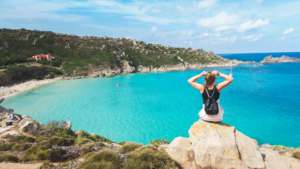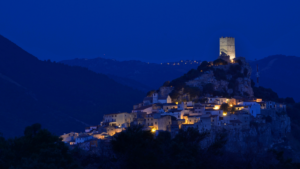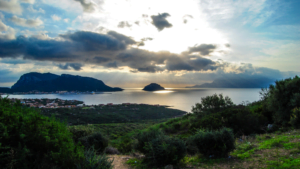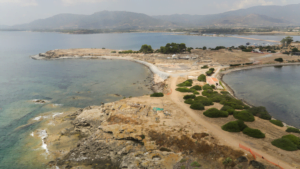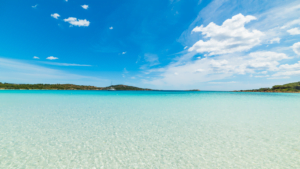
Where to stay in Sardinia depends on what kind of holiday you want. For most first-time visitors, Villasimius in the southeast and Alghero in the northwest offer the best combination of beach quality, infrastructure, and value. Those who want the most famous sea in the Mediterranean and a full-luxury experience head to the Costa Smeralda. If you need a base without a car, Cagliari is the only practical answer.
The island is bigger than people expect: 270 kilometres from north to south, three airports, and a coastline that changes character entirely from one end to the other. The wrong base means an hour of driving before you reach a beach you could have been five minutes from. This guide cuts through it. Ten areas, honest hotel picks with direct booking links, and the practical detail that only comes from living here.
Which area is right for you? A quick comparison
Before reading each area in full, use this table to narrow down the two or three options that match your travel style, budget, and airport.
| Area | Best for | Vibe | Price range | Car needed? | Closest airport |
|---|---|---|---|---|---|
| Cagliari | First-timers, city lovers, no-car travellers | Urban, cultural, lively | €€ | No (in the city) | Cagliari (15 min) |
| Villasimius | Couples, active travellers, beach variety | Upmarket, lively | €€€ | Yes | Cagliari (55 min) |
| Costa Rei | Families, laid-back couples | Slow, seasonal, uncomplicated | €€ | Yes | Cagliari (65 min) |
| Chia and Pula | Luxury seekers, honeymooners, nature | Wild, sophisticated, resort | €€€€ | Yes | Cagliari (45 min) |
| Costa Smeralda | Luxury couples, glamour seekers | Exclusive, polished | €€€€ | Yes | Olbia (30 min) |
| Alghero | Culture, mixed groups, first-timers | Historic, lively, coastal | €€ | Optional | Alghero (10 min) |
| San Teodoro | First-timers, families, value | Easy-going, modern | €€ | Yes | Olbia (20 min) |
| La Maddalena | Island-hoppers, nature lovers | Authentic, relaxed | €€ | No (on island) | Olbia (45 min + ferry) |
| Cala Gonone | Wild beach seekers, hikers | Rugged, intimate | €€ | Yes | Olbia (~2 h) |
| Oristano / Sinis | Off-the-beaten-track, culture | Quiet, genuine | € | Yes | Cagliari (1 h) |
One note before using the table: price ranges reflect mid-season (June and September). August adds 30 to 50 percent to almost every category, with the Costa Smeralda at the extreme end of that range.
North or South Sardinia? The honest answer
The north or south question is the one every first-time visitor asks, and the honest answer is: it depends on your airport and your priorities.
The north (Costa Smeralda, Alghero, San Teodoro, La Maddalena) is the more internationally recognised part of the island. The water colour in the northeast is genuinely exceptional, the infrastructure around the Emerald Coast is polished, and the beach density per square kilometre is high. Prices reflect all of this, especially in July and August.
The south (Villasimius, Costa Rei, Chia, Cagliari) is less hyped and costs 20 to 40 percent less for equivalent quality. The beaches around Villasimius and Chia are objectively as beautiful as anything in the north. For first-time visitors on a sensible budget, the south consistently delivers more value per euro.
For trips of 7 to 10 days, staying in one region is enough and avoids wasting days on the road. Two or three bases is the practical maximum. With two weeks or more, combining north and south makes sense: fly into Olbia, cover the northeast in the first week, drive south to Cagliari for the second.
For detailed hotel coverage of each macro-region, see the dedicated guides: Where to stay in Northern Sardinia, Where to stay in South Sardinia, and Where to stay in Central Sardinia.
Flying into Olbia: best nearby bases
Olbia Costa Smeralda Airport is the main entry point for the northeast. San Teodoro is 20 minutes by car. The Costa Smeralda (Porto Cervo, Cala di Volpe) is about 30 minutes. Palau, where the La Maddalena ferry departs, is 45 minutes. Santa Teresa Gallura at the northern tip is 1 hour 15 minutes. If you are flying into Olbia and heading west to Alghero, budget approximately 2 hours of driving.
Flying into Cagliari: best nearby bases
Cagliari Elmas Airport puts you close to the entire south coast. Chia and Pula are 45 to 50 minutes. Villasimius is 55 to 60 minutes. Costa Rei is 65 to 75 minutes. Sant’Antioco is about 1 hour 30 minutes. In August on a Saturday afternoon, add 30 to 45 minutes to all of these on the SS195 and SS554 coast roads.
Flying into Alghero: best nearby bases
Alghero Fertilia Airport is the least used of the three and the most convenient if you are staying in the northwest. Alghero city centre is 10 minutes away. Stintino and La Pelosa beach are 45 minutes. Castelsardo is 50 minutes. Sassari is 30 minutes.
Do you need a car in Sardinia?
Yes, with two real exceptions.
Cagliari city works without a car. Buses connect the centre to Poetto beach and the main archaeological sites. A short taxi or bus ride covers anything else. For travellers arriving late or leaving early, or for those who simply want a city break in the Mediterranean, Cagliari is the only Sardinian base that requires no driving.
La Maddalena island also works without a car. Bikes and mopeds reach every corner of the island. The ferry from Palau runs frequently in summer and takes 20 minutes. Hire the bike at the port when you arrive.
Everywhere else, a rental car is the difference between seeing the coastline you came for and being confined to a hotel shuttle radius. Book as soon as your flights are confirmed. In July and August, compact and mid-size cars at all three airports sell out weeks in advance. Last-minute prices at peak season cost double or more than advance bookings. See the car rental section at the end for airport-specific links.
Where to stay in Sardinia: the 10 best areas
For in-depth hotel listings and local detail on each macro-region, see the dedicated north, south, and central guides linked above. What follows is a curated selection of the best areas island-wide, with direct booking links for the most recommended accommodation.
1. Cagliari
Best for: first-time visitors, city lovers, no-car travellers, arrival and departure nights.
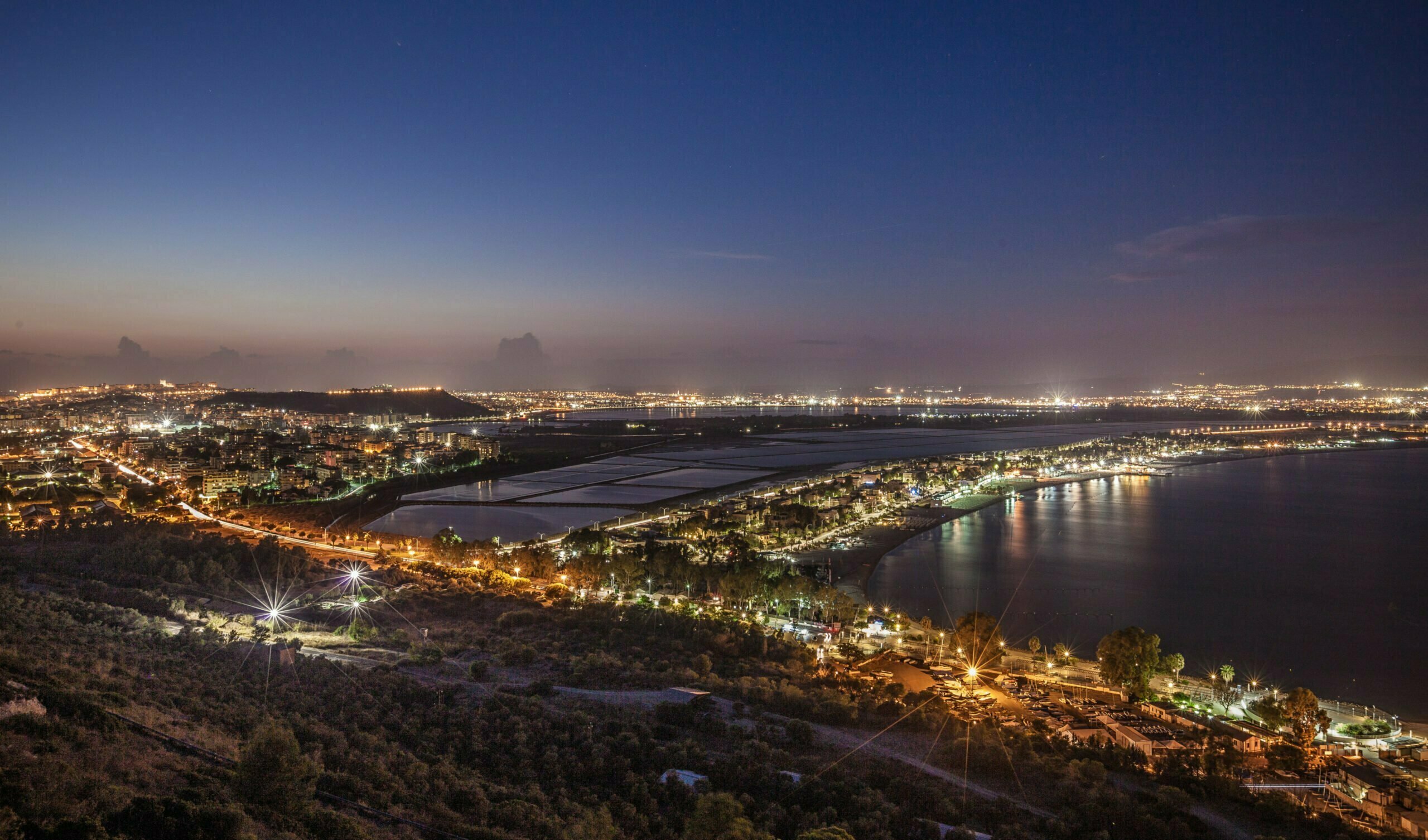
Cagliari is the only base in Sardinia that works without a car, and it is consistently underrated by visitors fixated on beach resorts. The capital has real city life: the Castello district on the hilltop with its medieval walls and lookout towers, the Roman Amphitheatre cut into the rock, the Marina quarter crammed with wine bars and osterie, and Poetto beach stretching for eight kilometres just 15 minutes from the centre by bus.
For first-time visitors, spending a night or two in Cagliari at the start or end of the trip is a genuinely smart move. It softens the arrival, gives you a sense of the island’s character, and allows a late check-in or early departure without the stress of driving to a resort. The airport is 15 minutes away by car.
The Molentargius salt pans immediately behind Poetto are worth knowing: a protected natural area with hundreds of flamingos visible from the cycle path, and entirely free to visit. The combination of an eight-kilometre urban beach on one side and a flamingo wetland on the other is not something you find easily in Europe.
Palazzo Tirso MGallery Cagliari (luxury)
A restored 1920s palazzo overlooking the harbour and the Marina district. 85 elegant rooms, rooftop pool with city and sea views, two restaurants (one gourmet, one rooftop), and a spa by L’Occitane. Walking distance to Castello, the amphitheatre, and the best bars in the Marina quarter. 15 minutes from the airport.
Book on Booking.com
Hotel Nautilus (mid-range, beachfront)
Directly on Poetto Beach, with sea-view balconies and free bike hire so you can cycle the length of the shore. Three-star pricing. The most affordable beachfront stay in Cagliari, and the most practical option if you want beach time without resort prices.
Book on Booking.com
For what to see and do, read the full Cagliari guide.
2. Villasimius
Best for: couples, active travellers, beach variety, snorkelling and diving.
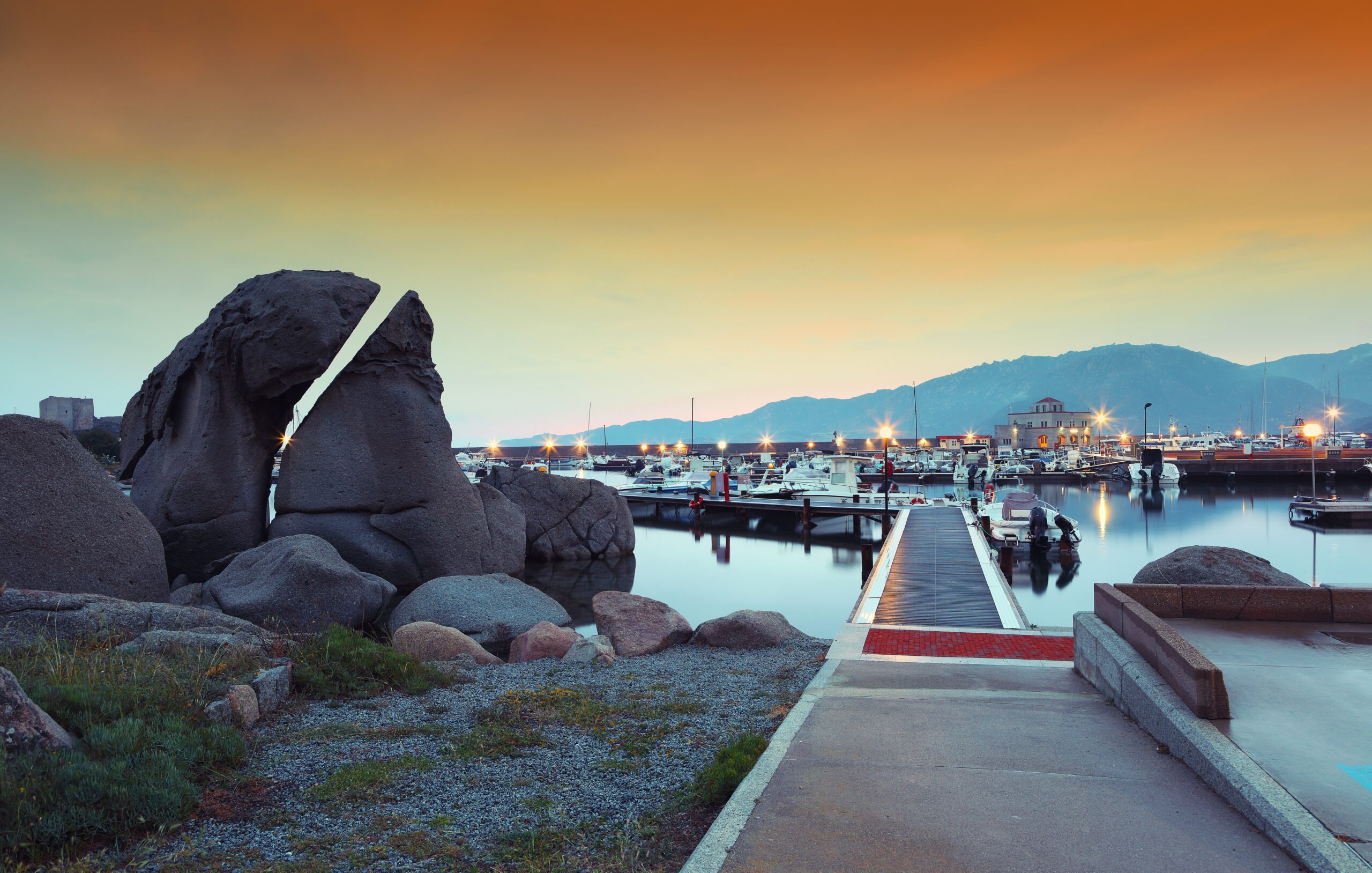
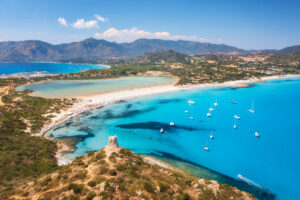
Villasimius sits at the southeastern tip of the island, roughly 55 kilometres from Cagliari airport. More than 20 beaches are within a short drive. The town has a proper summer life: restaurants, bars, a weekly market, and a marina where boat tours depart every morning for the Capo Carbonara Marine Protected Area, one of the most biodiverse stretches of Mediterranean seabed open to visitors.
The individual beaches here matter enough to name: Porto Giunco has a lagoon of pink flamingos on one side and open sea on the other. Punta Molentis is the most scenic cove on the southeast coast, accessible only on foot along a 20-minute trail. Simius beach is the widest and most developed. Isola dei Cavoli and Serpentara are two small islands reachable by boat with exceptional clear water and an underwater bronze statue at around 11 metres depth.
You can easilly stay in Villasimius and visit the different islands with catamaran or private boat. I do it at least once every few years, and I always recommend it. I remember that, were there weren’t booking platform we would go straight to the port and hope there would be a few places left. Don’t do it, expecially in july and august.
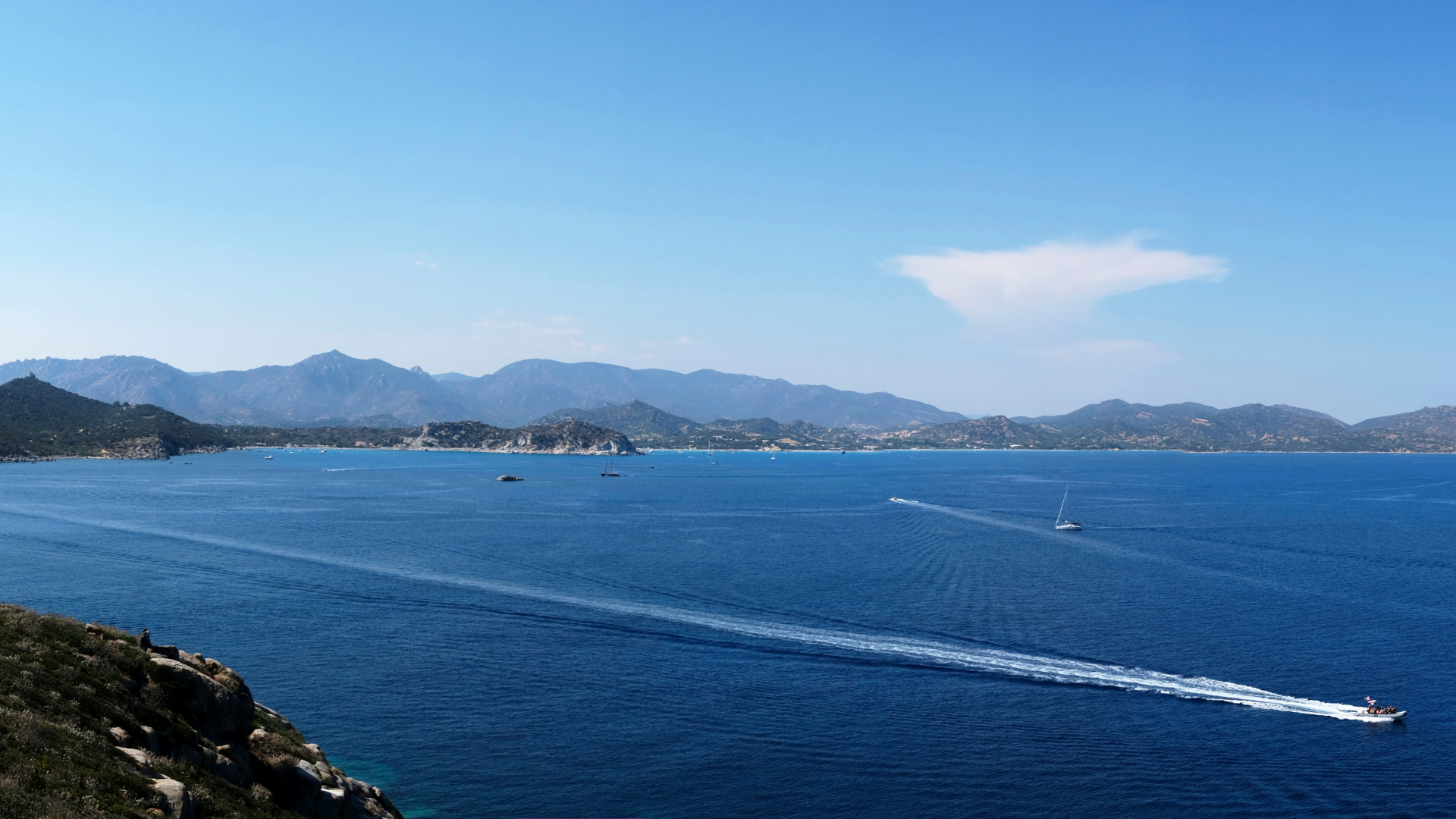
Villasimius is the south’s most complete destination. It has more beach diversity than Costa Rei, a livelier town than Chia, and better value than the Costa Smeralda for equivalent quality.
Almar Timi Ama Resort & Spa (luxury)
A five-star landmark in Mediterranean grounds next to the Notteri lagoon, a short walk from Porto Giunco. Four restaurants, four bars, three pools, a full spa, and a private white-sand beach. The benchmark resort on the southeast coast, with a private location that feels removed from the crowds even in August.
Book on Booking.com
Hotel Cala Caterina (mid-range boutique)
Built in local stone above its own small private beach, 49 individually decorated rooms with terraces or balconies. Calm, understated, and genuinely beautiful. Couples consistently rate the atmosphere among the best in Sardinia. A short drive from Porto Giunco.
Book on Booking.com
Falkensteiner Resort Capo Boi (family luxury)
Set between granite headlands and private beaches inside the Capo Carbonara Marine Protected Area. Dedicated kids’ clubs, three outdoor pools, a full Acquapura spa, and water sports on site. The standard-setting family resort in the south.
Book on Booking.com
For beaches and what to do, see the Villasimius guide.
3. Costa Rei
Best for: families, laid-back couples, classic long-beach holidays.
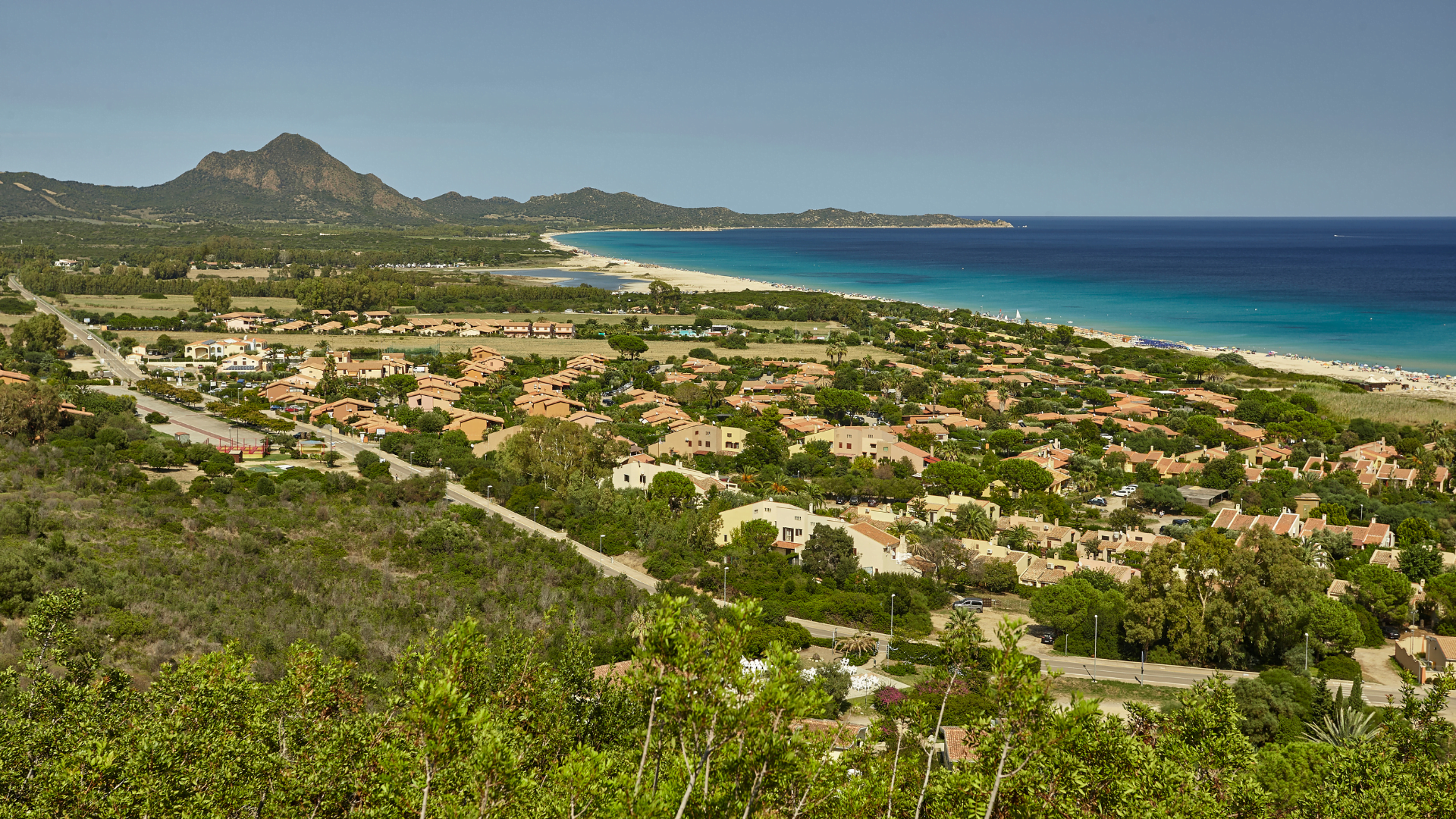
Costa Rei is quieter and simpler than Villasimius. About 65 kilometres from Cagliari airport, the main beach runs for over 12 kilometres of fine white sand with shallow, calm water. It is one of the longest uninterrupted beaches in Sardinia. The town itself is small, seasonal, and has a limited restaurant offer compared to Villasimius.
That is not a criticism. Costa Rei is the right choice if spending eight to ten hours a day on the beach is the actual purpose of the trip, and you do not need nightlife or a wide choice of dinner options. The sand is exceptional. The water is shallow enough for small children far from the shoreline. Cala Sinzias, just north of the main beach, is a sheltered cove that tends to be less crowded.
With a car, you can also reach the Villasimius beaches in about 35 minutes, combining the quiet base of Costa Rei with access to Villasimius’s greater variety when the mood requires it.
La Villa del Re (luxury, adults-only)
An adults-only five-star with a private beach, infinity pool, Bali-style sun beds, and a beach ordering service. Two restaurants, genuinely friendly staff, and a beautiful setting two kilometres from Costa Rei town. Arguably the best-run luxury hotel on the southeast coast for couples.
Book on Booking.com
For the full south coast overview, see Where to stay in South Sardinia.
4. Chia and Pula
Best for: luxury seekers, honeymooners, families in full-service resort complexes, nature lovers.
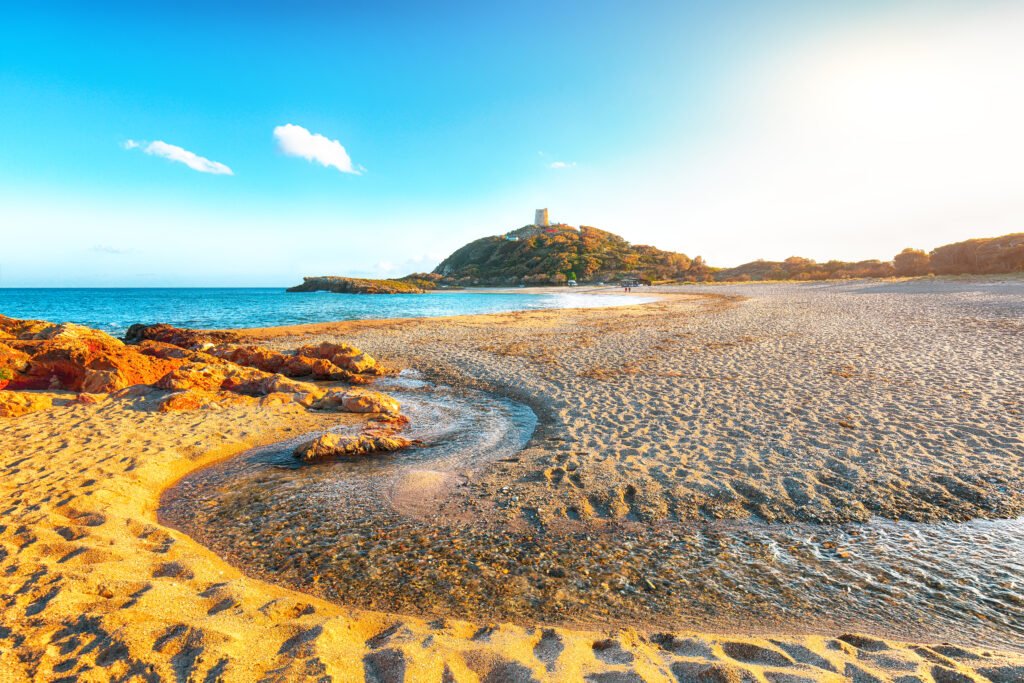
Chia represents something close to unique in the Mediterranean: a coastline where the landscape has genuinely not been overdeveloped. Dune systems, juniper woods, flamingos at the lagoon mouth, and resort complexes set discreetly into the hillside vegetation rather than crowding the seafront. The visual effect is wild even in August.
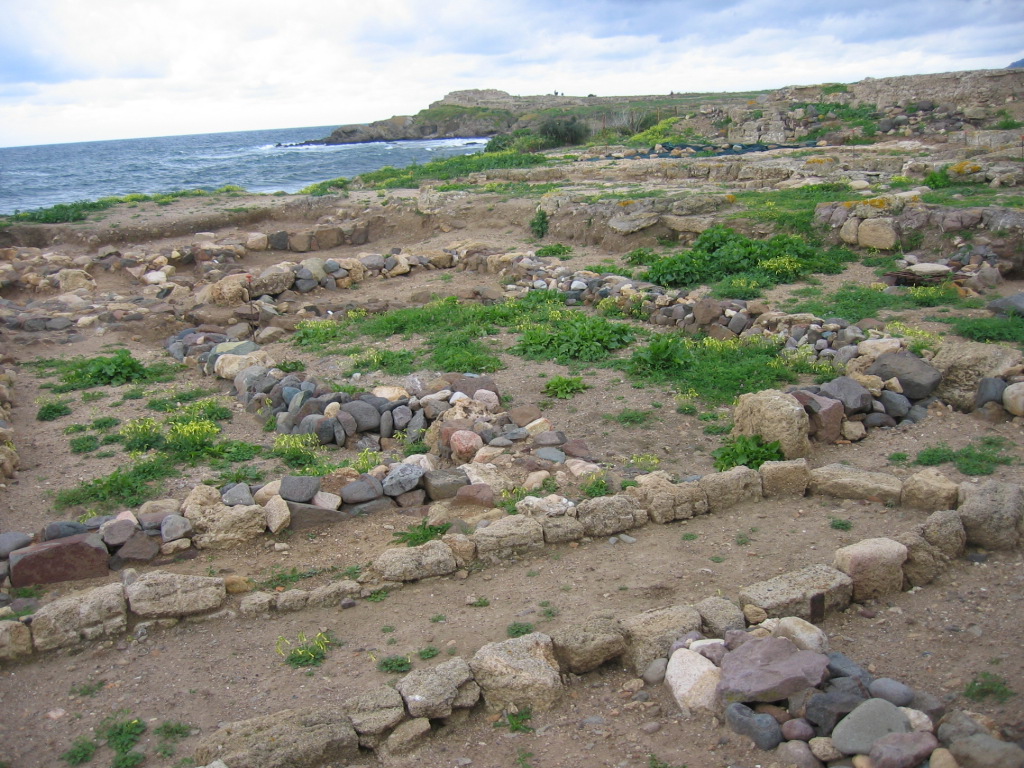
The beaches are among the finest on the island. Tuerredda has the water colour that appears photoshopped in photographs but is real. Su Giudeu is wider, backed by dunes, and consistently less crowded than Tuerredda. Cala Cipolla is smaller and more secluded. Just up the coast in Santa Margherita di Pula, some of Sardinia’s most famous resort complexes occupy a long pine-backed shore. The Nora archaeological site, a Phoenician-Roman settlement on a small rocky peninsula, is a genuine half-day detour worth making.
One practical note: the road to Tuerredda charges for parking in summer (typically €5 to €15 per day). Arrive before 9am in July and August for a space near the beach.
Conrad Chia Laguna Sardinia (luxury, couples-focused)
Part of the larger Chia Laguna resort complex. A serious spa, reserved beach with sun beds in the first rows, and 107 rooms and suites designed around views of the bay and lagoon. The most refined and quietest option in the complex.
Book on Booking.com
Forte Village Resort, Il Castello (luxury, families)
Sardinia’s most famous resort complex and one of the most awarded in Europe. Directly on the coast of Santa Margherita di Pula: 21 restaurants and bars, a water park, a world-class spa, and a self-contained holiday village. Families with children who need activities every hour will find it hard to outgrow.
Book on Booking.com
Hotel Aquadulci (boutique, mid-range)
41 rooms around a garden and pool, solar panels on the roof, and a wooden path to Su Giudeu beach where flamingos regularly pass. Sardinian-owned and independently run. Rates are significantly more accessible than the resort complexes 10 minutes away, and the atmosphere is genuinely warm.
Book on Booking.com
5. Costa Smeralda
Best for: luxury seekers, couples, glamour, the most famous sea in Sardinia.
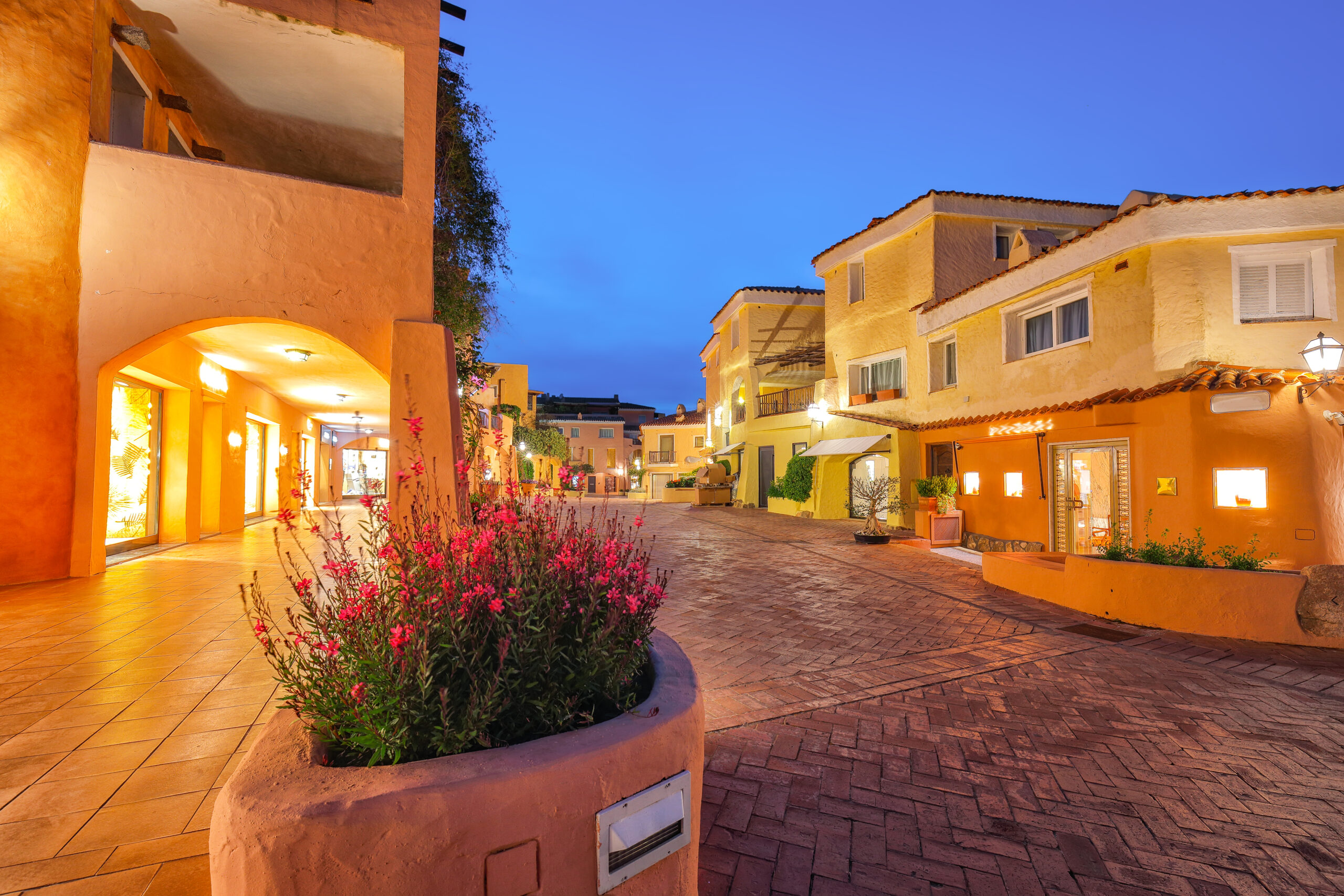
The Costa Smeralda covers 55 kilometres of northeastern coastline around Porto Cervo, Cala di Volpe, Cannigione, and Baja Sardinia. Aga Khan’s development of this granite coast in the early 1960s created one of the world’s most recognisable luxury destinations. The sea colour here, driven by the white sand and the particular granite of the Gallura, is genuinely unlike anywhere else in the Mediterranean.
The honest counterpoint: July and August are punishingly expensive, crowded, and logistically complicated. Parking in Porto Cervo requires patience. Beach clubs charge significant fees for a sun bed. May, June, and early September are when this area makes the most sense financially and practically. In shoulder season, the Costa Smeralda is one of the finest travel experiences in Europe.
If you want restaurants within walking distance and a social evening atmosphere, base yourself near Porto Cervo. If you want to be central for beach-hopping across multiple coves, position yourself around Cala di Volpe. The two areas are about 15 minutes apart by car.
7Pines Resort Sardinia (ultra-luxury)
37 acres of Baja Sardinia headland with four private beach coves, a rooftop infinity pool, a full spa, and restaurants that justify the prices. Part of the Hyatt portfolio. Contemporary design without the dated pomp of older properties. About 35 kilometres from Olbia airport.
Book on Booking.com
Romazzino, A Belmond Hotel (ultra-luxury boutique)
Whitewashed architecture in Mediterranean gardens, with direct access to one of Sardinia’s most beautiful private beaches. The most recommended luxury boutique stay for couples anywhere on the Emerald Coast.
Book on Booking.com
For the full breakdown of what to see and do, see the Costa Smeralda guide and the Porto Cervo guide.
6. Alghero
Best for: culture, history, mixed groups, first-timers who want a real town as a base.
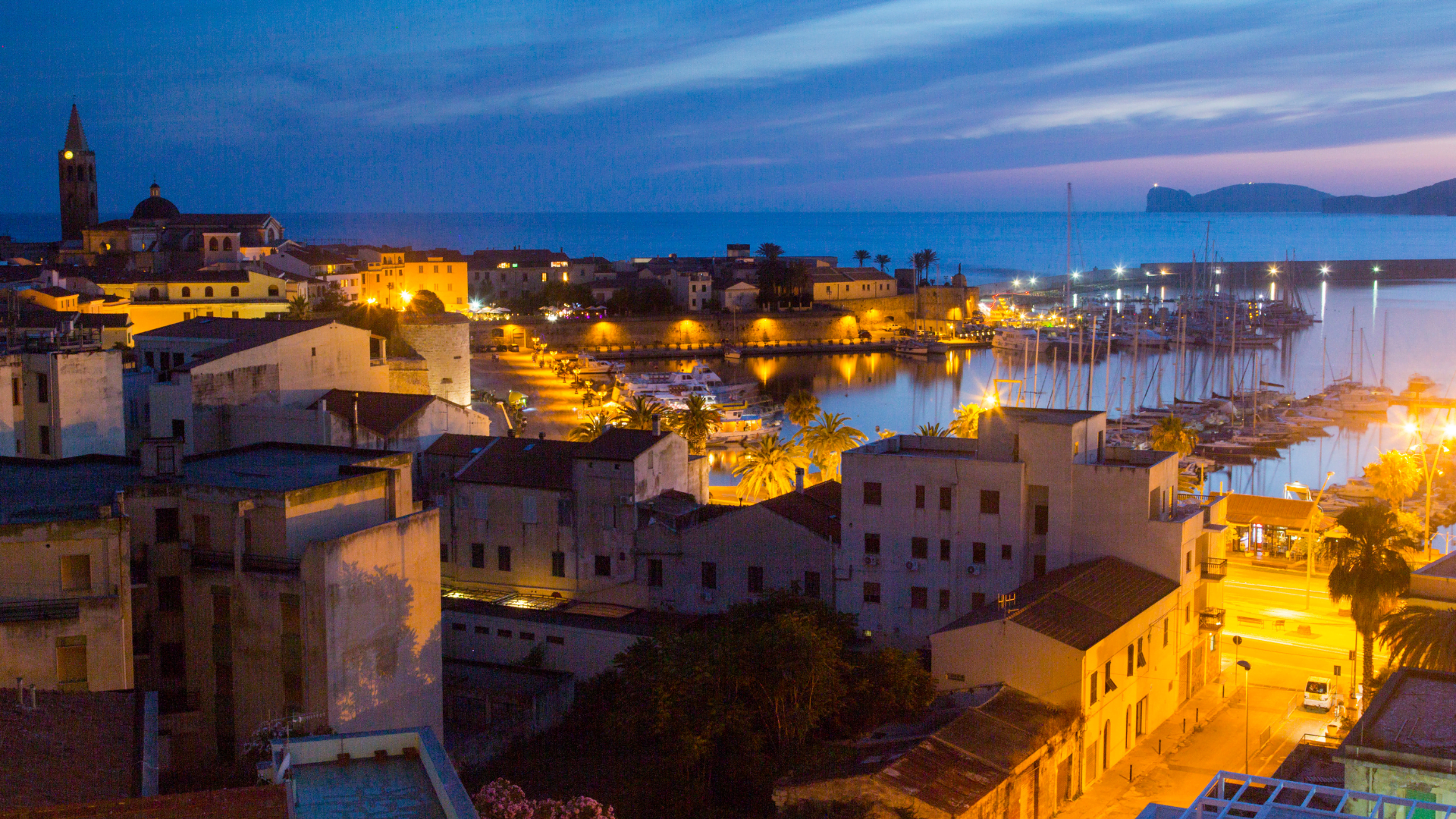
Alghero is the most complete destination in northern Sardinia and the only town in the north where you can genuinely get by without a car in the historic centre. The old town is Catalan-influenced, enclosed within 14th-century limestone walls, entirely walkable, and busy with seafood restaurants, coral jewellery shops, and aperitivo bars that stay open late. The bastions at sunset are among the finest free views on the island.
Beaches are within 10 minutes by car. Maria Pia is pine-backed and family-friendly. Le Bombarde is popular with young travellers. Lazzaretto is more secluded. Further out, Neptune’s Grotto at Capo Caccia is the 656-step descent into a cave of stalactites above the sea, accessible by boat or on foot. Bosa, one of the most beautiful small towns in Sardinia, is 45 minutes south.
One wind note: Alghero faces west to northwest. When the Maestrale is active, the western beaches get choppy and the Neptune’s Grotto boat service suspends. On those days, the old town and restaurants are the natural focus.
Villa Las Tronas Hotel & Spa (luxury)
A former summer residence of the Italian Royal Family, built in 1880, now a five-star on a private promontory ten minutes’ walk from the old town. Indoor saltwater pool, spa, sea views in multiple directions. Nothing else in Alghero has this atmosphere at any price.
Book on Booking.com
Smy Carlos V Wellness & Spa (mid-premium)
A large five-star 50 metres from the Bay of Alghero. Rooftop restaurant with panoramic views, two saltwater pools, spa. Walking distance to the old town walls.
Book on Booking.com
For the full north coast overview, see Where to stay in Northern Sardinia. For Neptune’s Grotto visit details, see the dedicated guide.
7. San Teodoro
Best for: first-time visitors, families, value seekers, anyone flying into Olbia.
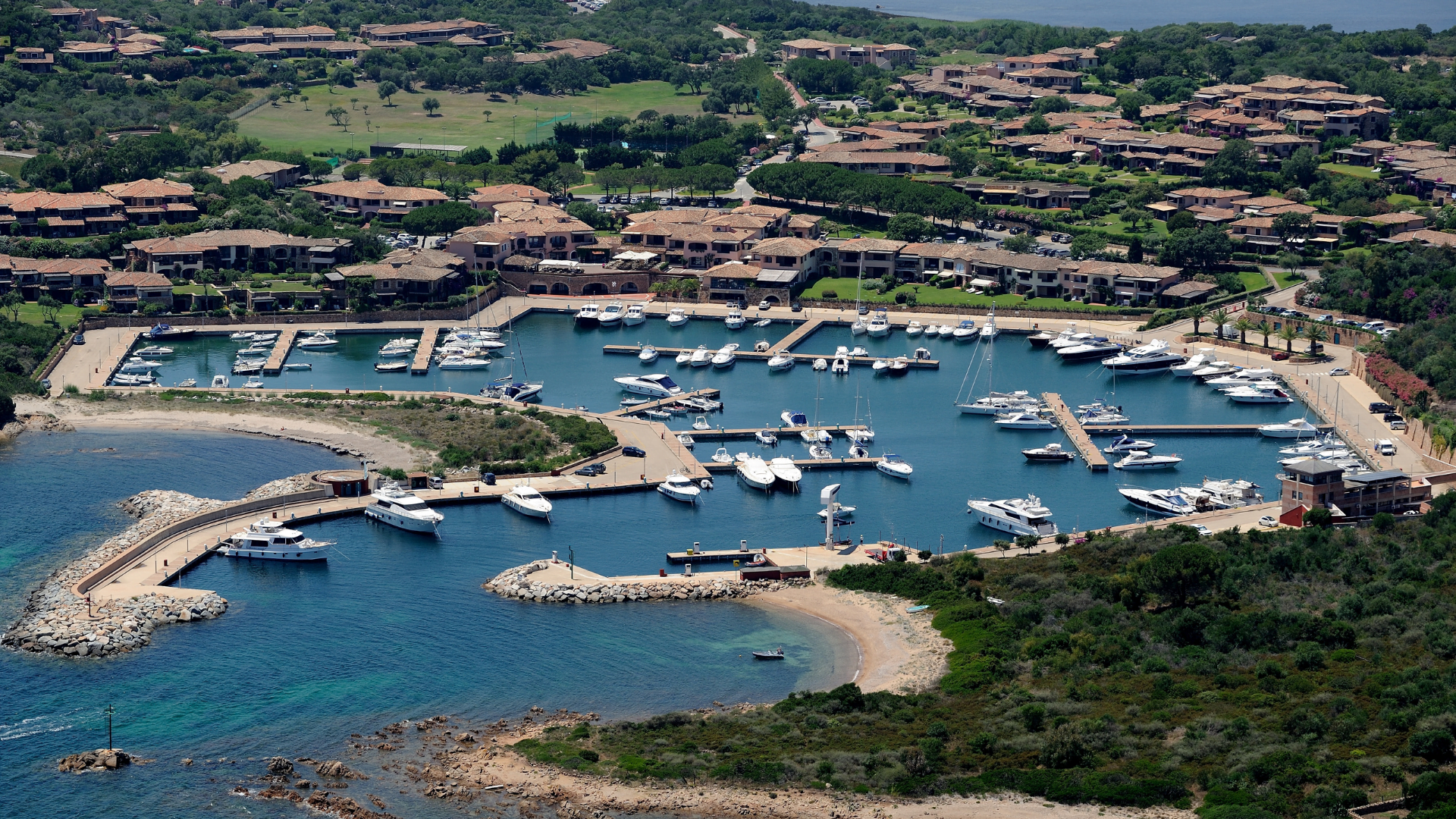
San Teodoro is the most underrated base in northeastern Sardinia. It is 20 minutes from Olbia airport, has some of the finest beaches in the entire north, and costs a fraction of the Costa Smeralda for the same quality of sea.
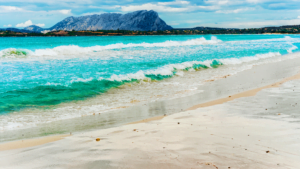
Cala Brandinchi is regularly ranked among Italy’s five most beautiful beaches: powdery white sand and shallow turquoise water in a sheltered bay surrounded by juniper trees. La Cinta is a three-kilometre lagoon of pale sand between the open sea and a freshwater lake, exceptional for windsurfing and kite lessons. Lu Impostu is the quieter third option, popular with those who have already done the famous two.
The town has a genuine summer life: good restaurants, evening bars, and the Tavolara Marine Protected Area visible from the shore. For first-time visitors flying into Olbia who do not have a Costa Smeralda budget, this is the most logical starting point on the entire island.
Baglioni Resort Sardinia (ultra-luxury)
A five-star Leading Hotels of the World member inside the Tavolara Marine Reserve, north of San Teodoro. Three pools, a full spa, a Michelin-starred restaurant (Gusto by Sadler), kids club, and private beach. The finest luxury option in the area.
Book on Booking.com
Hotel San Teodoro (mid-range)
Five minutes from the town centre. Pool, buffet breakfast, shuttle service to La Cinta and Cala d’Ambra, car hire desk on site. Rated 8.8 on Booking.com. The most practical mid-range option in the area.
Book on Booking.com
For beach detail, see the Cala Brandinchi guide.
8. La Maddalena Archipelago
Best for: island-hoppers, nature lovers, those who want Sardinia without resort infrastructure, no-car travellers.
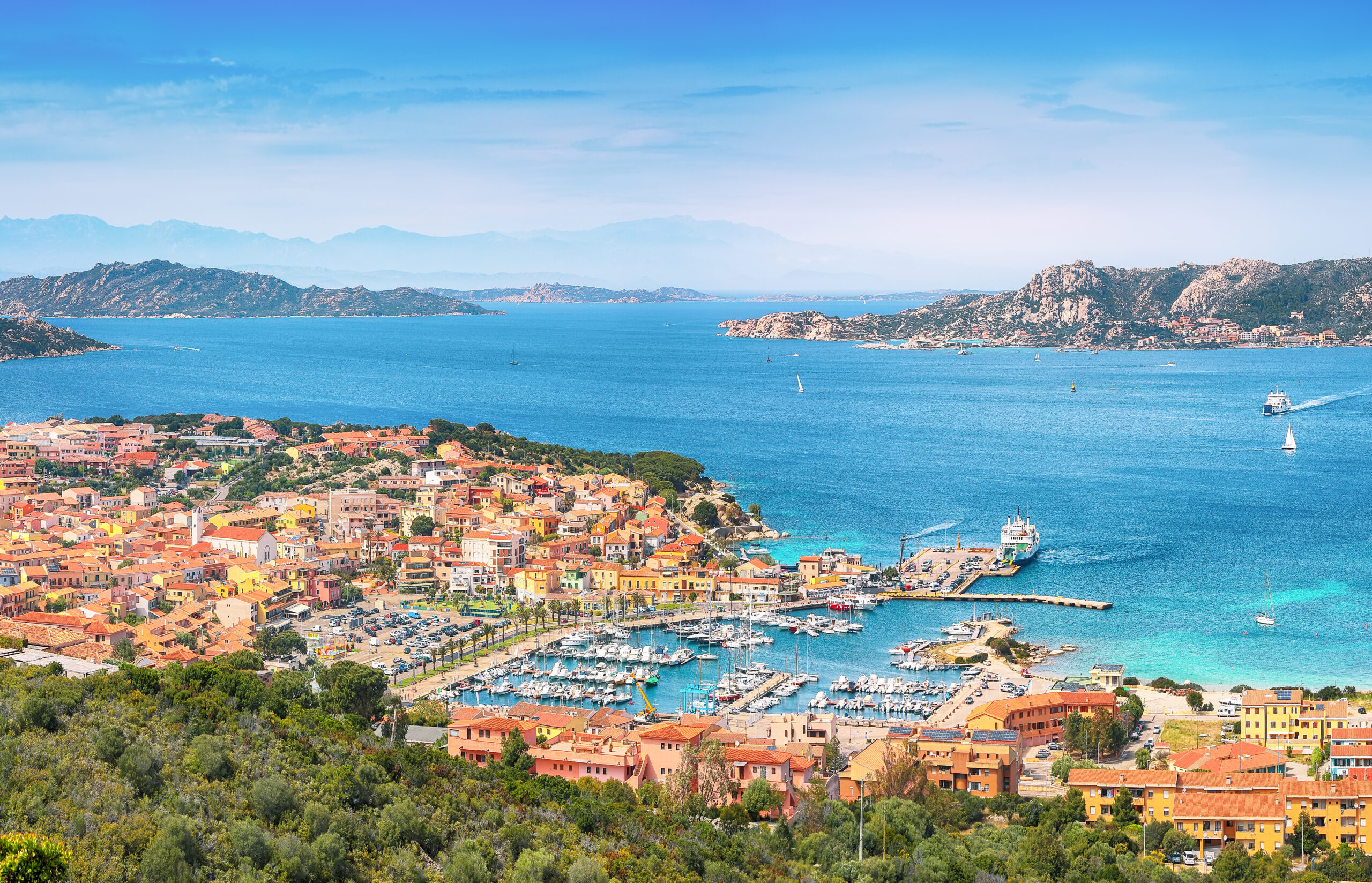
The La Maddalena Archipelago is a national park. Seven main islands, dozens of islets, and some of the most protected seawater in the Mediterranean. The best beaches, including Cala Coticcio on Caprera, the pink sands of Budelli, and the sea caves of Spargi, are only reachable by boat. That is the entire point.
La Maddalena town has a real local life: morning fish market, family-run trattorias serving the catch of the day, children on bikes in the squares by evening. The pace is slower and more authentic than anything in the Costa Smeralda, which is 30 minutes by car and a different world. A car is not needed once you are on the island.
Getting here: the ferry from Palau takes 20 minutes and runs frequently throughout summer (Delcomar and Enermar). Palau is 45 minutes from Olbia airport. For those doing multiple day trips to the archipelago, staying in Palau is more practical and cheaper than sleeping on La Maddalena island itself.
Grand Hotel Resort Ma&Ma (luxury, adults-only, age 14+)
A five-star on a peaceful headland at Punta Tegge, 150 metres from the sea. Infinity pool, spa, fine dining. One of the very few genuinely luxurious stays on the island itself.
Book on Booking.com
Hotel Villa del Parco (mid-range)
Country-style rooms with kitchenettes and furnished terraces, 400 metres from Punta Tegge beach. Staff arrange boat trips and airport shuttles. Rated 8.9 on Booking.com with over 1,600 verified reviews.
Book on Booking.com
For everything about the islands, see the La Maddalena guide.
9. Cala Gonone and the Baunei Coast
Best for: dramatic scenery, hikers, those who want the wildest beaches in Sardinia.
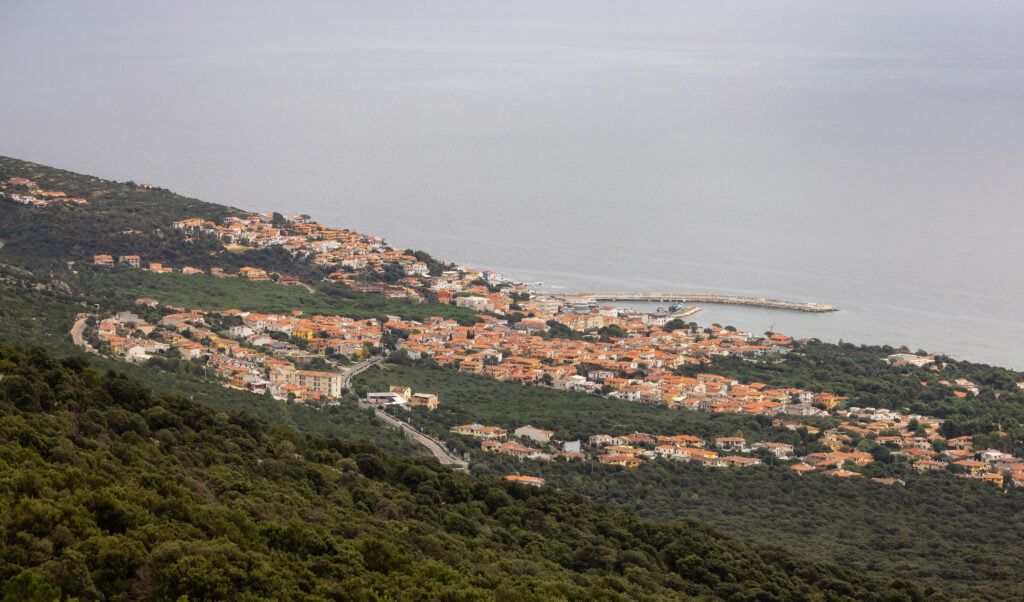
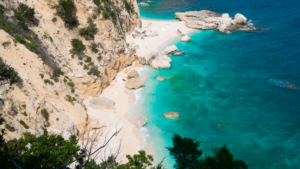
The Baunei Coast, also called the Golfo di Orosei, is the wildest part of the island. Limestone cliffs rise 500 metres directly from the sea and the most famous beaches, Cala Luna, Cala Mariolu, Cala Goloritzé (voted world’s most beautiful beach in 2025), and Cala Sisine, are inaccessible by land. You arrive by boat or you do not arrive.
Cala Gonone is the practical hub. Boat trips depart daily from the harbour in summer, covering the coast in both directions. Inland, the area also rewards those willing to drive: the Supramonte mountains, Gorroppu Gorge (one of Europe’s deepest canyons), and the ancient village of Tiscali hidden inside a collapsed cave are all within an hour. The villages of Dorgali and Oliena are genuinely excellent bases for Sardinian food and wine.
The logistics: roughly two hours from Olbia airport, three from Cagliari. Build in at least two nights to justify the journey. Three nights ideally: one full day on the boat, one day inland.
Su Gologone Experience Hotel (mid-premium, special experience)
30 minutes inland from Cala Gonone near Oliena. An art experience as much as a hotel: every room is a canvas, the grounds host outdoor sculptures, and the restaurant is a serious destination for Barbagia cuisine. Worth the inland position for the experience alone. Drive to the coast from here.
Book on Booking.com
For the coastal beaches, see the Golfo di Orosei guide and the Cala Gonone guide.
10. Oristano and the Sinis Peninsula
Best for: off-the-beaten-track travellers, culture lovers, lower prices, the best windsurfing in Sardinia.
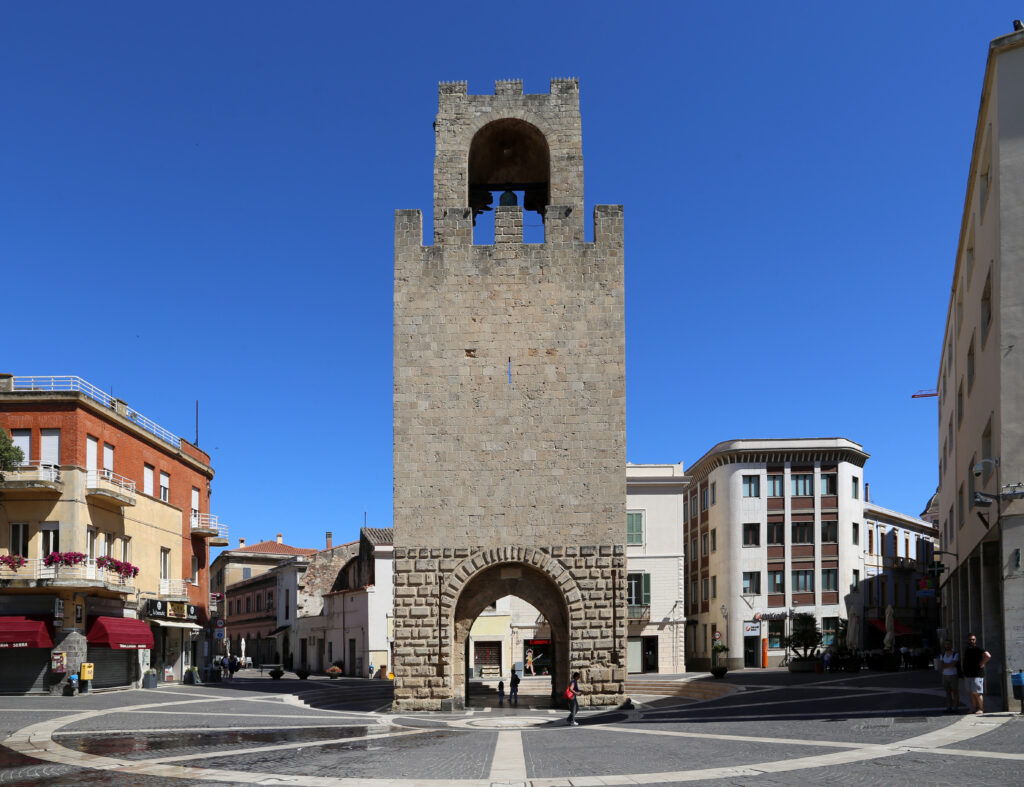
Oristano and the Sinis Peninsula to its west are the most genuinely undiscovered area in this guide. Is Arutas is a beach of white quartz grains that look like rice under water: visually extraordinary and unlike any other beach in the Mediterranean. Tharros is a Phoenician-Roman archaeological site on a rocky headland above the sea, one of the best-preserved in Sardinia. Flamingos gather in the coastal ponds year-round.
The practical consequences of being undiscovered: lower prices across accommodation and restaurants, lighter crowds even in August, a feeling of being in the real Sardinia rather than the tourist version. The consistent Maestrale wind makes the peninsula a top destination for kitesurfers and windsurfers, with rental centres on the beach in season.
Hotel Mistral 2 (mid-range)
The solid four-star option in Oristano. Outdoor pool, restaurant, modern rooms, and a central position for exploring the city and the Sinis Peninsula. Good value for the area.
Book on Trip.com
For more on the area, see the Oristano guide and Where to stay in Central Sardinia.
Also worth considering
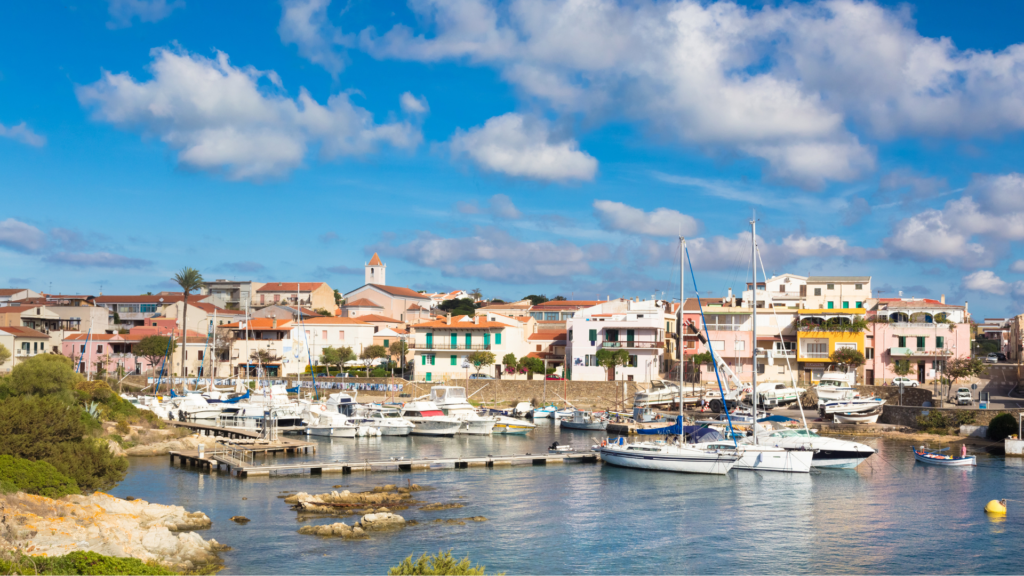
Stintino and La Pelosa: The most spectacular shallow-water beach in Italy. Mandatory timed-entry reservations apply in July and August with a capped daily visitor number. Book at least 48 hours ahead via the official online system or you will be turned away at the gate. Car essential.
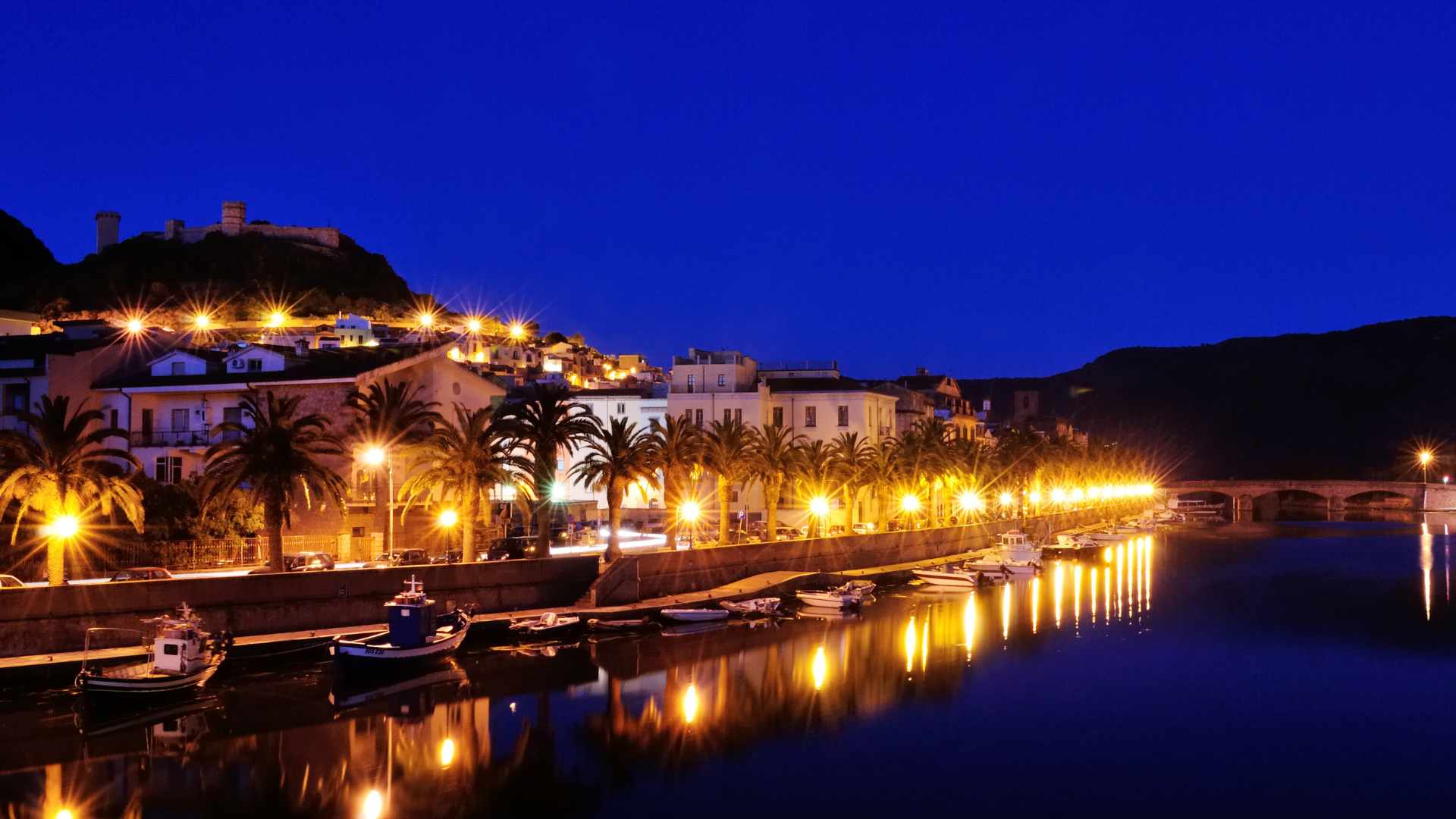
Bosa: Sardinia’s most picturesque town. Pastel-coloured houses line the Temo River below an intact medieval castle, and the pace is as slow as anywhere on the island. Not a beach base in itself, but one of the most beautiful places to spend an evening or morning, easily combined with Alghero as a day trip. See the Bosa guide.
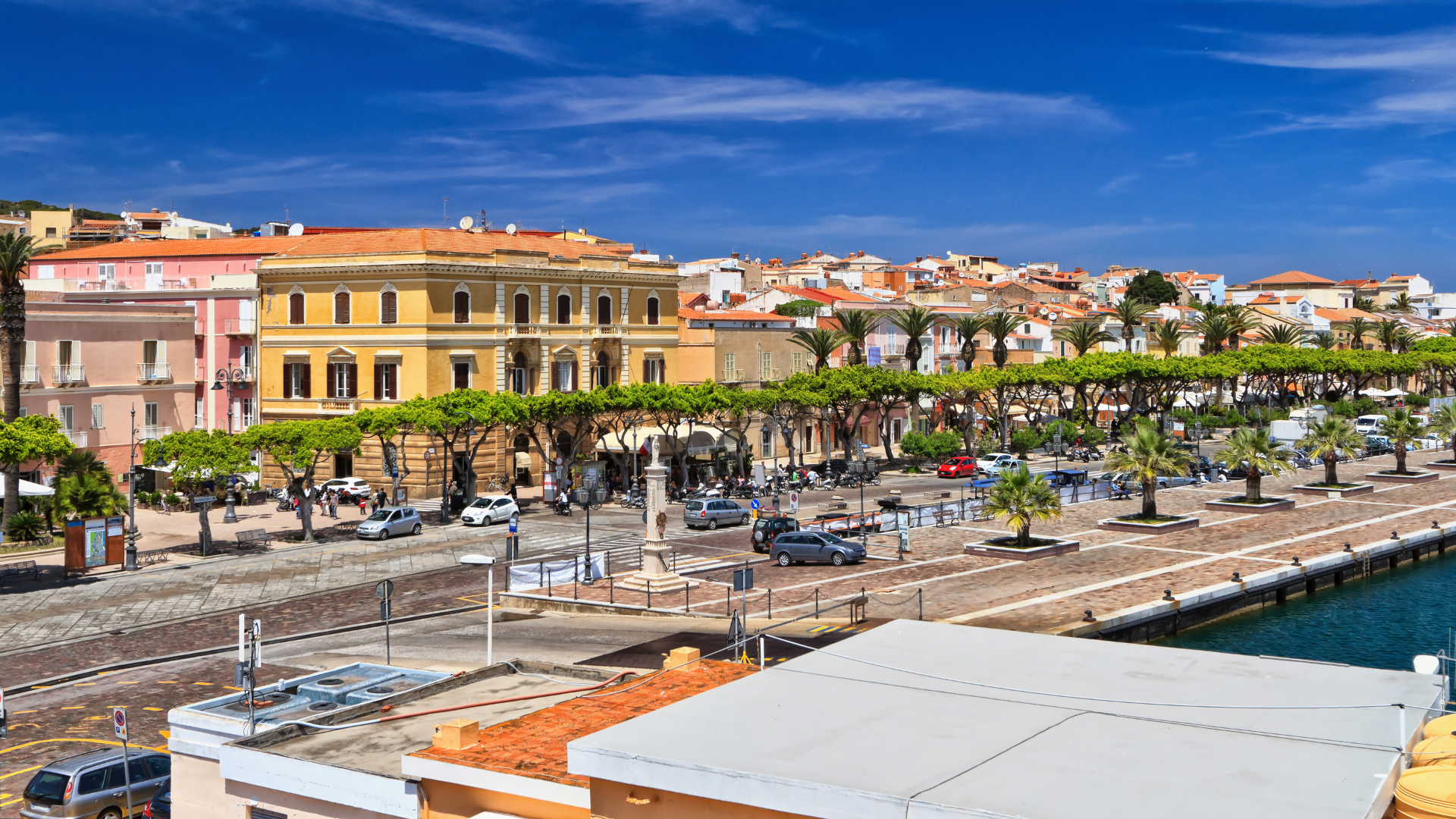
Carloforte and Isola di San Pietro: A small island off the southwest coast with a unique Ligurian culture, excellent fresh tuna (the traditional mattanza fishing season remains a cultural event), and a village atmosphere that feels like nowhere else in Sardinia.
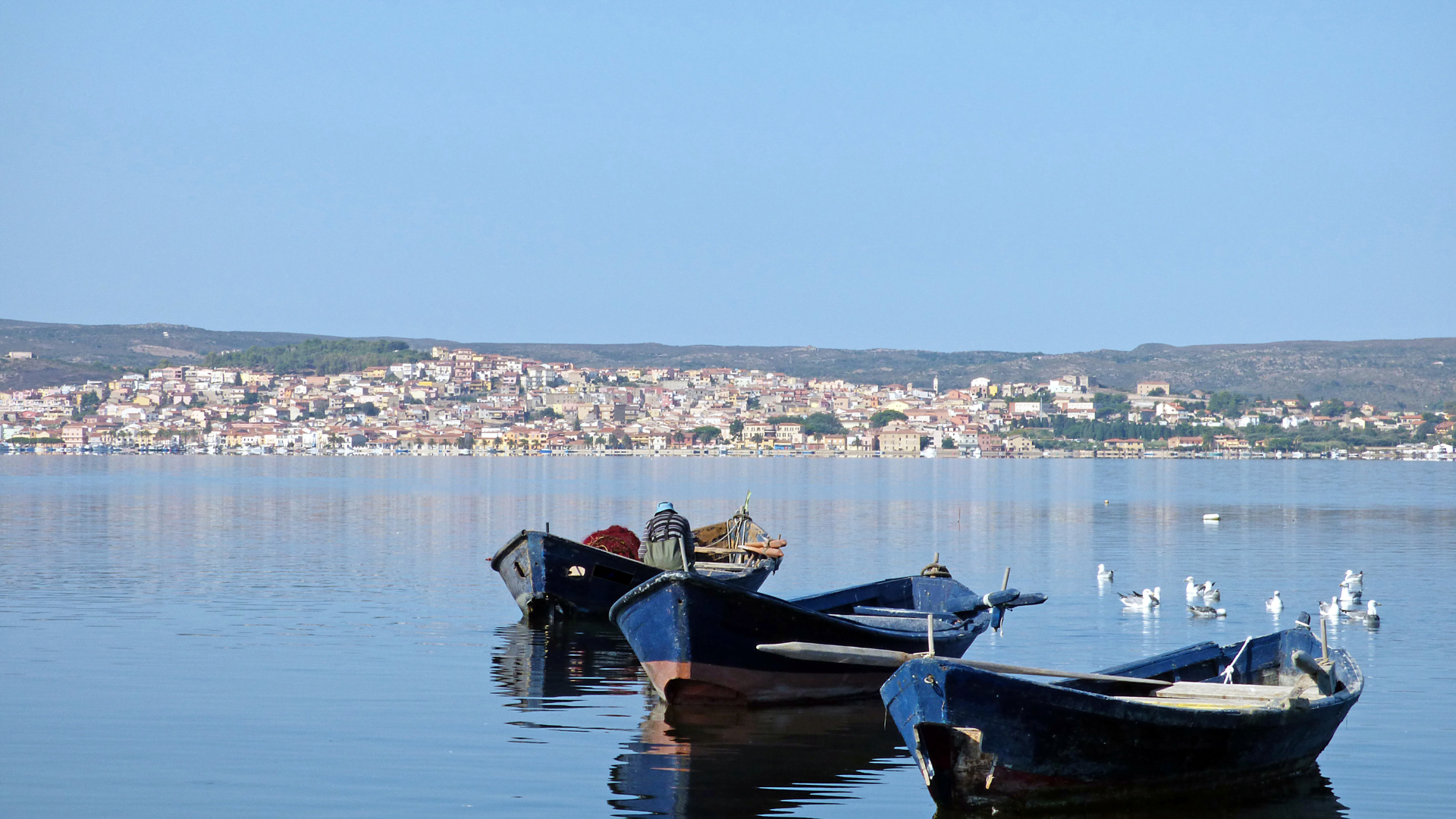
Sant’Antioco: The largest island connected to the mainland by causeway. Phoenician history, quiet beaches, and almost no international tourist infrastructure. The right choice for those who want to leave the circuit entirely. See the Sant’Antioco guide.

Santa Teresa Gallura: The northernmost town on the island, with a lively centre, Rena Bianca beach within walking distance of the main square, and the ferry to Corsica leaving from the harbour. Palau (La Maddalena ferry hub) is 30 minutes by car. One of the most affordable gateways to the far north.
Things to do in Sardinia: top activities
Choosing where to stay also means choosing which experiences you can reach. The best boat tours and excursions in Sardinia book up quickly, especially in July and August. These six activities are the ones worth reserving before you arrive.
La Maddalena Archipelago Boat Tour from Palau
The standard introduction to the Archipelago. A full-day tour departing from Palau harbour, visiting the main islands: swim stops at Spargi, a pass by the pink sands of Budelli, free time in La Maddalena town, and an optional stop at Cala Coticcio. Over 1,262 verified reviews on Viator. Consistently the most booked day trip on the entire north coast.
Book on Viator
Full-Day Sailing Tour in the Maddalena Archipelago with Lunch
For a smaller group and a slower pace. A full-day sailing trip covering all seven national park islands on a crewed sailing boat, with snorkelling gear and paddleboards on board, and lunch plus aperitif served during the cruise. 415 verified reviews, rated 4.9 out of 5. The difference from the standard ferry tour: fewer people, more time in the water, more swimming stops.
Book on Viator
Cagliari Gulf Boat Tour: 5 swim stops and Sardinian aperitif
A shared wooden gozzo departing from Marina Piccola near Poetto. The route covers Cala Bernat, the dramatic Sella del Diavolo headland, Cala Fighera, and Calamosca, with snorkelling gear and a SUP on board. A Sardinian aperitif (local wine, salumi, carasau bread) included. 655 reviews on Viator. The most recommended water activity for those based in Cagliari.
Book on Viator
Villasimius: Capo Carbonara Marine Park Boat and Snorkeling Tour
A guided tour of the Marine Protected Area of Capo Carbonara departing from Villasimius harbour. Boat stops around Isola dei Cavoli and Serpentara, snorkelling in protected waters with a marine biologist guiding the underwater section. One of the best wildlife experiences available in the south of the island.
Book on GetYourGuide
Alghero and Capo Caccia Small-Group Tour with Neptune’s Grotto
A small-group day combining Alghero’s Catalan old town with a coastal drive to Capo Caccia. Optional descent of 656 steps into Neptune’s Grotto (entrance fee payable on site), where the stalactites descend directly above the sea. Hotel pick-up from most Alghero properties available.
Book on Viator
Gulf of Orosei Full-Day Motorboat Tour from Cala Gonone
A motorboat cruise along the Baunei Coast with stops at Cala Mariolu, Cala Luna, Cala Sisine, and a photo pass in front of the arch at Cala Goloritzé. The only practical way to see this coastline without hiking for several hours each way. Multiple departure times available from Cala Gonone harbour.
Book on GetYourGuide
Getting around: car rental in Sardinia
A rental car is not optional for most destinations in this guide. The best beaches across northern and southern Sardinia are separated from accommodation by distances that no public service covers reliably. Even in Alghero, where the old town is walkable, a car unlocks Stintino, Bosa, Capo Caccia, and the whole of the northwest coast. Without one, you are dependent on hotel shuttles and guided tours for every beach visit.
One piece of local advice that saves real money: book as soon as your flights are confirmed. In July and August, compact and mid-size cars at all three airports sell out weeks in advance. Last-minute rentals at peak season cost significantly more than early bookings. Comparing rates across providers through a platform like Discovercars typically saves 20 to 40 percent versus walk-up prices.
A compact or mid-size car handles all the roads in this guide. Larger SUVs are only necessary for unpaved rural tracks in areas like Costa Verde or some inland Barbagia forest roads.
Book at the airport that matches your arrival:
- Olbia Costa Smeralda Airport (main gateway for the northeast and north): Discovercars Olbia
- Cagliari Elmas Airport (main gateway for the south): Discovercars Cagliari
- Alghero Fertilia Airport (main gateway for the northwest): Discovercars Alghero
The local perspective: what Sardinians think
Three things we know from living here that rarely make it into the standard travel guides.
The Maestrale determines your options on any given day. The Maestrale is the dominant wind of Sardinia, blowing from the northwest. When it is active for two or three days at a stretch, the western and northwestern coast takes the full force: Stintino and Alghero beaches become choppy and uncomfortable, and the Neptune’s Grotto boat service suspends entirely. The northeastern coast (Costa Smeralda, San Teodoro, La Maddalena) sits in a more sheltered position relative to this wind. The southeastern coast (Villasimius, Costa Rei) is the most protected of all. If guaranteed flat-sea swimming every single day matters to you, choose the southeast. If you can adapt the itinerary to conditions, the northwest remains excellent.
August is not what the photographs show. Every beach on the island is full in August. This is not hyperbole: campsite queues, car parks at capacity by 9am, sunbed lines, and the same crowd photographed on the same stretch of sand every year. The south is less chaotic than the north, but the south is still crowded.
The genuinely useful information is this: June and September are when most Sardinians use their own coastline. Sea temperature in September still reaches 24 to 26°C. Prices drop 30 to 40 percent versus August. The beaches that appear in every photograph are genuinely accessible without competition. Book the whole trip in October for the following June and you will pay late-spring prices with full-summer weather.
The south is not a lesser version of the north. This is the most persistent misconception in Sardinia travel writing, repeated everywhere. The beaches around Villasimius, Chia, and Costa Rei are objectively as beautiful as anything in the Costa Smeralda. Some of them (Tuerredda, Punta Molentis) are arguably more dramatic. The price difference is 30 to 50 percent for equivalent quality. The local food, if anything, is more interesting and less performative. The yacht traffic is lower. If your priority is the finest sea, the south delivers it at a fraction of the northern cost. If your priority is being seen in Porto Cervo, the north is the obvious choice. Both answers are legitimate. But they are different answers.
FAQ about where to stay in Sardinia
Is it better to stay in North or South Sardinia?
For a first visit of under 10 days, the north is the more internationally celebrated choice and offers the highest concentration of famous beaches around the Costa Smeralda, with good logistics from Olbia airport. The south offers equivalent beach quality at meaningfully lower prices, with better value for money across accommodation, restaurants, and beach services. If you are flying into Cagliari, the south is the stronger choice. If you are flying into Olbia and budget is flexible, the northeast is the most rewarding first experience.
Where should I stay in Sardinia for the first time?
Alghero is the most forgiving first-time base in the north: a real town, walkable historic centre, good restaurants, beaches within 10 minutes by car, and the airport 10 minutes from the hotel. In the south, Villasimius offers more beach diversity than anywhere else on the southeast coast with a proper summer infrastructure. Both give you enough variety for a one-week trip without ever needing to leave the area.
Do you need a car to explore Sardinia?
Yes, with two practical exceptions: Cagliari city, where buses cover the main beaches and attractions, and La Maddalena island, where bikes and mopeds are sufficient. Everywhere else, the beaches that appear in every photograph of Sardinia are not reachable by public transport. A rental car, booked in advance through a comparison platform, is the single most important logistical decision of the trip.
Where is the best place to stay in Sardinia for beaches?
It depends on what you mean. For the greatest beach variety within a small area, Villasimius. For the most famous single beach (La Pelosa with its Caribbean-shallow water), Stintino. For dramatic boat-only beaches with no road access, the Baunei Coast near Cala Gonone. For the most exclusive sea colour combined with resort infrastructure, Costa Smeralda. None of them can be called definitively the best. All of them are worth seeing. See the full top beaches guide for the complete overview.
Where to stay in Sardinia without a car?
The two practical options are Cagliari (bus access to Poetto beach, taxis for everything else, walkable historic centre) and La Maddalena island (bikes and mopeds cover the entire island, ferry from Palau in 20 minutes). Alghero’s old town is walkable in itself, but reaching the best beaches outside the city requires a car or a paid shuttle service.
How many bases do I need for a 7 to 10 day trip?
Two bases is the practical ideal. One in the north (Alghero or San Teodoro for value, Costa Smeralda for luxury) combined with one in the south (Villasimius or Cagliari) gives you the full range of the island without too many driving days. Three bases in 10 days is possible but leaves less time at the beach. For trips of under 7 days, one base and day trips is more efficient than multiple moves.
When is the best time to visit Sardinia?
June and September are the local preference. The sea is warm (23 to 26°C), prices are 30 to 40 percent lower than August, and the beaches are not at full capacity. July is beautiful but increasingly busy. August is peak season: high prices, very crowded beaches, and limited availability for accommodation and car hire unless booked months ahead. May is excellent for hiking and culture, but the sea is still cool for swimming (around 19 to 20°C). For the full seasonal breakdown, see the Sardinia weather guide.
Sources and references: Sardiniabella.com accommodation guides for Northern, Southern, and Central Sardinia; Viator and GetYourGuide activity listings.