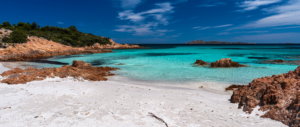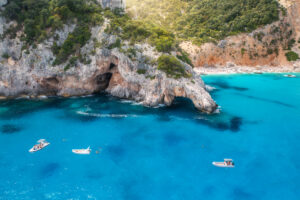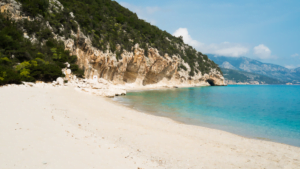

Getting to Sardinia comes down to two real choices: flying or taking the ferry. Which one wins depends on where you’re starting from, how much time you have, and whether you want your own car waiting for you on the island. I was born and raised here, in Cagliari, and I’ve made this trip from both sides of the boarding gate. Here’s what actually works.

How to get to Sardinia: fly or take the ferry?
Most people overthink this. If you’re short on time, fly. If you’re bringing a car, pets, or a mountain of luggage, the ferry earns its keep. Here’s the quick version before we get into the detail.
| Fly | Ferry | |
|---|---|---|
| Best for | Short stays, budget trips, no car | Bringing your own car, pets, big families |
| Typical cost | From €15 to €150 one way on budget carriers (from Europe) | From €40 to €150+ per person with a cabin and car |
| Typical time | 1 to 3 hours from most of Europe | 5 to 16 hours, mostly overnight |
| Bring your car | No, rent on arrival | Yes |
There’s no wrong answer here. I’d just say: don’t book the ferry because it sounds romantic and then discover you’ve burned a whole day of your holiday sitting in a cabin watching the Mediterranean go by. It’s fine. It’s just not fast.
What about flying from outside Europe? If you’re coming from North America, Asia, or Australia, the calculation changes slightly. Flying is no longer just the faster option, it’s close to the only sensible one. A ferry connection from those distances would mean flying into Italy anyway and then adding another half day at sea on top, which rarely makes sense unless you genuinely want the boat as part of the experience.
Getting to Sardinia by plane: the 3 airports
Sardinia has three airports, and choosing the right one matters more than choosing the right airline. Land in the wrong one and you could be looking at a 3 hour drive before your holiday even starts.
Cagliari Elmas Airport (CAG), south and centre

Cagliari is the island’s capital and its busiest airport. Fly here if you’re staying in Cagliari itself, heading to Villasimius, or exploring the south and centre of the island, including Barumini and the Sinis Peninsula.
From Rome, the flight takes under an hour with AeroItalia or ITA Airways. From London, expect around 2 hours 45 minutes with Ryanair or easyJet, both flying direct from Stansted and Gatwick. Once you land, the airport sits just outside the city centre, with a train and bus connection straight into Cagliari that takes around 10 to 15 minutes, so you won’t necessarily need a rental car waiting the second you arrive if you’re spending your first night in town.
Olbia Costa Smeralda Airport (OLB), northeast

This is the gateway to the Costa Smeralda, La Maddalena, and Gallura. If your trip revolves around Porto Cervo, San Teodoro, or boat trips around the archipelago, this is your airport.
Rome to Olbia takes about an hour, again on AeroItalia. London to Olbia runs roughly 2 hours 30 minutes on easyJet from Gatwick or Ryanair from Stansted. And as of May 2026, there’s something genuinely new here: Delta launched the first ever nonstop flight from the United States to Sardinia, JFK to Olbia, four times a week, seasonal through October. It’s an eight hour flight, and it means American travellers no longer have to connect through Rome or Milan just to reach the island. Worth knowing if you’re booking ahead: this route sells out fast in midsummer, since it’s the only nonstop link between Sardinia and North America that exists right now.
Alghero-Fertilia Airport (AHO), northwest
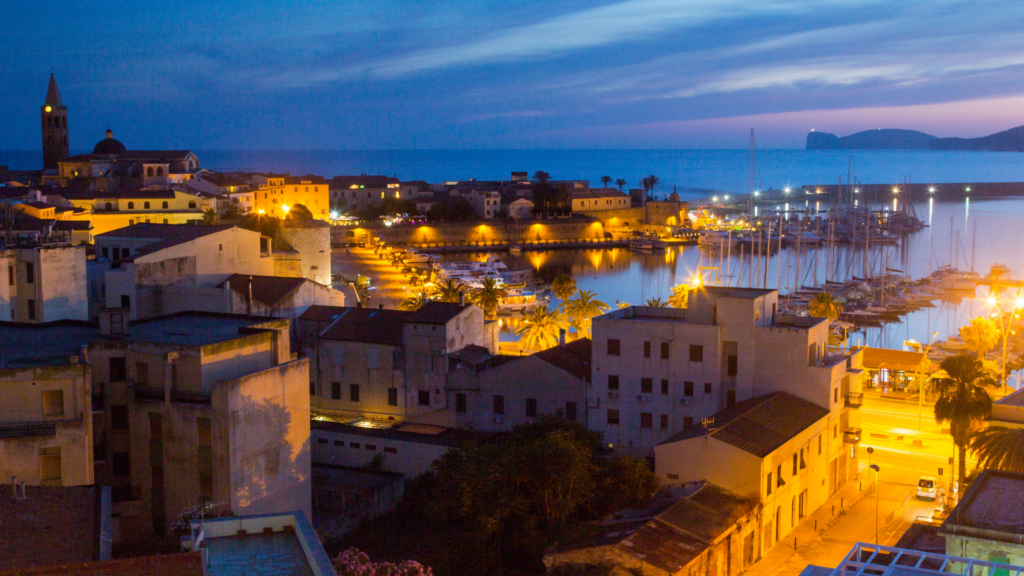
The smallest of the three, but well placed for Alghero itself, Stintino and La Pelosa beach, Castelsardo, and Sassari. It’s also the quietest of the three in winter, which some people prefer.
Most routes here are seasonal, running roughly June to October, with Ryanair as the dominant carrier from across Europe.
A quick word on something locals call continuità territoriale. Since March 2026, AeroItalia and ITA Airways operate guaranteed, government backed routes between all three Sardinian airports and Rome Fiumicino or Milan Linate. The discounted fares are reserved for residents and a handful of specific categories, so don’t expect a tourist discount. What it does mean for you is reliability: these routes run multiple times a day, year round, and can’t simply be cancelled the way a budget route sometimes is in low season. They also connect, through interline agreements, with Air France, KLM, Delta, and Qatar Airways, so a single ticket can get you from Rome or Milan onward to Sardinia without re checking your bags.
For the full breakdown of which airport suits which itinerary, I’ve written a separate guide on choosing the right airport in Sardinia.
Getting to Sardinia from major cities: Italy, Europe and North America
Some routes need more than “fly to one of three airports.” Here’s what I’d tell a friend asking specifically from these places.
From Italy: Rome, Naples, Sicily, the Amalfi Coast
From Rome, this is about as easy as island travel gets. AeroItalia and ITA Airways fly direct to all three Sardinian airports in under an hour, and Civitavecchia port, about 70 km outside the city, has overnight ferries to Olbia, Cagliari, and Arbatax.
From Naples, you’ve got both options too. EasyJet and Ryanair fly direct to Cagliari in roughly an hour, while Grimaldi Lines runs an overnight ferry to Cagliari three times a week, year round, taking about 15 hours. If you’re short on time, the flight is the obvious choice. The ferry only really makes sense if you want to bring a car down from southern Italy, since a 15 hour crossing eats into your holiday more than most people expect on a first booking.
From Sicily, it’s more awkward than people expect. There’s no simple direct ferry between Palermo and Cagliari at the moment. The realistic options are a connecting flight through Rome, Milan, or Naples, or an indirect ferry routed through Civitavecchia or Naples that can easily run past 12 hours. If your dates are flexible, flying wins here.
From the Amalfi Coast or Sorrento, there’s no direct link at all. Take the train, bus, or Circumvesuviana into Naples first, then fly or ferry from there. Budget half a day for this leg alone.
From the UK and Ireland: London, Scotland, Dublin
Yes, you can fly direct to Sardinia from the UK, to all three airports. Ryanair runs from Stansted to Cagliari, Olbia, and Alghero. EasyJet flies Gatwick to Olbia. British Airways covers Gatwick to Cagliari and Heathrow to Olbia, seasonally. Average flight time sits around 2 hours 30 to 2 hours 45.
Scotland isn’t left out either, though the options are thinner. EasyJet flies Edinburgh to Olbia direct a couple of times a week in season, and Ryanair or Jet2 connect Glasgow to Alghero. Both are seasonal, so check before you book outside the summer months.
From Dublin, Ryanair runs direct seasonal flights, roughly June to November, to all three airports. Flight time is just over 3 hours.
From France and Spain: Paris, Nice, Barcelona
From Paris, Volotea operates direct seasonal flights into Sardinia, alongside connections through Rome or Milan if you need year round flexibility.
From Nice, your best bet is actually the ferry. Corsica Ferries and similar operators sail to Golfo Aranci in around 13 hours, useful if you’re staying near Olbia or the Costa Smeralda.
From Barcelona, the ferry to Porto Torres takes about 13 hours and runs year round, weekly. There’s no straightforward direct flight at the time of writing, so most travellers connect through Rome, Milan, or Marseille.
From North America: New York, Toronto, Boston, Los Angeles, Montreal
This is the cluster everyone asks about, and the honest answer changed in 2026. Until this year, every American or Canadian traveller had to land in Rome or Milan first. Now, Delta’s seasonal JFK to Olbia route changes the picture, at least if New York is on your way.
If you’re flying from Toronto, Boston, Montreal, or Los Angeles, there’s still no direct flight to the island itself. The most practical route is connecting through JFK, using Delta or a partner airline like Air France, KLM, or Virgin Atlantic, and then catching the nonstop hop to Olbia. Delta also runs the JFK leg from several of its own US hubs, including Atlanta and Boston, so depending on your home airport you may only need the one connection before the long hop across the Atlantic and onward to Olbia.
Otherwise, the tried and tested option remains a connection through Rome Fiumicino, which has the best onward links to Sardinia of any hub in the world. Give yourself a full 3 hours for that connection, since you’ll likely clear passport control and recheck luggage.
Germany and Malta
From Germany, you’re in good shape. Frankfurt, Munich, Düsseldorf, Berlin, Stuttgart, Hamburg, and Cologne all have direct seasonal flights to Sardinia, mostly via Lufthansa, Condor, and Eurowings, running roughly June through November.
From Malta, Ryanair flies direct to Cagliari several times a week in season. It’s a short hop, just over an hour, and one of the better kept secrets on this list.
How to get to Sardinia by ferry
If your travel style includes a car, a dog, or simply too much stuff for an overhead bin, the ferry is the better fit. Just know what you’re signing up for: most crossings run overnight, and the minimum is usually 8 hours. Book a cabin if you’re sailing at night. Trust me on that one.
Prices move a lot with the calendar. A cabin and car combo booked in March for a July crossing can cost half of what the same route goes for if you book in June. If your dates are fixed and it’s peak season, book the ferry the moment you know you’re going. Flexibility, on the other hand, is your best friend if you’re travelling outside July and August.
Ferry routes from Italy to Sardinia
| Departure port | Arrives in | Typical duration | Notes |
|---|---|---|---|
| Civitavecchia (Rome) | Olbia, Cagliari, Arbatax | 7 to 15 hours | Daily, year round |
| Livorno / Piombino | Olbia, Golfo Aranci | 8 to 9 hours | Daytime sailings in summer, around 5 hours |
| Genoa | Porto Torres, Olbia | 10 to 12 hours | Overnight |
| Naples | Cagliari | 15 hours | 3 times a week, year round |
Companies running these routes include Tirrenia, Grimaldi Lines, Moby, GNV, and Sardinia Ferries. I’d use Direct Ferries or FerryScanner to compare schedules and prices in one place rather than checking each operator separately.
Ferry routes from France, Spain and Corsica
| Departure port | Arrives in | Typical duration | Notes |
|---|---|---|---|
| Marseille / Toulon | Porto Torres | 10 hours | Overnight, cabins recommended |
| Nice | Golfo Aranci | 13 hours | Overnight |
| Barcelona | Porto Torres | 13 hours | Weekly, year round |
| Bonifacio (Corsica) | Santa Teresa Gallura | 50 minutes to 1 hour | Multiple sailings daily, year round |
That last one deserves a second look. The Bonifacio to Santa Teresa Gallura crossing is the shortest ferry ride to Sardinia from anywhere, and it runs all year, not just in summer. If you’re island hopping through Corsica, it’s almost silly not to use it.
Getting around Sardinia: car rental
Once you land, public transport in Sardinia thins out fast outside the main towns. Buses connect cities, but the beaches, the smaller villages, and most of the coastline really do need a car. This isn’t a sales pitch, it’s just how the island works.
I use Discover Cars to compare prices at all three airports in one search, since rates swing a lot depending on season and pickup point:
- Cagliari Airport: rentals from around €11 a day, with hundreds of options ranging from small economy cars to full size SUVs
- Olbia Airport: from around €32 a day, busiest in peak summer
- Alghero Airport: from around €45 a day, smaller fleet so book ahead in August
If you’re arriving by ferry with your own car from Civitavecchia or Genoa, do the maths before you book. Sometimes shipping your own car across costs more in fuel and ferry fees than simply renting one on arrival, especially for a trip under two weeks.
One more thing worth knowing: August books out fast, particularly at Alghero, which has the smallest fleet of the three airports. If you’re travelling in peak season, reserve your car at least a couple of months ahead, and check whether the price already includes full coverage. Discover Cars lets you filter by that directly, which saves you the surprise of a deposit hold at the counter.
The local perspective: what Sardinians know about getting here
A few things you won’t find in most guides, because they only become obvious once you’ve lived through a few Sardinian summers.
Logistic and road network. Cagliari to Olbia is roughly 270 km, about 3 hours of driving. I’ve seen plenty of visitors book the cheapest flight available, land in the wrong corner of the island, and lose half a day just getting to their hotel. Choose the airport closest to where you’re actually staying, not the one with the lowest fare. It almost always works out cheaper in the end anyway, once you factor in fuel and time. The same logic applies to ferry ports. Arriving in Porto Torres when your hotel is in Villasimius means crossing nearly the entire island before you’ve even unpacked.
Economic. The continuità territoriale system I mentioned earlier isn’t really designed with tourists in mind, it’s there to guarantee Sardinians a stable, frequent link to the mainland regardless of season. But it has a side effect worth knowing: because these routes can’t be quietly dropped the way a low cost summer route can, they’re often your most reliable fallback if you’re travelling in November or February, when budget carriers thin out their schedules to almost nothing.
Geographic and climatic. The Maestrale, our northwest wind, is the real reason daytime ferries only run in summer. Outside July and August, the Tyrrhenian Sea can get genuinely rough, and operators switch to overnight sailings almost entirely. If you’re prone to seasickness and you’re travelling in shoulder season, fly. It’s not worth the gamble.
Now that you’re here: what to do in Sardinia
Once you’ve landed, or stepped off the ferry with the car packed, the island opens up fast. Start with our guide to the best beaches in Sardinia, or if you’re still deciding where to base yourself, our breakdown of where to stay in Sardinia covers all the main areas. Landing in the north? Check out the Costa Smeralda guide or La Maddalena. Flying into Cagliari, our Cagliari city guide is the obvious next stop.
FAQ on how to get to Sardinia
What is the cheapest way to get to Sardinia?
Budget airlines, hands down. Ryanair and easyJet routes to Cagliari, Olbia, and Alghero regularly drop below €30 one way if you book a few months ahead, especially in shoulder season.
Can you fly direct to Sardinia from the UK?
Yes. Ryanair, easyJet, and British Airways all run direct seasonal routes from London and several regional UK airports to all three Sardinian airports.
Which airport should I fly into for Sardinia?
Whichever one is closest to where you’re staying. Cagliari for the south and centre, Olbia for the northeast and Costa Smeralda, Alghero for the northwest. Don’t pick based on price alone.
How long does the ferry take to get to Sardinia?
Anywhere from 50 minutes (Bonifacio to Santa Teresa Gallura) to 15 hours (Naples to Cagliari), depending on the route. Most Italian mainland crossings fall between 7 and 12 hours.
Is there a direct flight to Sardinia from Toronto or New York?
From New York, yes, seasonally. Delta launched a nonstop JFK to Olbia route in May 2026, running four times a week through October. From Toronto, there’s no direct option yet. Connect through JFK or through Rome.
How do I get to Sardinia from Rome?
Either a flight under an hour from Fiumicino with AeroItalia or ITA Airways, or an overnight ferry from Civitavecchia, about 70 km from the city, taking 7 to 15 hours depending on the Sardinian port.
Can I get to Sardinia from Sicily or Naples?
From Naples, yes, easily, by direct flight or a three times weekly overnight ferry to Cagliari. From Sicily, it’s trickier. There’s no simple direct ferry, so flying via Rome, Milan, or Naples is usually the better option.
Do I need a car once I’m in Sardinia?
For anything beyond the main towns, yes. Public transport thins out fast outside the cities, and most of the best beaches and villages are easiest to reach with your own wheels. Having a car is a great option if you are planning a long stay on the island.
What documents do I need to travel to Sardinia?
Sardinia is part of Italy, so the same rules apply as for mainland Italy. EU citizens need a valid ID card or passport. Non EU travellers need a passport, and depending on your nationality, possibly a Schengen visa. If you’re bringing a car on the ferry, carry your driving licence, vehicle registration, and insurance documents too. Requirements can shift, so it’s worth a quick check closer to your travel dates.
How long is the ferry trip?
It takes between 5 to 11 hours depending on the route. It’s an adventure that allows you to see the beautiful Sardinian coastline as you arrive.
Is it possible to sail from other countries?
Yes, there are seasonal connections from France and Spain. For more general travel advice, read our things to know before traveling to Sardinia.
Sources
- Regione Autonoma della Sardegna, continuità territoriale aerea,
- Delta Air Lines and Delta News Hub, JFK to Olbia route announcements,
- Flightconnections.com, route data for Cagliari, Olbia, and Alghero airports
- Grimaldi Lines and FerryScanner, ferry schedules between Italy and Sardinia
- British Airways and Skyscanner, UK to Sardinia flight data