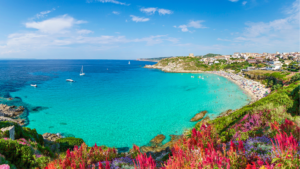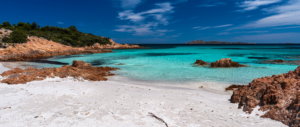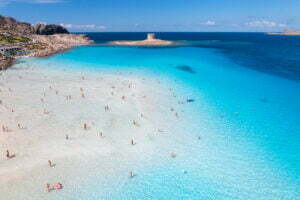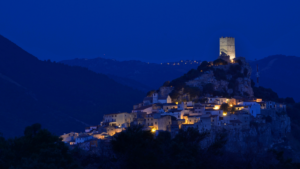
Diving in Sardinia means choosing between granite walls in the north, sea caves in the west, and World War II wrecks in the south, all in some of the clearest water in the Mediterranean. I grew up on this coast, and the question I get most from visiting divers is not “is it good” but “which part of the island fits what I want to see”. This guide covers where to go, when to go, and how to book it.
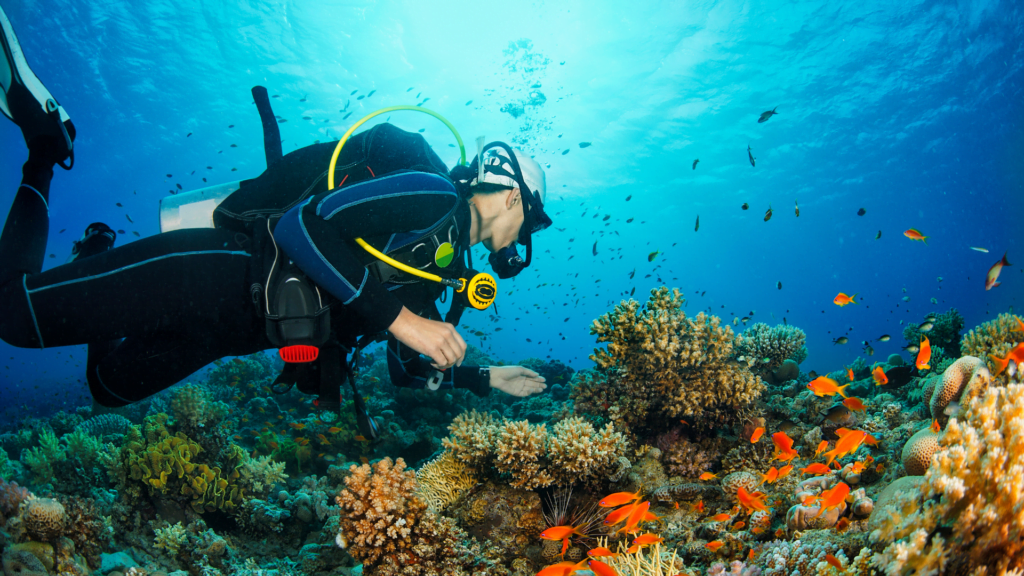
Where to dive in Sardinia: best spots by region
Sardinia has over 1,800 kilometers of coastline, and no single dive center covers all of it. Each region has its own character, shaped by wind exposure, seabed type, and how deep the water gets close to shore.
1. La Maddalena Archipelago and Tavolara (north-east)
This is the most popular diving area on the island, and for good reason. The La Maddalena Archipelago is a national park with over 60 mapped dive sites between granite islets, ranging from shallow bays perfect for a first dive to walls dropping past 30 meters near the Bocche di Bonifacio, on the border with Corsica.
Curious groupers, moray eels, and schools of anthias are common here, and the water is sheltered enough that dive centers run trips almost daily from April through October. A short drive south, the Tavolara-Punta Coda Cavallo Marine Protected Area adds wreck diving, including the KT12, a German WWII supply ship resting at recreational depth.
2. Alghero and the Nereo Cave (north-west)
Alghero and the Porto Conte / Capo Caccia area are where technical divers head. The main draw is the Grotta del Nereo, considered the largest underwater cave system in the Mediterranean, with roughly 350 meters of tunnels and multiple entry points between 0 and 35 meters.
This coast faces the Maestrale wind directly, so conditions here are less forgiving than the sheltered east coast. Most dive centers only run cave trips when the sea is calm, and some sections require cave-diving certification, not just Advanced Open Water.
3. Capo Carbonara and Villasimius (south-east)
Capo Carbonara, a marine protected area near Villasimius, is one of the most beginner-friendly zones on the island. It centers on the Isola dei Cavoli, where restricted zones keep marine life dense, and on rock formations like Secca di Santa Caterina.
Villasimius is also known for wreck diving: a Roman galley, a 15th-century Aragonese ship, and the WWII-era Egle steamship all lie within reach of local dive boats, making this a favorite for divers who want history alongside biodiversity.
4. Gulf of Cagliari (south)
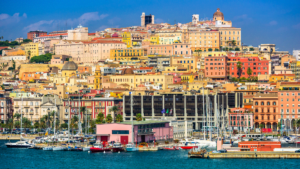
Less written about than the other four, the Gulf of Angels near Cagliari deserves more attention. Sites like Secca dell’Arco and Secca del Granito sit only 15 minutes by dinghy from the city, so this is a genuine option if you are based in the capital rather than driving out to the coast.
The gulf suits both beginners, at shallow sites like Calamosca, and certified divers looking for a quick dive without a long transfer.
5. Gulf of Orosei and Cala Gonone (east)
The Gulf of Orosei is defined by limestone cliffs that continue underwater into caves and canyons. Cala Gonone is the main base, and dives here mix reef, cave, and wreck: the Nasello, a 45-meter WWII cargo ship split into two sections, and Bianca’s Garden, a sea fan and sponge garden on a volcanic slope, are two of the better-known sites.
This is also one of the calmest stretches of coast, since it faces east and is shielded from the Maestrale, which makes it a solid choice even when wind ruins plans elsewhere on the island.
| Region | Best for | Difficulty | Iconic site |
|---|---|---|---|
| La Maddalena and Tavolara | Biodiversity, first dives | Beginner to advanced | KT12 wreck |
| Alghero, Nereo Cave | Cave diving | Advanced / cave certification | Grotta del Nereo |
| Capo Carbonara, Villasimius | Wrecks and history | Beginner to advanced | Egle steamship |
| Gulf of Cagliari | Quick dives near the city | Beginner to advanced | Secca dell’Arco |
| Gulf of Orosei, Cala Gonone | Caves and calm water | Beginner to advanced | Nasello wreck |
When to dive in Sardinia: season and water temperature
The diving season runs from April to October, with June through September offering the warmest water and the best visibility, often exceeding 30 meters in the north.
Water temperature climbs to 24-28°C at the surface in summer, but expect a thermocline around 12 meters, where it can drop to 15°C even in August. A 5mm wetsuit covers most of the season; anything colder than that and most dive centers switch to drysuits or stop running trips.
| Period | Water temperature | Notes |
|---|---|---|
| April to May | 16-19°C | Fewer divers, clear water, cooler surface |
| June to September | 22-28°C | Warmest water, best visibility, busiest season |
| October | 20-22°C | Warm water, calmer sea, fewer boats |
| November to March | 12-16°C | Most centers close, marine life thins out |
May, June, September, and October are, honestly, the best months if you want good conditions without fighting for space on a dive boat.
Do you need a certification to dive in Sardinia?
No. If you have never dived before, every region on this list offers a Discover Scuba Diving or “battesimo del mare” experience: a short briefing followed by a supervised dive to about 5 meters, no license required.
If you are already certified, an Open Water card is enough for most reef and shore dives around Villasimius, Cagliari, and La Maddalena. Deeper wrecks and the Nereo Cave near Alghero typically require Advanced Open Water at minimum, and some cave sections are restricted to divers with specific cave or wreck specialty training. When in doubt, dive centers will ask to see your certification card before booking you into anything beyond entry level.
Things to do: best diving tours in Sardinia
Here are direct, bookable diving experiences across the island, checked for availability and covering every region above.
Discover Scuba Diving in Villasimius
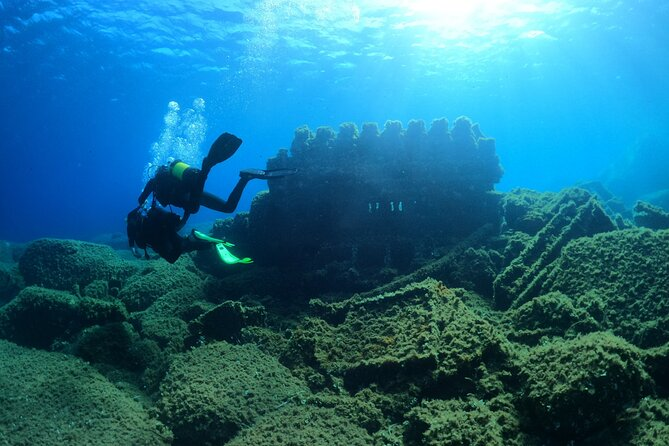
Beginner-friendly dive to about 5 meters in the Capo Carbonara Marine Protected Area, starting with a theory session before entering the water from an inflatable boat. No certification needed.
Book the Villasimius Discover Scuba Diving experience
Cavoli, Serpentara and Capo Carbonara diving tour for certified divers
Suited to certified divers of any experience level, exploring the Marine Protected Area of Capo Carbonara and the nearby islands of Cavoli and Serpentara, with sites chosen based on sea conditions.
Book the Cavoli, Serpentara and Capo Carbonara diving tour
Adventure dives in La Maddalena Archipelago and Lavezzi
A 2-tank morning trip across two marine parks, with over 60 dive sites to choose from depending on weather, led by PADI professional guides.
Book the La Maddalena and Lavezzi adventure dives
First dive in the La Maddalena Archipelago
A beginner introduction with a short theory session followed by a real dive to 12 meters in a sheltered cove within the archipelago, easily reached from Olbia airport.
Book the La Maddalena first dive
Scuba diving baptism in Alghero
A first dive near Porto Conte, reaching a maximum depth of 12 meters through rocky seabeds and marine vegetation, close to the Nereo Cave area described above.
Book the Alghero diving baptism
Advanced diving in the Gulf of Angels, Cagliari
For certified divers, a short boat ride from Cagliari to sites like Secca dell’Arco or Secca del Granito, matched to your certification level.
Book the Cagliari advanced diving experience
Discover Scuba Diving in Cagliari for beginners
A shore-based introduction at Calamosca cove, with a maximum depth of 5 meters, ideal if you are based in the capital and want to try diving without traveling far.
Book the Cagliari Discover Scuba Diving experience
Diving for professionals in Tavolara and Molara, from San Teodoro
A double dive for certified divers in the Tavolara Marine Protected Area, with sites chosen depending on conditions between the islands of Tavolara and Molara.
Book the Tavolara and Molara double dive
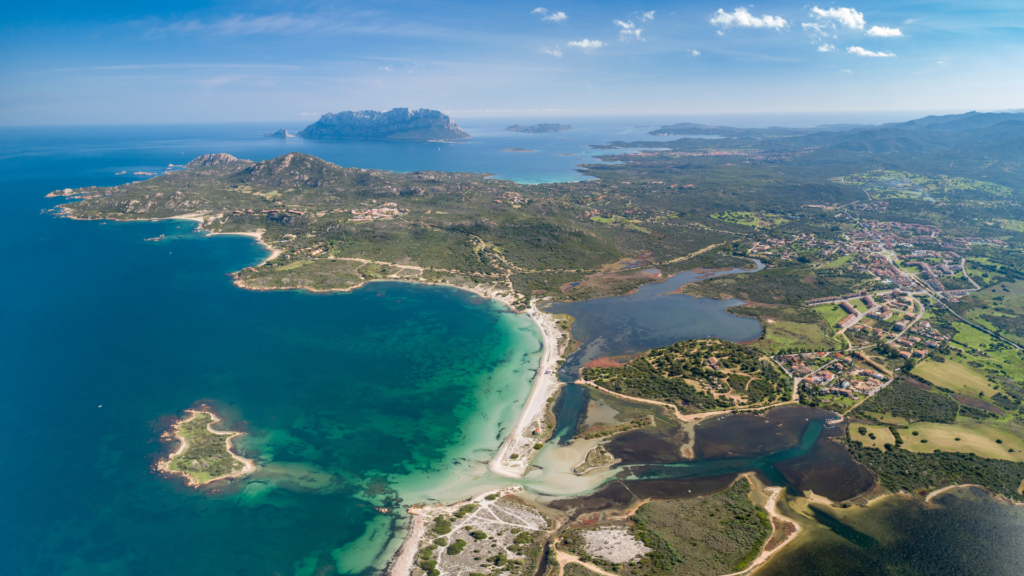
Getting around: car rental for reaching dive centers
Most dive centers sit outside town centers, on marinas or coastal roads that public transport barely reaches, especially in the north-west and along the Gulf of Orosei. If you are combining more than one region from this guide, for example diving near Alghero one day and Villasimius the next, a car is close to essential.
You can compare prices and book directly from the airport closest to your first dive:
- Olbia Airport (for La Maddalena and Tavolara): discovercars.com Olbia
- Cagliari Airport (for Villasimius and the Gulf of Cagliari): discovercars.com Cagliari
- Alghero Airport (for the Nereo Cave and Porto Conte): discovercars.com Alghero
If your trip covers the whole island, including Cala Gonone in the east, it’s worth comparing rates across all pick-up points before booking, since one-way rentals between airports can cost more than a round trip from a single one.
Where to sleep near the best dive spots
Accommodation isn’t the focus of this guide, but staying close to your dive center saves time on early morning departures. A few options worth knowing about, one per region:
- Grand Hotel Cannigione (La Maddalena area): sits on the Cannigione bay, a short drive from several dive centers serving the archipelago. Check availability
- Hotel Portoconte (Alghero, Porto Conte): directly on the bay facing Capo Caccia, with a diving center operating from the hotel’s own pier. Check availability
- Hotel Stella D’Oro (Villasimius): a budget-friendly option in the town center, about a 20-minute walk from the Capo Carbonara Marine Protected Area. Check availability
- Hotel Pop (Cala Gonone): right across from the port, a few steps from the nearest diving center in town. Check availability
For something more upscale near Villasimius, we’ve reviewed Hotel Cala Caterina in detail. If you’d rather compare full areas first, see our guides to where to stay in Northern Sardinia and where to stay in South Sardinia.
The local perspective: what Sardinians think about diving here
Every brochure calls Sardinia a diver’s paradise. What they usually skip is the practical difference between the two coasts, and it matters for how you plan your trip.
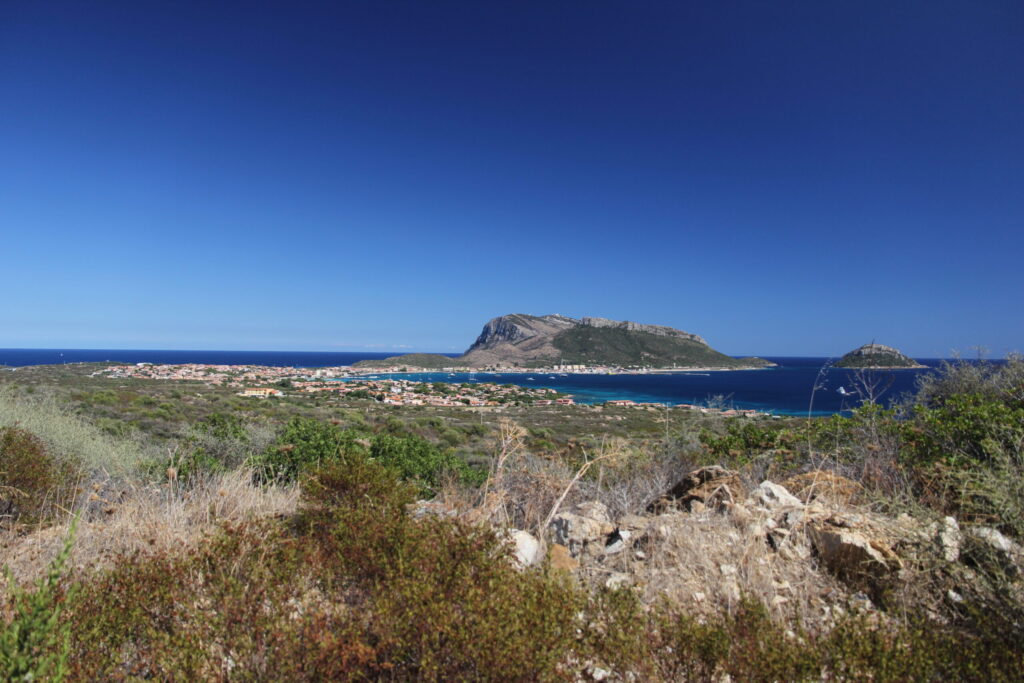
The east coast, from Tavolara down through the Gulf of Orosei to Villasimius, is sheltered from the Maestrale, the north-westerly wind that dominates Sardinian weather from spring through autumn. That’s why most beginner-friendly dive centers cluster here: the sea stays calmer more often, and trips get cancelled less frequently.
The west coast, around Alghero and the Nereo Cave, takes the Maestrale head on. We locals plan diving trips there around wind forecasts, not just tides, and if you book in advance without checking conditions, don’t be surprised if the center reschedules you to a different site or a different day.
On logistics: dive centers rarely sit inside town, and parking near the more popular marinas, particularly Cannigione and Villasimius in August, fills up by mid-morning in peak season. Arriving 30 minutes before your briefing time isn’t overcautious, it’s normal here.
FAQ about diving in Sardinia
Is Sardinia good for diving, even for beginners?
Yes. The east coast in particular has calm, shallow bays around Villasimius, Cagliari, and La Maddalena where Discover Scuba Diving experiences run without any certification required.
What is the best time of year to dive in Sardinia?
April to October, with June to September offering the warmest water and best visibility. May, June, September, and October avoid the summer crowds while keeping good conditions.
Do I need a certification to dive in Sardinia?
No, for shallow introductory dives. Deeper wrecks and cave sites like the Nereo Cave near Alghero generally require Advanced Open Water or a cave specialty.
Where are the best wreck dives in Sardinia?
Villasimius, near Villasimius, has several WWII and older wrecks. Cala Gonone in the Gulf of Orosei has the Nasello, another well-preserved WWII cargo ship.
Can I go cave diving in Sardinia?
Yes, mainly at the Grotta del Nereo near Alghero, one of the largest underwater cave systems in the Mediterranean. Some sections require cave certification, and trips depend on sea conditions due to Maestrale exposure.
North or south, which is better for diving?
The north-east (La Maddalena and Tavolara) has the highest concentration of dive centers and the most sheltered water. The south is better if you want to combine diving with a stay in Cagliari or want quick access without a long drive.
Are there sharks in Sardinia?
Shark encounters are extremely rare and no fatal attacks have been recorded in Sardinian waters. The species occasionally seen, like blue sharks, are not aggressive toward divers.
Sources
- Viator, Sardinia scuba diving tour listings
- GetYourGuide, Sardinia and Villasimius diving tour listings
- Booking.com, property listings for Cannigione, Alghero, Villasimius, and Cala Gonone