Budelli island is one of the most protected and most talked-about places in the entire Mediterranean, and yet most visitors arrive without knowing what they can actually do there.
Budelli isn’t the kind of destination where you show up and figure it out on the spot. The rules are strict, the access is limited, and if you go in without the right information you’ll spend two hours on a boat only to feel vaguely cheated. This guide gives you everything you need to plan the trip properly.
Where is Budelli Island?
Budelli is a tiny uninhabited island in the La Maddalena Archipelago, at the very northern tip of Sardinia, just south of the Strait of Bonifacio that separates Italy from Corsica. Its surface covers about 1.6 square kilometres, its coastline runs for 12.3 kilometres, and its highest point, Monte Budello, reaches 88 metres. The island sits a few hundred metres south of Razzoli and Santa Maria, and together these three form a naturally sheltered lagoon area locals call the Piscine Naturali (Natural Pools), one of the most spectacular snorkelling spots in the whole archipelago.
Budelli became part of the La Maddalena National Park when it was established in 1994. After a drawn-out legal saga involving a New Zealand billionaire who bought the island at auction in 2013 for nearly three million euros, the Italian state eventually reacquired it in 2016 and assigned its management to the National Park. Since then, access has been governed by the strictest category of environmental protection the park applies.
The Pink Beach (Spiaggia Rosa): What You Really Need to Know
The Spiaggia Rosa is the reason most people come to Budelli, and it’s also the source of the most widespread disappointment. Let’s be direct about both sides of this.
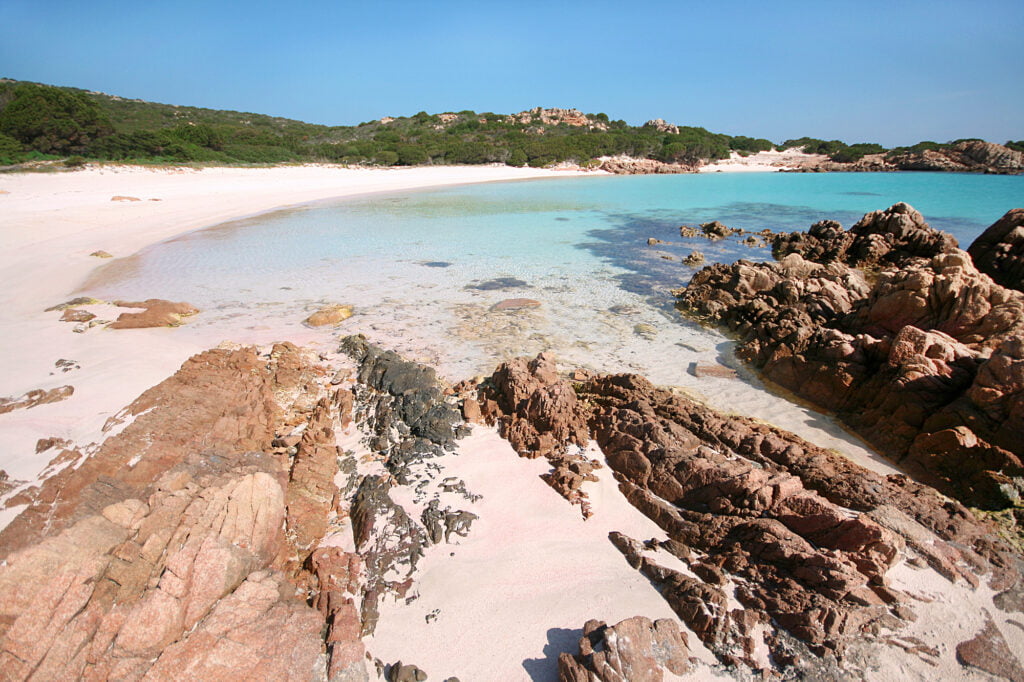
The pink colour of the sand is caused by the accumulation of fragments from a single-celled organism called Miniacina miniacea, a foraminifera with a reddish shell that lives in the Posidonia oceanica seagrass meadows surrounding the island. Over thousands of years, these microscopic shells broke down and washed ashore, mixing with fine white sand to create the distinctive hue. It is one of only a handful of pink-sand beaches on earth, and it formed without any human involvement whatsoever.
The catch, and it’s a significant one, is that decades of mass tourism stripped away most of that sand. Visitors walked on the beach, swam in the shallow water, took jars of sand home as souvenirs, and dropped anchor directly on the seagrass. By the time the Park declared it a Zone A protected area in 1994, the colour was already fading. Today the pink tint is subtle, visible mostly in certain light conditions, particularly in early morning or late afternoon when the sun is low. If you have seen intensely pink photographs online, most of them were taken decades ago or heavily edited. Be prepared for soft, pale hues rather than vivid pink, and you will not be disappointed.
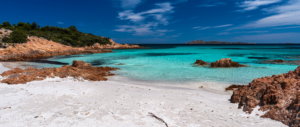
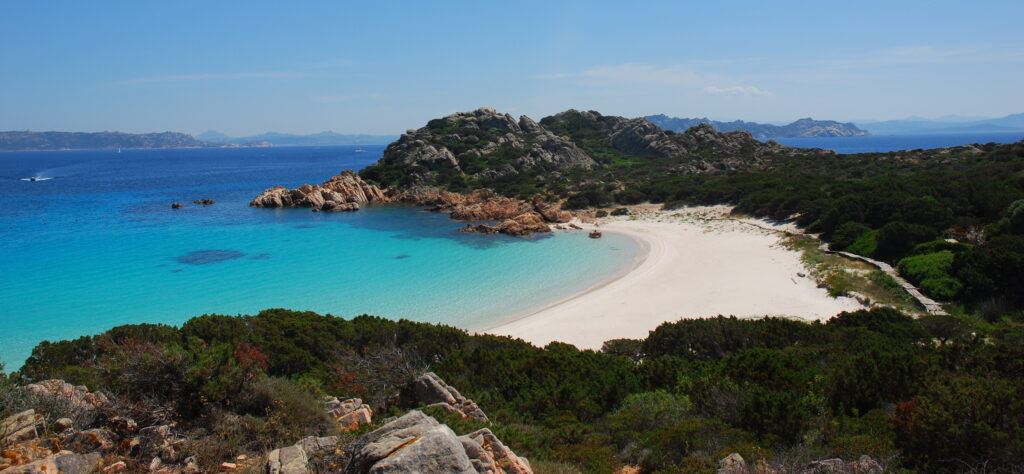
The good news is that the beach is genuinely beautiful regardless of its colour. The water in front of it is a shifting palette of turquoise and emerald, the granite formations framing it are dramatic, and the 1964 Michelangelo Antonioni film Deserto Rosso (Red Desert) was partly filmed here precisely because the landscape was so otherworldly. Monica Vitti’s famous monologue about the little girl who lived on an island was set on this beach.
What is allowed and what is not: You cannot set foot on the sand, swim within 70 metres of the shoreline, drop anchor in the cove, or pass through on a dinghy. The beach is surrounded by buoys marking the exclusion zone, and Park rangers monitor it regularly during the summer. What you can do is admire it from your boat at the buoy line, or take a short guided walk on the wooden pathway the Park has built around the beach’s perimeter. That path gives you a proper view of the beach and its framing vegetation without putting any pressure on the sand itself.
All the Beaches of Budelli
Spiaggia del Cavaliere
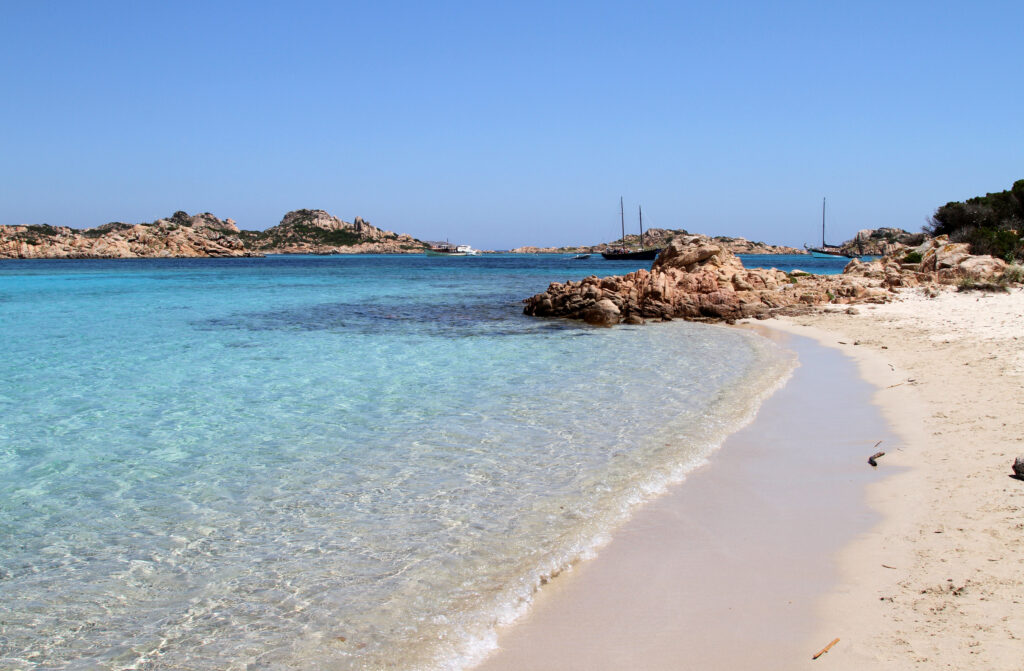
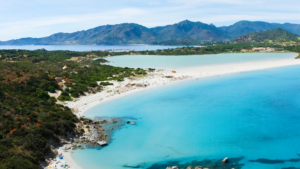
Located on the northern side of the island, this is the only beach on Budelli where swimming was traditionally permitted. The bay is wide, sheltered, and protected from the dominant mistral winds by the surrounding granite terrain. The sand is white and coarse, the seabed gently sloping with excellent visibility.
Worth noting: Spiaggia del Cavaliere has suffered its own overcrowding problems. Large tour boats carrying up to 200 passengers were routinely unloading on this beach during peak season, causing visible erosion and ecological stress. The National Park has progressively restricted landing access here too, so always check current regulations before planning to go ashore. In many cases you can still swim from your boat to the shoreline, but directly stepping off a dinghy onto the sand may not be permitted.
Cala di Roto
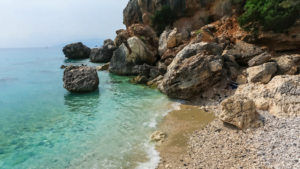
This is the cove that houses the Spiaggia Rosa on its south-eastern side. It is accessible by sea but, as described above, landing and anchoring are prohibited. The surrounding water is some of the clearest in the archipelago, and snorkelling along the perimeter from a respectful distance reveals a seabed dense with posidonia, sea urchins, and occasionally octopus. The rocky formations above the waterline are made of ancient pink granite, which contributes to the overall warm tone of the light in this part of the island.
The Natural Pools (Piscine Naturali)
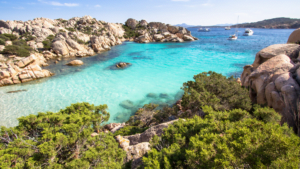
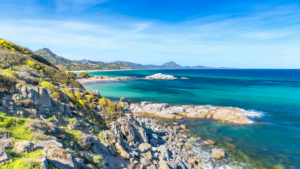
Strictly speaking these are not a beach on Budelli itself, but they are the experience most people find most rewarding during any trip to this part of the archipelago. The Natural Pools are formed by the protected lagoon between Budelli, Razzoli, and Santa Maria: three islands arranged close enough together that the sea between them becomes a vast shallow basin of extraordinarily clear water. Depths rarely exceed two metres, the seabed is sandy white, and the combination of sunlight and reflection produces an almost Caribbean colour palette. Snorkelling here is exceptional, and because the area is semi-enclosed it remains calm even when the mistral is blowing outside.
How to Get to Budelli
There is only one way to reach Budelli, and that is by sea. Your options are:
From Palau: This small port town on the north-eastern Sardinian coast is the main departure point for archipelago excursions. Several operators run full-day or half-day tours that include Budelli, typically stopping at the Piscine Naturali, passing by the Spiaggia Rosa at the buoy line, and making a swimming stop at one of the other islands. Journey time is roughly 45 to 60 minutes depending on the boat and the route.
From La Maddalena: If you are already based on La Maddalena island, you can reach Budelli in around 20 to 30 minutes. Several operators offer departures from the town’s main harbour.
Renting a boat: If you have a boating licence and want flexibility, hiring a motorboat in Palau or La Maddalena lets you set your own itinerary. This is the best option for visiting the Natural Pools at quiet times, early morning or late afternoon, when the tour boats have left. Navigation within the National Park requires a daily or weekly permit (currently around €40 per day for a 12-metre boat), and anchoring rules are strictly enforced.
Two things to keep in mind when choosing between options. First, July and August are genuinely very crowded. Multiple large tour boats can unload over a thousand visitors daily at the peak stops. If your priority is tranquillity, go in June or September. Second, wind matters enormously in this part of Sardinia. The mistral blows from the north-west and can make the crossing from Palau to Budelli uncomfortable or impossible on rough days. Any reputable operator will cancel or reroute if conditions are bad. If a tour company does not check wind forecasts carefully, do not book with them.
The Ecosystem of Budelli
Part of what makes Budelli worth visiting beyond the beaches is the density of the ecosystem both above and below the waterline.
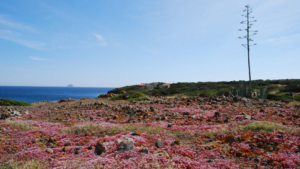
The vegetation on the island is macchia mediterranea at its most intact: juniper, tree heather, cistus, lentisk, and rockrose cover the terrain in a dense, fragrant scrub. The island has had no grazing animals and no human settlement for decades. The last resident, Mauro Morandi, left in 2021 after 32 years as the island’s solitary guardian, which means the vegetation is in exceptionally good condition.
Below the surface, the posidonia meadows are among the healthiest remaining in the Mediterranean. Posidonia oceanica is a seagrass, not an algae, and it acts as a nursery for a wide variety of juvenile fish as well as providing oxygen and stabilising sediment. Where posidonia is healthy, biodiversity follows: sea bream, mullet, octopus, sea urchin, and starfish are all common sightings during snorkelling sessions in the Natural Pools.
What to Do Near Budelli
Budelli works best as part of a broader exploration of the northern archipelago rather than a standalone destination. The island itself offers no landing-based activities other than the guided path around the Spiaggia Rosa perimeter. The richest experiences all happen on the water or at the nearby islands.
Snorkelling the Natural Pools: The shallow lagoon between Budelli, Razzoli, and Santa Maria is the highlight of any archipelago day trip. Bring a mask and fins. Visibility is routinely 10 to 15 metres and the variety of fish life is significant.
Exploring nearby islands: Santa Maria, just north of Budelli, has a beautiful beach accessible by dinghy. Spargi to the south-west has Cala Corsara, one of the most photographed beaches in the entire park. Caprera is larger and worth a half day for its coastal paths and Garibaldi museum.
For a broader look at boat and motorboat tours across Sardinia, see the complete guide to boat tours.
Rules and Regulations
- Spiaggia Rosa: No access to the sand, no swimming within 70 metres, no anchoring in the cove, no transit by dinghy. Observation from the wooden path or from a boat at the buoy line only.
- Spiaggia del Cavaliere: Landing restrictions have been progressively introduced; check current park rules before your visit. Swimming from a boat remains generally permitted.
- Navigation permit: Required for sailing or motoring within the National Park. Available online via the park authority’s website or from operators in Palau and La Maddalena.
- Anchoring: Strictly prohibited on posidonia meadows anywhere in the park. Use designated mooring buoys where provided. Fines are substantial and actively enforced.
- No removing sand, shells, or rocks from any island.
- No fires. All rubbish must leave with you.
The restrictions exist because the previous unregulated period genuinely damaged the ecosystem. The park’s approach has worked: posidonia coverage has begun recovering in areas where anchoring was banned, and bird populations have stabilised.
Best Time to Visit
June and September are the optimal months. Water temperature is warm enough for long snorkelling sessions, daylight hours are long, and the tour boat crowds are significantly smaller than in July and August.
July and August are peak season in every sense. The archipelago is exceptionally busy, with hundreds of boats converging on the same anchorages daily. That said, wind tends to be lighter in August than in June, which matters for comfort on the crossing.
October onwards: Most tour operators shut down by mid-October. Renting your own boat becomes the primary option, and the archipelago is essentially empty, which can be extraordinary in good weather. The mistral is more frequent and stronger from October through spring.
Where to Stay
Budelli has no accommodation. You sleep either on Palau, on La Maddalena, or on your own boat.
Palau
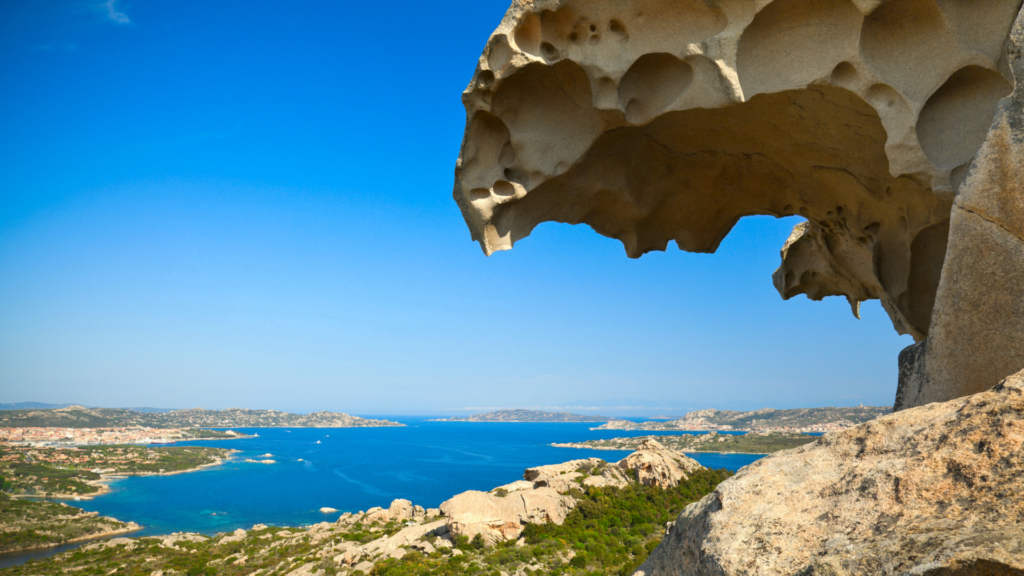
Palau is the most practical base for day trips to Budelli. The town has a well-developed tourist infrastructure, good restaurants, and direct access to the ferry to La Maddalena. Most tour boats to the archipelago depart from here.
- Premium option: Hotel Capo d’Orso Thalasso & SPA is a 5-star Leading Hotels of the World member set in a 10-hectare private park at Cala Capra, 4 km north of Palau. It has two private beaches, a thalasso wellness centre with heated seawater pools, a 9-hole Pitch & Putt course, and a private marina from which excursions to the archipelago depart directly. It books up well in advance for July and August.
- Mid-range option: Hotel La Roccia sits in the centre of Palau, a 5-minute walk from the ferry terminal and the tour boat moorings. A family-run 3-star hotel open since 1962, with free private parking, free breakfast, and 22 rooms. Simple, well-located, and significantly more affordable than the resort properties.
La Maddalena
Staying on La Maddalena island puts you closer to the archipelago itself. The town has genuine character, good local restaurants, and a more relaxed atmosphere than Palau.
- Premium option: Hotel Miralonga occupies a panoramic position on the south coast of La Maddalena island with sea views, an outdoor pool, free parking, and a well-regarded buffet breakfast. It sits a 10-minute walk from Spiaggia di Punta Tegge and directly alongside a boat excursion operator to the archipelago. Rated 8.5 out of 10 on Booking.com from over 700 reviews. Also bookable on Trip.com.
- Budget option: Riccio Hotel is a 3-star property 5 minutes’ walk from the seafront in La Maddalena, with free private parking, a bar, and air-conditioned rooms. Rates start significantly below those at Miralonga and it offers a solid base for those primarily interested in the water rather than hotel amenities.
For a broader look at where to stay across northern Sardinia, from the Costa Smeralda to Castelsardo, the guide to accommodation in northern Sardinia covers all the main options.
The Local Perspective: What Sardinians Think
This part of the archipelago is genuinely extraordinary, and we Sardinians know it well, which is exactly why a few honest observations are worth making.
On the overcrowding: The National Park has done important work, but August remains a genuinely difficult month at Budelli. You are not going to have a quiet, contemplative experience at the Piscine Naturali on a Saturday in August. If that is what you are seeking, either come in June or September, or hire a private boat and plan your timing around the early morning hours before the large tour vessels arrive. The difference between 7am and 10am at these spots in summer is not a small difference.
On logistics: Palau is a functional town with everything you need, but it is not a destination in itself beyond its role as the gateway to the archipelago. Do not plan more than two nights there unless you have specific reasons to linger. La Maddalena, by contrast, is worth exploring properly. The town centre, the Naval Archaeological Museum, and the coastal roads around the island are all genuinely interesting and tend to be underused by visitors fixated on boat trips.
On wind: The mistral is the defining meteorological fact of life in northern Sardinia from spring through autumn. It is not predictable more than 24 to 48 hours out, which means any trip that absolutely must include Budelli on a fixed date is a trip that risks being disappointed. Build flexibility into your itinerary. A day spent at the beaches of La Maddalena or Palau when the mistral is blowing is not a consolation prize.
FAQ
Can I walk on the Pink Beach (Spiaggia Rosa)?
No, walking on the sand and swimming at the Pink Beach is strictly prohibited to preserve its color. You can admire it from the designated walkway or from a boat tour of the archipelago.
Can I swim at the Spiaggia Rosa?
No. Swimming is prohibited within 70 metres of the beach, marked by buoys. The prohibition has been in place since 1994 and is actively enforced.
Why isn’t the pink beach actually pink anymore?
Decades of mass tourism stripped away the Miniacina miniacea fragments that gave the sand its colour. The hue is still present in soft, subtle tones under the right light, but the intense pink visible in old photographs reflects a beach that no longer exists in that form.
Is Budelli inhabited?
No. The last resident was Mauro Morandi, who lived as a voluntary guardian of the island from 1989 until 2021. He passed away in 2025. Budelli is now an uninhabited island within a protected marine area. This makes it a perfect example of Sardinia’s wild natural beauty.
Are there other beaches on Budelli?
Yes, the “Spiaggia del Cavaliere” is a stunning beach with crystal water where swimming is allowed. It is one of the top-rated beaches on the island.
Do I need a permit to visit Budelli by private boat?
Yes. Navigation within the La Maddalena National Park requires a permit, available from the park authority or from local operators. Daily rates start at around €40 for a 12-metre vessel.
What is the best way to visit if I have one day?
Book a small-group boat tour from Palau departing early, ideally by 8:30am. A well-run full-day excursion will cover the Piscine Naturali for snorkelling, a stop alongside the Spiaggia Rosa at the buoy line, and a second swimming stop at another island before returning in the afternoon. Avoid operators using large multi-deck vessels.
Can I visit Budelli outside of summer?
Technically yes, but organised tours stop operating by mid-October. From November to May, the only practical option is a private boat rental, and you must account for frequent mistral winds. The reward is near-complete solitude in one of the Mediterranean’s most beautiful places.