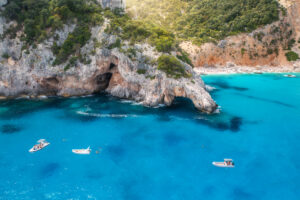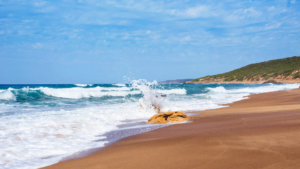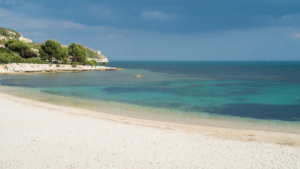
Sardinia weather is exceptional, even by Mediterranean standards: over 300 days of sunshine per year, a warm sea that holds through October, and winters mild enough for comfortable hiking. That is the headline.
The detail is more interesting. Sardinia is an island shaped by wind. The Maestrale can blow for days in June, turning crystal coves into choppy water. A Scirocco episode from the Sahara can push inland temperatures above 40°C in August. And the granite peaks of the Barbagia see real snowfall every winter. There is more variation here than the brochures suggest.
This guide breaks down Sardinia weather month by month, explains what drives it, and gives you a realistic picture of every point in the year: temperatures, sea conditions, wind, rainfall, and an honest local perspective on when things are genuinely good and when they are not.
Brief Overview of Sardinia’s Climate
Sardinia has a Mediterranean climate (Köppen Csa along the coasts): hot, dry summers and mild, wet winters. It is the second-largest island in the Mediterranean, and its size and varied terrain create meaningful differences between one end of the island and the other.
Four variables define the island’s weather:
- Temperature: Coastal highs range from 14°C in January to 32°C in August. The interior runs 2-3°C cooler in summer and significantly colder in winter. Southern Sardinia is the warmest zone overall.
- Rainfall: The coast receives 400-600 mm per year, mostly between October and March. The Gennargentu mountains can exceed 1,000 mm annually. Summers are practically dry.
- Wind: The Maestrale (north-westerly) is the dominant wind, strongest from October to April and regularly present in June-July. The Scirocco (southerly, from Africa) brings hot and dusty air mainly in late summer and early autumn. The Ponente (westerly) is a softer wind common in spring.
- Geographic variation: Cagliari and the south are the warmest and driest areas. Alghero and the north-west receive slightly more rain and benefit from sea breezes. Nuoro and the Barbagia plateau, at 600-800 m elevation, have cold winters and cooler summers. The Campidano plain around Oristano is one of the hottest points on the island in summer.
So what drives this pattern? Sardinia sits at roughly 40°N latitude, exposed to Atlantic fronts from the west in winter and blocked from them by Azores high pressure in summer. The island’s topography then redistributes heat, moisture, and wind according to its own internal logic.
| Area | Summer High | Winter Low | Annual Rainfall |
|---|---|---|---|
| Cagliari (south) | 32-33°C | 4-5°C | ~400 mm |
| Alghero (north-west) | 30-31°C | 4-5°C | ~560 mm |
| Nuoro and Barbagia | 28-30°C | 0-2°C | ~700 mm |
| Oristano (plain) | 33-35°C | 3-4°C | ~500 mm |
A rainy November day in Alghero can coincide with full sunshine in Cagliari, 200 km away. Sardinia is not one climate: it is several, layered across the same island.
Seasonal Weather Overview
Looking for the quickest answer on when to visit Sardinia? The breakdown below gives you the broad seasonal picture before we go deeper month by month.
Spring (March – May)
Spring is Sardinia’s best-kept secret. Temperatures rise steadily from 16°C in March to 24°C in May, the maquis bursts into flower, and the beaches are almost entirely empty.
Rain tapers off through April. By May the weather is already warm and dry enough for genuine beach days, with sea temperatures reaching 18-20°C in southern areas. Hiking conditions are ideal: trails are not yet parched, wildflowers are at their peak, and paths through the Supramonte and Gennargentu are fully open.
Tourism pressure is low and prices reflect it. Services at smaller resorts are limited before mid-June, so check ahead before booking.
Local tip: Late April is when Sardinians quietly return to their favourite beaches. Not to swim. To walk, to breathe, to check on the colour of the water. That is how good the weather already is.
Summer (June – August)
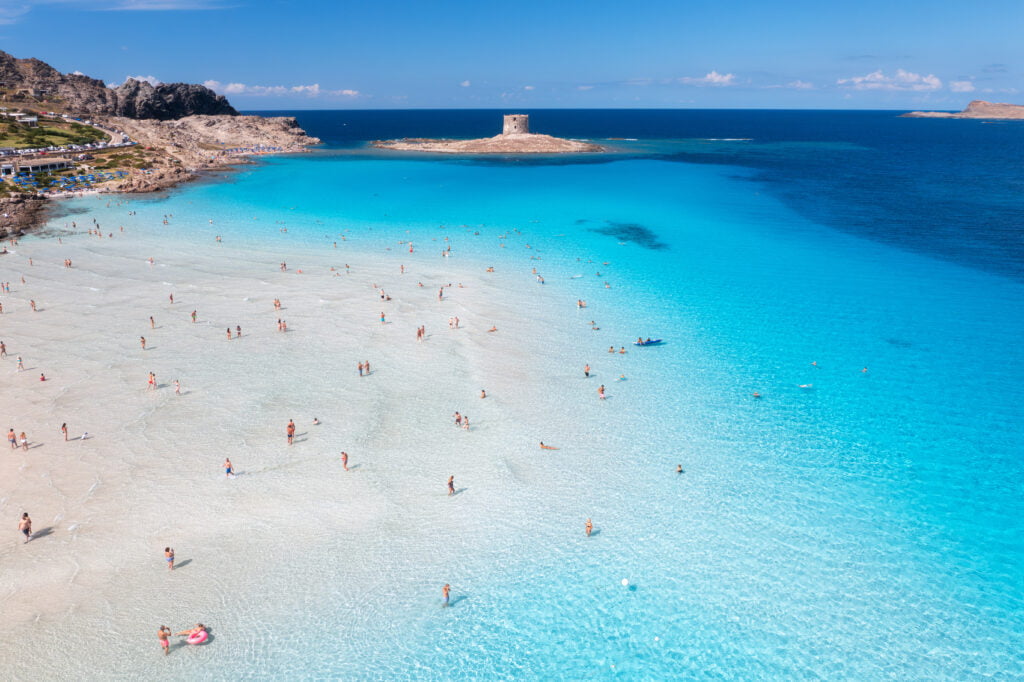
Summer here is the real thing. June brings long days of up to 15 hours, a sea already at 22°C, and temperatures consistently in the high 20s. July and August push to 31-32°C on the coast, with the sea reaching 25-27°C.
Rainfall in these months is essentially zero. What disrupts plans is not rain but wind. The Maestrale is the defining force on western beaches in June-July: a north-westerly that blows at 30-40 km/h for several consecutive days, making the sea rough on exposed western coasts while leaving eastern beaches such as Villasimius and San Teodoro calm.
The Scirocco is the other variable: a hot, dusty southerly from the Sahara that can push temperatures above 40°C inland, coat everything in fine red dust, and make the humidity briefly oppressive on the coast. It is usually short-lived, but it is memorable.
July and August are the peak of peak season. Book accommodation months in advance and expect significant crowds at all major beaches.
Local tip: June is the local’s choice. Hot enough, uncrowded, and with the longest daylight hours of the year. The sea is warm from the first week.
Autumn (September – November)
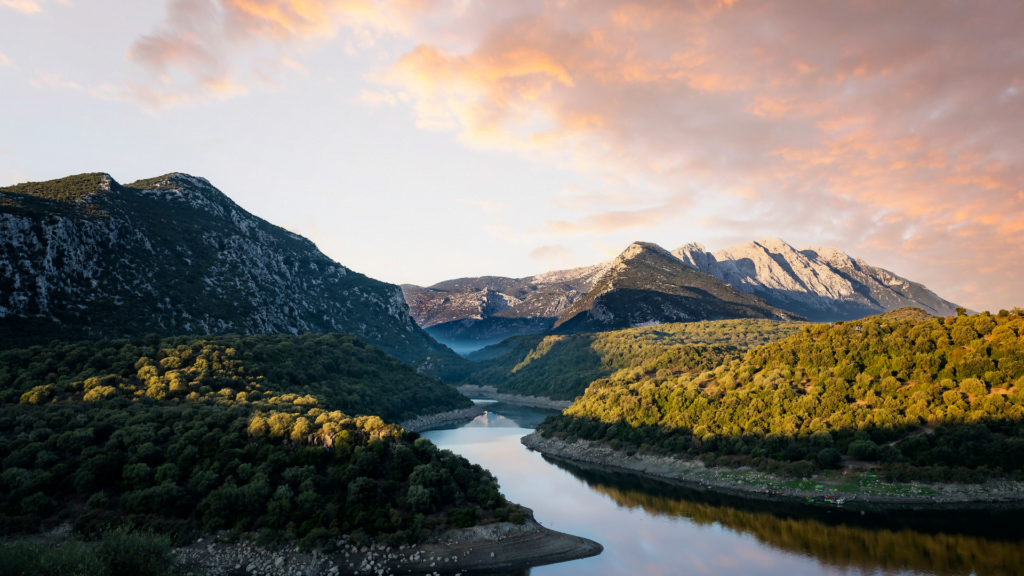
September is essentially a continuation of summer: 26-28°C on the coast, the sea holding at 23-25°C, and crowds thinning sharply after Ferragosto on 15 August. Many Sardinians consider September the finest month to visit the island.
October is golden. Temperatures drop to 22-23°C, the light softens, and the island takes on a quieter, more genuine character. Wine harvest runs through the Campidano and Gallura. Some beach facilities close from mid-October, but the weather holds well.
November changes the picture. Atlantic fronts arrive with increasing frequency, Scirocco events can bring oppressive warmth followed days later by fierce Maestrale cold, and flooding risk increases in low-lying coastal areas. The Olbia catastrophe of November 2013 remains the starkest reminder of what the island’s autumn storms can produce.
Local tip: Book September rather than August if you can. Same sea temperature, the same beaches, and you can actually find a parking space.
Winter (December – February)
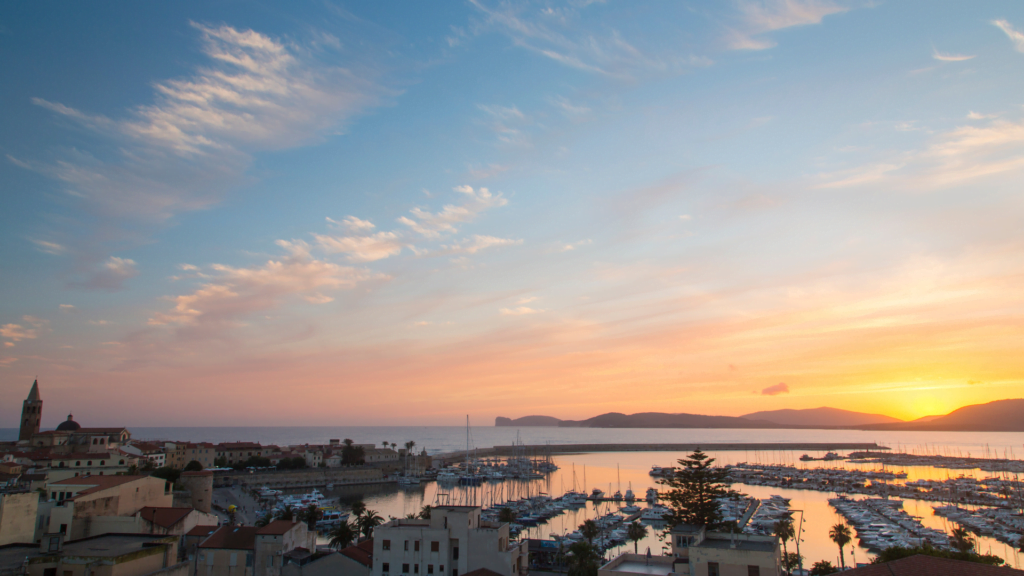
Sardinian winters are mild by north European standards, but not the paradise some brochures imply. Coastal temperatures range from 8°C at night to 14-15°C during the day. Rain arrives in pulses, often driven by Atlantic fronts from the west or by the Maestrale sweeping in from the north.
Snow at sea level is a genuine rarity. It happened briefly in 1985. In February 2012, Cagliari woke to a dusting of snow for the first time in living memory for most residents. In the mountains, snowfall is normal and expected from December through February.
The sea cools to 13-15°C, coastal resort hotels are largely closed, and the island takes on a completely different face.
Local tip: Winter is when Sardinia belongs to Sardinians. If you want to experience the island as it genuinely lives rather than as a stage set for tourism, January or February is a strong choice.
Monthly Breakdown
The table below gives verified averages for the north-west coast (Alghero station, 1991-2020 data). Southern Sardinia runs 1-2°C warmer in summer. The Barbagia interior is significantly colder in winter. Sea temperatures are northern coastal averages.
| Month | Avg High | Avg Low | Sea Temp | Rain Days | Sun hrs/day |
|---|---|---|---|---|---|
| January | 14°C | 5°C | 13-14°C | 8 | 5 |
| February | 14-15°C | 5°C | 13-14°C | 8 | 6 |
| March | 16-17°C | 8°C | 14°C | 7 | 8 |
| April | 19°C | 12°C | 15-16°C | 6 | 10 |
| May | 23-24°C | 16°C | 17-20°C | 4 | 11 |
| June | 28-29°C | 20°C | 21-23°C | 2 | 13 |
| July | 31-32°C | 22°C | 24-26°C | 1 | 13 |
| August | 31-32°C | 22°C | 25-27°C | 1 | 12 |
| September | 27-28°C | 19°C | 23-25°C | 2 | 11 |
| October | 23°C | 16°C | 21°C | 4 | 8 |
| November | 17-18°C | 11°C | 17-18°C | 7 | 6 |
| December | 14-15°C | 5-6°C | 15°C | 8 | 5 |
January
High: 14°C | Low: 5°C | Sea: 13-14°C | Rain: 8 days | Sun: 5 hrs/day
The quietest month on the island. Hotels and restaurants in coastal resort areas are mostly closed. Weather alternates between sharp, clear Maestrale days and grey Atlantic fronts with heavy rain. Cagliari, Oristano, and Sassari are the best bases: cities are fully alive, and the low winter light on historic centres and coastal lagoons is genuinely beautiful. Hiking is possible on clear days, with no summer heat to contend with. Pack a waterproof jacket and keep plans flexible.
February
High: 14-15°C | Low: 5°C | Sea: 13-14°C | Rain: 8 days | Sun: 6 hrs/day
February averages marginally more sunshine than January, and the first signs of spring appear in sheltered valleys. Almond trees in the Campidano begin blooming white in the second week of the month. This is also the season of Carnevale: the traditional masks of Mamoiada and Ottana and the equestrian festival of Sa Sartiglia in Oristano are among the most striking folk events in Italy, concentrated in late January and February. In the mountains, Fonni and the Gennargentu are reliably under snow.
March
High: 16-17°C | Low: 8°C | Sea: 14°C | Rain: 7 days | Sun: 8 hrs/day
March is transitional. Warm days, up to 20°C in the south, alternate with cold, rainy spells driven by the last Atlantic fronts of the season. The Maestrale eases off and wildflowers appear in force across the maquis. Day length increases quickly. The sea is still 14°C and cold for most swimmers, but the countryside is vivid. Easter falls in March some years, which brings domestic tourism to nuraghe sites, coastal towns, and interior villages ahead of the usual spring schedule.
April
High: 19°C | Low: 12°C | Sea: 15-16°C | Rain: 6 days | Sun: 10 hrs/day
April is reliably good. Rain drops to around six days in the month, temperatures are comfortably warm, and daylight stretches past 13 hours. Swimming is possible in sheltered southern bays for those comfortable with 15-16°C water. This is one of the finest months for visiting archaeological sites: Barumini, the Golfo di Orosei, and the coastal fortresses of Cagliari are all beautiful in spring light with almost no crowds. A strong choice for hikers, cyclists, and anyone combining culture with early outdoor activity.
May
High: 23-24°C | Low: 16°C | Sea: 17-20°C | Rain: 4 days | Sun: 11 hrs/day
May is, by most measures, the finest month in Sardinia. Temperatures are warm enough for genuine beach days, especially in the south where highs can reach 26°C. The sea is at 17-20°C by month’s end, comfortable for swimming. Rain is rare, sunshine is consistent, and prices are well below peak. Almost all tourist services have reopened. The island is green, uncrowded, and at its most liveable. A top recommendation for first-time visitors who want the full experience without the August pressure. Our Sardinia in May guide covers what to do in detail.
June
High: 28-29°C | Low: 20°C | Sea: 21-23°C | Rain: 2 days | Sun: 13 hrs/day
June is where summer starts in earnest. The sea is warm from the first week, sunshine stretches to 15 hours per day, and temperatures in the high 20s are consistent. The Maestrale is still active on the western coast, making beaches such as La Pelosa and the Alghero coastline choppier on some days, while eastern beaches remain calm. Crowds build toward the end of the month but are nothing like August. This is when most Sardinians themselves head to the beach. See our June in Sardinia guide for specific recommendations.
July
High: 31-32°C | Low: 22°C | Sea: 24-26°C | Rain: 1 day | Sun: 13 hrs/day
July is the hottest month. Expect 31-32°C on the coast; the Campidano plain and the Oristano area can reach 38-40°C, and Scirocco events have produced extremes: Decimomannu recorded 47°C in July 2023, a verified all-island record. On the coast, sea breezes temper conditions and the water peaks at 24-26°C. Rain is almost non-existent. Beaches are at their most crowded. Our July in Sardinia guide covers timing and the best spots to avoid the worst of the congestion.
August
High: 31-32°C | Low: 22°C | Sea: 25-27°C | Rain: 1 day | Sun: 12 hrs/day
August is statistically similar to July but feels more intense. Peak season hits its maximum around Ferragosto (15 August), when mainland Italy effectively relocates to the island. Famous beaches such as Cala Luna, Cala Mariolu, and the Costa Smeralda are genuinely overcrowded. The sea reaches 27°C in sheltered bays. If you travel in August, focus on lesser-known coves and inland areas. The second half of the month gradually eases as domestic tourism begins to thin.
September
High: 27-28°C | Low: 19°C | Sea: 23-25°C | Rain: 2 days | Sun: 11 hrs/day
September is the month most Sardinians quietly recommend to everyone. Temperatures stay summer-warm, the sea holds at 23-25°C, and crowds drop sharply after mid-August. The light shifts to something more golden and photogenic. Hiking trails that close in July-August for fire risk are fully accessible again, including paths through the Supramonte and to the sea caves of Cala Sisine. Most tourist services are still running. Prices fall noticeably. An outstanding choice for almost any type of visit.
October
High: 23°C | Low: 16°C | Sea: 21°C | Rain: 4 days | Sun: 8 hrs/day
Is the sea still warm in October? Yes: 21°C is comfortable for swimming, and the first half of the month is often beach-worthy in the south. Temperatures are ideal for active outdoor trips: walking, cycling, wine touring, archaeological visits. Rain increases but tends to arrive as short intense showers rather than prolonged grey periods. Some coastal businesses close from mid-October. The interior is particularly rewarding now: Orgosolo, the forests around the Gennargentu, and the harvest markets of the Campidano are all at their finest.
November
High: 17-18°C | Low: 11°C | Sea: 17-18°C | Rain: 7 days | Sun: 6 hrs/day
November is when the island’s weather becomes genuinely unpredictable. Atlantic fronts arrive with increasing frequency. The Scirocco can produce warm, oppressive humidity in early November, followed by fierce Maestrale cold within days. Flooding risk increases, particularly in low-lying areas around Olbia and the Flumendosa basin. That said, mild and sunny stretches remain possible, especially in the south. Cagliari and the Sulcis coast can produce clear, warm days well into the first half of the month: an often-overlooked window for off-season visitors.
December
High: 14-15°C | Low: 5-6°C | Sea: 15°C | Rain: 8 days | Sun: 5 hrs/day
December is among the wettest months across much of Sardinia. Rain typically arrives in intense bursts rather than persistent drizzle. Nights are cool but frost at sea level is rare. Days are short. In the mountains, December brings reliable snowfall: Fonni, the highest town in Sardinia at around 1,000 m, is frequently under winter conditions for weeks at a time. Christmas in Sardinian towns is atmospheric: markets in Cagliari, Oristano, and Sassari run through the month, and the island’s food culture, from roast porceddu to aged Pecorino Sardo, is at its most visible and accessible.
What to do in Sardinia by season: top activities
The right activity depends heavily on the weather. A summer boat tour is not the same thing as a spring hike into the Supramonte, and canyoning in March is a completely different experience from canyoning in August. The recommendations below are matched to the season that actually suits them.
Cagliari Gulf Boat Tour: snorkeling and aperitif
Explore the Gulf of Cagliari aboard a traditional wooden gozzo, with five swim stops in clear water, snorkeling equipment provided, and a platter of Sardinian cheeses and local wine included. One of the most enjoyable introductions to Sardinia’s sea. Ideal from June through September, when water temperatures are at their best.
Tavolara Boat Tour with Snorkeling from Olbia
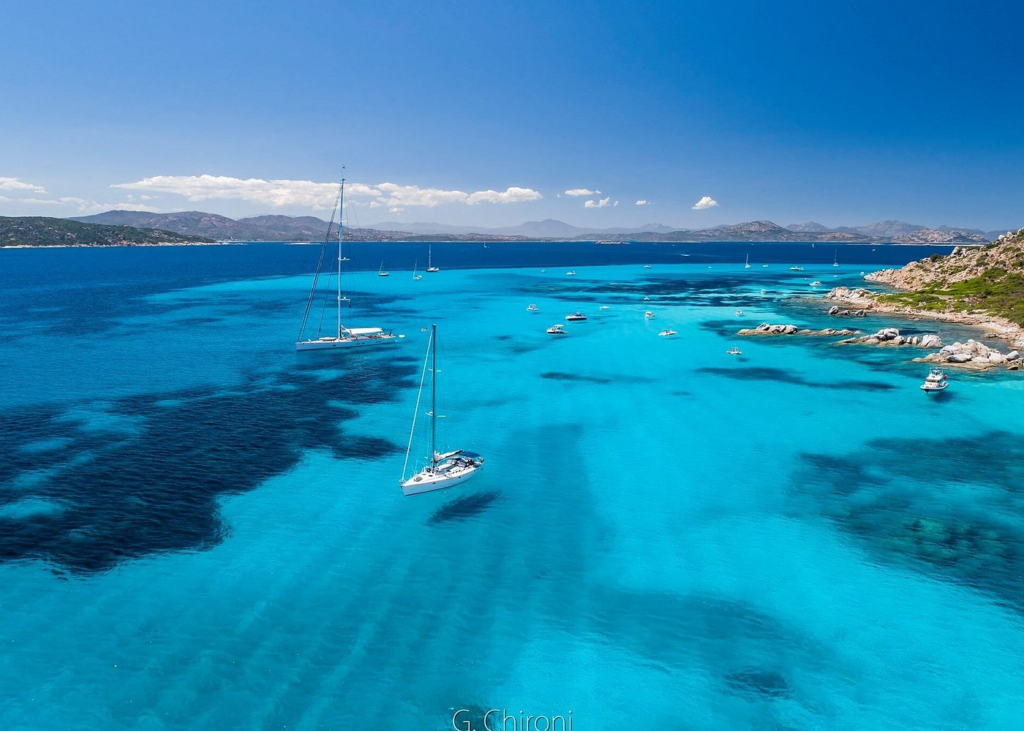
Cruise from Olbia to the dramatic granite cliffs of Tavolara island, with stops at Molara and Doctor’s Beach for snorkeling in a protected marine reserve. The water visibility in this area is exceptional. Best from June through October, with September offering calm seas and smaller groups.
Gorropu Canyon Guided Hike, Supramonte
Descend into the Gorropu, Italy’s deepest canyon, through the Supramonte wilderness. The walls rise over 400 m above the gorge floor. Expert local guides lead the route, with the chance to spot golden eagles, mouflons, and endemic plant species. A genuine physical challenge in one of Sardinia’s most impressive landscapes. Best in spring and autumn: March to May, and September to November.
Guided Hike to Tiscali Nuragic Village
Trek through the Valle Lanaitho to discover a Bronze Age village hidden inside a collapsed karst cave, used as a refuge by the Nuragic people more than 3,000 years ago. Jeep transfer included to the trailhead. Led by expert local guides with deep knowledge of the site’s history. Best in spring and autumn when temperatures are comfortable for the climb.
Rio Zairi Canyoning, Villacidro
A canyoning adventure through the Rio Zairi gorge in the Linas massif near Villacidro, with natural rock slides, waterfalls, and clear pools to swim through. Technical enough to be exciting, accessible enough for families with children aged 10 and over. One of the best outdoor experiences in southern Sardinia. Best from March through June, before the river drops to summer low water.
Barumini Nuraghe UNESCO Site Tour from Cagliari
Visit Su Nuraxi di Barumini, Sardinia’s only UNESCO World Heritage archaeological site, with a professional English-speaking guide and a stop at the Casa Zapata Museum where Bronze Age artefacts are displayed in situ above an excavation site. This tour runs year-round and is especially rewarding in spring, autumn, and winter, when the site is quiet and the surrounding countryside is green.
Sardinian Cooking Class in Cagliari
Learn to prepare culurgiones, fresh pasta, and traditional Sardinian dishes in a home kitchen near Cagliari, then sit down to a full lunch with local wine. Two good options are available depending on preference and scheduling: one is a home-style class focused on pasta-making and Sardinian flavours, the other combines the hands-on cooking session with a complete sit-down lunch experience. Both are suitable year-round, with autumn and winter being the most characterful seasons to do them.
Book on GetYourGuide | Book on Viator
Getting around: car rental in Sardinia
To explore Sardinia properly, a car is not optional. Public transport connects the main cities but stops well short of most beaches, archaeological sites, and mountain areas. In summer, rental fleets are stretched thin and prices peak: book at least six to eight weeks in advance if travelling between mid-June and mid-September.
For planning your journey to the island, the three main arrival airports are Cagliari, Olbia, and Alghero. Compare prices and book your car directly from the airport of arrival:
- Olbia Airport: compare and book
- Cagliari Airport: compare and book
- Alghero Airport: compare and book
- Sardinia general (all locations): compare and book
Where to stay in Sardinia: best hotels by area
The right base depends on the season and the part of the island you are exploring. Our complete guide to where to stay in Sardinia covers all areas in depth. Below are four reliable starting points, covering different zones and price levels.
Palazzo Doglio, Cagliari (premium)
A 5-star boutique hotel set inside a restored 18th-century palazzo in Cagliari’s historic Stampace district, with a rooftop terrace, full spa, and an acclaimed courtyard restaurant. An outstanding base for autumn, winter, and spring visits to the south of the island, when city culture and easy access to archaeological sites matter most.
Hotel Nautilus Excelsior, Cagliari, Poetto (mid-range, beach)
A 4-star adults-only hotel positioned steps from the Poetto, Cagliari’s 8 km urban beach. Garden, pool, and free breakfast included. A strong summer choice for those wanting beach access combined with easy proximity to a working city.
Villa Las Tronas Hotel and SPA, Alghero (premium)
A former royal villa perched on a private headland west of Alghero’s medieval old town, with panoramic views over the Gulf of Alghero, an indoor salt-water pool fed by the sea, and a full thalassotherapy spa. Works in any season, with winter and spring offering the most exclusive experience.
Hotel Stefania, Pittulongu, Olbia (mid-range, north)
A 4-star boutique property 100 metres from Pittulongu Beach near Olbia, with Tavolara island directly in front. A solid and well-located base for summer and shoulder-season trips to north-eastern Sardinia, combining easy beach access with proximity to the Olbia ferry port.
Weather forecast in Sardinia
Sardinia’s weather can vary significantly from one area to another, particularly when the Maestrale is blowing: the north-west coast may be rough and windy while the south coast stays calm, and the interior can sit under cloud while the beaches are sunny. Always check the forecast for your specific destination rather than a single island-wide reading. Live 7-day forecasts for the five main reference points are below.
Weather forecast Cagliari
Cagliari, in southern Sardinia, is typically the warmest and driest city on the island.
 -
- -
- -
- -
- --------------
Weather forecast Sassari
Sassari, in the north-west, sits inland at elevation: slightly cooler and windier than the coast.
------------------Weather forecast Alghero
Alghero sits on the north-western coast and benefits from sea breezes that temper the summer heat.
------------------Weather forecast Nuoro
Nuoro sits in the heart of the Barbagia mountains: winters are noticeably colder here and snowfall is possible.
------------------Weather forecast Oristano
Oristano sits on the central-western plain: one of the hottest points on the island throughout the summer months.
------------------The local perspective: what Sardinians think about their climate
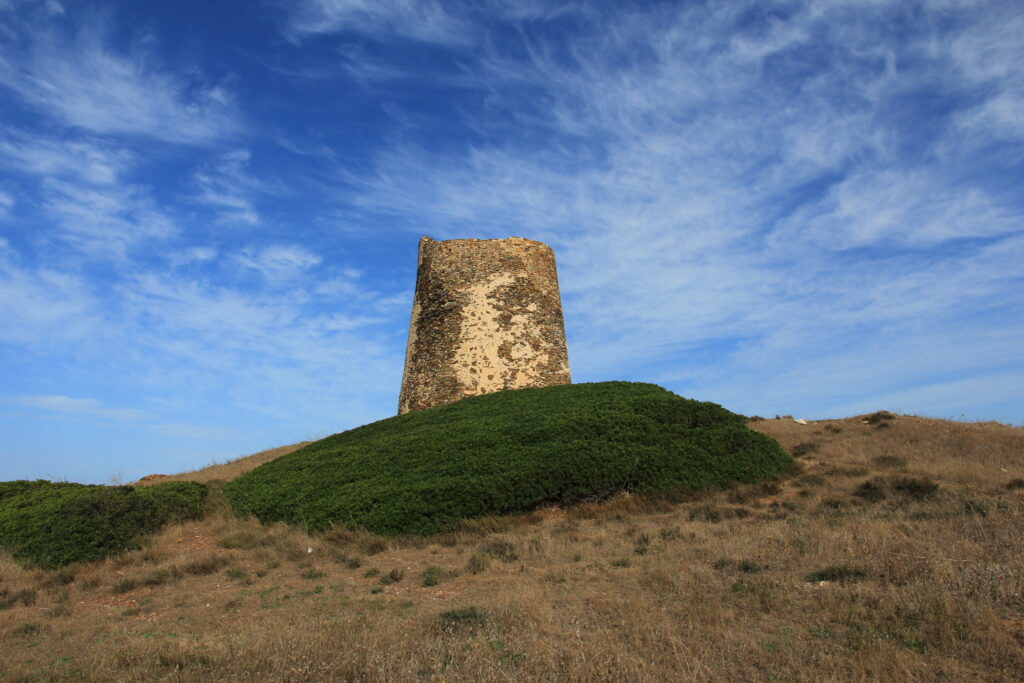
Numbers tell one story. The wind tells another.
The Maestrale is the fact of life that defines summer on the western coast of Sardinia more than any temperature chart does. On beaches between Alghero and Arbus, it can blow at 30-40 km/h for four or five consecutive days in June and July, building waves and stripping umbrellas from their moorings. For windsurfers and kitesurfers, this is a bonus. For families with young children expecting calm water, it is a surprise worth knowing about in advance.
The Scirocco is the counterpoint. A warm, dusty wind from the Sahara, most common in late summer and early autumn, it can push temperatures at inland stations above 40°C and deposit a fine layer of reddish African dust on every car on the island within hours. The Decimomannu meteorological station, near Cagliari, recorded 47°C in July 2023: a verified extreme that reflects the direction the island’s summer temperatures have been trending.
Weather also shapes real access in ways that tourists rarely read about before arriving. In July and August, forest fire risk is extreme. Mountain roads leading to beaches in the Supramonte and Ogliastra, including access routes to Cala Sisine and Cala Goloritzé, can be restricted or closed entirely by the Corpo Forestale on high-risk days. Some coastal hiking trails above a certain altitude are formally off-limits above defined temperature thresholds. These are not theoretical rules.
In winter, the Maestrale can close the port of Olbia for 24-48 hours. Sardinia is an island, and ferry cancellations between November and March are a routine part of travel planning. If your return journey home connects through Olbia by sea, build in a buffer day. It is not pessimism. It is logistics.
There is also a subtler mismatch worth knowing. Sardinia’s tourism season runs roughly from 15 June to 15 September. Sardinia’s genuinely good-weather season runs from May to October. May and early October offer outstanding conditions: warm, uncrowded, and often cheaper. The reason fewer people come then is not the weather. It is that many beach bars, boat tour operators, and smaller holiday rentals only operate in the peak window. If you want shoulder-season conditions with full access to services, June is the more reliable choice than May, and September is more reliable than October. A detail that matters when planning a trip rather than just reading about temperatures. Our complete guide to travelling to Sardinia covers the logistics in full.
FAQ about Sardinia weather
What is the best time to visit Sardinia?
May, June, and September offer the best combination of warm weather, calm seas, reasonable prices, and manageable crowds. July and August are the most popular months but also the most crowded and expensive. October is excellent for those prioritising outdoor activities and culture over beach time. For a full breakdown by travel style, see our best time to visit guide.
Is Sardinia hot in summer?
Yes. Coastal highs of 31-32°C are typical in July and August, with the sea reaching 25-27°C. The Campidano plain and Oristano area regularly exceed 35°C. During Scirocco events, which bring hot air directly from the Sahara, inland stations can reach 40°C and above: Decimomannu recorded 47°C in July 2023. On the coast, sea breezes provide meaningful relief, but summer heat in Sardinia is real and consistent.
Does it snow in Sardinia?
At sea level, snow is extremely rare. Recorded instances include a brief coastal snowfall in 1985 and the February 2012 event that left a dusting on Cagliari and other coastal cities. In the mountains it is a different matter: Fonni, Gavoi, and the Gennargentu peaks receive reliable snowfall every winter from December through February, and highland roads may close temporarily.
What is the weather like in Sardinia in September?
September is one of the finest months on the island. Average highs are 27-28°C, sea temperatures hold at 23-25°C, and rainfall is minimal. Crowds thin sharply after mid-August. Hiking trails that close in high summer for fire risk are fully accessible again. Most tourist services remain open. Prices are noticeably lower than July or August. It is a strong recommendation for almost any type of visit.
Is Sardinia good in October?
Yes, particularly the first half. Average highs of 23°C, sea temperatures of 21°C, and long sunny days make October well suited to active outdoor trips, cultural visits, and off-season beach time in the south. Rain increases from mid-month. Some smaller coastal businesses close after the first week. The interior, including the forests around Orgosolo and the harvest festivals of the Campidano, is at its most atmospheric in October.
How windy is Sardinia?
Wind is a defining feature of the Sardinian climate, not a minor detail. The Maestrale is the dominant wind, strongest from October to April, but frequently present in June and July on the western coast. It can sustain at 40-50 km/h for several consecutive days, making western-facing beaches choppy while eastern beaches remain calm. The Scirocco brings warm, dusty southerly wind mainly in late summer. Windsurfing and kitesurfing conditions are among the best in the Mediterranean precisely because of this pattern.
What is the sea temperature in Sardinia?
The sea is cold in winter (13-14°C from December to February), begins warming in spring (15-16°C in April, 17-20°C in May), reaches comfortable swimming temperature in June (21-23°C), peaks in August (25-27°C), and stays warm through September (23-25°C) and October (21°C). The water cools noticeably from November onward. For most visitors, the comfortable swimming window runs from late May to mid-October.
Sources
- ARPA Sardegna (Agenzia Regionale per la Protezione dell’Ambiente della Sardegna)
- climatestotravel.com: Sardinia climate data, Alghero meteorological station averages 1991-2020
- weather-atlas.com: Sardinia monthly weather averages and sunshine data