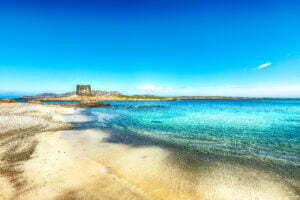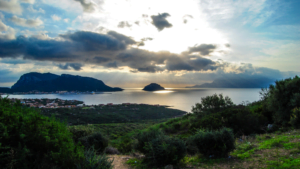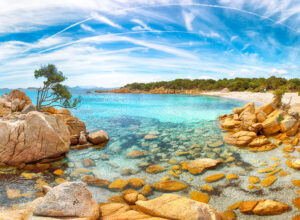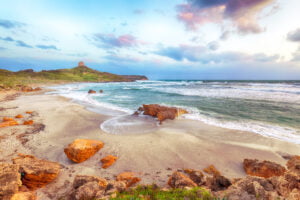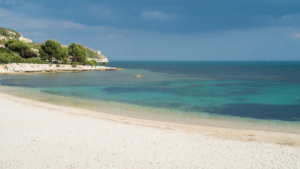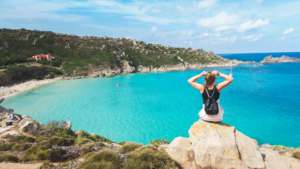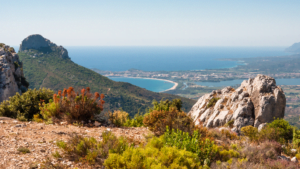
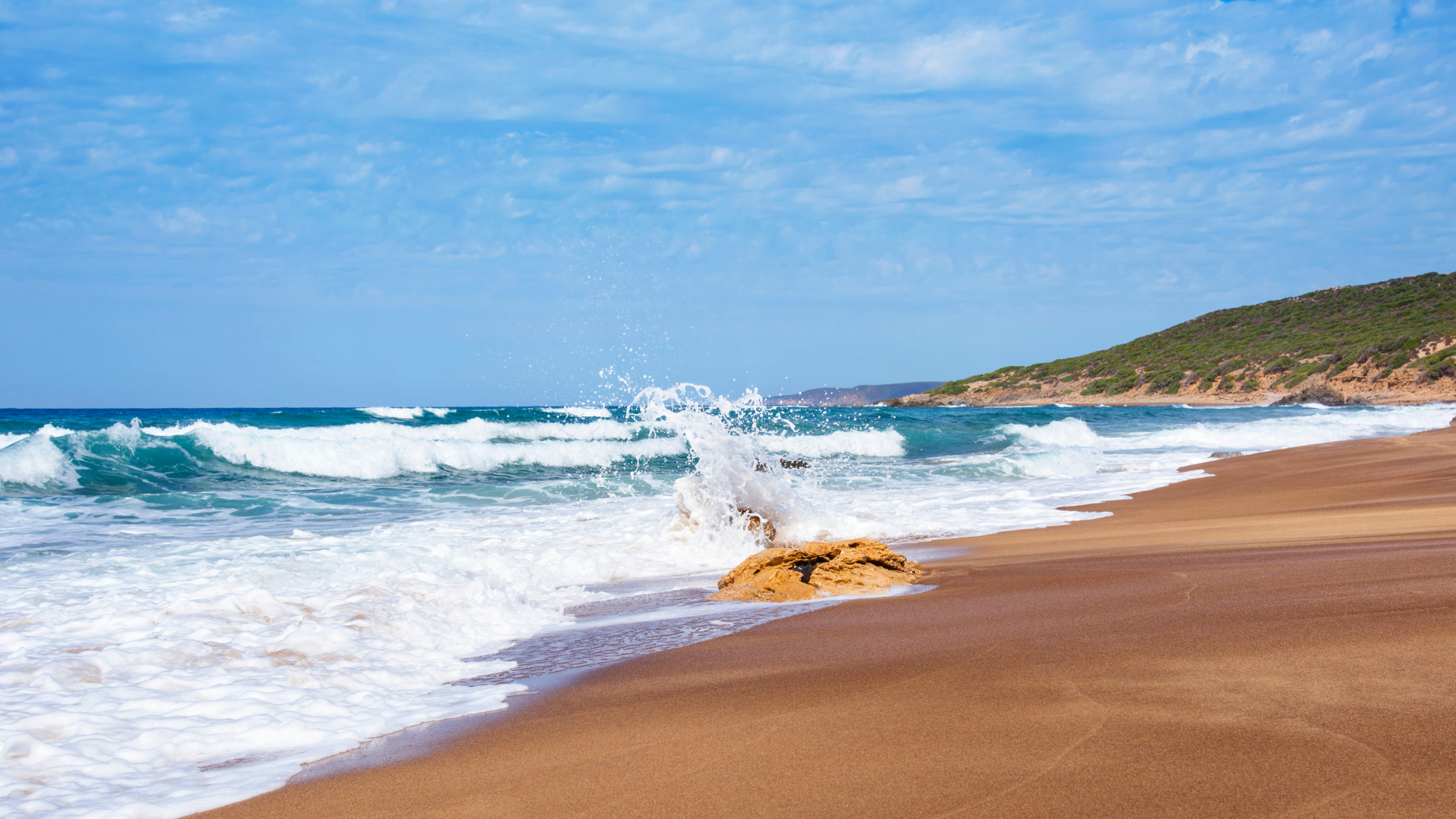
Piscinas beach sits on Sardinia’s Costa Verde, about 110 km northwest of Cagliari, and it looks nothing like the rest of the island. No crystal coves here, no beach clubs, no parasol rows. Just a vast sweep of golden sand backed by Europe’s tallest living dunes, a powerful open sea, and the ghost of an industrial past that makes the drive in feel like a scene from a western. This guide covers everything you need to know before you go: what makes the place unique, how to reach it, what to do, and where to sleep.
What makes Piscinas beach unique
Piscinas beach stretches for about 7 kilometres along the southwestern coast of Sardinia, in the municipality of Arbus. The feature that defines it is the dune system known as Le Dune di Piscinas: a continuously shifting desert of fine golden sand, shaped daily by the Maestrale (Mistral) wind, reaching heights of up to 60 metres according to Sardinia’s regional tourism authority. The dunes extend well over a kilometre inland from the waterline, blurring the boundary between desert and sea in a way that has no equivalent anywhere else in the Mediterranean.
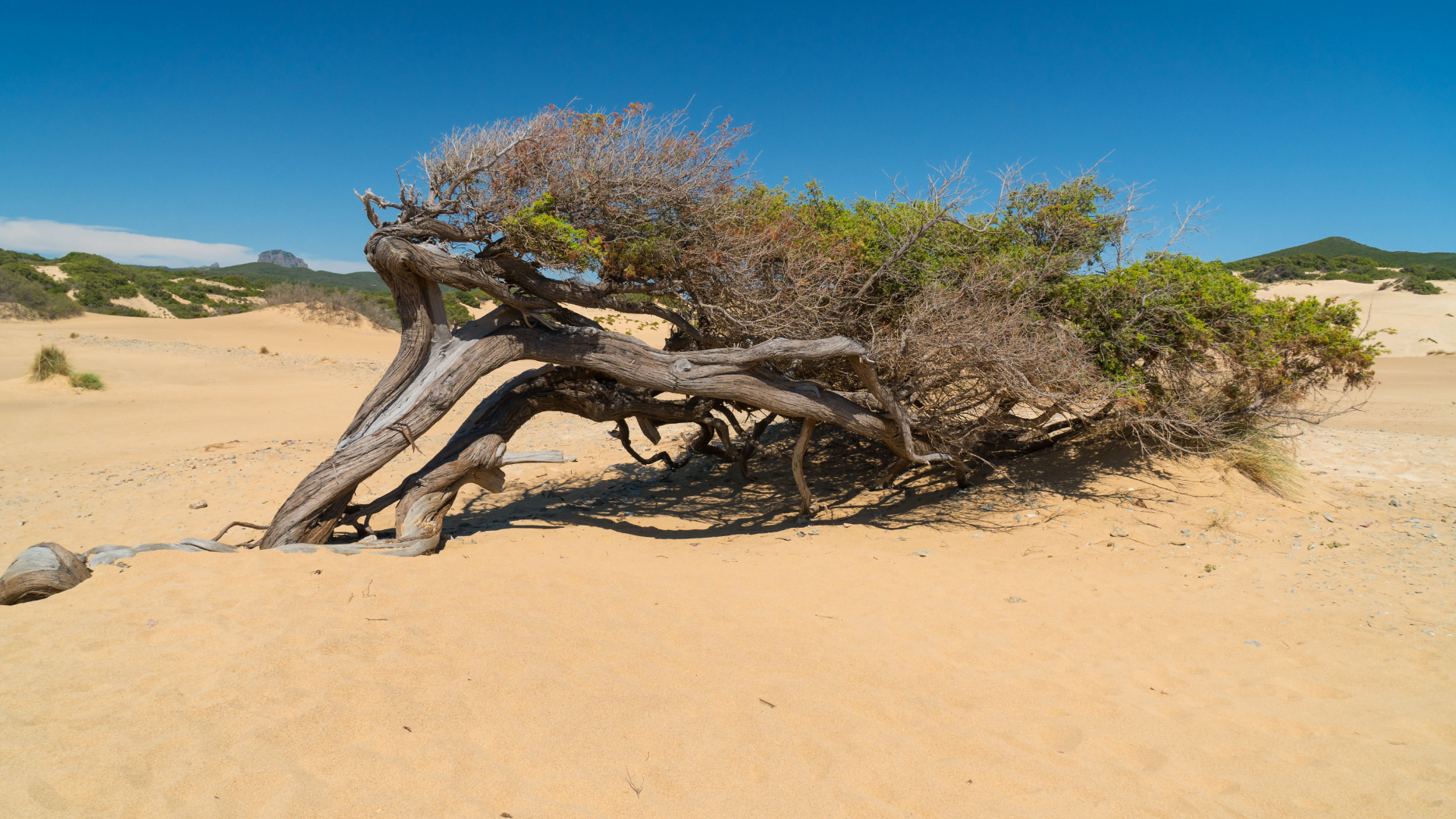
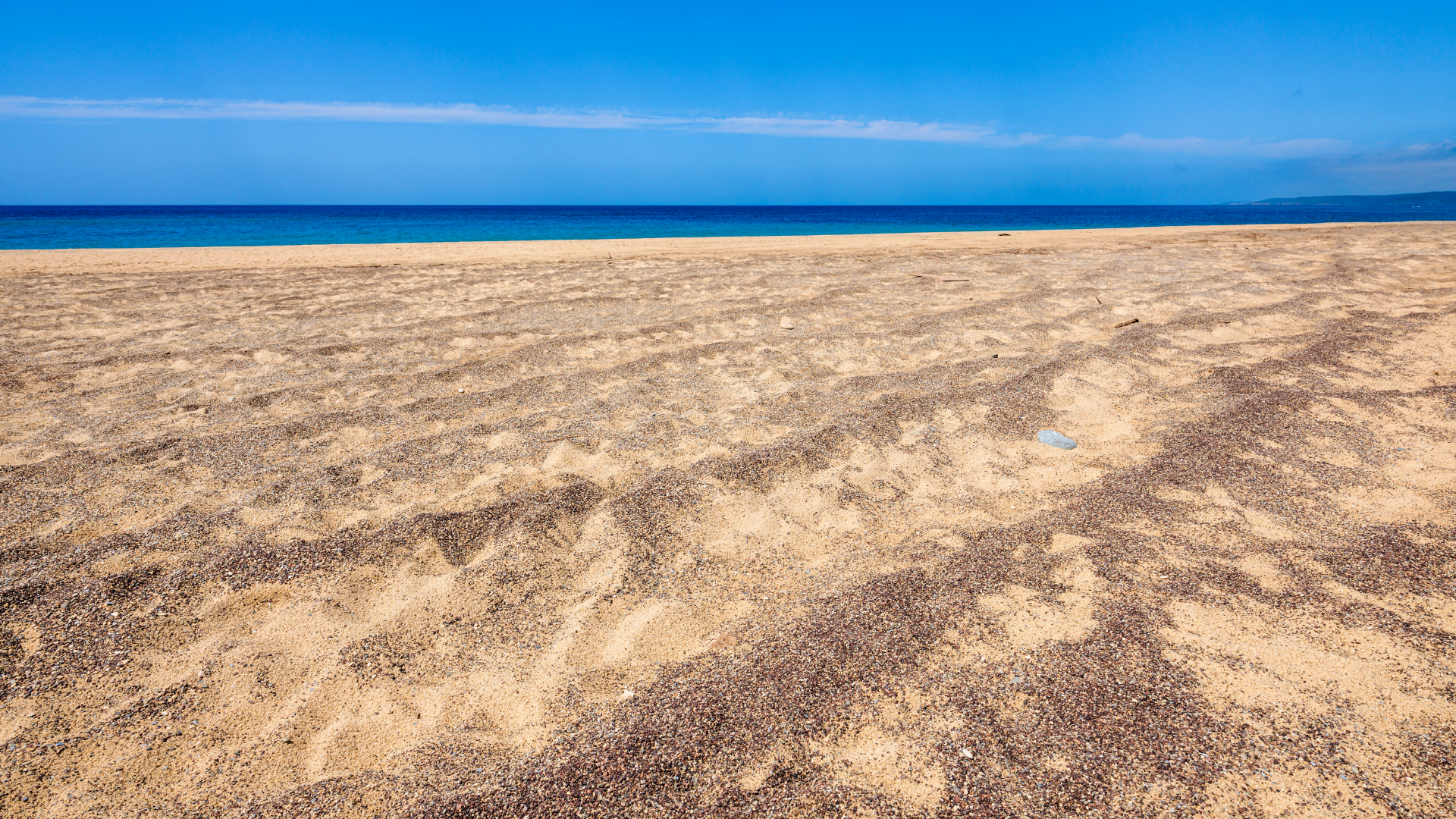
This is a landscape that moves. Walk back from the beach towards the dunes at sunrise, with no other person in sight, and you understand why the place is sometimes called il piccolo Sahara italiano. The sand shifts overnight. Juniper shapes change season by season.
The area forms part of the Parco Geominerario della Sardegna, recognised by UNESCO in 1997 as one of the world’s first Geoparks. That status comes with real protections: no development on the dunes, no motorised vehicles off the main track, no removal of sand, shells, or any natural material.
The dunes: numbers and context
The dune field covers roughly 28 square kilometres from the hinterland to the coast. Individual crests reach 60 metres; some sources cite higher figures, but 60 m is the officially confirmed height from Sardegnaturismo. For context, that is taller than a 15-storey building. The sand is warm and light golden-brown, not the blinding white of tourist brochures. It has a texture that is fine but not powdery, substantial enough to leave clear footprints that the wind erases within hours.
The Rio Piscinas, the stream that runs alongside the access track, carries a reddish tint. That colour comes from iron-rich mineral deposits leached from the old mine workings upstream. Locals have always called it the Red River.
Flora, fauna and environmental protections
The dunes support a fragile ecosystem that most visitors walk right past. The centuries-old juniper trees bent at extreme angles by the wind are genuinely ancient; some are hundreds of years old. In spring, sea lilies (Pancratium maritimum) bloom in clusters directly on the sand face, a sight that lasts only a few weeks. Sand poppies, mastic trees, and tamarisk fill in the scrub line between dune and beach.
Wildlife thrives here precisely because the place is hard to reach. The Sardinian deer (Cervus elaphus corsicanus) comes down to the beach at dusk; spotting one on the sand at dawn is genuinely possible if you stay the night nearby. Loggerhead sea turtles (Caretta caretta) nest on this coastline in early summer; if you see a cordoned-off area on the sand, stay well clear of it. The peregrine falcon nests on the granite headlands to the north and south.
Stay on marked paths across the dunes. The vegetation is doing hard work holding the sand in place, and footfall off the trails causes real damage.
The nudist beach section
To the left of the main parking area, closer to the largest dune mass, a stretch of approximately 800 metres has been officially designated as a naturist beach since 2018, making it one of the largest in Europe. It is signposted with a Sardinian flag. You can stay in your swimsuit; no one will bother you either way.
How to get to Piscinas beach
A car is not optional. There is no public transport to Piscinas, no taxi service that operates here, and no alternative. This is one of the most remote beaches in Sardinia and it is remote by design.
The main route from Cagliari (recommended)
From Cagliari, take the SS131 north towards Sanluri. Exit at Guspini and follow signs to Arbus via the SP4. From Arbus, follow the SP66 through the hamlet of Ingurtosu. The last 9 kilometres after Ingurtosu are unpaved dirt track, but well graded and easily passable by any standard car in dry conditions. Total distance: approximately 110 km. Total time: roughly 1 hour 45 minutes, not counting stops.
From Alghero or the north, allow around 3 hours.
Parking and road conditions
A large free car park sits a short walk from the beach. In peak season (July and August) a small fee applies, typically around €5 per day. Facilities are minimal: two small seasonal kiosk-bars on the beach that rent sun loungers and umbrellas at reasonable prices. Bring your own water, food, and sun protection. There is virtually no shade except beneath the beach umbrellas.
Do not attempt the coastal dirt road from Portu Maga to Piscinas in a standard car. That northern approach requires fording two stream beds and is only suitable for proper off-road vehicles. The hotel confirms this on their own website.
The drive through Ingurtosu: what to expect
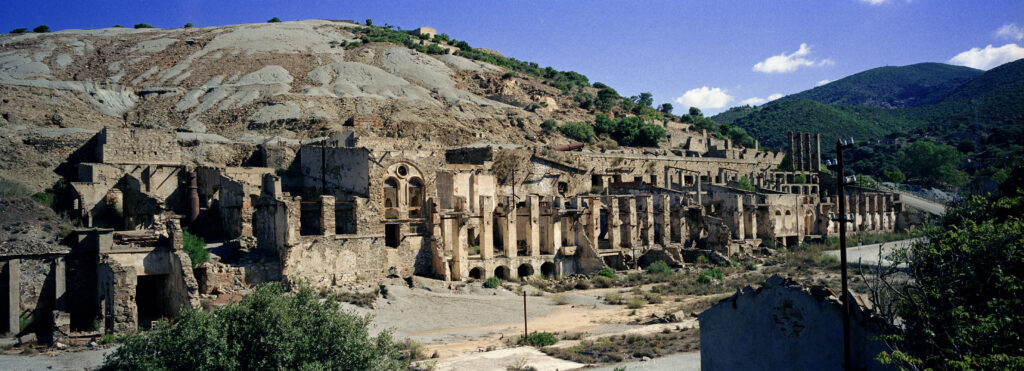
The road from Arbus descends into the valley of Is Animas past the ruins of the Ingurtosu mining settlement. You will see it before you understand what you are looking at: a neo-medieval granite management building (the “castle”), crumbling workers’ housing, rusted ore wagons left exactly where the mines closed, a small church dedicated to Santa Barbara. The mines extracted silver, zinc, and lead here from 1853 until closure in the 1970s. The whole valley is now part of the UNESCO Geopark network.
This drive is part of the experience. Budget 20 minutes to stop and walk around the ruins before continuing to the beach.
The sea at Piscinas: what you need to know before swimming
Be direct about this, because too many guides are not: the sea at Piscinas can be dangerous.
The beach faces west, directly into the prevailing Maestrale. The seabed drops away immediately; there is no gentle wading zone. On windy days, the shore break is powerful and lateral currents develop quickly. When the red flag flies, stay out of the water. This is not a precaution; people have got into serious difficulty here.
The best swimming conditions occur on calm summer mornings, before the Maestrale picks up around late morning. July and early August offer the warmest water. By afternoon on most days in summer, the wind makes conditions rough. That same wind, for surfers and windsurfers, is the whole point.
Piscinas is not suitable for young children or weak swimmers on anything other than the calmest days. Families with small children tend to prefer the protected bays of Cala Domestica or the sheltered coves of Costa Rei further south.
Things to do at Piscinas
Day trip from Cagliari: Piscinas, mines and Montevecchio
If you are based in Cagliari and want a guided day out, this is the clearest option currently available. The GetYourGuide tour from Cagliari takes in the old mines of Piscinas, the dunes and beach, and the historic village of Montevecchio, which was once one of the most productive lead and zinc complexes in all of southern Europe. The guide meets you in Piazza Yenne; the tour departs by car in a small group.
Book from Cagliari: Piscinas Mines and Montevecchio tour
Off-road 4×4 day trip from Oristano
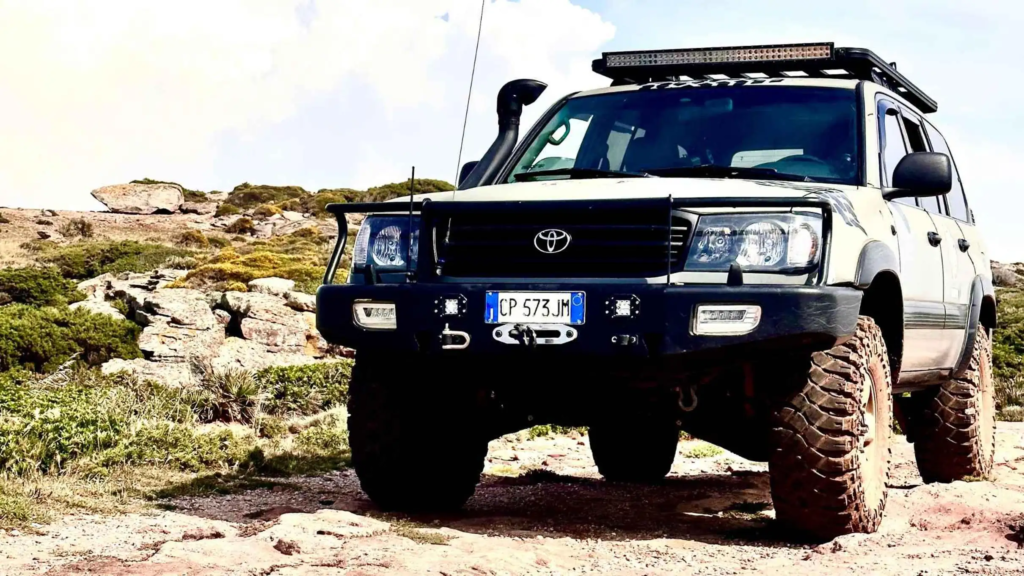
This GetYourGuide off-road tour departs from San Nicolò d’Arcidano and covers 70 km of dirt track through the Costa Verde, visiting Mount Gentilis, the beaches of Portu Maga, Piscinas, the Ingurtosu mining area, and Montevecchio. A Sardinian lunch on the waterfront is included. It is a full-day adventure in a Toyota Land Cruiser 100 with a local guide who grew up around these landscapes.
Book from Oristano: Costa Verde off-road trip
Hiking the dunes
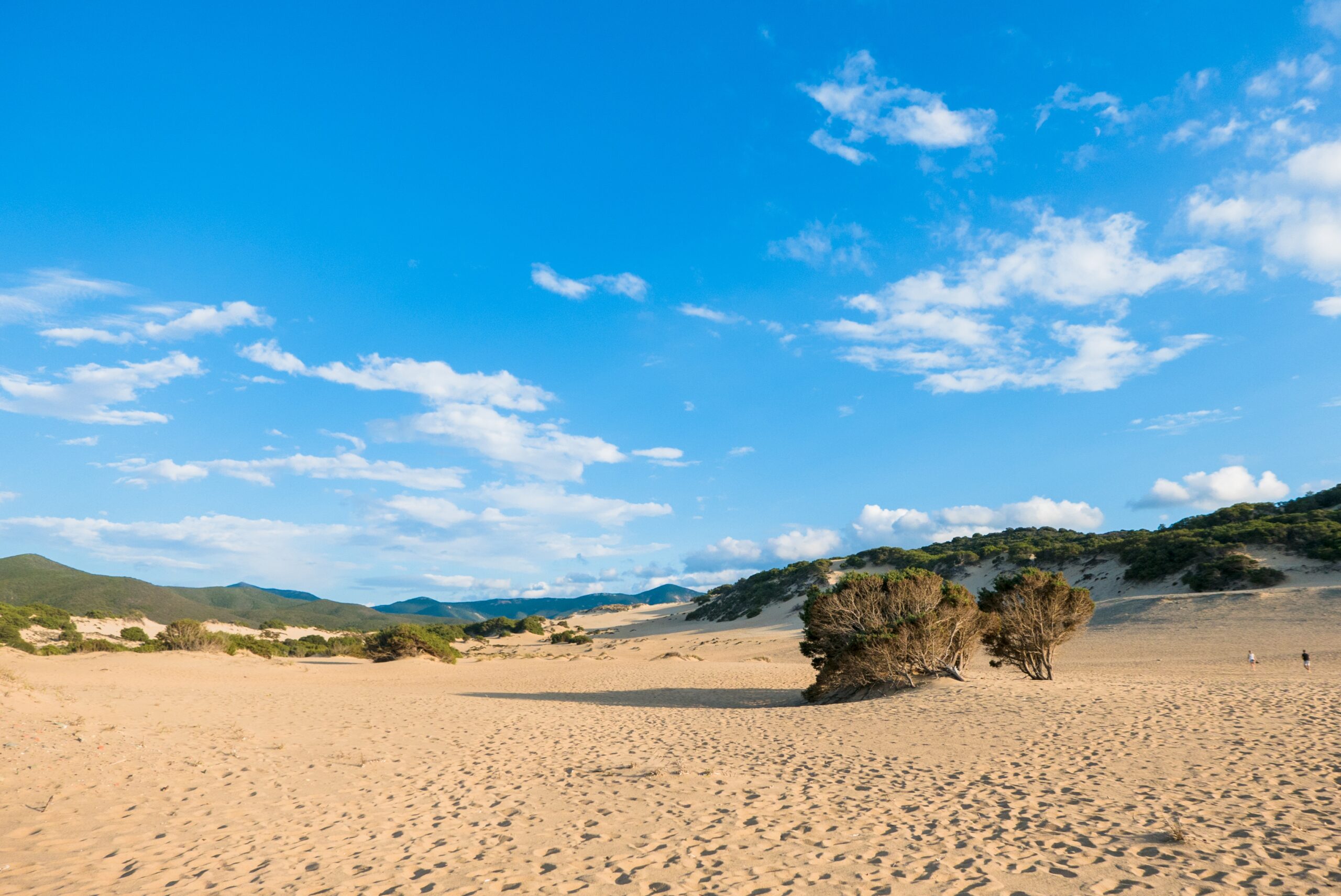
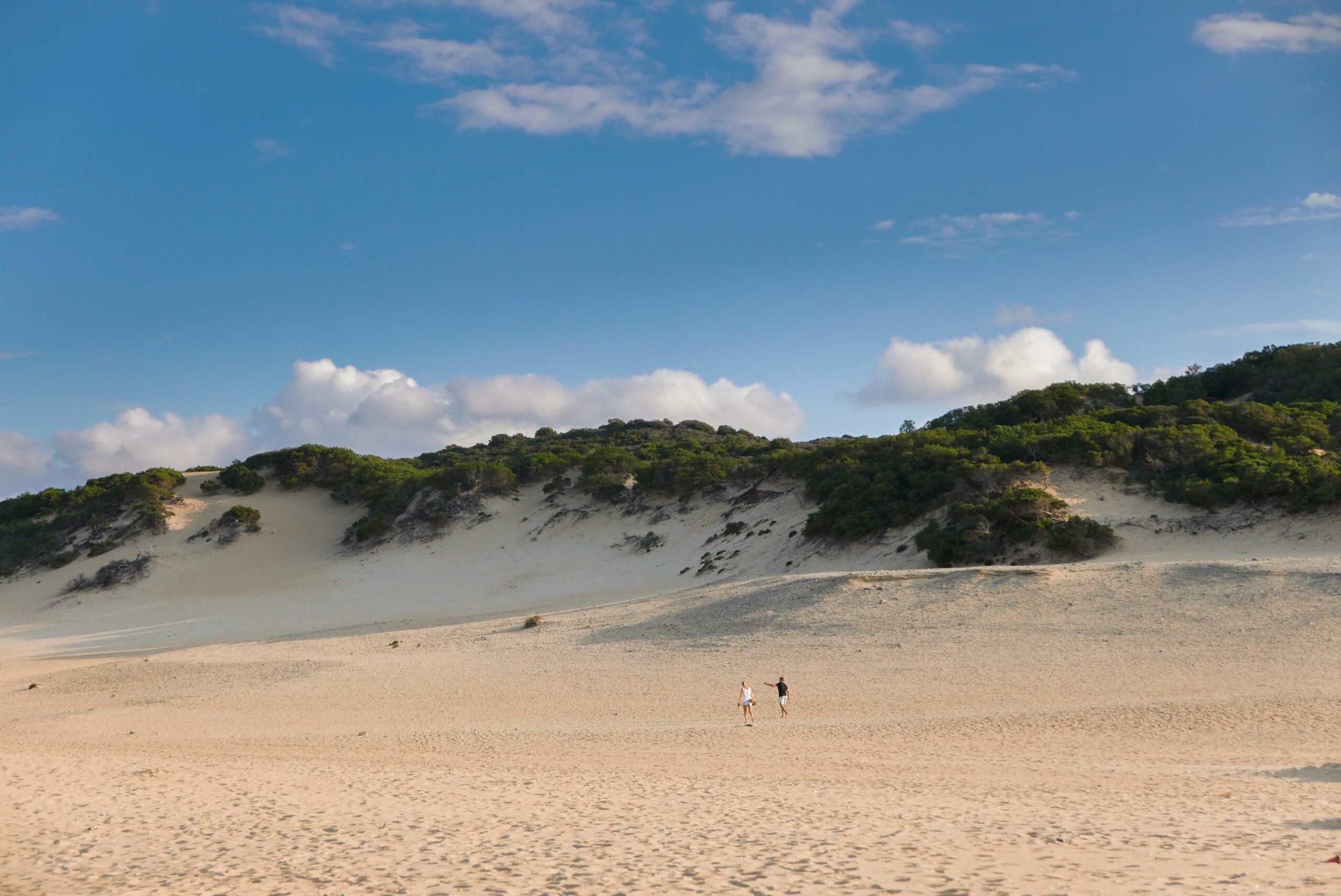
Self-guided. No trail markers, no admission, no guide needed. Walk from the car park directly towards the dune mass to the left of the beach. The climb is physically demanding: the sand gives way underfoot and the Maestrale pushes back. From the top of the highest crest, the view is 360 degrees of desert, sea, and scrubland. The silence, punctuated only by the wind, is the reward.
Bring at least 1.5 litres of water per person, sun protection, and a hat. The heat on the dune face in July and August reaches extremes. Early morning and late afternoon are far more comfortable than midday.
Stay on the visible paths and do not cross marked wildlife protection areas.
Surfing and windsurfing
From October to April, Piscinas is one of the most consistent surf spots on Sardinia’s western coast. The Maestrale drives reliable swells directly onto the beach and the open fetch from the west produces waves that suit both beginners and experienced surfers on the right day. Seasonal beach kiosks sometimes rent equipment; confirm directly before you arrive. The hotel can also advise on local operators. For the broader surf landscape on the island, see our guide to surfing in Sardinia.
Visiting Ingurtosu ghost town and Laveria Brassey
Free, open, self-guided. Drive the same road you used to reach the beach and stop for an hour in the Ingurtosu valley. The management building (the “castle”) is the most striking ruin; the small church of Santa Barbara, patron saint of miners, dates from 1916 and is still structurally sound. A few hundred metres before the beach, the Laveria Brassey washery stands as a spectacular ruin of industrial archaeology, where ore was processed before being loaded onto rail wagons for transport to the shore.
No admission, no set hours. The entire complex is part of the Parco Geominerario and protected under UNESCO rules: do not move or take any item.
Boat tours from Piscinas
Seasonal boat trips depart directly from the beach kiosks in summer. Destinations include the sea stack of Pan di Zucchero near Masua and nearby secluded coves accessible only by sea. Prices vary depending on the itinerary; enquire at the kiosk on arrival or check the GetYourGuide Piscinas activities page for any pre-bookable options.
Stargazing
With no towns, no streetlights, and no light pollution for tens of kilometres in every direction, Piscinas offers some of the darkest skies in all of Sardinia. On clear nights from spring through autumn, the Milky Way is visible with the naked eye. Staying at least one night makes this possible; it is not something you can plan as a day trip.
Getting around: car rental for Costa Verde
To explore Piscinas and the surrounding Costa Verde, a car is essential. The nearest airport is Cagliari Elmas (CAG), roughly 80-95 km away depending on your route, and by far the most practical gateway for this part of the island. There are no buses, no taxis, and no car-sharing services operating in this area.
Compare prices and book a rental car at Cagliari airport here:
Rent a car at Cagliari Airport (CAG)
A standard hatchback or small SUV is sufficient for the main route via Arbus and Ingurtosu in good weather. The dirt track is well graded. Do not attempt the northern coastal approach via Portu Maga in anything other than a high-clearance 4×4. For more on getting to Sardinia and choosing the right arrival point, see our guide to how to get to Sardinia.
Where to stay near Piscinas beach
Accommodation directly at Piscinas is extremely limited. This remoteness is a feature, not a problem, but it requires planning.
On the beach: Hotel Le Dune Piscinas (premium)
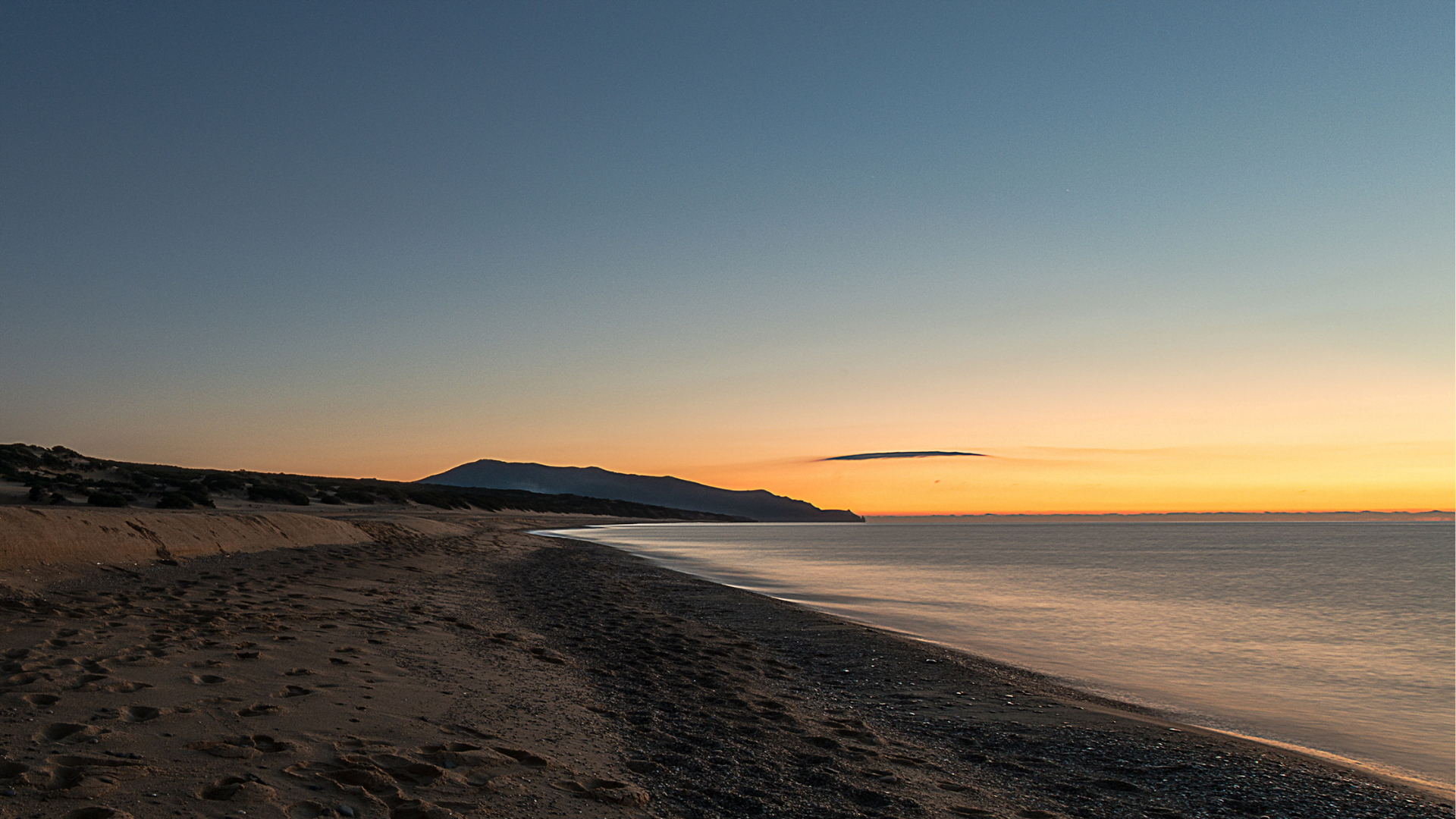
The only hotel directly on the beach is Hotel Le Dune Piscinas, a 5-star eco-resort built into the historic miners’ warehouse that was declared a national monument in 1985. After a complete renovation completed in 2024, the property now offers 28 rooms and suites, three restaurants (including a gourmet option, Rosso Tramonto), a spa, a gym, an outdoor pool, and a private beach section with sun loungers. Rooms face either the dunes or the sea; some have private terraces where the dune crests are literally within arm’s reach.
Prices start from around €270-300 per night in shoulder season and rise significantly in July and August. Book far in advance: this hotel fills months ahead in peak season.
Book Hotel Le Dune Piscinas on Booking.com
For direct booking, the official hotel website often offers a best-rate guarantee: ledunepiscinas.com
Budget-friendly base: Arbus village and the Costa Verde
The village of Arbus sits about 20-25 km from the beach by road (a 35-minute drive). It has several B&Bs, agriturismi, and small guesthouses at a fraction of the hotel’s price. From Arbus you drive to the beach each day. The village itself is worth a visit: the Museo del Coltello Sardo (Museum of the Sardinian Knife) traces a craft tradition specific to this area, and there are good local restaurants for dinner after a long day at the dunes.
Further options along the Costa Verde, including properties near Torre dei Corsari to the north, can be found on:
Hotels and accommodation on the Costa Verde, Booking.com
The local perspective: what Sardinians think
We Sardinians who know this coast have a clear view on a few things that most travel content gets wrong or skips entirely.
On the Maestrale: the wind here is not atmospheric background noise. It is the defining physical fact of the place. The same wind that shapes the dunes into 60-metre crests is the wind that makes the afternoon sea rough, that blows sand into your lunch, and that can chill you on a July day if you are sitting still. Morning is always better than afternoon at Piscinas. We arrive early, swim by mid-morning while the sea is still calm, and move up towards the dunes in the afternoon when the beach gets its full Saharan intensity.
On the logistics: the car park costs around €5 for the day and the two beach kiosks offer basic food, drinks, and rental equipment at honest prices. There is nothing else. No pharmacy, no restaurant, no ATM within reasonable distance. Bring cash for the car park, bring all your food and water, and bring more sunscreen than you think you need. The UV exposure on white sand surrounded by wind is intense.
On the mining heritage: the Ingurtosu complex is genuinely one of the most evocative places in the whole of Sardinia. It is not on most tourist itineraries. That is a shame. The social history here, of an English company (Pertusola) running a company town of 2,500 workers deep in the Sardinian mountains, is extraordinary and almost completely unknown outside the island. Stop for an hour. It changes how you read the whole landscape.
Nearby beaches worth combining with Piscinas
Scivu, about 30 km south by road, is the other great wild beach of the Costa Verde: long, windy, and dramatically backed by dunes. Its sand is said to make a faint whistling sound underfoot in the right conditions.
Portu Maga and Funtanazza are smaller beaches accessible via the northern coastal dirt track, suited to off-road vehicles. More sheltered than Piscinas and excellent for snorkelling on calm days.
Cala Domestica, further south near Buggerru, offers the sheltered dramatic cove experience that Piscinas lacks, flanked by high cliffs and with calm, shallow water: a better choice for families with children. Read our full guide to Cala Domestica.
For a broader overview of the southwestern and southern coast, see where to go in south Sardinia and our guide to Iglesias and the Sulcis coast. For a full comparison of Sardinia’s top beaches, including Piscinas in context, see our top beaches in Sardinia guide.
Where is Piscinas Beach?
Piscinas is a beach located in the south-west of Sardinia, Italy, along the famous Costa Verde coastline. It is situated approximately 4 kilometers north of Scivu beach, near the historically rich town of Piscinas.
Where is Piscinas Town?
FAQ about Piscinas beach
How do you get to Piscinas beach in Sardinia?
By car only. From Cagliari, take the SS131 to Guspini, then Arbus via the SP4, and follow the SP66 through Ingurtosu. The final 9 km is a dirt track passable by any standard car in dry weather. Total distance is about 110 km and the drive takes roughly 1 hour 45 minutes. There is no public transport.
Is Piscinas beach safe for swimming?
In calm conditions, yes. The seabed drops quickly and currents can be strong, particularly on windy afternoons. The beach faces west directly into the Maestrale. When the red flag is displayed, stay out. Morning swimming is far safer than afternoon. Piscinas is not recommended for young children or weak swimmers except on the calmest days.
When is the best time to visit Piscinas?
May, June, September, and early October offer the best balance of warm temperatures, calmer seas, and thinner crowds. July and August are viable but hot; arrive early to beat the midday heat on the dunes. For surfing and windsurfing, October through April brings consistent Maestrale swells.
Is Piscinas beach crowded?
Almost never, even in August. The beach stretches for 7 km and the remoteness of the location limits visitor numbers naturally. The area nearest the car park and the kiosks sees the most people; walk 15 minutes along the beach and you will often have the sand entirely to yourself.
Where can you stay near Piscinas beach?
Hotel Le Dune Piscinas is the only accommodation directly on the beach (5-star, from around €270/night). The village of Arbus, 20-25 km away by road, has B&Bs and agriturismi at much lower prices. Torre dei Corsari to the north has further options. Book any accommodation well in advance for July and August.
- How high are the sand dunes at Piscinas?
They are among the highest in Europe. This wild coast is a must-see for those traveling through South Sardinia. - Is it difficult to reach Piscinas?
The road is a bit bumpy and involves crossing a small stream, but it’s worth it for the desert-like scenery. It’s much more secluded than the beaches of Villasimius. - Can I find traditional food near the Costa Verde?
Yes, the nearby mining towns offer a unique culinary tradition. Check our Sardinian food guide for local dishes to try in the area. - What other coastal towns are in this region?
To the south of Piscinas, you can visit the historic town of Iglesias, famous for its medieval center and mining heritage.
Sources: Sardegna Turismo — Piscinas, Costa Verde, Sardegna Turismo — Ingurtosu, Parco Geominerario della Sardegna (UNESCO Geopark), Le Dune Piscinas — official hotel website, Arbus municipality tourism page.