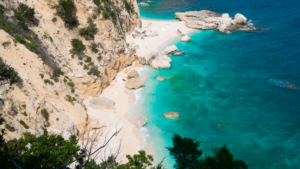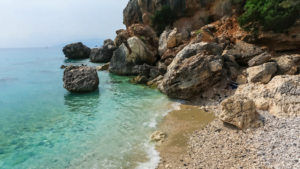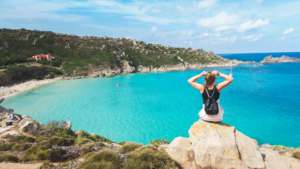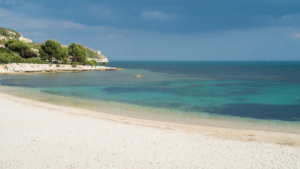
Sardinia highlights cover a lot of ground. This is a 24,000 km² island, bigger than most visitors expect, wilder than any brochure suggests, and more varied than a single itinerary can do justice to. From the turquoise coves of the Gulf of Orosei to 3,500-year-old stone towers and small-batch Cannonau vineyards buried in the Barbagia mountains, this is the kind of place that changes you — if you give it the time it deserves.
This guide covers what a local actually considers essential. Not every beach. Not every nuraghe. The ones genuinely worth your time, your fuel and your attention.
The real Sardinia highlights: a local’s overview
Most first-time visitors land in Olbia or Cagliari, rent a car, and try to see everything. The plan rarely survives contact with the island’s geography. Sardinia is not a small destination with a handful of star attractions neatly spaced along a coastal road. It is four distinct territories stitched together by long drives and separated by mountains that take longer to cross than they look on a map.
The north (Costa Smeralda, La Maddalena, Alghero) is the most visited area and has the most developed tourist infrastructure. The east (Gulf of Orosei, Baunei coast) is wilder and more dramatic. Many of its best spots require a boat. The south (Cagliari, Villasimius, Sulcis) mixes the island’s most complete urban culture with ancient history and some genuinely uncrowded beaches. The west and centre (Bosa, Oristano, Barbagia, Gennargentu) hold the most authentic pastoral Sardinia. Most tourists never get there.
The practical advice is simple: choose one or two areas, explore them slowly, and plan a second trip for everything else.
Sardinia highlights by region: where to focus your time
Northern Sardinia: Costa Smeralda, La Maddalena and Alghero
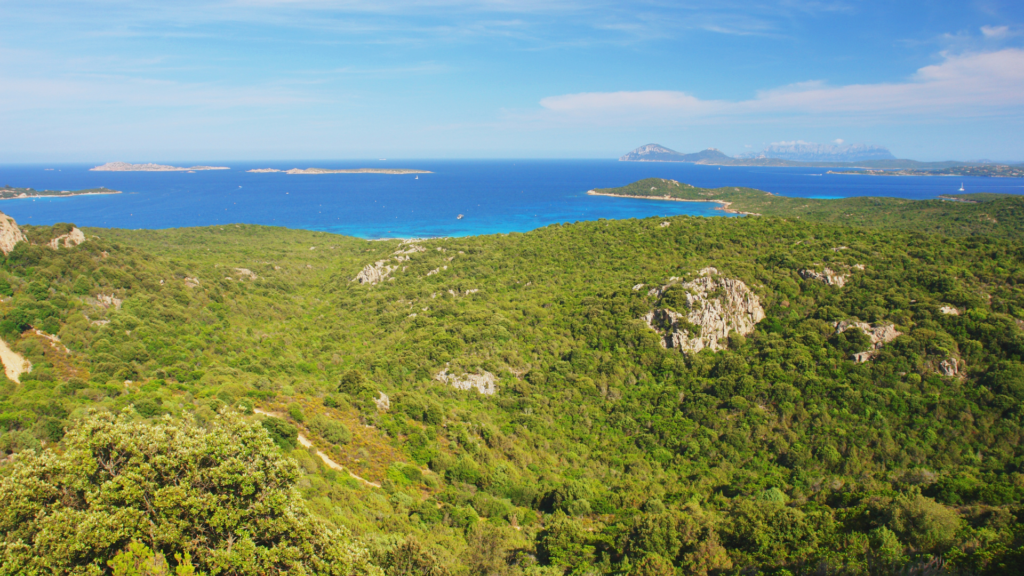
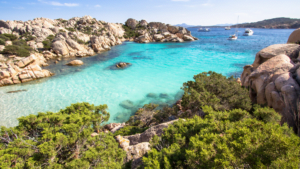
The north is where most visitors start. The Costa Smeralda stretches along the northeastern coast between Arzachena and the outskirts of Olbia. Its beaches are genuinely extraordinary: granite boulders shaped by millennia of wind, water that shifts from pale turquoise to deep cobalt depending on the depth, and interior terrain covered in fragrant Mediterranean scrub. Porto Cervo, at the heart of the Costa Smeralda, was built almost from scratch in the 1960s by the Aga Khan and has the feel of a very well-maintained private club. It is worth visiting in the early morning, before the yachts wake up. For the full picture of this area, see our Costa Smeralda guide.
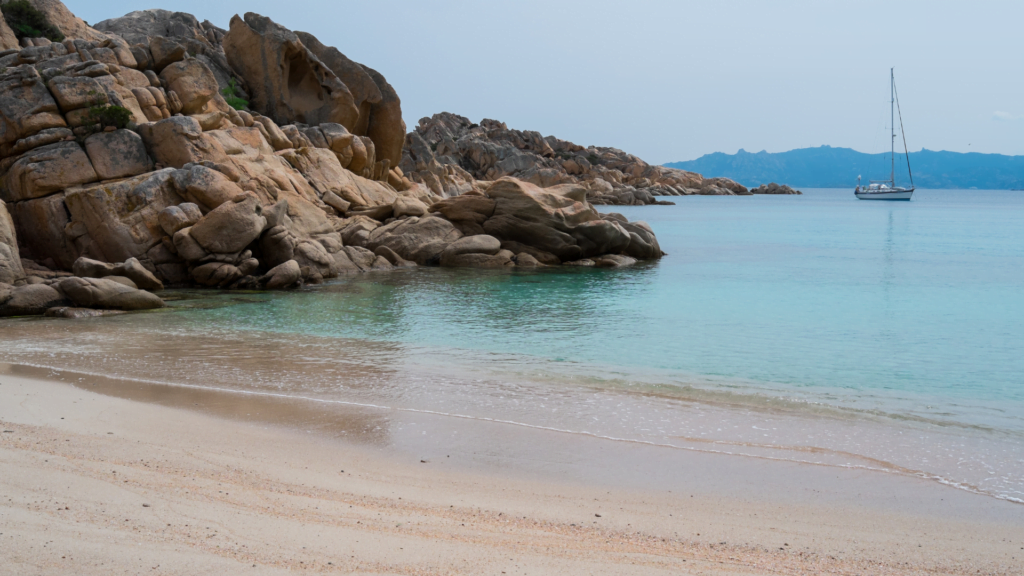
A 20-minute drive north of Porto Cervo leads to Palau, the departure point for the La Maddalena Archipelago. Seven major islands and dozens of islets have formed a national park here since 1994. The water colour in this area is exceptional and consistently surprises visitors who have seen photographs and still find themselves unprepared for the reality. The main island of La Maddalena is connected by ferry from Palau (15 minutes) and has its own beaches, restaurants, and a relaxed evening passeggiata. The island of Caprera, linked by causeway, is worth visiting for the former estate of Giuseppe Garibaldi, who lived and is buried here. Read our La Maddalena guide before you go.
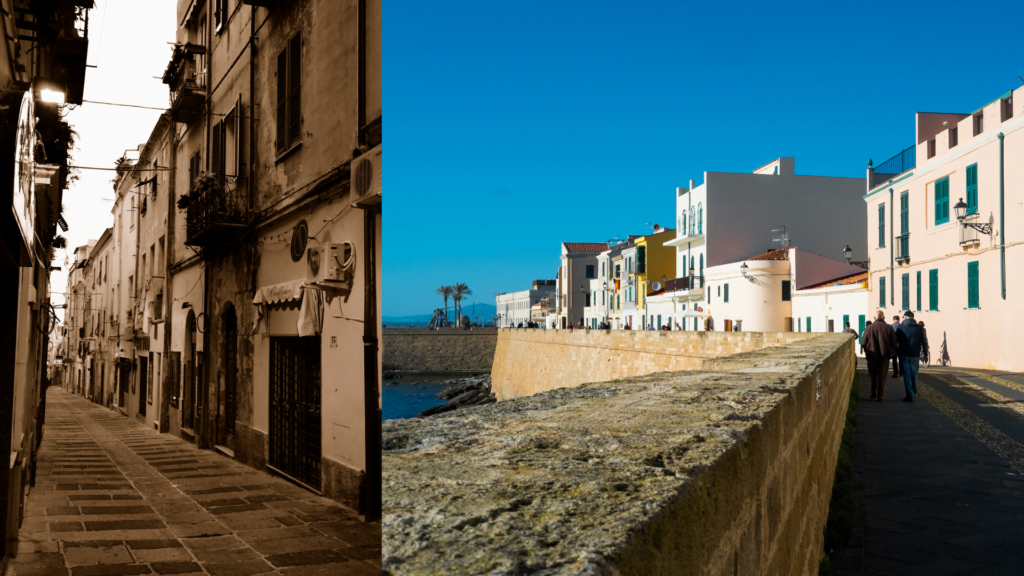
On the northwest coast, Alghero stands apart from every other city on the island. Colonised by Catalans in the 14th century, it retains visible traces of that origin: Gothic architecture in the old town, a dialect still spoken by part of its older population, and a seafood-heavy cuisine that owes as much to Catalan cooking as to Sardinian tradition. The old town is compact, easy to walk, and particularly lovely in the evenings. A short drive north brings you to Capo Caccia and the entrance to Neptune’s Grotto, a spectacular stalactite cave accessible by boat or by a staircase of 654 steps cut directly into the limestone cliff. Full details in our Alghero guide.
Eastern Sardinia: the Gulf of Orosei and the Baunei Coast
This is the most dramatic coastal scenery on the island and, in my view, among the most dramatic in the entire Mediterranean. The Gulf of Orosei is a 30-kilometre stretch of limestone cliffs that plunge directly into the sea. The coves tucked into those cliffs are accessible only by boat or on foot after multi-hour hikes. These are not standard beach destinations. They require a plan.
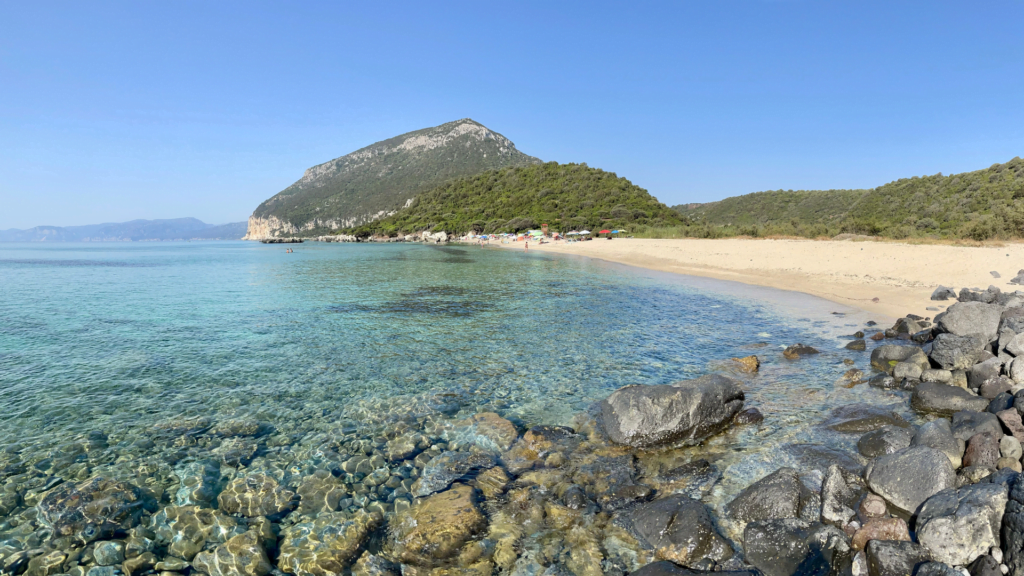
Cala Goloritzé has white limestone pebbles and a natural rock arch rising 143 metres above the water. It was declared a UNESCO World Heritage Site in 1995. Cala Mariolu has round white pebbles that make a distinctive sound underfoot. Cala Luna is wider and more accessible, with a freshwater stream, sea caves, and a section that is climbable at low tide. All three are reachable only by sea or by demanding hikes.
Cala Gonone is the main base for this area: a small, relatively quiet seaside town that fills up in August and empties almost entirely outside peak season. Practical, well-connected, and far less expensive than anything on the Costa Smeralda.
Read our Gulf of Orosei guide for beach-by-beach detail. For Cala Goloritzé specifically, including entry fees and access rules, our Cala Goloritzé guide has everything you need.
Southern Sardinia: Cagliari, beaches and ancient history
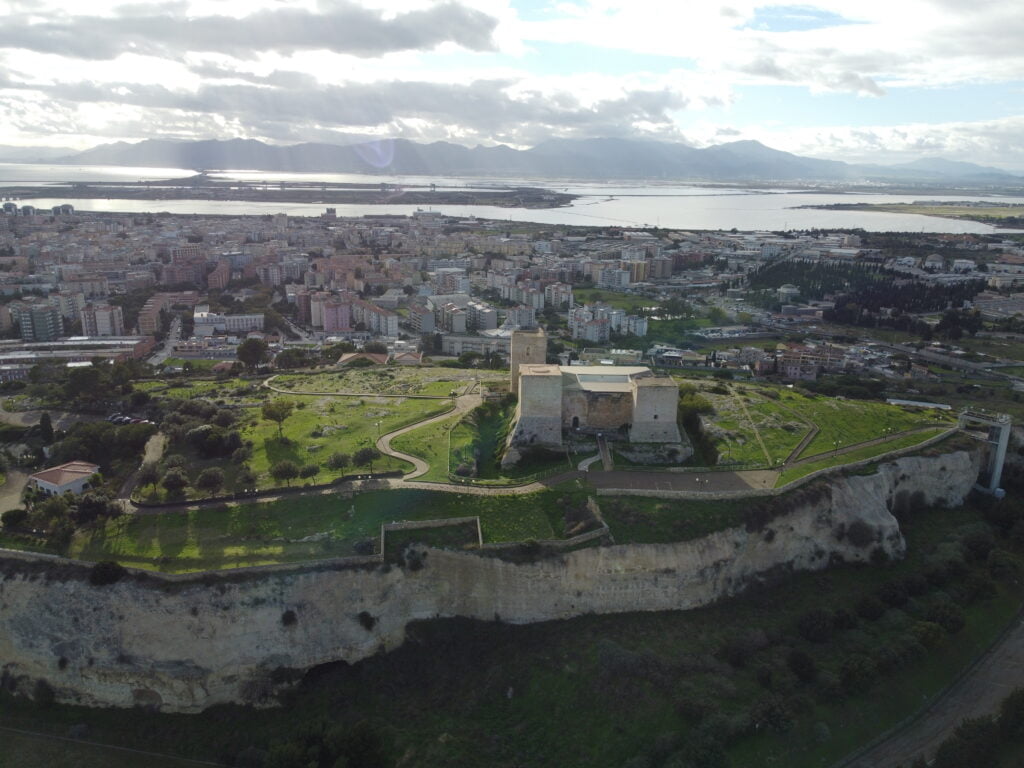
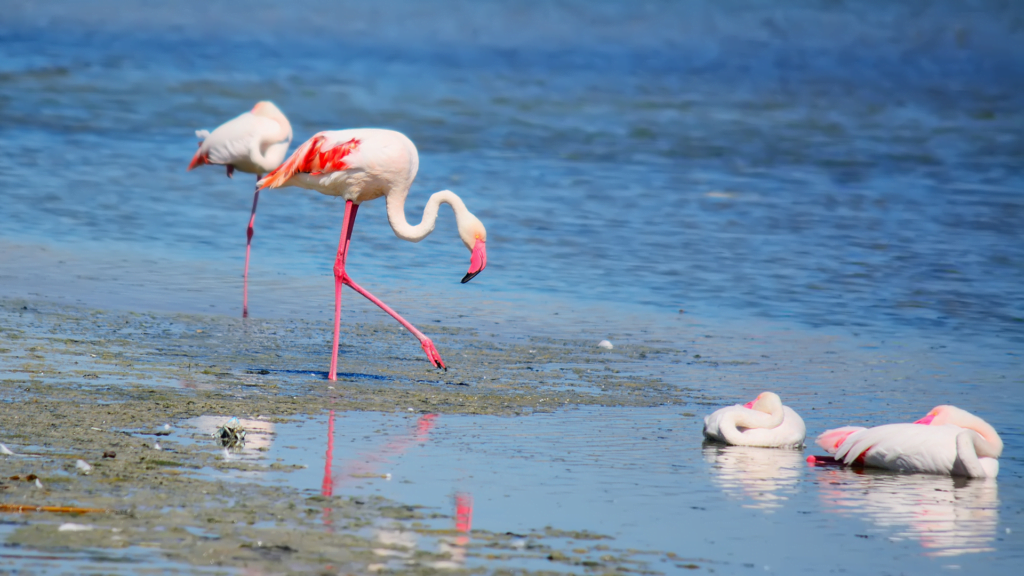
Cagliari is Sardinia’s capital and its most complete city. It has layers. The medieval hilltop district of Castello offers sea views in three directions and a cathedral built over a Roman cistern. The Marina neighbourhood, at the base of the hill, has the best trattorias and the covered market of San Benedetto, one of the largest in Europe. Poetto beach starts at the edge of the city and runs for 8 kilometres of fine white sand, separated from the Molentargius wetlands by a narrow strip of land. Pink flamingos feed in the lagoon within sight of the city skyline. It is a strange and genuinely unique combination.
Most tourists visit Cagliari briefly, as a transit point. That is a mistake. See our Cagliari guide for a full breakdown of what the city is actually worth.
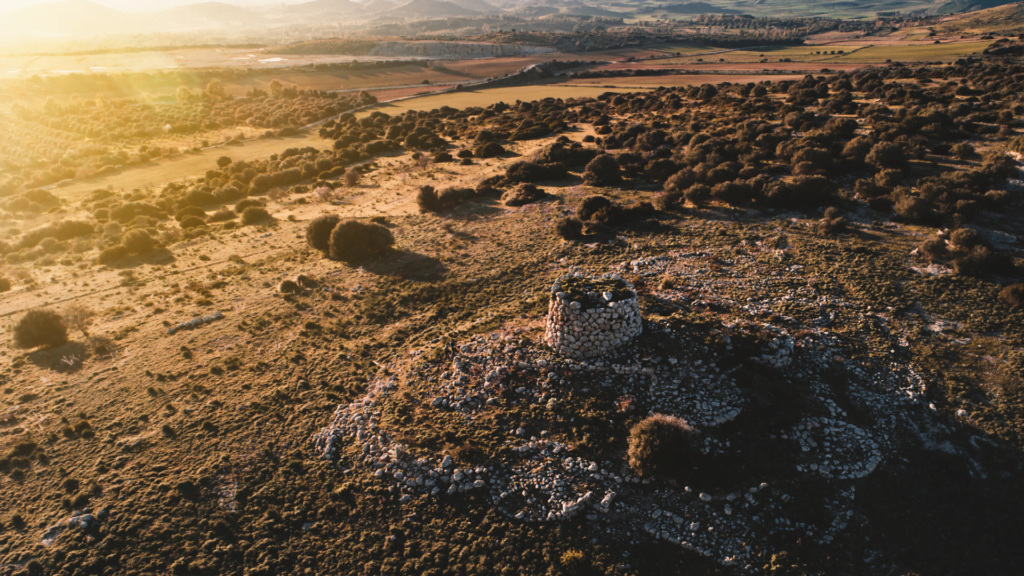
An hour north of Cagliari, Su Nuraxi di Barumini is Sardinia’s only UNESCO World Heritage Site and the finest example of a nuraghe, the megalithic tower-fortresses built by Sardinia’s Bronze Age civilisation. The main tower dates to approximately 1500 BC. Over 7,000 nuraghi are spread across the island. Most are unexplained. What the Nuragic people believed, how they governed themselves, why they built these towers at all — none of it is documented. That mystery is not a gap in the record. It is what makes this island unlike any other Mediterranean destination. For the wider context, read our guide to Sardinian nuraghi.
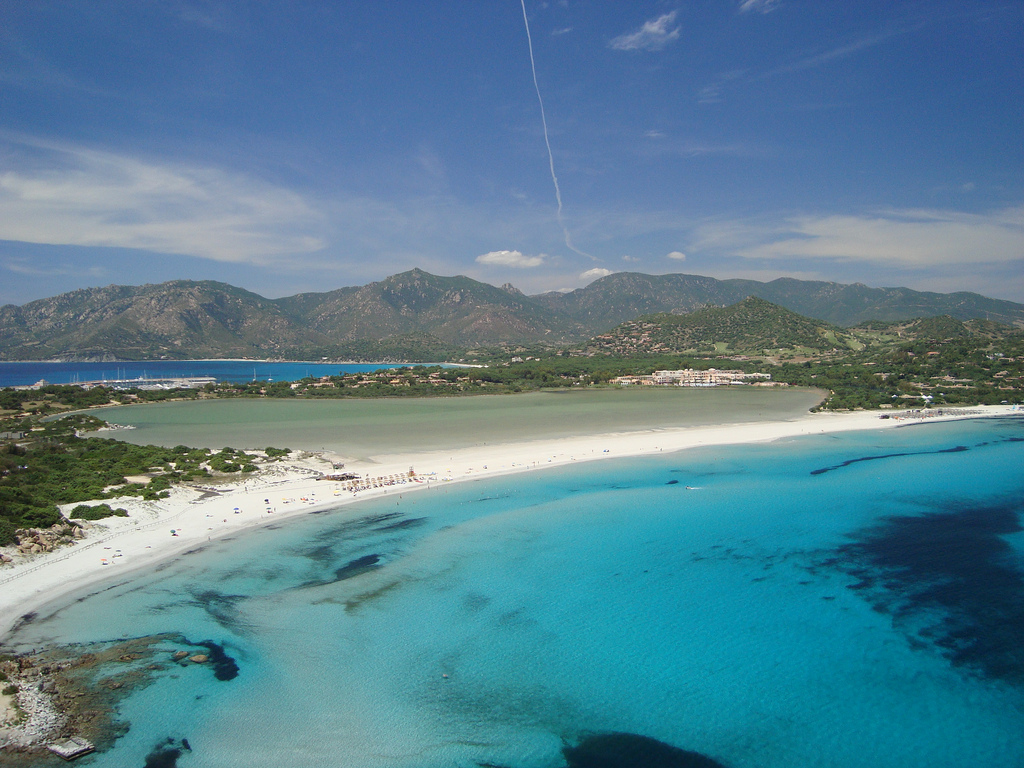
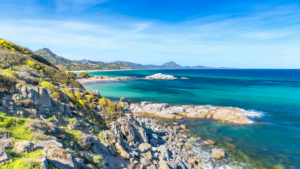
East and south of Cagliari, Villasimius offers the best combination of beach quality and logistical ease in southern Sardinia. Porto Giunco, Punta Molentis, and Simius beach are among the finest stretches on the island. The Capo Carbonara Marine Protected Area is excellent for snorkelling and is well-organised compared to the more remote eastern coves.
Western and central Sardinia: Bosa, Orgosolo and the Barbagia
The Sardinia that most tourists miss is also the Sardinia that locals tend to love most. Worth knowing before you skip it.
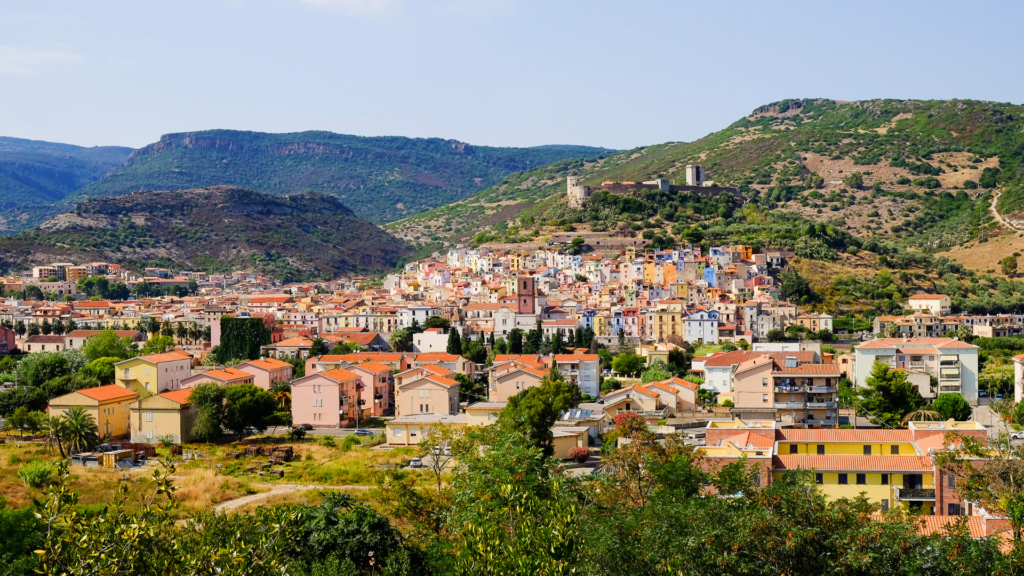
Bosa is the most colourful town on the island. Medieval houses painted in pink, yellow and terracotta stack up a hillside above the Temo river (the only navigable river in Sardinia), overlooked by a 12th-century Malaspina castle. The town is small, genuinely beautiful, and rarely crowded even in summer. The coast nearby, especially Bosa Marina, has beaches that are less visited than almost anything else on the island. Full details in our Bosa guide.
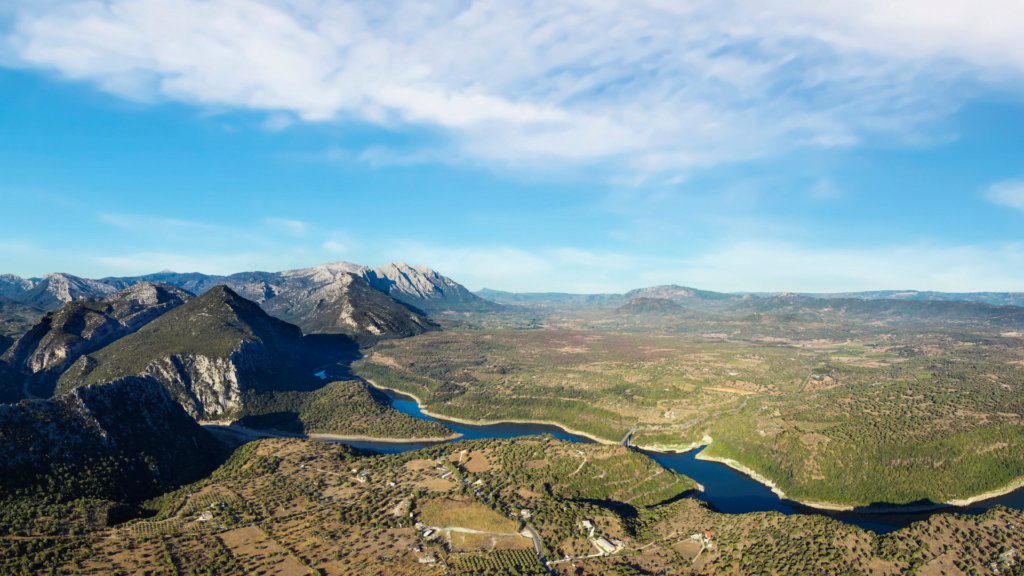
Orgosolo, a village in the Barbagia mountains, is famous for its murales: hundreds of politically charged frescoes painted directly onto the walls of houses. The tradition started in the 1960s as protest and has continued to the present. The village sits an hour inland, surrounded by the forested plateau of the Supramonte and the wild valley of the Gorropu canyon, one of the deepest gorges in Europe.
The Barbagia itself is Sardinia’s interior highland, home to shepherding traditions and one of the most genuine agriturismo cultures on the island. Lunch at a working farm here — roasted porceddu, handmade culurgiones, local cheese and Cannonau — is one of the best meals you will have in Sardinia. No printed menus. No photographs on the wall. Just food cooked by people who know what they are doing.
Top beaches in Sardinia: what the photos don’t tell you
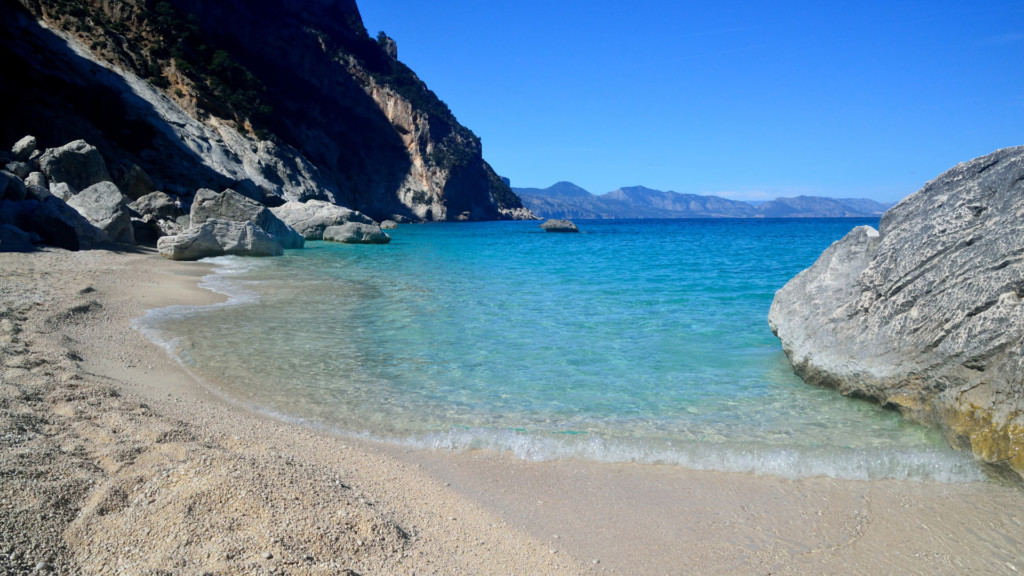
Sardinia has some of the best beaches in Europe. That is not marketing language. What the photographs tend not to show, however, is the practical reality of getting to them.
- La Pelosa (Stintino, northwest coast): exceptional in June or September. In August it requires an advance-booking entry ticket and early arrival. The Maestrale wind makes the water choppy on the exposed side on many afternoons.
- Is Arutas (Sinis Peninsula, west coast): famous for its quartz-grain sand that resembles cooked rice. Access requires a specific car park and a shuttle in high season. The sea here is calm and the colour is exceptional.
- Cala Goloritzé (east coast): the most spectacular beach on the island. Access requires a 45-minute hike each way or a boat from Cala Gonone. You cannot drive here and simply park.
- Chia (south coast): wide, dune-backed, usually breezy, which makes it perfect on the hottest days. The lagoon behind the main beach has pink flamingos from spring through autumn.
- Villasimius beaches: polished, well-serviced, and arguably the best combination of sea quality and accessibility in southern Sardinia.
For practical advice on access, parking, and the best months for each beach, read our top beaches in Sardinia guide.
Things to do in Sardinia: top activities from a local
Full-day boat tour of the La Maddalena Archipelago
A full day on the water around La Maddalena is the single activity most visitors describe as the highlight of their entire trip. This catamaran tour from Cannigione (a small port south of Palau) takes you past the Spiaggia Rosa of Budelli, into the crystal waters around Spargi, and to the uninhabited island of Santa Maria. Maximum 12 passengers. Lunch served on board with Sardinian specialities, wine and local liqueur.
From: approx. €100-130 per person
Book the La Maddalena catamaran tour on Viator
Gulf of Orosei full-day boat excursion
This eight-hour day covers Cala Goloritzé, Cala Mariolu, Cala Biriala, Cala Luna and the Piscine di Venere. The boat is well-equipped with awning, freshwater shower and snorkelling masks included. The skipper navigates into coves that larger vessels cannot reach. One of the most consistently praised boat experiences on the island, with 159 confirmed reviews.
From: approx. €90-110 per person
Book the Gulf of Orosei full-day boat excursion on Viator
For more boat options across the island, see our boat tours in Sardinia guide.
Guided day trip to Su Nuraxi di Barumini (UNESCO)
Su Nuraxi cannot be visited without a licensed guide — entry to the inner sections of the fortress requires an escort. This half-day tour departs from Cagliari with hotel pickup. The guide has grown up near the site and brings the kind of contextual depth that transforms a pile of ancient stones into something you will still be thinking about weeks later. The option to combine with the Giara di Gesturi plateau (home to Sardinia’s wild semi-wild horses) makes this one of the best inland day trips on the island.
From: approx. €55-75 per person
Book the Su Nuraxi guided tour from Cagliari on Viator
Cagliari food and wine walking tour
Sardinian cuisine is one of the most distinctive regional food cultures in Italy. Cagliari is the best city to taste it properly. This three-hour walking tour through the old Stampace fishing district includes tastings of raw-milk cheese, artisan cold cuts, natural wine, fresh bread and handmade gelato. The tour ends with a panoramic stop at Bastione di Saint Remy, with views over the gulf. 435 verified reviews on Viator.
From: approx. €60-80 per person
Book the Cagliari food and wine tour on Viator
What exactly to order and where to eat without a guide: read our Sardinian food guide.
Guided boat tour along the Baunei coast
The Baunei coastline between Arbatax and Cala Gonone includes some of the most inaccessible and unspoiled coves in Sardinia. This guided day tour covers the key beaches with enough time at each stop to actually swim, explore and decompress. One of the most reviewed boat tours for this section of coast on Viator (564 reviews), and consistently rated among the best experiences on the island.
From: approx. €80-100 per person
Book the Baunei coast boat tour on Viator
Gulf of Orosei small-group dinghy tour (max 12 people)
For those who want a smaller and more flexible experience, this dinghy tour from Cala Gonone carries a maximum of 12 passengers and visits Cala Goloritzé, the Piscine di Venere, Cala Mariolu and Cala Luna. The smaller boat enters sea caves and narrow inlets that larger vessels cannot reach. The skipper provides snorkelling goggles at anchor. Book well ahead: this tour is booked solid most days from late June through September.
From: approx. €95-120 per person
Book the Gulf of Orosei small-group dinghy tour on GetYourGuide
Getting around Sardinia: car rental
To explore Sardinia’s highlights independently, a rental car is not optional. It is the only practical way to move between beaches, archaeological sites and inland villages. Public transport connects the main cities but leaves the coast largely unreachable and the interior entirely inaccessible. Even within Cagliari and Alghero, a car simplifies access to beaches and surrounding areas significantly.
You can compare prices and book at the airport of your arrival:
- Olbia Airport (gateway for the north and east): compare prices at Olbia OLB
- Cagliari Airport (gateway for the south and west): compare prices at Cagliari CAG
- Alghero Airport (gateway for the northwest): compare prices at Alghero
Book in advance. July and August availability tightens fast and prices increase significantly with short notice. For general travel logistics, read our travelling to Sardinia guide and our Sardinia airports guide.
Where to stay in Sardinia
The right base depends on which part of the island you plan to explore. Below are direct booking options by area. For a full regional breakdown, read our where to stay in Sardinia guide.
Cagliari and the south:
| Property | Type | Notes | Book |
|---|---|---|---|
| Boutique Hotel Carlo Felice | 4-star, premium (rated 9.1) | Central location, 4 min walk from Palazzo Civico, terrace rooms available | Booking.com |
| Hotel Nautilus | Mid-range (rated 9.1) | Directly on Poetto Beach, free bikes and sun loungers, bus to old town | Booking.com |
Northern Sardinia (Olbia gateway):
| Property | Type | Notes | Book |
|---|---|---|---|
| Hotel Centrale Olbia | Mid-range (rated 9.3) | Central position on Corso Umberto, close to port and ferry connections, free parking at nearby Molo Brin | Booking.com |
For Alghero accommodation, the Alghero guide includes detailed property recommendations by budget.
The local perspective: what Sardinians think
Sardinia is often described in travel writing as a paradise. True enough, but that framing can set expectations that real geography quickly adjusts.
Geography and climate. The Maestrale (northwest wind) blows across the northern and western coasts with regularity from spring through autumn. On exposed beaches like La Pelosa or parts of the Costa Smeralda, it can transform a clear morning into rough afternoon water with little warning. This is not a complaint. It is information.
Check wind forecasts on Windfinder before booking a boat trip or committing to a specific beach. The east coast (Cala Gonone, Baunei) is more sheltered from the Maestrale but exposed to the Scirocco, the warm southeasterly that can bring Saharan dust and elevated sea temperatures. August in Cagliari regularly reaches 35-38°C. The best months, judged honestly, are June, September and October: warm water, manageable crowds, navigable roads. The difference between August and September on any beach in Sardinia is not subtle. It is the difference between an experience you enjoy and one you survive.
Distances and logistics. Cagliari to Olbia is roughly 3.5 hours on the SS131. Cagliari to the Gulf of Orosei is about 2.5 hours. Alghero to La Maddalena is around 2.5 hours. None of these are short drives, and the mountain roads in the interior are narrow. Any plan that includes both north and south Sardinia in a single week will spend a significant portion of that week in the car. The smarter approach: choose one or two areas and explore them thoroughly. Parking at the most popular beaches (La Pelosa, Is Arutas, Cala Goloritzé) requires very early arrival in peak season. Some now require advance online booking. Check before you go.
History and what makes Sardinia different. The Nuragic civilisation that built thousands of towers across the island left no written records. Everything we know about them comes from excavation and inference. The main tower at Su Nuraxi dates to approximately 1500 BC. Nobody knows with certainty what the towers were used for. That mystery is not a gap. It is precisely what makes Sardinia different from every other Mediterranean destination. Other islands have Roman ruins. Other islands have Greek temples. Only Sardinia has this: 7,000 unexplained stone towers scattered across the landscape, the silent record of a civilisation that chose not to write anything down. Worth thinking about on the drive between beaches.
FAQ about Sardinia highlights
What are the main highlights of Sardinia?
The most significant are: the Gulf of Orosei for coastal scenery and boat trips, the La Maddalena Archipelago for water colour and island-hopping, Cagliari for culture and food, Su Nuraxi di Barumini for prehistoric archaeology (UNESCO), and Alghero for history and the Catalan-influenced old town. Most first-time visitors combine two or three of these in a single trip.
How many days do you need to see the highlights of Sardinia?
Seven days is the minimum to cover one region properly and get a genuine sense of the island. Ten to fourteen days allows for two regions with enough time to slow down. Trying to cover the whole island in a week produces an exhausting itinerary with too much driving and not enough time anywhere.
What is the most beautiful place in Sardinia?
There is no single answer, but Cala Goloritzé is the beach most often cited as extraordinary. White limestone pebbles, a 143-metre natural arch, and water in shades of turquoise that look unrealistic until you are standing in it. The La Maddalena Archipelago is the most consistently stunning area in terms of water colour. The town of Bosa is arguably the most beautiful urban setting on the island.
Is a car necessary in Sardinia?
For any itinerary that goes beyond Cagliari or Alghero city centres, yes. The island’s public transport connects main cities but leaves the coast and the entire interior unreachable. Book your rental in advance, especially in summer. More details in our travelling to Sardinia guide.
What is the best time to visit Sardinia?
June and September are the best months overall. The sea is warm, the main beaches are accessible without booking weeks in advance, and temperatures are high without being punishing. July and August are high season: expensive, crowded, and very hot inland. October is increasingly popular for hiking, food tourism and quiet beach days, particularly in the south and interior. Read our Sardinia weather guide for month-by-month detail.
What food is Sardinia known for?
The most iconic dishes: porceddu (slow-roasted suckling pig, cooked over myrtle wood), culurgiones (handmade pasta parcels filled with potato, mint and pecorino), malloreddus (ridged semolina pasta with sausage and tomato), bottarga (cured grey mullet roe, grated over pasta or eaten in slices), and seadas (deep-fried pastry filled with fresh cheese and finished with honey). Wines: Cannonau (a powerful red from Grenache grapes, produced mainly in the Barbagia and Ogliastra) and Vermentino di Gallura (a dry, aromatic white DOCG that pairs perfectly with grilled fish and bottarga). Full details in our Sardinian food guide.
Sources
- Regione Sardegna official tourism portal: sardegnaturismo.it
- UNESCO World Heritage List: Su Nuraxi di Barumini (inscribed 1997), Cala Goloritzé (inscribed 1995) — whc.unesco.org
- Nurnet archaeological nuraghi map: nurnet.net
- Wind and sea forecasts: windfinder.com
- Viator tour listings and reviews: viator.com
- GetYourGuide tour listings and reviews: getyourguide.com