Looking for the best things to do in alghero? From ancient sea bastions to turquoise coves, this historic town has captured my heart for decades.
Perched on Sardinia’s northwest coast, Alghero is affectionately nicknamed Barceloneta (Little Barcelona) because of its Catalan heritage. You will notice this Aragonese legacy in the street signs, red-tiled roofs, and the Catalan dialect still spoken by older generations. Planning a visit means balancing leisurely strolls through fortified alleys with wild coastal hikes, prehistoric stone towers, and world-class seafood.
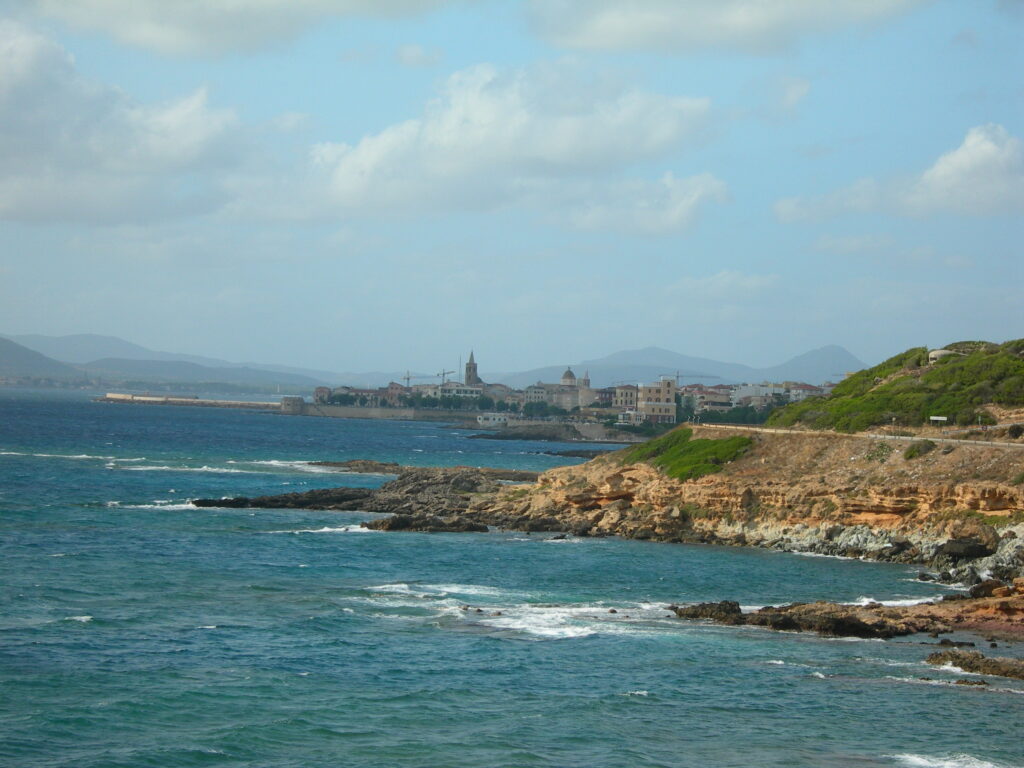
Wondering what makes this corner of the island so special? In this insider guide, I have gathered the 19 most rewarding sights, activities, and local experiences across the town and the Coral Riviera. From navigating sea swells at Neptune’s Grotto to finding sheltered beaches when the Maestrale wind blows, here is how to explore Alghero through the eyes of a local.
Top historic and cultural things to do in Alghero
The heart of Alghero beats inside its fortified medieval core. Built on a rocky promontory surrounded by water, the historic quarter is entirely pedestrianized, so you can explore comfortably on foot.
1. Wander the historic center and cobbled lanes
Stepping into Alghero’s historic center (Centro Storico) feels like traveling back to an authentic maritime past. The narrow streets are paved with smooth cobbles and framed by 16th-century palazzos with wrought-iron balconies and Catalan-Gothic stone doorways.
I always recommend starting your walk in Piazza Civica, the main town square. Here, you can sit at an outdoor cafe for an espresso while watching daily life unfold around you.
As you wander along Via Carlo Alberto and Via Gilbert Ferret, look out for the artisan workshops crafting genuine red coral (Corallium rubrum). The surrounding sea has provided Alghero with valuable coral for millennia. When buying coral jewelry, always look for the official quality mark, which guarantees that the coral was sustainably harvested by licensed local divers rather than manufactured from synthetic plastic.
2. Walk the ancient sea walls and bastions
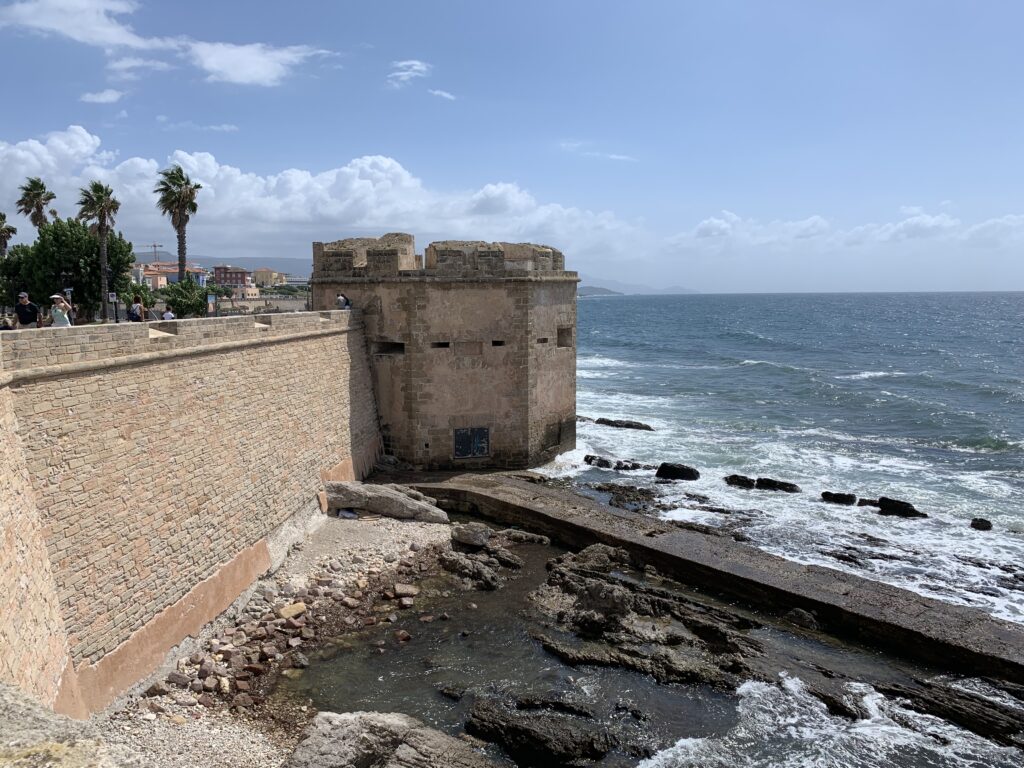
Alghero is one of the very few Italian cities to have preserved its defensive perimeter almost entirely intact. Built during the Aragonese and Spanish rule to fend off naval assaults, the massive stone bastions encircle the western flank of the old town.
Walking along Bastione Marco Polo, Bastione Pigafetta, and Bastione della Maddalena is my favorite daily ritual in town. During late afternoon, the honey-colored sandstone glows warmly in the setting sun.
The views look directly out across the bay toward the rugged limestone silhouette of Capo Caccia, known locally as the “Sleeping Giant”. The bastions are lined with lively bars where you can grab a glass of local chilled Vermentino or a spritz right as the sun sinks into the Mediterranean.
3. Visit the Cathedral of Santa Maria and its bell tower
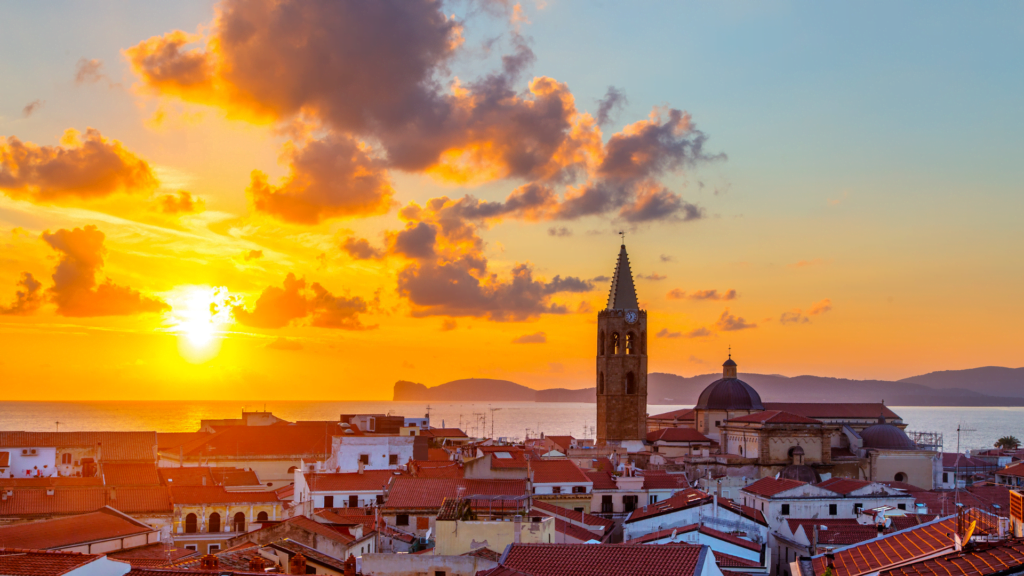
Dominating the city skyline, the Cathedral of Santa Maria Assunta dates back to the 16th century and represents a unique blend of Catalan-Gothic and Renaissance styles.
While the interior features impressive octagonal chapels, the real highlight is its soaring bell tower (Campanile). You can climb the narrow interior stairs of the tower on Via Principe Umberto to reach the open terrace at the top.
The panoramic vantage point rewards you with an unobstructed 360-degree view. You will look over the terracotta rooftops of the old town, the fishing harbor, and the turquoise waters stretching toward Capo Caccia.
4. Step back in time at Nuraghe Palmavera
Just a short 10-minute drive north of Alghero lies Nuraghe Palmavera, one of the most accessible and fascinating Bronze Age complexes on the entire island.
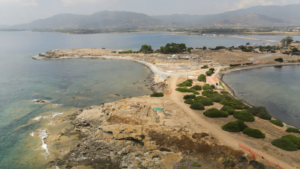
Built by the indigenous Nuragic civilization between the 15th and 8th centuries BC, Palmavera consists of a primary limestone tower, a secondary sandstone tower, and the remains of an ancient village composed of around fifty circular stone huts.
Walking through the central Meeting Hut (Capanna delle Riunioni) with its carved stone seat of the chieftain and ritual round altar offers an intimate glimpse into prehistoric Sardinian society. You can read more about these stone fortresses in our complete guide to the best Nuraghe in Sardinia.
5. Explore the Necropolis of Anghelu Ruju
Discovered accidentally in 1903 during vineyard work for the nearby Sella & Mosca winery, the Necropolis of Anghelu Ruju is the largest prehistoric burial ground in northern Sardinia.
The site dates back to the Neolithic and Copper Ages (between 3200 and 2800 BC) and features 38 rock-cut hypogeic tombs known throughout Sardinia as domus de janas (houses of the fairies).
As you descend into these sandstone burial chambers, you can observe ancient carvings of bull horns and spirals symbolizing fertility and rebirth. Wear flat, sturdy walking shoes and visit during morning hours before the midday heat. To understand the cultural significance of these burial sites across the island, take a look at our guide to the most fascinating Domus de Janas in Sardinia.

Spectacular natural attractions and beaches around Alghero
Beyond the ramparts of the old town, Alghero’s natural landscape is characterized by dramatic limestone cliffs, pine-fringed bays, and crystal-clear swimming spots. Keep in mind that sea and wind conditions dictate your daily experience here more than anywhere else in northern Sardinia.
6. Descend to Neptune’s Grotto and the Escala del Cabirol
Located at the western tip of the Capo Caccia promontory, Neptune’s Grotto (Grotta di Nettuno) is one of the most magnificent marine karst caves in the Mediterranean.
Formed over two million years ago, the cave extends over four kilometers, featuring subterranean saltwater pools like Lake Lamarmora and stalactites that resemble Gothic cathedrals.
You can reach the grotto in two ways. The first is by passenger ferry departing from Alghero’s tourist port, which provides a relaxing cruise along the cliffs.
The second, and by far the most thrilling, is via the Escala del Cabirol (the Roe Deer’s Staircase), a flight of 654 steps carved directly into the sheer 110-meter limestone cliff.
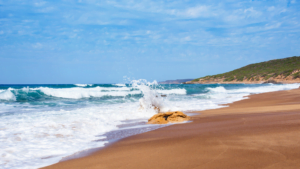
Local sea warning: The entrance to Neptune’s Grotto sits right at sea level. Whenever the westerly or northwesterly wind (Maestrale) blows, heavy coastal swells crash against the cave opening. During rough seas, staff will stop you at the top gate and turn you away, as happened to me on a windy afternoon. Before heading out, always verify the daily opening status on the official Neptune’s Grotto website.
7. Hike in Porto Conte Regional Natural Park and Punta Giglio
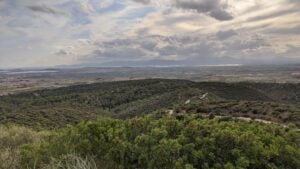
Encompassing over 5,000 hectares of protected coastal terrain, the Porto Conte Regional Natural Park is a sanctuary for Mediterranean flora and fauna.
Within the park, the Le Prigionette Nature Reserve is home to Giara wild horses, Sardinian deer, and rare griffon vultures nesting on the sea cliffs.
My personal favorite excursion within the park is the hike to Punta Giglio, a limestone headland crisscrossed by walking and cycling trails through fragrant rosemary, myrtle, and juniper bushes.
At the tip of the promontory, you will find an open-air museum set inside restored World War II naval batteries, paired with views across the entire crescent of Porto Conte bay.
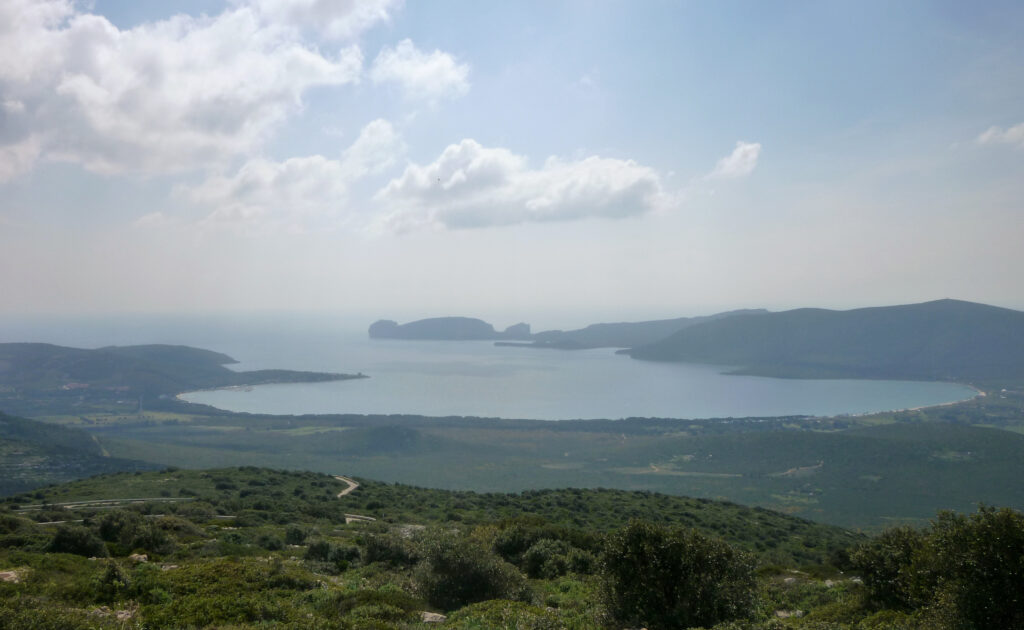
8. Relax on Spiaggia di Maria Pia and its sand dunes
If you want a gorgeous beach day without driving far from the town center, Spiaggia di Maria Pia is the top choice.
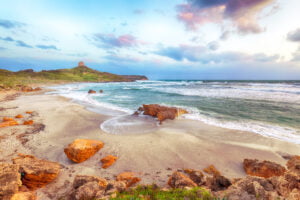
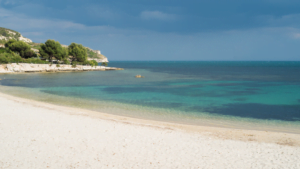
Stretching between Alghero and the suburb of Fertilia, this wide beach features powdery white sand, shallow turquoise water, and a backdrop of maritime pine groves and rolling sand dunes.
The pine forest (pineta) provides welcome natural shade during the hot midday hours. This setup works wonderfully for families with young children or anyone who loves beach picnics. You can easily reach Maria Pia by cycling along the waterfront bike path from the port in about 15 minutes.

9. Swim at Spiaggia delle Bombarde and Lazzaretto
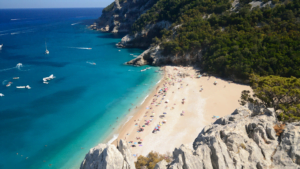
Located roughly 9 kilometers northwest of Alghero, Le Bombarde and Lazzaretto are two iconic sister beaches renowned for crystalline, emerald-green water and fine golden sand framed by red volcanic rocks.
Both beaches offer equipped lidos with sun loungers and umbrellas, as well as free beach sections and seaside cafes.
Because both coves are relatively compact, they get crowded quickly during July and August.
If you prefer a quieter experience, walk along the coastal paths on either side of Lazzaretto to discover tiny sheltered coves, such as Cala Bramassa, where you can snorkel over rocky seabeds teeming with bream and sea bass.
10. Escape the wind at Spiaggia di Mugoni
Looking for calm waters when the wind picks up along the coast? Tucked deep inside the protected gulf of Porto Conte, Spiaggia di Mugoni is a long arc of amber-colored sand flanked by a dense eucalyptus and maritime pine wood.
Because it sits sheltered behind the massive bulk of Capo Caccia and Monte Timidone, the water here remains remarkably flat and calm even when open-sea beaches are buffeted by westerly winds.
With its gently sloping seabed, ample shaded parking, and casual beach restaurants, Mugoni is where local families head whenever the open sea gets too rough for comfortable swimming.
Things to do in Alghero: top activities and local experiences
To truly absorb the maritime spirit and cultural richness of this coastline, booking an organized tour or guided experience lets you reach spots inaccessible on foot. Here are 6 verified, top-rated activities ranging from boat cruises to wine tastings.
Sailing cruise along the Coral Riviera and Capo Caccia
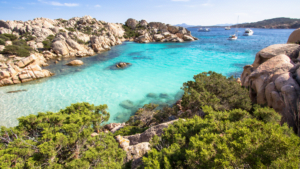
There is no better way to appreciate the dramatic scale of Capo Caccia than from the deck of a sailboat or catamaran. This top-rated half-day excursion navigates the limestone cliffs of the Marine Protected Area, with anchor stops in crystal-clear coves for swimming, snorkeling, and a freshly prepared aperitif featuring Sardinian cheeses, salami, and chilled wine.
Check availability and book the sailing cruise along the Coral Riviera
Guided Capo Caccia and Neptune’s Grotto tour
For travelers who prefer straightforward transport without worrying about local parking or ticket lines, this comprehensive guided overland tour takes you straight to the panoramic viewpoints of Capo Caccia and the entrance of the sea caves with an expert local guide.
Check prices and reserve the Capo Caccia and Neptune’s Grotto excursion
Sea kayaking in Porto Conte Regional Park with aperitif
Paddle along the tranquil turquoise waters of Porto Conte bay to discover hidden sea inlets, limestone crevices, and untouched marine nature reserves. This small-group guided kayak adventure includes top-tier equipment, snorkeling stops, and a convivial local aperitif on a quiet beach.
Book the Porto Conte guided sea kayak and snorkeling tour
Dolphin watching research cruise in the bay of Alghero
The waters fronting Alghero are home to a resident pod of bottlenose dolphins. This specialized eco-cruise is run in collaboration with local marine researchers. You will observe these playful creatures in their natural habitat while learning about marine conservation efforts in the Marine Protected Area.
Check details and book the Alghero dolphin watching research cruise
Sunset vineyard tour and wine tasting with local delicacies
Immerse yourself in Alghero’s prestigious winemaking tradition with a guided sunset tour through local vineyards and olive groves. The experience includes a tutored tasting of five regional wines, including Torbato and Cannonau, thoughtfully paired with artisanal pecorino cheese, cold cuts, and homemade bruschetta.
Reserve your sunset wine tasting experience in Alghero
Historic center walking tour with local audio guide
Explore the fascinating Catalan history of Alghero at your own pace with a verified digital walking guide crafted by local historians. Learn the stories behind the Spanish ramparts, hidden courtyards, and ancient churches while discovering authentic insider dining recommendations.
Get the Alghero historic center walking guide
Things to do around Alghero: unforgettable day trips
Alghero’s strategic position in the northwest makes it the ultimate base for day trips to medieval riverside towns, pristine islands, and historical cities.
11. Drive the coastal road SP49 to Bosa
The coastal drive connecting Alghero to the pastel-painted river town of Bosa along the SP49 panoramic road is considered one of the most spectacular coastal journeys in the Mediterranean.
Over approximately 45 kilometers, the road hugs volcanic cliffs plunging into cobalt waters, with no modern buildings in sight, only Mediterranean scrub and soaring griffon vultures.
Upon arriving in Bosa, wander through the Sa Costa neighborhood, climb to the medieval Malaspina Castle, and enjoy fresh seafood along the Temo River. You can read our detailed itinerary in the complete Bosa travel guide.

12. Discover the historic city of Sassari
Located just 35 minutes northeast of Alghero by car or local train, Sassari is Sardinia’s second-largest city and the cultural capital of the north.
Unlike coastal tourist hubs, Sassari offers an authentic glimpse into everyday Sardinian university and mercantile life.
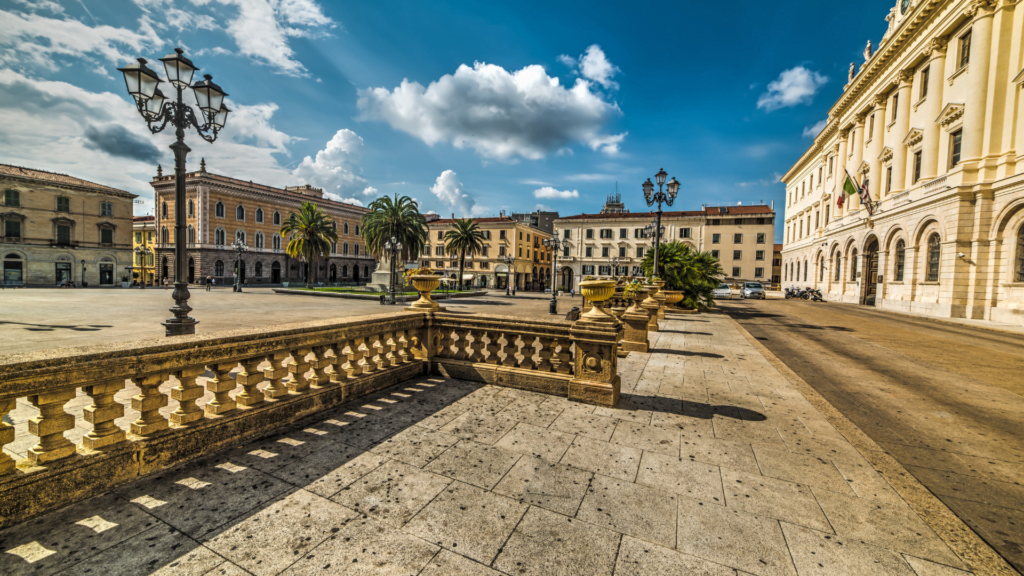
Make sure to visit the grand Piazza d’Italia, admire the baroque facade of the Duomo di San Nicola, and explore the Sanna National Archaeological Museum. Plan your day with our in-depth Sassari guide.
13. Venture to Stintino and La Pelosa beach
About 50 minutes north of Alghero lies the Stintino peninsula, home to the internationally famous La Pelosa Beach. With its shallow, iridescent turquoise water and view of the 16th-century Aragonese watchtower, it resembles a Caribbean lagoon.
Keep in mind that La Pelosa requires advance online ticket reservations and strict conservation rules (such as using straw mats under beach towels) between June and October.
For everything from booking tickets to parking advice, check our practical guide to La Pelosa beach and our Stintino visitor guide.
14. Take a boat tour to Asinara National Park
From the harbor of Stintino or Porto Torres, you can embark on an offshore excursion to Asinara Island, a former high-security penal colony turned pristine National Park.
The island is famous for its wild albino donkeys, untamed landscapes, and strictly protected marine coves.
You can explore the island by 4×4 Land Rover, e-bike, or sailing boat. Find all logistics in our Asinara National Park guide.
What to eat in Alghero: Catalan-Sardinian culinary traditions
Alghero’s culinary identity is uniquely distinct from the rest of the island. The multi-century Catalan presence created a fusion cuisine that celebrates fresh Mediterranean seafood with Spanish culinary flair.
- Aragosta alla Catalana: Alghero’s undisputed gastronomic king. Fresh local spiny lobster caught along the rocky coast, gently boiled and served with sweet ripe tomatoes, crunchy red onions, virgin olive oil, and a squeeze of fresh lemon.
- Paella Algherese: A proud local interpretation of the Valencian classic, prepared using local Sardinian toasted pasta (fregula) or round rice cooked with mussels, clams, wild prawns, and saffron from San Gavino.
- Copatza de Peix: A traditional fisherman’s rockfish soup simmered with tomatoes, garlic, chili, and toasted country bread rubbed with garlic.
- Menjar Blanc: A delicate Catalan-origin dessert made of a lemon-infused milk custard baked in a crisp pastry crust.
- Local Wines: Don’t miss pairing your meal with Torbato di Alghero DOC, a mineral white grape variety cultivated almost exclusively in Alghero’s limestone soils, or Cagnulari, a spicy red native to the surrounding Sassarese countryside.
Where to stay in Alghero
Whether you prefer a luxurious historic villa right over the water, a modern panoramic resort, or a charming boutique B&B inside the pedestrian center, here are 4 verified accommodation options with direct booking links.
Villa Las Tronas Hotel & SPA – A 5-star luxury boutique hotel set on a private seafront promontory, once the historic retreat of Italian royalty, featuring saltwater pools and a luxury spa – Book Villa Las Tronas Hotel & SPA on Booking.com
Hotel Smy Carlos V Wellness & Spa – A refined 4-star panoramic hotel located along the seaside promenade, offering sea-view balconies, an outdoor saltwater pool, and an extensive wellness center – Book Hotel Carlos V on Booking.com
Hotel Alguer – A welcoming and highly rated 3-star hotel situated in a quiet residential area within comfortable walking distance of Maria Pia beach and the old town – Book Hotel Alguer on Booking.com
Actinia Accommodation – A cozy, budget-friendly guesthouse in central Alghero offering immaculate modern rooms, warm hospitality, and easy walking access to the historic center – Book Actinia Accommodation on Booking.com
For an overview of other strategic towns and regions across the island, take a look at our guide to where to stay in Northern Sardinia.
Getting around: car rental and transport in Alghero
While Alghero’s historic center is compact and pedestrian-only, renting a car is essential if you want to explore the archaeological sites of Palmavera and Anghelu Ruju, discover secluded beaches like Mugoni and Porto Ferro, or take the breathtaking scenic drive down to Bosa.
You can pick up a rental car directly at Alghero Fertilia Airport (AHO), located just 15 minutes north of the city center.
To secure competitive rates and transparent insurance conditions, compare vehicles in advance through Discovercars Alghero Airport. If you are planning your driving routes across the island, read our complete practical guide to renting a car in Sardinia and download our tourist map of Sardinia.
Parking tip: Never drive into the historic center, as the entire walled city is an active ZTL (Limited Traffic Zone) monitored 24/7 by automated cameras with heavy fines. Park your vehicle in the large public parking areas outside the walls, such as Piazzale della Pace located right opposite the marina.
The local perspective: what Sardinians think
As a Sardinian who has spent decades exploring our coastlines, I can tell you that Alghero is a place of extraordinary character, but its climate and geography demand respect.
If you want your holiday to go smoothly, here is the honest, practical advice that local residents live by.
First, understand that winds and sea swells dictate everything in Alghero. The dominant wind is the Maestrale (Mistral), which blows forcefully from the northwest across the open sea.
When the Maestrale arrives, the western face of Capo Caccia takes the brunt of open-sea waves. If there is a rough sea swell, staff at the Escala del Cabirol will physically stop you from descending the 654 steps, exactly as happened to me on a blustery day. The site operators keep their daily opening status updated on their official website, so always double-check before driving out.
When the wind blows hard from the west or northwest, head straight to Spiaggia di Mugoni, which stays sheltered inside the curve of Porto Conte bay.
Alternatively, relax on Maria Pia, where the dense maritime pine forest absorbs the gusts.
Second, respect the seasonal rhythm. In July and August, Alghero’s population triples.
The narrow cobbled alleys of the old town become packed by 8:00 PM, and finding a table without a reservation at reputable seafood trattorias is nearly impossible.
If you visit in peak summer, book your dinners days in advance, visit historic sites before 10:00 AM, and arrive at beaches like Le Bombarde before 9:00 AM to secure a parking spot.
If you have the flexibility, visit in May, June, September, or October: the sea remains warm enough for swimming, parking is stress-free, and you will experience the true hospitality of the town.
Third, beware of tourist-trap menus along the busiest seafront promenades. Authentic Aragosta alla Catalana is prepared using wild Mediterranean spiny lobsters weighed alive and priced by the hectogram (etto); if a restaurant offers a cheap “lobster menu” for twenty euros, you are getting imported frozen crustaceans.
Seek out traditional trattorias tucked into the residential side streets outside the walls, or ask your hotel host where locals go for Sunday lunch.
FAQ about Alghero
Why is Alghero called “Little Barcelona” (Barceloneta)?
In 1354, King Peter IV of Aragon conquered the city and repopulated it with Catalan colonists after expelling the local Doria-allied population. The Catalan language and Aragonese civic customs took deep root, and a recognized dialect of Catalan (algherese) is still spoken by older generations and taught in local cultural circles today.
How many days do you need in Alghero?
I recommend spending at least 3 to 4 full days in Alghero. This allows you 1 day to explore the historic center, bastions, and local museums; 1 day for Capo Caccia, Neptune’s Grotto, and Porto Conte Natural Park; 1 day for archaeological sites and beaches; and 1 dedicated day for a coastal day trip down to Bosa or north to Stintino and Asinara.
Is Alghero easy to explore on foot without a car?
Yes, the historic center, the marina, and the city promenade are entirely pedestrian-friendly and very easy to walk. In addition, you can reach Maria Pia beach and the Lido on foot or by renting an electric bicycle. On the other hand, if you wish to explore Neptune’s Grotto, Nuraghe Palmavera, Anghelu Ruju, or Bosa independently, renting a car is strongly recommended.
How do you visit Neptune’s Grotto if boats are canceled due to rough seas?
If passenger ferries from Alghero port are suspended due to strong wind or waves, you can sometimes drive to Capo Caccia and descend via the Escala del Cabirol staircase.
When the sea swell is too powerful, on-site staff will stop visitors at the top gates for safety. Always check the planned daily opening status on the official Neptune’s Grotto website in the morning. If the grotto is closed, pivot your day toward the inland archaeological sites of Palmavera and Anghelu Ruju, or enjoy a wine tasting at Sella & Mosca.
Which beach in Alghero is best sheltered from waves?
Spiaggia di Mugoni, located deep inside the protected gulf of Porto Conte, is the most sheltered beach from northwesterly (Maestrale) winds and rough sea swells. The water remains flat and swimmable even when open-sea beaches experience strong waves.
What is the best month to visit Alghero?
September and June are the two best months to visit Alghero. During these months, daytime temperatures are pleasantly warm (24 to 28 degrees Celsius), the sea is warm and calm, accommodation rates are reasonable, and you avoid the intense crowds of August.
Official sources and references
- Comune di Alghero (Official Municipal Portal): alghero-turismo.it
- Parco Naturale Regionale di Porto Conte: algheroparks.it
- Fondazione Alghero Musei e Siti Archeologici: fondazionealghero.it
- Area Marina Protetta Capo Caccia – Isola Piana: ampcampocaccia.it