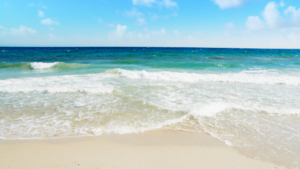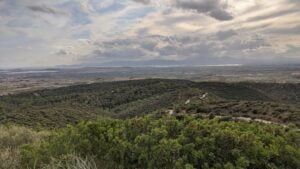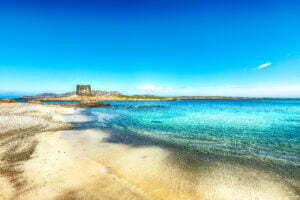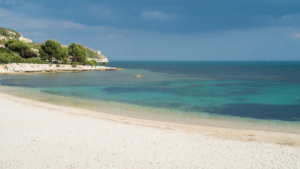
Isola di San Pietro sits off the south-western tip of Sardinia, 40 minutes by ferry from the mainland, and still catches most visitors completely off guard. Not because it is unknown. It is not. Nothing quite prepares you for the combination of volcanic cliffs, absurdly transparent water, and a town that speaks a 300-year-old Genoese dialect. One island. One town. An identity unlike anything else in Sardinia. This guide covers everything you need: the best beaches, what to see in Carloforte, how to get there, and where to stay.
What makes Isola di San Pietro different from the rest of Sardinia
Most islands in the Mediterranean promise escape. San Pietro actually delivers it. The island covers roughly 51 km², rises to just 211 metres at its highest point, and has exactly one town: Carloforte. No resort sprawl, no hotel strips carved into the hillside, no roundabouts with supermarkets on every corner.
What you get instead is a place shaped by a genuinely unusual history. In 1736, a group of Ligurian coral fishers, the descendants of Genoese settlers who had been living on the Tunisian island of Tabarka for nearly two centuries, petitioned King Charles Emmanuel III of Sardinia for permission to settle here. He agreed, and they founded a town in his honour: Carloforte, from Carlo il Forte, meaning Charles the Strong. The locals still call it U Pàize.
That Tabarchin heritage runs deep. The Tabarchino dialect, a form of old Genoese, is still spoken today. The architecture looks nothing like Sardinian villages. The narrow carruggi, the pastel facades, the cobbled staircases: it looks like Liguria, transplanted to the Mediterranean and left to develop on its own terms. The cuisine carries traces of both Ligurian and North African influence, most visible in the local use of couscous, the traditional Cassolla fish soup, and the ritual of the tuna season each May.
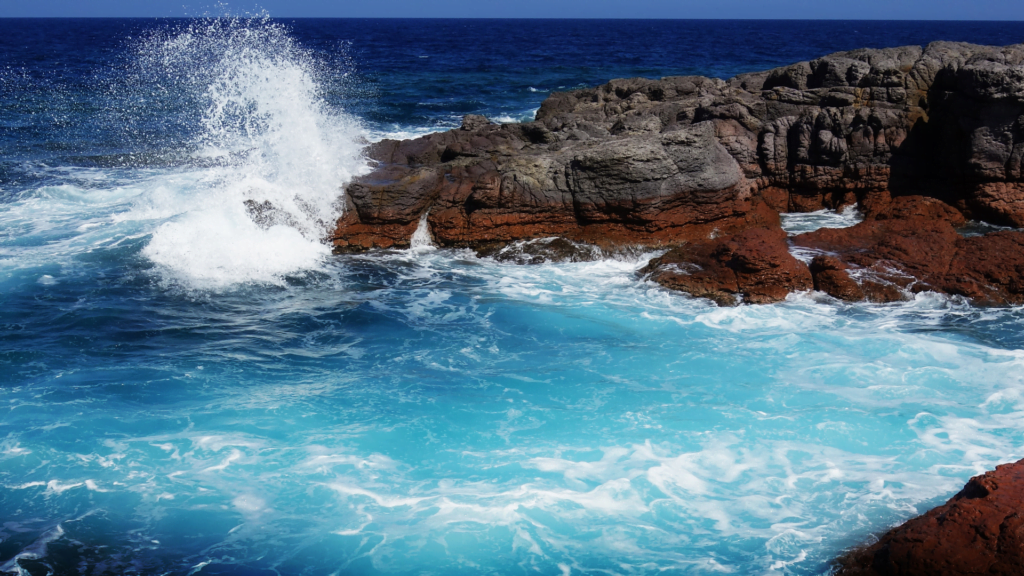
This cultural layering, combined with volcanic geology that produces dramatic cliffs, sea caves, and rock-pool formations, makes San Pietro one of the most rewarding and underappreciated stops in southern Sardinia. You will not find it overrun. Even in August, Carloforte retains its character. That is rare.
Where is Isola di San Pietro?
Isola di San Pietro is part of the Sulcis Archipelago and lies in the Mediterranean Sea, approximately 7 kilometers off the coast of Sardinia. The island can be easily reached by ferry, with regular services operating from Portoscuso and Calasetta on the Sardinian mainland. The ferry ride takes about 30 to 40 minutes, offering passengers scenic views of the surrounding waters and coastline.
The best beaches on Isola di San Pietro
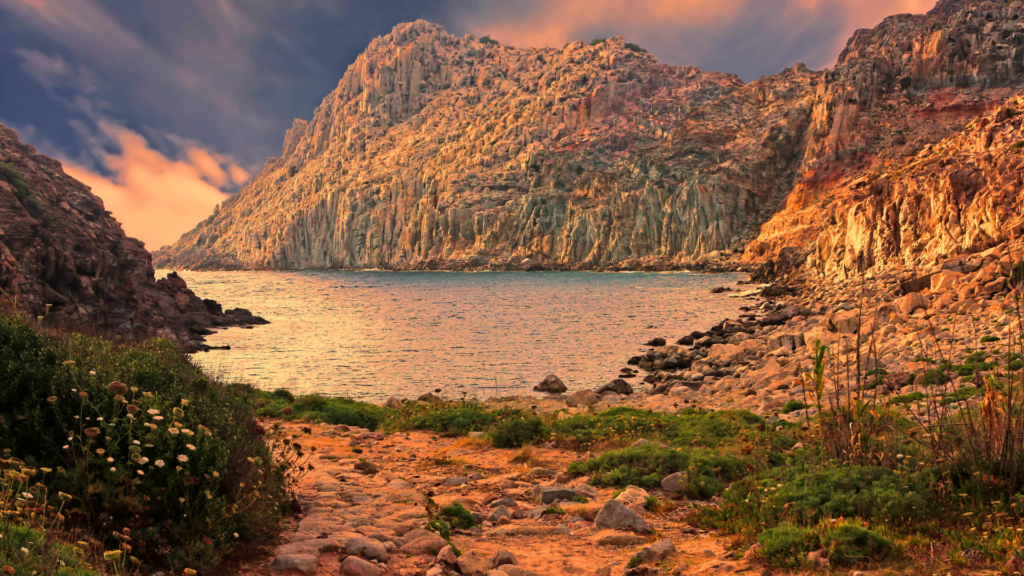
The island’s coastline stretches for around 33 kilometres. Most of it is rocky and fringed with Mediterranean scrub, myrtle, juniper, and rosemary, with sandy beaches appearing only in specific, sheltered bays. One practical note before you start planning: the Maestrale (north-westerly wind) is a constant presence. When it blows, west-facing beaches become uncomfortable. East-coast beaches stay sheltered. Check the forecast the evening before.
For a broader look at the best beaches in Sardinia, we have a full local guide on Sardiniabella.
La Bobba
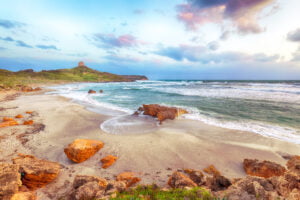
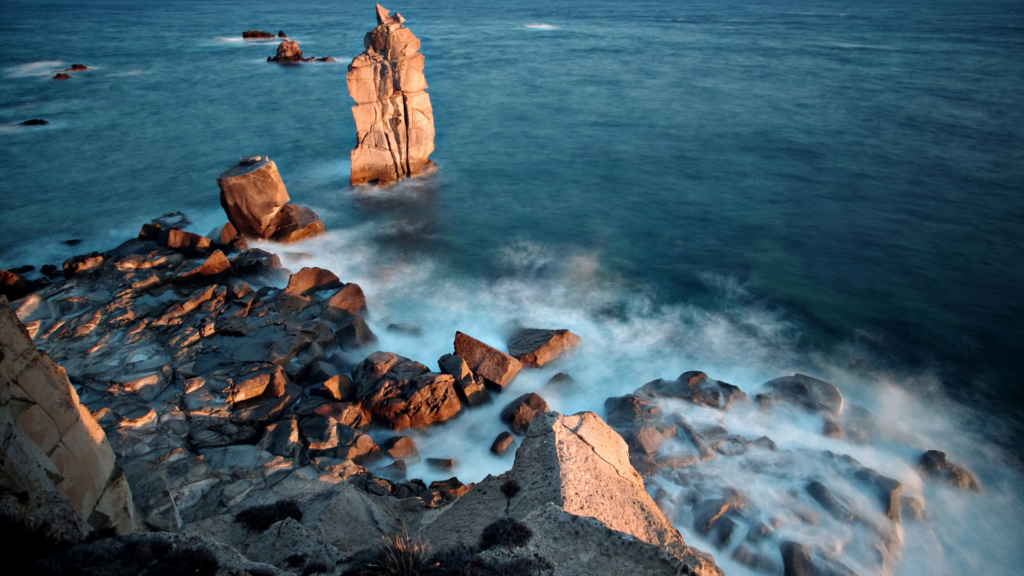
The most iconic beach on the island, the one on every photograph. La Bobba sits on the south-western coast, a short stretch of fine white sand enclosed by dark volcanic headlands. The water is turquoise, shallow near the shore, and exceptionally clear. A ten-minute trail from the beach leads to the Punta delle Colonne viewpoint, where you can look down at the famous sea stacks known as Le Colonne di Carloforte. Erosion has claimed one of the two columns in recent years, but the site remains spectacular. Go early or late in the day in summer.
Cala Fico
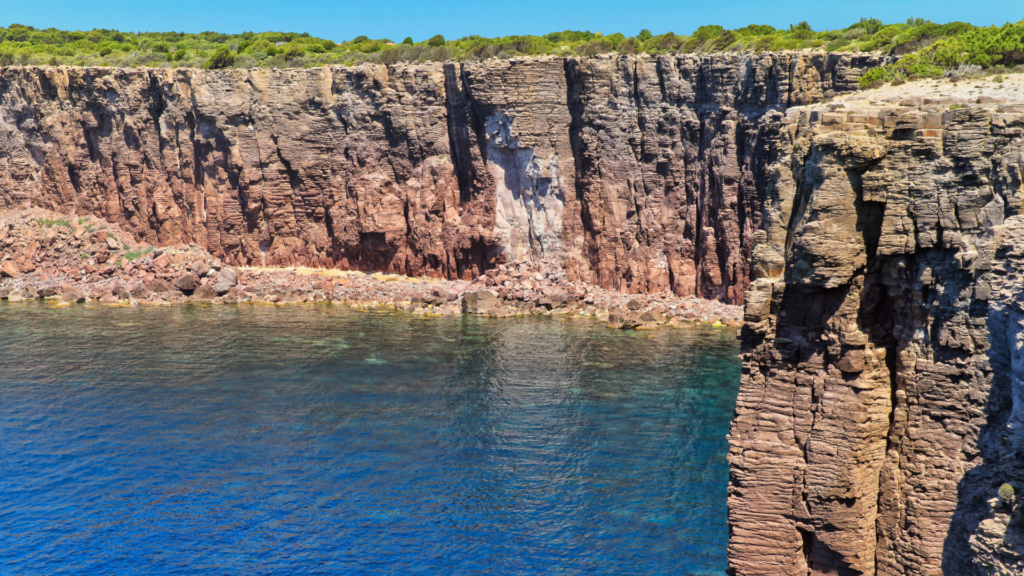
On the north-western coast, inside the LIPU nature reserve. The beach is pebbled and rocky. Bring sandals, and do not bring young children expecting sand. What you get instead is some of the clearest water on the island, framed by sheer basalt cliffs and protected from development by its conservation status. Birdwatching is excellent here, particularly from July to October when Eleonora’s falcons nest on the nearby cliffs. Snorkelling is superb. Crowds are minimal even in August.
La Caletta (Cala dello Spalmatore)
A small sandy bay on the north-western tip, accessible via a short trail through Mediterranean vegetation. It stays protected enough to be usable on windy days. It is the only sandy beach on the north-west stretch of the island, which makes it feel remote even when it is not. Windsurfers and kitesurfers appreciate it for the cleaner wind exposure. The parking area is limited and fills fast in summer; arrive early.
Spiaggia Giunco
The longest beach on the island, running along the south-eastern coast just below Carloforte, less than 3 km from the town centre. Broad, sandy, and shallow. The water is calmer here than on the western side, and the south-eastern orientation means it stays sheltered from the Maestrale. Family-friendly and the easiest beach to reach without a car. On busy August days this is also where most of the crowd concentrates, so manage expectations accordingly.
Spiaggia Guidi and Punta Nera
Two beaches close together on the south-eastern coast, past Giunco. Guidi opens onto a wide bay with clear water and a sandy bottom. Punta Nera is divided by a small rocky outcrop, creating two distinct coves. Both are quieter than La Bobba and less known to day visitors who come over on the ferry. The sea here is calm and well suited to snorkelling. Recommended for anyone willing to drive ten minutes beyond Giunco.
Piscine Naturali di Nasca
Not a beach, but more interesting than most. The Piscine Naturali di Nasca are a series of natural rock pools carved into the basalt on the north coast, filled and flushed by the sea through underwater channels. The water inside is extraordinarily clear, warm in summer, and sheltered even when the sea outside is rough.
Getting there requires driving to the northern end of the island, parking at the end of the road, then following an unmarked but easy-to-follow trail downhill for about 30 minutes. Bring proper walking shoes: the path is steep in places. The Fortino di Guardia Mori, a small abandoned fort dating from 1850, sits along the same trail. Almost no English-language content mentions this spot properly. That gap is starting to close, but for now it remains one of the most rewarding excursions on the island.
What to see in Carloforte
Carloforte rewards slow exploration on foot. Give it at least a full afternoon, ideally a morning too.
The historic centre and Tabarchino architecture
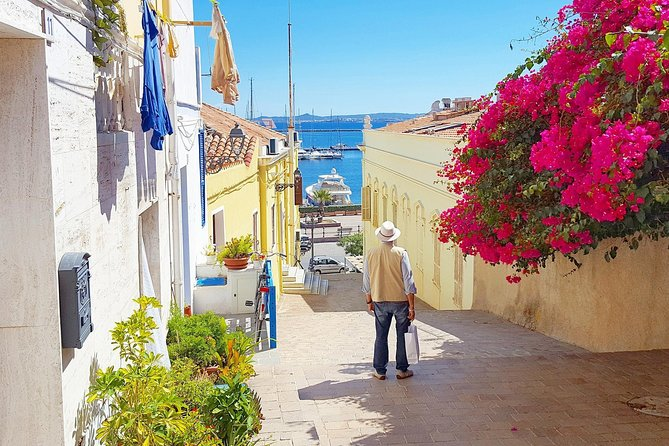
Start at the port and walk inland. The town unfolds through narrow carruggi, the Genoese term for covered alleys, framed by pastel buildings in yellow, terracotta, and faded blue. The Piazza Pegli is the social centre: tables spill out from bars, locals stop to talk, and the rhythm of the place becomes clear quickly. This is not a town performing itself for tourists. It is a town living its life, and visitors happen to be there.
Look for the Archiottu, an elegant arch from the late 18th century that once marked the entrance to a prominent family’s garden. It is one of the most photographed spots in town. The street layout itself reflects the Ligurian origin: compact, vertical, designed for a coastal community rather than an agricultural one.
The ancient walls, forts and the castle
On the western edge of town, the remains of the defensive walls tell a brutal chapter of the island’s history. In 1798, Tunisian corsairs raided Carloforte and captured over 900 inhabitants, enslaving them and transporting them to North Africa. The current walls were rebuilt after that raid, reinforced by three fortini: the forts of Santa Cristina, Santa Teresa, and Beatrice. Carloforte Castle, built in 1738 to house the original garrison, still stands near the seafront. Not all sections are open to visitors, but the exterior is worth seeing.
The Tonnara di Carloforte and the Girotonno Festival
The Tonnara di Carloforte is the old tuna fishery at Punta La Punta, at the northern tip of the island. Tuna fishing has been practised in these waters since at least the 16th century, using a complex system of nets called the mattanza. The tradition is still alive, barely but alive, and each May the island celebrates the Girotonno Festival: a three-day event dedicated to bluefin tuna culture, combining tastings, music, and guided visits to the fishery. If your dates align, it is worth planning around. The Tonnara can be visited by guided tour only. Contact the operators locally or via the official Carloforte tourism website.
For more on the Carloforte town experience, see the full Carloforte guide on Sardiniabella.
Capo Sandalo Lighthouse
The westernmost lighthouse in Italy. That alone justifies the 40-minute drive from Carloforte along the island’s winding western road. The lighthouse sits on a dramatic promontory above the sea, surrounded by low Mediterranean scrub, with views that on a clear day extend to Sardinia’s south-western coast. Sunset here is extraordinary: the light turns the basalt cliffs deep orange before dropping into the sea. A short walk from the parking area leads to a panoramic viewing platform. No entrance fee, accessible year-round.
Le Colonne di Carloforte
Two trachytic rock columns emerging from the sea near La Bobba beach. Since 1993, the formation has been a Natural Monument of Isola di San Pietro. As of recent years, only one column remains standing after the other collapsed through natural erosion. The surviving stack is still striking. You can reach the viewpoint by car (6.9 km from Carloforte along SP 103) or on foot from La Bobba via a well-marked, wheelchair-accessible trail.
The Salt Pans and flamingos
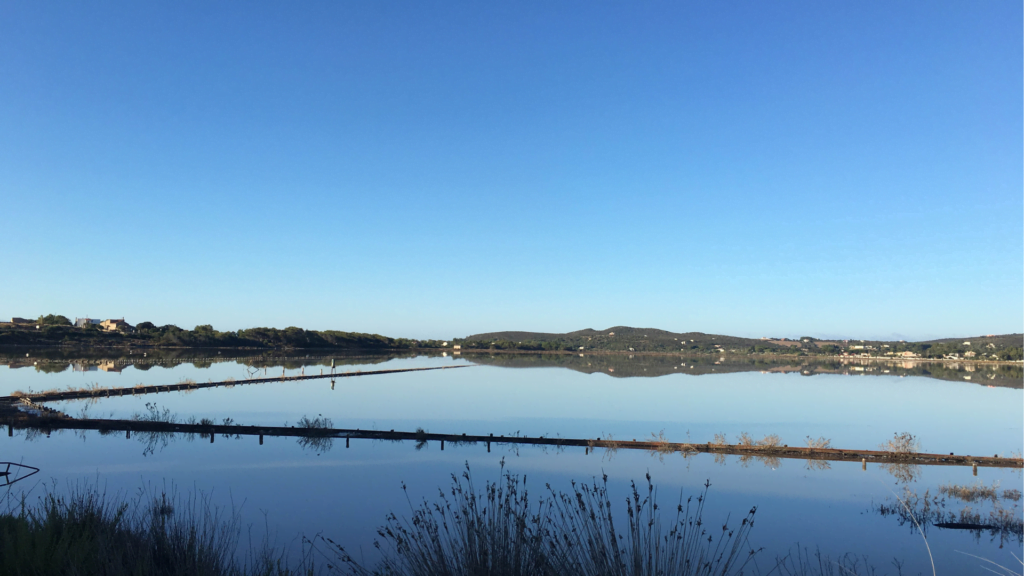
The Saline di Carloforte sit close to town, between the port and the Giunco beach. The salt extraction industry is long gone, but the shallow pans remain and have become an important habitat for migratory and resident birds. Pink flamingos are a near-permanent presence, along with herons, stilts, and other wetland species. The Torre San Vittorio nearby houses a small multimedia museum and an astronomical observatory.
LIPU Reserve and Eleonora’s falcons
On the island’s western coast, the LIPU reserve is dedicated primarily to protecting the colony of Eleonora’s falcons that nest on the cliffs each year. These elegant birds of prey, named after Eleonora of Arborea who granted them legal protection in 1392, arrive from Madagascar between July and October. The Cala Fico area offers the best vantage points. Bring binoculars and patience.
Things to do in Isola di San Pietro: top activities
Are you wondering how to make the most of your time here? Exploring the coastline and the historic center requires a bit of planning. You can certainly wander around on your own. However, joining a guided experience often reveals details you might otherwise miss. As locals, we strongly suggest booking your sea and land excursions in advance during the peak summer months.
Here are the most reliable and well-reviewed activities available right now.
Guided tour of San Pietro Island and Carloforte from Chia
Do you want to visit the island without the hassle of driving and booking ferry tickets? This is a highly practical option if you are staying in southern Sardinia. The tour includes hotel pick-up from the Domus de Maria and Chia areas. You will travel comfortably by air-conditioned minivan to the port of Calasetta. From there, you cross over by ferry. A local guide leads you through the island’s best spots. You will spend time at the beach, admire the sea stacks called Le Colonne, and walk through the historic center of Carloforte. Dolphin sightings during the crossing are quite common.
Book the guided San Pietro Island and Carloforte tour from Chia on Viator
Daily dinghy tour around San Pietro Island
If you want to see the most dramatic coastal cliffs, you need to go by sea. Departing from the nearby port of Sant’Antioco, this full-day route explores the rugged western coastline. The skipper navigates past Isola Piana, the Grotta del Pulpito, and Cala Fico. You will also see the imposing Capo Sandalo lighthouse. The tour includes multiple swimming stops in crystal-clear waters. A traditional Sardinian snack with pane guttiau and local white wine is served at anchor. The day ends with a final swim at the beautiful Giunco beach before heading back.
Reserve the daily dinghy tour to San Pietro and Carloforte on GetYourGuide
Sailing boat tour from Calasetta with lunch on board
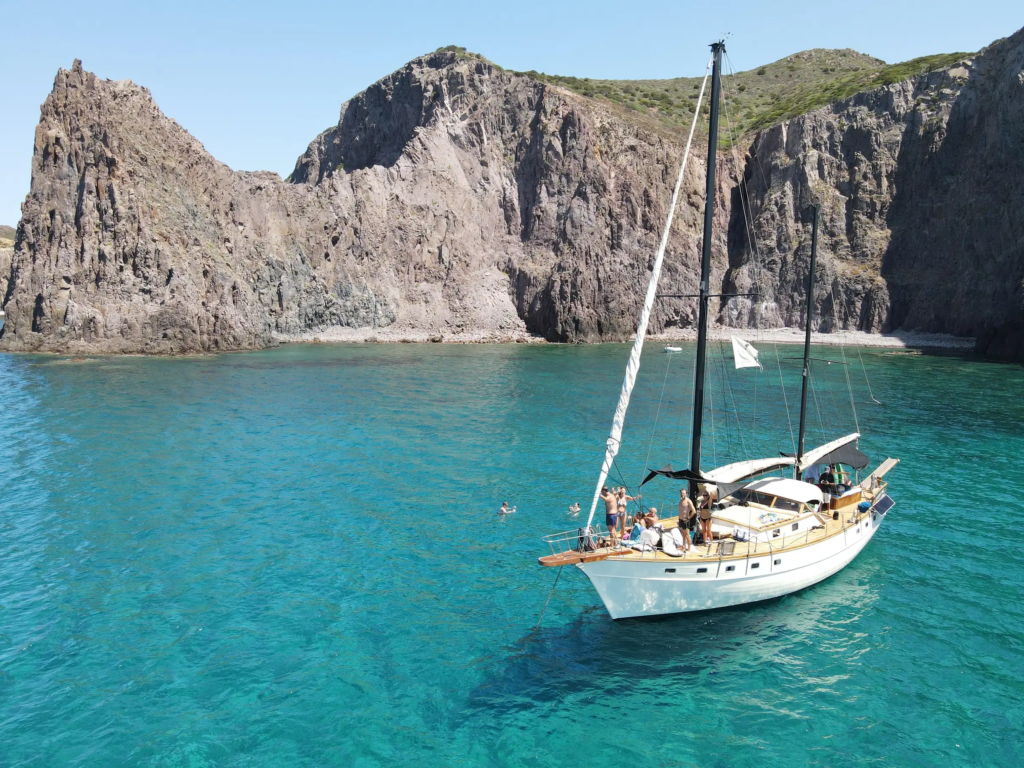
Sailing is arguably the most peaceful way to experience the Mediterranean Sea. The Schatzli II is an impressive 18-meter two-masted wooden sailing vessel. It departs from Calasetta and explores the coastlines of both Sant’Antioco and San Pietro. The exact route depends strictly on the wind direction. Skipper Matteo makes the call on the day to ensure maximum comfort and safety. You will stop for swimming and snorkeling in secluded coves unreachable by land. The crew prepares a fantastic lunch on board using fresh local produce. Keep an eye out for Eleonora’s falcons near the cliffs.
Book the sailing boat tour from Calasetta to Carloforte on GetYourGuide
Daily boat trip with snorkeling from Sant’Antioco
The waters around the Sulcis archipelago are packed with marine life. This full-day RIB boat experience explores the best inlets and underwater landscapes. The local skipper adapts the itinerary to find the calmest bays for snorkeling. You will swim in crystal-clear waters alongside schools of Mediterranean fish. The crew even takes photos with a GoPro so you can remember the experience. It is a fantastic option if you want a balance of relaxation and active exploration around Isola di San Pietro.
Reserve the daily boat trip with snorkeling on GetYourGuide
Snorkeling excursion to Carloforte and San Pietro Island
Not everyone has the time or stamina for a full 8-hour boat trip. This focused morning or afternoon excursion is a great alternative. Departing from the Carloforte harbor, the boat circles the most scenic sections of the coastline. The skipper drops anchor at two pristine coves for snorkeling. All necessary equipment is provided on board. The western cliffs offer regular sightings of rare falcons during the summer months. It is a solid, budget-friendly option for families and non-divers.
Book the San Pietro Island half-day snorkeling tour on GetYourGuide
How to get to Isola di San Pietro: the ferry
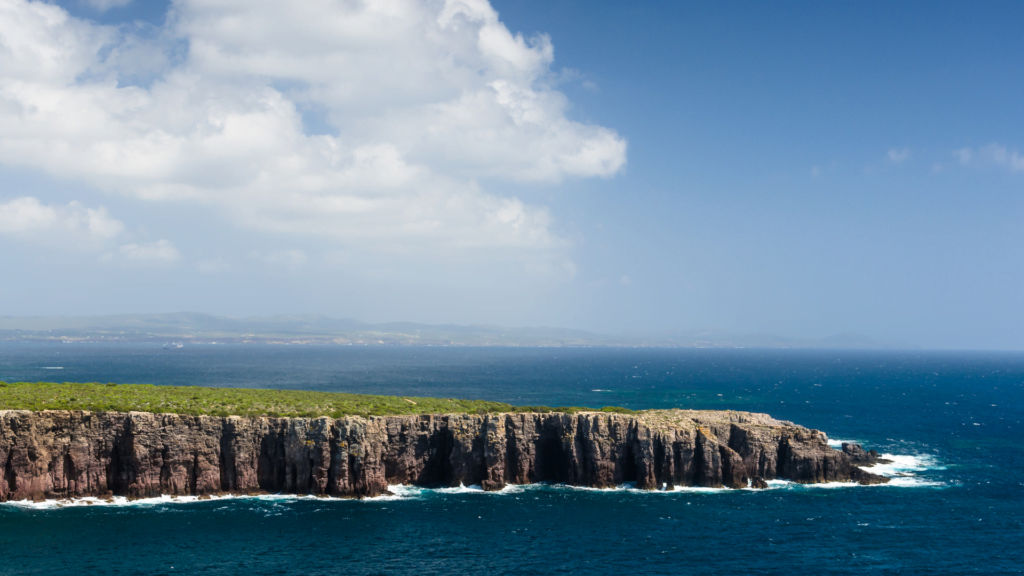
There are no bridges and no airports. The only way onto the island is by ferry, operated by Delcomar.
Two departure points:
- Portovesme (the port of Portoscuso, about 70 km from Cagliari airport): the more frequent option, with crossings running through the night in summer.
- Calasetta (on the island of Sant’Antioco, itself reachable by road from the Sardinian mainland): a slightly longer route that connects well with a visit to Sant’Antioco island.
The crossing takes 40 to 45 minutes. Tickets are inexpensive. Taking a car on the ferry costs extra. In summer, particularly from mid-July to late August, arrive at the port at least one hour before departure. Queues form quickly and the ferries fill. Delcomar does not guarantee your specific sailing even with a booked ticket in high season.
From Cagliari airport, budget around 75 to 80 minutes by car to Portovesme. There is no practical public transport connection from the airport.
If you are combining San Pietro with the wider south-western region, our guide to where to go in South Sardinia covers the surrounding area in full.
Getting around: car rental in Sardinia
A car is essential to reach either ferry departure point from Cagliari. Once on the island, the situation is different. Carloforte is walkable, and the main beaches are within cycling or scooter distance. Bicycle and scooter rentals are available in town, and e-bikes are increasingly common. For a full day of island exploration including Capo Sandalo and the Piscine di Nasca in the same circuit, a car on the island remains the most practical choice.
Compare rates and book directly from Cagliari airport:
Book as early as possible in summer. Availability in July and August tightens fast, and prices at the island’s limited rental agencies reflect that pressure.
Where to stay in Carloforte
All accommodation on the island is concentrated in or immediately around Carloforte. The range covers everything from budget-friendly B&Bs to comfortable four-star hotels with sea views. Prices are higher than mainland Sardinia, particularly in August: limited supply and growing demand make this one of the pricier stops in southern Sardinia.
Nichotel (4-star, mid-range to premium): Set in the historic centre, a few metres from the port. Consistently praised for its central location, attentive staff, and breakfast quality. Some rooms have terraces with views over the harbour. The hotel is also partner to the well-regarded Ristorante Nicolò, one of the best tuna kitchens on the island. A strong all-round choice.
Lù Hotel Riviera (4-star, premium): A larger property with panoramic views over the town and seafront, free parking, a rooftop terrace bar, and 46 rooms. Rated 9.9 by couples for its views and position. Free buffet breakfast included. Ideal if you want comfort, space, and an elevated outlook over the harbour. Note the seasonal opening: the hotel is typically closed from mid-October through early April.
Hotel Villa Pimpina (3-star, budget to mid-range): A boutique 3-star in a beautifully restored old building in the upper part of the historic centre. Individually decorated rooms, a garden where resident tortoises wander freely, and a breakfast buffet using local Sardinian produce. The owners are art collectors and the lobby frequently hosts exhibitions. Excellent value for money.
Hotel Hieracon (3-star, mid-range): A Liberty-style villa with a lush internal garden near the harbour. Known for genuine hospitality, excellent breakfast, and a restaurant specialising in local dishes including couscous and fresh tuna. The atmosphere is closer to a family-run guesthouse than a conventional hotel, which is exactly its appeal.
The local perspective: what Sardinians think about San Pietro Island
Those of us from Sardinia look at San Pietro differently from how visitors typically approach it. A few things worth knowing directly from that perspective.
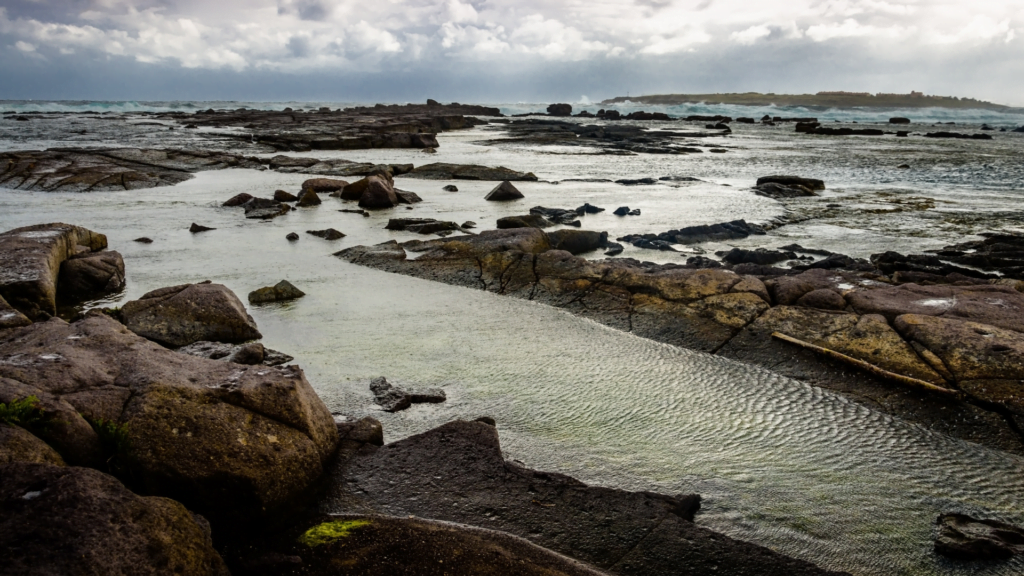
On the Tabarchino identity: Do not make the mistake of treating this as a Sardinian curiosity. The Tabarchino community has its own language, its own culinary tradition, its own sense of history. When people in Carloforte say U Pàize, they are not being picturesque. They mean it. Try the local food: in particular anything involving fresh tuna, the handmade Raiélu pasta with beet and ricotta, and the Macariun with basil pesto. You will not find these dishes on mainland Sardinia.
For a deeper introduction to Sardinian food culture, our Sardinian food guide is a good starting point.
On the wind and beaches: The Maestrale is not a minor inconvenience on the west coast. It can completely change the experience of a beach day. West-facing beaches like Cala Fico and La Caletta can be blown out within hours. When that happens, the eastern beaches, Giunco and Guidi, remain perfectly swimmable. Check the forecast the evening before. A flag visible from the harbour will tell you everything: if it is fully extended and horizontal, adjust your plans.
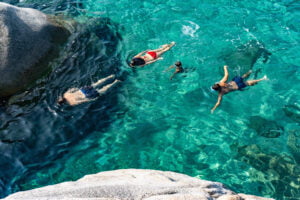
On water quality: By any objective measure, the sea around San Pietro is among the clearest in Sardinia. The volcanic rock bottom has minimal fine sediment, and there is no significant agricultural or industrial runoff in the catchment area. The clarity is real, not marketing. It shows most clearly at the Piscine di Nasca and Cala Fico.
On logistics and crowds: The island sees real summer pressure, but not the kind that degrades the experience. The Maestrale keeps the heat bearable. The ferry acts as a natural cap on visitor numbers. And Carloforte genuinely functions as a living town rather than a tourist set. The fact that Sardinians from the mainland take the ferry for weekend trips says something important: this is a place the locals choose to visit, not just recommend to outsiders.
Weather and Best Times to Visit
 -
- -
- -
- -
- --------------
Isola di San Pietro enjoys a Mediterranean climate, characterized by hot, dry summers and mild, wet winters. Here’s a breakdown of the weather throughout the year and the best times to visit:
- Spring (March to May): Spring is a delightful time to visit, with temperatures ranging from 15°C (59°F) to 22°C (72°F). The island is lush and blooming, making it perfect for outdoor activities like hiking and exploring the beaches.
- Summer (June to August): Summer is the peak tourist season, with temperatures often exceeding 30°C (86°F). This period is ideal for beach activities, swimming, and snorkeling. However, it can be quite crowded, and accommodation prices are at their highest.
- Autumn (September to November): Early autumn is another excellent time to visit. The temperatures are still warm, ranging from 20°C (68°F) to 28°C (82°F), and the crowds thin out, providing a more relaxed atmosphere.
- Winter (December to February): Winters are mild, with temperatures between 10°C (50°F) and 15°C (59°F). While not ideal for beach activities, this season offers a quiet escape and is suitable for exploring the island’s cultural and historical sites.
FAQ about Isola di San Pietro
How do you get to Isola di San Pietro?
By ferry only. Two departure points: Portovesme (about 70 km from Cagliari, 40 to 45 min crossing) and Calasetta on the island of Sant’Antioco (also about 40 min). The ferry is operated by Delcomar, with daily and nightly crossings that increase significantly in summer. No flights serve the island.
What is the best time to visit San Pietro Island?
May, June, and September offer the best balance of good weather, manageable crowds, and lower prices. May coincides with the Girotonno Festival. July and August are beautiful but busy and expensive. The island is largely closed to tourism from November through March.
Do you need a car on Isola di San Pietro?
Not necessarily on the island itself. Carloforte is walkable, and the main beaches are reachable by bicycle or scooter, both available to rent in town. A car becomes useful for reaching Capo Sandalo, the Piscine di Nasca, or the northern beaches efficiently in a single day. You will need a car or a guided tour to reach the ferry departure points from Cagliari.
What are the best beaches on Isola di San Pietro?
La Bobba for iconic scenery and white sand; Cala Fico for snorkelling and birdwatching in a protected reserve; La Caletta for windsports and relative quiet; Spiaggia Giunco as the closest and most family-friendly option near town; Guidi for calm, clear water without the crowds. The Piscine Naturali di Nasca, though technically not a beach, should be on every list.
What is the Girotonno Festival in Carloforte?
The Girotonno is an annual festival held each May in Carloforte, dedicated to the culture and tradition of bluefin tuna fishing in the waters around San Pietro. It combines food events (tastings, cooking demonstrations, fish market), live music, and guided visits to the Tonnara. The name is a play on tonno (tuna) and giro (tour). It typically draws visitors from across Sardinia and mainland Italy and runs for three days.
How long should I spend on Isola di San Pietro?
A day trip from Cagliari or the Chia coast is possible but leaves you feeling you barely scratched the surface. Two nights allows you to see the main beaches, explore Carloforte properly, and do one boat excursion. Three nights is the point where the island starts to feel like a stay rather than a visit. Divers and serious birdwatchers should budget more.
- Are the beaches on the island good?
Yes, they are small, sandy coves surrounded by rocks. They offer a more intimate experience even than the vast beaches of Costa Rei. - Is it a good destination for birdwatchers?
Yes, the Lipu Oasis protects the Eleonora’s Falcon. It is one of the top nature reserves in Sardinia for wildlife enthusiasts. - Can I visit other islands nearby?
Yes, you can easily take a ferry back to the mainland and explore the neighboring Sant’Antioco island.
Sources
- Carloforte Turismo official website: carloforteturismo.it
- LIPU Oasi di Carloforte: lipu.it
- Italia.it, official Italian Tourism Authority: italia.it
- GetYourGuide activity listings for Carloforte and Sant’Antioco: getyourguide.com