Golfo Aranci is one of the few places in northeast Sardinia where you can still find a real fishing village sitting right next to some of the island’s most extraordinary water. Fifteen minutes from Olbia airport. Half an hour from the Costa Smeralda. And somehow, still off the radar for most visitors who rush past on their way north.
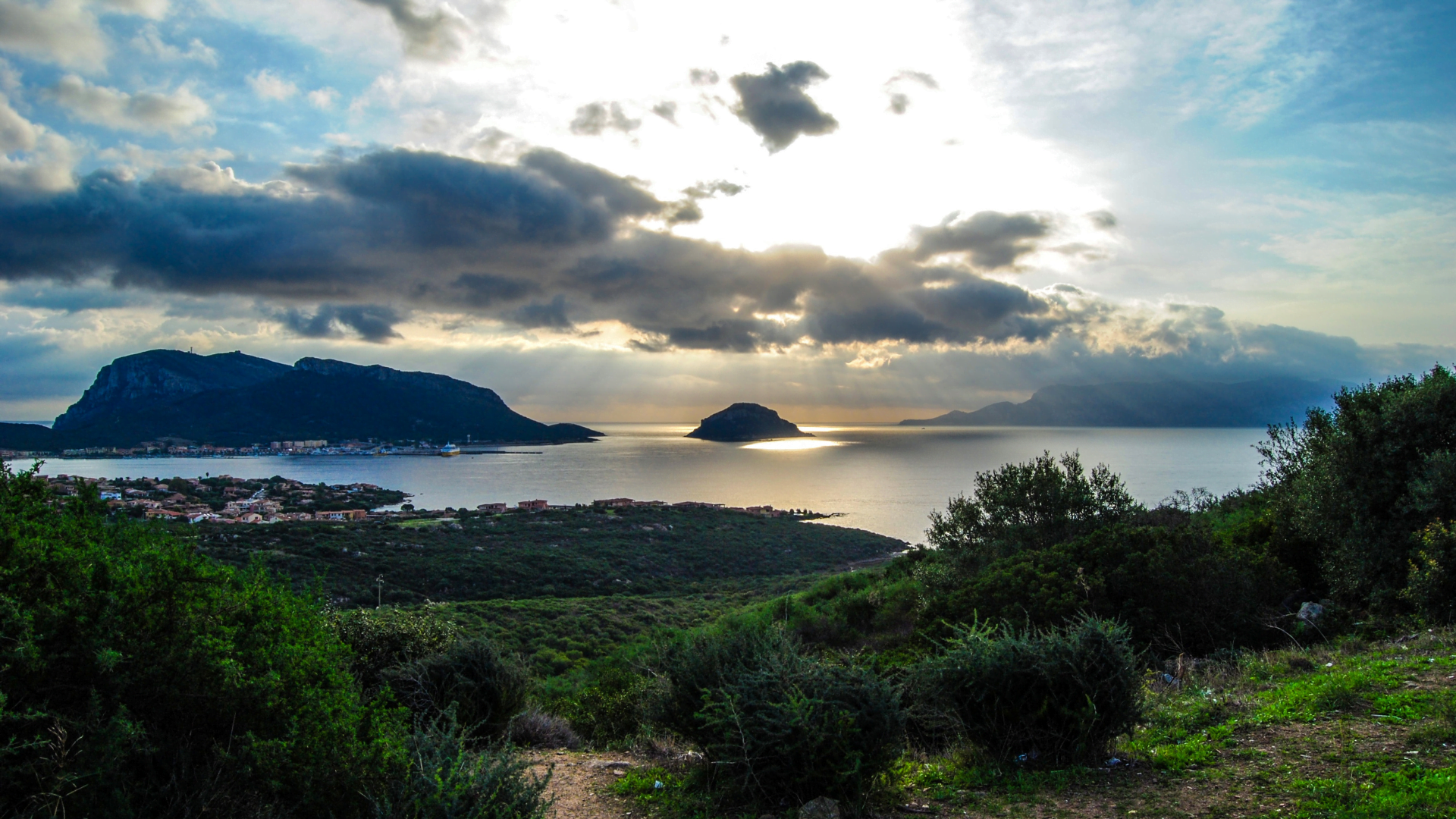
This guide covers everything worth knowing before you go: the best beaches, dolphin watching, the underwater sculpture museum, a Bronze Age sacred well almost no one visits, and honest advice on when to come and where to park.
One thing before we start. The name. Golfo Aranci does not mean “Bay of Oranges.” The town takes its name from the Gallurese word ranci, meaning crabs. Early cartographers misread it as aranci (oranges) and the mistake stuck. No orange groves. Plenty of crabs.
Where is Golfo Aranci and how to get there
Golfo Aranci sits on the northeast coast of Sardinia, about 15 km from Olbia and roughly 25 km from Porto Cervo. The town wraps around a deep natural bay framed by the dramatic Capo Figari headland to the north, which is why the water here is unusually calm and clear compared to the exposed coasts further south.
Getting there from Olbia airport
The fastest option is by car. From Olbia Costa Smeralda Airport (OLB) the drive takes 20 to 30 minutes depending on traffic. In July and August, the coast road can slow things down at peak hours.
Public transport exists but is limited to seasonal buses and a stretch of scenic railway. For a base that lets you reach the beaches, the hiking trails and day trips to the Costa Smeralda freely, renting a car from the airport makes a real difference.
Compare car rental prices at Olbia Airport
Arriving by ferry
Golfo Aranci is also a direct mainland ferry port, which surprises many visitors. Sardinia Ferries operates routes connecting the town to Livorno, Savona, Toulon and Nice. If you are coming from northern Italy or the south of France, you can disembark here without going through Olbia at all. The port is a 10-minute walk from the town centre.
The beaches of Golfo Aranci
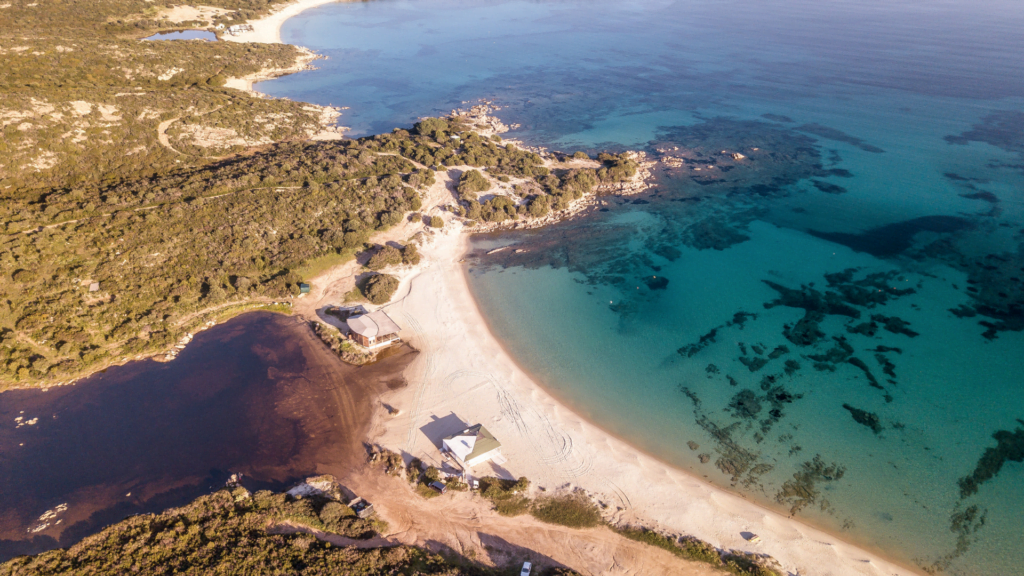
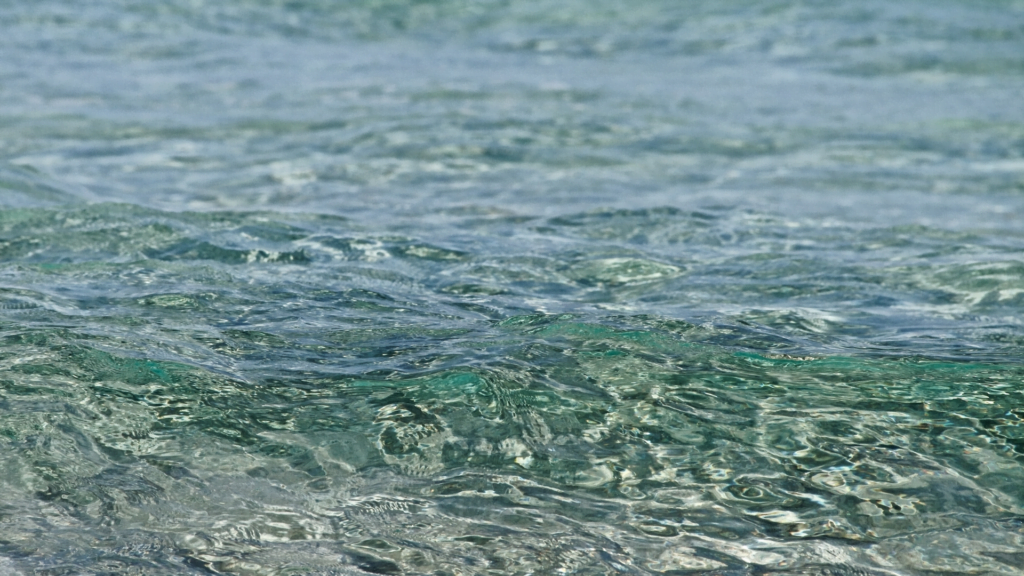
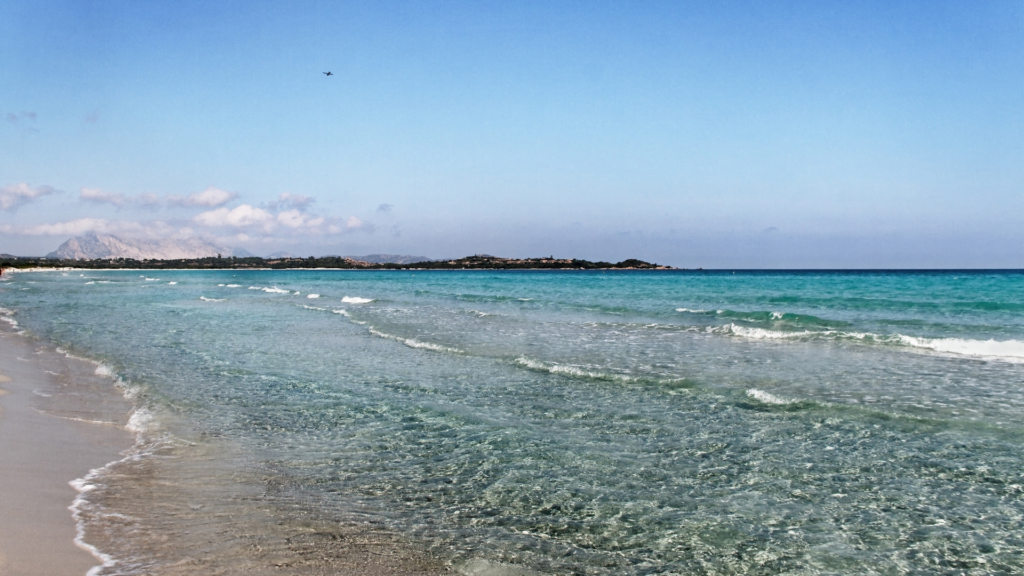
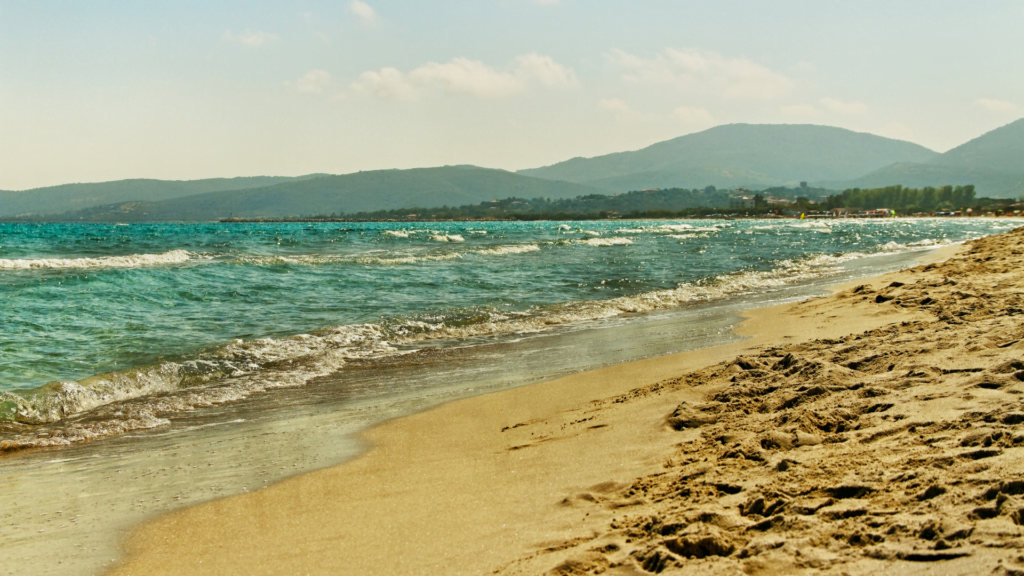
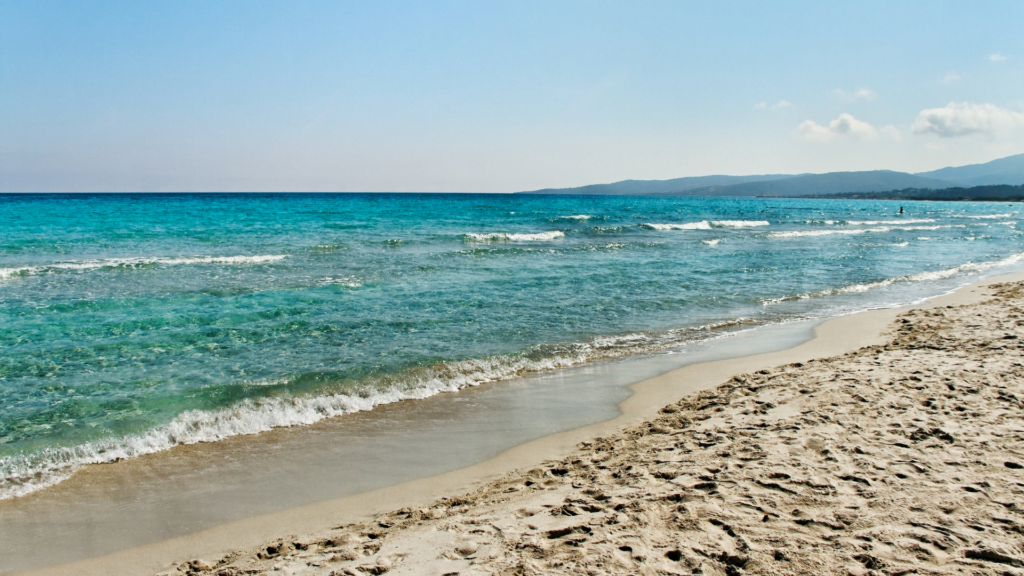
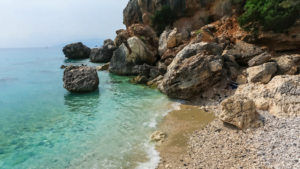
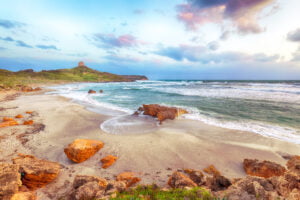
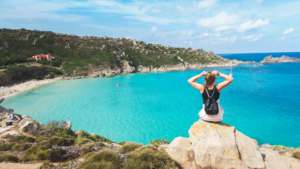
The municipality has around 24 named beaches, ranging from sandy family stretches within walking distance of the main square to wild granite coves reachable only by boat. Here is an honest breakdown of the ones actually worth your time.
The five town beaches
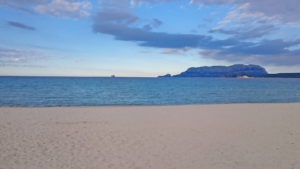
Right in the village, a sequence of sandy beaches runs along the seafront. Locals call them Prima, Seconda, Terza, Quarta and Quinta Spiaggia, simply numbered from north to south. All five are within 10 minutes’ walk of the centre.
The seabed is sandy and shallow, which makes them ideal for families with young children. They have lifeguard posts, beach lidos and easy access from the road. The honest trade-off: they fill up in August. Parking near Prima Spiaggia is pay-and-display from June through September, so either arrive early or use the car park by the ferry terminal and walk.
Cala Moresca
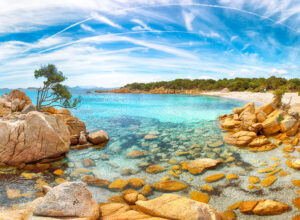
Cala Moresca is the standout beach of the area. Two connected coves sit below a pine forest, with direct views across to the small island of Figarolo. The water shifts from pale turquoise at the shoreline to deep cobalt further out.
There are no beach lidos, no bars and no facilities. That is the point. Getting there requires a short walk down from a gravel car park, and the final stretch of road leading to the car park is unsealed and rocky. Most standard hire cars handle it without trouble, but check your rental excess if you are driving something low-clearance.
One detail that tour operators mention: scenes from a 2023 Disney live-action production were filmed here, using the cove’s cliffs and pine-forest backdrop as a set. Whether or not that interests you, the location speaks for itself.
Cala Moresca car park fills by 9 AM on summer weekends. This is not an exaggeration. Come early or take the morning kayak tour and paddle in from the sea.
Cala Greca, Cala del Sonno and Cala Sabina
Around the northern side of the Capo Figari headland, a series of sheltered coves tucks into the limestone cliffs. Cala Greca is the most protected of the group, with a bed of pale pebbles and exceptional water clarity. It sits inside the Capo Figari nature reserve, which keeps it off-limits to motorboats, making it one of the best snorkeling spots in the area.
Cala del Sonno was historically used as a shelter by local fishermen and has a raw, undisturbed feel. Cala Sabina is the most accessible of the three, reachable by the seasonal narrow-gauge railway that follows the coast from Golfo Aranci town toward Olbia. Taking the train to Cala Sabina and swimming back time is one of those genuinely good local ideas that sidesteps the parking problem entirely.
Most of these coves are not reachable by road. Arrive by boat, by kayak, or on foot via the hiking trail from Cala Moresca. Allow at least 45 minutes each way on foot.
Spiaggia Bianca and La Marinella
South of the ferry port, Spiaggia Bianca (White Beach) is a compact stretch of pale sand that earns its name. The rocky outcrops around the bay create natural channels ideal for snorkeling, and the shallow entry makes it comfortable for anyone who prefers sand underfoot rather than pebbles.
La Marinella is broader, with about a kilometre of soft sand and a backdrop of pink granite boulders. It sits near the boundary with Porto Rotondo municipality and is notably less crowded than the town beaches in midsummer. Facilities here include a beach bar and limited sunbed hire.
Things to do in Golfo Aranci: top activities
Eco-friendly dolphin watching boat trip
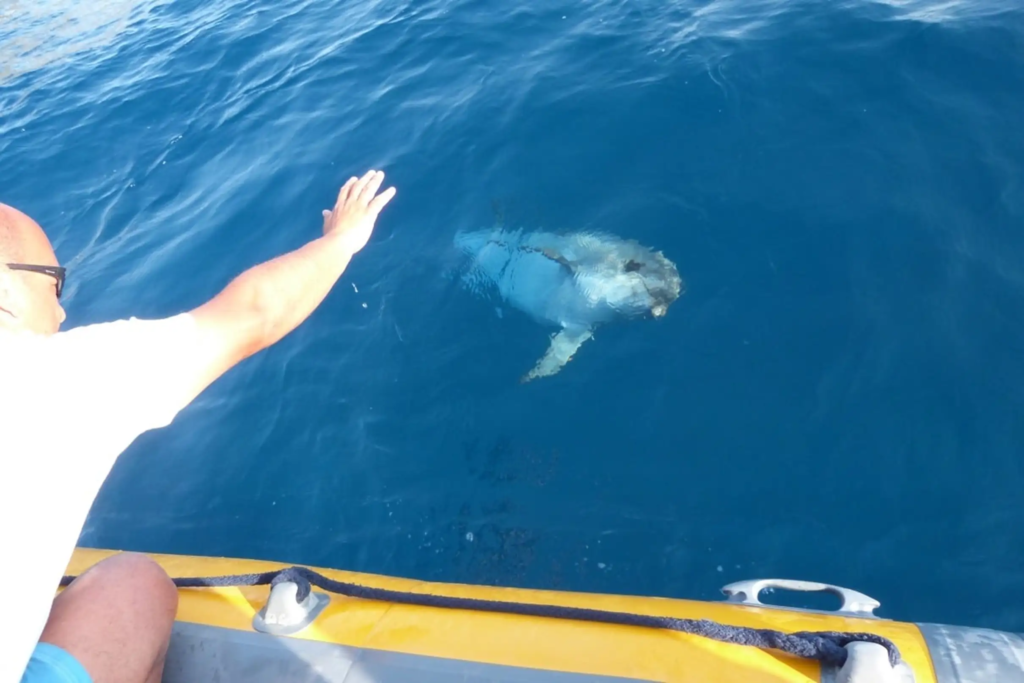
A resident pod of bottlenose dolphins has been living in the waters around Figarolo island for over ten years. They are drawn to the fish farm near the island, where large quantities of sea bass and sea bream are raised. This is a predictable feeding ground, which is why tour operators can make a credible claim about sighting frequency: according to the operators who participate in the Il Golfo dei Delfini environmental project, dolphins were not spotted on only three occasions across an entire summer season.
This 1.5-hour zodiac tour departs from Sos Aranzos beach, heads north along the Capo Figari cliffs, and circles to the Figarolo fish farm. Soft drinks are included. The operator follows an international conduct code designed to minimise disturbance to the dolphins.
Book the eco-friendly dolphin watching boat trip
Kayak tour with dolphins, snorkeling and aperitif
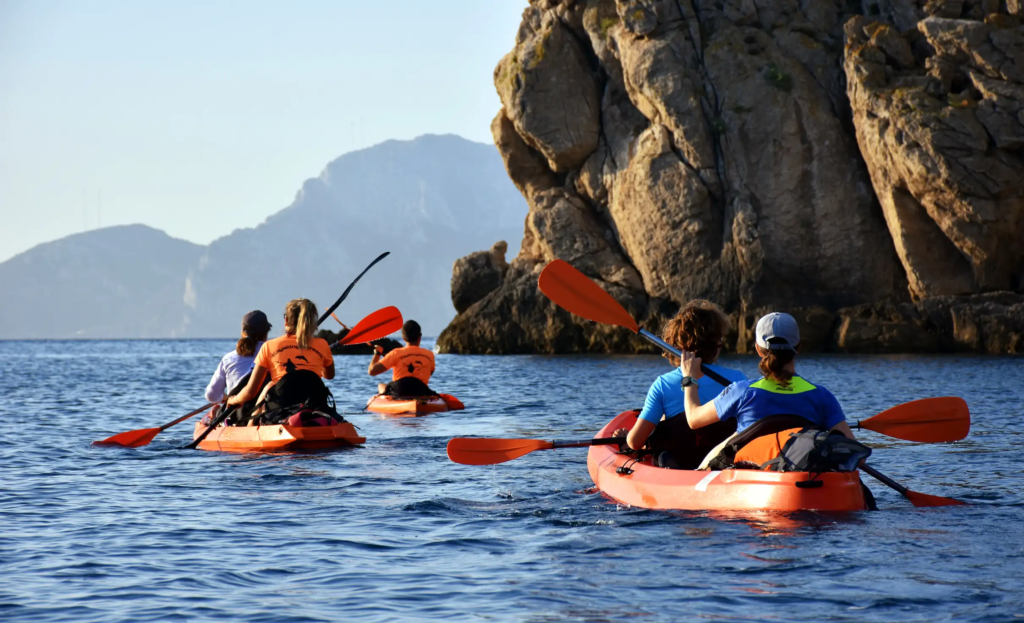
The most popular activity in Golfo Aranci by some margin. A guided kayak group (max 9 to 12 people depending on the operator) departs from Spiaggia dei Baracconi in the morning, paddles along the coast to Cala Moresca, stops for a swim and snorkel, continues to Figarolo island for a Sardinian aperitif (cheese, cured meats, local olives, bread and a drink), then routes past the fish farm in search of the dolphin pod.
No experience needed. Guides have been running this circuit since 2016 and the reviews consistently single out the snorkeling conditions around Figarolo as among the best in Sardinia.
Book the kayak tour with dolphins and aperitif
Sunset kayak safari with dolphins and aperitif
The same coastal route, run in the late afternoon. The group paddles out as the light shifts from white to orange, snorkels in calm evening water, and watches the sun drop behind the Gallura hills. According to multiple reviewers, the sunset timing is better for dolphin sightings because the day-trip motorboat traffic has thinned out by then.
The aperitif on this version includes beer, wine, local cheese, salsiccia, olives and bread. Worth booking a day or two in advance in high season.
Book the sunset dolphin kayak safari
Dolphin watching and snorkeling boat tour
A longer boat excursion covering Capo Figari, Cala Greca and Cala Moresca with snorkeling stops included. The tour departs from Sos Aranzos, moves north to the dolphin area near Figarolo, then anchors for snorkeling in the calm, protected water of Cala Greca. The guide points out marine life during the underwater section.
This is the best option if you want to cover more of the coastline, do not want to paddle, and still want a real chance of seeing dolphins.
Book the dolphin watching and snorkeling boat tour
Small-group kayak with Sardinian snack and dolphin watching
A second multilingual kayak option (English, German, Italian) running the Cala Moresca and Figarolo circuit in a smaller group of maximum 9 people. The morning version includes pastries, fresh fruit, juice and water at the island stop. The afternoon/sunset version serves the full aperitif.
If you prefer a more personal experience rather than a larger group, this is the version to book.
Book the small-group kayak tour
Traditional or transparent kayak tour
The same Golfo Aranci coastal circuit, but with a choice of kayak type at booking: a conventional sea kayak for stability and comfort, or a transparent kayak with a clear hull that lets you watch the seabed passing beneath you. Reviewers who chose the transparent option consistently described it as the highlight of the experience.
The tour ends with a tasting of local products at the operator’s garden near the beach.
Book the transparent or traditional kayak tour
Tavolara and Molara full-day snorkeling trip
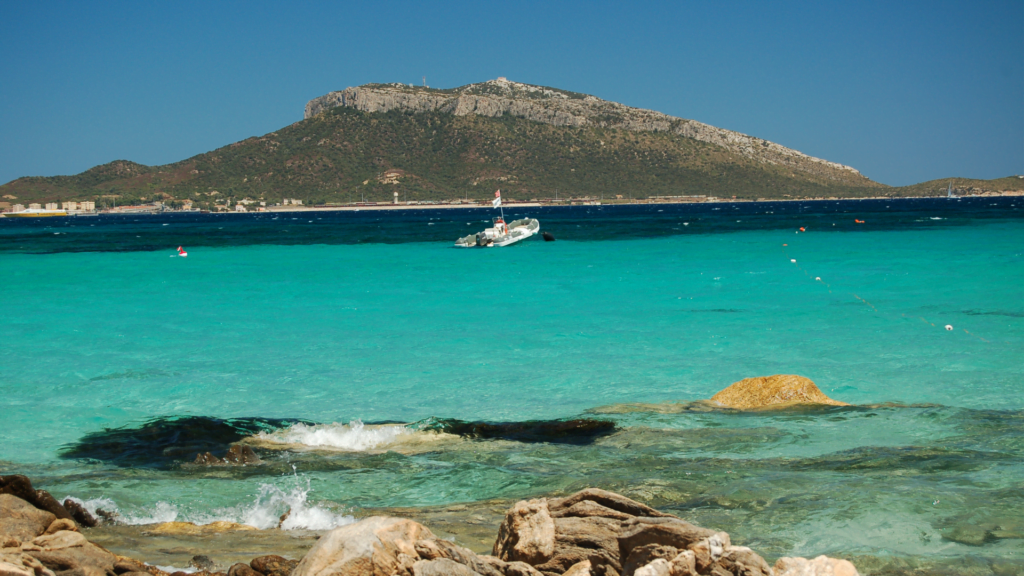
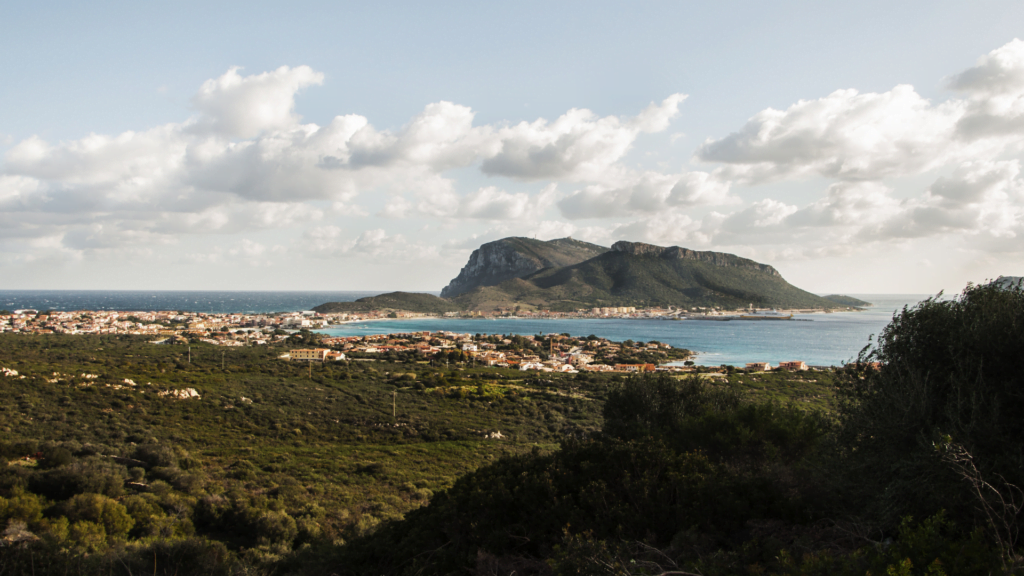
From Golfo Aranci you are perfectly positioned for a full-day boat excursion to Tavolara Island, one of the most striking rock formations in the entire Mediterranean. A sheer limestone plateau rising 560 metres from the sea, it is also home to one of the smallest kingdoms in the world, with a royal family cemetery that still stands today.
The excursion combines snorkeling in the crystal-clear waters around Isola Molara, a stop at the famous translucent bay on the north side of Tavolara, and time to explore the rocky shoreline. Departures available from the port area. Check our full guide to Tavolara Island for more details on what to expect.
What to see in Golfo Aranci: beyond the beach
The MuMart: Sardinia’s only underwater art museum
MuMart (Museo Subacqueo di Arte) is a collection of 14 stone sculptures placed on the seabed at depths of between 4 and 7 metres, close to the Golfo Aranci coastline. The works were created specifically for the underwater setting: shapes and surfaces designed to be colonised by algae and marine organisms over time, so the sculptures change appearance with every passing season.
You do not need to be a certified diver to see them. Snorkeling is sufficient for most of the pieces, and a glass-bottom boat option exists for those who prefer to stay dry. The Mizar submarine also offers a viewing option. Confirm access arrangements with local operators before visiting, as seasonal availability varies.
Capo Figari Nature Reserve and the hike to the summit
Capo Figari is an 850-hectare protected peninsula rising to 342 metres. The reserve shelters a small population of mouflons (wild Sardinian sheep with curved horns), peregrine falcons, and in late summer, grey herons that pass through during migration.
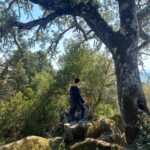
The main trail climbs from Cala Moresca to the summit in about 3 kilometres. Allow 2 to 3 hours for the full return. The path is marked but uneven in sections, and there is no shade above the first kilometre. Bring water and proper footwear. Trainers are borderline; trail shoes are better.
At the top, two things reward the climb. The view first: on a clear day you can see Tavolara, Olbia bay, the Maddalena archipelago and, depending on conditions, Corsica. Then the building. The summit station is the site of the Marconi Radio Station, where Guglielmo Marconi conducted a series of long-distance radio signal experiments in 1932 in collaboration with Italian Navy personnel. The station is not open to the public but the structure is clearly visible. Near the summit you can also find the small English Sailors’ Cemetery, marking the burial site of British naval crew whose ships wrecked on the headland.
Pozzo Sacro di Milis
Near the Golfo Aranci train station, an almost completely unknown nuragic monument sits in a low-profile archaeological area: the Pozzo Sacro di Milis, a sacred well built during the Bronze Age (roughly 1300 to 900 BC). Like all Sardinian sacred wells, it was used for ritual water worship and is aligned to capture sunlight during specific calendar events.
Access is free and the site has no facilities. It takes about 15 minutes to walk from the town centre. Almost no English-language guide to Golfo Aranci covers this. If you have any interest in Sardinia’s nuragic civilisation, it is worth a look before or after the beach. For broader context, see our guide to the best nuraghe in Sardinia.
The bronze Siren of the lungomare
On the waterfront promenade, a mechanical bronze Siren statue rises from the sea twice daily during summer: at 11:30 and 19:00. The emergence is accompanied by a recorded song. It lasts a few minutes. It is low-key and slightly theatrical, but it has become one of Golfo Aranci’s genuine identifying images and draws a small crowd at both times of day.
Worth timing a walk along the lungomare to coincide with one of the two appearances. The evening emergence at 19:00 catches the best light for photos.
Figarolo Island
Figarolo is a small protected islet about 500 metres off Cala Moresca. There is no public boat service and independent access is not permitted. The only way to visit is via one of the kayak or boat tours that include a stop here.
The island is home to mouflons, a nesting colony of grey herons in late summer, and the offshore fish farm that makes this stretch of water the most reliable dolphin-watching spot in northeast Sardinia. The combination of reliable prey and protected water has kept the same pod of bottlenose dolphins in residence here for over a decade.
Getting around: car rental in Golfo Aranci
The town centre is genuinely walkable. The numbered town beaches, the lungomare, the Pozzo Sacro and the ferry port are all within 15 minutes on foot from the main square.
Beyond that, you need a car. Cala Moresca is a 10-minute drive that cannot be substituted by any other means. The Capo Figari trailhead is at Cala Moresca. Day trips to Costa Smeralda, Porto Cervo or Tavolara require your own transport. And Olbia, 15 km away, has the nearest supermarkets, hospitals and airport.
The most practical option for most travellers is to pick up a rental at Olbia airport on arrival and keep it for the duration.
Compare car rental prices at Olbia Airport
Where to stay in Golfo Aranci
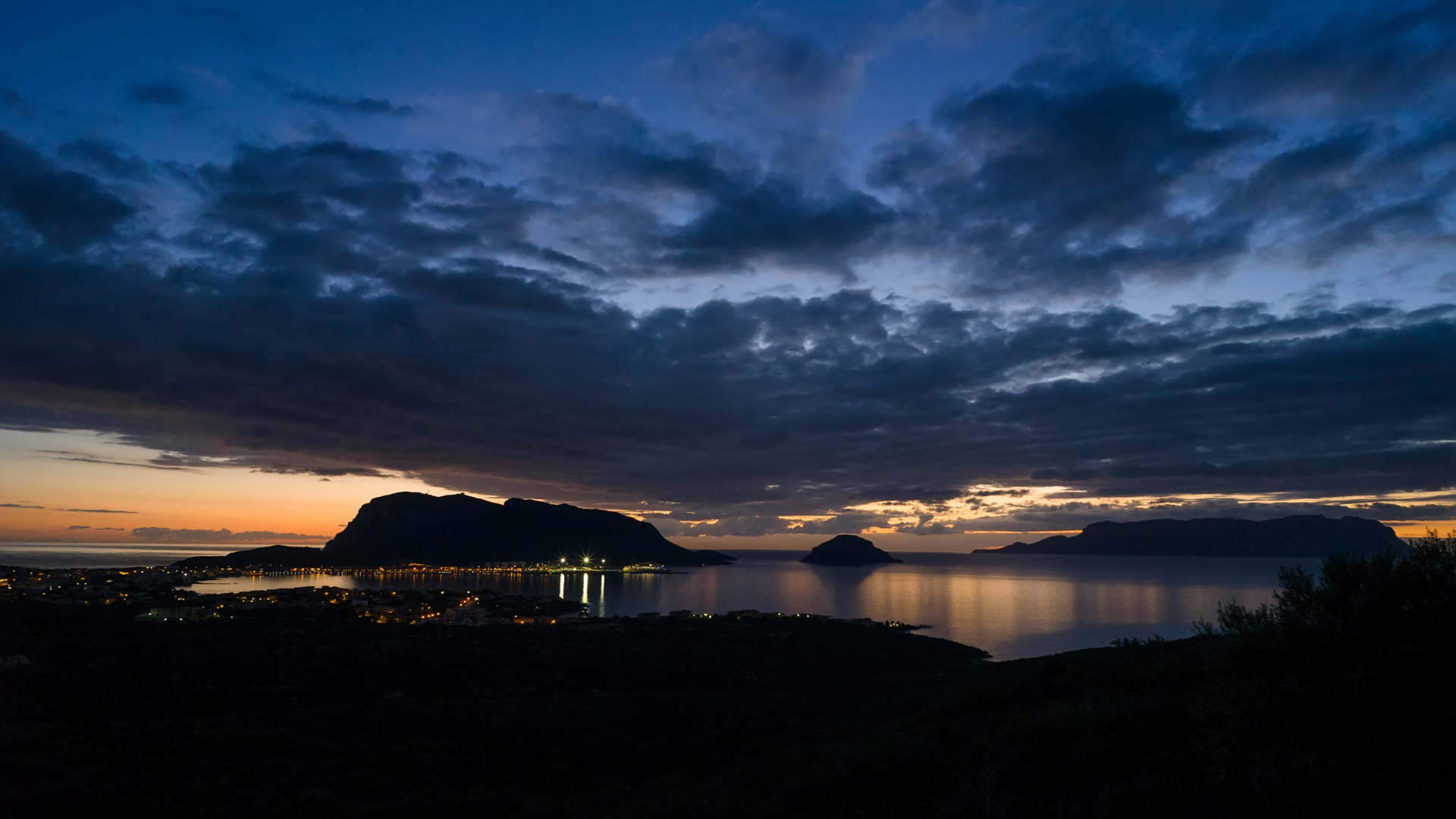
Golfo Aranci has a clear two-tier accommodation market: a handful of genuinely excellent seafront hotels at the upper end, and a set of simpler family-run options in the village itself. There is not much in between.
For a broader overview of the area, see our guide to where to stay in northern Sardinia.
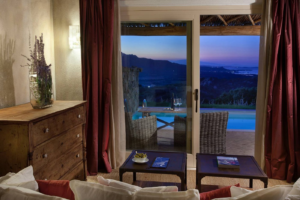
Gabbiano Azzurro Hotel & Suites is the most talked-about address in town. Family-run since 1968, it sits directly on a private white-sand beach with an infinity pool and award-winning seafood restaurant. The rooms facing the sea are genuinely beautiful. It fills up early for July and August, so book well in advance. Read our full review of Gabbiano Azzurro before booking. Check availability on Booking.com
VOI Colonna Village is a large 4-star resort on 100,000 square metres of grounds, with two pools, a private beach a 5-minute walk away, three restaurants, a diving school and evening entertainment. The scale makes it well suited to families who want everything in one place. Read our full review of VOI Colonna Village for a local perspective. Check availability on Booking.com
Hotel Baia Aranzos is a 4-star property about 400 metres from the beach, with two pools, a family-friendly structure and a location only 15 km from Olbia airport. Several dolphin-watching tours use the nearby beach as a departure point. Check availability on Booking.com
Smaller guesthouses and B&Bs in the village centre offer the most direct connection to local life. Prices are significantly lower than the resort options, and you are within walking distance of the port, the lungomare and the numbered beaches. The trade-off is limited amenities and August noise from the promenade.
The local perspective: what Sardinians think
The wind and which beaches to choose
The Maestrale (northwest wind) is the dominant summer wind in Sardinia, and it reaches Golfo Aranci’s town beaches directly because they face northwest. On a windy day, Prima through Quinta Spiaggia can have choppy water and blowing sand. Cala Moresca and Cala Greca, sheltered by the mass of Capo Figari to the north, stay calm in the same conditions. If the forecast shows Maestrale above 15 knots, skip the town beaches and head for the headland side.
When to come
August is genuinely crowded. The Cala Moresca car park fills before 9 AM. The town beaches are packed by mid-morning. Prices are at their peak and restaurants often require booking. There is also real energy in the village at this time of year, which some visitors enjoy.
September and early October are the local favourite. The sea temperature is still warm from the summer (around 24 to 26°C), the crowds have thinned substantially, Cala Moresca is reachable without a 6 AM start, and prices drop across accommodation and restaurants. If your schedule allows any flexibility, aim for the second half of September.
The ferry port reality
In low season, Golfo Aranci can feel transitional. It is a working port, and outside the summer months the lungomare quiets down significantly. This does not affect the beaches or the hiking, but if you are visiting in April or May, temper your expectations for evening atmosphere compared to peak summer.
Its value relative to the Costa Smeralda
Golfo Aranci is markedly more affordable than Porto Cervo, Porto Rotondo or Baja Sardinia, while being within 20 to 30 minutes of all of them. The fish restaurants on the lungomare charge real-world Sardinian prices rather than Costa Smeralda prices. The beaches are genuinely comparable in water quality. For a holiday that balances access to the glamorous north coast with something more grounded, this is one of the better base camps in northeast Sardinia.
Golfo Aranci weather
 -
- -
- -
- -
- --------------
FAQ about Golfo Aranci
Where does the name Golfo Aranci come from?
The name does not refer to oranges. It derives from the Gallurese word ranci, meaning crabs. Early map-makers misread it as aranci (the Italian for oranges) and the error was never corrected officially.
What are the best beaches in Golfo Aranci?
Cala Moresca is the most beautiful, with two sheltered coves, pine forest, and views of Figarolo. For families with young children, the numbered town beaches (Prima through Quinta Spiaggia) are the most practical. For snorkeling, Cala Greca and Spiaggia Bianca are the strongest options. In a Maestrale wind, choose the Capo Figari side.
Can you see dolphins in Golfo Aranci?
Yes, with a very high reliability rate. A resident pod of bottlenose dolphins has lived in the waters around Figarolo island for over ten years, drawn by the offshore fish farm. Tour operators participating in the Il Golfo dei Delfini project report sighting the dolphins on all but three occasions throughout an entire summer season. Both boat and kayak tours are available.
How far is Golfo Aranci from Olbia airport?
About 15 km by road, taking 20 to 30 minutes depending on traffic. No direct airport shuttle exists; the fastest option is a rental car or taxi.
What is the MuMart in Golfo Aranci?
MuMart is Sardinia’s only underwater art museum, consisting of 14 stone sculptures placed on the seabed at depths of 4 to 7 metres near Golfo Aranci. It is accessible by snorkeling, scuba diving or glass-bottom boat.
Is Golfo Aranci good for families?
Yes. The five numbered town beaches have shallow, sandy seabeds and lifeguard coverage. The kayak tours accept children (under-12s ride in tandem kayaks with an adult). The VOI Colonna Village resort is specifically designed for family holidays. Distances within the town are short and walkable.
What is the best time to visit Golfo Aranci?
Late September is ideal: warm sea, far fewer crowds, lower prices. July and August are peak season with full atmosphere but heavy tourist traffic. May and June offer good weather, open facilities and moderate prices.
Sources
- Sardegna Turismo – Golfo Aranci – Official Regional Tourism of Sardinia
- GetYourGuide – Eco-friendly dolphin watching boat trip – operator description and verified reviews
- Comune di Golfo Aranci – official municipal website
- Ministero della Cultura – historical records on Guglielmo Marconi’s 1932 radio experiments at Capo Figari