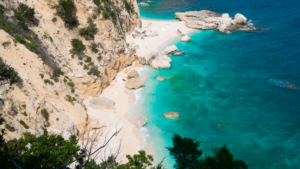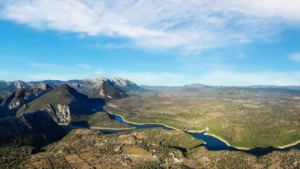
Cala Luna is one of those places that earns its reputation without needing marketing. An 800-metre crescent of pale sand, five caves carved into the cliff, a river of fresh water meeting the sea behind a curtain of oleanders: this is Cala Luna beach, Sardinia, tucked into the eastern coast of the island in the Gulf of Orosei. There is no road to get here. You arrive by boat or on foot, and that single fact shapes everything about the experience. Here is what you need to know before you go, from people who know this stretch of coast well.
Cala Luna: The beach at a glance
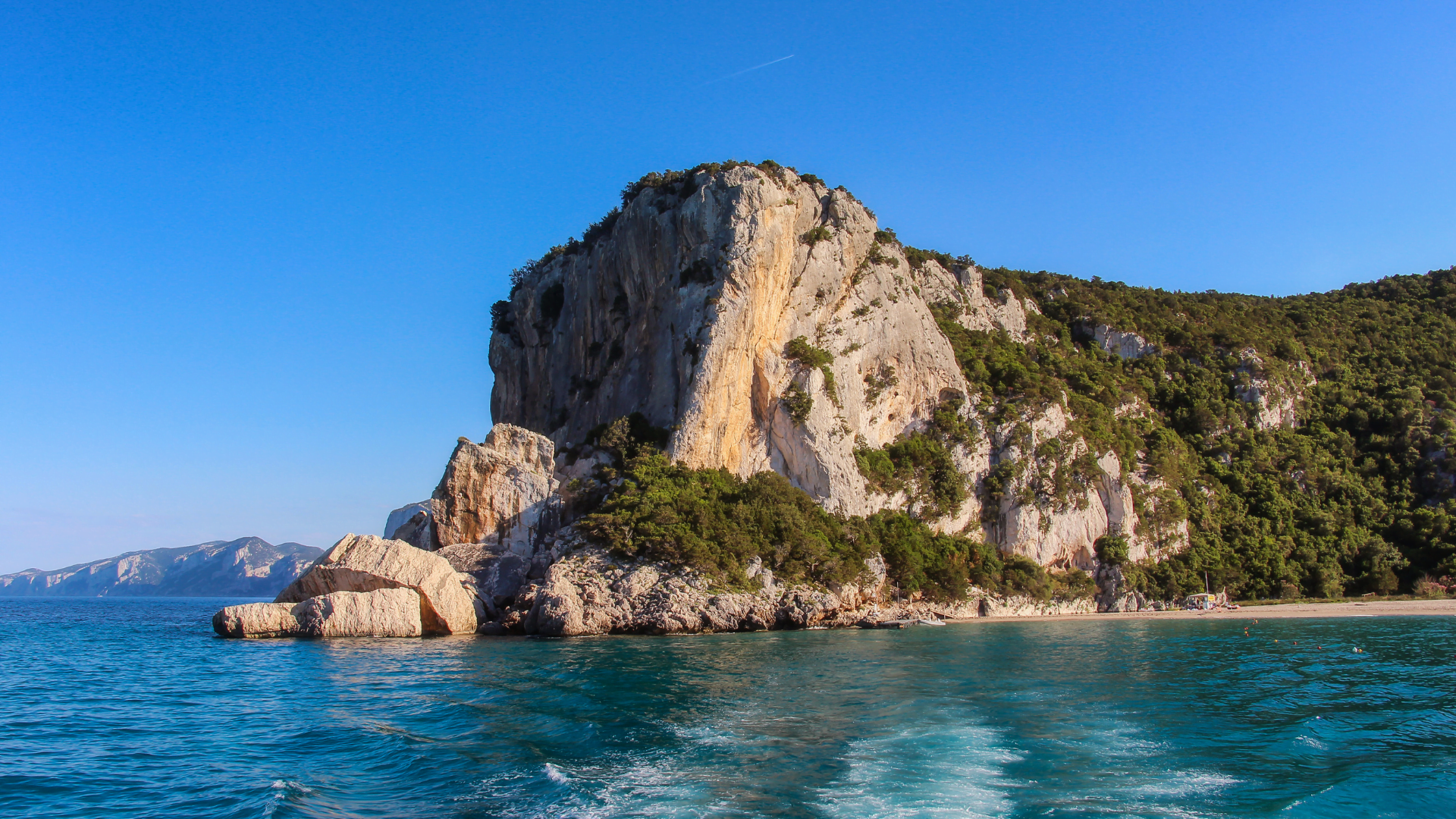
Cala Luna sits at the boundary between two territories: the municipality of Dorgali to the north and Baunei to the south. In the local Sardinian dialect spoken in Baunei, the bay is called Elune, or Su Golfu de Elune, a name that predates any tourist branding by centuries. The beach lies at the mouth of the Codula di Luna, one of the longest karstic canyon systems in Europe, stretching roughly 30 kilometres inland through the Supramonte limestone plateau.
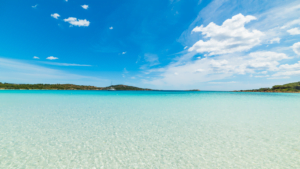
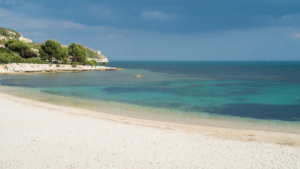
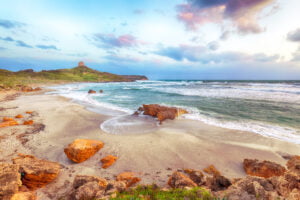
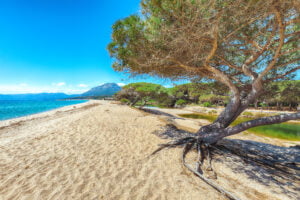
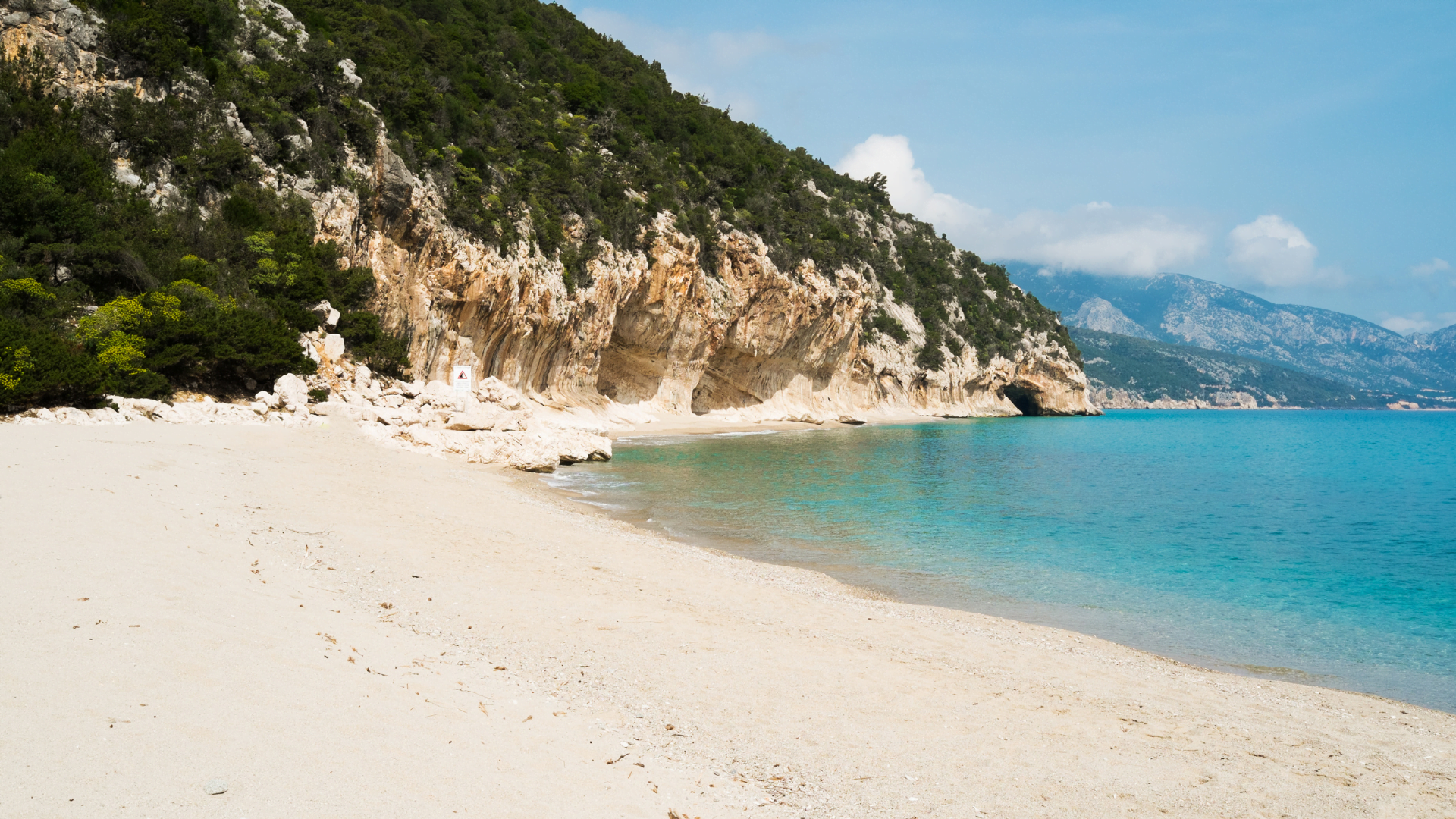
The shoreline is a mix of fine golden sand and smooth pebbles, shelving into water that shifts from transparent green in the shallows to a deep cobalt blue within a short distance from shore. The gradient is steep. Children can paddle safely at the edge, but the depth increases quickly.
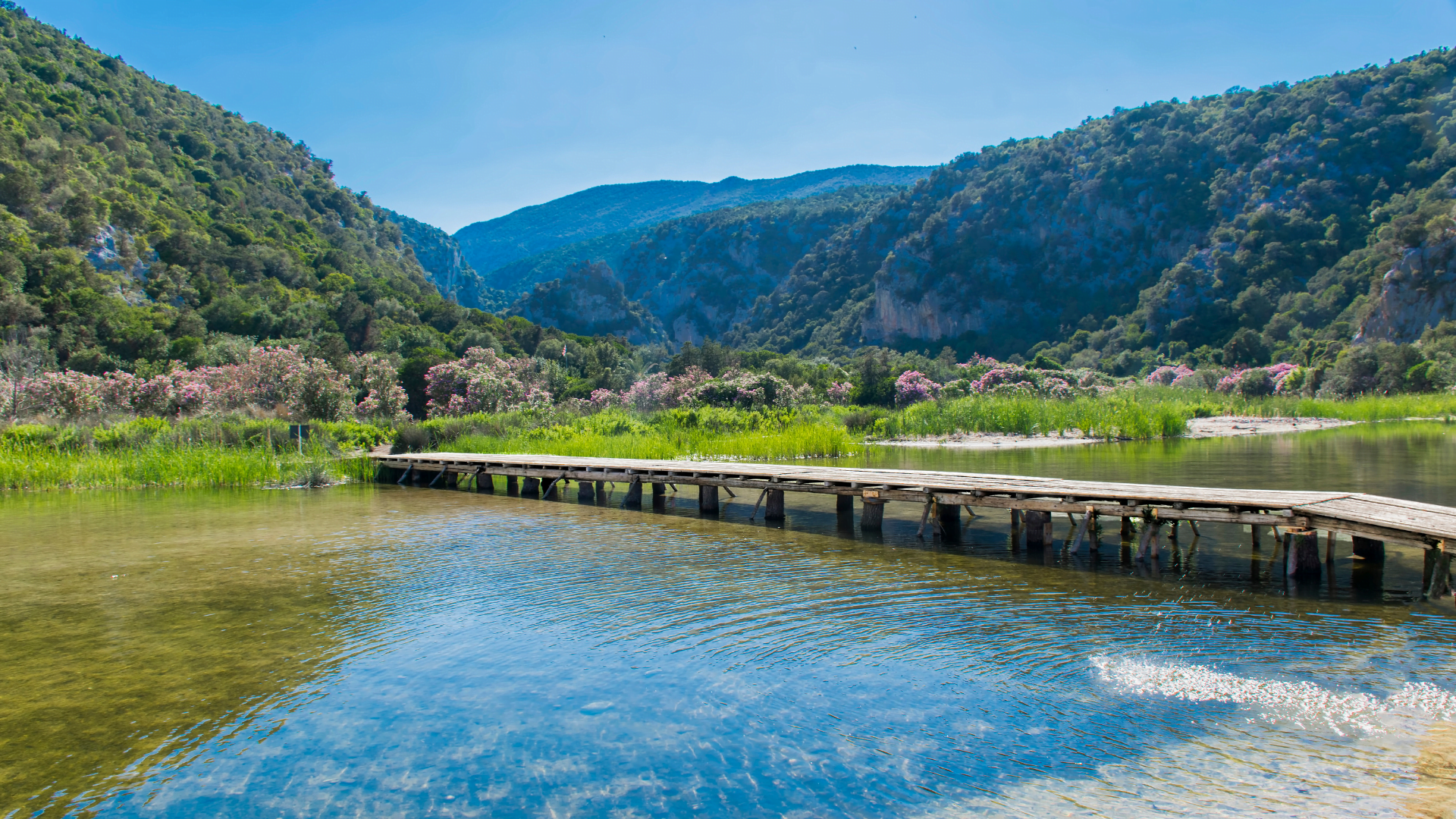
Behind the beach, the Codula di Luna river creates a small freshwater lagoon before reaching the sea. This is why the oleander forest exists: a dense strip of pink-flowering vegetation that backs the entire beach and gives Cala Luna a landscape unlike any other in the region. In spring, when the river runs strong, the contrast between the pink flowers and the turquoise water is remarkable.
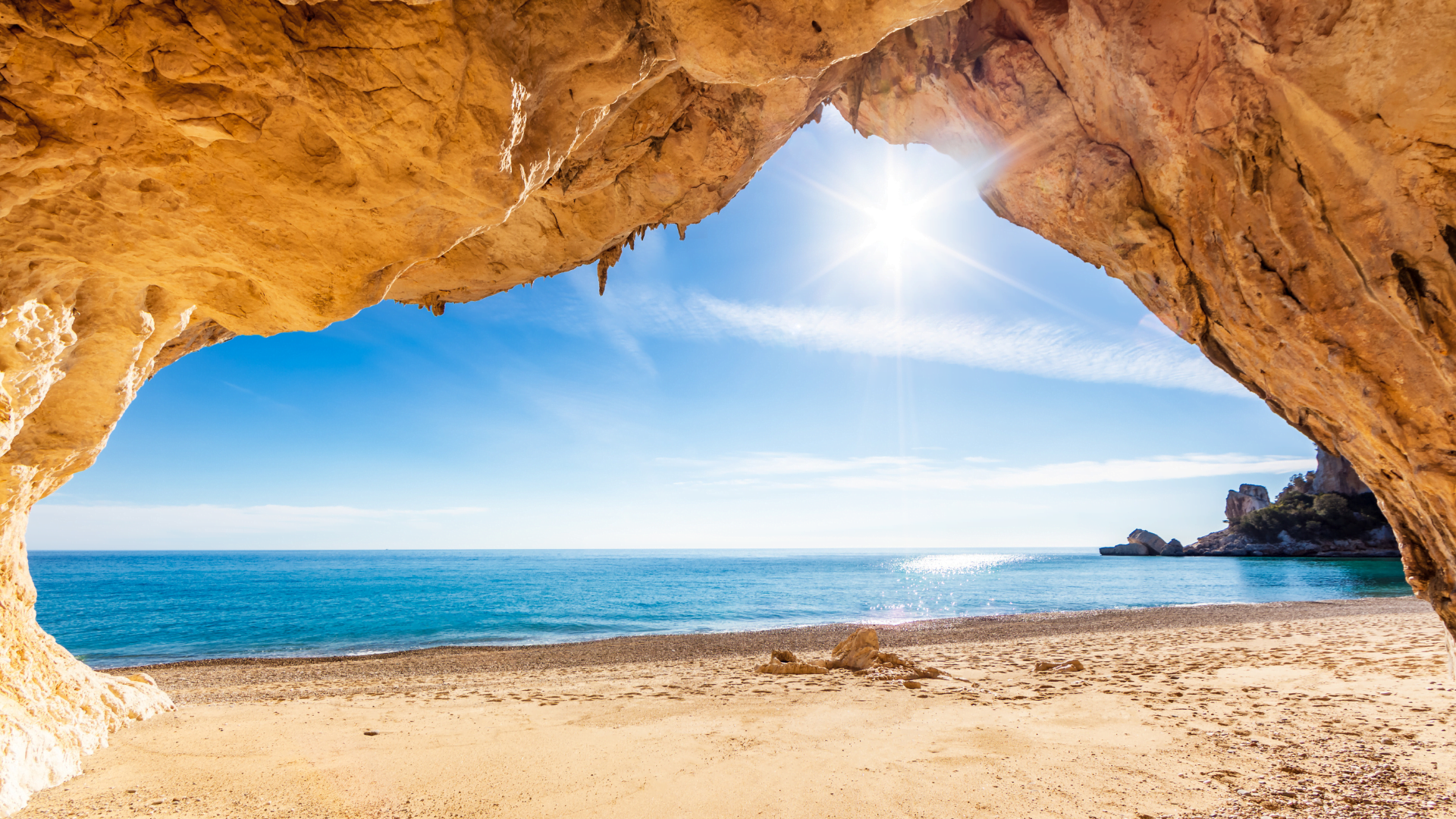
The five sea caves opening directly onto the sand are a defining feature. Some are large enough to walk into. They provide natural shade during the hottest hours and attract climbers as well as swimmers seeking shelter from the midday sun.
The beach became internationally known when director Lina Wertmüller chose it as the main set for her 1974 film Swept Away (Travolti da un insolito destino nell’azzurro mare d’agosto). Few locations have aged as well.
Key facts at a glance
| Feature | Detail |
|---|---|
| Location | Gulf of Orosei, eastern Sardinia |
| Municipality | Dorgali (north) / Baunei (south) |
| Beach length | Approx. 800 metres |
| Seabed | Sand and pebbles, steep gradient |
| Access | Boat or hiking trail only (no road) |
| Facilities | Bar, restaurant, sunbed rental, toilets |
| Lifeguard | None |
| Environmental contribution | €3 per person, payable in cash on arrival |
| Season | Open May to October |
| Sardinian name | Elune / Su Golfu de Elune |
How to get to Cala Luna
No road reaches Cala Luna. That is not a rumour or an exaggeration. You have two real options: arrive by sea or walk in.
By boat from Cala Gonone
The most popular approach for most visitors is the boat from Cala Gonone, a small seaside town about 9 kilometres north of the beach. The Nuovo Consorzio Trasporti Marittimi operates a regular ferry shuttle service from the port of Cala Gonone throughout the season. Departures run from approximately 9:00 to 11:00 in the morning, with hourly return boats from Cala Luna between 12:30 and 18:30.
The crossing takes around 15-20 minutes each way. The standard ferry shuttle costs approximately €35 per adult for a round trip. A combined ticket including a guided visit to the Grotta del Bue Marino (Sea Ox Cave) runs around €40-45.
The €3 environmental contribution is payable in cash only before departure. Carry change.
Practical note: collect your boarding pass at the ticket office at the port, at least 30 minutes before departure. In July and August, tickets for the most popular morning departures can sell out. Booking in advance through GetYourGuide removes that uncertainty.
The return boats from Cala Luna are operated by different vessels from the outward trip. This confuses some visitors. You do not need to return on the same boat you arrived on: simply be at the beach boarding point at your chosen return time.
By hiking trail from Cala Fuili
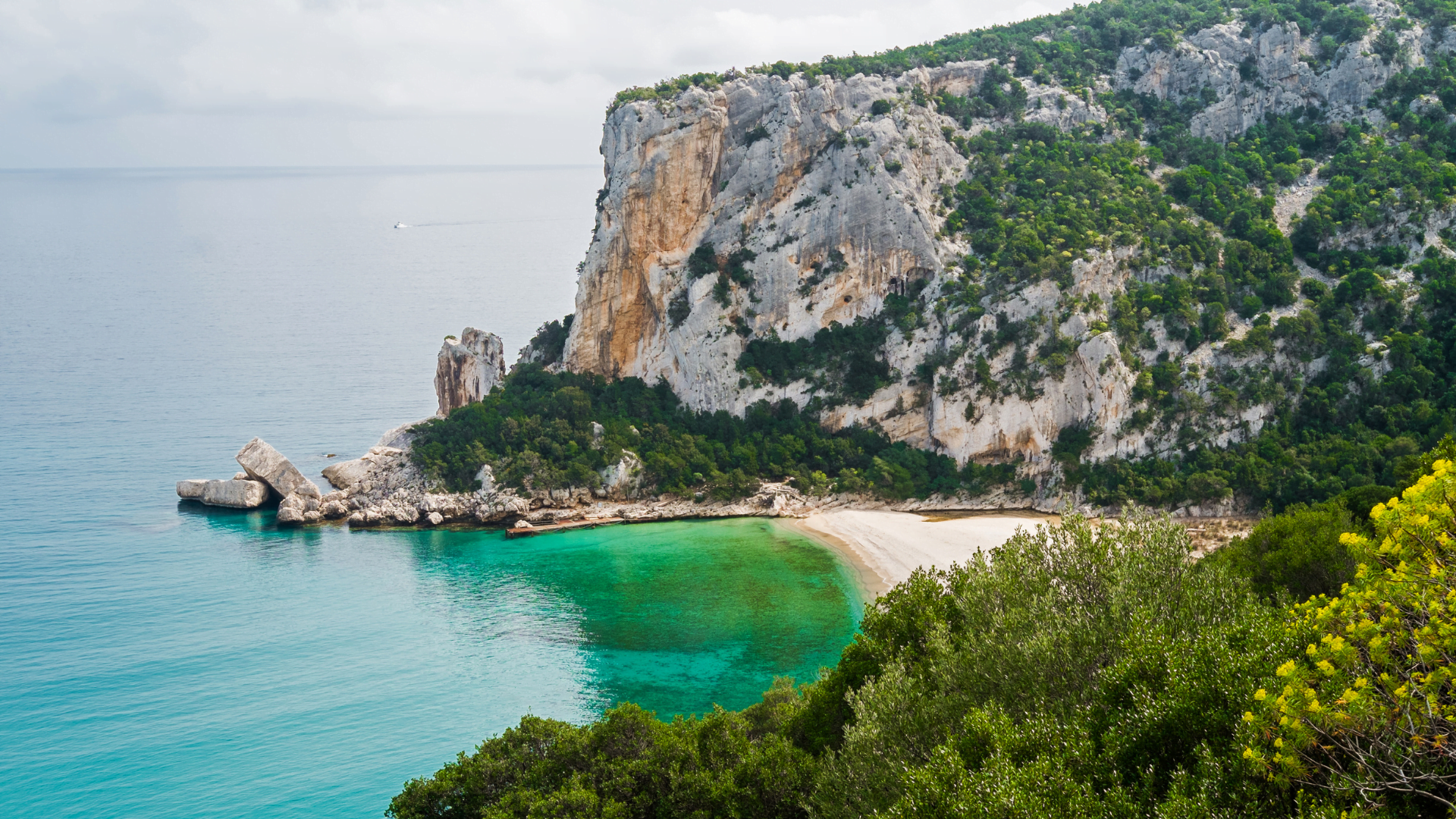
Cala Fuili is the last beach reachable by car on the road south from Cala Gonone. From its small car park, a well-marked trail descends and then climbs through Mediterranean scrubland to Cala Luna.
The numbers: approximately 5.5 kilometres one-way, moderate difficulty, around 1.5 to 2 hours depending on pace, with around 430 metres of cumulative elevation change. The path is rocky and uneven throughout. Proper hiking shoes or trail runners are not optional. There is no water source on the route. Bring at least 1.5 litres per person.
At roughly two-thirds of the way, a natural viewpoint opens over the Gulf of Orosei that stops most walkers in their tracks. This alone justifies the effort.
The smartest combination: hike one way, take the boat back. Walk down to Cala Luna in the morning, spend the afternoon on the beach, and board the return ferry to Cala Gonone at 17:30 or 18:30. A shuttle bus connects the port of Cala Gonone to the Cala Fuili car park for those who need to retrieve their vehicle.
The Cala Fuili car park fills up before 9:00 in peak season. Arriving by 8:00 is realistic advice, not an exaggeration.
By boat from Santa Maria Navarrese or Arbatax
Visitors staying in the southern part of the gulf, around Baunei, Santa Maria Navarrese or Arbatax, can join boat tours that depart from those ports and include Cala Luna as one of the stops. These tours cover the Baunei coast and typically include beaches such as Cala Mariolu, Cala Sisine, and Cala Goloritzé in the same day. This is a practical and often overlooked option for anyone based south of the gulf.
Things to do at Cala Luna: top activities
Cala Luna beach in Sardinia rewards those who go beyond simply lying on the sand, though lying on the sand is also a perfectly valid choice.
Ferry Boat Shuttle: Cala Gonone to Cala Luna
The simplest and most flexible way to reach the beach. This is pure transport: you choose your morning departure, choose your return time, and the rest of the day is yours. The boat runs along the Gulf of Orosei coast, and even the crossing offers views that justify pulling out a camera.
Book the Cala Gonone – Cala Luna ferry shuttle on GetYourGuide
Cala Luna + Grotta del Bue Marino: Boat Tour
The Grotta del Bue Marino (Sea Ox Cave) is a karst system that extends more than 70 kilometres inland. Its name comes from the monk seals, called su oe ‘e mare (sea ox) by local shepherds, who once used its inner chambers to rear their pups. The guided walk covers around 800 metres of the southern branch, lit artificially and crossed by wooden walkways. After the cave visit, the boat continues to Cala Luna for beach time. A four-hour experience that covers two of the Gulf of Orosei’s headline attractions in a single outing.
Book the Cala Gonone – Grotta del Bue Marino + Cala Luna boat tour on GetYourGuide
Cala Luna + Cala Sisine: Full Day Boat Tour
A full day on the water, with a morning stop at Cala Luna and an afternoon stop at Cala Sisine, one of the most isolated beaches on the coast. Audio guide available in English, French, Italian and German. A Vermentino and a Sardinian sweet are served on the return journey. Environmental contribution of €3 payable in cash before departure.
Book the Cala Luna + Cala Sisine full-day tour on GetYourGuide
Boat Tour from Arbatax: Cala Mariolu, Cala Luna and Grotta del Fico
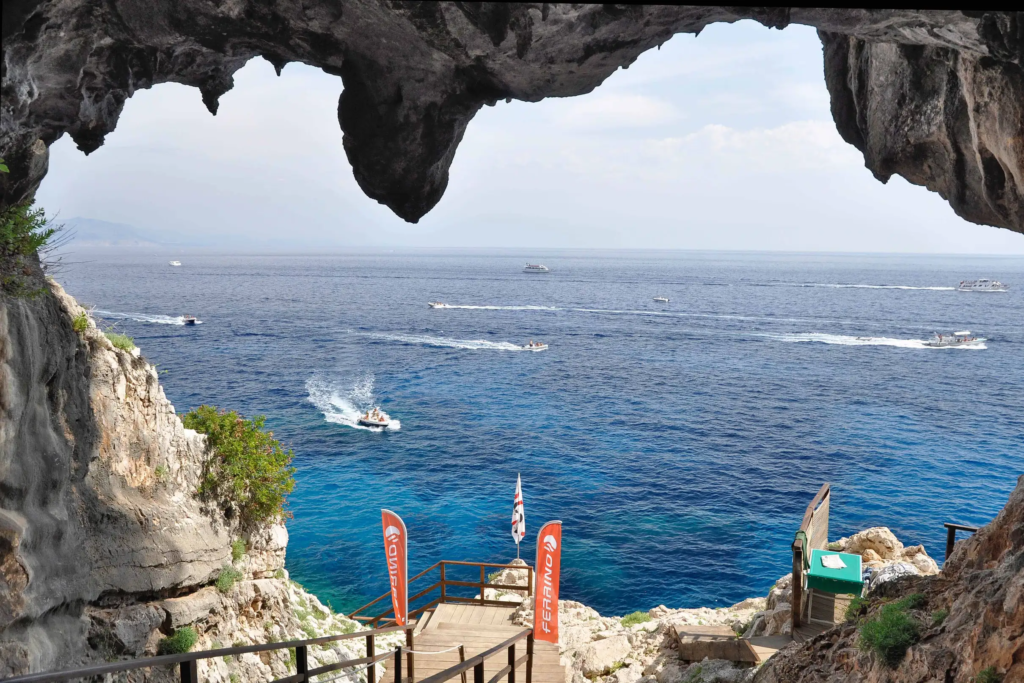
Departing from Arbatax on the southern end of the gulf, this full-day tour covers 24 miles of the Sardinian Natural Park coastline on a large 24-metre boat. Three beach stops (Cala Mariolu, Cala Luna, Cala Sisine) plus an optional visit to the Grotta del Fico. The best option for visitors based south of the gulf who do not want to drive north to Cala Gonone. Swimming and snorkelling stops at each beach.
Book the Arbatax boat tour to Cala Luna and Cala Mariolu on GetYourGuide
Guided Trekking to Cala Luna from Cala Fuili
If you want to walk the Cala Fuili trail but feel uncertain about navigating rocky terrain alone, a guided hike takes the guesswork out of it. The guide explains the flora, the geology of the Supramonte, and the history of the area along the way. The option to return by boat to Cala Gonone instead of retracing the trail is typically included, which makes for a much more satisfying day.
Book the guided trekking to Cala Luna on Viator
Cala Luna by Night
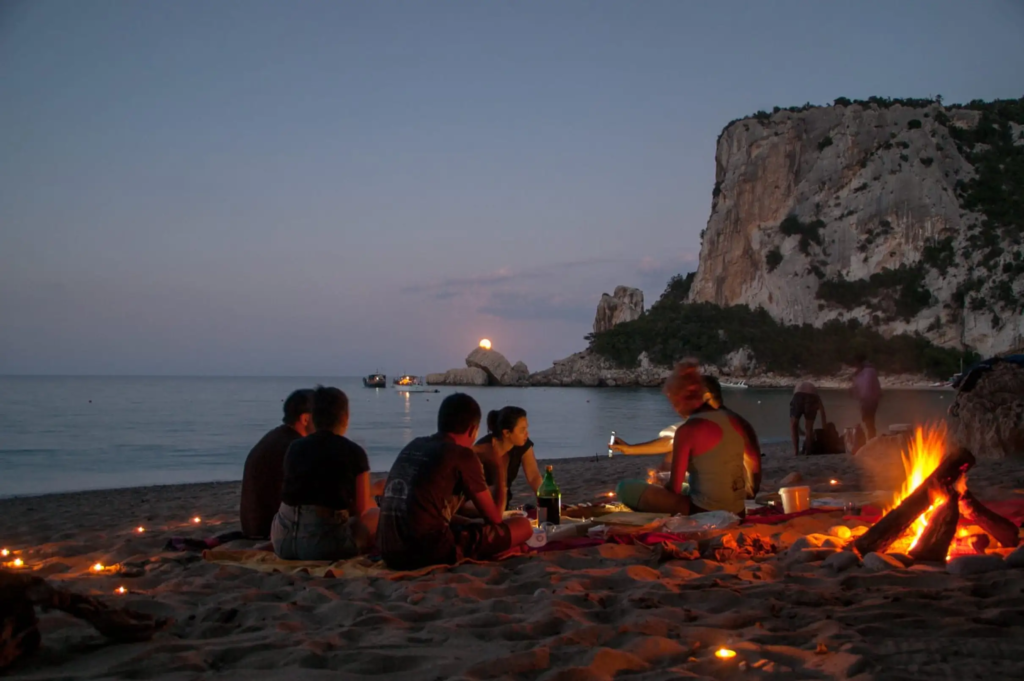
This is the most unusual experience on the list, and the one that separates it most clearly from a standard beach day. A small rubber dinghy leaves after sunset, when the last daytime boats have returned to Cala Gonone and the beach is empty. You arrive at Cala Luna in the dark, eat and drink inside one of the sea caves (local cheeses, salami, Sardinian wine), swim in the sea at night, and return under a sky with no light pollution. The return is typically around 01:00 to 02:00 in the morning. Not suitable for everyone. Genuinely unforgettable for those who do it.
Book Cala Luna by Night on GetYourGuide
Getting around: car rental for Cala Gonone and the Gulf of Orosei
Public transport does not reach Cala Gonone adequately. A car is the only practical way to base yourself in this part of Sardinia and have any flexibility: to reach the Cala Fuili trailhead, to explore nearby beaches such as Osalla or the smaller coves north of Cala Gonone, or simply to drive into Dorgali for dinner.
The nearest airports are Olbia Costa Smeralda (approximately 1 hour 30 minutes by road) and Cagliari Elmas (approximately 2 hours 30 minutes). Olbia is the default choice for most visitors to the eastern coast.
You can compare rental prices and book directly here:
Booking early, especially for July and August, makes a significant difference in price and availability.
When to visit Cala Luna: the honest picture
The official tourist answer is “June to September.” The honest local answer is more specific than that.
June and September: the local choice
June and September are when people who know Sardinia actually visit. The sea is warm enough (June: around 22-23°C, September: 25-26°C), the weather is stable and the beaches are a different experience from the August peak. At Cala Luna, the Cala Fuili car park does not fill before sunrise. The boats are not packed to capacity. The sand is accessible. You can actually see the caves without navigating around other people.
In late September, the oleanders behind the beach are still in bloom. The light in the afternoon is extraordinary. These are not minor points.
July and August: beautiful but busy
The beach is genuinely beautiful in August. It is also genuinely crowded. Boats begin arriving from mid-morning, and by 11:00 the most accessible sections of sand are full. The water near the shore can become murky due to heavy boat traffic disturbing the seabed.
The practical response: arrive on the first morning boat (around 09:00 departure from Cala Gonone), claim a position near the caves on the northern end of the beach, and plan your return for 17:30 or later, when the crowd has thinned. Alternatively, the Cala Luna by Night experience sidesteps the issue entirely.
The €3 environmental contribution applies per person on arrival and is mandatory. Carry cash.
Spring and autumn: for hikers
April, May and October are ideal for the Cala Fuili trail. Temperatures are comfortable for walking (15-22°C during the day), the scrubland is green and sometimes flowering, and the coastal panorama from the trail is at its clearest. The sea is refreshing rather than warm for most people, though dedicated swimmers will not be deterred.
The beach bar and restaurant may operate on reduced hours in the shoulder season. Check before assuming full facilities are available.
Where to stay near Cala Luna
Cala Gonone is the natural base for visiting Cala Luna. It is a small town with a port, a handful of good restaurants, and direct boat access to the beaches of the Gulf of Orosei. Staying here removes the need to drive to the port each morning.
For a detailed guide to the town and its surroundings, read: Cala Gonone: guide, things to know and where to stay
Premium:
- Hotel Cala Luna – Beachfront, family-run, sea-view rooms and balconies, skybar, seafood restaurant, 2-minute walk from the harbour. The best-positioned hotel in town for accessing the morning boats. Book on Booking.com
- La Favorita Hotel – Right on the seafront promenade, 3-star with a beachfront terrace and restaurant, guests rate the location 9.8 for couples. Book on Booking.com
Mid-range:
- Hotel San Francisco – 50 metres from the beach, family-run, excellent breakfast buffet, wood-fired pizza restaurant, rated 8.5 by recent guests. Book on Booking.com
- Hotel Pranos Turismo Rurale – Rural setting on the hillside above Cala Gonone, infinity pool with views, quieter atmosphere, 5 minutes by car to the port. Rated 9.2. Book on Booking.com
Budget:
- B&B Cala Luna – Adults-only, sea views from the balcony, exceptional host (Milena), rated 9.6 by recent guests, home-made breakfast. Free parking. Book on Booking.com
Nearby beaches and attractions in the Gulf of Orosei
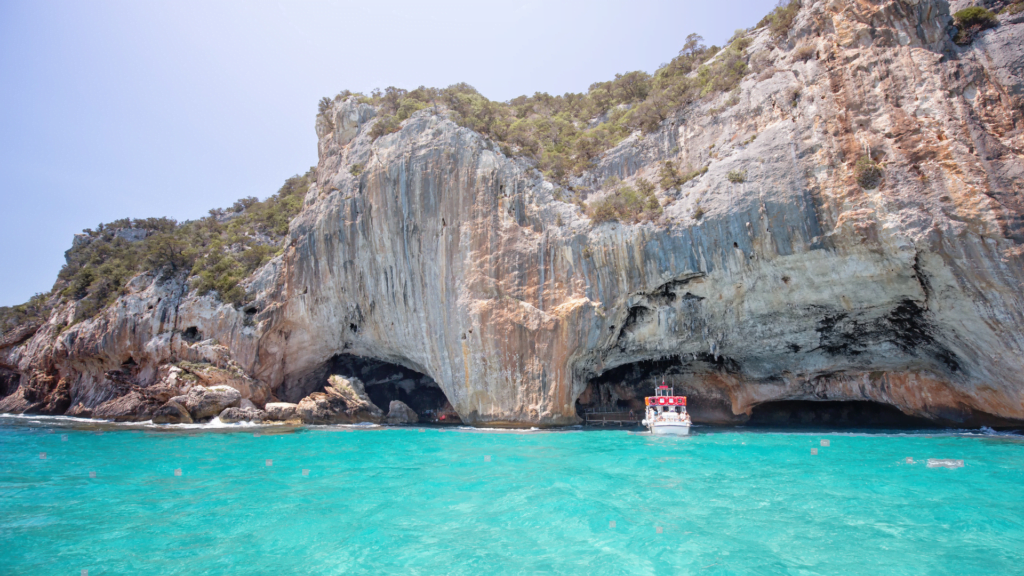
Cala Luna sits in the middle of a stretch of coastline that contains several of the finest beaches in the Mediterranean. If you are already making the effort to visit this part of Sardinia, these are worth knowing about.
- Cala Goloritzé: A UNESCO-recognised monolith and an emerald cove accessible only by boat or a challenging hike from the Golgo plateau above Baunei. Perhaps the most striking single point on the entire Gulf of Orosei coastline.
- Cala Mariolu: North of Cala Luna, this beach is famous for its white quartz pebbles and turquoise water so clear it reads as artificial in photographs. It is not. Accessible only by sea.
- Cala Sisine: Reached by boat from Cala Gonone or by a long hike from the Supramonte plateau. Wider and less frequented than Cala Luna. A river flows behind this beach as well.
- Gulf of Orosei: complete guide to the best beaches: For a full overview of the coast, this guide covers the entire gulf with practical information on each beach.
- Grotta del Bue Marino: Located 2 kilometres north of Cala Luna by sea. One of the most important cave systems in Europe, visited since the 1950s. Accessible only by boat from Cala Gonone.
The local perspective: what Sardinians think
Geography and wind. Cala Luna sits at the mouth of a canyon, sheltered by a rocky wall on its southern side. This wall blocks the Scirocco, the hot wind that blows from the south and can generate rough, uncomfortable seas at other beaches along the gulf. On Scirocco days, Cala Luna stays calmer than most. The Maestrale, the northwest wind, is a different matter: when it builds, it can create swells that cancel boat services entirely. Before booking a morning departure, check the wind forecast. The ferries do not sail in rough sea conditions, and there are no refunds for weather cancellations.
Logistics. The car park at Cala Fuili is small and fills by 08:30 on summer mornings. This is not an opinion: it is the reality from June onwards. The alternative is parking at the Cala Gonone port (paid) and taking the shuttle bus to Cala Fuili. There is no ATM at Cala Luna. The bar and restaurant accept cards, but the environmental contribution and some small vendors do not. Bring cash. There is no lifeguard on duty at Cala Luna.
The seabed. The shallows are safe and clear for the first few metres. The depth then increases rapidly. The water is cold below a certain depth even in August, due to the freshwater input from the Codula di Luna. Snorkelling close to the cliff walls at either end of the beach reveals a rich seabed with sea urchins, octopus, and colourful fish. This section of the Gulf of Orosei is part of a protected marine area, which explains the water quality.
Historical context. The canyon system behind Cala Luna, the Codula di Luna, is one of the longest in Europe, extending roughly 30 kilometres into the Gennargentu massif. The coastal landscape here is the result of millions of years of karstic erosion in Jurassic limestone. Shepherd communities from the Barbagia interior have used this coast seasonally for centuries, travelling down the canyon on foot to reach the sea. The trails that exist today follow routes far older than any tourist infrastructure.
FAQ about Cala Luna
Can you drive to Cala Luna?
No. There is no road to Cala Luna. The beach is accessible only by boat from Cala Gonone (or from Arbatax and Santa Maria Navarrese on the southern coast) or on foot via the hiking trail from Cala Fuili.
How long is the hike to Cala Luna from Cala Fuili?
Approximately 5.5 kilometres one-way, with around 1.5 to 2 hours of walking at a moderate pace. The terrain is rocky and uneven. Proper footwear is essential. The trail is well-marked but not flat. There are no water sources en route, so carry enough before you leave.
Is Cala Luna suitable for families with young children?
The beach itself is family-friendly: the shallows are calm, the sand is spacious, and there is a bar and restaurant on site. The water deepens quickly beyond the first few metres, which parents should be aware of. There is no lifeguard. The boat from Cala Gonone is easy and accessible; the hiking trail from Cala Fuili is not recommended for young children.
Is there an entrance fee for Cala Luna?
There is no formal entry fee, but an environmental contribution of €3 per person is collected on arrival, payable in cash. This applies to visitors arriving by boat. It is not optional.
What facilities are available at Cala Luna beach?
A bar and restaurant operate on the beach during the summer season. Sunbed and umbrella rental is available. Basic toilet facilities are present. There is no shower facility. There is no ATM and no medical post. Phone signal is limited.
Is Cala Luna crowded in August?
Yes. Boats arrive continuously from mid-morning, and the most accessible sections of sand are full by late morning. Taking the first departure from Cala Gonone (around 09:00) and positioning near the caves or the northern end of the beach makes a meaningful difference. June and September offer a substantially different experience.
What is the best time to visit Cala Luna?
June or September for the best combination of warm sea, stable weather and manageable crowds. May and October for hiking without the heat. July and August are spectacular but busy: go early, stay late, and accept that this is one of the most famous beaches in Sardinia.
Can I combine Cala Luna with the Grotta del Bue Marino in one day?
Yes. The standard combined boat tour from Cala Gonone covers the guided cave visit (around 1 hour) followed by beach time at Cala Luna. It is one of the most satisfying full-day outings in the Gulf of Orosei, and widely regarded as worth the extra cost over the ferry shuttle alone.
- Can I reach the beach on foot?
Yes, there is a scenic coastal trail. For more details on this and other routes, check our Sardinia trekking guide. - Is it a good beach for families?
Yes, though the water gets deep fairly quickly. For more options with shallow water, look at our list of best beach resorts.
Sources: Sardegna Turismo (sardegnaturismo.it), Nuovo Consorzio Trasporti Marittimi Cala Gonone (calalunasardegna.com), AllTrails trail data, GetYourGuide activity listings, Booking.com property listings. Film reference: Lina Wertmüller, “Travolti da un insolito destino nell’azzurro mare d’agosto,” 1974.