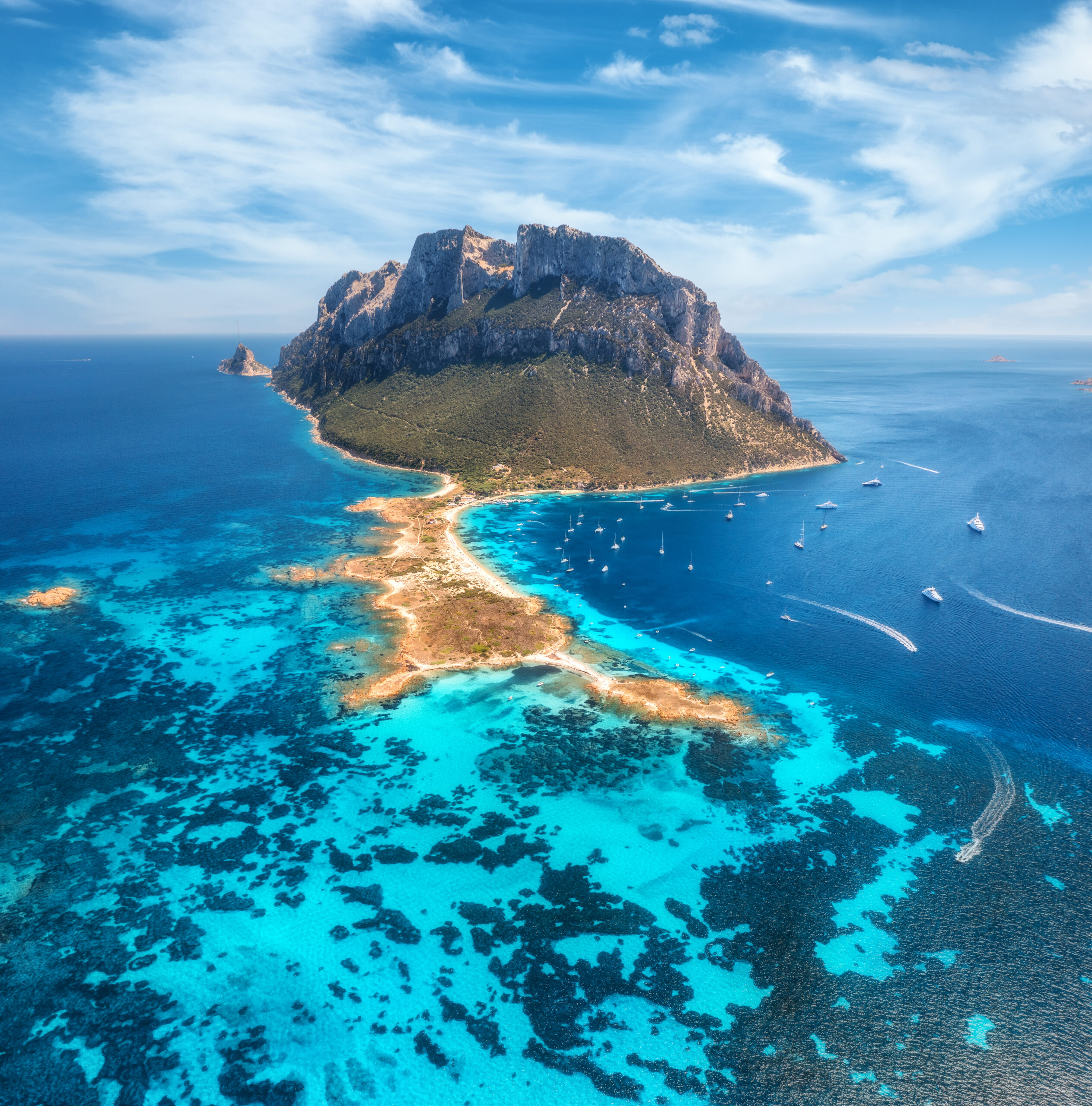
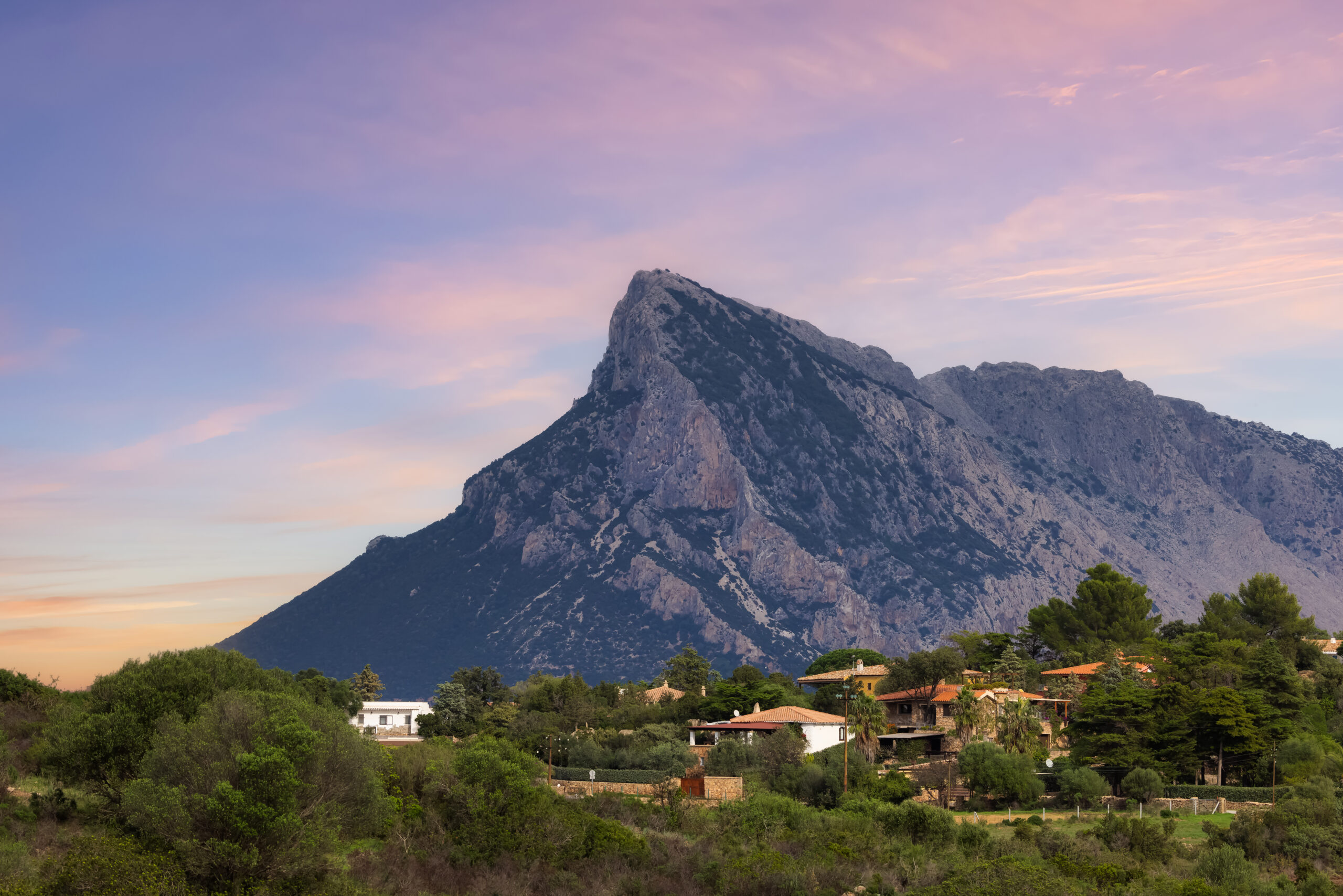
Tavolara Island is one of the most dramatic natural landmarks in Sardinia, and one of the least understood. A limestone massif rising 565 metres straight from the sea, barely 5 kilometres long and 1 kilometre wide, it dominates the skyline of every beach between Olbia and San Teodoro. You can see it from the plane as you land. You can spot it from the terraces of Costa Smeralda. It looks like a wall. It looks impossible. And it more or less is, which is exactly the point.
What makes Tavolara genuinely worth the effort of reaching it is not just the scenery. It is the combination: a marine protected area with exceptional clarity and biodiversity, a beach you reach only by boat, two family-run restaurants with lobster on the menu, a royal cemetery complete with a crown-topped tomb, and a surrounding sea that is legitimately among the clearest in the Mediterranean. This guide covers what Tavolara actually is, what you can see and do there, how the marine protected area works in practice, and how to reach the island from the mainland.
Tavolara Island: what it is and where it is
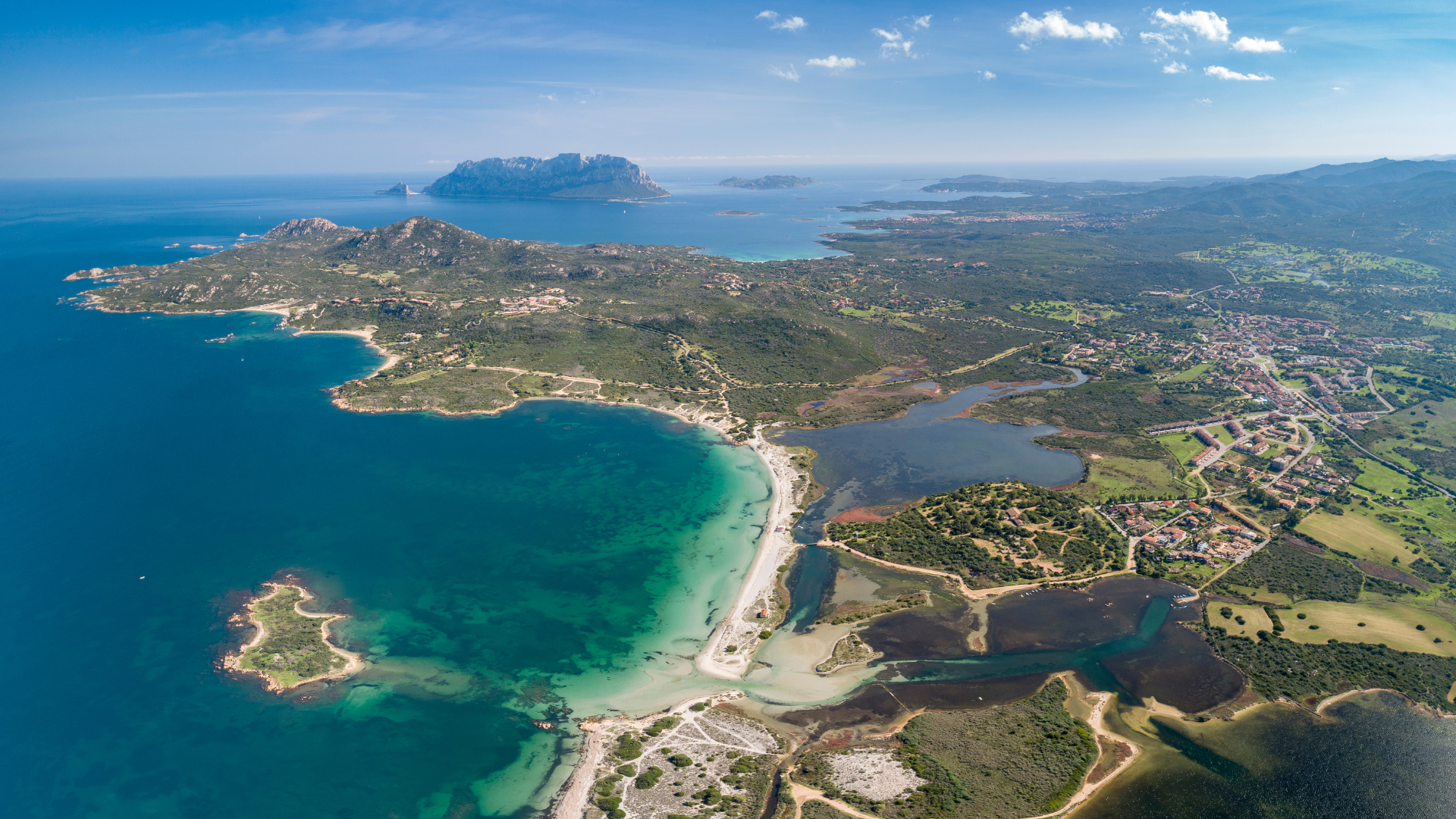
Tavolara Island sits in the northeastern corner of Sardinia, off the coast between Olbia and San Teodoro. It is administratively part of the municipality of Olbia, and the small fishing village of Porto San Paolo, directly across the strait, serves as the main departure point for visitors.
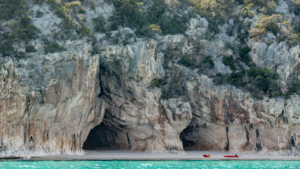
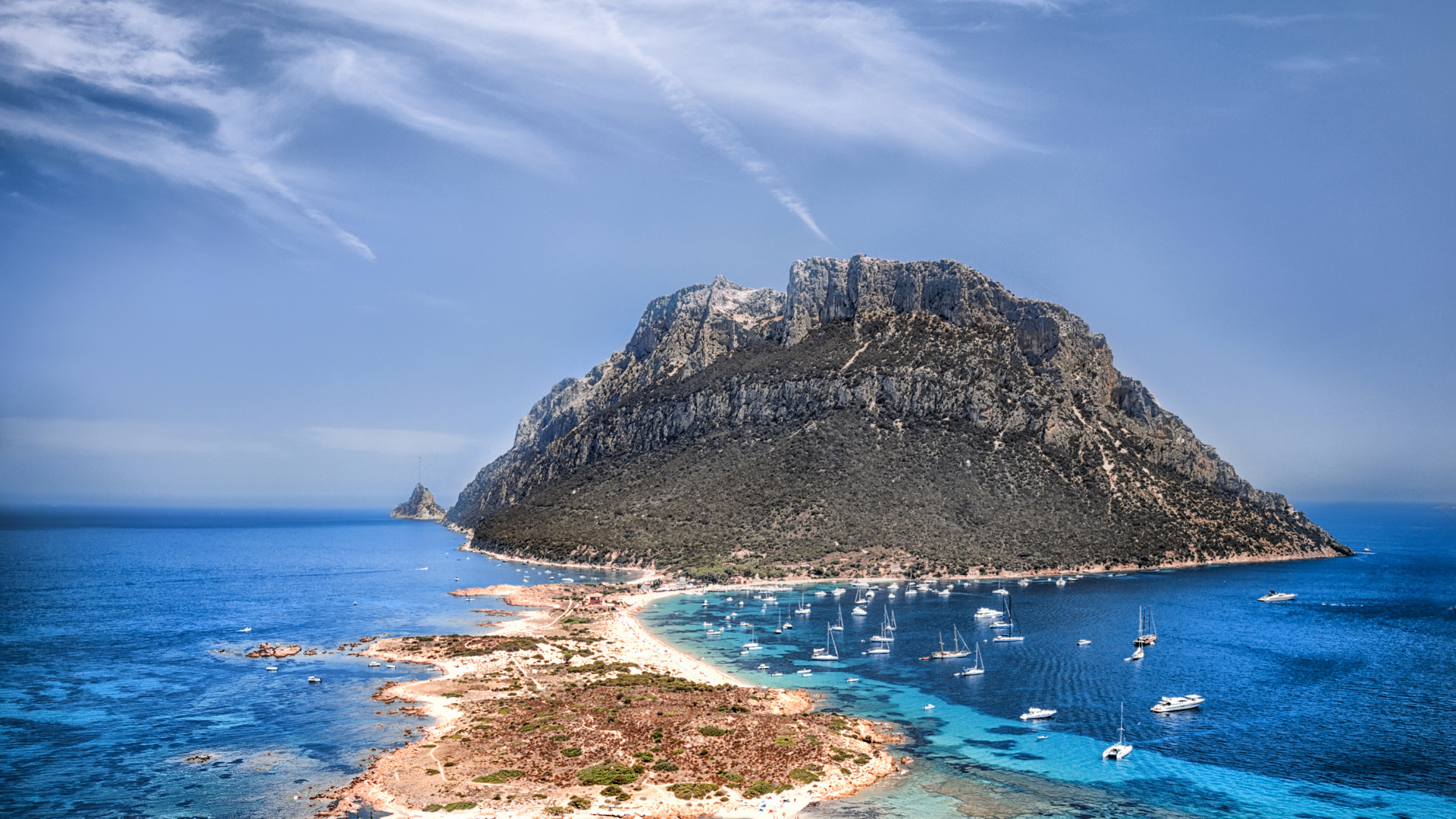
The island is built almost entirely of limestone and granite. Its highest point, Monte Cannone, reaches 565 metres above sea level. The cliffs on the northern face are near-vertical and essentially inaccessible. The southern end, Spalmatore di Terra, is the only accessible area, where a small beach, two restaurants, a handful of buildings and the royal cemetery are located.
Since 1997, the island and its surrounding waters have been part of the Area Marina Protetta Tavolara-Punta Coda Cavallo, one of the largest marine protected areas in the Mediterranean. The reserve covers 15,000 hectares of sea and approximately 40 kilometres of coastline, stretching from Capo Ceraso in the north to Punta Isoledda south of San Teodoro.
The three access zones: what you can and cannot visit
The protected area is divided into three management zones, and understanding them saves a lot of confusion.
Zone A is completely off-limits to the public. This is where the NATO military radiogoniometric station is located, on the eastern half of the island. It has been there since 1962, and its presence is why the island has barely a handful of permanent residents. Do not attempt to enter.
Zone B is partially accessible, primarily for research and authorised boat tours. Some areas allow swimming and snorkelling with restrictions.
Zone C covers the majority of the accessible coastal waters. Here, sailing, swimming, snorkelling and scuba diving are all permitted, subject to the conservation rules of the protected area. No anchoring on Posidonia seagrass meadows, no collecting of any marine organisms, no disturbance of wildlife. The operators running boat tours are all licensed within these parameters.
For a typical visitor, the practical upshot is this: you arrive at Spalmatore di Terra, you spend time on the beach and at the restaurants, and any snorkelling or diving in deeper waters happens on a guided tour in Zone C.
The Kingdom of Tavolara: history and legend
Tavolara has a claim that no other island in the world can make: it is considered the smallest kingdom on the planet, and the title is not entirely a joke.
The story begins in the late 18th century, when a man named Giuseppe Bertoleoni arrived on the island from the Ligurian coast, settling with his family and raising goats. Those goats became famous across Sardinia for having yellow teeth, which local folklore attributed to gold. The reality was more prosaic: the goats fed on helichrysum, the yellow-flowered plant that blankets much of the Sardinian maquis, which stained their teeth a vivid yellow.
In 1836, according to the account that has been passed down and verified by multiple sources, King Charles Albert of Savoy landed on Tavolara during an excursion, met Paolo Bertoleoni (son of Giuseppe), and formally recognised him as King of Tavolara. Whether the gesture was ironic, ceremonial or genuine is debated, but the Bertoleoni family took it entirely seriously. A succession of kings followed: Paolo I, Paolo II, and others. The kingdom nominally became part of Italy in 1934 with the death of Mariangela, regent of the island.
The NATO base construction in 1962 forced nearly all inhabitants off the island. Most families relocated to Porto San Paolo on the mainland. The Bertoleoni family, however, stayed. Today Tonino Bertoleoni and his family are the only permanent residents, running one of the two restaurants on the island.
The royal cemetery at Spalmatore di Terra is a genuine site, easy to reach on a short walk from the landing jetty. Paolo I’s tomb is topped with a sculpted crown. The inscriptions are clear, the headstones real, and the coat of arms carved in stone. It is small and quiet and genuinely moving. Worth the ten minutes it takes to find it.
The beaches of Tavolara
Spalmatore di Terra
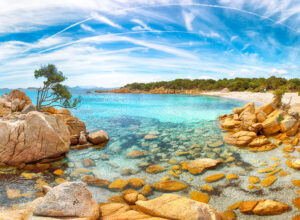
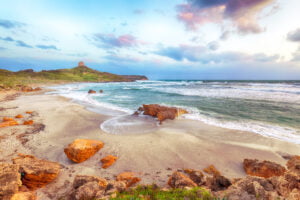
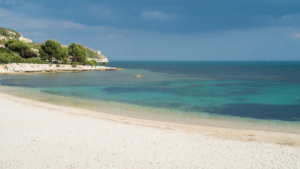
This is the main beach on the island, where the boats land and where almost all visitors spend their time. It is approximately 616 metres long, with fine golden sand and extraordinarily clear water that drops off to significant depth unusually quickly from the shore, even in the shallows near the jetty.
Behind the sand you will find a narrow band of sand dunes held together by sea daffodils and Mediterranean scrub. There is a bar, a restaurant, and sunlounger and umbrella rental. Basic facilities including toilets are available to all visitors.
In August, Spalmatore di Terra can fill up. The beach has an indicative capacity figure often cited around 900 visitors per day, which reflects the total accommodation the beach can reasonably support, not a hard gate. The practical advice is simple: arrive before 10am in August if you want a good spot, or plan your visit for September, when the water is still warm but the crowds have thinned dramatically.
Cala Tramontana and Spiaggia del Passetto
From Spalmatore di Terra, a short walk takes you to Cala Tramontana, a north-facing cove of pebbles and flat rocks. No sand, no services, and considerably fewer people. The water is just as clear. This is where you will also find the royal cemetery.
Spiaggia del Passetto is a narrow strip of sand and rock that connects the main area of the island to Punta Spalmatore, with the sea on both sides. It is essentially a tombolo, bathed on both flanks. No facilities, reached at the end of the walk along the western side of Spalmatore di Terra.
Mainland beaches facing Tavolara
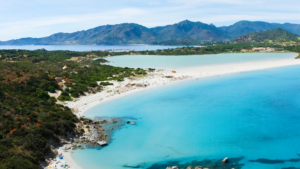
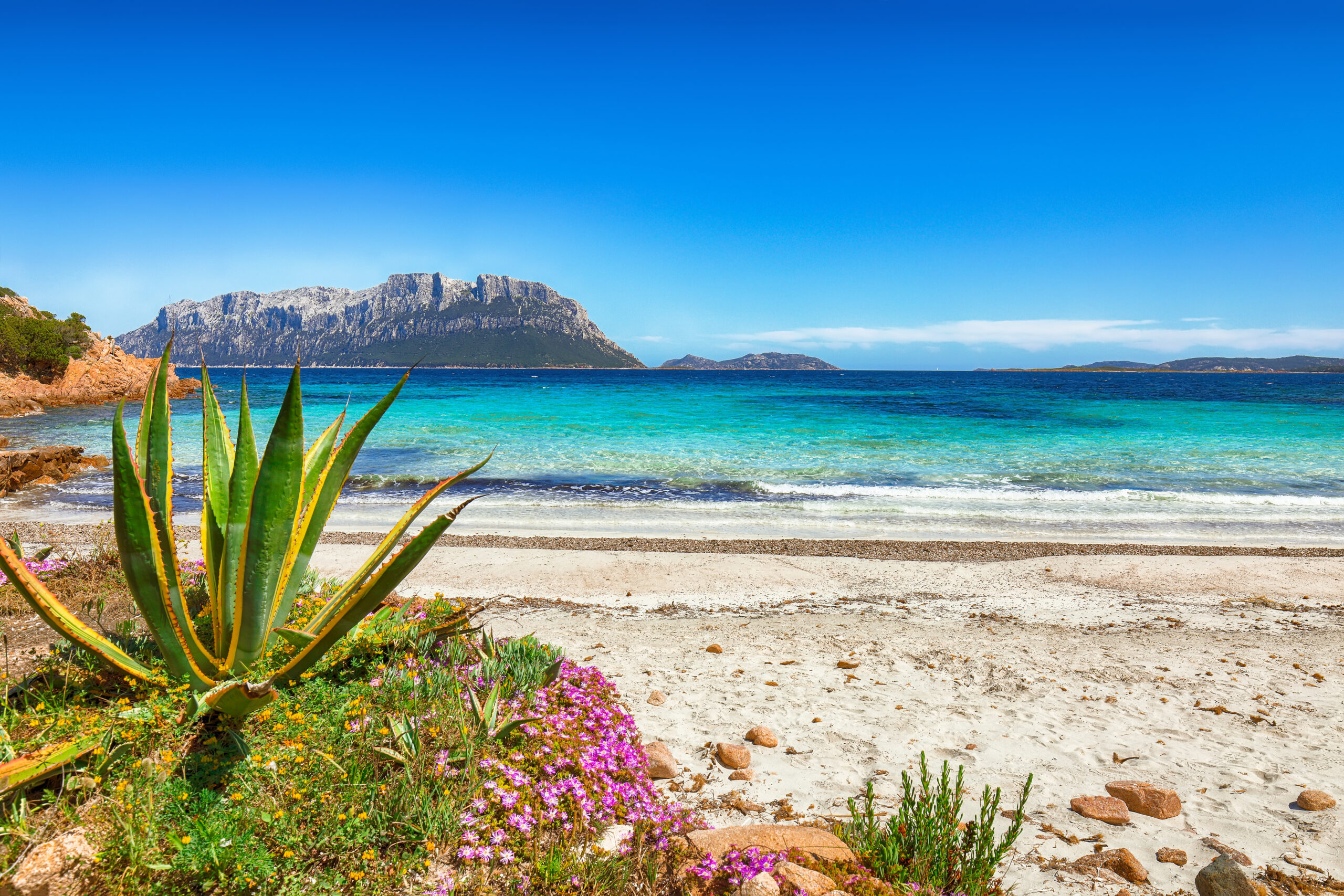
Some of the best views of Tavolara are from the mainland beaches directly opposite. These are also excellent beaches in their own right, and if weather or boat availability rules out a visit to the island, they are the natural alternative.
Cala Brandinchi is the closest point of comparison to Tavolara’s beach in terms of sand colour and water clarity. From there, Tavolara rises almost directly behind you. Visitor reservations are required in peak season.
La Cinta is the long barrier beach south of San Teodoro, 5 kilometres of sand with a lagoon behind it. Tavolara is visible across the water to the north.
Lu Impostu and Porto Istana sit between Porto San Paolo and San Teodoro and offer unobstructed views of the island. Porto Istana is also the closest mainland beach to the island itself.
For a complete guide to San Teodoro and surrounding beaches, see our San Teodoro guide.
Things to do in Tavolara: top activities
Tavolara Archipelago Excursion
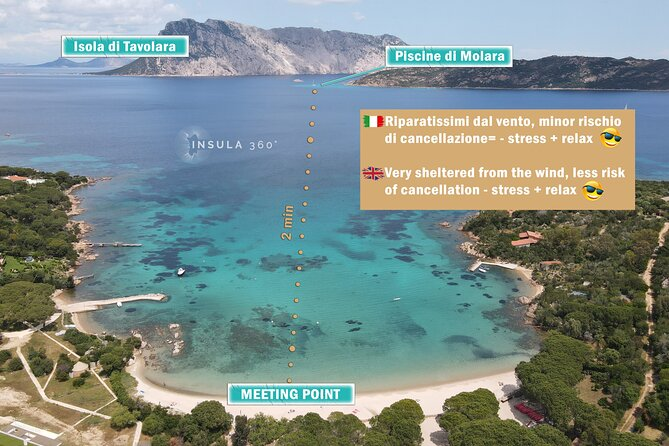
Experience Sardinia at its finest with guided dinghy excursions through the Tavolara Punta Coda Cavallo Marine Area. Led by expert local skippers, you’ll discover hidden coves and crystal-clear natural pools while learning about the history and culture of these magnificent places. This immersive tour ensures a comprehensive exploration of Sardinia’s natural beauty and heritage, creating an unforgettable 360-degree experience.
Experience Highlights
- Guided Tour with Local Skippers
- The journey begins at Cala Suaraccia, where expert skippers guide you through the most beautiful and lesser-known spots in the marine area. The skippers share fascinating anecdotes and local knowledge, enhancing the experience with cultural and historical insights.
- Snorkeling in Pristine Waters
- Enjoy stops at the Proratora Cave at Capo Coda Cavallo and the natural pools of Molara, where you can swim among colorful fish in breathtakingly clear waters. The tour also includes a visit to Tavolara Island, where you can explore Spalmatore beach and admire the island’s majestic cliffs.
For more information, visit Viator – Tavolara Archipelago Excursion.
Boat tour with snorkelling from Olbia
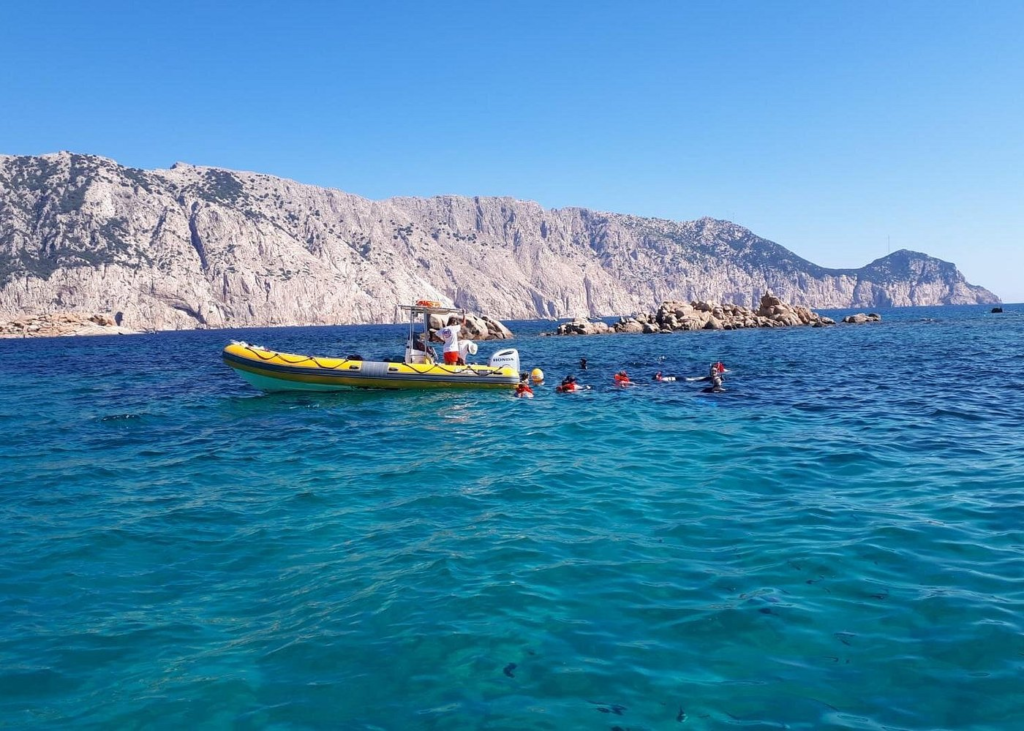
The most popular introduction to the area. This half-day RIB tour departs from the Marina of Olbia in small groups of maximum 10 people, skirts the granite cliffs of Capo Ceraso, and heads into the marine protected area for three stops. Snorkelling at Tavolara bay, the natural pools of Molara Island, and either Doctor’s Beach or Porto Istana depending on conditions. A Sardinian aperitif is included on board. Likely to sell out in July and August.
Snorkelling in the marine protected area (Viator)
Half-day snorkelling excursion with a marine guide, departing from Olbia. Flotation equipment provided, so no previous experience is required. The itinerary covers the Tavolara bay and the natural pools of Molara. Multiple daily departures. This tour is particularly suited to families with children who want a supervised, low-stress introduction to snorkelling in genuinely exceptional water.
Tavolara Archipelago Dinghy Grand Tour from San Teodoro
A full-day, 6-hour tour departing from the harbour of San Teodoro. This is the most comprehensive way to experience the whole archipelago. The route covers La Cinta beach, Cala Brandinchi (locally called “Little Tahiti”), Capo Coda Cavallo, Grotta del Forno on Proratora, the natural pools of Molara, and the Cathedral Cave at Tavolara. A local guide provides historical and natural history commentary throughout. Private option available. Rated 4.8 from nearly 500 reviews.
Dinghy excursion to Tavolara and Molara from San Teodoro
A 4-hour tour led by Fabio, whose family served as guardians of Molara Island for decades. That personal connection shapes the experience significantly. The itinerary is deliberately sheltered, designed to remain enjoyable even when the Scirocco blows, making it a reliable choice for days when larger, more exposed tours might be uncomfortable. First stop is a secret cove that the guide keeps deliberately unnamed. Then Grotta di Proratora, then the natural pools of Molara. Small group maximum of 12. A good option for families and anyone less confident at sea.
Expert diving in Tavolara and Molara
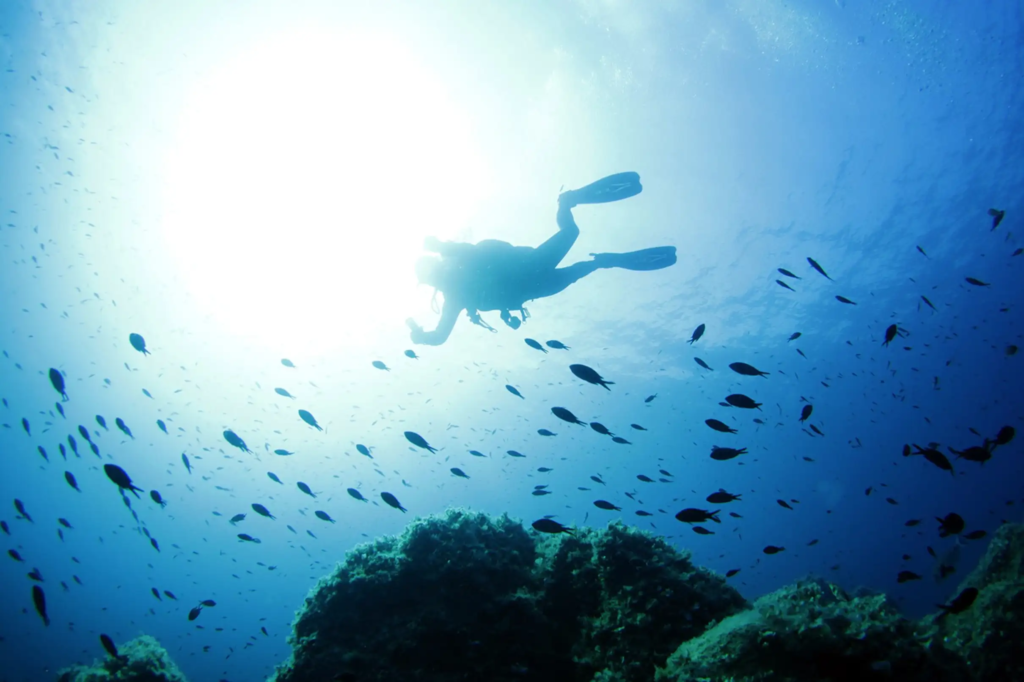
For certified divers only. Two dives from Puntaldia marina: the first on the south wall of Tavolara, a dramatic descent where the limestone cliff drops rapidly to considerable depths; the second in the shallows of Molara, known for large groupers, moray eels, barracuda, damselfish, and occasional sightings of Pinna nobilis, the giant Mediterranean fan mussel. An experienced dive guide accompanies the group throughout, with a theoretical briefing between dives. A rare chance to explore one of the least-dived sections of an area that has been protected and recovering since 1997.
For more diving options throughout Sardinia, see our diving guide.
Grand Tour of the Tavolara Archipelago from San Teodoro (Viator)
A full-day dinghy departure from San Teodoro that includes a landing on Tavolara itself. After snorkelling stops along the coast, the boat lands at Cala Tramontana, giving visitors time to explore the island on foot, visit the royal cemetery, and eat at one of the two restaurants. This is the tour to book if your priority is actually setting foot on the island rather than experiencing the waters around it.
Hiking and the Via Ferrata degli Angeli
Every path up toward Monte Cannone requires a licensed guide. This is not a bureaucratic formality. The terrain is genuinely challenging, the paths unmarked above a certain altitude, and the heat in midsummer is serious enough to create real danger on exposed rock faces. Do not attempt to reach the summit independently.
The Via Ferrata degli Angeli is the route for experienced climbers and hikers, involving fixed iron rungs, cables and sections of rappelling. It leads toward the plateau of the island, which sits at 565 metres and is inhabited only by seabirds and the occasional wild goat. From the top, on a clear day, you can see Corsica to the north, the entire Gulf of Olbia, Monte Limbara, Caprera and Maddalena to the northeast, and the Gennargentu massif to the southwest.
The island’s lower flanks, accessible by foot without a guide, pass through dense Mediterranean maquis: rosemary, juniper, mastic, helichrysum. The same helichrysum that famously gave the Bertoleoni goats their yellow teeth. A rare species of thorny knapweed, Centaurea horrida, grows here and in a handful of other locations in northern Sardinia and is found nowhere else on the planet. It is not a plant you will easily overlook: the spines are serious. The maquis also harbours falcons, which nest on the cliff faces, and the island’s seabirds include several species that use the sheer limestone walls for breeding in spring.
The best months for any hiking at Tavolara are May, June, September and October. July and August are too hot for uphill exertion on exposed limestone. The island receives very few shade sources above the scrub line. Good footwear is mandatory regardless of the route; the rock underfoot alternates between sharp limestone fragments and smooth slabs that become treacherous when wet.
The Tavolara Film Festival: Una Notte in Italia
Every year in mid-July, Tavolara hosts what is genuinely one of the most unusual film festivals in Europe. “Una Notte in Italia” (A Night in Italy) has been running for decades, typically over three evenings, using the natural plain near Spalmatore di Terra as an open-air cinema with the limestone massif as backdrop.
The festival focuses on Italian cinema with a strong emphasis on younger directors and emerging talent. International films are also screened. The combination of the setting, the relatively small audience (largely drawn from northeast Sardinia and the mainland ferry crowd), and the film programme makes this an event that regularly draws serious attention in the Italian cultural press.
If you are visiting the area in mid-July and have any interest in film, it is worth checking whether the festival dates coincide with your stay. Boats from Porto San Paolo run for the evening screenings.
Getting around: car rental and how to reach Tavolara
There is no way to reach Porto San Paolo, Olbia or San Teodoro without a car unless you are relying on infrequent local buses or a taxi from Olbia airport. A car is the practical choice for this part of Sardinia.
The drive from Olbia airport to Porto San Paolo is approximately 20 kilometres and takes 25 to 30 minutes depending on traffic in summer. From San Teodoro, the distance to Porto San Paolo is similar. From Costa Smeralda, allow 40 to 50 minutes.
You can compare prices and book directly from:
Reaching the island itself. Passenger boats depart from Porto San Paolo, with the crossing taking approximately 15 to 20 minutes. Services operate from spring through early September, with multiple departures daily in the peak months of July and August. There are no vehicle ferries. The island is explored entirely on foot. Some tour operators also depart from Olbia Marina and San Teodoro harbour, offering organised half-day and full-day excursions that combine the island landing with snorkelling stops at Molara.
Note that Da Tonino restaurant (run by the Bertoleoni family) operates its own private boat transfer from Porto San Paolo and Costa Corallina for evening dinner guests. If you are planning to eat there in summer, this transfer should be arranged in advance.
Where to stay near Tavolara Island
There are no tourist accommodations on the island itself. The base for visiting Tavolara is Porto San Paolo, with Olbia and San Teodoro as wider alternatives.
Baglioni Resort Sardinia (San Teodoro) – The premium option in this stretch of coast, set inside the Tavolara Marine Reserve just north of San Teodoro. Three pools, private beach, elegant rooms in a Sardinian style. Directly on the reserve. For those who want to be immersed in the protected area rather than simply visiting it.
Book on Booking.com
Hotel Don Diego (Porto San Paolo) – A classic 4-star property set on the coast 12 kilometres south of Olbia airport, surrounded by 60,000 m² of green valley. Panoramic views of Tavolara and Molara from the veranda. Buffet breakfast and good restaurant. The location is ideal for early morning ferry departures to the island.
Book on Booking.com
IHR Hotel San Paolo (Porto San Paolo) – A 3-star beachfront hotel sitting directly on the water, with views of Tavolara and Molara from the rooms and terrace. Walking distance to the ferry jetty. Good value for money in a location that would justify much higher prices in many other comparable areas of Sardinia.
Book on Booking.com
Felix Hotels – Hotel Residence Porto San Paolo (Porto San Paolo) – Mid-range option with an outdoor pool, clean rooms, and views toward Tavolara from the upper floors. About 15 minutes’ walk from the beach. A reliable, unfussy choice for those prioritising access to the boats over beachfront luxury.
Book on Booking.com
The local perspective: what Sardinians think about Tavolara
Tavolara is one of those places that Sardinians from the northeast feel a proprietary affection for. Every summer, the same conversation happens in every bar between Olbia and San Teodoro: foreigners arrive expecting a Caribbean island, and what they get is something better, stranger, and considerably more honest.
On the wind and the water. The island sits in a corridor between the Gulf of Olbia and the open Tyrrhenian. The Maestrale, the prevailing northwest wind of northern Sardinia, hits the Spalmatore di Fuori end of the island with notable force. The southern landing area, Spalmatore di Terra, is naturally sheltered from the Maestrale by the limestone wall above it. When the Scirocco comes from the southeast, the picture reverses: the whole area becomes uncomfortable, waves increase, and the smaller boat operators will either change their route or, in severe cases, cancel. Nobody should be surprised by this. The Mediterranean works on its own schedule.
The water at Spalmatore di Terra becomes deep unusually quickly. It looks shallow from the beach but drops off within a few metres of the shore. This matters for anyone bringing young children. The calm conditions of the sheltered beach are real, but depth awareness is essential. Strong swimmers will find this a feature rather than a problem: even a few metres from the sand, the underwater visibility is extraordinary, and the transition from the sandy bottom to the deeper limestone shelf is worth seeing with a mask.
On visiting in August versus September. August on Tavolara means the beach can feel crowded and the two restaurants are busy enough that showing up without any plan is not a good idea. The boats from Porto San Paolo fill up. The two restaurants can be operating at maximum capacity by noon. September changes the calculation entirely. Water temperature remains around 25 degrees, the ferry runs, the restaurants are still open, and you will not be sharing Spalmatore di Terra with hundreds of other visitors. If you have any flexibility in your dates, September is the month. Early October works too, particularly for hiking and for anyone whose priority is the marine reserve rather than beach time.
On the island’s silence. The 1962 NATO construction emptied most of the island of its inhabitants. Families that had lived on Tavolara for generations were relocated to Porto San Paolo and the surrounding coast. The silence of the island today, that quality of being near-uninhabited despite its fame, is a direct consequence of that displacement. The marine protected area established in 1997 has allowed the sea to recover substantially, which is why the water clarity and fish populations are what they are. Those who live and work along this stretch of coast are well aware of both facts. The protection is not incidental to the beauty. It is the explanation for it.
FAQ about Tavolara Island
How do you get to Tavolara Island?
The main route is by passenger boat from Porto San Paolo, a small village 20 kilometres south of Olbia. The crossing takes 15 to 20 minutes. Services operate from spring through early September, with multiple departures daily in summer. Organised boat tours also depart from Olbia Marina and San Teodoro harbour and typically include snorkelling stops along the way.
Is Tavolara Island worth visiting?
Yes, with realistic expectations. The accessible part of the island, Spalmatore di Terra, is a beautiful beach with extraordinary water. The royal cemetery is a genuine historical curiosity. The restaurants are good. If you go expecting a full-day adventure with multiple landscapes and extensive hiking, you will be underwhelmed. If you go expecting a half-day on one of the clearest beaches in Sardinia, combined with a genuinely unusual piece of history, it is well worth the ferry crossing.
Can you stay overnight on Tavolara Island?
No. There are no tourist accommodations on the island. The only permanent residents are the Bertoleoni family. Porto San Paolo is the closest base, with a direct view of the island and a short boat crossing to reach it.
What is the Kingdom of Tavolara?
In 1836, King Charles Albert of Savoy reportedly recognised Paolo Bertoleoni, the island’s only inhabitant, as King of Tavolara. The Bertoleoni family took the designation seriously across multiple generations. Today the “kingdom” is an unofficial but well-documented historical curiosity rather than any kind of political entity. Tonino Bertoleoni, the current head of the family, runs the restaurant Da Tonino on the island.
When is the best time to visit Tavolara?
June, September and early October offer the best balance of good weather, warm water and manageable crowds. July and August are peak season with more visitors and higher prices everywhere. The restaurants and ferry services typically run from late May to late September.
Are there restaurants on Tavolara Island?
Yes, two. Da Tonino (also known as “Il Re di Tavolara”) is run by the Bertoleoni family and is the more well-known of the two, with a focus on freshly caught seafood. La Corona also operates on the island and offers private boat transfers from Porto San Paolo and Costa Corallina for dinner guests. Both are open in summer only and fill up quickly in August.
- How do I reach Tavolara Island?
Most visitors take a ferry from Porto San Paolo, which is conveniently located for those staying in the Olbia area. - Can I book a boat trip to see the surrounding marine area?
Yes, Tavolara is a highlight of many Sardinian boat and motorboat tours that explore the crystal-clear waters of the northeast. - Are there beaches nearby on the mainland?
Very close to Tavolara, you will find the famous San Teodoro coastline, known for its long white sandy beaches. - Is it possible to hike to the top of the island?
Yes, for experienced hikers, but many prefer the sea-level beauty. If you enjoy the coast, you should also visit Cala Brandinchi, often called “Little Tahiti,” located nearby.
Sources
- Sardegna Turismo (official regional tourism portal)
- Wikipedia: Tavolara Island
- Italia.it (official Italian tourism portal)