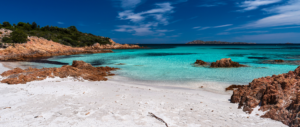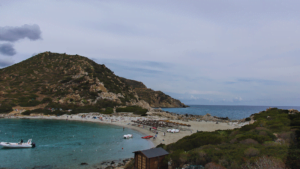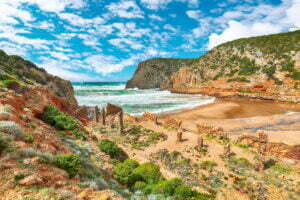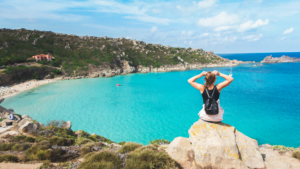
Pula, Sardinia is one of the most rewarding coastal towns in the Mediterranean. Located 35 kilometers southwest of Cagliari, it blends ancient seaside ruins, sheltered beaches, and genuine local life.

What makes Pula so appealing compared to typical resort towns? While many purpose-built coastal resorts shut down outside July and August, Pula remains an active Sardinian community throughout the year.
As a local from the Cagliari area who visits this coast often, I appreciate this authentic balance. You can tour ancient stone ruins in the morning, swim in calm turquoise bays at noon, and spend your evening sipping chilled Vermentino in a lively town piazza.
Before setting off, explore our interactive Sardinia tourist map and read through our guide to the best places to visit in South Sardinia.
Nora Archaeological Site: Exploring Sardinia’s Ancient Seaside City
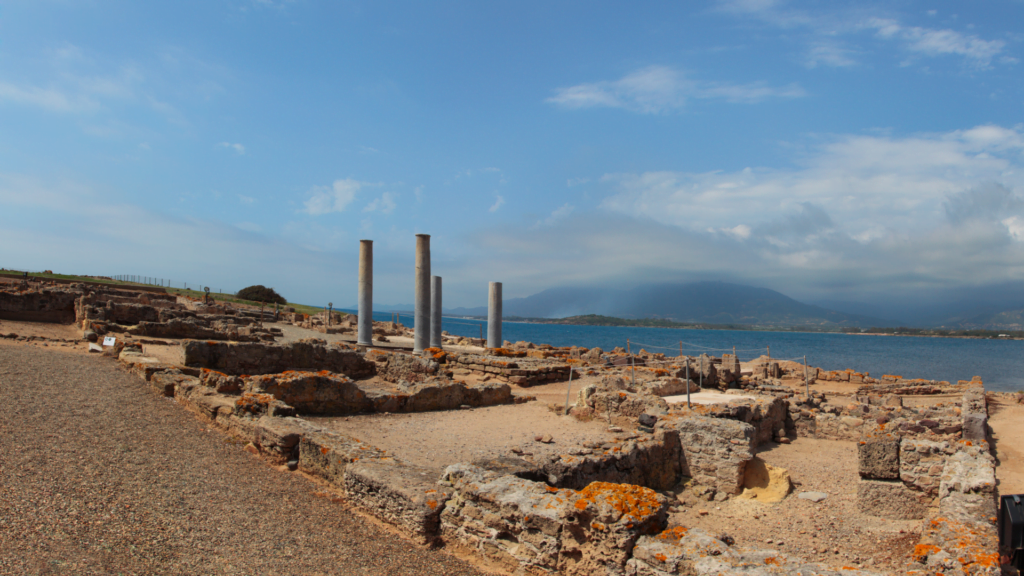
The ancient city of Nora is the crowning historical attraction of Pula. Perched on the narrow peninsula of Capo di Pula, it represents one of the most evocative archaeological sites in the central Mediterranean.
Phoenician sailors founded Nora in the 8th century BC. The city later grew under Carthaginian rule and reached its peak as a wealthy Roman municipality and port. For ticket prices and opening hours, consult our dedicated Nora archaeological guide.
Have you ever watched live classical drama while listening to sea waves lap against ancient Roman quays? That is precisely what Nora offers during summer.
Walking through the excavated streets is a memorable experience. Key highlights include:
- The Roman Theater: Built in the 2nd century AD, this theater faces directly toward the sea. During July and August, it hosts La Notte dei Poeti, an open-air festival featuring evening plays and poetry readings.
- The Thermal Baths: These coastal bathhouses display stone columns, lead heating pipes, and well-preserved floor mosaics showing marine life and geometric patterns.
- The Temple of Tanit: Standing on the high point of the promontory, this sacred area preserves Phoenician foundations that Roman builders later modified.
- The Nora Stone (Stele di Nora): Discovered here in 1773, this 9th-century BC Phoenician inscription contains the earliest known written mention of the word SRDN (Sardinia).
I advise visiting Nora early in the morning or near sunset. The low sun softens the sandstone textures, mosaic colors stand out clearly, and you avoid summer heat.
Historical Gems in Pula: Sant’Efisio Church and Giovanni Patroni Museum
Beyond Nora, Pula preserves two cultural sites that highlight island traditions and ancient artifacts.
The Romanesque Church of Sant’Efisio and the May Procession
Standing directly on the sand near the Nora ruins, the Church of Sant’Efisio (Chiesetta di Sant’Efisio a Nora) is a simple 11th-century Romanesque chapel built from warm sandstone blocks.
Local tradition marks this headland as the place where Saint Efisio, a Roman soldier who turned to Christianity, was martyred in 303 AD.

Each year on May 1st, a statue of Sant’Efisio leaves Cagliari on a golden carriage. Pilgrims in folk costumes, riders on decorated horses, and painted ox-carts (traccas) escort the saint.
The procession arrives at Nora Beach on May 2nd. Watching the saint reach this remote seashore amidst songs and prayers is deeply moving. Read more about these customs in our guide to cultural traditions and religious festivals.
Giovanni Patroni Civic Archaeological Museum
In Pula town center along Corso Vittorio Emanuele, the Museo Civico Archeologico “Giovanni Patroni” occupies a graceful 19th-century town residence.
The collection displays discoveries recovered from Nora and underwater surveys along the Capo di Pula coastline.
Inside, you will see Roman amphorae, heavy lead ship anchors, ancient glassware, and a precise replica of the famous Stele di Nora. A visit takes roughly 45 minutes and enriches your understanding of the outdoor ruins.
For more regional heritage stops, view our guides to archaeological museums in Sardinia and the most impressive nuraghi in Sardinia.
Best Beaches in Pula, Sardinia: From Nora to Santa Margherita
The coastline around Pula features shallow bays, long sandy stretches, and shaded maritime pine woods. Your ideal beach choice depends on the daily wind direction and what activities you enjoy.
Spiaggia di Nora
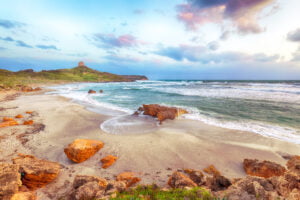
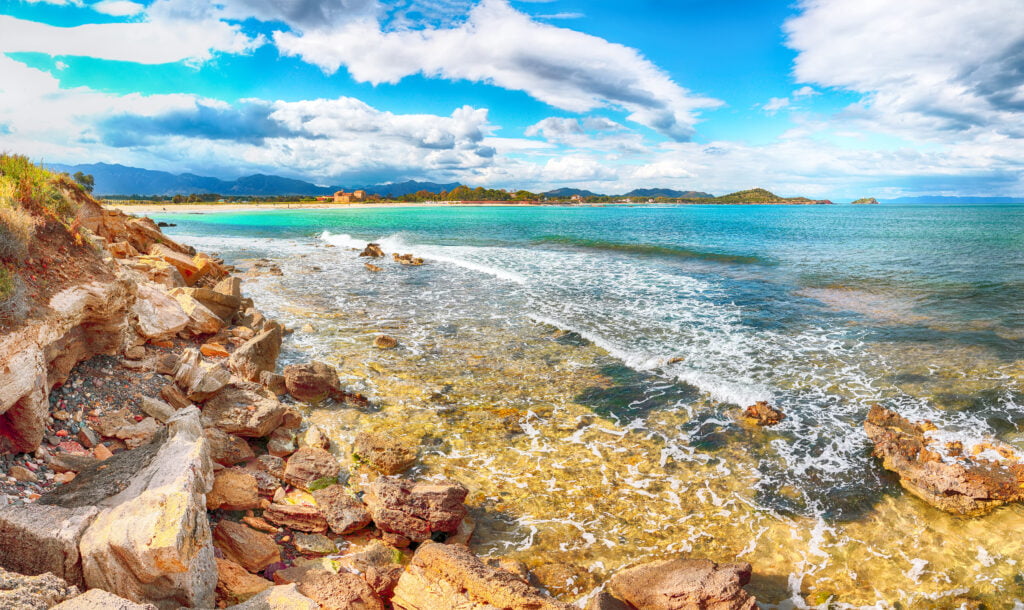
Spiaggia di Nora curves beside the archaeological park and the church of Sant’Efisio. The beach has golden sand, tiny pebbles, and crystal-clear water that stays shallow for many meters.
Because Capo di Pula and the Spanish Tower of Coltellazzo guard the bay, Nora remains sheltered from northwesterly winds. It is a relaxing spot for families with young children. A beach kiosk rents umbrellas and serves cold drinks.
Su Guventeddu
East of Nora lies Su Guventeddu, a 600-meter beach of soft pale sand facing clear turquoise water.
The beach looks straight out toward the islet of San Macario, crowned by its Spanish defense tower. Su Guventeddu attracts windsurfers and kitesurfers whenever easterly breezes blow. On calm days, the sandy bottom makes it ideal for swimming and paddleboarding.
Santa Margherita di Pula
Southwest of town, Santa Margherita di Pula forms a wide coastal strip running for more than five kilometers.
Dense forests of umbrella pines and fragrant eucalyptus trees line this entire shore. The fragrant trees offer welcome natural shade during the hottest midday hours.
Public pathways and private village roads provide access to several sectors, including Cala Marina, Campummaton, Cala d’Ostia, and Cala Verde. The sand has a soft pinkish-golden tone, and the water stays clean and shallow.
To compare coastlines across the island, check our guide to the top beaches in Sardinia.
Nora Lagoon: Sea Turtles, Snorkeling, and Flamingos
Behind Nora Beach lies the Laguna di Nora (Laguna di Nora), a protected wetland ecosystem teeming with wildlife.

The lagoon hosts the Centro Recupero Cetacei e Tartarughe Marine, an environmental rescue facility dedicated to injured loggerhead sea turtles (Caretta caretta).
You can book guided tours of the small aquarium, view recovering turtles in treatment tanks, and discover local marine biology work.
Quiet channels bordered by samphire and reeds wind through the wetland. Birdwatchers can spot egrets, herons, and rare Audouin’s gulls.
Flocks of wild pink flamingos often feed in the shallow water. To see more of these birds, read our guide on where to see pink flamingos in Sardinia and our tour of Molentargius Saline Park. The lagoon center also rents canoes and kayaks for water tours.
Strolling Pula Historic Center: Piazza del Popolo and Evening Life
As the sun dips behind the mountains, social life shifts into the historic core of Pula. The center becomes a relaxed pedestrian zone where locals and travelers mingle.
Piazza del Popolo serves as the central gathering hub. Flowering oleanders, outdoor cafe tables, and pastel buildings surround the square.
Taking an evening stroll (la passeggiata) along Corso Vittorio Emanuele is a daily island ritual. You will find street musicians, boutiques selling local jewelry, and gelaterias serving gelato made from sheep milk and wild berries.
Food lovers will discover authentic regional dining in town. The fertile soils around Pula produce the sweet and crisp Camone tomato, which restaurants pair with fresh local burrata or seafood.
Do not miss fregula con arselle (toasted semolina grain with fresh clams), grilled fish, and handmade culurgiones pasta. Pair your dinner with chilled Vermentino di Sardegna DOC or a glass of Carignano del Sulcis red wine. For more food ideas, see our list of must-try Sardinian dishes.
Day Trips from Pula: Chia Dunes, Tuerredda, and Is Cannoneris Forest
Pula serves as a practical base for exploring the southern tip of the island. Within 20 to 30 minutes, you can reach dramatic coastal dunes, sheltered coves, or high mountain forests.
The Golden Sand Dunes of Chia and Tuerredda
A 20-minute drive westward leads to Chia. Towering dunes dotted with junipers frame famous beaches like Spiaggia Su Giudeu, Sa Colonia, and Cala Cipolla.
At low tide on Su Giudeu, you can walk through knee-deep water to reach a granite islet sitting offshore.
Further west past Capo Spartivento lighthouse sits Spiaggia di Tuerredda. Set inside a sheltered cove, Tuerredda features crystal clear water reminiscent of tropical seas. A lush islet rests a short swim from the beach. Both Chia and Tuerredda make unforgettable day excursions.
Hiking in Is Cannoneris Nature Reserve
When you want mountain scenery away from the sea, drive north into the Sulcis range. Directly behind Pula lies Foresta di Is Cannoneris, the largest continuous holm oak forest in Europe.
The reserve offers cool mountain air, freshwater streams, and quiet trails beneath towering trees. It is also an important sanctuary for the native Sardinian red deer (Cervus elaphus corsicanus).
Hikers often spot these graceful animals feeding in clearings during morning walks. For trail suggestions, read our guides on scenic hikes in Sardinia and Sardinian nature reserves and parks.
Things to do in Pula, Sardinia: top activities
To make the most of your stay, here are six verified outdoor and cultural activities in and around Pula:
Guided Tour of Nora Ruins and Historic Pula
Explore the Roman theater, thermal mosaics, and ancient temples of Nora with an expert guide, followed by a historical walk through Pula town.
Book Nora Ruins & Pula Guided Tour on GetYourGuide
Chia Kayaking the Wild Side and Secret Beach Snorkeling
Paddle beside granite headlands, enter sea caves, and snorkel in secluded coves along the rugged coast of Chia.
Book Chia Wild Coast Kayak & Snorkeling on GetYourGuide
4×4 Jeep Mountains and Beaches Tour to Chia
Ride through panoramic mountain paths in a four-wheel-drive vehicle, followed by swimming stops at Chia’s white sand beaches.
Book 4×4 Mountains & Beaches Tour on GetYourGuide
Full-Day Beach Tour to Chia and Tuerredda
Enjoy hassle-free transit to the top southern beaches. Spend hours swimming in crystal turquoise waters without parking concerns.
Book Chia and Tuerredda Beach Tour on GetYourGuide
Nora Archaeological Site Half-Day Guided Tour
Discover Phoenician trade roots, Roman architecture, and seaside ruins on a focused tour led by an authorized guide.
Book Nora Archaeological Site Guided Tour on GetYourGuide
Exclusive Marine Snorkeling and Coastal Exploration
Explore the rich marine life of the Pula coast in a small group led by a marine specialist, spotting fish and underwater structures.
Book Pula Marine Snorkeling Tour on GetYourGuide
If you also wish to explore other aquatic trips, see our articles on boat and dinghy excursions in Sardinia, best snorkeling spots in Sardinia, and scuba diving in Sardinia.
Getting around: car rental in Pula
Pula center is simple to explore on foot, but relying only on buses limits your holiday. Public transit reaches Nora Beach and Cagliari, yet remote bays like Tuerredda and mountain trails in Is Cannoneris require a vehicle.
Renting a car when you land is the smartest strategy. Cagliari Elmas Airport (CAG) sits 35 kilometers north of Pula. The drive south down the SS195 highway takes about 35 to 40 minutes.
For helpful rental advice, inspect our practical guide to renting a car in Sardinia and our Cagliari Elmas Airport guide.
You can compare prices from top rental companies and reserve your car here:
- Cagliari Elmas Airport (CAG): Compare car rentals on Discovercars
Where to sleep in Pula
Pula offers diverse lodgings, including seaside luxury resorts, peaceful rural retreats, and central guesthouses. For wider regional ideas, browse our guide on where to stay in South Sardinia and our general overview of the best areas to stay in Sardinia.
Here are four well-regarded properties in Pula for different travel styles:
- Hotel Baia di Nora – Elegant 4-star beachfront resort in Su Guventeddu with private equipped beach, park gardens, and swimming pool just 1 km from the Nora ruins – Check availability on Booking.com
- Nora Club Hotel & Spa – Charming 4-star boutique hotel with lush flower gardens, outdoor pool, wellness spa, and private patios 900 meters from Pula center – Check availability on Booking.com
- Villa Lina – Welcoming and peaceful bed and breakfast set in a private garden only 350 meters from Piazza del Popolo – Check availability on Booking.com
- Forte Village Resort (Il Castello) – Renowned 5-star luxury resort on Santa Margherita beach with thalassotherapy spa, fine dining, and private beach access – Check availability on Booking.com
If you plan a luxury stay, read our detailed review of Forte Village Resort.
The local perspective: what Sardinians think
As a Sardinian who travels this coastline often, I want to share useful local realities that travel brochures omit.
Looking for the best swimming spot when the afternoon breeze picks up? Always check the wind direction before picking your beach.
When the strong northwesterly Maestrale (mistral) blows, it creates choppy surf on exposed western shores. Nora Beach is your ideal retreat on windy days. Because Capo di Pula shelters the bay, the water here stays calm as a pool.
When the humid southeasterly Scirocco blows, waves and posidonia sea grass reach Nora. Head west to the sheltered coves near Tuerredda instead, or spend the afternoon under the deep canopy of Is Cannoneris.
Plan your beach mornings early during peak summer. In July and August, parking spots at Spiaggia di Nora fill up fast. Aim to arrive before 9:30 AM to secure a spot without stress. Parking uses blue meter lines.
In the evening, the historic center closes to cars. Park in the public lots near Viale Spano or Via Segni and walk into the piazza in three minutes.
On summer Sunday evenings, traffic builds on the SS195 as beachgoers return toward Cagliari. Allow extra driving time if you have an evening flight to catch.
If you take a day trip to the capital, read our guide on things to do in Cagliari and stroll along Cagliari’s Poetto beach. To visit the interior, you can easily combine your stay with the prehistoric Su Nuraxi di Barumini UNESCO site.
Local pride here thrives on fertile soil as much as the azure sea. Farmers grow exceptional honey, figs, and greenhouse vegetables. Treat the local heritage with care, and you will receive warm hospitality in return.
Weather in Pula
Pula features a sunny Mediterranean climate with mild winters and dry, warm summers.
 -
 -
 -
 -
 --------------
Summer temperatures from late June through August typically sit between 28°C and 33°C. Sea breezes keep coastal afternoons pleasant.
May, June, September, and October provide ideal touring weather with fewer visitors. The sea stays warm enough for swimming well into October. For monthly trends, consult our guides on the best months to visit Sardinia and sea water temperature month by month.
FAQ about Pula, Sardinia
Is Pula in Sardinia worth visiting?
Yes, Pula is well worth visiting. It combines the seaside archaeological ruins of Nora with sheltered sandy beaches, a vibrant pedestrian center, and easy access to Chia dunes and Is Cannoneris trails.
What is Pula Sardinia famous for?
Pula is famous for the Phoenician-Roman city of Nora, the seaside Church of Sant’Efisio, the beaches of Santa Margherita, and its delicious local Camone tomatoes.
How far is Pula from Cagliari and the airport?
Pula lies 35 kilometers southwest of Cagliari. Driving from Cagliari Elmas Airport (CAG) along the SS195 highway takes approximately 35 to 40 minutes.
Do you need a car in Pula Sardinia?
You can walk around Pula center easily, but renting a car is strongly advised to visit Chia, Tuerredda, and the hiking trailheads in Is Cannoneris.
Can you swim at the Nora archaeological ruins?
Yes. Spiaggia di Nora sits right beside the ruins. In calm conditions, you can swim in shallow waters and view submerged Roman stones while snorkeling.
What are the best beaches near Pula?
Top nearby beaches include Spiaggia di Nora, Su Guventeddu, and Santa Margherita di Pula. Renowned spots like Su Giudeu, Cala Cipolla, and Tuerredda sit a 15- to 20-minute drive further west.
Sources and historical references
- Sardegna Turismo – Destination Pula and Nora
- Sardegna Turismo – Nora Archaeological Site
- Ministero della Cultura – Area Archeologica di Nora
- La Notte dei Poeti – Official Festival at Nora Roman Theater