Looking for the best things to do in Stintino? This historic fishing village in northwestern Sardinia offers iconic turquoise beaches, Asinara boat excursions, and scenic coastal trails. I have explored our island for decades, and Stintino always surprises me with its striking dual nature. Calm shallows border the east, while rugged cliffs meet open sea swells on the west.

Stintino at a glance: the story behind the peninsula
Stintino rests on a slender headland pointing straight toward Asinara Island. The town was founded in 1885 under unusual circumstances. The Italian government converted Asinara into a maximum-security penal colony and quarantine station. Forty-five families of fishermen and farmers were forced to leave their island homes.
Crossing the narrow sound, these families established a new settlement around a fjord-like inlet known in local dialect as isthintinu, meaning narrow gut. That term gave the village its name.
The displaced islanders brought their maritime skills with them. They built wooden lateen-sail skiffs (gozzi a vela latina) and ran offshore bluefin tuna traps (tonnare). Today, summer tourism anchors the local economy, yet the town preserves its maritime dignity. Walk along the quays at dawn. You will see local fishermen hauling their nets before daily crowds arrive.
Top beaches in Stintino: from white sand to quartz pebbles
Stintino owes its worldwide fame to its coast. The headland features two distinct marine exposures. The sheltered eastern flank overlooks the Gulf of Asinara, while the raw western coast faces open water (Mar di Fuori). Here are the finest shores to explore during your stay.
1. Spiaggia La Pelosa: Europe’s turquoise crown jewel
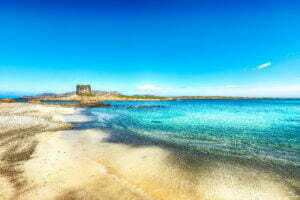
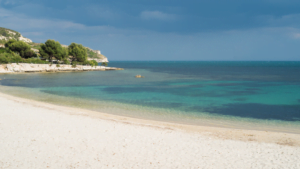
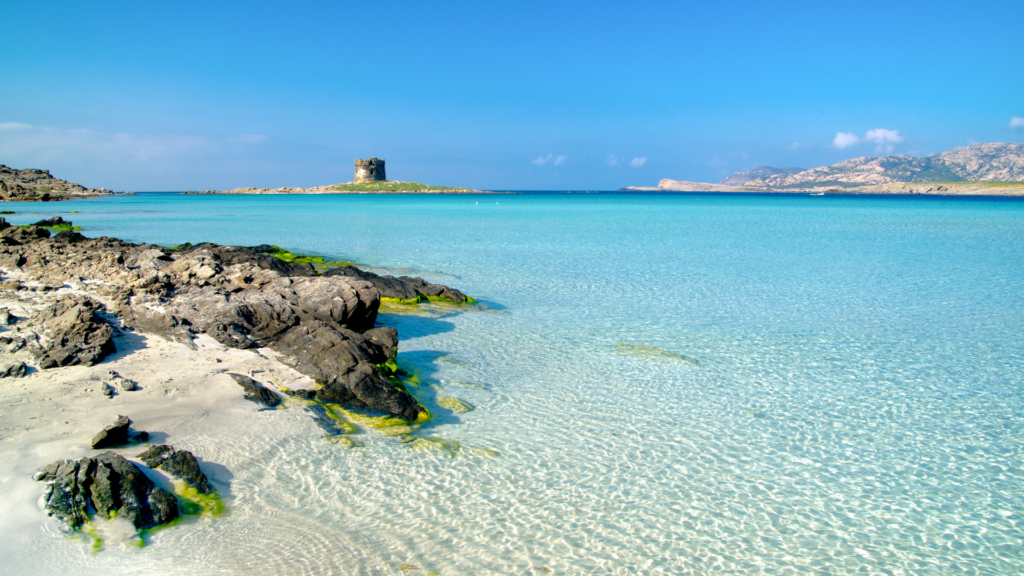
La Pelosa routinely ranks among the most celebrated beaches across southern Europe. The clarity of the water defies belief. Moored dinghies appear suspended on air, cast over blinding white sand as fine as flour. The sea remains knee-deep for dozens of paces from the tide line.
The surrounding scenery frames the shallow basin. Right across the channel rises the islet of La Pelosa with its Aragonese defense tower, flanked by Isola Piana and the hills of Asinara. Families cherish these calm shallows. Swimmers and paddleboarders cross water that shifts through shades of aquamarine, pale jade, and cobalt.
For details on parking meters and conservation rules, check our dedicated guide to La Pelosa beach.
2. Practical rules for visiting La Pelosa (Booking, entry fee and mats)
Because La Pelosa suffered severe sand loss from decades of overcrowding, municipal authorities enforce strict protection protocols. You cannot simply drop a beach towel on the shore during high season.
Keep these mandatory regulations in mind before heading out:
- Online reservations: Between June 1st and October 31st, daily visitor numbers are capped at 1,500 people. You must book your entry pass on the official website (spiaggialapelosa.it). The portal opens booking in two stages: a share opens during spring for advance planners, while remaining passes become available 48 hours before the date.
- Entry fee: Admission costs 3.50 euros per adult per day, with free entry for children under 12. Scanning your digital QR code at gate checkpoints secures an official wristband.
- Mandatory straw mats: Placing a standard towel directly onto the damp sand is strictly forbidden. Fabric loops trap quartz grains and strip the beach of volume. You must place a rigid straw or bamboo mat under your towel. Wardens patrol the sand continuously, issuing fines up to 100 euros for violations.
- Rinse posts: You must rinse feet, sandals, and beach gear at the wooden tap stations beside each boardwalk before leaving.
- Smoking and pets: Smoking is forbidden along the beach, and pets cannot enter the sand during daylight hours.

3. Spiaggia La Pelosetta: the intimate rocky neighbor
Right next to La Pelosa, separated by a low shelf of rock, lies La Pelosetta. This smaller cove offers the same clear water along a mixed shoreline of coarse sand and flat stone.
The beach sits right across from the Aragonese tower. Snorkelers love this spot because bream and damselfish gather around the sunken boulders. When tickets for the main sand of La Pelosa sell out, La Pelosetta gives you a scenic spot to take a quick swim.
4. Spiaggia Le Saline: white quartz grains and pink flamingos
Travel five kilometers south of Stintino village along the eastern shore to reach Spiaggia Le Saline. This expansive beach takes its name from ancient salt pans run by monks during the 13th century.
Instead of powdery sand, Le Saline is covered in tiny white quartz pebbles resembling grains of rice. These pebbles do not cling to wet skin. They settle fast, keeping the sea clear on breezy afternoons.
Directly behind the road lies Stagno di Casaraccio, a protected wetland lagoon. Flocks of pink flamingos, black-winged stilts, and little egrets forage here across the warm months. Bring binoculars: you can swim in transparent surf and watch flamingos feeding across the street.
5. Spiaggia di Ezzi Mannu: wild dunes and open horizons
Continuing south past Le Saline, you come to Spiaggia di Ezzi Mannu. This shore features pale sand mixed with small pebbles, backed by rolling dunes carpeted in wild sea lilies, sea fennel, and aromatic juniper bushes.
Ezzi Mannu feels expansive and airy. Even in August when northern bays feel congested, walking a few minutes along this shoreline guarantees open space to relax.
A small beach bar serves chilled espresso and sandwiches. The seabed slopes smoothly. Swimming here is safe and easy for visitors of all ages.
6. Spiaggia di Pazzona: seclusion away from the crowds
Pazzona forms the southern curve of the coastal ribbon heading toward Porto Torres. The sand has a warmer golden hue mixed with quartz gravel, and the beach stays remarkably calm throughout the summer.
Local families often come here because parking is easy. You never have to battle for space. The sea is clean and deepens slightly faster than at La Pelosa. It is a fantastic spot to read a book in peace to the sound of breaking waves.

7. Cala Coscia di Donna: rugged western cliffs for snorkelers
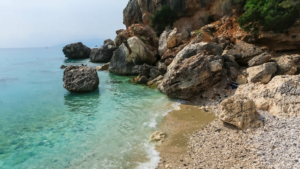
On the western side of the headland, looking out toward the open sea, the coastal profile shifts. White sand gives way to dark schist cliffs, rocky inlets, and deep drop-offs.
Cala Coscia di Donna is the best-known cove on this western rim. Reaching the shore requires driving down an unpaved track, followed by a brief walk down a rocky trail through scrub.
There are no beach clubs or sun loungers here. The reward is a wild rocky inlet with emerald water. Snorkelers will find sea bream, crabs, and octopuses tucked inside underwater crevices. Wear sturdy walking shoes. Check the forecast, and avoid this shore during strong westerly winds when waves smash against the rocks.
Things to do in Stintino: top activities and boat tours
What makes Stintino so memorable once you leave the sand? The surrounding sea provides endless adventures, especially the protected wilderness of Asinara National Park.
Here are six verified excursions departing directly from Stintino, covering sailing trips, island safaris, and quick coastal tours.
8. Full-Day Catamaran Tour in Asinara National Park with Seafood Lunch
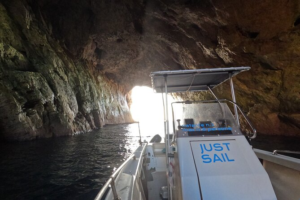
Boarding a wide catamaran at Stintino’s marina is a wonderful way to experience the marine reserve of Asinara. Catamarans offer wide sun nets and exceptional stability while navigating shallow sounds.
This full-day tour runs for eight hours and includes four to six swim stops in untouched coves, including the natural pools of Fornelli. At lunchtime, the skipper cooks fresh seafood right on deck, served with local Sardinian Vermentino wine and coffee. Snorkeling gear is provided for all guests without extra charge.
Rates begin at 167 euros per person. Check dates and reserve on GetYourGuide: Asinara Catamaran Excursion.
9. Asinara Dream: Full-Day Sailing Yacht Experience with Lunch
A classic sailboat offers an intimate day on the water. This excursion runs aboard a 15-meter ocean sailboat limited to just eight guests.
The boat glides past La Pelosa and drops anchor in quiet bays around Asinara. Guests can swim and snorkel in transparent water away from crowded tour vessels. The skipper serves a homemade Sardinian lunch with artisanal cheeses, seafood pasta, traditional pastries, and chilled local wine.
Rates begin at 139 euros per person. Book your trip on GetYourGuide: Asinara Dream Sailing Yacht.
10. Full-Day Guided Minivan Tour of Asinara Island
Travelers keen to explore the wild inland terrain and complex social history of Asinara should book a guided minivan excursion.
The tour includes round-trip boat transfer from Stintino to the island dock. An official park guide drives you across the national park in an air-conditioned minivan. Along the dirt tracks, you will spot wild albino donkeys (asini bianchi) and grazing mouflons.
The route stops at the historic maximum-security prison where high-profile inmates were held under the strict 41-bis regime until 1997. You also visit the Sea Turtle Rescue Center (C.R.A.M.A.) and enjoy a swim stop at Cala Sabina.
Rates begin at 84 euros per person. Reserve your seat on GetYourGuide: Asinara Minivan Land Tour.
For comprehensive trail routes and heritage stops on the island, read our complete guide to Asinara Island National Park.
11. Half-Day Dinghy (RIB) Tour in the Gulf of Asinara
A half-day trip is ideal if you are short on time. This three-hour coastal cruise on an eight-meter rigid inflatable boat delivers exceptional value.
Leaving Stintino, the skipper cruises around Isola Piana, Capo Falcone, and the cliffs of Cala Grande. You will pause for several swimming stops in luminous water near La Pelosa and Fornelli, with snorkeling masks and chilled drinks included.
Prices start from 48 euros per person. Book this affordable boat trip on GetYourGuide: Half-Day Dinghy Tour.
12. Boat Excursion with Sardinian Aperitivo to La Pelosa and Asinara
Enjoying fresh local food while floating on transparent water is a quintessential Sardinian summer pleasure. This three-hour boat outing combines easy swimming with local flavors.
The boat heads toward Capo Falcone and drops anchor in the natural pools near Fornelli. While you snorkel, the crew prepares an authentic local aperitivo of aged pecorino cheese, crisp carasau flatbread, olives, and chilled Vermentino wine.
Prices begin at 56 euros per person. Check availability on GetYourGuide: Boat Excursion with Sardinian Aperitivo.
13. Maxi RIB Tour: Swim Stops & Historic Prison Visit
The Maxi RIB excursion pairs coastal swimming with an overland heritage stop on southern Asinara.
Departing from Stintino, you cross the sound on a rigid inflatable boat to the pier at Fornelli. After a swim in the turquoise shallows, you take a guided walking tour through the historic Fornelli penal complex, which housed a World War I camp and a modern high-security prison. The boat then circuits the cliffs of Capo Falcone for an onboard aperitivo of local wine and regional snacks.
Prices start from 86 euros per person. Reserve on GetYourGuide: Maxi RIB Tour and Prison Visit.
What to see in Stintino village: maritime heritage and culture
Beyond the beaches, Stintino preserves its roots as a genuine fishing haven. Spending an afternoon in the village reveals the identity of the families who settled this coast.
14. Porto Vecchio and Porto Nuovo: lateen sailing capital
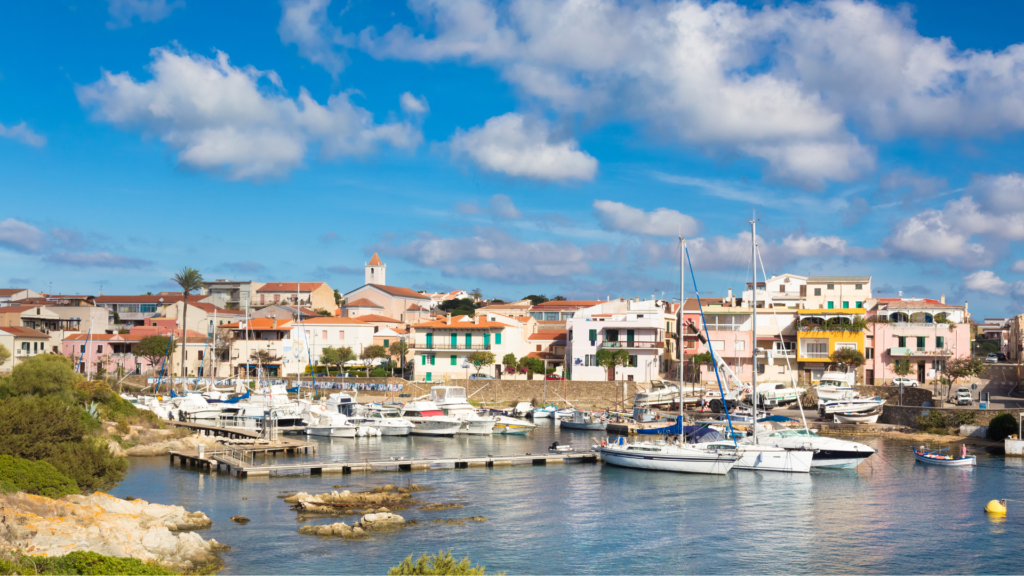
Stintino is built around two separate harbors: Porto Vecchio (Portu Minori) and Porto Nuovo (Portu Mannu).
Porto Vecchio forms the historic core. Stroll along the quayside to admire the wooden gozzi, classic fishing boats fitted with lateen rigs, which are triangular sails hung from long diagonal yards. Stintino is the Mediterranean home of lateen sailing. Each year in late August, the town hosts the international Regata della Vela Latina, drawing vintage wooden sailboats from all over Europe.
Porto Nuovo accommodates recreational yachts, tour boats bound for Asinara, and diving centers. Walking from one harbor to the other along the waterfront takes under ten minutes.
15. Museo della Tonnara (MUT): tuna fishing memory
The Museo della Tonnara (MUT), set along the waterfront on Via Lepanto, stands out as one of the best cultural museums in Sardinia.
For generations, bluefin tuna fishing drove the local economy. Fishermen built an intricate labyrinth of underwater nets (tonnara) across migratory pathways to trap tuna schools during the annual mattanza. The museum features multimedia displays, black-and-white photography, restored netting gear, and historical boats that illustrate the lives of the tonnarotti (tuna fishermen).
Admission costs 5 euros, and an average visit takes an hour. It provides invaluable perspective on why the original 45 families established their lives here in 1885.
16. Evening strolls and what to do at night in Stintino
Nightlife in Stintino has a pleasant, unhurried tempo. You will not find loud commercial megaclubs here. Evenings revolve around the beloved Italian tradition of the passeggiata.
As darkness falls, people gather along Lungomare Cristoforo Colombo and Piazza dei 45, the central square honoring the village founders. Boutiques sell handmade ceramics, cork leather goods, and local coral jewelry.
Sit at an outdoor harbor table for a glass of crisp Vermentino while looking out at the boats. Later, pick up an artisan gelato and browse the evening craft stalls set up along the pedestrian walkways during midsummer.
Hiking Capo Falcone and visiting historical watchtowers
Outdoor enthusiasts should make time for the headland of Capo Falcone, located at the northernmost point of the peninsula.

17. The hike to Torre del Falcone: 360-degree views
Torre del Falcone stands atop the highest cliff ridge of Capo Falcone, roughly 200 meters above sea level. This granite watchtower was erected in the 16th century by Spanish rulers to protect coastal communities against pirate raids.
A rocky trail leads up from near La Pelosetta through low-growing Mediterranean scrub of wild rosemary, cistus, and dwarf fan palms. The uphill walk takes about 45 minutes at a steady pace.
The summit rewards you with an extraordinary panoramic vantage point. Look eastward, and you see the peaceful turquoise pools of La Pelosa, Isola Piana, and the Gulf of Asinara. Turn west, and dark cliffs plunge vertically into the deep sea. Peregrine falcons nest inside these cliffs, an avian presence that inspired the name of the cape.
Torre della Pelosa guards the water below. Built in 1578 right on the waterline, its round granite tower defended the tuna channels and provided defense coverage with Asinara across the sound.
18. Tasting Polpo a la Stintinese and local seafood specialties
You cannot claim to know Stintino without enjoying its seafood. Village recipes remain simple, honest, and tied directly to what local trawlers bring ashore each day.
The undisputed local specialty is Polpo a la stintinese (Stintino-style octopus). Freshly boiled octopus is cut into bite-sized pieces and tossed with boiled potatoes, minced garlic, parsley, rich olive oil, and a dash of white wine vinegar. It is served at room temperature as a flavorful appetizer.
Several other regional dishes deserve a place on your table:
- Traditional cured tuna delicacies like buzzonaglia (rich dark tuna cuts), bottarga (cured fish roe shaved over spaghetti), and mosciame (salt-cured tuna loin).
- Fregula con arselle, tiny round semolina pasta pearls simmered in a garlicky broth of sweet local clams.
- Zuppa di pesce stintinese, a fragrant fisherman’s stew cooked with rockfish and cuttlefish, served with toasted sourdough.
- Seadas, the famous Sardinian dessert of crisp fried pastry stuffed with melted pecorino cheese and coated in warm bitter honey.
Enjoy these dishes with a bottle of chilled Vermentino di Sardegna DOC, whose mineral finish pairs naturally with fresh fish.
Where to sleep in Stintino: recommended hotels and stays
Accommodations in Stintino range from full-service coastal resorts to family-run bed and breakfasts in the town center. Book your stay well ahead of time: rooms for July and August routinely sell out months before summer begins.
- Club Hotel Ancora (4 Stars): A coastal resort set in a private park of Mediterranean pines near La Pelosa. It features a semi-Olympic pool, tennis courts, a private beach club, and a dedicated restaurant. It is an ideal pick for families looking for quiet comfort.
- Hotel Cala Reale (3 Stars): Overlooking the bay, this friendly three-star hotel offers clean rooms, a spacious outdoor pool, gardens, and a seasonal beach shuttle. It delivers dependable quality at a moderate price point.
- Hotel Silvestrino (Historic Boutique Stay): Located in the heart of Stintino village, this family-managed hotel has operated for generations. Its ground-floor seafood restaurant is popular with local residents. Staying here keeps you within steps of the evening harbor walk.
- Park Hotel Asinara (3 Stars): Set among manicured gardens, this modern hotel features an outdoor pool, rooms with balconies, and a dedicated shuttle service to La Pelosa.
- B&B Domo Sul Porto (Budget-Friendly Option): Facing the Old Port, this charming bed and breakfast features air-conditioned rooms decorated in maritime style. You can eat breakfast on the terrace while watching the fishing skiffs prepare their nets.
For broader accommodation recommendations across the north coast, take a look at our guide on where to stay in northern Sardinia.
Getting around: car rental and transport to Stintino
Because Stintino sits at the end of a long peninsula, public transit options are sparse. Seasonal shuttle buses connect the village center with La Pelosa, but having your own wheels is necessary to reach outlying beaches, hiking trails, and nearby towns.
Stintino has no railway connection. The closest passenger train station is in Sassari, about 45 kilometers south, linked by regional buses.
Most international visitors travel from these primary hubs:
- From Alghero Airport (Fertilia): The closest airport sits 50 kilometers away. Driving takes 45 to 50 minutes along the SP42 road past Porto Torres. Review our full Alghero travel guide to plan extra time in the Catalan town.
- From Olbia Airport: Located 145 kilometers to the east. The trip takes about 1 hour and 45 minutes along the SS729 highway toward Sassari, then following the SS131 and SP34 into Stintino.
- From Porto Torres Ferry Port: If you arrive by sea from Genoa or Civitavecchia, Porto Torres is just 30 kilometers south, a quick 30-minute drive.
Booking your car before arriving on the island is wise. You can compare rates across major airport providers on Discovercars: Sardinia Car Rental.
For driving tips, toll details, and insurance rules, read our practical guide to renting a car in Sardinia.
The local perspective: what Sardinians think about Stintino
Ever wonder what locals say when planning a trip to Stintino? We love this stretch of coast, but we know that a great trip requires timing and straightforward preparation.
1. Winds and sea conditions: Maestrale vs Scirocco
The orientation of the peninsula makes it sensitive to changing wind patterns. The prevailing wind across northern Sardinia is the Maestrale (Mistral), blowing from the northwest.
When a gentle to moderate Maestrale blows, La Pelosa remains clear because the ridge of Capo Falcone blocks open swell. Strong gusty winds can make sitting on the beach uncomfortable as sand whips through the air. If the Maestrale picks up, head over to eastern beaches like Le Saline or Ezzi Mannu, where the headland provides shelter.
When the warm Scirocco blows from the southeast, the open sea by Capo Falcone becomes calm, while eastern beaches may accumulate floating ribbons of seagrass (Posidonia oceanica). Remember that Posidonia is not dirt. It is a vital marine plant that keeps our waters clean and protects fragile sand dunes from winter storms.
2. Parking logistics and summer crowds
During July and August, parking near La Pelosa requires foresight.
All parking bays along the access road to La Pelosa are marked with blue lines, which means paid hourly parking applies daily from 8:00 AM to 8:00 PM. Hourly rates range from 2.00 to 2.50 euros. Install the EasyPark or Flowbird mobile app before arriving so you can top up your parking meter right from your towel without returning to the machine.
Arrive at beach parking areas before 8:15 AM to find a spot without frustration. Alternatively, come after 5:30 PM. Peak crowds thin out, parking stalls open, temperatures drop, and the evening light on the Aragonese tower turns warm and golden.
3. Identity and seasonal contrast
Outside the summer rush, Stintino returns to its quiet routines. Between November and April, fewer than 1,500 residents live in the village. Life slows down, leaving the shores quiet and wild.
May, June, September, and October are the golden windows for travel. During these shoulder periods, the water is comfortable for swimming, local trattorias are relaxed, and you can enjoy Stintino at its best: an authentic fishing community set in an unspoiled Mediterranean landscape.
To see how Stintino fits into a wider northern itinerary, explore our guide to where to go in northern Sardinia and our roundup of the top beaches in Sardinia.
Weather in Stintino
Stintino enjoys a Mediterranean climate with long, sunny summers and mild, windy winters. Midsummer temperatures regularly cross 30 degrees Celsius (86 degrees Fahrenheit), though coastal breezes keep the evenings pleasant.
 -
 -
 -
 -
 --------------
FAQ about Stintino
Why is La Pelosa beach so famous, and do I need to book in advance?
La Pelosa is world-renowned for its fine white sand, shallow turquoise water, and picturesque Spanish tower. To protect the environment, visitors must book passes online in advance (spiaggialapelosa.it) between June 1st and October 31st, pay a 3.50 euro entry fee, and use a straw mat under their towels.
How do I get to Asinara Island National Park from Stintino?
You can book day excursions departing from Stintino’s ports, including sailing trips, catamaran cruises, and guided minivan tours. In addition, a passenger ferry connects Stintino to the pier at Fornelli during the holiday season.
What are the best beaches in Stintino besides La Pelosa?
Spiaggia Le Saline is famed for its smooth white quartz pebbles and flamingo lagoon. Spiaggia di Ezzi Mannu offers wide sand dunes and space even in peak summer. For rocky swimming and snorkeling, head to Cala Coscia di Donna on the western coast.
What can you do in Stintino in the evening?
Evenings center on peaceful walks along the docks of Porto Vecchio and Piazza dei 45. You can explore craft shops, enjoy a sunset aperitivo overlooking the boats, and taste fresh local seafood like Polpo a la stintinese at harbor-side restaurants.
Do you need a car to visit Stintino?
Yes, having a rental car is strongly recommended. Stintino has no passenger train station, and a vehicle is necessary to reach different beaches, hiking trails, and nearby historic towns like Alghero and Castelsardo.
What are the best months of the year to visit Stintino?
June and September are the best months to visit. The weather is sunny, the sea is warm enough for swimming, and you avoid the heavy crowds and parking challenges of July and August.