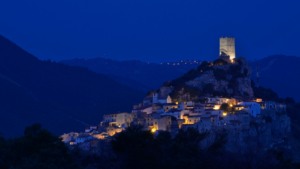
When travelers ask me about the most rewarding things to do in Sassari, I always give them a candid answer: do not come here expecting a sanitized, postcard-perfect beach resort. Sassari is the proud, beating heart of northern Sardinia, an ancient royal city of steep medieval alleys, grand neoclassical boulevards, and proud civic identity. As the island’s second-largest city after our capital, which you can explore in my Cagliari city guide, Sassari offers something rare on the Mediterranean circuit: an authentic, lived-in Sardinian urban soul that remains vibrant twelve months a year.
In this comprehensive guide, I share my insider perspective on the 21 best things to see and do in Sassari, from hidden Baroque chapels and prehistoric stone temples to centuries-old bakeries, bustling food markets, and practical logistics to make your stay effortless.
Is Sassari worth visiting? (The honest local truth)
Yes, Sassari is definitely worth visiting, but your expectations must align with what the city genuinely is. If you are looking for beachfront cocktails steps from your hotel lobby, you will be disappointed, as Sassari sits on a limestone plateau roughly 15 kilometers inland from the Gulf of Asinara.
However, if you want to understand true Sardinian culture, architecture, and culinary traditions away from tourist crowds, Sassari is unmissable. It is home to the island’s oldest university (founded in 1562), a fiercely independent historical legacy, and monumental squares that rival major mainland Italian cities. Visiting Sassari gives you depth, historical context, and an authentic taste of daily island life that seasonal resort towns simply cannot deliver.
Top things to see in Sassari: historic center and landmarks
Sassari’s historic core, known locally as the Centro Storico, developed within medieval fortifications before expanding into majestic neoclassical avenues during the nineteenth century. The best way to explore it is on foot, taking your time across its cobblestone streets and lively piazzas.
Piazza d’Italia
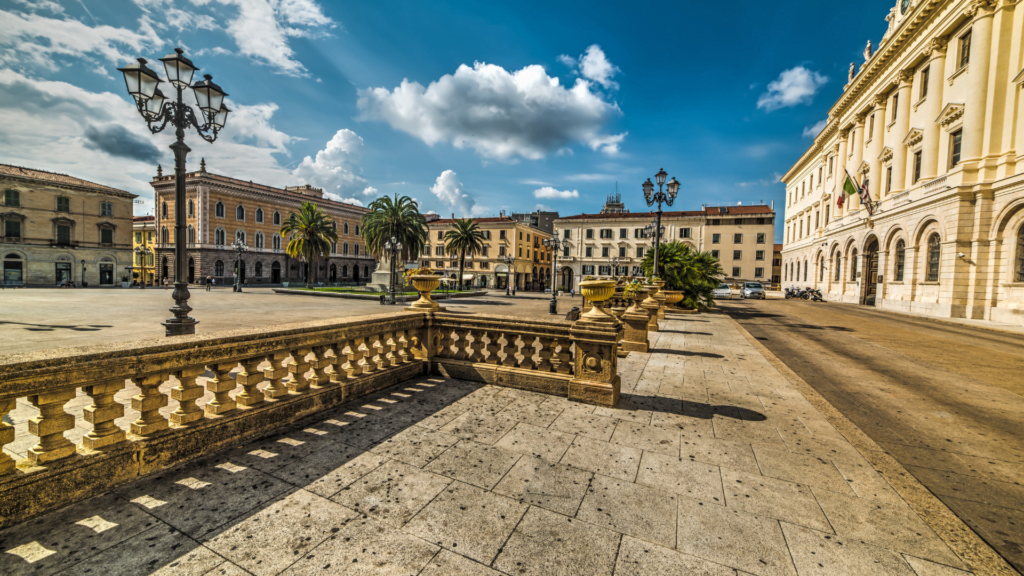
Piazza d’Italia is the grand open-air drawing room of Sassari and the social crossroads of northern Sardinia. Spanning nearly a hectare, this expansive neoclassical square was designed in the nineteenth century as the city expanded beyond its medieval walls.
At the center stands the imposing marble statue of King Vittorio Emanuele II, sculpted by Giuseppe Sartorio in 1899. The square is framed by regal architecture, most notably the neo-Gothic Palazzo Giordano with its Venetian-inspired mullioned windows, and the majestic Palazzo della Provincia. Every evening around sunset, locals gather here for the sacred ritual of the passeggiata, strolling leisurely, chatting with neighbors, and sipping an espresso or Cannonau wine at the outdoor café tables.
Cattedrale di San Nicola (Duomo di Sassari)
Dedicated to Saint Nicholas of Bari, Sassari’s cathedral is an extraordinary architectural palimpsest that showcases centuries of evolving craftsmanship. Founded in the twelfth century over an early Christian temple, it preserves a Romanesque bell tower, late-Gothic interior vaulting, and a jaw-dropping Spanish Baroque facade added in the late seventeenth century.

The limestone facade rises in three tiers adorned with niches, statues of Sassarese martyrs (Gavin, Proto, and Gianuario), and ornate stone foliage. Inside, beneath soaring ribbed Gothic cross vaults, you will discover the Museo del Tesoro del Duomo, displaying priceless liturgical silverware, Renaissance paintings, and ancient codices.
Fontana di Rosello
Tucked away in the Rosello valley just below the historic center, the Fontana di Rosello is the undeniable civic emblem of Sassari. Constructed between 1603 and 1606 by Genoese and local stone masons, this late-Renaissance monumental fountain once served as the primary freshwater conduit for the entire populace.

The fountain is built from alternating green and white marble blocks and features two stacked rectangular basins. Four statues at the corners symbolize the Four Seasons, while delicate arched dolphins crown the top tier, presided over by an allegorical figure representing the river god. For centuries, water carriers known as aquaioli loaded donkey barrels here to sell fresh water throughout the steep town alleys.
Palazzo Ducale
Constructed between 1775 and 1805 for Don Antonio Manca Amat, the Duke of Asinara, Palazzo Ducale represents the pinnacle of civilian aristocratic architecture in eighteenth-century Sardinia. Today, this grand neoclassical palace functions as Sassari’s Town Hall (Palazzo di Città).

Walking into its paved internal courtyard, you immediately sense the ducal ambition of the era. The ground floor and restored vaulted basements regularly host prestigious contemporary art exhibitions, civic ceremonies, and historical archives detailing the municipal history of the city.

Chiesa di Santa Maria di Betlem
Located near the train station, the Church of Santa Maria di Betlem is one of the most beloved sanctuaries in Sassari, closely bound to our civic identity and religious heritage. The complex dates back to the twelfth century when Franciscan friars settled here, though it was extensively remodeled in subsequent eras.

The exterior presents a Romanesque portal beneath an eclectic circular dome, while the spacious interior houses remarkable baroque chapels, intricate wooden altarpieces, and the venerated wooden statue of the Virgin of Bethlehem. Most importantly, this church is the sacred finishing point of the annual Candelieri festival, where the colossal wooden columns are blessed after their triumphant descent through the city.
Museo Nazionale Archeologico ed Etnografico G.A. Sanna
If you wish to grasp the sheer antiquity of Sardinia, the Museo Nazionale “G.A. Sanna” is the premier cultural institution in northern Sardinia. Founded through the generous bequest of entrepreneur and politician Giovanni Antonio Sanna, the museum spans several millennia of human habitation.

The archaeological wing holds an invaluable collection of pottery, obsidian tools, and bronze figurines (bronzetti) recovered from Nuragic settlements, alongside artifacts from Phoenician, Roman, and medieval excavations. The ethnographic wing offers an equally captivating showcase of authentic Sardinian traditional clothing, hand-woven carpets, intricate filigree jewelry, and historic woodcraft from across the northern territories.
Museo Storico della Brigata Sassari (Caserma La Marmora)
Standing on Piazza Castello, the historic Caserma La Marmora was erected on the foundations of Sassari’s demolished Aragonese castle. Today it houses the museum dedicated to the legendary Brigata Sassari, Italy’s only military brigade composed entirely of Sardinian recruits.
Established during World War I, the brigade earned legendary status for its extraordinary bravery, resilience, and brotherhood on the Carso and Piave battlefronts, earning two Gold Medals of Military Valor. The museum exhibits personal soldiers’ diaries, period uniforms, historical photographs, and a meticulously reconstructed life-sized battle trench that offers an emotional, unvarnished insight into our twentieth-century heritage.
Pinacoteca Nazionale di Sassari
Housed within the restored former Jesuit College of Canopoleno in the heart of the historic center, the Pinacoteca Nazionale di Sassari is the most comprehensive art gallery in northern Sardinia.
Its permanent collection spans seven centuries of painting, beginning with precious medieval religious panels and Flemish masterpieces, continuing through dramatic Renaissance and Baroque canvasses, and culminating in an extraordinary twentieth-century gallery. Here, you can admire seminal paintings by master Sardinian painters such as Giuseppe Biasi, Mario Delitala, and Filippo Figari, whose brushstrokes immortalized traditional island folklore, textiles, and rural rituals.
The Medieval Walls and Turret Ruins
During the fourteenth century, Sassari was shielded by a formidable perimeter of fortified stone walls reinforced by 36 defensive watchtowers, built during the era of Genoese and Pisan influence. While substantial sections were dismantled in the nineteenth century to facilitate urban modernization, six original medieval towers and intact wall stretches still survive.
I recommend taking a stroll along Corso Trinità and Via Torre Tonda to view these sturdy limestone bastions up close. The cylindrical Torre Tonda, in particular, offers a vivid tangible link to the medieval city-state that codified the famous Statuti Sassaresi in 1316.
Parks and relaxing green spots in Sassari
When you need a tranquil interlude between exploring museums and churches, Sassari offers elegant green sanctuaries that have served as beloved gathering spots for generations.
Giardini Pubblici (Public Gardens)
Located between Corso Margherita di Savoia and Viale Mancini, the Giardini Pubblici form a verdant oasis right on the perimeter of the historic center. Designed in the second half of the nineteenth century, the gardens are laid out in classical romantic fashion.

Shaded by century-old ficus trees, palms, and Lebanon cedars, the park centers around an ornamental pond flanked by neoclassical marble busts commemorating prominent local statesmen and scholars. It is a peaceful, cool refuge on hot summer afternoons, equipped with walking paths, benches, and a playground for young travelers.
Parco di Monserrato
Spreading across more than five hectares in a natural southwestern basin on the edge of the city, Parco di Monserrato is a historical landscaped park of exceptional beauty. Originally established by wealthy aristocratic families in the seventeenth century and expanded over successive generations, the park preserves a harmonious blend of manicured orchards, cypress avenues, and native Mediterranean scrub.

As you wander along its hillside trails, you will encounter charming architectural follies, stone ramps, ancient water cisterns, and a panoramic belvedere that overlooks the rolling hills of the Logudoro region. It is the ideal destination for a relaxing morning jog or an afternoon family picnic beneath olive and holm oak trees.
Food and cultural traditions: what to do in Sassari like a local
To genuinely experience Sassari, you must engage your palate and participate in our communal rituals. The city boasts a distinctive culinary heritage that sets it apart from the rest of Sardinia, heavily rooted in peasant land recipes and historical Genoese commercial ties.
Taste authentic Fainè in the old town
You cannot leave Sassari without eating fainè. Brought to the city centuries ago by Genoese merchants and adapted into our proud culinary canon, fainè is a thick, golden chickpea flour pancake baked in blazing wood-fired ovens on giant round copper trays.
Crispy and caramelized on the outside, soft and savory on the inside, it is traditionally ordered plain (semplice), seasoned with black pepper, or topped with sweet onions and savory Sardinian sausage (salsiccia). Make your way into historic rustic bakeries in the old quarter, order a steaming slice wrapped in greaseproof paper, and pair it with a glass of chilled white wine. For a broader dive into our island’s culinary secrets, check out my traditional Sardinian food guide.
Explore the Mercato Civico Storico
For a sensory awakening, step inside the Mercato Civico on Via Mercato, the bustling municipal market where local producers gather daily. Unlike tourist-oriented food halls, this is the authentic pantry of Sassarese households.
Here, stallholders display wheels of aged sheep pecorino, pungent goat cheeses, cured pork sausages, fresh wild fennel, and dried mullet bottarga. During the autumn and winter months, you will see stalls devoted exclusively to edible wild snails (ciogghitta), which locals prepare boiled with spicy tomato sauces or garlic and breadcrumbs. In the fish pavilion, vendors call out the morning catch unloaded just hours earlier at nearby Porto Torres.
Experience the UNESCO Faradda di li Candareri and Cavalcata Sarda
Sassari is renowned for two massive traditional celebrations that encapsulate our island soul:
- La Faradda di li Candareri (August 14th): Recognized by UNESCO as an Intangible Cultural Heritage of Humanity, this five-hundred-year-old votive procession honors the Assumption of Mary for saving the city from the plague. Historical trade guilds (gremi) carry colossal carved wooden columns weighing several hundred kilograms down the packed streets of the old town, dancing and spinning them to the rhythmic beat of drums and pipes before entering the Church of Santa Maria di Betlem.
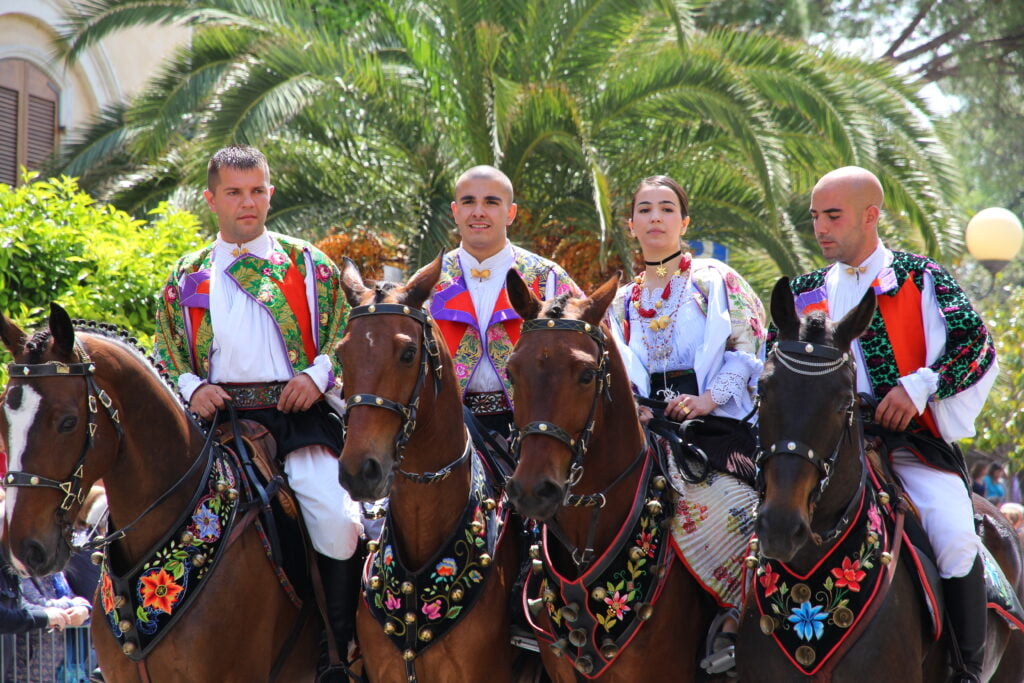
- La Cavalcata Sarda (Penultimate Sunday of May): Known as the “festival of beauty”, this is Sardinia’s premier secular folklore pageant. More than three thousand participants from dozens of island villages parade on foot and horseback in their authentic, hand-embroidered traditional costumes, culminating in daring acrobatic equestrian performances (pariglie).
Best day trips from Sassari: archaeology and coastline
Sassari’s central geographical position makes it the premier hub for discovering northwest Sardinia’s enigmatic prehistoric ruins and wild coastal landscapes within a 15 to 30 minute drive.
Monte d’Accoddi: the Sardinian prehistoric ziggurat
Located just eleven kilometers north of Sassari along the highway toward Porto Torres, Monte d’Accoddi is one of the most enigmatic archaeological wonders in Europe. Dating back to the fourth millennium BC (roughly 4000 to 3650 BC), this prehistoric temple predates the construction of Egypt’s pyramids and has no architectural equivalent in the western Mediterranean.
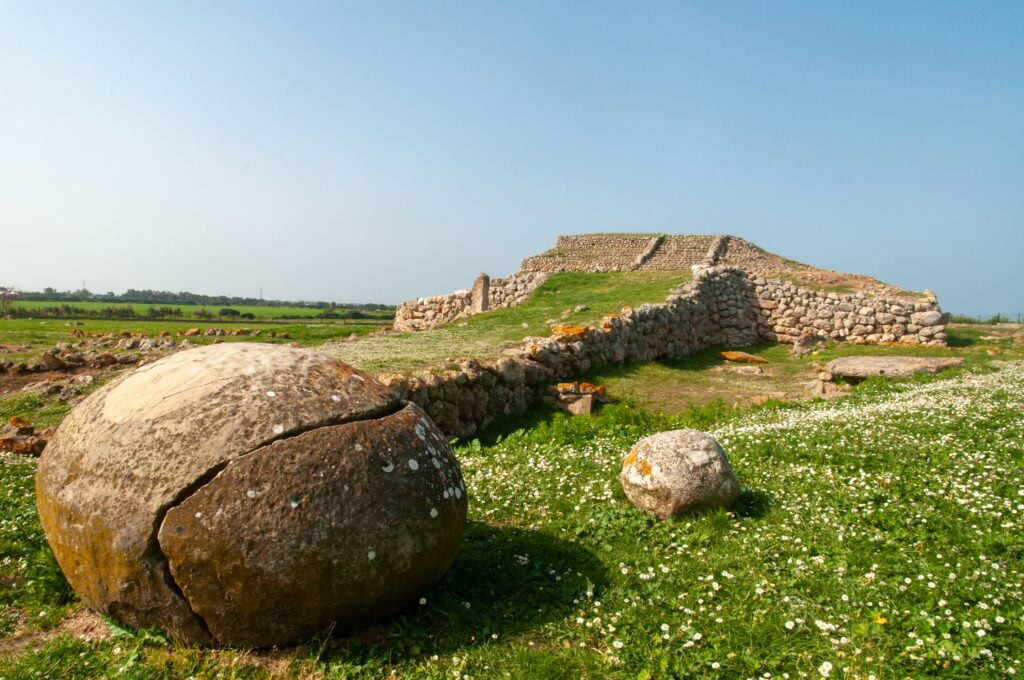
Shaped like a Mesopotamian ziggurat with a massive ramp leading up to a raised ceremonial platform, it was consecrated by the Ozieri culture as an open-air sanctuary dedicated to earth and sky deities. Surrounding the stepped altar, you can view a colossal carved stone altar, ritual offering tables, and a spherical limestone menhir. It provides a fascinating counterpart to the top Nuragic complexes in Sardinia and the ancient Domus de Janas tombs scattered across our hills.
Basilica di Santissima Trinità di Saccargia
Situated in an isolated green valley fifteen minutes south of Sassari near Codrongianos, the Basilica of Saccargia is widely hailed as the crown jewel of Pisan-Romanesque architecture on the island. Completed in 1116 by Camaldolese monks, the church is instantly recognizable by its alternating horizontal stripes of dark volcanic basalt and brilliant white limestone.
Rising above the pastoral landscape, its slender forty-meter bell tower commands the valley. Stepping inside, the austere single nave leads your eyes to the central apse, which preserves the only complete Romanesque fresco cycle surviving in Sardinia, depicting the Passion and Crucifixion of Christ with remarkable emotional intensity.
The ghost mining village of Argentiera and Porto Ferro
For travelers who appreciate evocative industrial archaeology and untamed nature, drive west towards the Nurra coast to visit Argentiera. This former silver and lead mining settlement was abandoned in 1963, leaving wooden washeries, stone miners’ cottages, and iron gears perched directly above a dark sand cove. Today, it has been revitalized as an open-air mining museum (MAR – Miniera Argentiera).
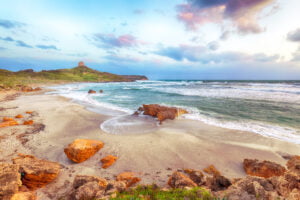
Just south lies Porto Ferro, a breathtaking crescent bay bordered by amber-colored sand dunes, pine forests, and three Spanish coastal defense towers. Because it faces open western seas, it is northern Sardinia’s primary surfing destination, offering spectacular, fiery sunsets over the Mediterranean.
Platamona Beach and the secret coves of the Nurra
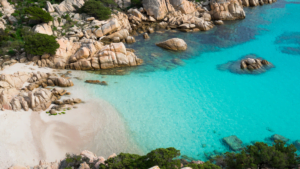
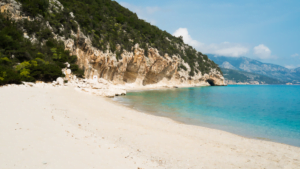
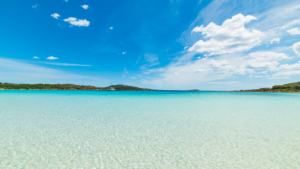
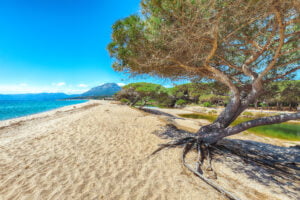
When summer temperatures peak, Sassarese head directly to Platamona, the city’s coastal playground. Stretching for more than fifteen kilometers along the Gulf of Asinara, this wide sandy shore is bordered by a fragrant maritime pine forest, offering both serviced beach clubs and expansive wild stretches.
If you prefer rugged, secluded shores, continue northwest into the rocky coast of the Nurra plateau. Here, sheltered pebble coves like Porto Palmas, Lampianu, and Rena Majori di Nurra reward adventurous drivers with crystal-clear turquoise waters and dramatic schist cliffs far from the crowded resort crowds of the coast.
Things to do in Sassari: top activities and tours
To truly experience northern Sardinia’s marine reserves, coastal landmarks, and countryside traditions, booking guided excursions led by certified local captains and expert guides is the best way to travel. Here are six verified, top-rated activities departing within easy reach of Sassari, primarily bookable through GetYourGuide with live availability:
Asinara Gulf Full-Day Catamaran Tour with Lunch from Porto Torres
Departing from the nearby port of Porto Torres just 15 minutes north of Sassari, this full-day sailing excursion on a spacious catamaran takes you into the protected waters of the Asinara National Park, featuring swimming stops at natural sea pools, snorkeling, and a fresh Sardinian lunch served on deck.
You can check real-time availability and reserve on GetYourGuide’s Gulf of Asinara Full-Day Catamaran Tour.
Porto Conte Park Kayaking Tour with Aperitif
A magnificent active paddle along the dramatic limestone coves of the Porto Conte Nature Reserve near Capo Caccia, exploring hidden sea caves and concluding with a relaxing local aperitif on the water.
Book your kayaks and guide on GetYourGuide’s Porto Conte Park Kayaking Tour with Aperitif.
Anghelu Ruju Prehistoric Necropolis with Audio Guide
A self-guided cultural visit to northern Sardinia’s largest pre-Nuragic cemetery complex dating back over 5,000 years, exploring ancient underground burial chambers with a comprehensive multilingual audio guide.
Reserve your admission tickets directly via GetYourGuide’s Anghelu Ruju Necropolis Audio Guide Tour.
Alghero Countryside Winery Tour with Wine and Food Tasting
Visit a boutique vineyard estate in the rolling hills of the Coral Riviera to tour the barrel cellars and taste five regional wines including Cannonau and Cagnulari, paired with artisanal local cheeses, cured meats, and freshly baked bread.
Reserve your tasting session through GetYourGuide’s Alghero Winery Tour with Wine and Food Tasting.
Alghero Historic Center Guided Walking Tour with a Local
An engaging guided walk through the Catalan-Gothic cobblestone streets, sixteenth-century sea walls, and panoramic towers of neighboring Alghero, uncovering centuries of maritime and defensive history. For additional planning tips, make sure to read my dedicated Alghero travel guide.
Check schedules and book your walking tour on GetYourGuide’s Alghero Historic Center Guided Tour.
Asinara National Park Full-Day 4×4 Off-Road Safari
If you prefer exploring the wild island interior by land, this rugged 4×4 jeep tour takes you deep into the former high-security prison colony, historic quarantine stations, and pristine coastal trails where wild albino donkeys roam freely.
You can book your jeep seats on Viator’s Asinara National Park Full-day 4×4 Tour.
Getting around: car rental in Sassari and northern Sardinia
While Sassari’s historical center is wonderfully walkable, public transportation across rural archaeological sites, nature reserves, and western beaches is infrequent and time-consuming. To explore northwestern Sardinia independently, a rental car is practically essential.
The four-lane SS131 expressway connects Sassari to Porto Torres in 15 minutes, while the SS291 motorway takes you straight to Alghero in just 30 minutes. You can easily compare rates and secure a vehicle directly upon arrival:
- Alghero-Fertilia Airport: Compare car rental rates at Alghero Airport on Discovercars
- Olbia Costa Smeralda Airport: Compare car rental rates at Olbia Airport on Discovercars
- Sardinia General Fleet: Browse all car rentals across Sardinia on Discovercars
For detailed driving advice, road rules, and insurance recommendations, be sure to read my practical car rental advice for Sardinia before hitting the road.
Where to sleep in Sassari
Sassari provides far better value for money than seasonal coastal resorts, making it an intelligent strategic base for discovering the north. Here are five vetted, high-quality accommodations in the city with direct, working booking links:
- Hotel Marini – A classic and peaceful 4-star hotel set in a quiet, green residential area close to the center, renowned among locals for its outstanding internal restaurant serving authentic Sardinian specialties – Check rates on Booking.com
- Hotel Leonardo Da Vinci – A comfortable, well-established hotel conveniently situated within a 15-minute walk from both the train station and the historic center, offering spacious air-conditioned rooms and professional service – Check rates on Booking.com
- B&B HOTEL Sassari – A fresh and contemporary 3-star property located right by the transit hub and railway station, featuring modern smart rooms, high-speed Wi-Fi, and effortless walking access to Palazzo Ducale – Check rates on Booking.com
- Antiche Conce rooms – A charming, beautifully restored boutique guest house located in a historical lane of the old quarter, offering stylish modern comfort with authentic exposed brick details – Check rates on Booking.com
- Sassari-In – A warm and welcoming guest house set in a historic town palace right in the city center, celebrated by travelers for its cozy atmosphere and exceptional local hospitality – Check rates on Booking.com
If you are currently mapping out your full itinerary across the northern province, take a look at my comprehensive regional overview of where to stay in Northern Sardinia.
The local perspective: what Sardinians think
As a local Sardinian, I always advise visitors to look beyond the typical resort clichés and embrace the authentic soul of our island. Sassari embodies that deeper identity better than almost anywhere else in the north.
From a geographical and climatic standpoint, Sassari’s position at 225 meters above sea level on an undulating limestone plateau means it stays notably cooler and breezier in the evenings than the sweltering coastal lowlands. However, when the brisk Mistral (Maestrale) wind charges in from the northwest, the sea along Platamona and Porto Ferro develops strong rolling waves and rip currents. On those windy days, swimming can be hazardous, but the cooler urban air makes it the absolute best time to wander through Sassari’s shaded museum corridors and historic alleys.
From a practical and logistical standpoint, heed my firm warning regarding driving: never attempt to drive into the narrow maze of the historic center. The streets are tightly monitored by automated ZTL (restricted traffic zone) cameras, many alleys are one-way bottlenecks, and finding street parking is nearly impossible. Instead, leave your car in the spacious underground parking facility at Piazza Fiume or the open-air lot at Emiciclo Garibaldi, both just a five-minute walk from Piazza d’Italia. From there, your feet will take you everywhere.
From a historical and cultural standpoint, Sassari holds a unique place in our collective heart. In 1316, the free municipality enacted the Statuti Sassaresi, one of the earliest democratic legal codes in southern Europe, composed in Latin and early Sardinian. The local population speaks sassaresu, a melodious transition dialect showing deep linguistic ties to medieval Pisa, Genoa, and Corsica. When you sit down at an old tavern and order a slice of warm fainè with a carafe of dry Cagnulari red wine, you are experiencing an unbroken cultural line that has thrived here for over seven hundred years.
FAQ about Sassari
Is Sassari worth visiting during a trip to Sardinia?
Yes, Sassari is very much worth visiting if you appreciate genuine history, monumental architecture, world-class archaeological museums, and authentic regional gastronomy without the commercial sheen of tourist resorts.
What are the best things to see in Sassari in one day?
In a single day, start with breakfast on Piazza d’Italia, tour the Cattedrale di San Nicola, walk down to the Fontana di Rosello, visit the prehistoric treasures at the Museo Nazionale G.A. Sanna, eat hot fainè in the old town, and conclude with a late-afternoon drive out to the enigmatic prehistoric altar of Monte d’Accoddi.
How far is Sassari from the nearest beach?
The closest coastal strip is Platamona Beach, situated roughly 15 kilometers (a 20-minute drive) north of the city center. The famous crystal-clear waters of the beaches and sights in Stintino and the Catalan ramparts in my Alghero travel guide are both an easy 35 to 40 minute drive away.
What traditional dishes should I eat in Sassari?
You must try fainè (wood-baked chickpea flatbread with sausage or onions), ciogghitta (small wild snails stewed with spicy sauce or garlic), and ziminu (marinated and grilled veal entrails, a true local delicacy), paired with local ruby-red Cagnulari wine.
What is the closest airport to Sassari?
The nearest commercial airport is Alghero-Fertilia Airport (AHO), situated approximately 30 kilometers (about 25 minutes by car) southwest of Sassari. For international flight connections, you can consult my guide on choosing the right airport in Sardinia.
What other historic towns can I visit near Sassari?
Just 30 minutes to the northeast along the Gulf of Asinara, you can explore the colorful clifftop fortress featured in my guide to the medieval village of Castelsardo. To the northwest lies the port of Porto Torres with the ancient Romanesque Basilica of San Gavino, the launching point for our Asinara National Park guide.
Sources and historical references
- Comune di Sassari – Official municipal portal and tourism department of the City of Sassari
- Museo Nazionale Archeologico ed Etnografico “G.A. Sanna” – Italian Ministry of Culture (MiC) and Regional Directorate of National Museums of Sardinia
- Pinacoteca Nazionale di Sassari – National Art Gallery of Sardinia (MiC)
- Soprintendenza Archeologia, Belle Arti e Paesaggio per le province di Sassari e Nuoro – Cultural Heritage Protection Authority and archaeological excavation reports for Monte d’Accoddi
- UNESCO Intangible Cultural Heritage: Faradda di li Candareri – Official inscription dossier for the network of large shoulder-borne processional structures