Best time to visit Sardinia? Between May and September. But the honest answer is: it depends entirely on what you want to do while you’re here. Sardinia is a large island with a strong seasonal personality, and picking the wrong month for your travel style can genuinely ruin a trip.
This guide breaks down every month of the year, with real temperature data, honest crowd levels, and the kind of local logic you only get from someone who actually lives here.
Best time to go to Sardinia: what it depends on
Not all visitors want the same thing. Before looking at the calendar, ask yourself one question: what does your ideal Sardinia day actually look like?
- Beach and swimming: you need warm sea water, not just warm air. Water temperature matters more than air temperature.
- Hiking, cycling or outdoor exploration: you want comfortable temperatures and empty trails.
- Cultural immersion and festivals: you need to be here when Sardinians are actually living their traditions, not performing them for tourists.
- Budget travel: avoid July and August entirely.
The sections below give you the full picture, season by season. There is also a quick-reference table by travel style further down.
Sardinia month by month: weather, crowds and what to do
Here is a full seasonal overview. Temperatures are averages for coastal areas. Inland zones, particularly the Gennargentu and Nuoro province, run 3-4°C cooler in winter and hotter in summer.
| Month | Avg High (°C) | Sea Temp (°C) | Crowds | Price Level | Best For |
|---|---|---|---|---|---|
| January | 14 | 14 | Very low | Low | Culture, festivals |
| February | 14 | 13 | Very low | Low | Carnival, city breaks |
| March | 16 | 14 | Low | Low-medium | Hiking, wildflowers |
| April | 18 | 15 | Low-medium | Medium | Hiking, Easter, diving |
| May | 22 | 19 | Medium | Medium | Hiking, coast, diving |
| June | 27 | 22 | Medium-high | Medium-high | Beach, everything |
| July | 31 | 25 | Very high | Very high | Beach, sea |
| August | 33 | 26 | Peak | Peak | Beach, nightlife |
| September | 28 | 24 | Medium-low | Medium | Beach, hiking, value |
| October | 23 | 21 | Low | Medium-low | Hiking, food, culture |
| November | 19 | 18 | Very low | Low | City breaks, food |
| December | 15 | 15 | Very low | Low | Cities, Christmas |
January and February: festivals, quiet beaches and Carnival
January is cold by Sardinian standards, not by northern European ones. Coastal daytime highs sit around 14°C, and the beaches are completely empty. No crowds, no parking problems, no queues at restaurants.
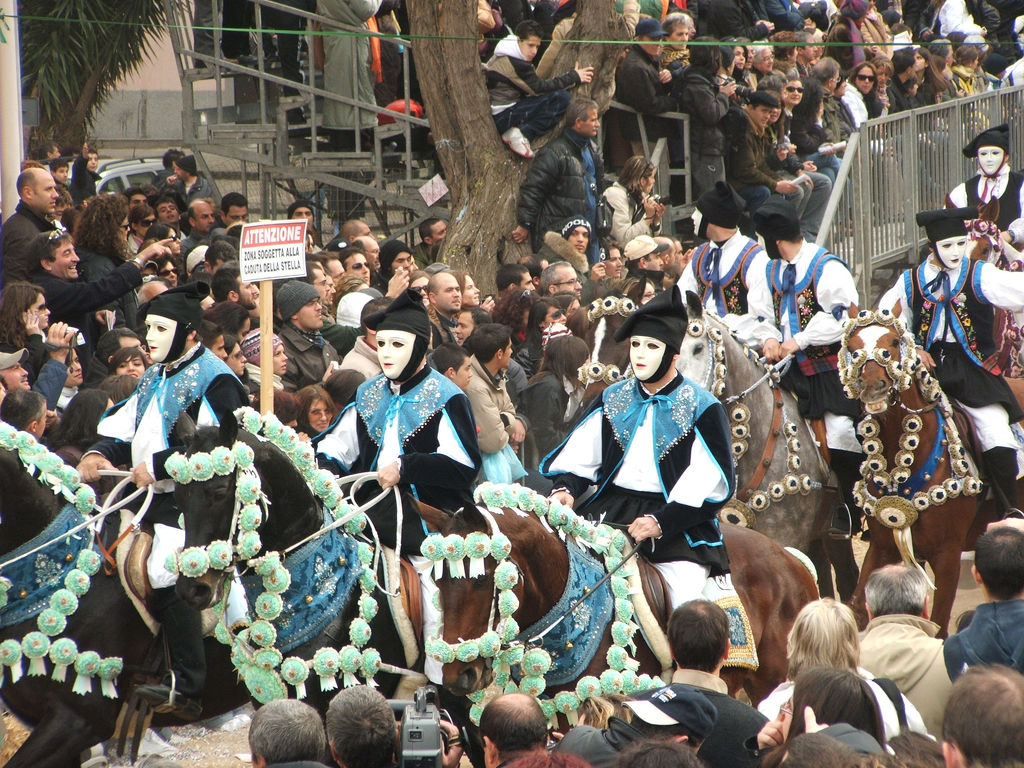
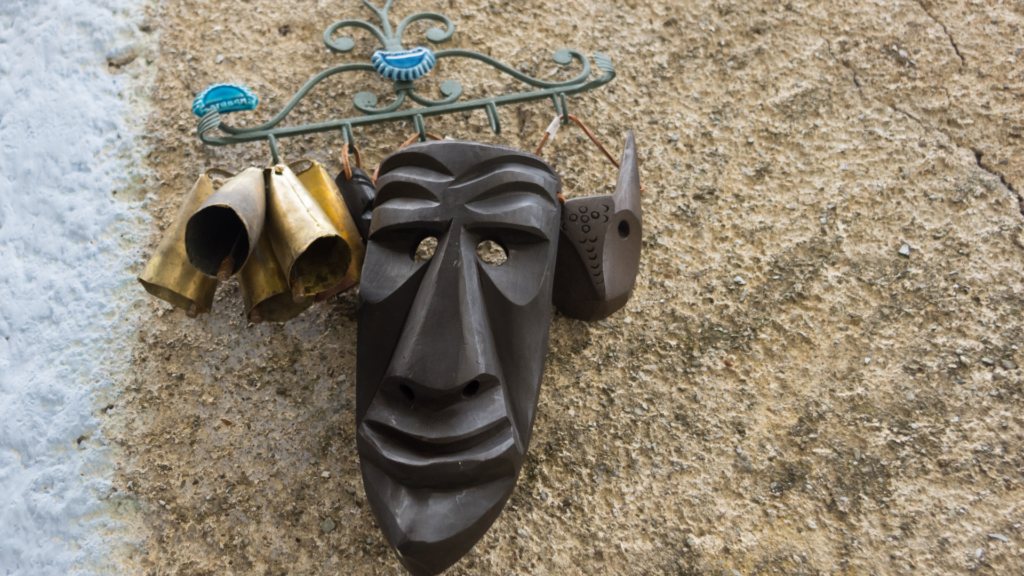
What January offers instead is one of the island’s most remarkable cultural events: the Festa di Sant’Antonio Abate on January 17, celebrated with bonfires in the streets. In Mamoiada, the legendary Mamuthones make their first appearance of the year, parading in hand-carved black masks and heavy sheepskins weighted with dozens of copper cowbells. It is genuinely unlike anything else in Europe.
February is Carnival season across Sardinia. The Sartiglia di Oristano is a UNESCO-recognized equestrian joust performed by masked riders on horseback in the city center. Mamoiada again hosts the Mamuthones. These events are local, not tourist productions. The streets fill with Sardinians from all over the island, not foreign visitors.
Swimming is not on the agenda. Cities like Cagliari, Alghero, and Sassari are fully operational, with museums, restaurants, and markets running normal hours. Prices are at their annual low.
March and April: wildflowers, hiking and Easter processions
Spring arrives early and with genuine force in Sardinia. By late March, the interior is already carpeted in wildflowers: asphodels, wild orchids, and the yellow explosion of euphorbia along the coastal cliffs. The Supramonte limestone mountains near Orgosolo and the Golfo di Orosei trail network are at their best.
Temperatures reach 16-18°C on the coast, which makes hiking perfectly comfortable. The sea is still cool at 14-15°C, so committed swimmers should wait. Most beach facilities are closed until mid-May, but you can still walk every beach in Sardinia without a single sunbed in sight.
Easter (Settimana Santa) is a major event. Cagliari, Iglesias, and Alghero hold solemn processions that date back centuries. In Iglesias, white-robed hooded figures carry statues through candlelit streets accompanied by drums and matraccas, a distinctively Sardinian rattle instrument. This is not staged for visitors; it is a living tradition.
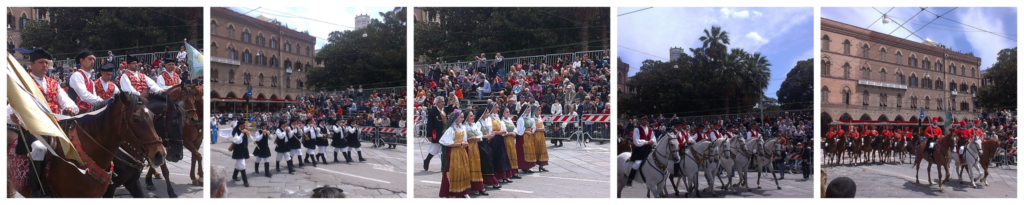
On May 1, Cagliari celebrates the Festa di Sant’Efisio with a four-day costumed procession. One of the oldest religious festivals in Italy. Worth planning around if you are here at the right time.
April and May are also prime diving months: water visibility is excellent and the crowds around dive sites are minimal. For more on the best spots, see our guide to diving in Sardinia.
May and June: the sweet spot before summer
This is where a local stops hedging and gives a direct answer. May and June are the best months to visit Sardinia for most travellers.
May offers hiking conditions that are almost perfect. The trails are open, the wildflowers are still out in the highlands, and temperatures are warm but not yet aggressive. Sea temperature around 19°C is swimmable for anyone reasonably hardy. Facilities are opening gradually, so early May can feel more like spring camping than summer resort.
June is different. The sea hits 22-23°C. All beach services, boat tours, and activity operators are fully running. Prices are meaningfully lower than July, and the coastal roads are nothing like the August gridlock. You can reach beaches like Cala Luna or the Golfo di Orosei without the summer traffic.
June is also when boat tours in Sardinia reach full operation, from the La Maddalena Archipelago in the north to the coves of the Sulcis in the southwest.
July and August: peak season, full heat, maximum crowds
Peak season. No point pretending otherwise: July and August are extremely crowded, extremely expensive, and extremely hot. Air temperatures regularly hit 32-35°C inland, with coastal highs of 28-30°C. The sea is a glorious 25-26°C.
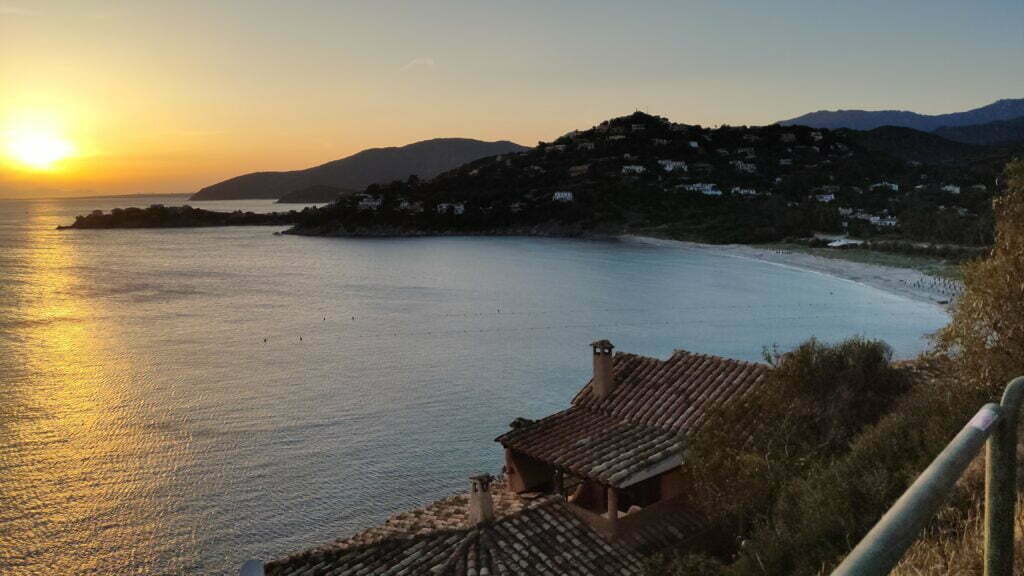
If you specifically want the full Mediterranean summer atmosphere, packed beaches, open-air bars, festivals and fireworks, this is your window. The Sagra del Redentore in Nuoro on the last Sunday of August is one of the most important Sardinian festivals, with traditional costume parades and religious ceremonies.
Ferragosto on August 15 is a national holiday and the single busiest day of the Italian beach calendar. Every beach on the island will be at maximum capacity. Book accommodation and car hire at least 3-4 months in advance.
What locals know, and most guides do not say clearly: do not try to visit interior towns like Orgosolo, Dorgali or Barumini in August heat. It is uncomfortable and the experience suffers. Save those for spring or autumn.
September and October: the locals’ favourite
September is, without much debate, the single best month to visit Sardinia. The sea reaches its annual peak temperature of 24-25°C, warmed by three months of summer sun. Italian families have gone home as schools reopen. Prices drop 30-50% from August. Coastal traffic disappears almost overnight.
The weather is still reliably warm, with daytime highs of 26-28°C. Boat tours are running. Beaches are genuinely accessible. The island feels like it has exhaled.
Early October continues in much the same spirit, particularly in the south around Cagliari and Villasimius, where the sea stays swimmable at 21-23°C. The Autunno in Barbagia festival runs from October through November, opening the villages of the Barbagia region to visitors: artisan workshops, local food, and a degree of cultural access that simply does not exist in summer. For a full picture of what October offers, see reasons to visit Sardinia in October.
Direct flights thin out from mid-October onward, so check your routes before booking late autumn travel.
November and December: off season for the curious traveller
Most beach resorts shut down. Coastal villages empty out. Rainfall increases, concentrated in short, heavy downpours rather than continuous drizzle. Many days remain clear and mild, with coastal highs still around 17-19°C in November.
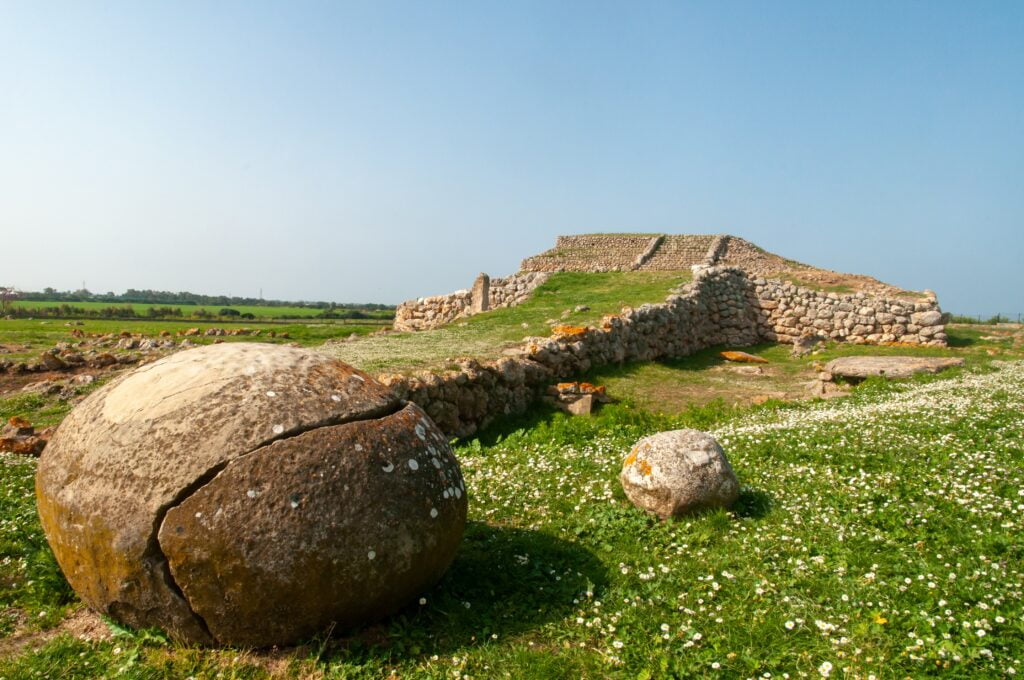
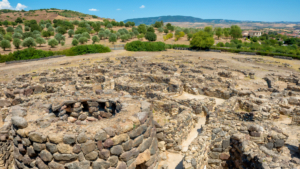
Cities stay fully operational. Cagliari, Alghero, and Sassari are excellent in winter: no queues, local prices, and a pace of life that feels nothing like the summer tourist economy. The National Archaeological Museum in Cagliari and the nuraghe sites are easier to visit without crowds. Read our full guide on the Nuraghe in Sardinia.
December brings Christmas lights and presepi (nativity scenes) in every town church. Prices are at their annual minimum. This is not a beach holiday, but it is a genuinely interesting time to encounter Sardinian life as it actually is.
Best time to go to Sardinia by travel style
| Travel Style | Best Months | Why |
|---|---|---|
| Beach and swimming | June, September | Warm sea, manageable crowds |
| Peak summer beach | July, August | Maximum heat, full atmosphere |
| Hiking and cycling | April, May, October | Mild temps, trail conditions ideal |
| Surfing and windsurfing | March-May, Sep-Nov | Maestrale and Scirocco at their best |
| Diving and snorkeling | May, June, September | Best visibility and water temperature |
| Cultural festivals | January-April | Carnival, Easter, Sant’Efisio |
| Food and wine | October, November | Harvest season, Autunno in Barbagia |
| Budget travel | May, October | Low prices, decent direct flights |
| Families with children | June, September | Warm sea, manageable heat |
| City breaks | November-March | Authentic pace, very low prices |
For more detail on Sardinia’s climate patterns throughout the year, see our dedicated weather in Sardinia guide.
Things to do in Sardinia by season: top experiences
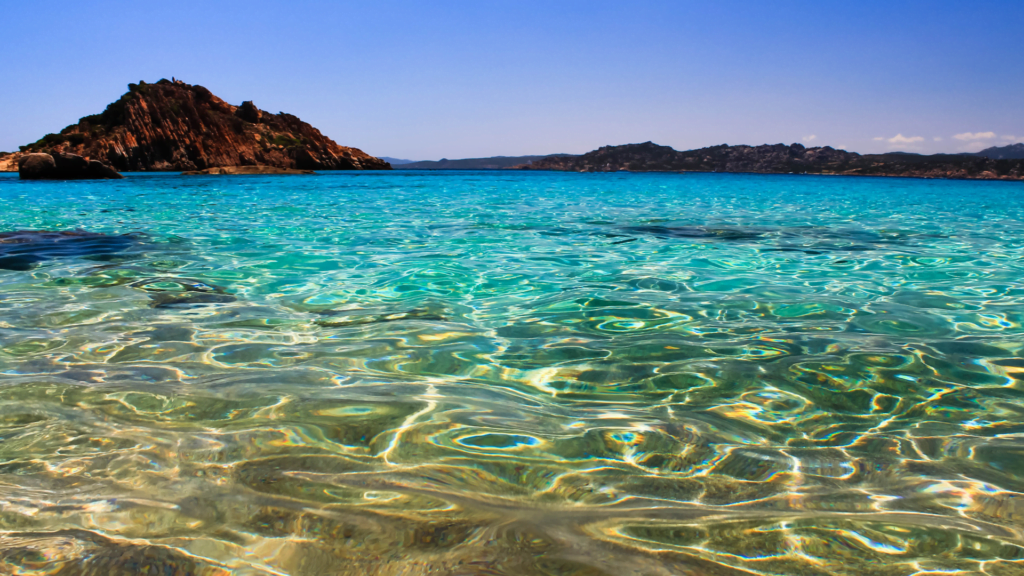
The right activity depends entirely on when you visit. Below are six confirmed, bookable experiences, each suited to a specific season.
Gorropu Canyon Guided Hike (spring and autumn)
One of the deepest canyons in Europe, Su Gorropu in the Supramonte range is best tackled in April, May, or October when temperatures are manageable. A guided hike with pickup from Orosei or Dorgali takes you through 500-metre limestone walls, past rare endemic plants and the chance of spotting golden eagles. A local guide is not optional on this trail. Sergio, who runs the most reviewed version of this tour, has been taking groups here for years and knows every boulder.
Book the Gorropu Canyon guided hike on GetYourGuide
For more trails, see our guide to the best hikes in Sardinia.
Maddalena Archipelago Catamaran Tour (June to September)
The La Maddalena Archipelago is only properly accessible by boat, and June through September is when the catamaran tours operate at full swing. From Cannigione, a full-day tour covers Spargi, Budelli’s famous Pink Beach, Razzoli, and Santa Maria, with swimming stops in the kind of water that makes people actually cry. Small-group tours (maximum 12 passengers) give access to coves the larger boats cannot reach.
Book the Maddalena Archipelago catamaran from Cannigione on Viator
For a larger group boat with more stops, there is also this option departing from Palau: full-day boat tour of La Maddalena from Palau.
Capo Carbonara Snorkeling Tour, Villasimius (May to October)
The Marine Protected Area of Capo Carbonara in Villasimius is one of Sardinia’s richest underwater environments, home to groupers, octopus, Posidonia seagrass meadows, and a famous underwater statue. A qualified marine biologist guides this tour, which combines a boat excursion with guided snorkeling at multiple sites. Best in June, July, and September when visibility peaks and water temperature is ideal.
Book the Capo Carbonara snorkeling tour on GetYourGuide
SUP, Snorkeling and Dolphins, Golfo Aranci (May to September)
Golfo Aranci has a resident family of bottlenose dolphins. This stand-up paddleboard tour from Baracconi Beach follows the coastline to Figarolo Island for a guided snorkeling session, then stops for a traditional Sardinian aperitif on a small beach. The guides are certified SUP instructors who also handle all the photography. Suitable for beginners. May through September, with July and August offering the calmest sea conditions.
Book the SUP and dolphins tour in Golfo Aranci on GetYourGuide
Wine Tour in Gallura with Cannonau and Vermentino Tasting (year-round, best in autumn)
The rolling granite hills of Gallura produce some of the best Vermentino in Italy. This small-group tour departs from Olbia or Costa Smeralda, transfers you to a family-run winery, and includes a tasting of Cannonau, Vermentino, and local cheeses and cured meats. Wine tourism works all year in Sardinia, but October and November align with the harvest, when the wineries are most active and the food pairing is at its richest.
Book the Gallura wine tour from Olbia on GetYourGuide
For those based in Cagliari or the south, this artisanal food and wine tasting by a local Sardinian guide is the equivalent experience for the southern half of the island: Cagliari artisanal food and wine tasting.
Wine Tasting and Nuragic Village Tour near Alghero (spring and autumn)
This tour near Alghero combines a coastal walk through the Porto Conte Natural Reserve with a visit to a family-run winery and a tasting session, then finishes at an ancient Nuragic village dating to the 16th century BC. The combination of archaeology, landscape, and local wine makes this one of the most complete half-day experiences in northwest Sardinia. April, May, and October are the best windows, when the coastal scrub is at its most vivid. See our Alghero guide for more context on the area.
Book the wine and Nuragic village tour near Alghero on GetYourGuide
Getting around: car rental in Sardinia
A car is not optional in Sardinia. That applies in every season, not just summer. In the shoulder season and winter, public transport becomes sparse and unreliable between coastal resorts. Without a car, you are limited to the main cities and the train corridor between Cagliari, Oristano, and Sassari.
For getting to Sardinia, you will land at one of three airports in Sardinia. Booking your rental car early is important in peak season, when prices can double and availability collapses.
You can compare prices and book directly from:
- Olbia Airport (OLB): Discovercars Olbia
- Cagliari Airport (CAG): Discovercars Cagliari
- Alghero Airport: Discovercars Alghero
- All of Sardinia (compare all locations): Discovercars Sardinia
Where to stay in Sardinia
Accommodation choices in Sardinia change significantly with the season. In peak summer, coastal resorts command the highest rates and must be booked months ahead. In autumn and winter, the same rooms can cost 40-60% less, and city-center hotels become the smarter base.
For a full breakdown by area, see: where to stay in Sardinia, northern Sardinia, and south Sardinia.
Three confirmed options across different budgets and locations:
- Palazzo Doglio, Cagliari (luxury, 5 stars): Urban sanctuary in the heart of Cagliari, within walking distance of the historic Castello quarter and a 10-minute drive from Poetto Beach. Excellent base for autumn and winter visits when the city is at its best. Spa, courtyard restaurant, and the finest breakfast buffet in the city. Book on Booking.com
- Hotel Da Cecco, Santa Teresa Gallura (mid-range, 3 stars): Family-run hotel 200 metres from Rena Bianca beach in the far north. Sea-view rooms, free parking, and staff who genuinely care about giving practical local advice. Ideal base for exploring the Bocche di Bonifacio and the La Maddalena Archipelago from June to September. Book on Booking.com
- Browse all options across Sardinia: For budget accommodation, agriturismi, and apartment rentals across the island and every season: Booking.com Sardinia
The local perspective: what Sardinians think
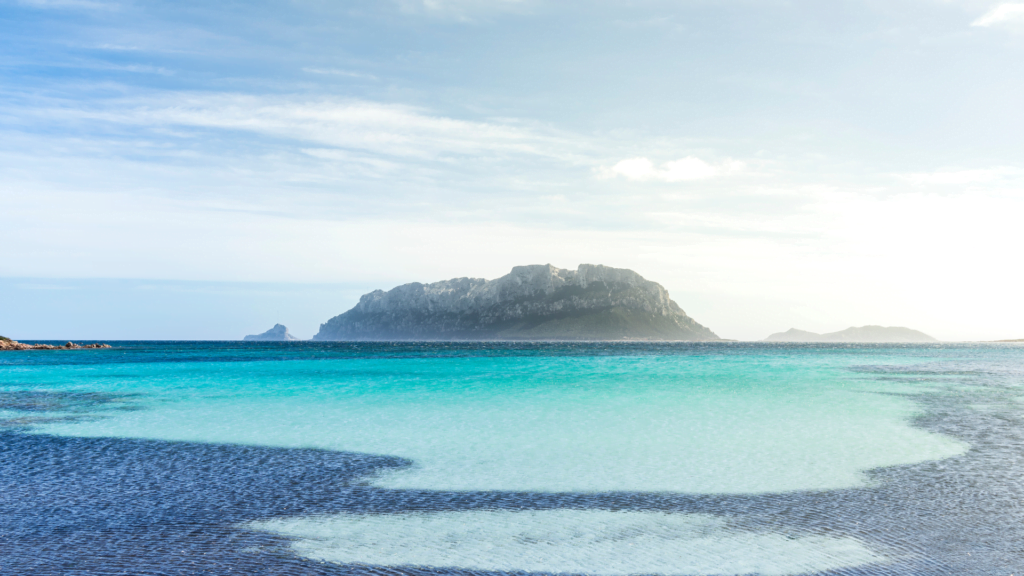
Sardinians go to the beach in June, July and September. Not really in August. This is not a cliche. It is a logistical reality.
On climate and wind: The island’s two prevailing winds shape the experience profoundly and most travel guides ignore them. The Maestrale (the northwesterly Mistral) blows hard across the north and center, particularly at Cagliari’s Poetto beach and the Costa Smeralda. In spring and early summer, it can make sea conditions rough for boat excursions, even on sunny days. The Scirocco, the warm southerly wind from Africa, arrives irregularly in summer and autumn, pushing temperatures up sharply and producing a heavy, hazy sky. Neither wind is dangerous, but both affect the practical experience of outdoor activities significantly.
On logistics in peak season: August in Sardinia is not a relaxed experience. The SS125 along the east coast backs up for kilometres. Parking at any popular beach between 10:00 and 17:00 ranges from difficult to impossible. Petrol stations near coastal resorts run out of fuel on Ferragosto weekend. Restaurants in tourist-heavy areas switch to fixed tourist menus at double the off-season price. None of this is a reason not to come in August, but it is information you need before you book.
On the sea temperature gap: many visitors are surprised to find the sea still cold in June. This is because the Sardinian sea takes the entire summer to warm up properly. A 22°C sea in June requires more adjustment than a 24-25°C sea in September. If warm water swimming is your priority, September beats June every time on this single metric alone.
FAQ about the best time to go to Sardinia
What is the best single month to visit Sardinia?
September, for most travellers. The sea is at its warmest, Italian families have returned home, direct flights are still operating, and prices have dropped from the August peak. It delivers the full Sardinian beach experience without the August coefficient of heat, crowds, and inflated prices.
Is Sardinia too hot in August?
For beach use, not particularly. For visiting inland towns, archaeological sites, or doing any serious hiking, yes. Temperatures regularly exceed 32°C inland in August, and the combination with peak crowds makes cultural exploration genuinely uncomfortable. If your plan is beach-only, August works. If you want to see more of the island, June or September are far better.
Can you swim in Sardinia in October?
Yes, in the first half of October and particularly in the south around Cagliari, Villasimius, and Pula. Sea temperatures average 21-23°C through most of October, warm enough for comfortable swimming. The northern coasts cool slightly faster. By late October, sea swimming becomes less predictable.
When is Sardinia cheapest to visit?
January through March and November offer the lowest prices by a significant margin, with accommodation sometimes 60% below August rates. May and October offer a good balance: reasonable prices, decent direct flight availability, and weather conditions that are genuinely pleasant rather than merely tolerable.
Is Sardinia worth visiting in winter?
Yes, with clear expectations. Beach holidays do not work in winter. But Cagliari, Alghero, Sassari, and Oristano are fully alive and genuinely interesting in winter. The Carnival season in February, the archaeological museums, the weekly markets, and the food scene all operate normally. What closes is the coastal resort infrastructure, including most beach restaurants, water sports operators, and many hotels in smaller coastal towns.
When does tourist season start in Sardinia?
The official start of the Sardinian tourist season is typically late May, when most beach operators open. However, flights begin increasing from Easter onward, and some operators, particularly in the diving and hiking sectors, run from April. The full resort infrastructure is operational from June 1.