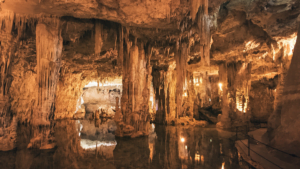
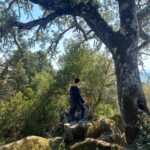
This is a guide to what to see in Sardinia from north to south: the obvious icons and the places most visitors never reach. It is written by someone who actually lives here.
Sardinia is not what most people picture. The beaches are real, yes. The turquoise water is real too. But the island you discover when you actually explore it is far bigger, stranger, and more rewarding than any travel catalogue suggests. A car is non-negotiable. Distances are real. The island covers roughly 24,000 km² and public transport will not get you to most of the places worth seeing. Plan by area, not by a wish list scattered across the map.
What to see in Sardinia: how this guide is organized
Sardinia divides naturally into three geographic macro-areas: North, Central, and South. Each has its own character, its own coastline, its own inland world.
This guide is a starting point. It gives you the essential picture of each area with the unmissable places, then points you to the in-depth pages on this site for every location. Think of it as the map before the map.
Each macro-area has a dedicated deep-dive guide:
- Where to go in Northern Sardinia – 11 best places from a local
- Where to go in Central Sardinia – 19 best places from a local
- Where to go in South Sardinia – the full south guide
You will also find a sardinia map built for tourists that covers all regions in one view.
Now, let us get into it.
What to see in North Sardinia
The north is the most visited part of the island. It is also the most misunderstood. Most first-timers go straight to the Costa Smeralda, spend a week there, and leave thinking they have seen Sardinia. They have seen a very expensive sliver of it.
The north actually offers two completely different worlds: the glamorous, granite-and-yacht northeast, and the rugged, wind-carved northwest where towns like Alghero and Castelsardo tell a completely different story.
Costa Smeralda and La Maddalena
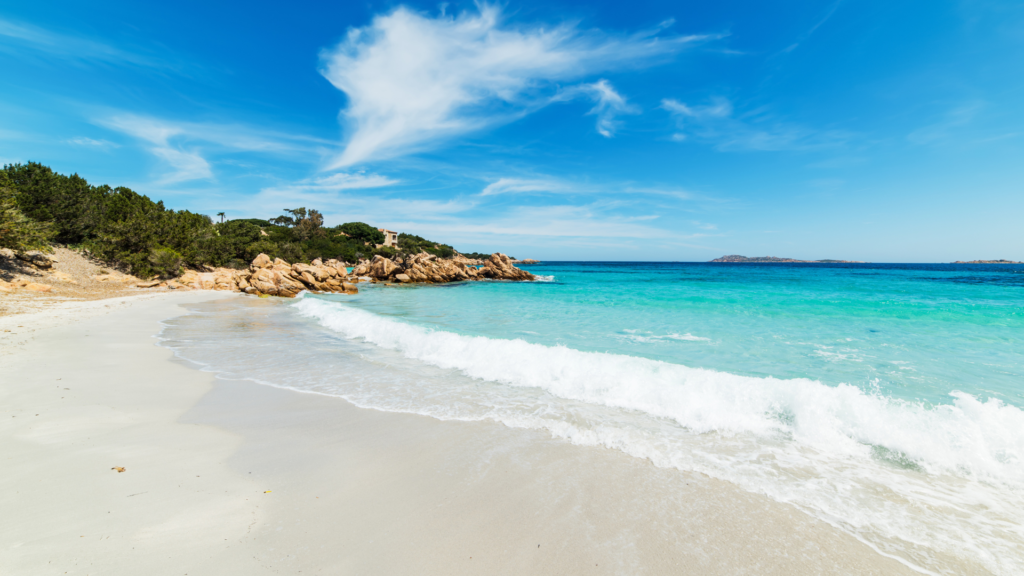
Costa Smeralda is the name everyone knows. Porto Cervo, Porto Rotondo, the yachts, the designer boutiques. The sea here is genuinely extraordinary: pale green in the shallows, deep blue offshore, framed by smooth pink granite. In July and August, it is also genuinely crowded and genuinely expensive.

Immediately to the north, La Maddalena Archipelago is a different matter. This is a protected national park made up of seven main islands and dozens of smaller ones. Most are uninhabited. The beaches are accessible only by boat. The water in places like Cala Coticcio on Caprera is the kind of colour that makes people wonder if the photo has been edited. It has not.
Read the full guides: Costa Smeralda guide and La Maddalena guide.
Alghero and the northwest coast
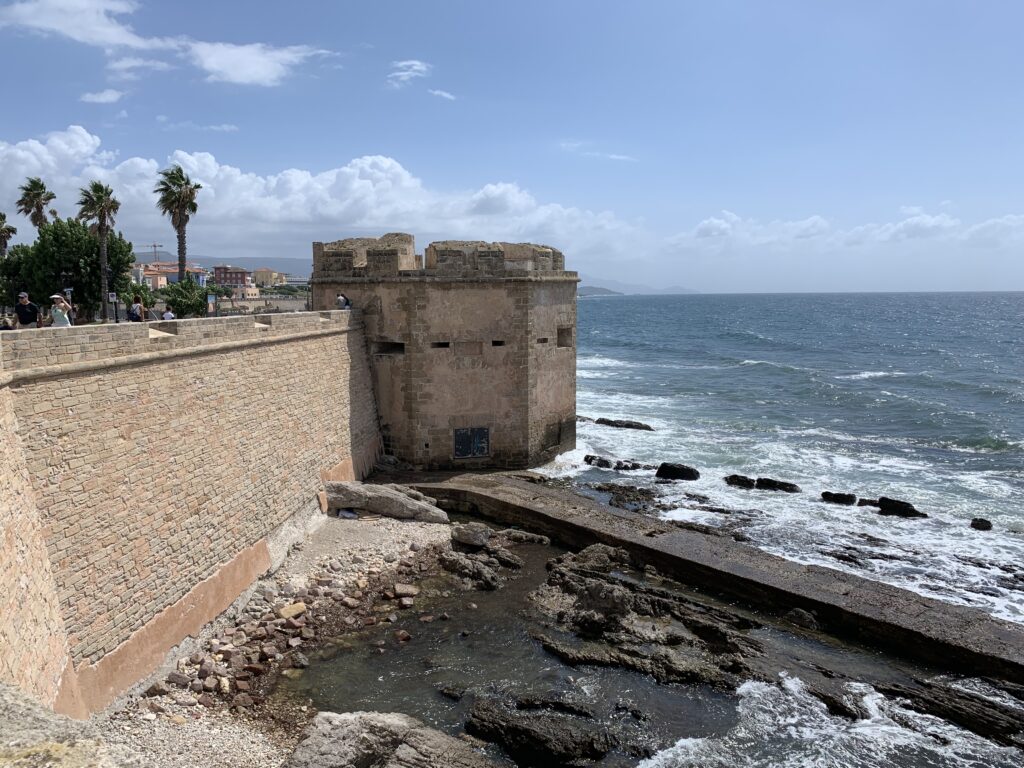
Alghero is the most interesting city in northern Sardinia. Its medieval walls were built by the Aragonese in the 16th century. Its old town dialect is a variant of Catalan, not Italian, still spoken by some older residents. The sea walls at sunset are one of the finest views on the island.
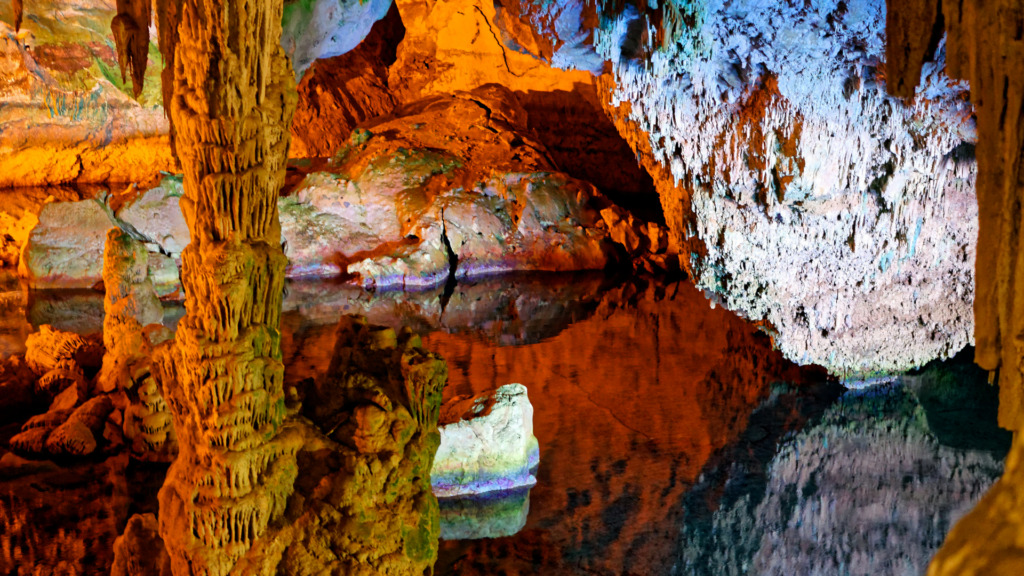
Just west of Alghero, Neptune’s Grotto (Grotta di Nettuno) sits inside the limestone cliffs of Capo Caccia: a massive sea cave reached either by a long staircase carved into the cliff or by a short boat ride from Alghero port. It is worth both the journey and the entrance fee.
The coastal road south from Alghero to Bosa is one of the most scenic drives in Italy. Bosa itself is a small town on the Temo river, with a medieval castle above it and a coloured old town below. Most visitors drive straight past it. That is their loss.
Full guides: Alghero guide and Neptune’s Grotto guide.
Asinara, Stintino and Castelsardo
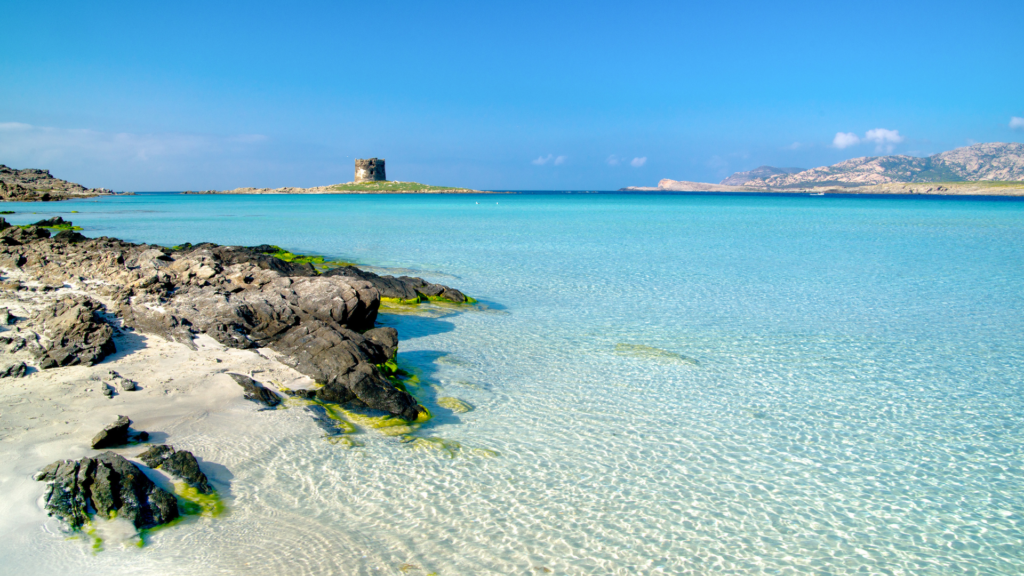
Stintino and its La Pelosa Beach are among the most photographed places in Sardinia. The shallow water stays warm and clear well into September. Since 2021, La Pelosa operates a timed-entry ticket system in peak season: book in advance.
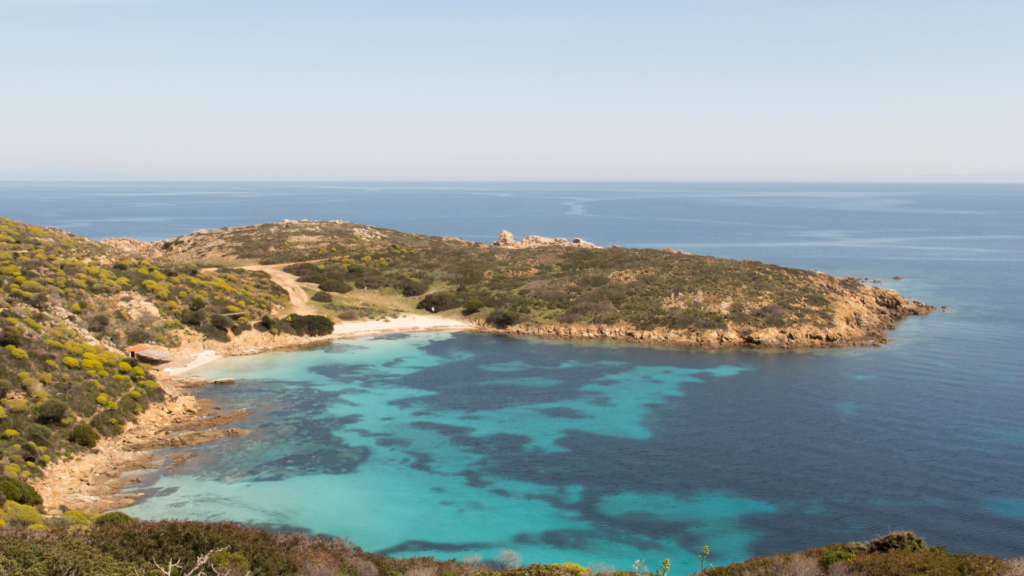
A short ferry ride from Stintino, Asinara Island spent most of the 20th century as a maximum-security prison. Today it is a national park with no permanent residents, albino donkeys roaming the roads, and an emptiness that is hard to find anywhere else in the Mediterranean.
On the northeastern tip of the north, Castelsardo is a medieval town perched on a volcanic outcrop above the sea. The old town is compact, the views are wide, and the tourist crowds are lighter than at the coast.
Full guides: Asinara guide, Stintino guide, Castelsardo guide.
Read the full guide to Northern Sardinia
What to see in Central Sardinia
Central Sardinia is where most visitors never go. That is precisely why it belongs on this list. This is the Sardinia that Sardinians actually know: wild mountains, ancient villages, the deepest canyon in Europe, and beaches accessible only by sea.
It is also the most logistically demanding part of the island. The roads are slower. The distances between places are real. That is what keeps the crowds away, and it is not a disadvantage.
Golfo di Orosei and Cala Goloritzè
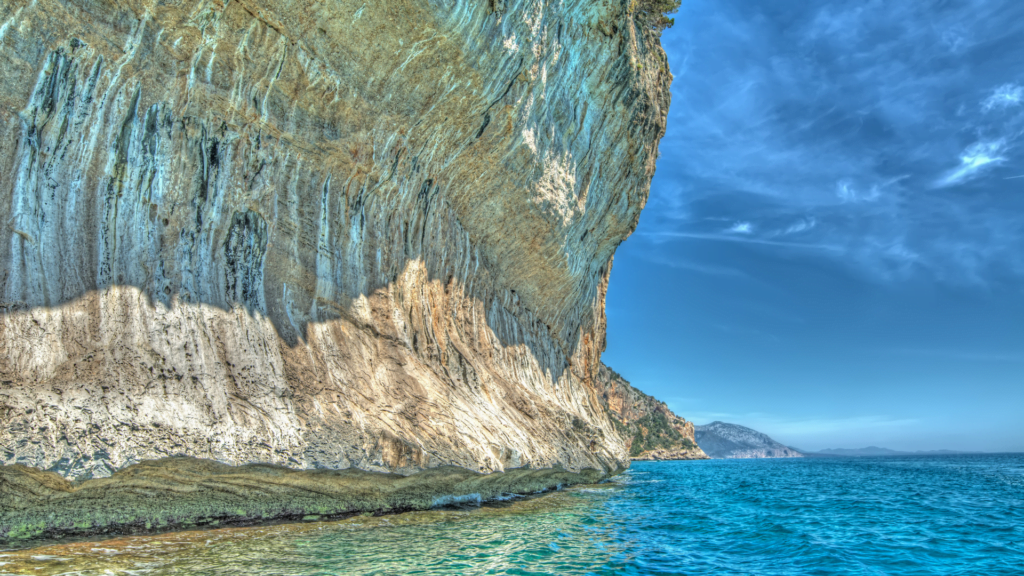
The Gulf of Orosei is the crown jewel of the Sardinian coast and it is not even close. This is a stretch of limestone cliffs, hidden coves, and caves running for about 40 km along the eastern coastline, most of it accessible only by boat or on foot.
Cala Goloritzè is a UNESCO World Heritage Site. It sits at the base of a spectacular limestone arch at the end of a hiking trail from Baunei. The pebble beach below is tiny, the water is extraordinary, and the approach on foot takes around 90 minutes each way. The effort is worth it.
Other beaches in the gulf, including Cala Mariolu, Cala Luna, and Cala Sisine, are equally remarkable and equally inaccessible by road. Boat tours from Cala Gonone are the practical way to see them.
Full guides: Golfo di Orosei guide and Cala Goloritzè guide.
Barbagia: Orgosolo, Mamoiada, Oliena
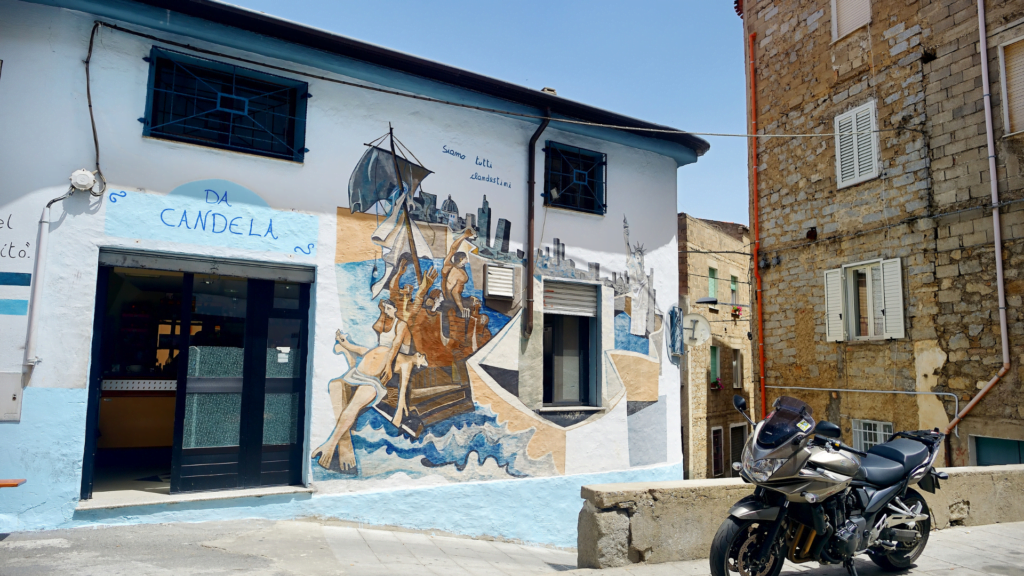
Barbagia is the mountainous heart of the island. This is not beach territory. It is the territory of shepherds, ancient festivals, and extraordinary food.
Orgosolo is famous across Sardinia for its murals: hundreds of political paintings covering the walls of the village, many dating from the 1970s. They are blunt, direct, and unlike anything you will find in a gallery. The village itself is small and unassuming, which makes the murals more striking, not less.
Mamoiada is known for the Mamuthones, the masked figures of the January Carnival, one of the oldest and most unusual festivals in Europe.
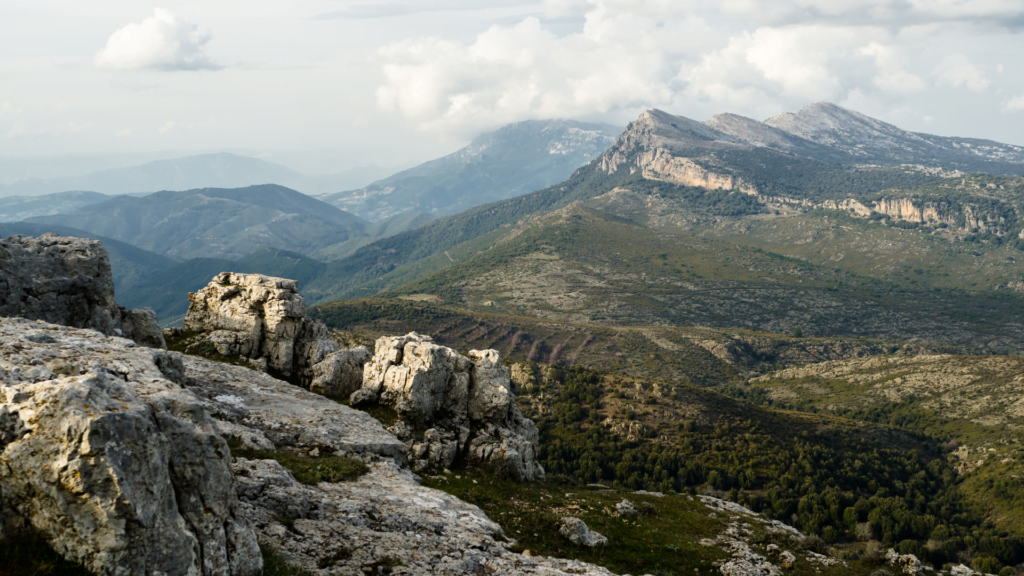
Oliena sits at the foot of Monte Corrasi and is the base for exploring the Supramonte, a vast limestone massif with caves, springs, and trails that take serious walkers days to complete.
None of this is easy to reach without a car. None of it is crowded. Both facts are connected.
Su Nuraxi di Barumini: UNESCO World Heritage Site
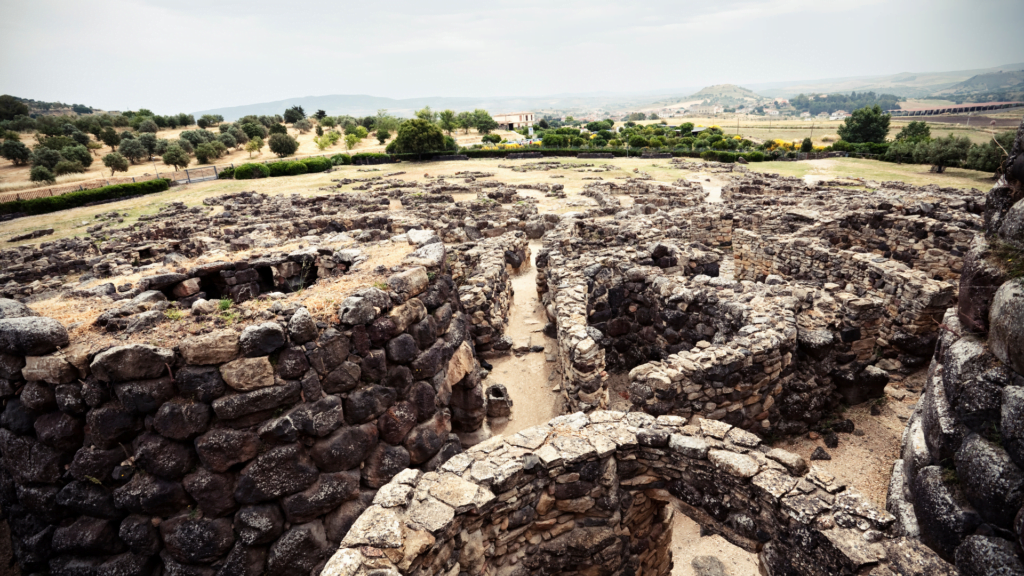
Su Nuraxi di Barumini is the most important archaeological site in Sardinia. Full stop. It is a nuragic complex dating back to the Bronze Age, around the 15th century BC, and it was declared a UNESCO World Heritage Site in 1997.
The central tower, or nuraghe, is surrounded by a village of circular stone huts that were inhabited for centuries. The guided tour is mandatory and well worth it: the site is complex enough that exploring it alone leaves most visitors confused about what they are actually looking at.
It sits about 50 km north of Cagliari. Combine it with the Giara di Gesturi plateau, 10 km away, where the last population of wild Giara horses in the world still roams free.
Full guides: Barumini guide and Nuraghe guide for all Sardinia.
Gorropu Canyon and the Gennargentu
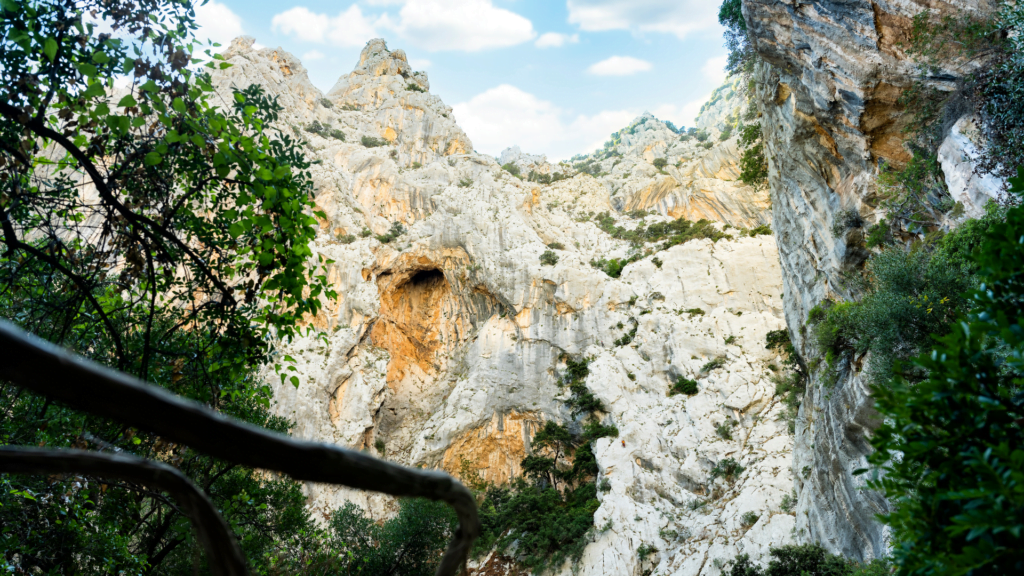
Gorropu Canyon, near Dorgali, is sometimes called Europe’s Grand Canyon. The walls reach up to 500 metres and the canyon narrows to 4-5 metres at its tightest point. It is a limestone gorge carved by the Flumineddu river over millennia.
A guided hike into the canyon takes around 4.5 hours and covers about 7 km. The terrain is rough but the difficulty is moderate. What you see inside, boulders wedged between walls, a river running under your feet, sheer rock above you, is unlike anything else on the island.
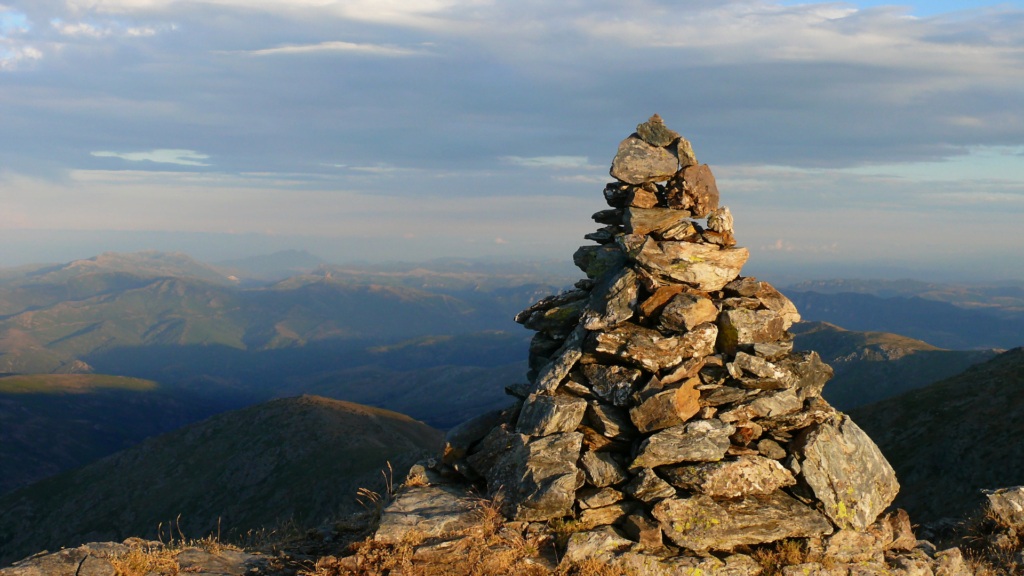
Above the canyon, the Gennargentu massif contains Punta La Marmora, Sardinia’s highest peak at 1,834 metres. Spring brings wildflower meadows and the chance to spot mouflons (Sardinian wild sheep) and golden eagles.
Full guides: Gennargentu National Park guide and Best hikes in Sardinia.
Read the full guide to Central Sardinia
What to see in South Sardinia
The south is the most underrated part of the island among international visitors and the most appreciated by Sardinians themselves. Cagliari is a real city with real life in it. The beaches of the southeast are among the best on the island. And the Sulcis-Iglesiente, the wild southwest corner, is almost entirely off the tourist circuit.
Cagliari
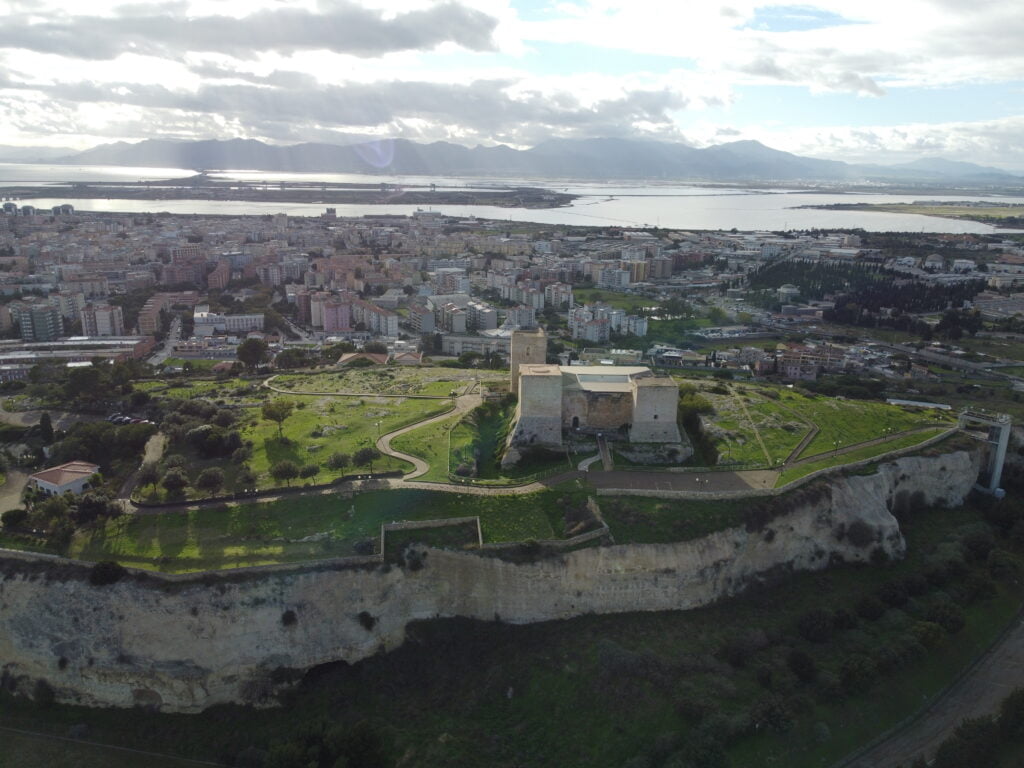
Cagliari is a city that earns a minimum of two full days. It is the capital and it does not apologize for being urban.
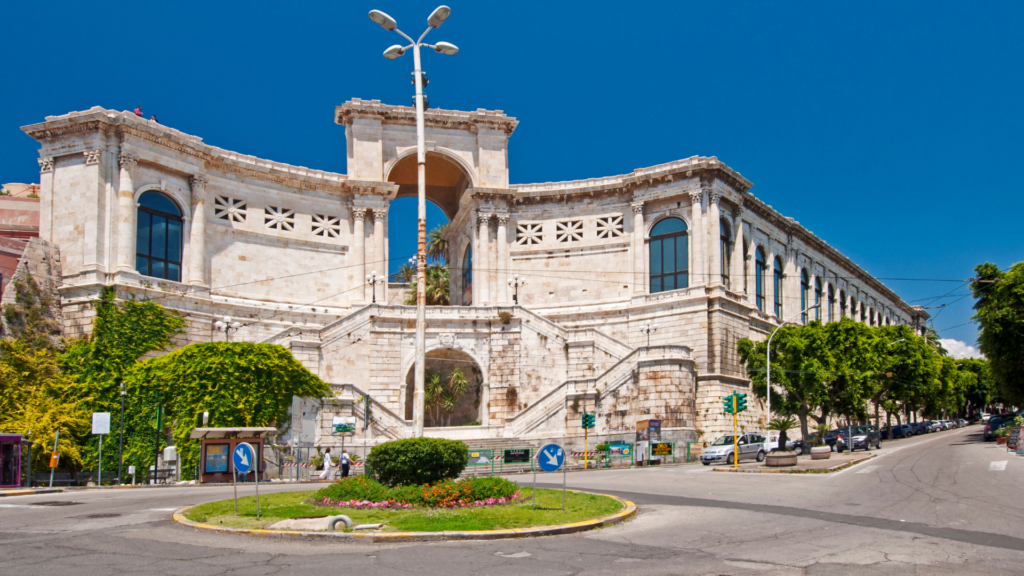
The Castello district sits on a hilltop above the port: medieval walls, baroque churches, museums, and the best views of the city and the sea. The Bastione di Saint Remy is the terrace where locals come for aperitivo while looking out over the rooftops.
Below the hill, the San Benedetto Market is one of the largest covered markets in Italy: two floors of fresh fish, cheese, bread, and everything the Sardinian kitchen runs on.
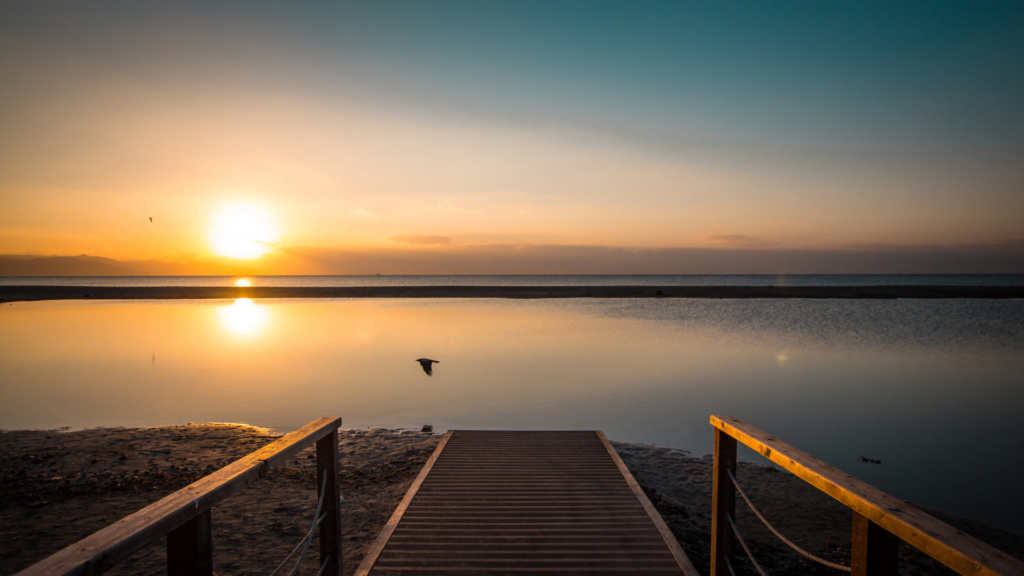
Poetto Beach stretches for 7 km just east of the city centre. It is a long, sandy beach backed by the Molentargius Natural Park, a shallow lagoon that is home to one of the largest flamingo colonies in Europe. You can see the flamingos from the road without even stopping the car.
Full guides: Cagliari guide, Poetto guide, Molentargius park guide.
Villasimius and the southeast coast
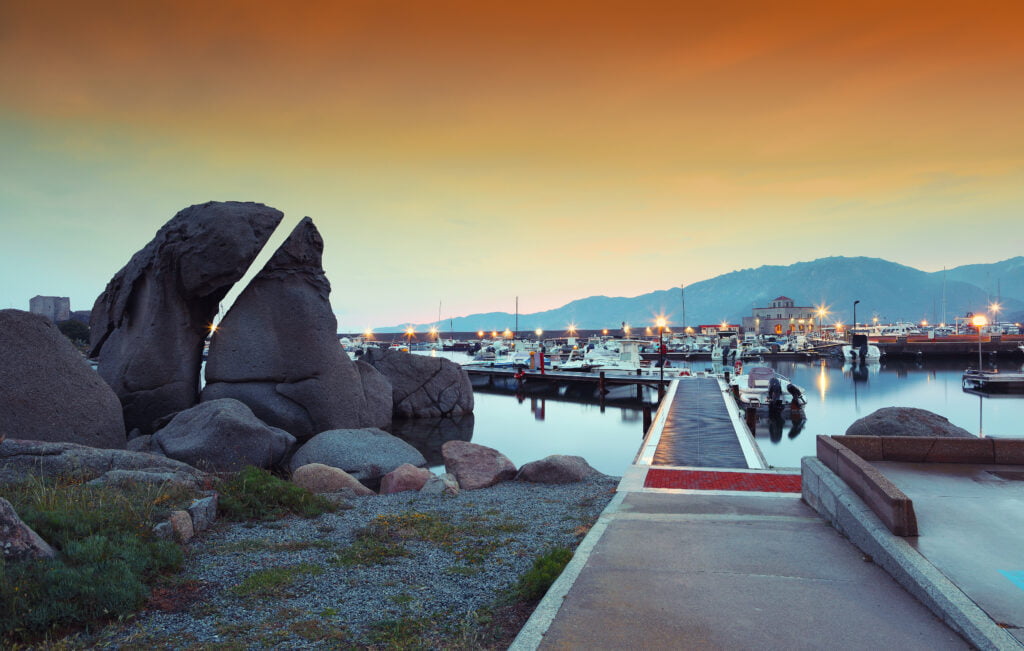
Villasimius is about one hour from Cagliari airport and it contains some of the finest beaches in the Mediterranean. The Capo Carbonara Marine Protected Area wraps around the southeastern tip of Sardinia: clear water, protected sea grass beds, and snorkelling that genuinely surprises people.
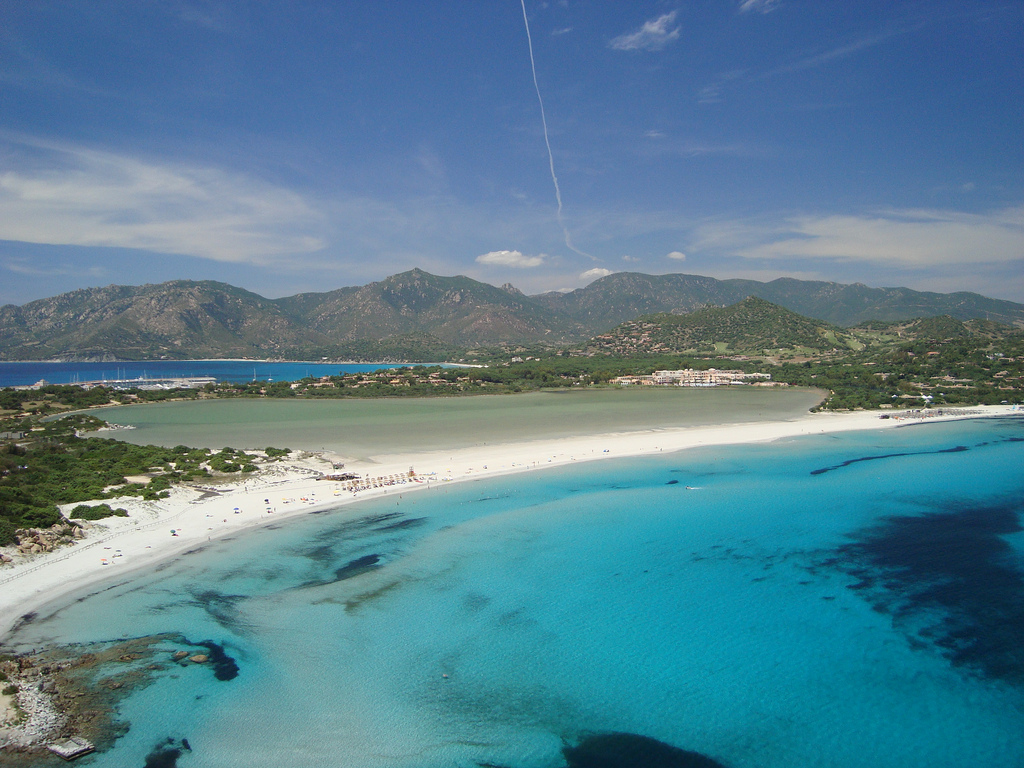
Porto Giunco is the standout beach: a long arc of white sand with a lagoon behind it where flamingos appear seasonally. Punta Molentis is smaller, more sheltered, and requires a short walk from the car park, which keeps it calmer even in August.
North of Villasimius, the Costa Rei runs for about 12 km of continuous sandy beach, backed by low dunes and relatively light development. The area around Muravera and Cala Sinzias is quieter than Villasimius even at peak season.
Full guides: Villasimius guide, Porto Giunco guide, Punta Molentis guide.
Chia and the southwest coast
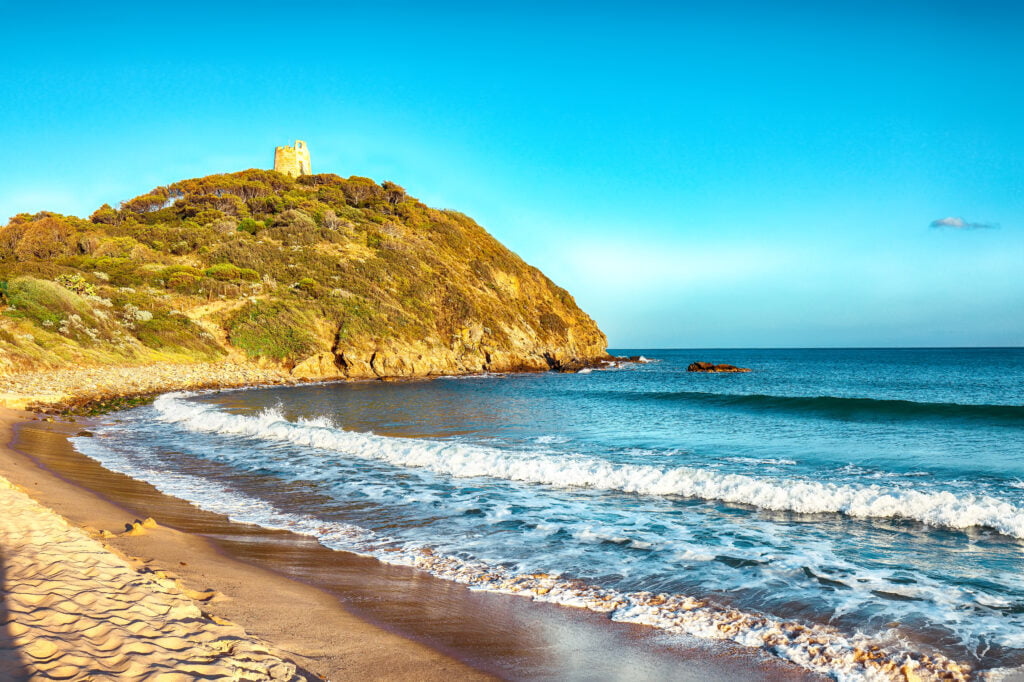
Chia, about 55 minutes south of Cagliari airport, sits in a pocket of coastline that is arguably the wildest in southern Sardinia. Su Giudeu and Cala Cipolla are backed by sand dunes that shift with the Maestrale wind. A Punic tower stands at the headland. Flamingos feed in the lagoon behind the main beach.
Further south, Tuerredda near Teulada has repeatedly been voted among the most beautiful beaches in Italy. It is a small cove with extraordinarily clear water. The beach access road is narrow and the car park fills early in summer. Go before 9am or after 5pm.
More remote and almost unknown to international visitors, Porto Pino in the Sant’Anna Arresi area has enormous white sand dunes and a lagoon ecosystem that feels completely untouched. It is one of the most honest places on the south coast.
Read the full guide to South Sardinia
Sulcis-Iglesiente and the islands
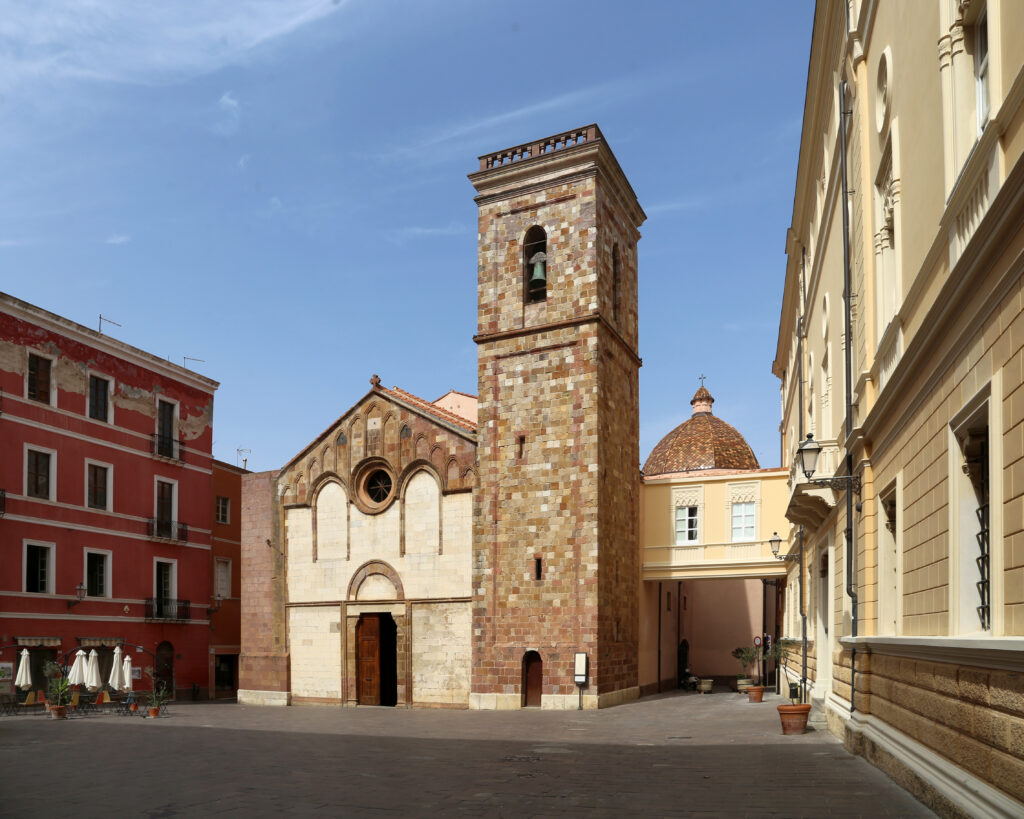
The Sulcis-Iglesiente in the far southwest is the part of Sardinia that surprises people most. It is not pretty in the conventional sense. It is dramatic.
Iglesias is a former mining town with a medieval centre and a Spanish-era cathedral. Porto Flavia, on the coast near Masua, is an engineering marvel from the early 20th century: a loading port carved directly into the cliffs 50 metres above the sea, so that mineral ore could be loaded onto ships from tunnels in the rock face. It is one of the most unusual sights on the island.
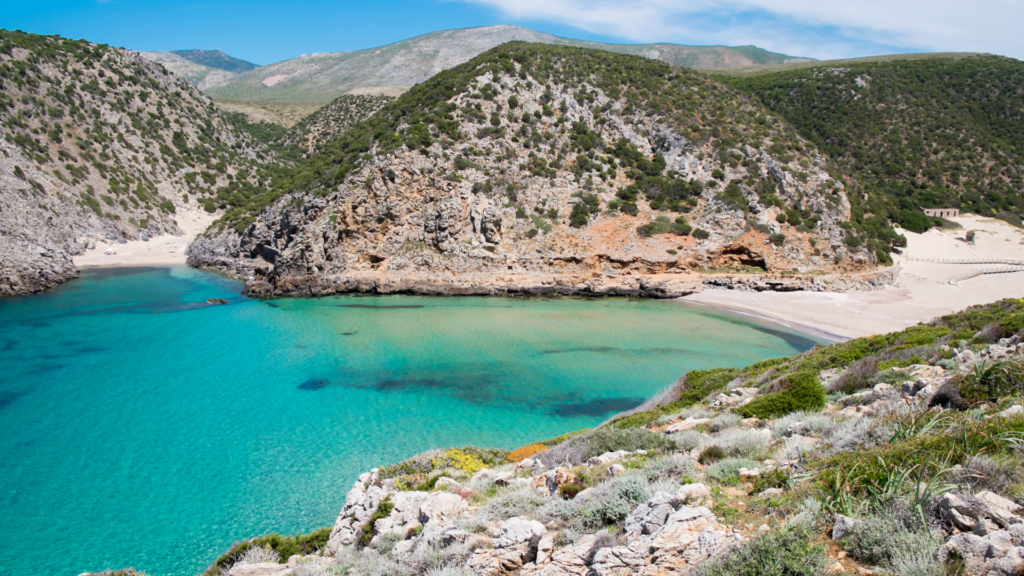
Cala Domestica, inside the old mining zone near Buggerru, is a spectacular inlet framed by cliffs. The water is calm and very clear. The setting is unlike any beach resort on the island.
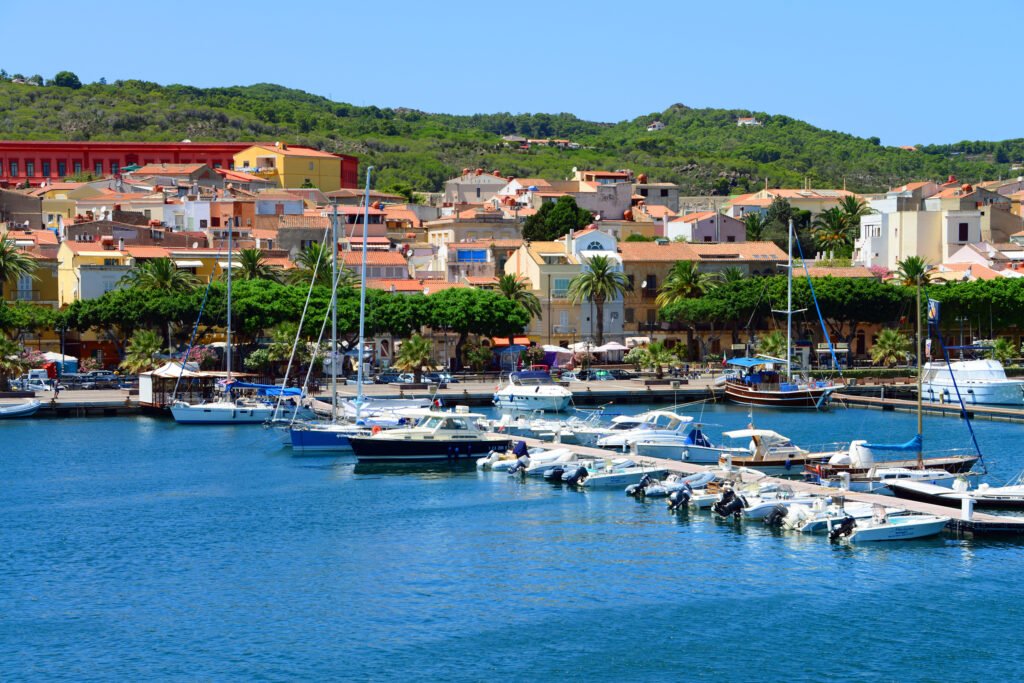
Two islands complete this area. Isola di San Pietro is reached by ferry from Portovesme in about 30 minutes. Its only town, Carloforte, was founded by Ligurian fishermen in the 18th century and still speaks a variant of Genoese dialect. The local cuisine is built around tuna and couscous, neither typically Sardinian, both extraordinary.
Sant’Antioco is connected to the Sardinian mainland by a Roman causeway. It is the oldest continuously inhabited place on the island, with Phoenician ruins and a tophet (sacred burial ground) that historians continue to study and debate.
Full guides: Carloforte guide, Sant’Antioco guide, Cala Domestica guide, Iglesias guide.
Things to do in Sardinia: top activities
Knowing what to see is one thing. Experiencing it is another. These are eight of the best bookable activities on the island, covering all three macro-areas and a range of interests: sea, hiking, archaeology, and food.
La Maddalena Archipelago Sailing Tour with Lunch
A full-day sailboat cruise through the seven islands of the La Maddalena Archipelago. The tour includes two swimming stops, snorkelling and paddleboard equipment, and a Sardinian lunch prepared on board. The captain provides commentary on the landscape and its history. With 415+ reviews and consistently high ratings, this is one of the most trusted experiences in northern Sardinia.
Gorropu Canyon Guided Hike
A full-day guided hike into one of the deepest canyons in Europe. The route covers about 7 km and takes around 4.5 hours, with a moderate difficulty level. Your guide explains the geology, flora, and fauna along the way. The lunch stop inside the canyon, boulder-surrounded and utterly silent, is the kind of moment that ends up in people’s travel journals. 304+ reviews.
Gulf of Orosei Boat Tour
A small-group RIB tour (maximum 12 passengers) along the coast of Orosei, visiting sea caves and inlets that are completely inaccessible by road or by larger boats. Stops include Cala Goloritzè, Cala Luna, Cala Mariolu, and Cala Biriala. The skipper provides commentary throughout. 369+ reviews.
Gulf of Orosei Dinghy Tour to Cala Sisine
An alternative boat excursion format for those who want a longer stop at a single spectacular beach. Cala Sisine is one of the most beautiful coves in the Gulf, accessible only by sea, with a shallow pebble floor and water of exceptional clarity. The tour includes swimming time and a skipper who knows the coast well. 56+ reviews.
Su Nuraxi Barumini UNESCO Tour from Cagliari
A half-day guided tour of the Su Nuraxi fortress in Barumini, one of the most important Bronze Age sites in the Mediterranean, combined with a visit to the Giara di Gesturi plateau to see the wild Giara horses. Hotel pickup from Cagliari is included. The guide explains the history of the nuragic civilization in a way the site alone cannot. 339+ reviews.
Barumini and Giara di Gesturi Small-Group Tour
A smaller-group alternative to the tour above, for those who prefer a more intimate pace and a deeper focus on the archaeological site and the plateau. Ideal for visitors with a specific interest in Sardinian prehistory and archaeology.
Cagliari Walking Tour of the Castello Quarter
A two-hour guided walk through the Castello district with a local guide: medieval palaces, baroque churches, hidden alleyways, and the best viewpoints over the city and the bay. The guides are Cagliari residents who bring personal knowledge to the historical facts. 104+ reviews.
Culurgiones Sardinian Cooking Class in Cagliari
A hands-on cooking class focused on culurgiones, the traditional Sardinian pasta dumplings filled with potato and mint, sealed by hand using a specific braiding technique that takes patience and practice. The class ends with lunch, including the pasta you made, paired with local wine. 473+ reviews. One of the highest-rated food experiences on the island.
For a complete and updated list of activities across the whole island, with selections organized by area and type, see our dedicated guide to boat and motorboat tours in Sardinia.
Getting around: car rental in Sardinia
A car is not optional in Sardinia. This needs to be stated plainly.
Public transport connects the main cities but does not reach the beaches, the canyon, the nuraghi, the Barbagia villages, or most of the places listed in this guide. Even along the coast, the roads to the best beaches are typically unmarked, narrow, and unpaved for the last kilometre. You need a car.
The three airports that serve the island each have rental desks with a full range of operators:
- Olbia Airport (gateway to north Sardinia): compare and book on DiscoverCars
- Cagliari Airport (gateway to south Sardinia): compare and book on DiscoverCars
- Alghero Airport (gateway to northwest Sardinia): compare and book on DiscoverCars
- All of Sardinia (compare across all airports and pickup points): DiscoverCars Sardinia
Book in advance. In July and August, rental availability drops sharply and prices rise equally fast. A compact car with air conditioning is the practical choice for most itineraries.
See also: Airports in Sardinia: how to choose
Where to stay in Sardinia
Where you base yourself in Sardinia shapes everything else. The island is too large to cover from a single location without spending most of your time driving. Plan your accommodation around the area you intend to explore.
Here are four verified options across the price range and the island:
Palazzo Doglio, Cagliari (5-star, premium)
An urban luxury hotel in the historic centre of Cagliari, a short walk from the Castello district and 10 minutes from Poetto Beach. Spa, rooftop terrace, and multiple restaurants. The ideal base for exploring the south and for those arriving or departing through Cagliari airport.
Book on Booking.com
Margaida Boutique Hotel & SPA, Cala Gonone (4-star boutique, adults-only)
An adults-only property with an infinity pool, sea views, and a spa, two minutes walk from Spiaggia Centrale in Cala Gonone. The perfect base for the Gulf of Orosei. Pre-booking a boat tour for the day after arrival is strongly recommended.
Book on Booking.com
Hotel Cala Luna, Cala Gonone (mid-range, family-friendly)
A family-run beachfront hotel on the Cala Gonone promenade, with direct access to the marina from which all Gulf of Orosei boat tours depart. Three dining options and consistently helpful staff who organize excursions on-site.
Book on Booking.com
Costa Dorada, Cala Gonone (mid-range, waterfront)
Thirty-three feet from the beach, central, and excellent value for the location. Compact rooms but a well-positioned base for exploring both Cala Gonone and the broader Dorgali area.
Book on Booking.com
For a broader selection organized by area and budget, see: Where to stay in Sardinia, Where to stay in Northern Sardinia.
The local perspective: what Sardinians think
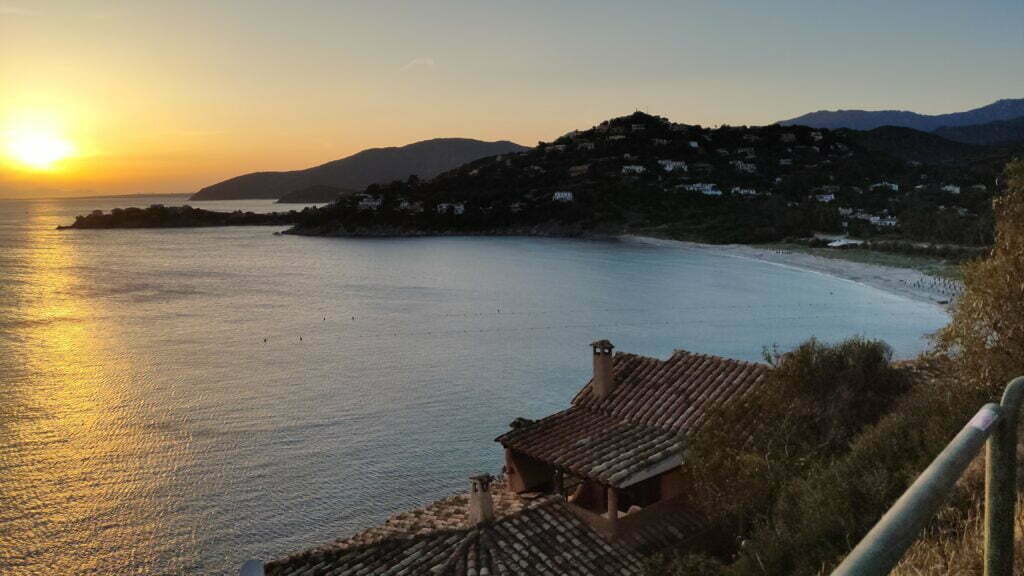
We live here. We know things about this island that do not appear in travel guides written after a 10-day visit. These are the three things that actually matter for planning.
Wind and coast exposure
The Maestrale, the northwest wind, is the dominant wind on the island and it blows hard. The western coasts, including La Pelosa, Stintino, Is Arutas, Chia, and much of the Sulcis, are exposed to it. On Maestrale days, which come in summer without warning and can last three to four days, the sea on those beaches turns rough and the sand blows horizontally.
The eastern coast, including Villasimius, the Gulf of Orosei, and Cala Gonone, is sheltered from the Maestrale by the central mountain chain. If you want a sea day and the wind is howling on the west side of the island, drive east.
August is not the ideal month
We will be direct: August in Sardinia is crowded, expensive, and, in many places, unpleasant. La Pelosa requires a timed-entry ticket and still fills up. Parking at popular beaches costs as much as a meal. Roads in the Costa Smeralda move at walking pace.
June, September, and early October are when we actually go to the sea ourselves. The water is warm (September is the warmest month for sea temperature), the crowds have thinned, and you can get a car park in the morning without planning the previous evening.
Distance is not a detail
Driving from Cagliari to Palau in the far north takes more than four hours on roads that are not motorways for the entire distance. People underestimate this constantly. Sardinia is not a small island. It is the second largest in the Mediterranean after Sicily.
Plan by area. Spend three nights in the north, three nights in the south, and if your time allows it, three nights in central Sardinia. Do not try to do all of it in a week with a single base.
FAQ about Sardinia
What is the most beautiful place in Sardinia?
There is no single answer, and that is not a diplomatic evasion. Cala Goloritzè is probably the most spectacular single beach on the island. The Gulf of Orosei is the finest stretch of coastline. The Barbagia is the most authentic inland territory. The Sulcis-Iglesiente is the most dramatic and overlooked. It depends entirely on what you are looking for.
How many days do you need to visit Sardinia?
A minimum of 7 days to see one area properly. Two weeks to cover north, central, and south without feeling rushed. Three weeks if you want to actually understand the island. Many visitors return year after year because one visit never covers it.
What is Sardinia best known for?
Internationally: its beaches and the Costa Smeralda. Among those who know it better: the nuragic civilization, which left thousands of stone towers across the island; the Cannonau and Vermentino wines; the extreme longevity of its inland population, with one of the highest concentrations of centenarians in the world; and a culture that has remained distinct from mainland Italy for millennia.
Do you need a car in Sardinia?
Yes. There is no practical way around this. Public transport will get you between the major cities. It will not get you to any beach worth visiting, to any nuraghe, to Gorropu Canyon, or to Barbagia. Rent a car at the airport and keep it for the whole trip.
What is the best time to visit Sardinia?
June and September are the best months for a beach holiday: warm sea, manageable crowds, lower prices. May is excellent for hiking and inland exploration: the landscape is green and the wildflowers are out. October is underrated for the coast and ideal for the Autunno in Barbagia festival series in the interior villages.
Is Sardinia better than Sicily?
They are fundamentally different experiences. Sicily is dense with history, architecture, and city life. Sardinia is wilder, emptier, and more focused on nature and the sea. The food cultures are completely different. If you want ancient Greek temples and baroque cities, go to Sicily. If you want the Gulf of Orosei and the Supramonte, come to Sardinia. Many people who love Italy choose both, in different years.
Sources: UNESCO World Heritage List (Su Nuraxi di Barumini, 1997; Cala Goloritzè); Sardegna Turismo (sardegnaturismo.it); Parco Naturale Regionale di Molentargius-Saline; Parco Nazionale dell’Asinara; Fondazione Barumini Sistema Cultura; Viator (activity reviews and availability); Booking.com (hotel data).