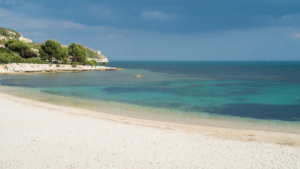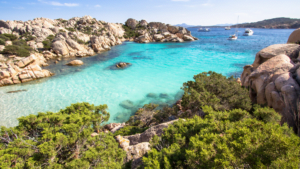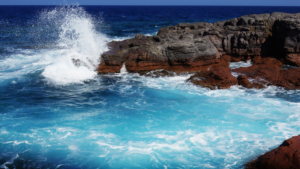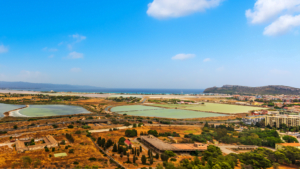
Sardinia north or south is the first question most first-time visitors ask, and the honest answer is: it depends entirely on what kind of trip you want. The north built its reputation on granite glamour, emerald water, and the legend of Costa Smeralda. The south answers with a real capital city, calmer seas, and some of the most underrated beaches in the Mediterranean. And if you want the genuine wildcards, two more options most travel guides skip entirely: the east coast’s Golfo di Orosei and the west coast’s Sinis Peninsula.
This guide gives you the complete picture, region by region, from someone who has lived on this island their whole life.
North Sardinia: Costa Smeralda glamour meets wild granite coast
What defines North Sardinia
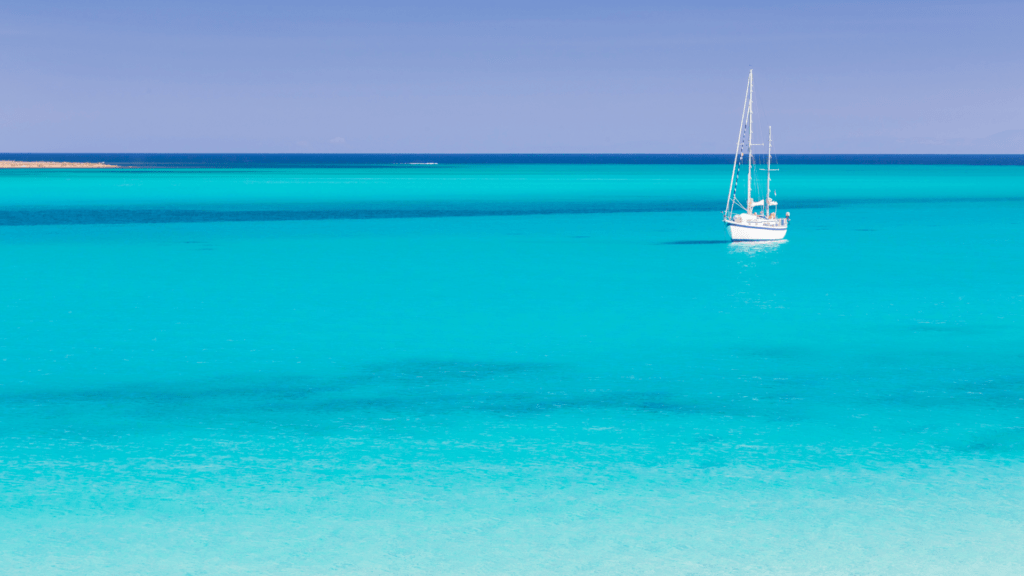
The north of Sardinia means, first of all, Gallura. This is the land of pink granite, wind-bent juniper trees, and water that goes from transparent to emerald green in ten metres. Costa Smeralda, Porto Cervo, Palau, the La Maddalena Archipelago, San Teodoro, and Cala Coticcio all fall within this orbit.
But the north is larger than the Emerald Coast label. Go northwest and you reach Alghero, a medieval Catalan-speaking city with coral-red bastions over the sea, followed by Stintino, the famous La Pelosa beach, and the wild Asinara national park island visible just offshore. These two sub-regions have completely different characters.
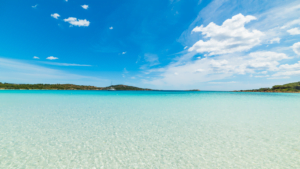
The granite landscape is the defining physical feature. Boulders the size of houses emerge directly from the sea at Caprera. Capo Testa, near Santa Teresa di Gallura, looks like a sculptor’s abandoned workshop. The water colour, that vivid smeraldo green, comes from genuinely shallow depth over white sand.
For a full picture, our guide to northern Sardinia covers all the main destinations. And if you are focused specifically on Costa Smeralda, La Maddalena, Alghero, or San Teodoro, each has its own dedicated guide on this site.
Who should choose North Sardinia
- Couples seeking luxury: the north has the island’s highest concentration of premium resorts, private beach access, and Michelin-star dining
- Sailors and kitesurfers: Porto Pollo, between Palau and Santa Teresa di Gallura, is consistently ranked among Europe’s best kitesurf and windsurf locations
- Families wanting resort infrastructure: animation programmes, kids clubs, and children’s pools are more abundant here than anywhere else on the island
- Nightlife seekers: Porto Cervo, Porto Rotondo, and Baja Sardinia have the liveliest summer scene in Sardinia
- Culture and history in Alghero: the Catalan old town, Neptune’s Grotto at Capo Caccia, and the nearby Palmavera nuraghe are genuinely unmissable
- Wildlife enthusiasts: the resident dolphins of Golfo Aranci and the flamingos of Olbia’s lagoons operate year-round
The honest trade-offs of North Sardinia
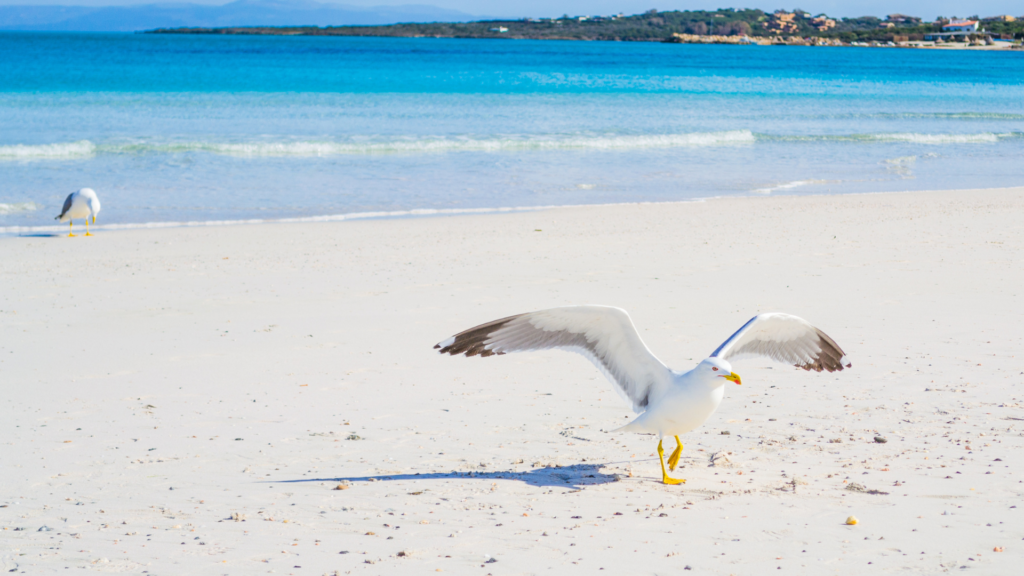
The Maestrale is the north’s defining inconvenience. This northwesterly wind blows with force 4 to 6 from late May through September. It makes some beaches uncomfortable, some boat crossings choppy, and some afternoons in Porto Cervo unpleasant despite the sunshine. The Costa Smeralda’s most exposed northwestern-facing beaches feel it most directly. If you are booking for July, build a forecast check into your planning.
Cost is the second issue. In July and August, hotels along Costa Smeralda are among the most expensive in the Mediterranean. A beach umbrella at Capriccioli in peak season costs real money. Dinner in Porto Cervo can cost three times what the same meal costs in Cagliari. San Teodoro and Alghero offer a meaningfully more accessible version of the north without the glamour surcharge.
And August itself. Parking at Cala Brandinchi fills by 8:30 in the morning. The ferry queue for La Maddalena requires planning. Beautiful? Without question. Peaceful? Not remotely.
Our guide to Stintino and La Pelosa and the Palau guide both address the August logistics honestly.
Arriving in the north: the right airport
Olbia Costa Smeralda Airport (OLB) is the gateway for Costa Smeralda, La Maddalena, San Teodoro, Porto Cervo, and the Gallura coast. In peak season it handles direct connections from most major European cities.
For the northwest, meaning Alghero, Stintino, and the Sassari area, Alghero Fertilia Airport (AHO) is the logical entry point. It saves a 90-minute drive from Olbia and has solid summer connectivity. Our full Sardinia airport guide breaks down the routes and distances for both.
South Sardinia: authentic coastline and real Sardinian life
What defines South Sardinia
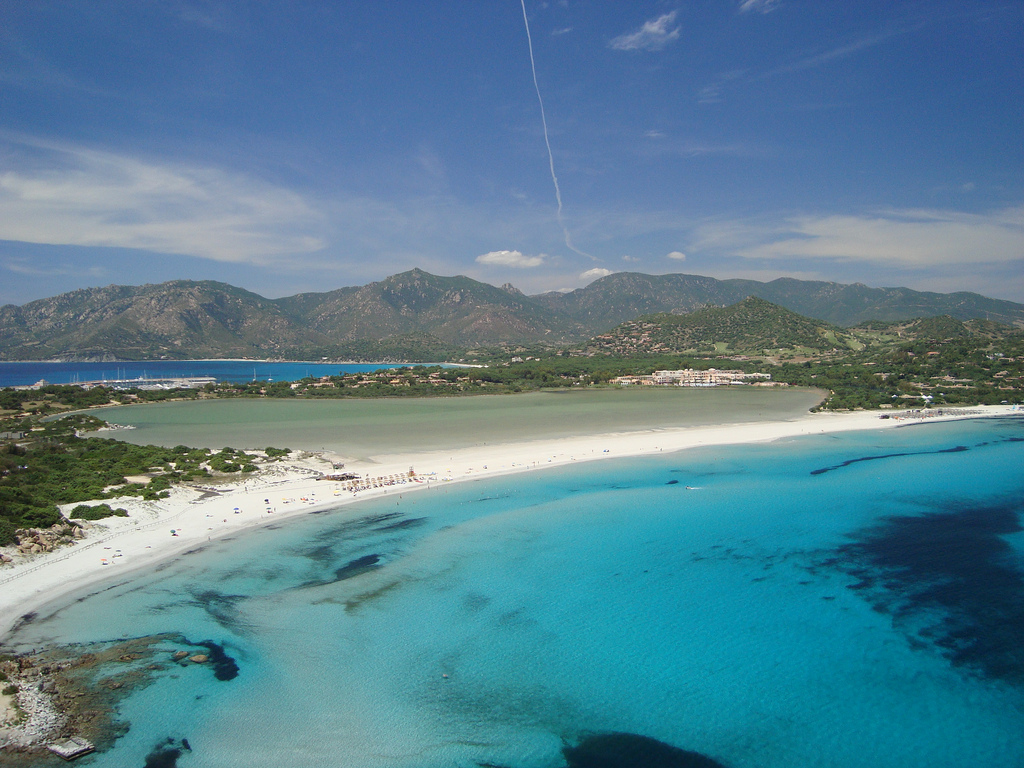
The south is where Sardinia breathes differently. Cagliari is the island’s capital: a layered, walkable city with a Phoenician necropolis, Roman amphitheatre, a flamingo lagoon ten minutes from the city centre, and a restaurant scene that deserves far more international attention than it gets. It is not a postcard city. It is a real one.
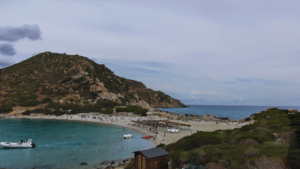
Beyond Cagliari, the coastline opens into something remarkable. Villasimius sits at the southeastern tip inside a protected marine area, with shallow turquoise water and flamingos at Porto Giunco lagoon. Costa Rei stretches north with wide beaches backed by pine woods and low-rise villas. To the southwest, Chia and Tuerredda deliver turquoise bays with dunes and a Spanish watchtower. Pula and the ancient city of Nora offer Phoenician and Roman ruins just twenty minutes from a white beach.
The sea in the south is calmer. The Scirocco blows from Africa, but its effect on the main bathing beaches is muted compared to the Maestrale in the north. Most south-facing beaches have gentle waves, making them structurally better for young children and anyone who simply wants to swim in flat water.
Our guide to southern Sardinia covers all the key stops, and our detailed guides to Cagliari and Villasimius go deeper into each.
Who should choose South Sardinia
- Families with young children: shallow, calm water at Villasimius, Costa Rei, and Chia is structurally safer and more comfortable than the north’s windier coves
- History and archaeology enthusiasts: Nora, Barumini Su Nuraxi (UNESCO), Tuvixeddu necropolis, and Cagliari’s Roman amphitheatre
- Budget-conscious travellers: comparable accommodation is consistently 30 to 50% cheaper here than in the north in peak weeks
- City breakers: Cagliari punches well above its weight for food, museums, and evening culture
- Couples who prefer authenticity over glamour: a long sunset over Chia’s dunes is not less romantic than Porto Cervo, and it costs considerably less
- Nature lovers: the Molentargius flamingo park, the Sette Fratelli mountains, and the Gennargentu range are all accessible by car
Also worth knowing: Cagliari operates flights year-round, which makes the south a much better choice for shoulder-season travel in May, June, September, and October.
The honest trade-offs of South Sardinia
The south has less premium resort infrastructure than the north. Forte Village and Almar Timi Ama are genuine world-class properties, but the sheer concentration of five-star resort options that exists between Olbia and Porto Cervo has no equivalent here.
The nightlife comparison is similar. Cagliari has a lively bar and restaurant culture, but the club-style scene of Baja Sardinia or Porto Cervo does not exist at the same scale.
Some of the south’s most popular beaches, Villasimius and Costa Rei among them, also get busy in July and August. The crowd is more spread out than in the north’s pinch points, but it is still present. May, June, and September are when the south truly shows its best face. Our October in Sardinia guide is worth reading if your calendar is flexible.
Flying south: Cagliari is your gateway
Cagliari Elmas Airport (CAG) is the hub for the entire south. Unlike Olbia, which winds down most flights in winter, Cagliari runs year-round schedules to European cities. This makes it a structurally better base for anyone travelling outside peak summer. The Sardinia airport guide has the full route comparison.
The east coast: the Golfo di Orosei (the third option)
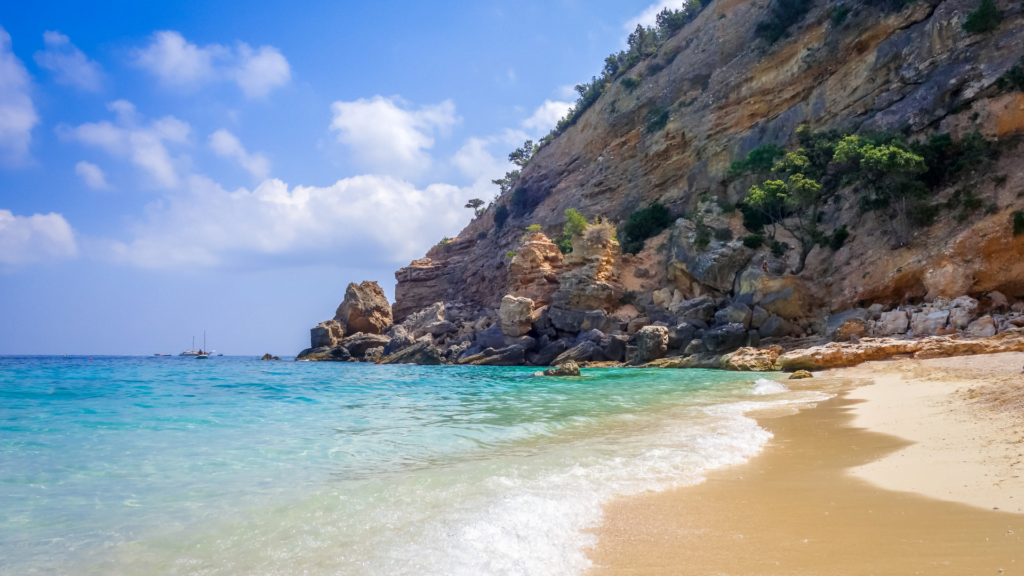
Most visitors force themselves into a north-or-south binary. The Golfo di Orosei, on Sardinia’s central-east coast, belongs to neither category and offers something neither can match.
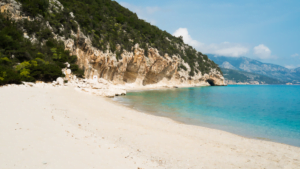
Limestone cliffs drop 300 metres straight into the sea. The hidden bays accessible only by boat or by long hikes through the Baunei plateau are arguably the most dramatic coastal scenery in the entire Mediterranean. Cala Goloritzè, Cala Luna, Cala Mariolu, Cala Sisine: none of these have a road. You arrive by boat from Cala Gonone or by hiking the Selvaggio Blu trail. Hotels here are simple and family-run. The experience is raw.
Who it suits: hikers, snorkellers, travellers who value landscape over convenience, and anyone planning a road trip across the island.
What to know before you go: it sits about 2.5 to 3 hours from both Olbia and Cagliari. Plan accordingly. Our Golfo di Orosei guide covers every beach and how to reach them. For where to sleep in the area, see our central Sardinia accommodation guide.
The west coast: Oristano and the Sinis Peninsula (the option most guides miss)
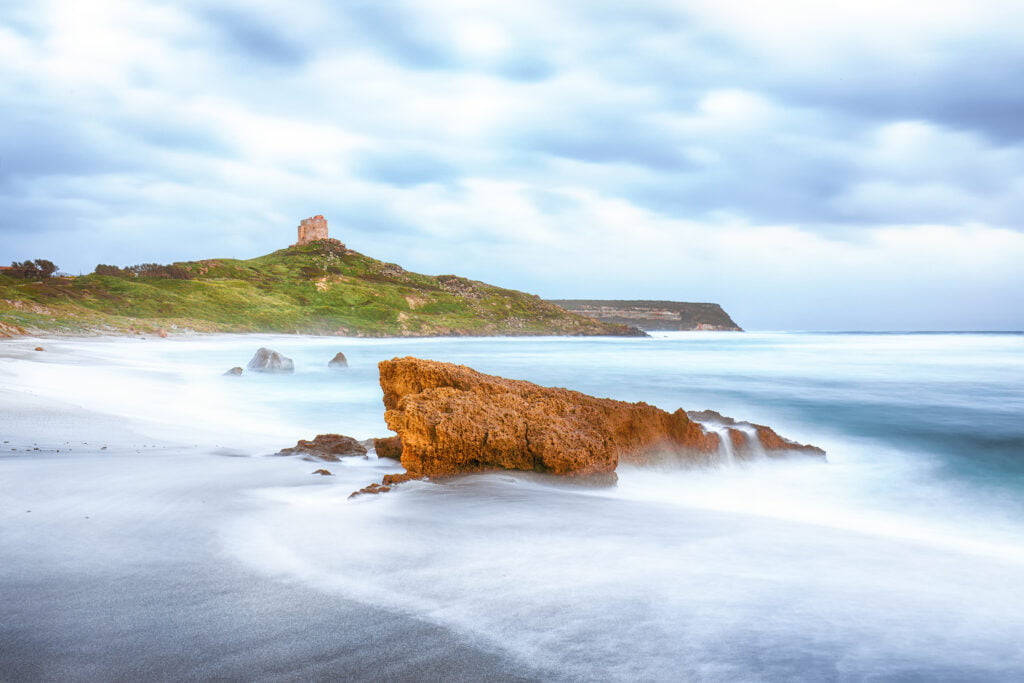
Here is the section most travel articles skip entirely. The Sinis Peninsula, south of Oristano, is one of the most ecologically distinctive places in Sardinia. The beaches, Is Arutas and Mari Ermi, are made not of sand but of tiny quartz grains, the colour and texture of crushed ice. The effect is genuinely surreal.
Just south of Is Arutas, the Phoenician and Roman ruins of Tharros stand on a promontory above the sea: one of the most atmospheric archaeological sites on the island, far less visited than Barumini or Nora. Our Tharros guide is the best starting point.
The west coast also catches the island’s most consistent surf. Putzu Idu and Torre dei Corsari are well-known among Italian and European surfers. The lagoons around Oristano host flamingos, the rare Eleonora’s falcon (which breeds here between August and October), and cormorants.
Who it suits: second or third-time visitors, photographers, surfers, birdwatchers, and anyone who wants ancient history without a tour-bus crowd.
Logistics: the west connects easily with both north and south by the SS131 motorway. Cagliari is about 90 minutes away; Olbia is roughly 2.5 hours.
North vs South Sardinia: complete comparison
Quick reference comparison chart
| Factor | North Sardinia | South Sardinia |
|---|---|---|
| Best-known beaches | Spiaggia del Principe, Cala Brandinchi, La Pelosa, Cala Coticcio | Tuerredda, Chia, Porto Giunco, Is Arutas |
| Landscape | Pink granite, juniper scrub, dramatic boulder scenery | Calcareous headlands, coastal dunes, Campidano plain |
| Sea conditions | Emerald green, clear, can be choppy (Maestrale) | Turquoise-blue, calmer, flat in summer |
| Peak-season prices | High to very high | Medium to high |
| Luxury resort offer | Exceptional concentration | Fewer options, world-class quality |
| Archaeology | Nuraghi, Arzachena prehistoric sites, Domus de Janas | Nora, Barumini (UNESCO), Cagliari’s Roman amphitheatre |
| Nightlife | Active (Porto Cervo, Baja Sardinia) | Moderate (Cagliari city) |
| August crowding | Very high at key beaches | High but more geographically spread |
| Families | Strong resort infrastructure, some exposed beaches | Calmer sea, wide beaches, fewer resort clubs |
| Best travel months | June, September | May, June, September, October |
| Main airport | Olbia (OLB) | Cagliari (CAG) |
Beaches and coastline
The north and south each win this category for different reasons. The north’s beaches are dramatic: granite frames the water, the colour shifts from transparent to emerald in ten metres, and Cala Coticcio or Spiaggia del Principe look genuinely impossible. But the Maestrale can close them for days.
The south’s beaches are more consistently swimmable. Tuerredda near Chia and Porto Giunco near Villasimius match the north aesthetically while delivering flat water even when the wind picks up further north. For sheer swimming reliability across the season, the south has a structural edge.
For a complete ranking, our top beaches in Sardinia guide covers both coasts.
Budget and value
The price difference is real and significant in peak season. A mid-range double room near Costa Smeralda runs roughly 40 to 60% higher than a comparable room near Villasimius in peak weeks. Restaurants in Porto Cervo charge hotel prices; the same meal in a Cagliari backstreet costs half.
Outside peak season the gap narrows considerably. In June and September, both regions are affordable and the quality of experience improves. If your travel dates have any flexibility, read our best time to visit Sardinia guide before you book.
Families with children
The south has a structural advantage: calmer water. The beaches of Villasimius, Costa Rei, and Chia have shallow, flat swimming areas where children can wade thirty metres without the water reaching their waist. The north’s prettiest beaches can have chop and afternoon wind that makes the same experience stressful.
The north’s resort infrastructure compensates. Kids clubs, animation programmes, and children’s pools are more abundant around San Teodoro and Baja Sardinia than anywhere in the south.
The practical answer: independent families renting a villa should lean south. Families who want a fully catered resort experience find more supply in the north.
Getting around: car rental in Sardinia
A car is not optional. This applies north, south, east, and west. Public transport does not reach the best beaches on this island, and taxis from resort areas to remote coves are expensive and scarce. Book your rental before you land, as early as possible in summer when availability tightens quickly.
Compare prices and reserve directly at the airport closest to where you are staying:
- Olbia Airport (OLB): compare rental cars at Olbia
- Cagliari Airport (CAG): compare rental cars at Cagliari
- Alghero Airport (AHO): compare rental cars at Alghero
A compact car is sufficient for most Sardinian roads. A 4×4 is only necessary if you plan to access the Golfo di Orosei’s unmade tracks or the Gennargentu interior in spring when some passes are still muddy.
Things to do in Sardinia: top activities by region
Wherever you base yourself, these are the activities worth booking in advance. They are spread across all four regions covered in this guide, with links to book directly.
La Maddalena Archipelago: full-day boat tour
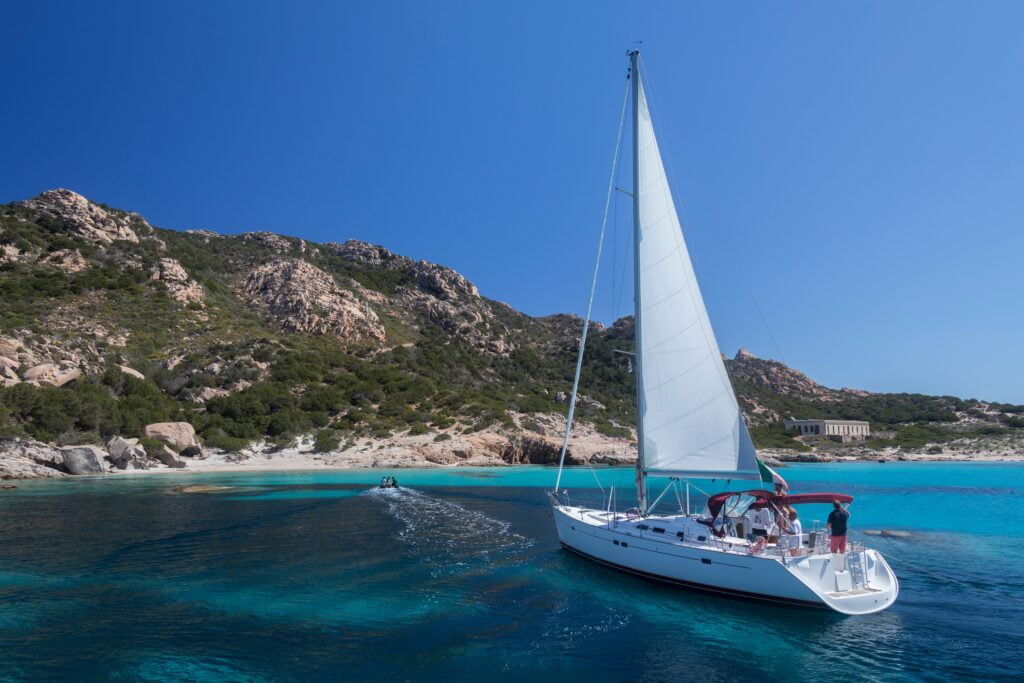
A day on the La Maddalena Archipelago is, for many visitors, the highlight of any north Sardinia trip. This shared boat tour departs from Palau and visits the islands of Spargi, Budelli, Santa Maria, and La Maddalena itself, with stops for swimming and a one-hour break in the historic town centre. The water colour at Cala Granara and the pink-tinged sand of Budelli are genuinely difficult to photograph adequately.
Book the La Maddalena archipelago full-day boat tour on GetYourGuide
La Maddalena Archipelago: private sailing tour
For a more exclusive experience on the same waters, this private sailing tour takes groups of up to eight people to the same key islands with a dedicated skipper, flexible stops, and no shared-boat crowds. Worth considering for special occasions or for travellers who find large tour boats uncomfortable.
Book the private sailing tour of the Maddalena Archipelago on Viator
Alghero, Capo Caccia and Neptune’s Grotto: small group day tour
This small-group tour covers the medieval Catalan town of Alghero and the dramatic Capo Caccia headland, where Neptune’s Grotto sits at the bottom of 654 steps carved into the cliff. The cave system is one of the largest in the Mediterranean and one of those places that justifies a trip to the northwest specifically. Book well in advance in summer.
Book the Alghero and Neptune’s Grotto tour on Viator
Cagliari: highlights city tour
A four-hour small-group tour through Cagliari‘s four historic districts, from the medieval Castello hilltop down through Marina, Villanova, and Stampace, with panoramic viewpoints over the Gulf of Angels and the Sella del Diavolo. This is the most efficient way to read the city on a first visit, with a guide who contextualises what most solo walkers miss.
Book the Cagliari highlights city tour on GetYourGuide
Cagliari: walking tour of the old city
A more flexible walking tour of Cagliari‘s historic centre with a local guide. Options include an underground extension covering the WWII bomb shelters and Roman-era crypts beneath the city, which add a dimension to Cagliari that is genuinely hard to access independently.
Book the Cagliari old city walking tour on GetYourGuide
Snorkeling in the Capo Carbonara Marine Reserve (Villasimius)
The Capo Carbonara Marine Protected Area around Villasimius is one of the most biologically rich zones in Sardinia. This snorkeling tour visits the waters around Isola dei Cavoli and Isola Serpentara, where posidonia meadows host groupers, octopus, sea bream, and the Corsican gull nesting colony. One of the best-value marine experiences on the island.
Book the Capo Carbonara snorkeling tour on Viator
Gulf of Orosei: speedboat trip and aperitif from Cala Gonone
A full-day speedboat tour departing from Cala Gonone, visiting Cala Luna, Cala Sisine, Cala Goloritzè, and the Piscine di Venere, with an onboard Sardinian aperitif at the end of the day. The skipper adjusts the itinerary to sea and weather conditions. This is the most accessible way to experience the east coast’s hidden calas without hiking.
Book the Gulf of Orosei speedboat tour on GetYourGuide
Gulf of Orosei: motorboat cruise to Cala Goloritzè
A more structured motorboat cruise on a comfortable 22-metre vessel with multiple daily departures from Cala Gonone, with stops at Cala Luna, Cala Mariolu, Cala Sisine, and Cala Goloritzè. The optional extension includes a guided tour of the Bue Marino Caves, with tickets purchased separately. A good option for families or travellers who want a larger, more organised vessel.
Book the Gulf of Orosei motorboat cruise on GetYourGuide
From Cagliari: Tharros, San Salvatore and Fordongianus day tour
A guided day trip from Cagliari covering three distinct west coast highlights in a single outing: the Tharros Phoenician and Roman ruins on the tip of the Sinis Peninsula, the ancient village of San Salvatore with its underground pre-Christian sanctuary, and the Roman Forum of Fordongianus (Forum Traiani), one of the best-preserved Roman thermal bath complexes in Sardinia. Comfortable minibus transport included. A well-structured option for travellers based in Cagliari who want a thorough introduction to the west coast without a hire car.
Book the Cagliari to Tharros, San Salvatore and Fordongianus day tour on GetYourGuide
Sinis Peninsula: mountain bike tour
A guided off-road cycling tour through the Sinis Peninsula, starting from the village of San Salvatore and covering coastal watchtowers, Gulf of Oristano viewpoints, the Oasis of Seu pine forest, and a stop at a quartz-grain beach. Led by FCI-certified mountain bike guides. A very different way to experience the west coast for active travellers.
Book the Sinis Peninsula mountain bike tour on GetYourGuide
For a broader overview of boat trips across the whole island, our Sardinia boat tours guide and diving guide cover further options by region. Hikers should check our best hikes in Sardinia guide and surfers the Sardinia surfing guide.
Where to stay in Sardinia: north vs south
The accommodation landscape reflects the broader character difference between the two regions. The following are verified properties with direct booking links. For extended lists by zone, our dedicated pages on where to stay in northern Sardinia and where to stay in southern Sardinia cover more options at every budget level. Our best beach resorts guide also provides a wider comparison.
North Sardinia: where to stay
Hotel Cala di Volpe, a Luxury Collection Hotel (Costa Smeralda, Porto Cervo) is the benchmark luxury property of the north. Set on its own bay with a private beach shuttle, three tennis courts, a saltwater pool, and three restaurants, it is the hotel that defined the Costa Smeralda aesthetic in the 1960s and has maintained it ever since. Not a sober choice, but an extraordinary one. Read our full review | Check prices on Booking.com
Baglioni Resort Sardinia (San Teodoro, near Cala Brandinchi) sits inside the Tavolara Marine Reserve with three pools, a Michelin-listed restaurant, a private beach, and 78 rooms. It delivers five-star quality at a noticeably lower price point than Costa Smeralda’s peak-season rates, making it the most credible value-luxury option in the north. Read our full review | Check prices on Booking.com
Gabbiano Azzurro Hotel & Suites (Golfo Aranci, near Olbia) is the north’s most compelling mid-range choice. Four-star-superior, family-run since 1968, set directly on the seafront with a private beach and a seawater infinity pool facing Tavolara island. Twenty minutes from Olbia airport, far more accessible than Costa Smeralda, and significantly more affordable in all months. Read our full review | Check prices on Booking.com
South Sardinia: where to stay
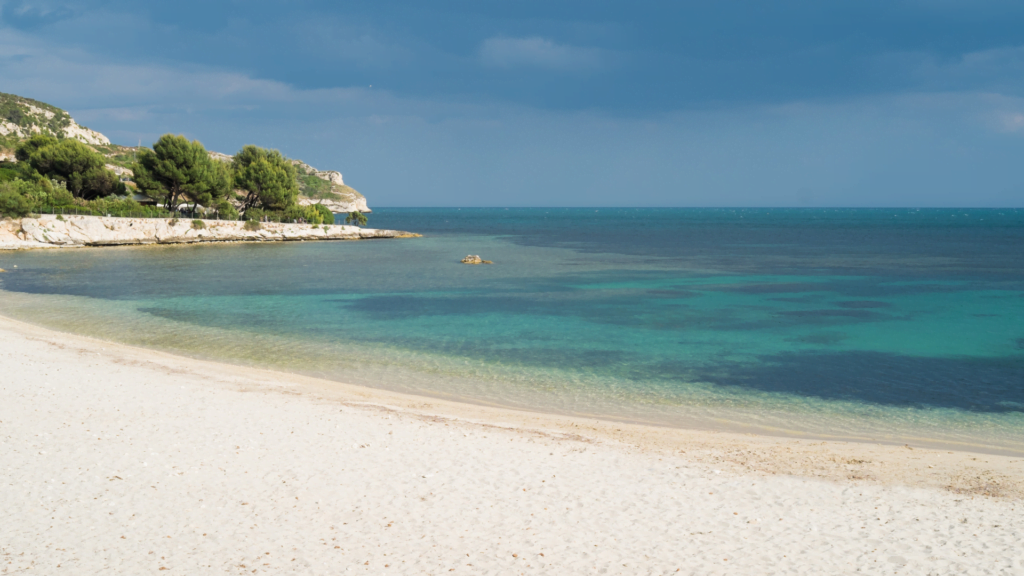
Forte Village Resort (Santa Margherita di Pula) is the south’s most famous property and one of Italy’s most awarded resorts. The complex spans multiple hotels and bungalows inside a 47-hectare garden directly on the beach, with 21 restaurants, a thalassotherapy spa, and the best children’s programme in Sardinia. It has won World’s Best Family Resort repeatedly at the World Travel Awards. Read our full review | Check prices on Booking.com
Almar Timi Ama Resort & Spa (Villasimius) sits within the Capo Carbonara Marine Protected Area, with 238 rooms, three restaurants, a private white-sand beach five minutes away by electric shuttle, and one of the best wellness centres in the south. For couples and families who want full resort services near Villasimius without Forte Village’s price tag, this is the clear first choice. Read our full review | Check prices on Booking.com
VOI Tanka Village (Villasimius) is the most complete mid-range resort option in the south. It has five restaurants, five tennis courts, a private beach, and a kids club, all within walking distance of Villasimius town. The sea immediately in front is shallow and calm. Read our full review | Check prices on Booking.com
Which Sardinia region should you choose? Honest recommendations
For romantic couples and honeymoons
The north for luxury and spectacle. Porto Cervo and the Costa Smeralda deliver an atmosphere that is genuinely hard to replicate. The south for authenticity and value: a week in a rented villa near Chia, with long sunsets over the dunes and dinner in Cagliari, is as romantic as anything the north offers at significantly lower cost.
If budget is not a constraint: north, specifically Costa Smeralda.
If you want romance without the performance: south or the Golfo di Orosei.
For families with children
The south wins on sea conditions. Calm, shallow water at Villasimius, Costa Rei, and Chia is better suited to children under eight than the north’s wind-exposed beaches. For a resort with full children’s infrastructure including clubs, animation, and entertainment, Forte Village (south) and San Teodoro area resorts (north) are both excellent.
Age of children matters: under six, go south for the sea. Over ten and activity-oriented, the north’s boat tours and outdoor programme are hard to beat.
For luxury seekers
The north has more options at the very top. The concentration of five-star properties between Porto Cervo and Baja Sardinia is unmatched in the Mediterranean at this scale. Hotel Cala di Volpe, Pitrizza, Romazzino, 7Pines, Cervo Hotel: these are flagship properties by global standards.
The south’s luxury offer is more limited in volume but exceptional in quality. Forte Village specifically is a different kind of luxury, resort-town in scale rather than boutique.
For first-time visitors on a typical budget
Honestly, the south. Cagliari gives you a genuine city, history, food culture, and easy access to excellent beaches within 30 to 40 minutes by car. You spend less, see more, and leave with a more complete picture of what Sardinia actually is. The north at standard budget in July often means a disappointing hotel for the same money that buys a very comfortable room near Villasimius.
For first-timers with more budget flexibility: consider splitting your stay, arriving Olbia and flying out Cagliari, which avoids the double backtrack.
For adventure, hiking and culture enthusiasts
The Golfo di Orosei and the Supramonte are the primary destination. Nowhere else on the island competes for dramatic hiking, via ferrata, and sea kayaking. The nuraghi, for archaeology, are spread across the whole island, but the Barumini UNESCO complex, the Tiscali nuragic village, and the dolmens of Arzachena are standout sites in both regions. Our nuraghe guide and hiking guide go deeper on both.
For sailing and water sports enthusiasts
Porto Pollo (between Palau and Santa Teresa di Gallura) for kitesurfing and windsurfing: it is one of Europe’s consistently best spots for both disciplines. Porto Cervo and the La Maddalena Archipelago for private sailing and charter. Alghero for sea kayaking and coasteering. The south’s surf spots at Pula and Buggerru are worth knowing for surfers. Our full surfing guide covers the best breaks by region.
Combining North and South Sardinia in one trip
Can you do both in one week? Technically yes. Practically, you will spend two full days driving and half of each stay feeling like you are just arriving. Olbia to Cagliari is approximately three hours without stops, and Sardinia’s SS131 motorway is efficient but monotonous.
Two weeks changes the equation. A common route: fly into Olbia, spend five nights in the north or northeast, drive south via the Golfo di Orosei with one night in Cala Gonone, then spend five nights near Cagliari or Villasimius, and fly home from CAG. This works well and gives you all three coastal personalities.
If you have only seven days: choose one region and go deep. A week based in Villasimius with day trips to Cagliari, Nora, and Barumini is a complete trip. So is a week based in San Teodoro with day trips to La Maddalena, Cala Coticcio, and Alghero.
For road trip planning, our Sardinia map guide and how to get around Sardinia page are the best starting points.
The local perspective: what Sardinians think
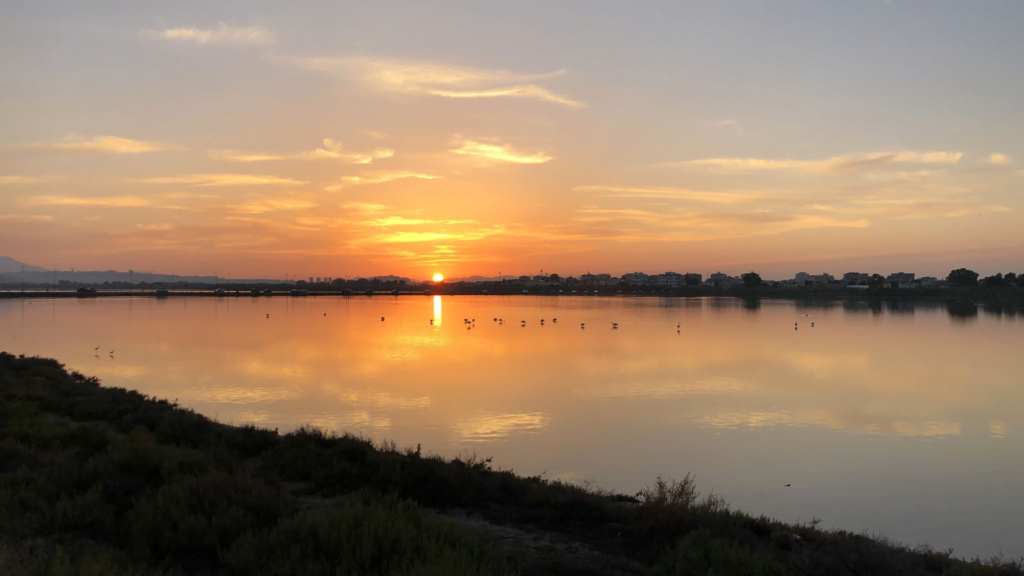
The north-versus-south question gets asked constantly by visitors. Among Sardinians, we rarely frame it this way. Here is the honest version of how people who live here actually think about it.
Wind is the real dividing line, not aesthetics. The Maestrale is the dominant wind of the north and the northwest. It blows with significant force from late May through September, and it affects the bathing experience on exposed beaches dramatically. We know this. Tourists often do not discover it until they are standing at Spiaggia del Principe at 3pm in June watching an umbrella cartwheel into the sea. The south’s prevailing wind is the Scirocco, which is warm, carries fine African dust, and can be oppressive for air quality, but it does not create the same wave and spray problems on south-facing beaches. This is not a small distinction.
Distances are larger than they look. The island is 270 kilometres long and 145 kilometres wide at its widest point. On a map, Cagliari and Olbia look reachable from each other in an afternoon. In reality, someone who books a hotel in Palau and wants to spend a day at Tuerredda near Chia is looking at a round trip of over six hours. We see this itinerary mistake constantly in summer.
The infrastructure difference has a historical explanation. The Costa Smeralda was developed from 1962 onward by Prince Karim Aga Khan IV, who bought a barren granite peninsula and turned it into one of the world’s most famous resort destinations within twenty years. The south received significant tourist infrastructure investment only in the 1990s and 2000s. This explains why the north has more luxury hotels, better marinas, and more consolidated resort villages. It is not a quality difference. It is a timing difference. The south is catching up quickly, and in the opinion of many Sardinians who know both, it already offers the better overall experience for most visitors.
FAQ about Sardinia north or south
Is North or South Sardinia better for first-time visitors?
For most first-time visitors on a typical budget, the south offers better overall value. Cagliari provides genuine urban culture, history, and food, while beaches like Villasimius and Chia are as beautiful as anything in the north at lower prices. First-timers with a larger budget who prioritise beach glamour and luxury resort experience should look north, specifically at San Teodoro or Costa Smeralda.
Which part of Sardinia has the best beaches?
Both regions have world-class beaches and neither wins overall. The north’s beaches (Spiaggia del Principe, Cala Coticcio, Cala Brandinchi) are more dramatic and photogenic but can be affected by the Maestrale wind. The south’s beaches (Tuerredda, Chia, Porto Giunco) are more consistently swimmable and calmer. The Golfo di Orosei, technically the east, has the most extraordinary scenery of all three. Our complete Sardinia beaches guide covers them all with practical access information.
How much more expensive is North Sardinia than South Sardinia?
In July and August, accommodation near Costa Smeralda typically runs 40 to 60% higher than comparable properties near Villasimius. Restaurant prices in Porto Cervo can be two to three times what you pay in Cagliari. Outside peak season (May, June, September, October), the gap narrows considerably and both regions become excellent value.
Can you visit both North and South Sardinia in one week?
You can, but it requires accepting that two days of your week will be largely spent driving and settling in. Olbia to Cagliari is roughly three hours. A better approach for one week is to choose one region and explore it properly. For two weeks, a north-to-south road trip via the Golfo di Orosei is one of the best driving holidays in the Mediterranean.
Which part of Sardinia is less crowded in August?
Neither region is uncrowded in August. The north’s bottleneck beaches (Cala Brandinchi, La Pelosa) and ferry queues for La Maddalena are particularly intense. The south’s crowds are more geographically distributed but still significant at Villasimius and Costa Rei. The Golfo di Orosei is crowded by boat from July to mid-August but remains peaceful by foot. The west coast Sinis Peninsula is the least crowded option in August by a meaningful margin. For a fuller picture, our best time to visit guide covers every month.
Is South Sardinia good for families with young children?
Yes, and for structural reasons. The beaches near Villasimius, Costa Rei, and Chia have calm, shallow water that is well-suited to children under eight. The sea temperature in July reaches 26 to 27°C on south-facing beaches. Forte Village near Pula has the most complete children’s programme on the island, including a dedicated club for various age groups. Our Sardinia in July guide has specific family beach recommendations.
What is the best airport to fly into for each region?
Olbia (OLB) for the north and northeast: Costa Smeralda, La Maddalena, San Teodoro, Porto Cervo. Alghero (AHO) for the northwest: Alghero city, Stintino, Sassari, Asinara. Cagliari (CAG) for the south and west: Cagliari, Villasimius, Costa Rei, Chia, Pula, and the Sinis Peninsula. Cagliari is also the best option for year-round travel as it has the strongest off-season flight schedule. Our Sardinia airports guide covers routes and distances.
Which part of Sardinia is best for a luxury holiday?
The north, specifically Costa Smeralda and the area between Porto Cervo and Palau, has the highest concentration of premium properties in the Mediterranean. Hotel Cala di Volpe, Romazzino, Pitrizza, 7Pines, and Cervo Hotel set the standard. For a different kind of luxury, Forte Village in the south offers resort-town scale and has been voted the world’s best family resort repeatedly. For a full comparison, see our beach resorts guide.
Sources
- Regione Autonoma della Sardegna, Assessorato del Turismo: official tourism data and protected area regulations
- Parco Nazionale dell’Arcipelago di La Maddalena: navigation and access rules for the archipelago
- Area Marina Protetta Capo Carbonara (Villasimius): marine reserve zone regulations
- Istituto Nazionale di Statistica (ISTAT): regional tourism flow data
- Sardiniabella.com: internal guides on beaches, airports, accommodation, and seasonal travel