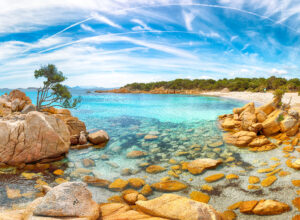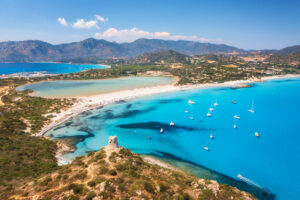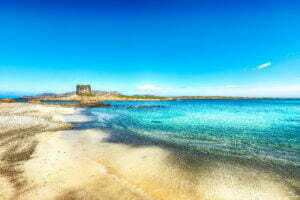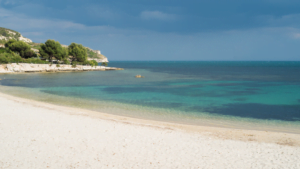
If you plan a trip to eastern Sardinia, Orosei is the ideal base. Set in the fertile Cedrino valley near the sea, it pairs rich baronial heritage with vast sandy beaches. Unlike purely seasonal holiday settlements, this is a welcoming Sardinian community where traditions run deep. In this guide, I share my insider advice as a local on visiting Orosei, covering historic alleys, mainland shores, mountain viewpoints, boat trips, and regional dining.

Whether you look for a strategic base to explore eastern Sardinia or seek an escape combining rich island culture with outdoor adventures, Orosei offers the ideal balance. If you are crafting your island itinerary, check out my guide on the best things to do in Sardinia to see how this area fits into a broader trip.
What makes Orosei special: the noble soul of the Baronia
To understand Orosei, you have to look at its geography and history. The town was historically the capital of the Baronia di Galtelli, a noble feudal territory controlling trade and agriculture along the Cedrino river basin. While villages perched on steep cliffs like nearby Cala Gonone were traditionally isolated fishing hamlets or seasonal outposts, Orosei was an established administrative and religious hub.
When you walk around Orosei today, that heritage is immediately tangible. You will not find cookie-cutter holiday developments in the town core. Instead, you walk through authentic neighborhoods where locals live year-round, stop for morning espresso at neighborhood cafes, and purchase crusty loaves of pane carasau straight from historic bakeries.
Choosing Orosei as your holiday base gives you several distinct advantages over staying directly in beach resorts:
- Year-round vitality and local dining: Because it is a real town, restaurants, bakeries, artisan workshops, and gelaterias cater to locals rather than just tour buses. You get genuine regional cooking at fair prices.
- Strategic road connectivity: Positioned along the scenic SS125 Orientale Sarda and connected via quick dual-carriageway access to the SS131dcn, Orosei allows you to drive north toward San Teodoro or south toward the Supramonte mountains with ease. For a wider perspective on the region, take a look at my comprehensive central Sardinia guide.
- Spacious, uncrowded mainland beaches: While the cliff-backed coves of the southern gulf require boats and can feel packed in peak season, Orosei’s direct coastline spans kilometers of wide sand dunes where you can always find your own patch of sand.
Top things to do in Orosei historic center
The historic core of Orosei, centered around the ancient Palafitta district, is remarkably compact and best explored on foot. It is characterized by narrow alleys paved with basalt cobbles, rustic stone arches, and an extraordinary density of religious architecture. For a town of its size, Orosei boasts an impressive number of churches and historic chapels.

1. Piazza del Popolo and the noble mansions
Looking for the best evening atmosphere in town? Piazza del Popolo is the beating heart of civic life in Orosei. Lined with leafy trees, outdoor cafe tables, and historic facades, this is where locals gather for their evening aperitivo.
As you stroll through the square and adjoining alleys, look closely at the architecture. You notice substantial stone palaces with wide wooden portals and interior courtyards (cortes), which belonged to the baronial nobility and prominent landowners of the Baronia. The contrast between dark volcanic basalt stones and pale white limestone masonry gives the buildings a distinctive textural beauty.
2. Church of San Giacomo Maggiore
Standing gracefully at the top of an elegant terraced staircase, the Parish Church of San Giacomo Maggiore (Saint James the Apostle) is one of the finest examples of 18th-century baroque architecture on the east coast of Sardinia. Built between 1794 and the early 1800s over a pre-existing medieval structure, the church features a dazzling white facade flanked by twin bell towers capped with colorful ceramic domes.
Step inside to escape the midday heat and admire the soaring vaulted ceiling, the octagonal wooden pulpit, and the elaborate baroque wooden altars. The square fronting the church offers a pleasant vantage point overlooking the rooftops of the town toward the coastal plain.
3. The complex of Sant’Antonio Abate and the medieval tower
Just a short walk from Piazza del Popolo lies one of the most evocative corners of Orosei: the architectural complex of Sant’Antonio Abate. Centered around a wide, peaceful enclosed courtyard, this site feels like stepping straight back into the Middle Ages.
At the center stands the rustic church of Sant’Antonio, preserving 15th-century frescoes detailing the life of Christ. Surrounding the courtyard are the traditional cumbessias, small lodgings historically built to house pilgrims during the major feast of Saint Anthony in January.
Dominating the complex is a sturdy rectangular medieval tower constructed from basalt masonry. Built during the Pisan domination of Sardinia in the 14th century, this fortified watchtower served as a stronghold to defend the fertile valley from pirate raids launching from the sea.
4. Don Nanni Guiso Museum
Housed inside the restored Palatzos Betzos, an ancient baronial palace that once formed part of the old town fortress, the Museo Don Nanni Guiso is one of the most unique cultural attractions on the island. Donated to the town by the Sardinian nobleman and collector Nanni Guiso, the museum showcases a rare private collection.
The highlight of the museum is an extraordinary display of miniature theaters from the 18th and 19th centuries, crafted across France, Germany, and Italy. Alongside these theatrical curiosities, the collection includes vintage stage costumes, antique books, historical ceramics, and drawings by prominent modern artists. It is an unexpected cultural gem in the heart of eastern Sardinia.
5. Sanctuary of Nostra Signora del Rimedio
Located on the northern outskirts of town, the Sanctuary of Our Lady of Remedy (Santuario del Rimedio) is an extensive walled sanctuary complex with a fascinating past. Originally erected as a fortified lazaretto to quarantine travelers during plagues and later converted into a religious fortress against pirate incursions, it is enclosed by massive perimeter walls.
Inside the compound, rows of small pilgrim rooms (cumbessias) line the courtyards. Every September, the sanctuary comes alive for one of the most heartfelt religious and folkloric festivals in the region, drawing families from all over the Baronia who lodge here for over two weeks of traditional feasts, songs, and communal dining.
The best beaches in Orosei: mainland sandy shores
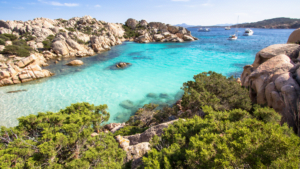
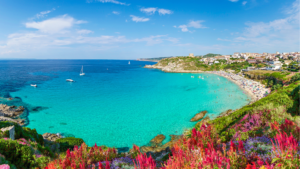
One of the greatest misconceptions among first-time visitors is thinking that you can only swim in Orosei by boarding a boat to the deep coves of the Supramonte. In reality, the municipality of Orosei possesses some of the longest, wildest, and most accessible sandy beaches in Sardinia. These mainland shores can be reached easily by car or bicycle, feature fragrant coastal pine groves, and offer plenty of space even during peak summer weeks.

6. Marina di Orosei
Located just 2.5 kilometers east of the historic center, Marina di Orosei is the town’s primary beach. You can reach it in five minutes by car or take a scenic ride along the flat, paved cycling path that connects the town center to the coast. The approach crosses a wooden bridge spanning the local coastal lagoon, where you can often spot grey herons, kingfishers, and stilts wading in the brackish waters.
The beach itself is immense, stretching for over two kilometers with golden sand mixed with fine gravel. The water here is crystal clear, though you should note that the seabed shelves deeply after just a few steps into the sea. There are several beach kiosks, umbrella rentals, and spacious parking lots, yet the sheer size of the beach means you never feel crowded.
7. Spiaggia di Su Barone and Su Petrosu
Heading immediately south from Marina di Orosei, the shoreline continues into Spiaggia di Su Barone and Su Petrosu. This is one of my personal favorite coastal stretches in the area. Backing the beach is a dense forest of domestic pines and maritime junipers planted during land reclamation projects decades ago, alongside the tranquil Stagno di Su Barone.
In the waters of the lagoon, birdwatchers can frequently observe wild birdlife, and in certain seasons you might even spot migratory pink flamingos in Sardinia resting in the protected wetlands. The pine wood provides shaded picnic tables and parking. It is an exceptional retreat for travelers seeking natural shade during the hottest midday hours.
8. Spiaggia di Osalla di Orosei
At the southern boundary of Orosei’s sandy gulf lies Spiaggia di Osalla. A natural rocky promontory separates this beach from the adjacent Osalla di Dorgali, forming a picturesque crescent of pale sand bounded by dark green Mediterranean macchia and limestone bluffs.
A small stream cuts through the southern end, where local fishermen moor small boats. The sea here boasts dazzling shades of turquoise and emerald green. Because it sits tucked against the headland, Osalla offers slightly more shelter when southerly breezes blow across the coast. If you want to explore the island’s best coastal spots, make sure to browse my guide to the top beaches in Sardinia.
9. Cala Liberotto and Cala Ginepro
Located roughly 10 to 14 kilometers north of Orosei along the coast, the twin hamlets of Cala Liberotto and Cala Ginepro offer a completely different beach landscape. Instead of long, straight sandy shores, the coast here breaks into a series of intimate sandy coves framed by smooth pink granite rocks and aromatic juniper bushes.
The seabed here slopes very gently into shallow, calm turquoise water, making these beaches a paradise for families traveling with young children, as well as snorkelers who can explore the fish-filled granite reefs flanking each cove.
10. Oasi di Biderosa
Lying within the municipal borders of Orosei, the protected nature reserve of Oasi di Biderosa (Bidderosa Oasis) is a true coastal sanctuary. Encompassing over 800 hectares of pristine coastal forest, hills, and five distinct sandy coves, Biderosa is strictly preserved by the regional forestry authority.
The five beaches feature powdery silver sand and turquoise water of astonishing clarity. Wind-sculpted granite outcrops frame each bay. To protect the fragile coastal ecosystem from overcrowding, vehicle access is strictly capped each day during the summer season. You must book your vehicle pass well in advance on the official reserve portal, or you can join a guided tour or hike in on foot. It is easily one of the best national parks and nature reserves you can visit on our island.
Exploring the famous coves: visiting the Gulf of Orosei
While Orosei’s mainland beaches are fantastic for relaxing days by the sea, no visit to this region would be complete without experiencing the legendary marine cliffs of the southern gulf. To avoid any confusion: the famous cliff-backed coves like Cala Luna and Cala Mariolu lie within the Gulf of Orosei, stretching along the uninhabited limestone coastline between Cala Gonone and Baunei.

Because these coves cannot be reached by standard roads, visiting them requires a sea excursion. From Orosei, you have two convenient options:
- Depart directly from Orosei: During the summer months, large passenger cruise boats depart directly from the wooden pier at Marina di Orosei or nearby La Caletta harbour. This option allows you to embark right from town without driving anywhere.
- Drive to Cala Gonone: A 25-minute scenic drive through the Dorgali mountain tunnel brings you down to the port of Cala Gonone. From here, you find the largest fleet of small-group zodiacs (rubber dinghies or gommoni) with skippers, as well as self-drive boat rentals. You can learn more in my dedicated Cala Gonone travel guide.
The legendary coves: Cala Luna, Cala Mariolu, and Cala Goloritze
Wondering which legendary cove to explore first? Each cove along this limestone coastline has its own unique character and geological story. For in-depth practical advice on every single cove, head over to my pillar article on the Golfo di Orosei guide: best beaches.
- Cala Luna: Renowned for its six enormous limestone sea caves providing natural shade right on the beach, as well as the fresh oleander grove backing the sand. Learn more in my Cala Luna guide.
- Cala Mariolu: Known to locals as Ispuligidenie, meaning “snow fleas”, referring to its tiny, rounded white marble pebbles that make the water shine with unreal clarity. Read my detailed Cala Mariolu guide.
- Cala Goloritze: A UNESCO National Monument famous for its 143-meter stone pinnacle (Aguglia) and natural rock arch. Boats are not allowed to land on the beach to preserve it, but excursions stop right outside the buoys for swimming. Discover all the rules in my Cala Goloritze guide.
- Cala Sisine: A wide canyon beach backed by dramatic cliffs, ideal for boat stops and hiking trails. Read my Cala Sisine guide.
- Grotta del Bue Marino: The historic sea cave complex once home to the Mediterranean monk seal, famous for its underground lakes and stalactite galleries. Check out my Grotte del Bue Marino guide.
Inland adventures: Mount Tuttavista and Supramonte hikes
Turn your back to the sea, and you see the imposing limestone mass of Mount Tuttavista towering directly above Orosei. The inland territory of the Baronia and neighboring Supramonte offers some of the most rewarding hiking, climbing, and archaeological exploration in the Mediterranean.

11. Mount Tuttavista and the natural arch of Sa Pedra Istampada
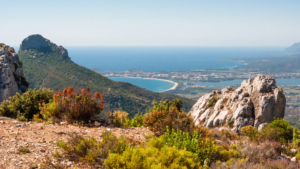
Rising to 806 meters above sea level, Mount Tuttavista translates literally to “all-view mountain”, and it certainly lives up to its name. A paved winding road climbs from the nearby town of Galtelli toward the summit, making it accessible by car, road bike, or on foot.
Near the peak, you discover Sa Pedra Istampada (the holed stone), a spectacular natural rock window opening through the limestone cliffside, framing a dizzying view of the Cedrino valley and the coastline below.
At the summit stands an impressive bronze statue of Christ the Redeemer (Cristo Redentore), created by the renowned Sardinian sculptor Pietro Longu. The 360-degree panorama from the top stretches across the entire Gulf of Orosei, the Baronie coastline, and the jagged limestone peaks of the Supramonte. If you enjoy dramatic trails, explore my guide to the best hikes in Sardinia and climbing in Sardinia.
12. Day trips to Tiscali and Gorropu Canyon
Within a 30 to 45-minute drive from Orosei, you access two of the island’s most legendary outdoor landmarks:
- Gorropu Canyon: Carved by the Flumineddu river, Gorropu is one of the deepest gorges in Europe, with sheer vertical limestone walls soaring up to 500 meters high. You can hike in from the Dorgali or Urzulei side to scramble over massive white boulders.
- The Nuragic Village of Tiscali: Hidden inside a collapsed doline on the summit of Mount Tiscali, this enigmatic prehistoric sanctuary settlement remained undiscovered by outsiders for millennia. Learn how to plan your visit in my guide to the Nuragic village of Tiscali and explore the surrounding artisan town with my Dorgali travel guide.
Things to do in Orosei: top activities
To make the most of your stay in Orosei, I selected six reliable outdoor tours and excursions. Each connects you with certified local operators and guides:
Full-Day Gulf of Orosei Day Cruise from Orosei or La Caletta
A full-day scenic cruise departing directly from the Orosei shoreline and La Caletta harbour. You sail down the entire limestone coast with extended beach stops at Cala Mariolu and Cala Sisine, plus an optional visit to the Grotta del Fico. Perfect for travelers who prefer a comfortable motor vessel without driving to Cala Gonone.
Book the Gulf of Orosei Day Cruise from Orosei
Gulf of Orosei Dinghy Trip with Skipper from Cala Gonone
The quintessential Sardinian boat experience. Cruising in a small-group zodiac with an experienced skipper allows you to enter small sea caverns, dock directly on hidden pebble beaches, and swim in the dazzling Pools of Venus (Piscine di Venere).
Reserve your Dinghy Trip with Skipper
Full Day Cala Gonone and Gulf of Orosei Mini Cruise
A classic, relaxing full-day boat excursion along the gulf that takes in all the major sea caves, dramatic limestone cliffs, and renowned beaches with multiple swimming stops throughout the day.
Book the Full Day Gulf of Orosei Mini Cruise
Gulf of Orosei Cruise to Cala Goloritze from Cala Gonone
An excellent guided boat tour focusing on the southern section of the gulf, bringing you right in front of the iconic limestone needle and turquoise waters of Cala Goloritze.
Book the Cala Goloritze Boat Tour
Gorropu Canyon Guided Hike with 4×4 Jeep Transfer
Tackle the rugged trek into Europe’s Grand Canyon with an expert local mountain guide who explains the unique flora, fauna, and geology of the gorge, complete with an off-road jeep transfer to save your legs on the ascent.
Book the Gorropu Canyon Guided Hike
Orosei: 4×4 Tour Oasi di Biderosa and Capo Comino Beach
An exhilarating guided Land Rover safari departing directly from Orosei. You venture deep into the protected pine forests and wild coves of the Biderosa Oasis before exploring the rolling white sand dunes and historic lighthouse of Capo Comino.
Book the Biderosa 4×4 Off-Road Safari
What to eat in Orosei: authentic Baronia flavors
Eating in Orosei is a memorable culinary journey bridging coastal seafood and traditional mountain cooking. Unlike heavily commercialized tourist areas, the culinary roots here belong to the agropastoral identity of the Baronia.
When you sit down at an authentic trattoria in Orosei, sample these regional staples:
- Pane Carasau and Pane Guttiau: The Baronia is renowned for producing some of the thinnest, crispiest pane carasau on the island. Local bakeries still bake these sun-dried flatbread sheets in wood-fired ovens. Try pane guttiau, drizzled with olive oil, sprinkled with sea salt, and lightly toasted.
- Culurgiones: While originating in Ogliastra, handmade culurgiones are staples on local menus. These pasta pockets are crimped into an ear-of-wheat shape (spighitta) and stuffed with creamy potatoes, fresh pecorino cheese, and wild mint, typically served with fresh tomato sauce and grated aged sheep’s cheese.
- Sos Maccarrones de Busa: Traditional long handmade pasta hollowed out with a thin reed (busa), served with slow-cooked wild boar or sausage ragu.
- Fresh Seafood: Thanks to Marina di Orosei and the Cedrino estuary, local menus feature grilled sea bream, octopus salads, and spaghetti with sea urchin (ricci) or local mullet roe (bottarga).
- Sebadas (or Seadas): Finish your meal with our island’s signature warm pastry filled with slightly soured fresh sheep’s milk cheese and lemon zest, deep-fried until crisp and generously bathed in warm, bitter corbezzolo (strawberry tree) honey.
- Local Wines: Accompany your meal with a crisp, mineral Vermentino di Sardegna DOC or a glass of rich, ruby-red Cannonau di Sardegna produced in the nearby vineyards of the Cedrino valley. For a complete overview of traditional island dishes, read my Sardinian food guide.
Getting around: car rental in Orosei
To explore Orosei and eastern Sardinia independently, a car is practically essential. While you can walk around Orosei historic center or ride a bike to Marina di Orosei along the flat cycle path, you need a vehicle to reach the Biderosa Oasis, Cala Liberotto, Mount Tuttavista, and the boat departure points in Cala Gonone. You can compare prices and book directly from:
- Olbia Costa Smeralda Airport: DiscoverCars Olbia Airport (OLB)
To avoid common pitfalls like unexpected deposits or credit card requirements, read through my renting a car in Sardinia practical guide. If arriving by other hubs, check my guides on airports in Sardinia and the ferry to Sardinia routes and ports.
Where to sleep in Orosei
Orosei offers accommodation options for every travel style, ranging from historic boutique hotels nestled inside centuries-old stone townhouses to quiet country agriturismi and full-service beach resorts:
- Albergo Diffuso Mannois – Historic 4-star boutique hotel set across restored stone townhouses with a private beach club at Marina di Orosei – Book Albergo Diffuso Mannois
- Hotel Su Barchile – Family-run hotel in the old town famous across eastern Sardinia for its traditional seafood restaurant – Book Hotel Su Barchile
- Hotel Maria Rosaria – Comfortable 4-star hotel close to the center with an outdoor swimming pool, gardens, and family rooms – Book Hotel Maria Rosaria
- Sentido Orosei Beach – Full-service 4-star beachfront resort at Marina di Orosei set beside pine woods with lagoon pools – Book Sentido Orosei Beach
- Agriturismo Su Birde – Peaceful countryside farm stay on a panoramic hill overlooking Orosei with authentic home-cooked Sardinian dinners – Book Agriturismo Su Birde
If you are weighing different regions for your stay, browse my guides on where to stay in central Sardinia and the best beach resorts in Sardinia.
Weather in Orosei: when to visit
Orosei enjoys a classic Mediterranean climate characterized by long, warm, sun-drenched summers and mild, relatively dry winters. Because Mount Tuttavista and the Supramonte massif provide shelter from westerly fronts, the Cedrino plain experiences high sunshine hours throughout the season.
 -
 -
 -
 -
 --------------
- May and June: Outstanding months to visit. The countryside is lush, wild cistus and broom are in full bloom, temperatures hover around 24 to 28 degrees Celsius, and beaches are peaceful. For details, check out my guide on Sardinia in June.
- July and August: The peak of summer, with temperatures often climbing past 32 degrees Celsius. Perfect for swimming and boat tours, though you must book accommodations, boat trips, and rental cars well in advance.
- September and October: Many locals, myself included, consider September and early October the golden season in Sardinia. The sea retains its summer warmth, evening temperatures are pleasant, and the summer crowds have cleared out. Discover why in my guides to Sardinia in September and Sardinia in October.
- For a month-by-month breakdown, refer to my overview on the best time to visit Sardinia month by month.
The local perspective: what Sardinians think
As a local who travels through Orosei regularly, I want to share three critical practical insights that travel brochures rarely mention:
1. Winds and sea conditions
Pay close attention to wind directions when planning your beach days in Orosei:
- Maestrale (North-West wind): When the strong Maestrale blows, the sea at Marina di Orosei, Su Barone, and Osalla remains as flat as a swimming pool because the wind blows from the land toward the water. Still, the wind pushes floatation devices away from the shore, so keep children close.
- Scirocco and Levante (South-East and East winds): These winds blow directly onshore across the open sea. Because the seabed at Marina di Orosei shelves deeply within a few feet of the shoreline, onshore winds create powerful, crashing shorebreak waves and strong undertows. If the sea is rough at Marina di Orosei, drive 15 minutes north to the sheltered, shallow granite coves of Cala Liberotto or Cala Ginepro, where headlands protect the water.
2. Parking and crowd management in high season
At Marina di Orosei and Su Barone, municipal parking lots operate on pay-and-display meters from June through September. Bring coins or download the EasyPark mobile app. The pine forest at Su Barone is a blessing in July and August because it keeps parked vehicles out of the blazing sun.
For the Oasi di Biderosa, do not simply drive to the entrance gate in July or August expecting to buy an auto pass on the spot. Vehicle passes sell out days and sometimes weeks in advance during midsummer. If vehicle passes are sold out, you can still book bicycle access or join a guided 4×4 tour.
3. The baronial identity and quarry tradition
Do not expect Orosei to look or feel like Costa Smeralda or Stintino. Orosei was never an exclusive jet-set resort or an isolated fishing hamlet. It was an agricultural barony that produced wine, olive oil, almonds, and grain, and it weathered centuries of pirate raids from North Africa.
In addition, the hills around Orosei are home to world-renowned quarries of Marmo di Orosei (also known as Daino Reale), a beautiful beige limestone with delicate veins that has been exported globally to pave luxury hotels, airports, and cathedrals. You will see this local stone proudly paving Piazza del Popolo, church steps, and door frames throughout the town.
FAQ about Orosei
Is Orosei worth visiting?
Yes, absolutely. Orosei offers a genuine slice of authentic Sardinian life that many purely seasonal tourist enclaves lack. With an atmospheric historic old town, superb local gastronomy, uncrowded mainland beaches, and proximity to both the Gulf of Orosei and the Supramonte mountains, it is one of the most well-rounded holiday bases on the island.
What is the difference between Orosei and the Golfo di Orosei?
Orosei is the historic municipality and agricultural town located on the mainland plain of the Cedrino river valley. The Gulf of Orosei (Golfo di Orosei) is the wide marine bay and coastal nature park that stretches south toward Baunei, famous for its sheer limestone cliffs, sea caves, and secluded coves accessible primarily by boat.
Can I take a boat tour to the coves directly from Orosei?
Yes. During the summer season, full-day passenger cruise ships depart directly from the pier at Marina di Orosei or nearby La Caletta harbour. Alternatively, you can drive 25 minutes to the port of Cala Gonone, where dozens of small-group zodiacs with skippers and self-drive boats depart daily.
Do I need a car in Orosei?
While you can explore the historic center on foot and cycle to Marina di Orosei along the flat bike path, a rental car is strongly recommended if you want to visit the Biderosa Oasis, explore Cala Liberotto, hike Mount Tuttavista, or drive down to Cala Gonone for boat rentals.
How far is Orosei town from the beach?
Orosei’s historic center sits approximately 2.5 kilometers inland from Marina di Orosei. The drive takes around 5 minutes, or you can take a pleasant 10 to 15-minute bicycle ride along the dedicated, illuminated cycling path.
Nearby towns to explore in Eastern Sardinia
If you have extra days in the Baronia and want to expand your itinerary, consider visiting these nearby destinations:
- Posada: Located 25 kilometers north, Posada is an ancient medieval village crowned by the Castello della Fava, offering panoramic views over the green Posada river delta and coastal pine woods. Discover it in my Posada guide.
- Nuoro: The cultural and literary capital of the island, nestled beneath Mount Ortobene. Nuoro is home to the outstanding MAN Art Museum, the Museum of Sardinian Ethnography, and the birthplace of Nobel laureate Grazia Deledda. Read more in my Nuoro cultural guide.
- San Teodoro: Located 45 minutes north, known for its vibrant nightlife and the famous white sands of La Cinta and Cala Brandinchi. Check out my San Teodoro guide.