Things to do in Sardinia range far beyond the postcard beaches everyone talks about. This island holds boat-only coves, Bronze Age stone towers, wind-carved coastlines, and small towns that most travel guides skip entirely. Written by someone who actually lives here, this guide covers what is genuinely worth your time, and why.
Sardinia rewards people who slow down. It punishes people who try to see everything in four days. Before diving into the activities themselves, it helps to understand how the island is put together.
Sardinia at a Glance: How to Plan Your Time
Sardinia is the Mediterranean’s second largest island, and distances here are deceptive. A map might make the north and south look close, but mountain roads and single-lane coastal routes mean a 150 km drive can easily eat three hours.
Most first-time visitors make the mistake of trying to circle the whole island in a week. Locals almost never do this. We pick a region and dig in.
| Region | Known for | Best base |
|---|---|---|
| North (Costa Smeralda, Gallura) | Boat trips, upscale beaches, La Maddalena | Olbia, Palau, Baja Sardinia |
| Northwest (Alghero, Sassari) | Historic towns, coral tradition, Neptune’s Grotto | Alghero |
| East (Baunei Coast, Gulf of Orosei) | Boat-only calas, cliffs, hiking | Cala Gonone, Dorgali |
| South (Cagliari, Sulcis) | City life, archaeology, flamingos | Cagliari |
If this is your first trip, pick one or two of these regions rather than all four. You will see less on paper, but experience far more.
Three airports serve the island, each better suited to a different region. Olbia connects most directly to the north and Gallura, Cagliari serves the south and the interior, and Alghero works best if the northwest is your main focus. Choosing the wrong airport relative to your itinerary can easily add two or three hours of driving to your first and last day, so match the airport to your base before booking flights, not after.
For a broader orientation before you land, our map of Sardinia by a local breaks the island down visually, and our guide to Sardinia’s airports helps you pick the right entry point depending on which region you are targeting.
Best Beaches to Visit in Sardinia
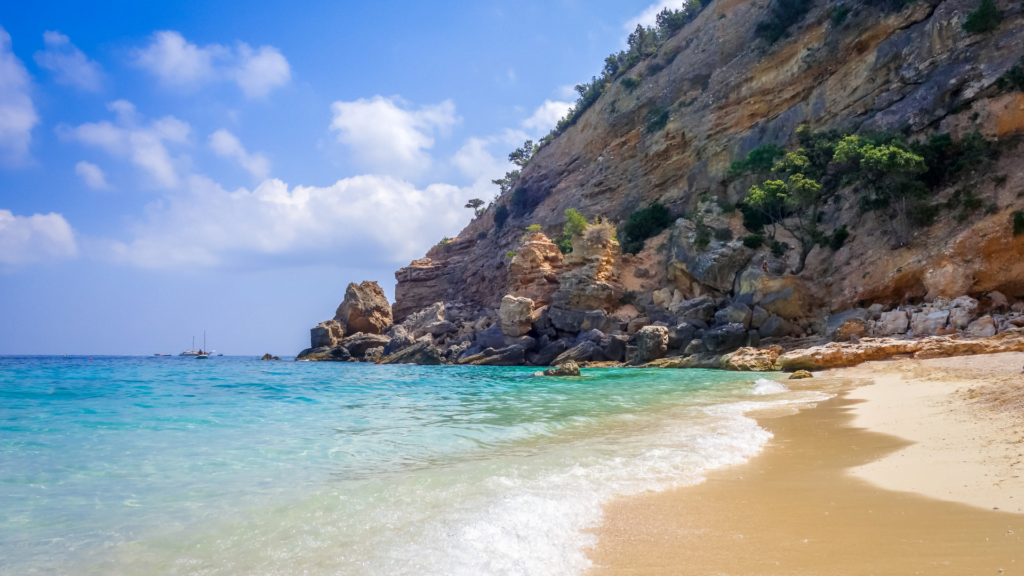
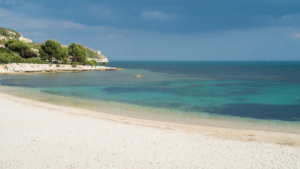
No list of things to do in Sardinia is complete without its beaches, though we will keep this section brief since we cover it in depth elsewhere. Expect shallow turquoise water on the northeast coast, dramatic cliffs and pebble coves on the east, and wide open sand on the south.
Several of the island’s most photographed beaches, including La Pelosa, Cala Brandinchi, and Cala Goloritzè, now require an online reservation and a small entrance fee during high season. This is a genuine change from a decade ago, and it exists to stop overcrowding from destroying fragile dune systems. Book these in advance, ideally a week or more ahead in July and August.
For the full rundown, including our personal favorites and honest notes on crowding, see our guide to the top beaches in Sardinia and our dedicated Golfo di Orosei beaches guide.
Boat Tours and Sailing: La Maddalena and the Gulf of Orosei
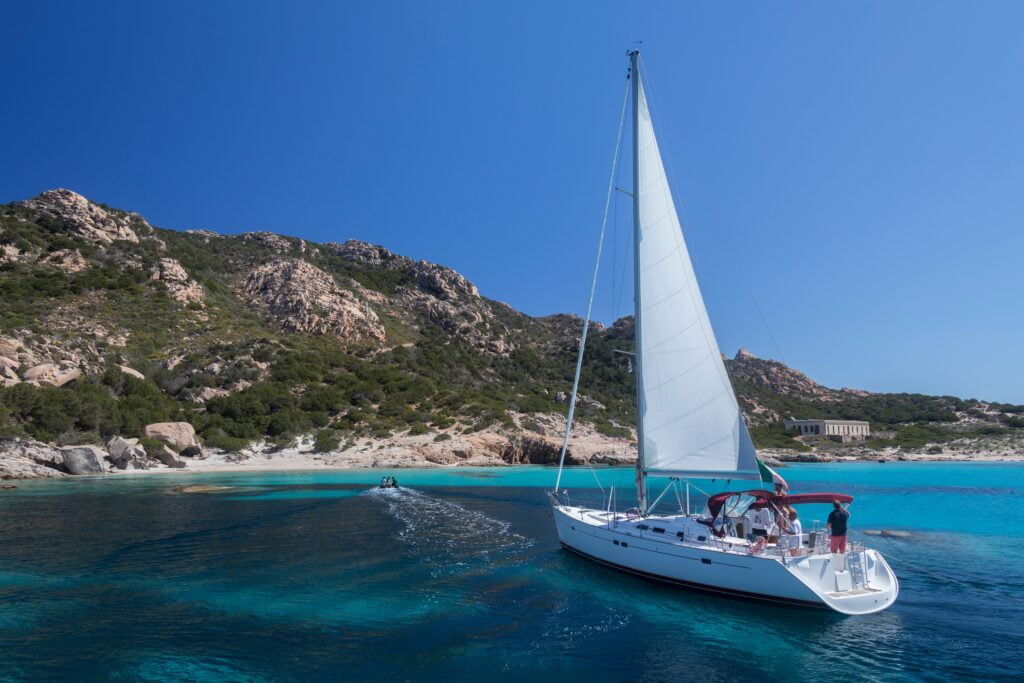
If you only do two organized activities in Sardinia, make them boat trips. The island’s most striking scenery, granite islands in the north, limestone cliffs in the east, is simply not visible from a car. Roads here rarely hug the coast for long stretches, and the calas that show up in every photo of Sardinia are, more often than not, reachable only by water or by a genuinely demanding hike.
This is not a minor detail. It shapes how a Sardinia trip should be planned in the first place. Visitors who budget a single “beach day” per region often leave disappointed, because the best coves require booking a boat slot in advance, checking wind conditions, and building in a flexible backup day. Locals plan around the sea, not the calendar.
La Maddalena Archipelago
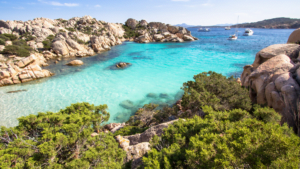
The La Maddalena Archipelago sits just off Sardinia’s northeast tip, a cluster of protected islands with water so clear it looks artificially lit. Boats leave from Palau, Cannigione, Baja Sardinia, or La Maddalena town itself, and most full-day tours stop at Spargi, Budelli (home of the famous Pink Beach), and Santa Maria.
Wind matters here more than most tourists realize. The Bocche di Bonifacio strait between Sardinia and Corsica funnels air with real force, and a windy morning can turn a calm cruise into a rough one. Locals check the forecast the night before, not the morning of.
If you want to explore independently, small dinghies without a boat license are widely available around Palau and Cala Gonone, though this only makes sense if someone in your group is comfortable reading basic sea conditions.
Gulf of Orosei
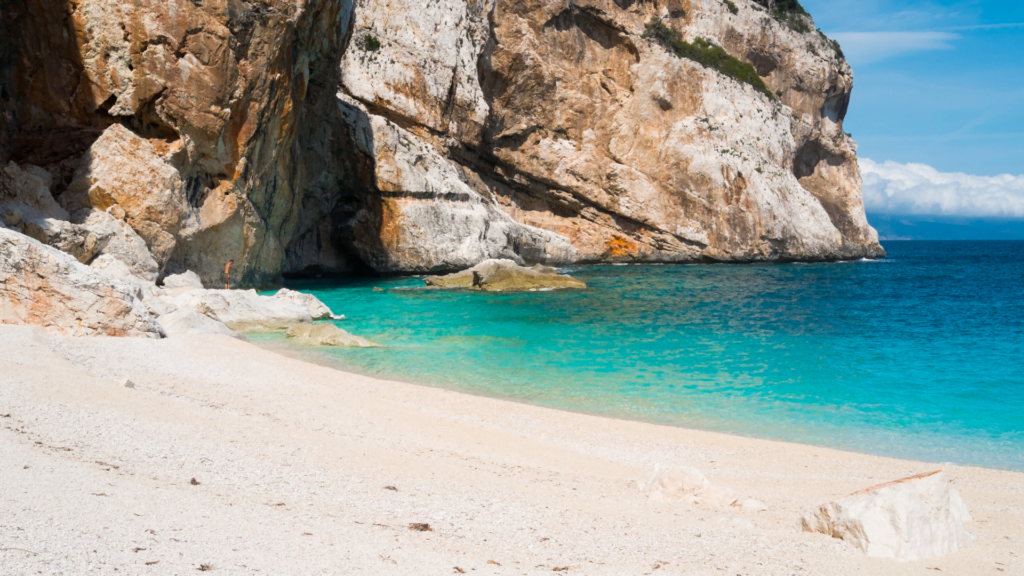
The Gulf of Orosei, often called the Baunei Coast, is arguably Sardinia’s single best half-day experience. Many of its calas have no road access at all. You reach them by boat from Cala Gonone, or by a demanding multi-hour hike.
- Cala Luna, the most accessible of the group, with caves visible from the water
- Cala Mariolu, known for its pale, marble-like pebbles and deep turquoise water
- Cala Goloritzè, a protected natural monument with a limestone pinnacle rising from the sea, capped at 300 visitors a day
Full-day boat excursions from Cala Gonone typically make two or three beach stops, with roughly an hour at each. Departures start as early as 7:30 in peak summer, and the earliest slot is worth choosing if you want a beach mostly to yourself before the crowds arrive.
For the full range of options, our best boat tours in Sardinia guide compares operators and routes across the island.
Explore Nuraghi and Ancient Sardinia
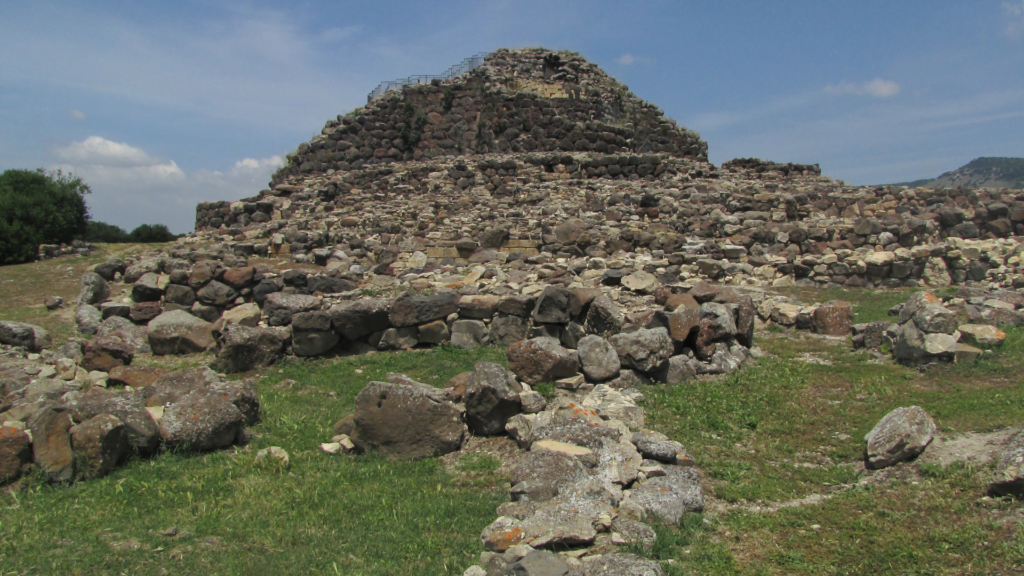
This is where most travel guides fall short. Sardinia holds over 7,000 nuraghi, cone-shaped stone towers built by the island’s Bronze Age population starting around 1900 BCE. Nowhere else in the world has anything quite like them, and yet visitors routinely skip archaeology entirely in favor of beaches.
Su Nuraxi in Barumini is Sardinia’s only UNESCO World Heritage nuraghe and, honestly, the best starting point if you are only going to visit one. A central tower surrounded by a complex of secondary structures and an entire village of circular huts gives you a genuine sense of how these communities lived. Guided visits run every 15 to 30 minutes from the ticket office, since the interior chambers require supervision.
Beyond nuraghi, the island is scattered with Domus de Janas, small rock-cut tombs whose name translates to “houses of the fairies,” and Giants’ Tombs, collective burial monuments that predate most of what most visitors associate with ancient history in Europe.
A tip from experience: archaeological sites here are almost never crowded, even in August. If you need a break from beach heat, this is one of the best ways to spend a midday.
What makes the nuraghi genuinely puzzling, even to archaeologists, is how little written record the Nuragic civilization left behind. No decoded script, no dynastic lists, nothing comparable to what survives from contemporary Mediterranean cultures. What we know comes almost entirely from what was built and buried. That absence of a clear narrative is part of what makes standing inside one of these towers feel different from a typical ruin. You are looking at proof of a sophisticated, organized society, defensive architecture, water management, metalworking, without the accompanying story that usually fills in the gaps.
Smaller sites scattered around the Costa Smeralda area, such as Nuraghe Albucciu near Arzachena, make an easy add-on if you are already staying in the north and do not want to drive as far as Barumini. They lack the scale of Su Nuraxi, but the more modest size actually makes it easier to picture how a single extended family or small community would have used the space day to day.
Hiking and Trekking in Sardinia
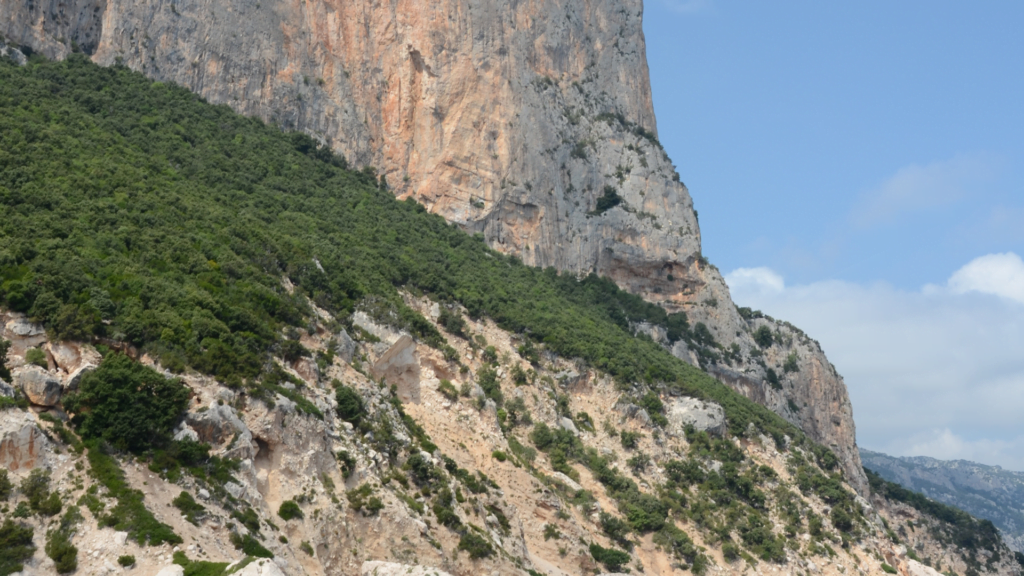
For anyone who likes to move under their own power, hiking in Sardinia is genuinely underrated. The interior region of Ogliastra and Barbagia holds some of the most dramatic limestone landscape in Italy, and most of it sees a fraction of the foot traffic you would find in the Dolomites.
Gorropu Canyon, the deepest gorge in Europe, offers routes for both casual walkers and technical hikers. Trails begin from either Dorgali or Urzulei, on opposite sides of the canyon, so check which trailhead matches your base before setting off.
For the truly committed, the Selvaggio Blu is a six-day coastal trek mixed with light canyoning along the Baunei Coast, reaching beaches that boats simply cannot access. It requires a guide and proper equipment, and it is not a spontaneous decision.
If scrambling and rock faces appeal more than walking trails, our guide to climbing in Sardinia covers the island’s best-known routes, many of them concentrated around the same limestone formations that make Gorropu so striking.
Timing matters more here than on the coast. Summer heat in the interior can be brutal by mid-morning, with little shade along most limestone trails, so an early start is not optional if you are hiking between June and August. Spring and autumn shift the balance entirely. Temperatures drop into a genuinely comfortable range, wildflowers cover the hillsides in April and May, and the same trails that feel punishing in July become some of the most pleasant walking in Italy.
Water is another detail visitors underestimate. There are no shops or fountains along most inland routes, and the terrain, sun-bleached limestone with almost no tree cover in places, dehydrates people faster than they expect. Carry more than you think you need, and tell someone your planned route if you are heading into Gorropu or the Selvaggio Blu without a guide.
Surfing, Cycling and Other Outdoor Activities
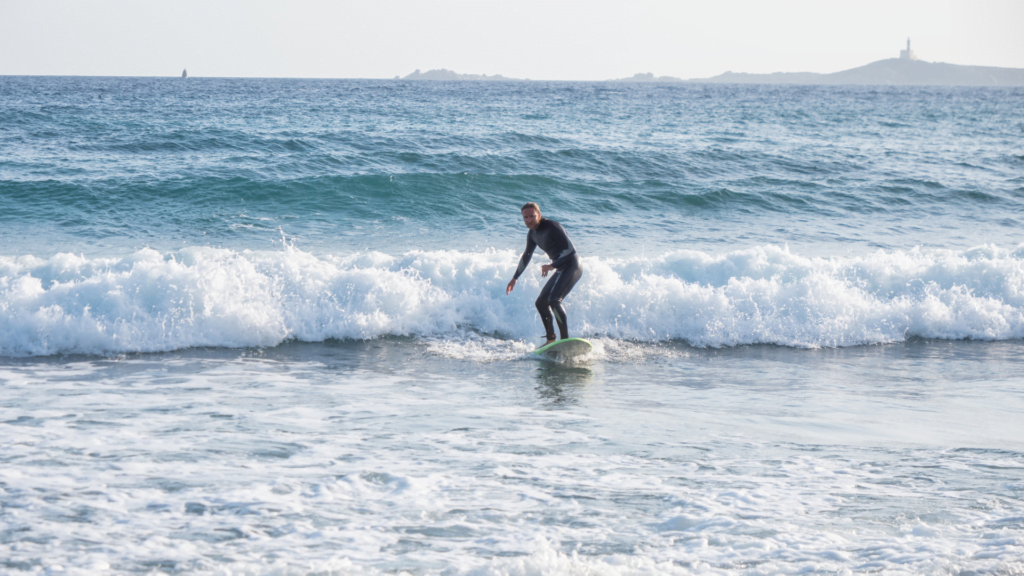
Sardinia is windier than most people expect for a Mediterranean island, which makes it a genuinely good destination for water sports well outside the classic swim-and-sunbathe routine.
Surfing in Sardinia depends entirely on wind direction and season, with the west coast catching Atlantic-style swell in autumn and winter while summer conditions favor kitesurfing and windsurfing on the more exposed northern beaches. This is not a beach activity you can plan months ahead with certainty. Locals watch the forecast a few days out and adjust.
On land, cycling in Sardinia has grown steadily as coastal roads get resurfaced and interior routes gain proper signage. Expect serious elevation on inland routes and strong crosswinds on anything hugging the coast, so pace yourself if you are used to flatter terrain.
For anyone who prefers to explore underwater, snorkeling is possible almost anywhere the water is clear, though a handful of protected marine areas around San Pietro Island and Tavolara offer noticeably richer marine life. Our guide to diving in Sardinia covers the best dive sites for those who want to go deeper, including a handful of wreck sites off the southern coast.
Spot the Pink Flamingos
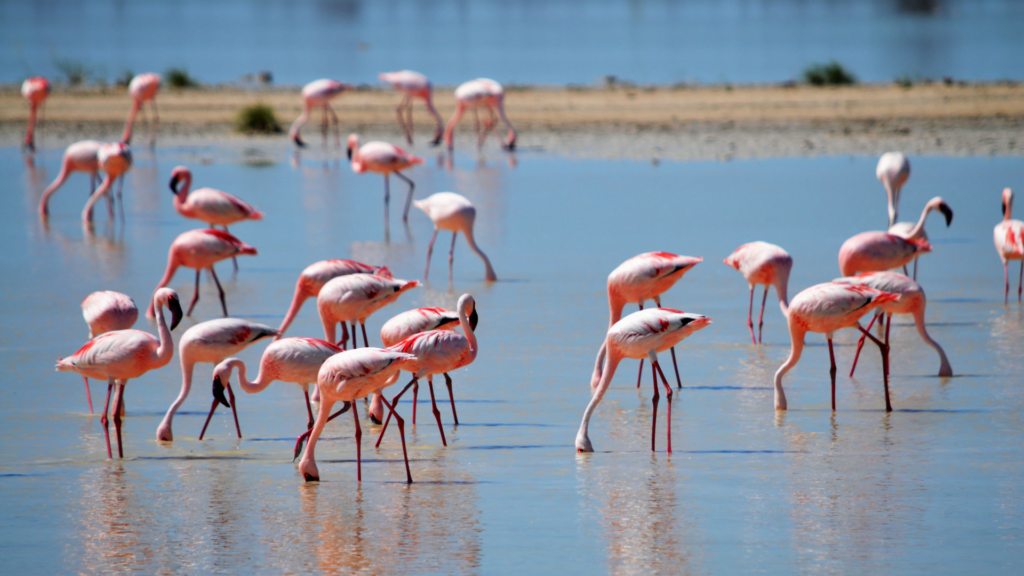
Few first-time visitors expect to see flamingos in Sardinia, which makes it one of the most memorable surprises the island offers. Several coastal lagoons host resident colonies year-round, with the largest concentrations typically visible in spring and early summer during nesting season.
The Molentargius nature reserve, just behind Cagliari’s Poetto beach, is the most accessible viewing point on the island. You can reach it by local bus without a car, and a network of walking paths lets you get close to the wetlands without disturbing the birds.
For full details on where and when sightings are most reliable, along with other colonies further north near San Teodoro, see our dedicated guide to pink flamingos in Sardinia and our Molentargius Saline Park guide.
Visit Alghero, Cagliari and Sardinia’s Historic Towns
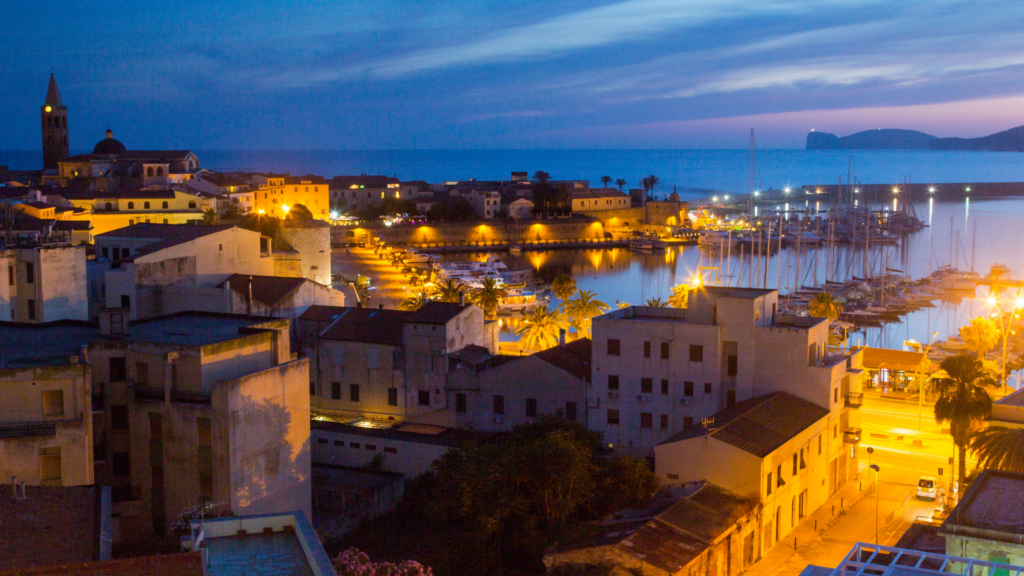
Beaches and boat trips tend to dominate the conversation, but Sardinia’s towns hold their own weight in things to do.
Alghero, on the northwest coast, carries a distinctly Catalan character. Spain ruled the city for centuries after conquering it in the 14th century, and that history still shapes the language, architecture, and even some street signage in the old town. The cobblestone Centro Storico, framed by medieval bastions overlooking the sea, is genuinely one of the most atmospheric places to spend an evening on the island. Red coral has been harvested and worked here for generations, and jewelry shops throughout the historic center still sell pieces certified by the Corallium Rubrum consortium, worth looking for if authenticity matters to you.
Cagliari, the capital and largest city, sits in the south and rewards a proper day or two rather than a rushed afternoon. Four historic districts climb the city’s hills, and the Castello quarter in particular offers sweeping views over the Gulf of Cagliari. Below the old town, Roman ruins and one of the island’s better archaeology museums give context to everything else you will see in Sardinia.
Near Alghero, Neptune’s Grotto deserves a special mention. This vast sea cave, carved into the limestone cliffs of Capo Caccia, can be reached either by boat from Alghero’s harbor or by descending the 654 steps of the Escala del Cabirol staircase. Guided visits inside last around 45 minutes and reveal a still saltwater lake ringed by stalactites, one of the more genuinely dramatic natural sights on the island.
Smaller towns deserve a mention too, even if they rarely make the standard itinerary. Bosa, on the west coast, lines the Temo River with pastel houses beneath a hilltop Malaspina castle, and it works well as a slower counterpoint to a busier base like Alghero or Cagliari. Inland, towns across the Barbagia region hold onto traditions, murals, festivals, wool weaving, that have mostly disappeared from the coast. None of this replaces the coastline, but it rounds out a trip that would otherwise be beaches and boats from start to finish.
Try Sardinian Food

Food here is regional in a way that surprises people expecting standard Italian menus. Sardinian cuisine developed largely in isolation, and dishes like culurgiones (a filled pasta closed in a distinctive braided seal), malloreddus with sausage and saffron, and porceddu, a slow-roasted suckling pig usually reserved for special occasions, reflect an island tradition rather than a mainland one.
Bottarga, cured mullet or tuna roe, shows up grated over pasta or shaved onto bread with olive oil, and it is worth trying even if the description sounds unfamiliar. Agriturismi, working farms that also serve meals, remain the most authentic place to experience a full traditional spread, though booking ahead is essential since the good ones fill up fast in summer.
Wine pairs naturally with all of this. Cannonau, a deep red grown across the island, has drawn scientific attention for its association with the Barbagia region’s unusually high concentration of centenarians, though locals will tell you it simply pairs well with roast meat and does not need a research paper to justify a second glass. Vermentino, the island’s signature white, comes from the Gallura region in the north and suits seafood far better.
For a complete rundown of dishes worth seeking out, our Sardinian food guide covers regional variations and where locals actually eat.
Things to Do in Sardinia: Best Activities and Tours
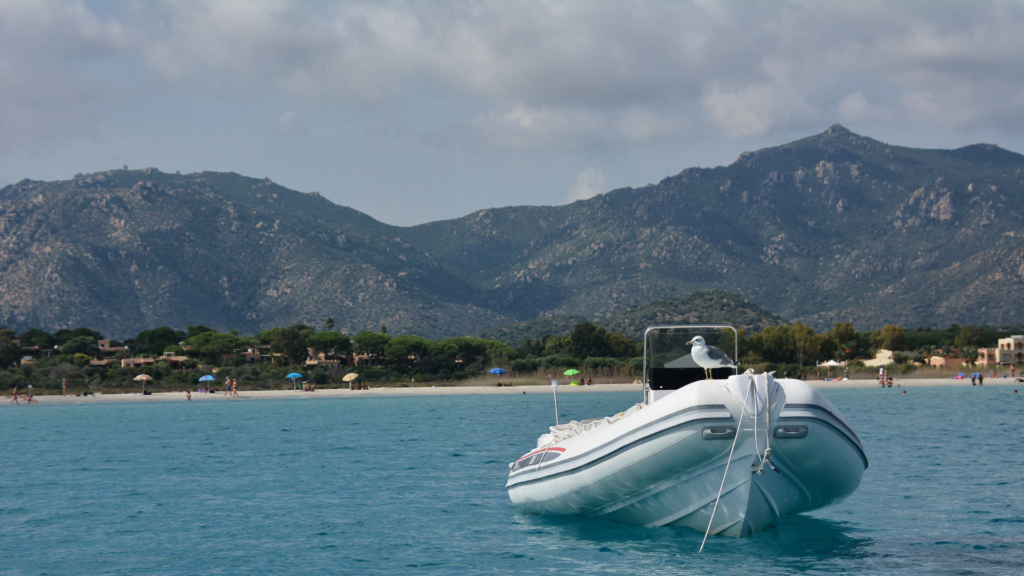
Booking activities in advance matters more in Sardinia than in most Italian destinations, since several of the most popular boat tours and guided visits sell out days ahead in July and August. Here are six worth prioritizing.
La Maddalena Archipelago Boat Tour
A full-day sailing between Spargi, Budelli, and Santa Maria islands, with stops for swimming and time in La Maddalena’s old town. Departures run from Palau, Cannigione, Baja Sardinia, or La Maddalena itself.
View this tour on GetYourGuide
Gulf of Orosei Dinghy Cruise with Swim Stops
A seven-hour small-group cruise from Cala Gonone aboard an inflatable boat, reaching Cala Mariolu, Cala Luna, and other calas that larger vessels cannot access, with time to swim into sea caves along the way.
View this tour on GetYourGuide
Neptune’s Grotto Tickets and Tours
Combined boat and cave-entrance options departing from Alghero’s harbor, covering the approach along the Capo Caccia cliffs and the guided walk inside the grotto itself.
View options on Viator
Underground Cagliari Walking Tour
A two to four hour guided walk through Cagliari’s underground caves, crypts, and a WWII-era bomb shelter beneath the Stampace and Marina districts, a good option for a hot midday break from the sun.
View this tour on GetYourGuide
Su Nuraxi di Barumini Guided Tour
A half-day trip from Cagliari to the UNESCO-listed nuraghe at Barumini, usually paired with the nearby Casa Zapata museum, with a knowledgeable local guide walking you through the site’s Bronze Age history.
View this tour on GetYourGuide
Sardinian Cooking Class in Cagliari
A hands-on pasta workshop in a local home near Cagliari, learning to shape malloreddus and culurgiones by hand before sitting down to eat what you made alongside your host.
View this experience on GetYourGuide
Getting Around: Car Rental in Sardinia
A car is genuinely necessary here, not a nice-to-have. Public transport connects the main cities reasonably well, but most beaches, archaeological sites, and small towns covered in this guide sit well outside bus routes, and schedules thin out considerably outside the summer months.
Distances between the regions covered above are longer than they look on a map. Cagliari to Alghero takes close to three hours by road, and Alghero to the Baunei Coast is a similar stretch in the other direction. Plan your route around one or two bases rather than trying to cover the whole island from a single hotel.
You can compare prices and book directly through Discover Cars, choosing the airport closest to your itinerary:
- Olbia Airport (for Costa Smeralda, Gallura, La Maddalena): Book your car here
- Cagliari Airport (for the south, Barumini, Cagliari): Book your car here
- Alghero Airport (for the northwest, Neptune’s Grotto): Book your car here
- General Sardinia search: Compare all options
Where to Sleep in Sardinia
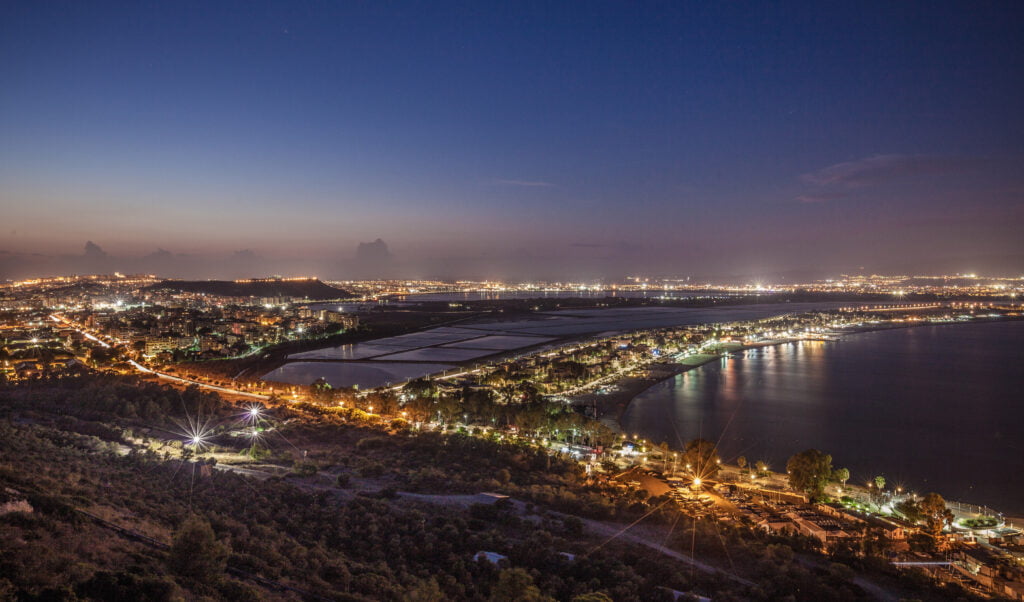
Since accommodation is not the main focus of this guide, here are a few solid options across the regions covered above, from premium picks to more budget-conscious ones.
Costa Smeralda: Hotel Cala di Volpe remains the most iconic luxury address in the area, with a lively, social atmosphere near Porto Cervo’s best beaches. Check availability on Booking.com
Alghero: For a splurge, Villa Las Tronas sits on its own promontory just outside the historic center, with sea-facing rooms and an indoor pool. Check availability on Booking.com For something more budget-friendly right inside the old town walls, Centro Storico Alghero BB offers a simple, well-located base a short walk from the cathedral. Check availability on Booking.com
Baunei Coast / Cala Gonone: Hotel Caramare sits right on the seafront, a two-minute walk from the port where the Gulf of Orosei boat tours depart, making early departures far less stressful. Check availability on Booking.com
For the full regional breakdown, see our where to stay in Sardinia guide.
Best Time to Visit Sardinia
Peak season runs from mid-May to mid-September, when hotels, restaurants, and beach clubs operate at full capacity. This is also when the island gets genuinely crowded, particularly in August, when much of mainland Italy goes on holiday at once.
September is our own pick as locals. The sea stays warm through the month, crowds thin noticeably after the last week of August, and restaurant reservations become far easier to secure. Spring, particularly April and May, suits hiking and archaeology better than swimming, since the water is still cool.
Outside the summer window, many resort hotels and seasonal restaurants close entirely, so if you are traveling between November and March, stick closer to the larger towns where things stay open year-round.
For a full month-by-month breakdown, see our guide to the best time to visit Sardinia and our overview of Sardinia’s weather patterns.
The Local Perspective: What Sardinians Think
We live with this island’s rhythms all year, not just in August, and that gives us a slightly different read on it than a typical guidebook.
On wind and water. Two winds define how a day here actually plays out: the Maestrale from the northwest and the Scirocco from the southeast. Boat tours get cancelled or rerouted around them more often than visitors expect, especially in the north where the Bocche di Bonifacio channel amplifies whatever the sky is doing. If your itinerary depends on one specific boat trip, build in a spare day. We do.
On crowds versus the photos. Beaches like La Pelosa and Cala Goloritzè look almost empty in the photos that circulate online. In reality, August brings genuine crowds, hence the reservation systems now in place at several sites. Locals who want a quieter version of these same beaches simply go in June or September instead, or arrive at opening time before the tour buses do.
On distances. We rarely try to do “all of Sardinia” in one trip, and we would gently discourage you from trying either. A drive that looks short on a map often runs through mountain passes or single-lane coastal roads, and rushing between regions usually means arriving tired and leaving disappointed. Pick a base, explore it properly, and save the rest for next time.
On the shoulder season. Ask any Sardinian which month they would pick for themselves, not for a first-time visitor, and a surprising number will say October. The sea holds its summer warmth for weeks after the crowds leave, restaurants that survived the season are noticeably more relaxed, and the light across the coast turns softer in a way that photographs never quite capture. It is not swimming weather for everyone, but for locals it is often the best month of the year.
FAQ about Things to Do in Sardinia
How many days do you need in Sardinia?
A single region, such as the north or the Baunei Coast, needs at least four to five days to see properly. For a broader trip covering two regions, plan on ten days to two weeks.
Do you need a car in Sardinia?
Yes, for almost any itinerary beyond the main cities. Public transport is limited outside Cagliari, Olbia, Sassari, and Alghero, and most beaches and archaeological sites are not reachable by bus.
What is the best month to visit Sardinia?
June and September offer the best balance of warm water and manageable crowds. July and August are the busiest and hottest months, while spring suits hiking and archaeology more than swimming.
Is Sardinia worth visiting?
Yes. Beyond the well-known beaches, the island offers ancient nuraghi found nowhere else in the world, some of Italy’s best hiking in the Ogliastra region, and a food culture distinct from mainland Italy.
What is there to do in Sardinia besides beaches?
Archaeological sites like Su Nuraxi, hiking trails through Gorropu Canyon, boat tours through the Gulf of Orosei, historic towns like Alghero and Cagliari, and flamingo watching at Molentargius all offer a full trip without a single beach day.
Is Sardinia expensive?
Costs vary sharply by region. Costa Smeralda in August ranks among the most expensive places in Italy, while inland towns and off-peak travel anywhere on the island remain considerably more affordable.
How do you get to Sardinia?
Flying is the fastest option, with direct routes into Olbia, Cagliari, or Alghero from most major European cities, especially in summer. Car ferries also run from mainland Italy and France, a good option if you plan to bring your own vehicle or want to combine Sardinia with a wider Mediterranean road trip. Our guide on how to get to Sardinia breaks down every route in detail.
Sources
- ISTAT, Italian National Institute of Statistics
- Sardegna Turismo, official regional tourism board
- UNESCO World Heritage Centre, Su Nuraxi di Barumini listing
- Parco Nazionale dell’Arcipelago di La Maddalena