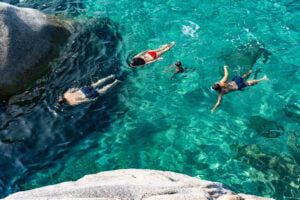
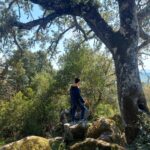
When people ask me where to find the most breathtaking beaches in the southern part of our island, my answer is always the same: head southwest from Cagliari down to Chia. Located along the winding panoramic coast of Domus de Maria, Chia is not a conventional town with crowded apartment blocks or concrete high-rises. Instead, it is an unspoiled coastal stretch where towering golden sand dunes, scent-laden juniper groves, turquoise shallow waters, and ancient Phoenician ruins blend into one of the most spectacular landscapes in the Mediterranean.
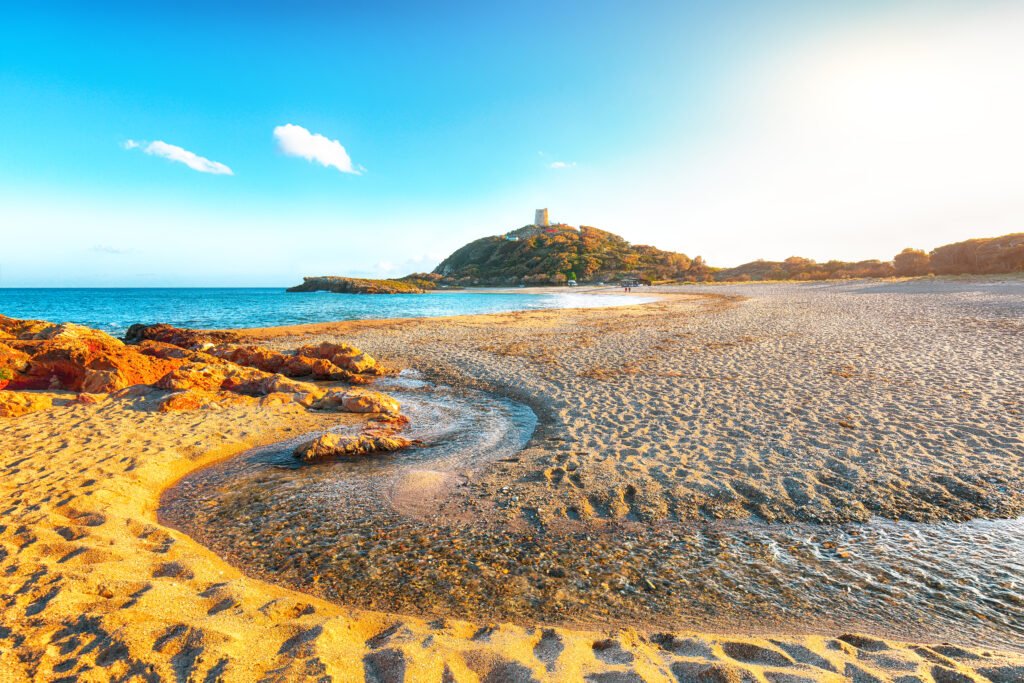
Whether you plan a relaxing day trip from Cagliari or choose to spend your entire holiday here, this comprehensive guide gives you my firsthand local perspective. I will walk you through every single beach, show you what historical landmarks and wild nature reserves to explore beyond the sand, provide proven advice on wind directions and car parking, and share my curated selection of accommodations and verified activities.
The legendary beaches of Chia Sardinia
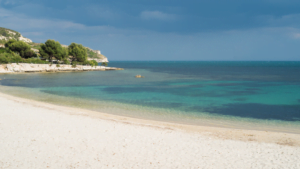
The coastline of Chia is famed across Europe for its distinctive fine, peach-golden sand and transparent waters that resemble a natural swimming pool. What makes this area unique is the sequence of varied coastal environments: expansive dune fields sculpted by the winds, shallow coves protected by pink granite headlands, and brackish coastal lagoons resting right behind the sandbars.

If you are planning your beach days, here is my detailed breakdown of the best shores in and around Chia, listed from east to west. For a wider comparison across the island, you can also explore my complete guide to the top beaches in Sardinia.
Su Giudeu beach
Su Giudeu is the undisputed queen of Chia and one of the most celebrated shorelines in the entire Mediterranean. The beach is named after the local octopus species (Polpo Giudeo) that frequents the rocky shallows around the offshore reef.
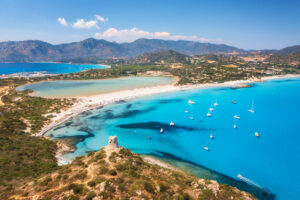
What sets Su Giudeu apart are its colossal dunes, rising up to 20 meters high and framed by twisted centuries-old junipers. The sand here has a warm, golden grain that feels incredibly soft underfoot. The water remains calm, transparent, and knee-deep for dozens of meters out, making it exceptionally safe for children and leisurely wading.
Just about 100 meters off the shoreline lies a dark basaltic rock islet, Isola Su Giudeu. During low tide, the sea is so shallow that you can literally walk across the sandy seabed to the island with water barely reaching your waist. Climb gently onto the rocks (wearing water shoes) for an extraordinary panoramic view of the entire bay, or bring your mask and snorkel to observe sea breams, damselfish, and small rays gliding along the underwater rocks.
Facilities at Su Giudeu are well organized during the summer season, including sunbed rentals, kiosks, public restrooms, and a large paid parking area located right behind the dunes.
Cala Cipolla
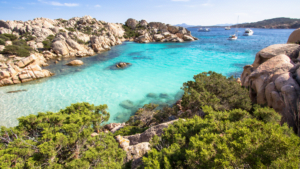
Tucked away at the western end of the main road, Cala Cipolla is a smaller, much more intimate cove that feels completely wild and secluded. Enclosed between two promontories of weathered pink granite, this pocket beach is sheltered from many prevailing winds and is surrounded by dense Mediterranean scrub, pine trees, and wild sea lilies.
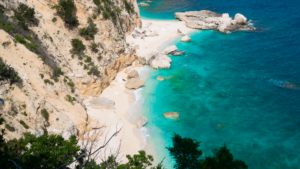
The water at Cala Cipolla is strikingly clear, with shades shifting from emerald green near the sand to electric blue further out. Because of the surrounding rocky coastline and granite boulders scattered across the seabed, Cala Cipolla is arguably the premier spot in Chia for snorkeling. You will frequently spot schools of salema, wrasses, octopuses, and starfishes just a few meters from the shore.
A scenic coastal trail departs from the western corner of Cala Cipolla and winds uphill toward the Capo Spartivento lighthouse. I strongly recommend bringing comfortable walking shoes so you can combine an hour of beach relaxation with a sunset hike up the promontory.

Monte Cogoni and Sa Colonia
Sa Colonia and Monte Cogoni form a sweeping, continuous crescent of golden sand that stretches for more than a kilometer right below the promontory of the Spanish Tower.
Monte Cogoni occupies the western portion of the crescent, backed by gentle sand dunes and a wooden pedestrian walkway that connects the beach directly to the nearby resort area. Sa Colonia forms the eastern section, ending right at the foot of the rocky cliff crowned by the seventeenth-century watchtower.
This beach offers plenty of open space even during high season. The seabed slopes gently into calm, crystal-clear water, and the open bay catches steady sea breezes, making Sa Colonia a favorite launch spot for windsurfers and kitesurfers on windy afternoons. On calm mornings, the water is glassy and ideal for stand-up paddleboarding along the cliffs of the tower.
Behind the beach lies the Stagno di Chia, where you can frequently watch flamingos and gray herons feeding in the shallows as you walk down the wooden boardwalk to the sea.
Su Portu and Isolotto Cardolinu
Located on the eastern side of the Chia Tower promontory, Su Portu is a horseshoe-shaped beach with a distinct atmosphere. Unlike the open dune beaches of Su Giudeu, Su Portu is sheltered by high headlands, giving it a peaceful, old-world coastal feel.
The sand here is slightly darker, mixed with tiny smooth pebbles near the water’s edge. Directly across from the beach lies Isolotto Cardolinu, a rocky islet connected to the mainland by a narrow sandbar. You can easily stroll across to the islet on foot.
Cardolinu holds deep historical significance: excavations here revealed the remains of a seventh-century BC Phoenician Tophet (an open-air sacred sanctuary) and the ancient foundations of Bithia. Standing on top of Cardolinu surrounded by archaeological traces while looking back at the turquoise sea is an unforgettable experience.
Su Portu is also an excellent starting point for walking up the trail to the Chia Tower or embarking on the historical Roman road hike toward Santa Margherita di Pula.
Campana Dune and Porto Campana
Nestled between Monte Cogoni and Su Giudeu, the beach of Campana Dune (also known as Porto Campana) features pristine sand hills and a dramatic backdrop of Mediterranean maquis. The sand here has a luminous, pale golden shade, and the water is clean and transparent.
The dunes of Campana are among the most sensitive natural formations in southern Sardinia. Local environmental authorities have installed dedicated wooden pathways and protective fencing to preserve the native vegetation, including sea daffodils and beach junipers, whose deep roots keep the dunes from eroding. Always stick strictly to the marked paths when accessing the beach to help us protect this fragile coastal ecosystem.
Porto Campana offers a mix of fully serviced beach concessions and wide stretches of free public beach, complete with beach bars serving cool drinks, light lunches, and fresh seafood salads.
Tuerredda beach
While technically located in the adjacent municipality of Teulada, just a scenic 10-minute drive west along the SP71 coastal road, Tuerredda is an inseparable part of any Chia holiday itinerary.
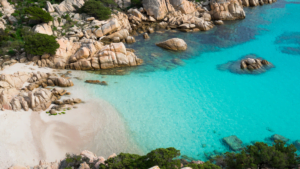
Tuerredda is frequently voted among the most stunning beaches in Italy. Set inside a deep, sheltered cove between Capo Malfatano and Capo Spartivento, its water has an astonishing turquoise and fluorescent aquamarine color that rivals any tropical paradise. In the middle of the bay lies the small Isola di Tuerredda, which strong swimmers can reach in just a few minutes from the shore.
Because of its worldwide fame, Tuerredda operates a limited-number access system during peak summer months (usually from June to September) to prevent overcrowding and protect the shoreline. If you plan to visit in July or August, you must either book your entry online in advance or arrive very early in the morning (before 08:30 AM).
What to see in Chia: history, towers and wild nature
Chia is much more than a collection of world-class beaches. The territory of Domus de Maria possesses a rich heritage spanning Phoenician seafaring, Spanish coastal fortifications, and vast mountainous forests inhabited by rare wildlife.
The Spanish Tower of Chia (Torre di Chia)
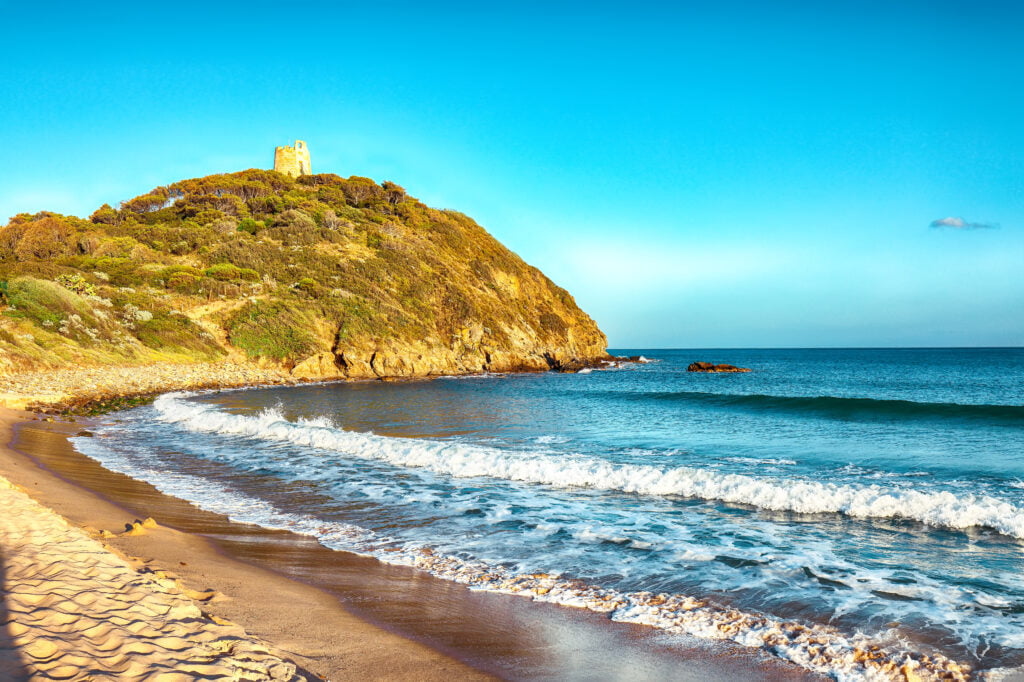
Perched atop a rugged granite promontory 45 meters above sea level, the Torre di Chia is the undeniable landmark of the area. Built in 1592 by the Spanish Crown as part of the island-wide coastal defense network against Barbary pirate raids, the tower kept watch over the mouth of the Chia river and the ancient harbor.
The promontory is easily accessible via a well-trodden walking trail starting from Su Portu beach or the Sa Colonia parking area. The walk takes about 10 to 15 minutes of gentle climbing. Once you reach the base of the stone tower, you will be rewarded with a breathtaking 360-degree panorama: to your left lies the bay of Su Portu and Cardolinu islet, to your right stretch the endless golden sands of Sa Colonia and Su Giudeu, and behind you roll the green hills of Domus de Maria. Access to the surrounding promontory is free, and it is my favorite spot in Chia for capturing panoramic photos.
Ancient Bithia archaeological area
Before it became a holiday hotspot, Chia was home to Bithia, one of the most prominent ancient maritime settlements in southern Sardinia. Founded by Phoenician traders in the eighth century BC, Bithia later flourished under Carthaginian rule and was eventually integrated into the Roman Empire.
The ancient city was built across the hill of the Chia Tower and the coastal plain behind Su Portu. Over the decades, winter storms and formal excavations brought to light ancient necropolises, Punic sandstone statues, Roman residential structures, and a temple dedicated to the god Bes, an Egyptian-Punic deity whose monumental sandstone statue is now displayed at the National Archaeological Museum in Cagliari.
As you walk between Su Portu and the tower, you can still observe ancient stone wall alignments, rock-cut tombs, and pottery fragments, bearing witness to over 2,500 years of Mediterranean history. To explore more ancient Phoenician and Roman heritage nearby, you should also plan a day trip to the ancient coastal city of Nora near Pula.
Stagno di Spartivento and Chia lagoons
Resting immediately behind the coastal sand dunes are several coastal wetlands, most notably the Stagno di Spartivento and the Stagno di Chia. These brackish lagoons form a protected natural sanctuary of immense ecological value.
The lagoons are home to a permanent colony of Greater Pink Flamingos (Phoenicopterus roseus), which feed on the small brine shrimps that inhabit the shallow water. In addition to flamingos, birdwatchers can easily observe black-winged stilts, kingfishers, little egrets, and cormorants. For more insights on where to watch these magnificent birds across the island, check my dedicated guide on pink flamingos in Sardinia.
The best times to view the flamingos are early in the morning or during the hour before sunset, when the birds are actively feeding and the low sun casts pink reflections across the still lagoon waters.
Capo Spartivento lighthouse
Capo Spartivento marks the southwestern geographic extremity of the Gulf of Cagliari. Standing atop vertical granite cliffs 66 meters above the open sea, its historic lighthouse has guided mariners since 1864, making it one of the oldest operating lighthouses in Sardinia.
While the interior of the historic lighthouse has been converted into an exclusive luxury guesthouse, the surrounding cliff headland remains accessible via a coastal walking track from Cala Cipolla. The scenery here is dramatic: raw granite rocks sculpted into surreal shapes by the wind, crashing waves far below, and expansive views stretching west toward Teulada and east toward the mountains of Pula. Sunsets from these cliffs are legendary.

Is Cannoneris state forest
When you need a change of pace from sunbathing, head inland toward the mountains of Domus de Maria to discover the Foresta di Is Cannoneris. This protected state reserve protects the largest continuous holm-oak (Quercus ilex) forest in Europe, covering thousands of hectares of wild mountainous terrain.
Is Cannoneris is a haven for hikers, mountain bikers, and nature lovers. The forest is home to a thriving population of native Sardinian red deer (Cervus elaphus corsicanus), fallow deer, wild boars, and golden eagles nesting along the high granite crags of Monte Calamixi. The canopy provides cool, refreshing shade even during hot summer afternoons, with marked hiking paths leading to fresh mountain streams and scenic waterfalls. If you enjoy wilderness walks, explore my overview of the best hikes in Sardinia.
Chia weather and interactive forecast
Chia enjoys a privileged Mediterranean microclimate. Shielded from northern cold fronts by the Sulcis mountain range, the coastline experiences more than 300 sunny days per year. Summers are warm and dry, with daytime temperatures hovering between 28°C and 34°C, tempered by refreshing afternoon sea breezes. Winters are remarkably mild, rarely dipping below 10°C during the day.
For swimming, the sea warms up pleasantly by late May and remains comfortable for bathing well into October. September and June are my personal favorite months to visit: the water is crystal clear, temperatures are ideal, and the beaches are pleasantly quiet compared to the peak weeks of August. For full seasonal details, read my month-by-month analysis in the weather in Sardinia guide.
Here is the real-time weather and 7-day forecast for Chia:
[weather_in_any_city city=”Chia”]
Things to do in Chia: top activities
Beyond soaking up the sun on the dunes, Chia offers world-class outdoor activities, marine sports, and scenic excursions. Because local operators and boats have limited capacity, I always advise booking your tours well in advance, especially during the summer months.
Here are 6 handpicked, verified activities that I recommend for experiencing the best of Chia and the southern coastline:
Chia and Tuerredda beach tour by van from Cagliari
If you are staying in Cagliari and prefer not to deal with driving, rental logistics, or the stress of finding parking spots in Chia during high season, this full-day small-group tour is the perfect solution. Traveling in an air-conditioned minivan, the tour takes you through the flamingo-filled Santa Gilla lagoon before giving you several hours of leisurely swimming at both Su Giudeu in Chia and the natural pool of Tuerredda.
Check availability and book: Beach tour to Chia & Tuerredda on GetYourGuide
4×4 Jeep tour of Chia mountains and beaches
This thrilling off-road tour combines the wild mountain paths of the Sulcis region with the coastal beauty of Chia. Riding in an open 4WD vehicle with an experienced local guide, you will climb dirt roads into panoramic forest peaks to spot wildlife before descending to the coast for swim stops at Su Giudeu, Cala Cipolla, and panoramic viewpoints overlooking the Spanish watchtowers.
Check availability and book: 4×4 Chia Mountains and Beaches on GetYourGuide
Guided sea kayak and snorkeling tour along Chia cliffs
Chia’s pink granite coastline is filled with hidden sea caves, natural arches, and tiny secret inlets that cannot be reached on foot or by large boats. This guided 4-hour sea kayaking trip departs directly from the beach, paddling along the cliffs towards Capo Spartivento with stops to snorkel in crystal-clear waters among schools of fish. Kayaks, paddles, life vests, and snorkeling gear are all provided.
Check availability and book: Chia Kayak & Secret Beach Snorkeling on GetYourGuide
Snorkeling boat excursion along Chia & Capo Spartivento
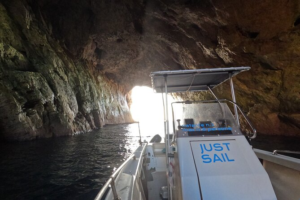
Departing from the local marina with a certified marine biologist and skipper, this 4-hour RIB dinghy boat cruise takes you into the protected waters of Capo Spartivento and Capo Malfatano. You will swim in secluded coves with pristine seabed visibility, exploring underwater rock formations and marine life that you simply cannot see from the crowded beaches. For more great underwater locations, take a look at my guide to snorkeling in Sardinia.
Check availability and book: Chia Snorkeling Boat Tour on Viator
Chia to Tuerredda coastal kayak expedition
For active travelers who love open-water paddling, this sea kayak expedition navigates the stunning coastal stretch between the dunes of Chia and the turquoise bay of Tuerredda. Accompanied by a qualified guide, you will skirt around Capo Spartivento, explore marine caverns, and land directly on the white sand of Tuerredda for a well-deserved swim.
Check availability and book: Chia Kayak Tour to Tuerredda on Viator
Full-day beach escape to Chia with parasols included
This full-day excursion is designed for total beach relaxation. Departing from central Cagliari, the tour provides direct round-trip transport to Chia’s premier beaches, complete with provided beach umbrellas and comfortable mats so you do not need to purchase or carry bulky equipment on your flight.
Check availability and book: Beach Excursion to Chia & Tuerredda on Viator
Getting around: car rental and transport in Chia
To truly experience Chia and the surrounding south-western coast, renting a car is practically essential.
Chia does not have a centralized downtown railway station. While regional public buses (ARST line 129 from Cagliari) run towards Chia and Domus de Maria, services are infrequent, timetables change significantly between seasons, and bus stops on the main road leave you with a 1.5 to 2-kilometer walk under the baking summer sun to reach the shorelines. Having your own vehicle gives you the freedom to move effortlessly between Su Giudeu, Cala Cipolla, Tuerredda, and the mountain trails of Is Cannoneris.
The most convenient place to pick up your rental car is directly upon landing at Cagliari-Elmas Airport, which is just a 45 to 50-minute drive from Chia. You can compare real-time rates and find reliable deals through our verified car rental partner:
- Pick up at Cagliari Airport (CAG): Compare Cagliari Airport car rental deals on Discovercars
- General Sardinia pickup locations: Browse all Sardinia car rental options on Discovercars
For detailed advice on insurance options, local driving regulations, and avoiding common rental pitfalls on the island, read my comprehensive guide on renting a car in Sardinia.
Where to sleep in Chia
Accommodation in Chia is harmoniously integrated into the landscape, ranging from world-class luxury resorts overlooking the sea to charming family-run bed & breakfasts. Because the area has strict environmental building regulations, properties sell out months in advance for the June-September window.
If you are evaluating different coastal areas in the south, you can compare Chia with other towns in my guide on where to stay in South Sardinia. Here are 5 verified, highly rated properties in Chia:
Conrad Chia Laguna Sardinia – Exclusive 5-star Hilton luxury resort perched on the hillside with panoramic views over the lagoons, multiple pools, an exquisite spa, and a private beach club on Monte Cogoni – Check availability on Booking.com
Baia Di Chia Resort Sardinia, Curio Collection by Hilton – Secluded 5-star beachfront resort set right into the natural amphitheater of Monte Cogoni, offering direct foot access to the sand, fine Mediterranean dining, and an infinity pool – Check availability on Booking.com
Faro Capo Spartivento – Ultra-exclusive 5-star luxury boutique hotel situated inside an active 1864 clifftop lighthouse with cliff-edge infinity pools, personalized butler service, and unmatched sunset vistas – Check availability on Booking.com
The Village Chia Laguna – Excellent 4-star family resort located within the Chia Laguna complex, featuring cottage-style garden rooms, dedicated children’s clubs, tennis courts, and free beach shuttles – Check availability on Booking.com
B&B La Vela Chia – Cozy, highly rated bed & breakfast set in a quiet residential garden setting in Chia, offering warm local hospitality, spotless air-conditioned rooms, homemade breakfast, and private parking – Check availability on Booking.com
The local perspective: what Sardinians think
As a local Sardinian, I have spent countless weekends on the beaches of Chia across every season of the year. While travel brochures depict Chia as an effortless tropical paradise, there are practical realities of our territory that only someone who knows the island intimately can explain to you.
First, understand how the wind shapes your day in Chia. The southwestern coast of Sardinia is strongly influenced by two dominant winds: the northwesterly Maestrale (Mistral) and the southeasterly Scirocco.
When the Maestrale blows, which happens frequently in Sardinia, it brings clear blue skies, lower humidity, and brisk breezes. The great news about Chia is that its tall coastal dunes and the promontory of the Spanish Tower offer natural shelter on the eastern beaches like Sa Colonia and Su Portu. Furthermore, Cala Cipolla is well protected by its high granite walls. However, on days with very fierce Maestrale, Su Giudeu can experience shifting airborne sand across the open dunes. If a strong southern Scirocco blows instead, the sea at Chia can produce rolling waves; this is the time when local surfers flock to Su Giudeu, while families with small children might prefer exploring the sheltered pine forests or heading towards the archaeological ruins of Nora.
Second, let us talk frankly about summer logistics and parking. In July and especially in August, Chia is extremely popular with both international travelers and locals coming down from Cagliari. The parking lots at Su Giudeu and Cala Cipolla are paid municipal areas (managed through parking attendants and mobile apps like EasyPark). If you arrive at Su Giudeu at 11:00 AM on a sunny Saturday in August, you will likely face long queues and full parking lots.
My golden local rule: either arrive before 09:00 AM to claim your favorite spot on the sand and park stress-free, or arrive after 16:30 PM. Late afternoons in Chia are pure magic: the fierce midday heat softens, day-trippers begin packing up, the water turns glassy, and the low sunlight lights up the dunes in warm amber shades.
Third, remember that Chia’s beauty lies in its delicate balance between nature and heritage. The immense sand dunes are living geological formations held together by ancient juniper roots. Please respect the wooden boardwalks and never climb or slide down the dunes: walking on them accelerates erosion and destroys the fragile beach vegetation. Respect our land, take your rubbish with you, and Chia will reward you with memories that last a lifetime.
How to get to Chia from Cagliari
Chia is located approximately 50 kilometers southwest of Cagliari, making the journey simple and scenic. https://www.google.com/maps/embed/v1/place?key=AIzaSyBAM2o7PiQqwk15LC1XRH2e_KJ-jUa7KYk&zoom=11&maptype=roadmap&q=chia
If you are driving from Cagliari or Cagliari-Elmas Airport:
- Exit the airport or city center and follow signs for the SS195 Sulcitana highway heading south toward Teulada and Pula.
- Continue along the SS195, bypassing the town of Pula and the resorts of Santa Margherita di Pula.
- At kilometer marker 43, take the well-marked exit for Chia / Domus de Maria.
- Follow the main coastal road (Viale Chia), which leads directly to the access roads for Sa Colonia, Su Portu, Campana, Su Giudeu, and Cala Cipolla. The total driving time is about 45 to 50 minutes.
If you are continuing your journey across the island, Chia serves as a fantastic gateway to the wild south. You can follow the SP71 panoramic road westward past Tuerredda, Capo Malfatano, and Porto Pino, or venture further into the South Sardinia territory as detailed in my guide on where to go in South Sardinia.
FAQ about Chia Sardinia
What is Chia in Sardinia famous for?
Chia is internationally famous for its expansive golden sand dunes, turquoise and shallow waters, wild pink flamingos feeding in coastal lagoons, and historic landmarks like the 17th-century Spanish watchtower and the ancient Phoenician city of Bithia.
Which is the best beach in Chia?
Su Giudeu is widely considered the best beach in Chia due to its massive sand dunes, shallow waters, and the small rocky islet that you can walk to on foot during low tide. For snorkeling and a more sheltered atmosphere, Cala Cipolla is equally exceptional.
Do I need a car to visit Chia?
Yes, renting a car is strongly recommended. While regional ARST buses connect Cagliari to the Domus de Maria area, the beaches are spread out across several kilometers and public bus stops require long walks under the sun. A car allows you to easily hop between beaches like Su Giudeu, Cala Cipolla, and nearby Tuerredda.
Can you see pink flamingos in Chia all year round?
Yes, colonies of wild pink flamingos reside in the brackish lagoons immediately behind the beaches, specifically at the Stagno di Chia and Stagno di Spartivento. They can be seen throughout the year, with peak numbers during the spring breeding and autumn seasons.
Is Chia good for families with children?
Chia is one of the most family-friendly destinations in southern Sardinia. Beaches like Monte Cogoni, Sa Colonia, and Su Giudeu feature soft fine sand and very wide shallow waters where young children can safely paddle and swim for dozens of meters from the shore.
What is the closest airport to Chia Sardinia?
The closest airport is Cagliari-Elmas Airport (CAG), located approximately 55 kilometers away. The drive takes about 45 to 50 minutes via the SS195 Sulcitana highway.
What should I do in Chia when the wind is strong?
If a northwesterly Maestrale (Mistral) wind is blowing, seek shelter at Cala Cipolla or on the eastern side of the Chia Tower promontory at Sa Colonia and Su Portu. On very windy days, you can also explore inland attractions like the Is Cannoneris forest or visit the ancient archaeological ruins of Nora.